电影
Search documents
国内高频 | 工业生产边际改善(申万宏观·赵伟团队)
赵伟宏观探索· 2026-01-12 16:04
Group 1: Industrial Production - The operating rate of blast furnaces has improved slightly, with a week-on-week increase of 0.4% and a year-on-year rise of 1.3 percentage points to 2.2% [1][4] - Apparent steel consumption has decreased, with a week-on-week decline of 0.6% and a year-on-year drop of 1.5 percentage points to 0.6% [1][6] - Steel social inventory continues to decline, with a week-on-week decrease of 2.5% [1] Group 2: Chemical and Automotive Industries - In the chemical sector, the operating rate of soda ash has significantly increased, with a week-on-week rise of 4.4% and a year-on-year increase of 0.2 percentage points to -2.2% [10][11] - The operating rate of PTA has also improved, with a week-on-week increase of 3.2% and a year-on-year rise of 4.1 percentage points to -4.2% [10][14] - The automotive sector shows weaker performance, with the operating rate of semi-steel tires declining by 2.4% week-on-week and a year-on-year drop of 2.8 percentage points to -13% [10] Group 3: Construction Industry - The cement production and demand have marginally improved, with a week-on-week increase in grinding operating rate of 2.1% and a year-on-year rise of 5.2 percentage points to 9.9% [22][23] - Cement shipment rates have slightly decreased, with a week-on-week decline of 1.5% and a year-on-year increase of 1.9 percentage points to 0.5% [22][26] - Cement inventory continues to decline, with a week-on-week decrease of 0.5% and a year-on-year increase of 0.9 percentage points to 1.3% [22][29] Group 4: Demand Tracking - The average daily transaction area of commercial housing in 30 major cities has decreased by 47.4% week-on-week and a year-on-year drop of 13.6 percentage points to 38.4% [44][45] - The transaction volume in first-tier and second-tier cities remains weak, with week-on-week declines of 30.8% and 61.9% respectively [44][48][51] - Port cargo throughput has also declined, with a year-on-year decrease of 3.6 percentage points to -0.4% [56][63] Group 5: Price Tracking - Agricultural product prices show differentiation, with vegetable and fruit prices decreasing by 0.9% and 0.2% respectively, while egg prices increased by 1.4% [98][99] - The industrial product price index has risen by 1.7% week-on-week, with the energy and chemical price index increasing by 0.7% and the metal price index rising by 3.9% [110][111]
利率周报(2026.1.5-2026.1.11):CPI同比阶段性回升-20260112
Hua Yuan Zheng Quan· 2026-01-12 14:03
1. Report Industry Investment Rating No relevant content provided. 2. Report Core Viewpoints - In December 2025, China's prices recovered. CPI rose 0.8% year-on-year, reaching a new high since March 2023, with food prices playing a significant role, and core CPI remaining stable. PPI's year-on-year decline narrowed to -1.9%, with three consecutive months of positive month-on-month growth, and prices in upstream and new-quality productivity-related industries were well-supported. In 2026, the central bank may continue its moderately loose monetary policy, with a new focus on "optimizing supply." It may focus on price recovery, keeping financing costs low, strengthening the prevention and control of financing platform debt risks, and promoting financial opening-up. In the US, the December non-farm payrolls were lower than expected, but the unemployment rate decreased. Traders postponed the first interest rate cut in 2026 to June, with an expected total cut of 50BP for the year [2][4][118]. 3. Summary by Relevant Catalogs 3.1 Macro News - **CPI and PPI Trends**: In December 2025, CPI rose 0.8% year-on-year, with food prices rising 1.1% and contributing significantly. Core CPI was stable at 1.2%. PPI's year-on-year decline narrowed to -1.9%, and it had three consecutive months of positive month-on-month growth [4][13][29]. - **Factors Affecting CPI**: Food prices, especially fresh vegetables and fruits, drove CPI growth, while energy prices, affected by international oil prices, restricted CPI growth [19]. - **Factors Affecting PPI**: Domestic policies, seasonal demand, input factors, and new-quality productivity all influenced PPI trends. Upstream prices were supported by policies and seasonal demand, and new-quality productivity-related industries contributed to price increases [33][38]. - **Central Bank Policy**: The 2026 central bank work conference added "optimizing supply" as a policy focus, emphasizing balanced credit supply, reasonable price recovery, and support for financing platform debt risk resolution [43]. - **US Non-farm Payrolls**: In December 2025, US non-farm payrolls increased by 50,000, lower than expected, and the unemployment rate decreased to 4.4%. Traders postponed the first interest rate cut to June, with an expected 50BP cut for the year [4][48]. 3.2 Meso-level High-frequency Data - **Consumption**: Passenger car retail and wholesale volumes increased year-on-year, but movie box office revenue decreased. Three major household appliances' retail volume and revenue showed mixed trends [4][9][54]. - **Transportation**: Passenger transportation activities were relatively high, with increases in migration, flight numbers, and subway ridership. However, freight transportation, including postal, railway, and highway, decreased [4][9][59]. - **Industry**: Most industrial indicators showed a year-on-year decline, including steel production, coal consumption, and factory operating rates [4][9][64]. - **Real Estate**: The real estate market continued to decline, with decreases in housing sales area and land transactions [9][76][80]. - **Prices**: Food prices showed mixed trends, with pork prices down and vegetable prices up. Industrial product prices also varied, with some rising and some falling [4][9][90]. 3.3 Bond and Foreign Exchange Markets - **Bond Yields**: Most government bond yields increased, with significant adjustments at the long end. The yields of national debt, policy bank bonds, local government bonds, and interbank certificates of deposit all changed to varying degrees [4][104][109]. - **Foreign Exchange Rates**: The US dollar to RMB exchange rate decreased, and the yields of ten-year government bonds in the US, Japan, the UK, and Germany also changed [113][117]. 3.4 Investment Recommendations - The bond market in 2026 may perform better than expected. Attention should be paid to the potential rebound of long-term bonds. It is recommended to focus on long-term bond trading opportunities, allocate 3 - 5Y capital bonds for coupon income, and explore multi-asset investment opportunities [4].
中国宏观周报(2026年1月第2周)-20260112
Ping An Securities· 2026-01-12 02:40
Domestic Demand - In December 2025, retail sales of passenger vehicles in China were 2.296 million units, down 13% year-on-year, compared to a 7% decline in November[2] - Retail sales of major home appliances decreased by 28.5% year-on-year as of January 2, 2026, but improved by 8.4 percentage points from the previous value[2] - The volume of postal express deliveries decreased by 0.9% year-on-year as of January 4, 2026, a decline of 2 percentage points from the previous value[2] - Daily box office revenue for movies was 53.55 million yuan, down 26.3% year-on-year as of January 9, 2026[2] Industrial Sector - The Nanhua Industrial Index rose by 2.4% this week, with the black materials index up 2.7% and the non-ferrous metals index up 5.3%[4] - Daily average pig iron production and cement clinker capacity utilization rates increased, while the apparent demand for major steel products declined[4] - New home sales in 30 major cities fell by 38.4% year-on-year as of January 9, 2026, a decrease of 7.4 percentage points from the previous week[4] External Demand - Port cargo throughput increased by 1.1% year-on-year as of January 4, 2026, but this was a decline of 0.9 percentage points from the previous value[4] - Container throughput at ports rose by 7.7% year-on-year, an increase of 0.5 percentage points from the previous value[4] - South Korea's export value increased by 13.4% year-on-year in December, up 5 percentage points from November[4] Price Trends - The price of rebar futures increased by 0.7%, while spot prices rose by 0.6% this week[4] - Coking coal futures prices increased by 7.2%, with Shanxi coking coal spot prices remaining stable[4] - The agricultural product wholesale price index decreased slightly by 0.4% this week[4]
中泰证券:中低档内容出清 电影市场从“要数量”进入“要口碑”新阶段
Ge Long Hui A P P· 2026-01-12 02:11
格隆汇1月12日|中泰证券研报指出,电影大盘恢复增长,2025年11—12月高质量引进片集中上映推动 全年票房持续增长,单银幕收入探底回调,市场结构从用户、场景、价值链等多维度显现拓展空间。单 银幕收入从2012年以来呈波动下降趋势,疫情中探底,并开始恢复。此外,观影年龄持续提升,30岁以 上观众在2024年首次突破50%,用户整体消费能力增强;三线及以下城市票房占比突破40%,开拓了收 入空间;影院非票经济得到空前重视,IP后链路开发横向延伸,电影商业变现路径持续拓宽。电影市场 从"要数量"进入"要口碑"新阶段,中低档内容出清,高质量供给成电影票房核心驱动力。 ...
“Movie Land”上海虹口电影地图专区上线 探寻百年光影
Xin Lang Cai Jing· 2026-01-11 13:08
中新网上海1月11日电 (记者 李佳佳)作为上海电影历史版图上的重要一环,上海虹口区的百年电影故事 如今有了全新的数字打开方式。 近日,"Movie Land上海电影地图"正式上线"虹口电影地图"专属板块。该专区以深度互动的手绘地图形 式,凝练虹口跨越世纪的电影历史与银幕传奇,汇集超过50个精心绘制的地标点位,并同步推出3条主 题鲜明的Movie Walk互动探索线路。用户只需一部手机,即可化身故事主角,在任务指引下,亲身解锁 深藏在街区巷陌中的光影记忆。 与此同时,主办方联动区域内两家影院推出"电影岛"历史故事微展陈,旨在通过数字科技与线下体验的 结合,盘活区域丰厚的电影文化底蕴,以年轻化、互动性的叙事,让历史故事在当代焕发新生命力,并 促进电影文化与城市消费场景的深度融合。 虹口专区并非简单的地点罗列,而是一个基于翔实历史数据库构建的沉浸式叙事空间。专区内的每个手 绘地标均配有翔实的图文资料,讲述其真实历史背景与银幕内外的故事。此次推出的三条主题探索线 路,各自承载不同的时代印记与叙事风格,为用户提供截然不同的体验。 10日,"Movie Land上海电影地图"正式上线"虹口电影地图"专属板块。该专区以深 ...
【文体市场面面观】从“一高一深”看消费潜力
Sou Hu Cai Jing· 2026-01-11 05:06
Core Insights - The Chinese film market is projected to achieve a box office of 51.832 billion yuan and 1.238 billion viewers by 2025, both reflecting over 20% growth [2] - The film consumption market is characterized as "experiential" and "emotional," indicating a strong connection to consumer enthusiasm and cultural aspirations [2] Group 1: Market Dynamics - The "high" market consists of economically developed regions like Guangdong, Jiangsu, Zhejiang, and Shanghai, which have high per capita income and strong cultural consumption willingness, serving as the main contributors to national box office revenue [2][3] - Guangdong has consistently been the top box office contributor, exemplified by its significant contribution of over 1.65 billion yuan to the record-breaking 15.4 billion yuan box office of "Ne Zha" [2] - The "deep" market includes third and fourth-tier cities, which have seen a rising share of box office revenue, reaching the highest contribution in five years in 2025, with over 58% of box office revenue coming from these areas during the 2025 Spring Festival [3] Group 2: Future Opportunities - To unlock further consumption potential, it is essential to understand the characteristics of both "high" and "deep" markets, focusing on their inherent demands [4] - The high-demand from developed regions will drive the film industry to enhance production quality and content innovation, promoting high-quality development [4] - The enthusiasm from the vast lower-tier markets and their emotional resonance with local narratives provide a solid foundation for domestic films, encouraging the emergence of diverse and relatable content [4]
2026青葱青年影展(广州)开幕
Xin Lang Cai Jing· 2026-01-11 04:50
Core Viewpoint - The 2026 Qing Cong Youth Film Festival opened in Guangzhou, featuring the film "The Siege of Kowloon Walled City" as its opening film, directed by Zheng Baorui [1][3]. Group 1: Event Details - The festival is hosted by the China Film Directors Association and is held at the China Film International Cinema in Guangzhou [1][3]. - The opening ceremony was presided over by Jia Zhangke, the president of the China Film Directors Association, with notable attendees including Zheng Baorui, Wang Hongwei, and other filmmakers [3]. - The festival will last for four days and will showcase 22 films, including titles like "Catching the Wind," "The Girl," and "The First Part of Fengshen: Chaoge Wind and Cloud" [3][4]. Group 2: Film Highlights - "The Siege of Kowloon Walled City" is set to be released in 2024 and features actors such as Louis Koo and Lin Feng, depicting a story of a young man caught in a conflict within the Kowloon Walled City during the 1980s [3]. - The film has received critical acclaim, winning nine awards at the 43rd Hong Kong Film Awards, including Best Film and Best Director [3]. - Zheng Baorui emphasized the film's aim to retain the authentic atmosphere of the Walled City, focusing on characters relatable to the audience rather than traditional heroes [3]. Group 3: Youth Film Initiative - The Qing Cong Youth Film Festival is part of the Qing Cong Plan, which supports young filmmakers in China [4]. - Previous events under the Qing Cong Plan include various themed film exhibitions and online short film screenings, aimed at fostering connections between established and emerging filmmakers [4].
海南启动电影促消费活动
Zheng Quan Shi Bao Wang· 2026-01-11 04:04
Core Viewpoint - The Hainan Province film promotion activity officially launched on January 10, aiming to boost consumer spending in the film industry through ticket discounts for local users [1] Group 1 - The event is organized by the Hainan Provincial Film Bureau and undertaken by Hainan Film Co., Ltd [1] - The promotional activity utilizes a single ticket discount method, providing daily viewing benefits to users in Hainan [1]
经济日报:从“一高一深”看消费潜力
Xin Lang Cai Jing· 2026-01-11 03:48
Core Insights - The Chinese film market is projected to achieve a box office of 51.832 billion yuan and 1.238 billion viewers by 2025, both reflecting over 20% growth [1] - The film consumption market is characterized as "experiential" and "emotional," indicating a strong connection to consumer sentiment and cultural aspirations [1] Group 1: Market Dynamics - The film market's vitality showcases the resilience and potential of China's domestic demand, especially in the context of broader consumption challenges [1] - The "high" market consists of economically developed regions like Guangdong, Jiangsu, Zhejiang, and Shanghai, which are key contributors to box office revenue due to high income levels and mature viewing habits [2] - Guangdong has consistently been the top box office contributor, exemplified by its significant contribution of over 1.65 billion yuan to the record-breaking 15.4 billion yuan box office of "Ne Zha" [1][2] Group 2: Emerging Markets - The "deep" market refers to the growing influence of third and fourth-tier cities, which have seen an increasing share of box office revenue, reaching the highest contribution in five years by 2025 [2] - During the 2025 Spring Festival, box office revenue from third and fourth-tier cities exceeded 58%, establishing them as the primary revenue source [2] - The development of infrastructure and commercial activities in these areas is expected to further enhance viewing demand, transforming them into innovative spaces for new consumption habits and industry ecosystems [2] Group 3: Future Opportunities - To unlock further consumption potential, it is essential to understand the unique characteristics of both "high" and "deep" markets [3] - The high expectations for film quality in developed regions will drive the film industry towards higher production standards and content innovation [3] - The enthusiasm for local narratives in the deep market provides a solid foundation for domestic films, encouraging the emergence of diverse and relatable content [3] - Both market segments can mutually reinforce each other, creating a sustainable growth engine for film consumption and enhancing the market transformation of Chinese stories [3]
开年电影市场“新”观察·按下“启动键”!透过10亿元票房看消费市场活力足、潜力大
Yang Shi Wang· 2026-01-11 03:38
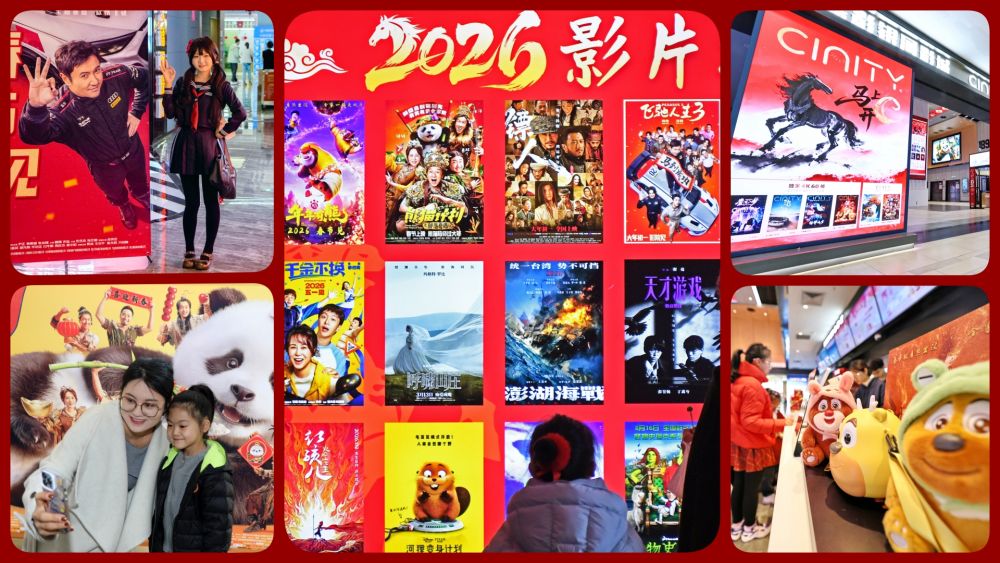
Core Insights - The Chinese film market has shown strong momentum and significant growth potential, achieving over 1.09 billion yuan in box office revenue within the first ten days of January 2026, marking a more than 10% increase compared to the same period last year [2][4]. Group 1: Box Office Performance - The box office performance during the typically slow season between New Year's and the Spring Festival has defied expectations, indicating a robust start for the Chinese film market in 2026 [4]. - The 1 billion yuan box office is attributed to multiple films performing well rather than a single blockbuster, showcasing a diverse range of offerings [8]. Group 2: Film Content and Variety - A rich supply of creative content has contributed to the box office success, with a variety of genres including suspense, realistic themes, classic IPs, and family-friendly films being released [6]. - Notable films such as "The Killing," "The Sky of Our Fathers," "The Hidden Kill," and "The Qin Chronicles" have collectively driven audience interest, alongside popular imported films like "Zootopia 2" and "Avatar 3" [8][10]. Group 3: Consumer Engagement and Market Dynamics - The 1 billion yuan box office serves as a clear signal of the vibrant and expansive potential of the Chinese consumer market, with the film industry leading the charge towards future growth [12]. - The cinema experience has evolved beyond mere film screenings, becoming a catalyst for a broader consumption chain, supported by initiatives from various government bodies to promote film-related activities and consumer engagement [13].