
航空航天器及设备制造业

Search documents
商务部:1-7月全国吸收外资4673.4亿元人民币
智通财经网· 2025-08-22 09:10
Core Insights - In the first seven months of 2025, China established 36,133 new foreign-invested enterprises, marking a year-on-year increase of 14.1% [1] - The actual utilized foreign capital amounted to 467.34 billion RMB, reflecting a year-on-year decrease of 13.4% [1] Industry Analysis - The manufacturing sector attracted 121.04 billion RMB in actual foreign investment, while the service sector received 336.25 billion RMB [1] - High-tech industries saw actual foreign investment of 137.36 billion RMB, with notable growth in specific sectors: e-commerce services (up 146.8%), aerospace equipment manufacturing (up 42.2%), chemical pharmaceuticals manufacturing (up 37.4%), and medical instruments manufacturing (up 25.5%) [1] Source Region Insights - Investment from ASEAN countries to China increased by 1.1% [1] - Significant growth in foreign investment from Switzerland (up 63.9%), Japan (up 53.7%), and the UK (up 19.5%), including data from free port investments [1]
7月国民经济稳中有进 规上工业增加值增长5.7%
Chang Jiang Shang Bao· 2025-08-18 00:05
Economic Overview - The national economy shows a steady growth trend, with industrial added value above designated size increasing by 5.7% year-on-year in July and 6.3% from January to July [1][3] - The service industry continues to grow rapidly, contributing significantly to economic stability [6] Industrial Production - Industrial production maintains robust growth, with high-quality development progressing steadily, showcasing resilience and potential [1] - High-tech manufacturing added value increased by 9.3% year-on-year in July, with significant growth in integrated circuits and electronic materials [2] - Equipment manufacturing and high-tech manufacturing sectors are key contributors, with respective growth rates of 8.4% and 9.3% [1][2] Investment Trends - Fixed asset investment continues to expand, with a total of 288,229 billion yuan from January to July, marking a 1.6% year-on-year increase [3] - Manufacturing investment grew by 6.2%, with high-tech industries such as aerospace and information services seeing substantial increases [3] Consumer Market - Retail sales showed positive growth, with total retail sales reaching 38,780 billion yuan in July, up 3.7% year-on-year [4] - Online retail sales increased by 9.2%, indicating a strong shift towards e-commerce [4][5] - The consumption upgrade policy, including trade-in programs, has positively impacted sales of upgraded goods [5] Service Sector Growth - The service sector's contribution to economic growth is significant, with a 5.5% year-on-year increase in added value in the first half of 2025 [6] - The service production index rose by 5.8% in July, with information technology services growing at 11.9% [6]
我国投资潜力大后劲足
Zheng Quan Ri Bao· 2025-08-17 16:20
Group 1 - The nominal growth rate of fixed asset investment in China fell to 1.6% in the first seven months, but the actual growth, after excluding price factors, is approximately 4% to 5%, indicating a systematic optimization of the investment structure as the economy transitions from high-speed growth to high-quality development [1] - Investment in the manufacturing sector increased by 6.2% year-on-year, with notable growth in traditional manufacturing upgrades and high-end industries, such as aerospace and computer equipment manufacturing, which saw year-on-year growth rates of 33.9% and 16% respectively [1] - Investment in major sectors is growing rapidly, with equipment and tool purchases increasing by 15.2% year-on-year, accounting for 16.2% of total investment and contributing 2.2 percentage points to overall investment growth [1] Group 2 - Investment in renewable energy sources, including solar, wind, nuclear, and hydropower, increased by 21.9% year-on-year, supporting the green transformation of the economy and reducing reliance on traditional fossil fuels [2] - There is significant potential for investment in infrastructure and industrial upgrades, driven by the urbanization of nearly 300 million agricultural migrants, which creates demand for education, healthcare, and housing [2] - Policy measures are being implemented to stimulate effective investment, including the promotion of a unified national market and the activation of private capital through tools like REITs and industrial funds, which will enhance the investment environment [2]
7月经济数据出现短期波动,扩内需政策仍将接续发力
2 1 Shi Ji Jing Ji Bao Dao· 2025-08-15 12:37
Economic Overview - July economic data shows marginal weakening, with declines in social retail sales, investment, industrial output, and service production indices compared to June [1][6] - The overall economic performance in the first half of the year was better than expected, with a year-on-year growth of 5.3% [6] Export and Import Data - In July, total goods import and export amounted to 3.91 trillion yuan, a year-on-year increase of 6.7%, with exports at 2.31 trillion yuan, growing 8.0% [2][3] - Despite a decrease in exports to the US due to tariff adjustments, China's overall export performance remains resilient, particularly in non-US markets [2][3] Consumer Spending - Social retail sales in July reached 3.88 trillion yuan, growing only 3.7%, marking the lowest monthly growth this year [2][3] - The slowdown in retail growth is attributed to the temporary suspension of the "trade-in" policy in some regions [3][8] Investment Trends - Fixed asset investment from January to July totaled 28.82 trillion yuan, with a year-on-year growth of 1.6%, reflecting a decline from the previous months [3][4] - Manufacturing investment grew by 6.2%, while infrastructure investment increased by 3.2%, both showing a decrease compared to earlier months [3][4] Policy Implications - The government is expected to enhance macroeconomic policies, including fiscal stimulus and interest rate cuts, to support consumption and stabilize the real estate market [5][6][8] - The introduction of the third batch of 690 billion yuan in "national subsidies" is anticipated to boost retail sales in August [3][8] Sectoral Performance - New industries are experiencing rapid investment growth, with aerospace and computer equipment manufacturing seeing increases of 33.9% and 16% respectively from January to July [4] - The renewable energy sector also shows strong investment growth, with solar, wind, nuclear, and hydropower investments rising by 21.9% [4]
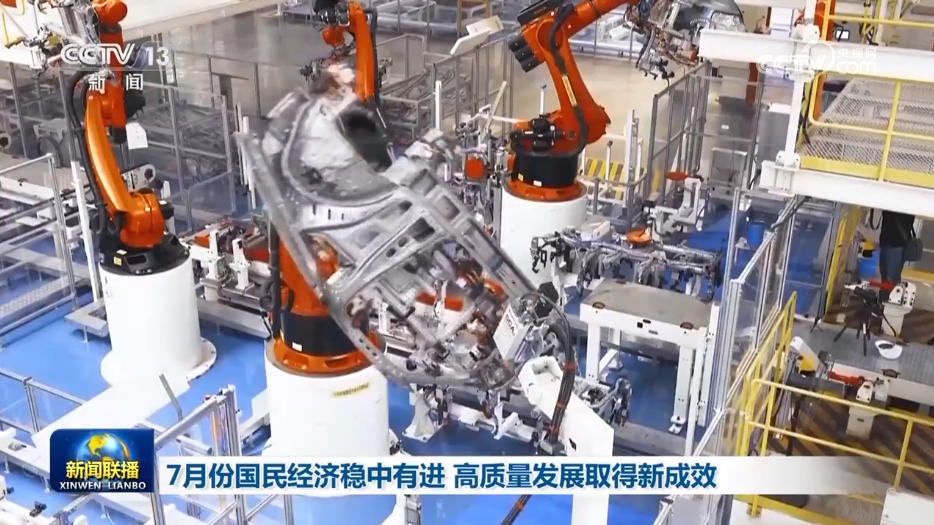
7月份国民经济稳中有进 高质量发展取得新成效
Yang Shi Wang· 2025-08-15 12:10
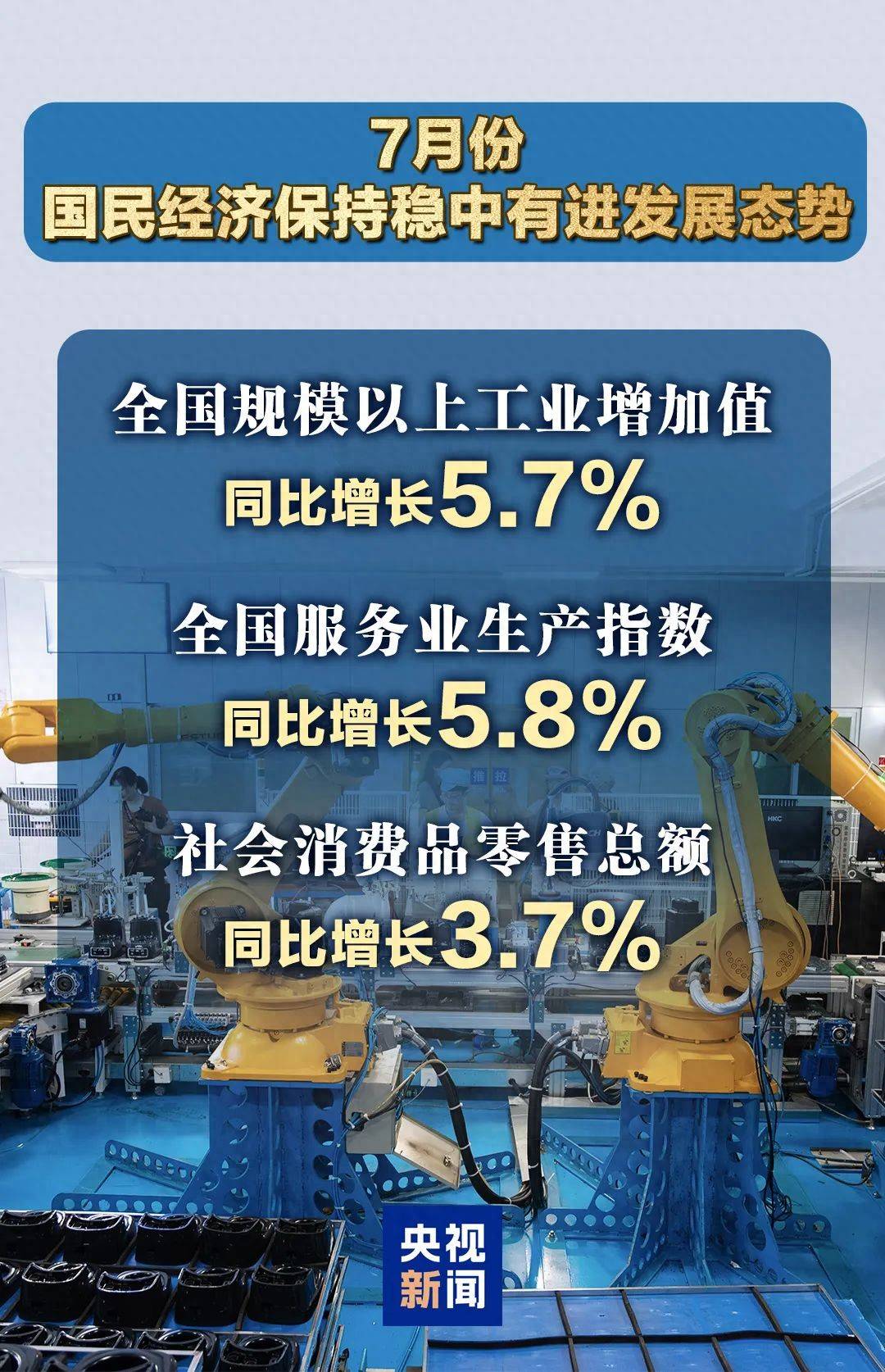
Economic Overview - The national economy showed a stable and progressive development trend in July, with new achievements in high-quality development [1] Industrial Growth - The industrial added value of enterprises above designated size increased by 5.7% year-on-year in July, with the equipment manufacturing sector performing particularly well, growing by 8.4%, which is 2.7 percentage points higher than the overall industrial growth [3] Service Sector Performance - The service production index rose by 5.8% year-on-year in July, driven by increased tourism during the summer [5] Consumer and Investment Trends - Consumption and investment continued to grow, with retail sales of consumer goods increasing by 3.7% year-on-year in July, and retail sales of goods growing by 4%. From January to July, service retail sales increased by 5.2%. Investment in equipment and tools rose by 15.2% during the same period due to the effects of large-scale equipment renewal policies [7] Emerging Growth Drivers - The added value of high-tech manufacturing industries increased by 9.5% year-on-year from January to July, with electronic and communication equipment manufacturing and aerospace equipment manufacturing growing by 12.8% and 8.6%, respectively. The digital economy also saw rapid growth, with the added value of digital product manufacturing increasing by 8.4% in July [9]

最新数据,国家统计局详解
Shang Hai Zheng Quan Bao· 2025-08-15 06:37
Economic Overview - In July, the international environment was complex and severe, with extreme weather conditions impacting economic operations, yet key economic indicators remained stable overall [1][8] - The industrial production increased by 5.7% year-on-year in July, while the retail sales of consumer goods grew by 3.7% year-on-year [1][3] Industrial Production - The industrial production showed a steady and relatively fast growth, with the added value of large-scale industries increasing by 5.7% year-on-year in July [3] - The equipment manufacturing sector performed well, with an increase of 8.4% in added value, and high-tech manufacturing saw a growth of 9.3%, outpacing the overall industrial growth by 2.7 and 3.6 percentage points respectively [3] - The "two new" policies continued to show positive effects, with significant growth in specific industries such as shipbuilding and electric motor manufacturing, which grew by 29.7% and 15.9% respectively [3] Investment Trends - From January to July, fixed asset investment increased by 1.6% year-on-year, with actual growth estimated between 4% to 5% after adjusting for price factors [3][4] - Manufacturing investment grew by 6.2% year-on-year, significantly higher than the overall investment growth rate, with aerospace and computer equipment manufacturing investments increasing by 33.9% and 16% respectively [4] Consumer Market - In July, the retail sales of consumer goods increased by 3.7% year-on-year, although the growth rate decreased by 1.1 percentage points compared to June [6] - The sales of home appliances and communication devices saw substantial growth, with increases of 28.7% and 14.9% respectively [6] - Service retail maintained stability, with a year-on-year growth of 5.2% from January to July, supported by active markets in sports events, movies, and cultural tourism [6] Future Outlook - The economic foundation remains stable with strong potential for growth, supported by effective macroeconomic policies and increased market demand [8][9] - The government plans to implement policies to lower credit costs for personal consumption and service industry loans, which is expected to stimulate consumption and promote service sector growth [9] - The International Monetary Fund has raised its growth forecast for China's economy by 0.8 percentage points, indicating increased international confidence in China's economic development [9]
国家统计局:我国投资增长面临的压力是阶段性的
Xin Hua Cai Jing· 2025-08-15 06:36
Group 1 - The core viewpoint is that the current pressure on investment growth in China is temporary, and a comprehensive perspective is needed to understand the situation [1] - From January to July, fixed asset investment in China grew by 1.6% year-on-year, a decline compared to the first half of the year, with actual growth excluding price factors estimated at around 4% to 5% [1] - The decline in nominal investment growth is attributed to various factors, including extreme weather, complex external environments, intensified domestic competition, and a weakening of traditional industry investment momentum during the transition to new industries [1] Group 2 - Manufacturing investment showed rapid growth, with a year-on-year increase of 6.2% from January to July, significantly outpacing overall investment growth [2] - Investment in high-end industries increased, with aerospace and equipment manufacturing up by 33.9%, computer and office equipment manufacturing by 16%, and information services by 32.8% [2] - Key areas of investment, particularly in infrastructure, also saw significant growth, with water management investment up by 12.6% and information transmission investment by 8.3% [2] Group 3 - Investment in clean energy is steadily increasing, with solar, wind, nuclear, and hydropower investments collectively growing by 21.9% year-on-year from January to July [2] - The potential for investment in China remains substantial, with significant gaps in per capita capital stock compared to developed countries, indicating a need for increased investment in new productive forces and social welfare [3] - Future strategies include promoting high-quality development, optimizing the investment environment, and stimulating private investment to enhance effective investment and support stable economic growth [3]
信息量巨大!重要发布会,刚刚公布
Sou Hu Cai Jing· 2025-08-15 05:42
Economic Overview - In July, China's national economy maintained a steady and progressive development trend, with industrial production and service sectors showing significant growth [2][4] - The industrial added value for large-scale enterprises increased by 5.7% year-on-year and 0.38% month-on-month, with equipment manufacturing and high-tech manufacturing growing by 8.4% and 9.3% respectively [2] - The service sector's production index rose by 5.8% year-on-year, indicating robust growth in modern services [2] Consumer Market - The total retail sales of consumer goods reached 38,780 billion yuan in July, reflecting a year-on-year growth of 3.7% [3] - From January to July, the retail sales of consumer goods increased by 4.8%, with service retail sales growing by 5.2%, demonstrating overall stability in consumption [8] Supportive Factors for Economic Growth - Market demand is expanding, supported by consumption-boosting initiatives, with a notable increase in household appliance and communication equipment retail sales by 30.4% and 22.9% respectively from January to July [9] - High-tech manufacturing added value grew by 9.5% year-on-year, with significant contributions from electronic and communication equipment manufacturing, as well as aerospace manufacturing [8] - The contribution rate of final consumption expenditure to economic growth reached 52% in the first half of the year, an increase of 7.5 percentage points compared to the previous year [9] Policy Impact - The implementation of more proactive macroeconomic policies has effectively stimulated production demand and supported stable economic growth [9] - The International Monetary Fund has raised its forecast for China's economic growth by 0.8 percentage points, reflecting increased confidence from the international community [10]
国家统计局:1-7月份,太阳能、风力、核力、水力发电投资同比合计增长21.9%
Sou Hu Cai Jing· 2025-08-15 05:01
Group 1 - The core viewpoint of the article highlights the economic performance of China in the first seven months of 2025, indicating a nominal growth in fixed asset investment of 1.6% year-on-year, with actual growth adjusted for price factors estimated at around 4%-5% [3][4]. - The decline in nominal investment growth is attributed to several factors, including adverse weather conditions, complex external environments, intensified domestic competition, and a decrease in investment returns, alongside a weakening of traditional industry investment momentum during the transition to new industries [3][4]. - Despite the nominal growth decline, the physical workload of investments remains robust, particularly driven by innovation and large-scale equipment updates, leading to a continuous optimization of investment structure [3][4]. Group 2 - Manufacturing investment has seen a significant increase, with a year-on-year growth of 6.2% in the first seven months, outpacing overall investment growth. Notable sectors include textiles and apparel (25.2%), automotive manufacturing (21.7%), and general equipment manufacturing (14.8%) [3][4]. - Investment in high-end industries has also increased, with aerospace and equipment manufacturing up by 33.9%, computer and office equipment manufacturing by 16%, and information services by 32.8% [4]. - Key infrastructure investments have grown, particularly in water management (12.6%) and information transmission (8.3%), with large-scale equipment purchases contributing significantly to overall investment growth [4]. - Investments in green energy transition are steadily increasing, with combined investments in solar, wind, nuclear, and hydropower generation rising by 21.9% year-on-year [4]. Group 3 - Overall, China's investment scale continues to expand, and the investment structure is improving, with pressures on investment growth being viewed as temporary [5]. - The potential for future investment remains substantial, with significant gaps in per capita capital stock compared to developed countries, necessitating increased investment in new productive forces, urban-rural coordination, and social welfare [5]. - The focus moving forward will be on maintaining high-quality development, advancing the construction of a unified national market, optimizing the investment environment, and stimulating private investment to promote effective investment and sustainable economic growth [5].

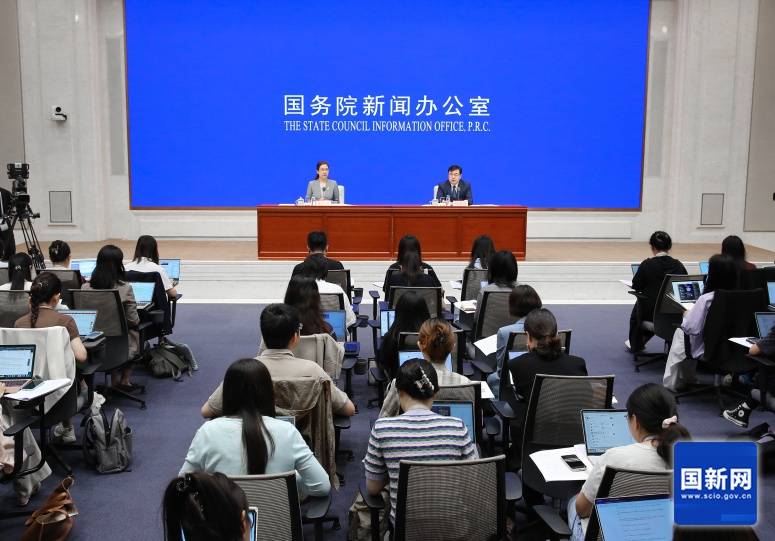
国家统计局:我国投资空间潜力依然巨大
Yang Shi Wang· 2025-08-15 04:18
Group 1 - Fixed asset investment in China grew by 1.6% year-on-year from January to July, showing a decline compared to the first half of the year, with actual growth around 4%-5% after adjusting for price factors [1] - Manufacturing investment increased significantly, with a year-on-year growth of 6.2%, driven by the construction of a manufacturing powerhouse and upgrades in traditional manufacturing [1][2] - Investment in high-end industries saw substantial growth, with aerospace and equipment manufacturing up by 33.9%, and information services by 32.8% [2] Group 2 - Key infrastructure investments grew rapidly, with water management investment increasing by 12.6% and information transmission investment by 8.3% [2] - Investment in clean energy continued to expand, with solar, wind, nuclear, and hydropower investments collectively growing by 21.9% [2] - The overall investment scale in China is expanding, with a focus on high-quality development and optimizing the investment environment to stimulate private investment [3]