装备制造

Search documents
抢抓“人工智能+制造”机遇 湖南省政协委员建言人工智能全链条赋能
Zhong Guo Xin Wen Wang· 2026-02-04 14:15
中新网长沙2月4日电(记者邓霞)"政府工作报告提出要持续用力打造'三个高地',推动高质量发展实现新 突破,为'十五五'时期湖南装备制造行业指明了前进方向。"正在召开的湖南省两会上,湖南省政协委 员、中联重科副总裁孙昌军建议,以人工智能赋能制造业全链条、全场景转型升级,推动湖南从"制造 大省"向"智造强省"跨越。 同时,湖南正前瞻布局具身智能等前沿赛道,支持智能体在感知、决策、执行能力上不断突破,逐步形 成"前沿科研突破+核心产品落地+产业生态协同"的发展格局,推动人形机器人在工业制造、医疗康养 等场景加速落地。在中联重科智能工厂,目前已有数十台人形机器人参与生产作业,有望培育形成企业 新的增长曲线。 如何推动"人工智能+制造"融合走深走实?孙昌军建议,要加强政策支持力度,强化应用场景牵引,鼓 励开发轻量化、低成本的AI解决方案,降低中小企业数智化门槛;鼓励龙头企业开放标杆场景,推动 成熟方案在产业链复制推广,培育本地人工智能链主企业和解决方案服务商,构建大中小企业融通、软 硬件协同的良好生态。 "同时要加大引才育才力度,缓解人才供给瓶颈。"孙昌军建议,依托"芙蓉计划"等人才政策,加大对人 工智能领域复合型人才 ...
城记 | 合肥晋级后,长三角“双万城市后备队”集结
Xin Hua Cai Jing· 2026-02-04 14:02
Core Viewpoint - The emergence of Hefei as a "Double Ten Thousand City" signifies its transition from a regional center to a nationally significant urban node, driven by steady economic growth and population influx [2][4]. Economic Growth - Hefei's GDP surpassed 1.4 trillion yuan, achieving an annual growth rate of 6.1%, marking a significant milestone as it crossed four hundred billion yuan thresholds [1][2]. - The city's GDP is projected to grow from 11.41 trillion yuan in 2021 to 14.21 trillion yuan by 2025, indicating a robust economic trajectory [2]. Population Dynamics - Hefei's resident population exceeded 10 million, with a net inflow of over 700,000 people, highlighting its attractiveness as a destination for migration [1][2]. - The city became the 18th in China to reach a population of over 10 million, reflecting its growing urban appeal [2]. Innovation and Industry - The continuous influx of talent has bolstered Hefei's technological innovation and industrial upgrading, with strategic emerging industries expected to grow by 16.6% by 2025 [3]. - Key industrial outputs include 1.371 million new energy vehicles, accounting for 8.3% of the national total, and significant increases in semiconductor and robotics production [3]. Regional Context - The Yangtze River Delta now hosts four "Double Ten Thousand Cities," including Shanghai, Suzhou, Hangzhou, and Hefei, showcasing the region's urban development leadership [4]. - The next potential "Double Ten Thousand City" is likely to emerge from the Yangtze River Delta, with cities like Wenzhou, Ningbo, and Nanjing being strong candidates due to their economic performance [4]. Wenzhou's Aspirations - Wenzhou has set a clear goal to achieve "Double Ten Thousand City" status by 2025, with a GDP target of 10213.9 billion yuan and a population of over 10 million [5][6]. - The city has experienced significant economic growth, with a 10.3% increase in industrial output and a strong focus on innovation and industrial transformation [6]. Long-term Development Strategy - Wenzhou is positioning itself for long-term growth with a strategic vision that includes enhancing its metropolitan area and establishing itself as a key regional center [7].
“10万亿俱乐部”扩容 “老四川”经济总量突破10万亿
Sou Hu Cai Jing· 2026-02-04 03:26
Core Viewpoint - The economic landscape of China is witnessing significant growth, with Shandong becoming the third province to surpass a GDP of 10 trillion yuan, alongside Guangdong and Jiangsu. Meanwhile, the Sichuan-Chongqing region is projected to exceed a combined GDP of 10 trillion yuan by 2025, marking a historic economic milestone for the area [1][2]. Group 1: Economic Milestones - Shandong has officially announced its GDP has surpassed 10 trillion yuan, joining Guangdong and Jiangsu as the only provinces to achieve this status [1]. - The Sichuan-Chongqing region is expected to surpass a combined GDP of 10 trillion yuan by 2025, with the Chengdu-Chongqing economic circle projected to exceed 9 trillion yuan [1][2]. Group 2: Historical Context - Historically, Sichuan and Chongqing were part of the same province until 1997 when Chongqing was designated as a direct-controlled municipality, leading to a division that impacted economic dynamics [2][4]. - The re-establishment of the Chengdu-Chongqing economic circle signifies a return to collaboration between the two regions, which were once unified [2][6]. Group 3: Economic Growth Drivers - In 2022, Sichuan's GDP reached 6.77 trillion yuan, while Chongqing's GDP was 3.37 trillion yuan, ranking them 5th and 16th among Chinese provinces, respectively [7]. - The regions have benefited from over 800 billion yuan in fiscal transfer payments, alongside national strategic support for the western development and significant infrastructure investments [9]. - Key industries contributing to this growth include electronics, advanced manufacturing, and distinctive consumer goods, with Sichuan and Chongqing forming several trillion-yuan industrial clusters [9][10]. Group 4: Industrial Competitiveness - Sichuan and Chongqing have established five national-level advanced manufacturing clusters, including electronics and biomedicine, which are crucial for their economic competitiveness [10][11]. - The regions are also focusing on innovation in emerging industries, such as new energy vehicles and advanced materials, to sustain long-term growth [11][12]. Group 5: Future Economic Positioning - By 2025, Sichuan is projected to maintain its position as the largest economy in Central and Western China, with a GDP of 6.77 trillion yuan, surpassing Henan's 6.66 trillion yuan [12][14]. - The competition between Sichuan and Henan will depend on industrial strengths and regional development strategies, with Sichuan emphasizing its electronic information and high-end equipment sectors [14][15].


各地2025年GDP数据出炉,GDP破万亿元城市扩容至29座——读懂“万亿城市”背后的发展密码
Sou Hu Cai Jing· 2026-02-04 00:39
Core Insights - The article discusses the recent economic achievements of various cities in China, highlighting the expansion of the "GDP trillion club" with 29 cities surpassing a GDP of 1 trillion yuan by 2025 [4][5][6]. Group 1: Economic Growth and Rankings - By 2025, 29 cities in China are projected to have a GDP exceeding 1 trillion yuan, with notable new members including Dalian and Wenzhou [5][6]. - Shanghai leads the list with a GDP of 56,708.71 billion yuan, followed by Beijing at 52,073.4 billion yuan, marking Beijing's first entry into the 5 trillion yuan club [6][7]. - Dalian and Wenzhou are highlighted as new entrants, with Dalian achieving a GDP of 10,002.1 billion yuan and Wenzhou reaching 10,213.9 billion yuan [6][7]. Group 2: Regional Distribution - Approximately one-third of the "GDP trillion cities" are located in the Yangtze River Delta, while the Guangdong-Hong Kong-Macau Greater Bay Area has four cities, including Shenzhen and Guangzhou [6][7]. - The Beijing-Tianjin-Hebei region has three cities, and the Chengdu-Chongqing economic circle includes two cities, indicating a diverse geographical distribution of economic power [6][7]. Group 3: Economic Growth Rates - Cities like Chengdu, Wuhan, and Shenzhen are experiencing robust growth rates, with Chengdu at 5.8%, Wuhan at 5.6%, and Shenzhen at 5.5%, all exceeding the national average [7][8]. - Beijing and Shanghai both recorded a growth rate of 5.4%, reflecting a strong economic performance among the top cities [7][8]. Group 4: Structural Optimization and Innovation - The article emphasizes the importance of structural optimization and innovation in driving economic growth, with Beijing focusing on high-value industries and technological advancements [9][10]. - Shenzhen's Nanshan District is noted for its innovation, achieving a GDP of over 1 trillion yuan, driven by a high number of patents and the presence of major tech companies [10][11]. Group 5: Industrial Strength and Investment - Dalian's industrial base is highlighted as a key factor in its economic growth, with significant increases in the manufacturing sector, particularly in high-tech industries [12][13]. - Wenzhou's economy is supported by a strong private sector, with substantial growth in strategic emerging industries and a focus on expanding its trade network [13][14]. Group 6: Regional Coordination and Development - The expansion of the "GDP trillion cities" reflects the importance of regional coordination and collaboration, with larger cities driving growth in surrounding areas [14]. - The article suggests that urban agglomerations can enhance economic development through resource sharing and collaborative efforts [14].

“理想之城·筑梦乳山”高校学子看家乡活动圆满完成
Xin Lang Cai Jing· 2026-02-03 16:43
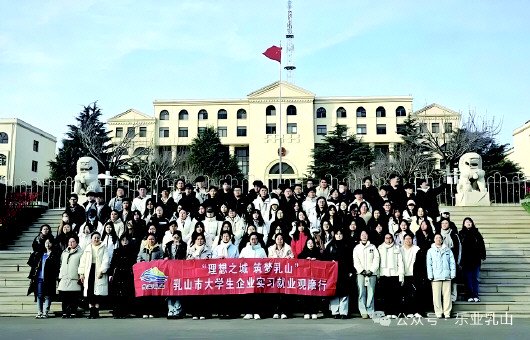
Group 1 - The event "Ideal City · Building Dreams in Rushan" was held on January 27, 2026, organized by Rushan Human Resources and Social Security Bureau, in collaboration with the Municipal Organization Department and the Youth League Committee, to deepen the construction of youth-friendly cities and support talent recruitment efforts [2] - Over 100 university students from across the country, who are originally from Rushan, participated in the event, which aimed to address their concerns regarding future employment and entrepreneurship [2] - A career guidance lecture was conducted by an expert from Shandong Foreign Affairs Vocational University, providing students with a clear "path map" for employment based on their different majors and aspirations, transforming the idea of returning home for work from a "possibility" to a "clear plan" [2] Group 2 - Following the event, students visited several local companies, including Dingcheng Fresh Seafood Processing Co., Ltd., Shandong Haomai Heavy Equipment Co., Ltd., Shandong Marine Cable Co., Ltd., and Huaxin Food Group Co., Ltd., where they observed various technologies and innovations [2] - The company visits allowed students to broaden their perspectives and engage in practical considerations regarding their future career choices [2] - The Rushan Human Resources and Social Security Bureau plans to continue organizing various forms of enterprise observation activities to encourage more young students to understand and settle in Rushan, contributing to the high-quality development of the region [3]
沈裕谋:湖南消费“烟火气”焕发新活力,对非贸易“高地”更上层楼丨直击厅长通道
Sou Hu Cai Jing· 2026-02-03 14:49
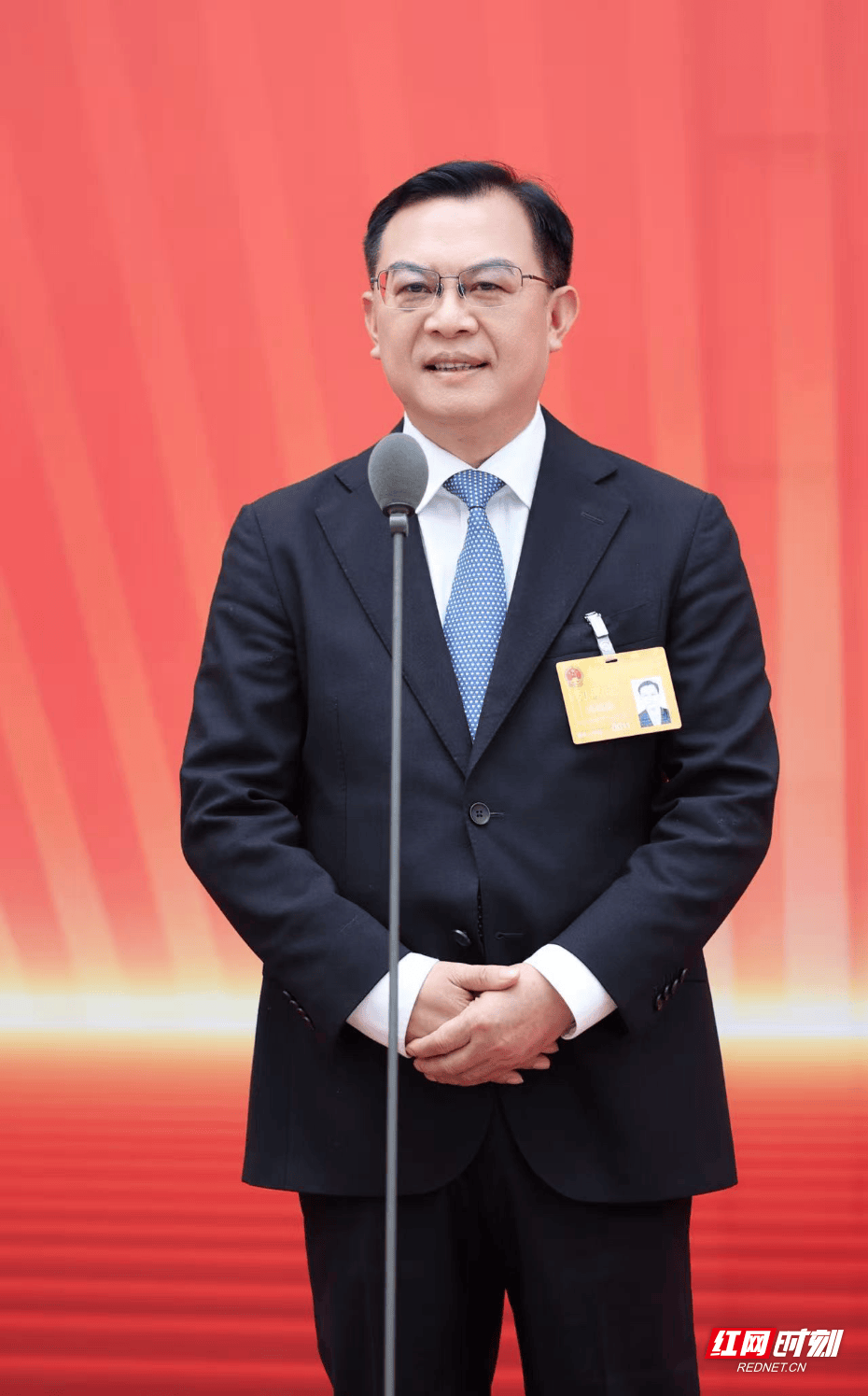
Core Insights - Hunan province is focusing on enhancing consumption and expanding openness to stimulate economic growth, with a target of surpassing 2.1 trillion yuan in total retail sales by 2025 [3][4] Consumption Enhancement - The shift in consumer behavior is moving from survival-based consumption to development and emotional consumption, where consumers are willing to pay for experiences and meaningful engagements [4] - Hunan plans to implement a "combination punch" to boost consumption by optimizing policies for old-for-new exchanges and enhancing service quality in key sectors such as transportation and entertainment [6] - The province aims to create vibrant consumption environments by revitalizing old neighborhoods and integrating historical narratives into modern commercial spaces, exemplified by the successful case of Changsha's Chaozong Street [6] Open Economy Development - Hunan has expanded its trade relationships to 235 countries and regions, with 212 Fortune 500 companies establishing a presence in the province [7] - The province is focusing on five major international trade corridors to enhance its openness, facilitating logistics and economic trade to support local enterprises in accessing international markets [8] - Hunan is also enhancing its open economy through innovative reforms and the establishment of various development zones, aiming to convert platform advantages into competitive strengths [8][9] Strategic Initiatives - The province is implementing a "six external linkages" mechanism to foster an open ecosystem, emphasizing the importance of genuine engagement and avoiding superficial metrics in economic development [9] - Hunan's business development strategy is designed to address current challenges while positioning for long-term growth, focusing on both demand-side and supply-side innovations to create a more engaging consumer experience [9]
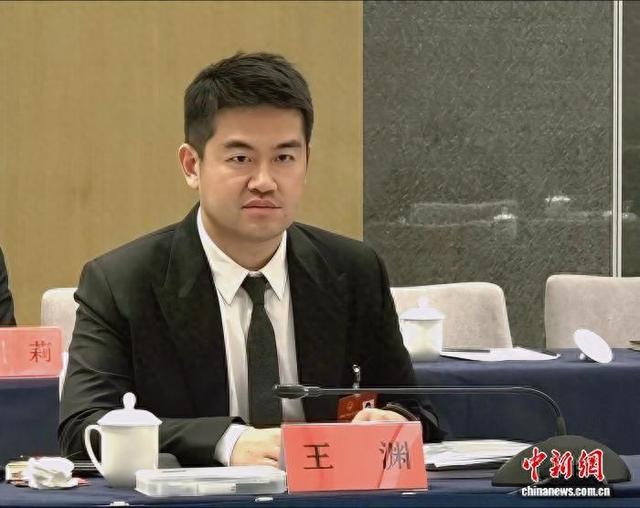
山西省人大代表王渊:支持临汾打造省级传统产业数字化赋能示范区
Xin Lang Cai Jing· 2026-02-03 11:31
Core Viewpoint - The proposal to establish Linfen City as a "provincial-level traditional industry digital empowerment demonstration zone" aims to enhance the integration of the real economy and digital economy, creating replicable and promotable regional transformation experiences [1][3]. Group 1: Digital Transformation in Linfen - Linfen City has made significant progress in digital transformation within traditional industries, particularly in coal, metallurgy, and equipment manufacturing, with companies like Huaxiang Group and Jinnan Steel leading the way [3]. - Huaxiang Group has implemented the "HBS Intelligent Manufacturing Transformation System," which has notably improved operational efficiency and profitability, establishing a differentiated core competitiveness [3]. - By 2025, Huaxiang Group expects to host over 500 visits from enterprises both within and outside the province, indicating a growing recognition of Linfen as a hub for intelligent manufacturing [3]. Group 2: Benefits of the Demonstration Zone - The establishment of the demonstration zone will allow Linfen to systematically summarize experiences in policy guidance, ecological construction, enterprise implementation, and effectiveness evaluation, creating a comprehensive methodology for digital empowerment in traditional industries [4]. - This initiative is expected to attract high-tech enterprises and talent in the digital field, further enhancing the local industry's high-quality development and providing a reference model for similar resource-based regions and old industrial bases across the country [4].

GDP增5.1%,陕西的稳态答案
Sou Hu Cai Jing· 2026-02-03 11:05
Group 1 - The core viewpoint is that Shaanxi's economic growth is transitioning from high-speed to stable mid-speed growth, with a focus on long-term stability rather than rapid expansion [3][4][5] - In 2025, Shaanxi's GDP is projected to grow by 5.1%, slightly above the national average of 5.0%, indicating a stable development trend [6][7] - The industrial sector remains a key stabilizer for Shaanxi's economy, with significant contributions from energy and manufacturing [8][16] Group 2 - Industrial value added in Shaanxi is expected to reach approximately 14,521.16 billion yuan, with a growth rate of 5.6%, and the scale of industrial value added is projected to grow by 7.3% [9][16] - The energy sector continues to play a crucial role, with coal production exceeding 800 million tons and natural gas output increasing by nearly 38% [9][17] - Manufacturing is shifting towards high value-added sectors, with notable growth in automotive and new energy industries [9][22] Group 3 - Shaanxi's fixed asset investment decreased by 2.8%, but industrial investment grew by 9.4%, with manufacturing investment increasing by 13.3% [12] - Private investment in Shaanxi rose by 4.6%, accounting for 42.2% of total investment, indicating confidence in long-term returns [12][35] - R&D intensity in Shaanxi is at 2.61%, the highest in Western China, reflecting a commitment to sustainable technological development [13] Group 4 - The total import and export value in Shaanxi reached a record high of 537.9 billion yuan, growing by 18.5%, which is significant given the global trade environment [28] - High-value products, particularly in the "new three items" (electric vehicles, lithium batteries, solar cells), are driving export growth, with lithium-ion battery exports increasing by 120% [32] - The development of logistics and trade routes, such as the regular operation of the China-Europe Railway Express, is enhancing Shaanxi's position as a trade hub [33]
山西省人大代表刘奇:建议设立全省技师考评中心 畅通技能人才晋升通道
Zhong Guo Xin Wen Wang· 2026-02-03 08:52
Core Viewpoint - The proposal to establish a provincial-level evaluation center for technicians and senior technicians in Shanxi aims to address the bottleneck in the promotion of skilled talent, enhancing the skill evaluation system and supporting the transition of the manufacturing industry towards intelligent manufacturing [1][2]. Group 1: Proposal Details - Liu Qi, a representative and leader of a national-level skills master studio, suggests the creation of a unified evaluation system for technicians across Shanxi, which currently lacks social evaluation institutions for skilled workers [1]. - The proposed implementation plan is "1+11", where a provincial evaluation headquarters will be established, and 11 local centers will be set up in key vocational colleges or large state-owned enterprises to cover local industries [1][2]. Group 2: Operational Mechanism - The evaluation system will separate training from assessment, with a standardized question bank and evaluation criteria developed for around 20 key occupations in sectors such as coal, equipment manufacturing, new energy, and digital industries [2]. - Liu emphasizes the need for strict supervision and management, proposing an annual inspection system and a "red-yellow card" management system to address issues like fraud and low standards [2]. Group 3: Expected Outcomes - The evaluation system is expected to be completed in approximately three years, with an annual evaluation capacity projected to reach 10,000 individuals, thereby stimulating the enthusiasm of technical workers to enhance their skills [2].
宁波精达:在德国,美国,日本等都有设立生产基地和销售公司
Mei Ri Jing Ji Xin Wen· 2026-02-03 08:47
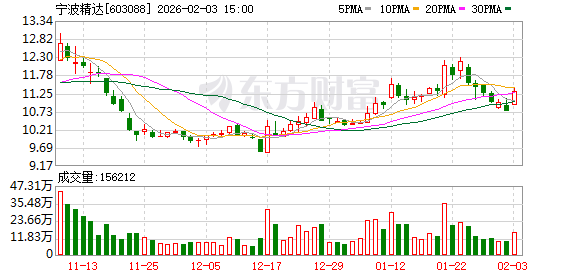
Group 1 - The company has emphasized the European market as a key sales region and has established strategic partnerships with numerous global brands, including companies from Italy, Japan, Germany, and China [2] - The company has production bases and sales companies in Germany, the United States, and Japan, indicating a strong international presence [2] - The export strategy for equipment is one of the important strategic goals that the company has actively implemented in recent years [2]