
茶饮

Search documents
新茶饮股集体上涨,平台外卖大战门店爆单
Di Yi Cai Jing· 2025-07-07 10:22
7月5日至7月6日,阿里、美团外卖大战白热化。 7月7日,茶饮股集体高开。截至发稿,茶百道(02555.HK)涨11%,报10.66港元;奈雪的茶(02150.HK)涨4%,报1.58港元;古茗(01364.HK)涨6%,报27.6港 元;沪上阿姨(02589.HK)涨6%,报141.3港元;蜜雪集团(02097.HK)涨6%,报543港元。 7月5日至7月6日,阿里、美团外卖大战白热化。两个平台分别发放外卖大额券,其中包括"满25减21""满25减20""满16减16"等多张无门槛的外卖券。7月5 日,"美团崩了"登上热搜。7月5日夜间,美团发布了战报,表示截至当日22时54分,美团即时零售当日订单已经突破了1.2亿单。其中,餐饮订单已超过1亿 单。 在此背景下,多家茶饮店迎来爆单。奈雪的茶方面数据显示,7月5日至7月6日周末两天外卖订单破峰值,两天突破100万单,环比增长50%,单店最高环比 增长230%。7月7日下午,第一财经记者在上海市浦东新区一家蜜雪冰城门口看见外卖小哥不断进出,送出一单又一单。不过店员表示,外卖生意已经不如 刚过去的周末,但比上个工作日好些。 华西证券在一份公开研报中指出,"外卖大 ...

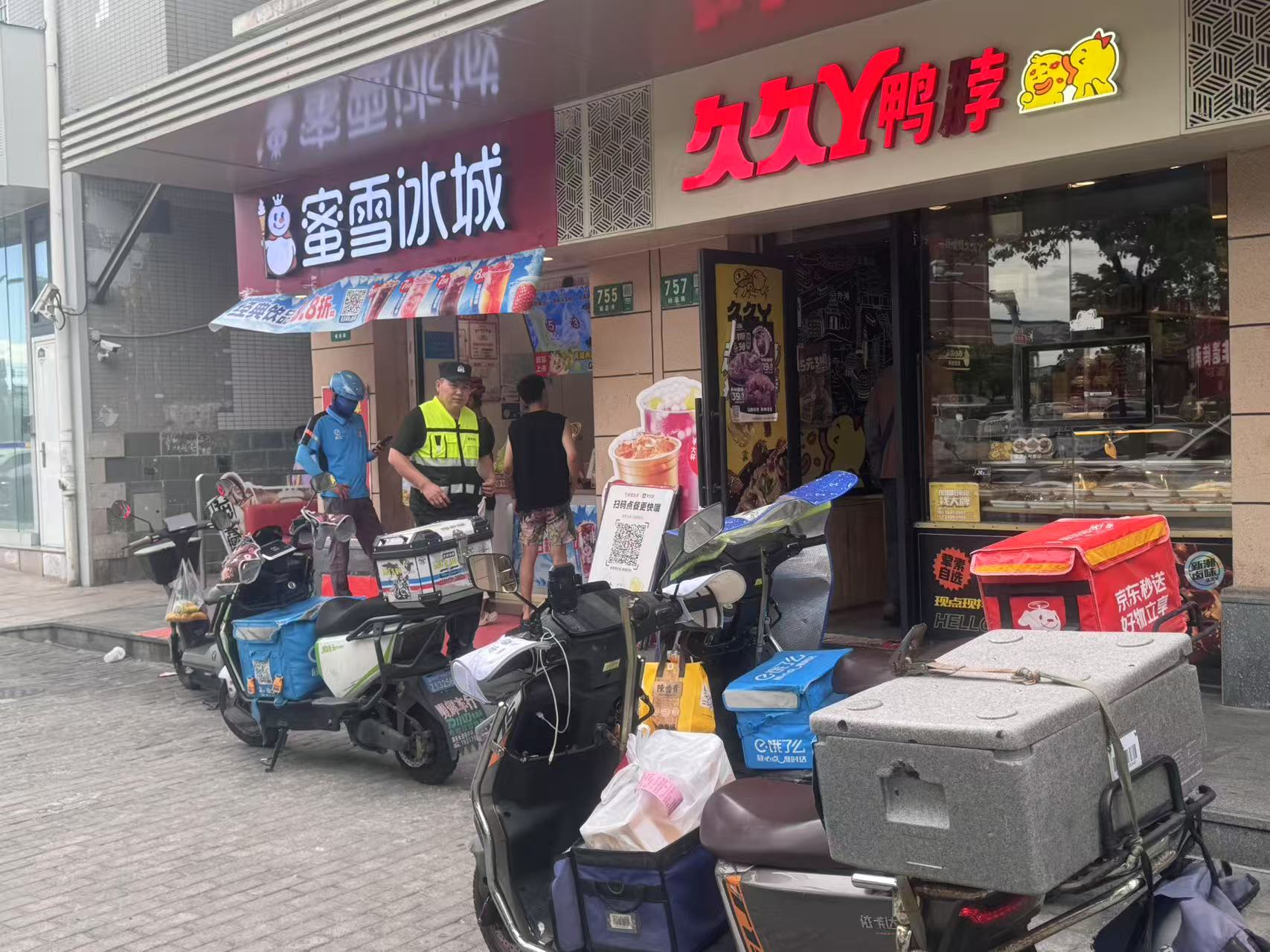
受益于“外卖大战”,新茶饮股价普涨
Guan Cha Zhe Wang· 2025-07-07 10:18
Group 1: New Tea Beverage Market - New tea beverage stocks surged on July 7, with significant increases in share prices for companies such as Cha Bai Dao (up 11.04%), Gu Ming (up 6.15%), and Mi Xue Group (up 5.74%) due to the competitive "takeaway war" [1] - The "takeaway war" has led to a surge in orders, with platforms like Taobao and Ele.me reporting over 80 million daily orders, including more than 13 million non-food orders, and over 200 million active users [1] - Huaxin Securities reported that the new tea beverage sector is benefiting from the explosive growth in takeaway services and seasonal demand, recommending investment opportunities in this sector [1] Group 2: Food Safety Issues - Mi Xue Bing Cheng faced a food safety scandal in Hong Kong, resulting in the closure of its Sha Tin store after high levels of bacteria were found in a frozen dessert sample [2] - The store has since been taken over by another tea brand, Hui Cha, which is undergoing renovations [2] - Mi Xue Group's investment in Hui Cha is now valued at 6.59 million RMB, a decrease of 37% from 2023 [2] Group 3: Stock Liquidity Enhancement - Hu Shang A Yi announced plans to implement a full circulation plan for H-shares, converting up to approximately 35.26 million unlisted domestic shares into H-shares, which represents about 33.51% of the company's issued share capital [3] - This initiative aims to enhance the liquidity of the shares and requires approval from the China Securities Regulatory Commission and the Hong Kong Stock Exchange [3] Group 4: International Expansion - Mo Suan Nai opened its first store in North America, located in Carrefour Laval shopping center in Montreal, Canada [4] - The brand is accelerating its international expansion, with plans for additional stores in Taiwan, South Korea, New York, Seattle, Toronto, and Thailand by the end of 2025 [4] Group 5: Rising Matcha Prices - The price of matcha raw materials has surged by 170% due to a significant reduction in production caused by record high temperatures last summer in Japan [5] - The auction price for matcha in Kyoto reached 8,235 yen per kilogram (approximately 408 RMB) in May, marking a substantial year-on-year increase [5] - The global demand for matcha is rising, and industry experts anticipate that prices will continue to climb after reaching new highs [5]

茶百道(02555)取得韩国特许经营资质,在韩开店步伐将进一步提速
智通财经网· 2025-07-07 09:48
Group 1 - The core point of the article is that Cha Bai Dao has officially obtained franchise qualifications in South Korea, enabling it to accelerate its store expansion in the market [1][2] - As of June this year, Cha Bai Dao has opened over 10 stores in South Korea, covering key business districts such as Hongdae and Gangnam, making it the largest Chinese tea brand in the Korean market [1][2] - The company has established a robust supply chain and distribution system, achieving daily delivery of raw materials to stores in the Seoul area [1] Group 2 - The local franchisees have reported that the Cha Bai Dao team is highly localized and professional in terms of recruitment and site selection, with a preparation period of about three to four weeks from securing a store to opening [2] - Cha Bai Dao has gained significant popularity in South Korea, especially after being the only Chinese tea brand invited to enter Everland, leveraging the Panda IP to enhance brand influence [2] - The company is currently preparing over 10 new stores in South Korea, with plans to accelerate its store opening pace following the approval of its franchise qualifications [2][3] Group 3 - Cha Bai Dao provides a comprehensive opening training system and a supervisory system to support franchisees in achieving sustained profitability [2] - According to Huaxin Securities, Cha Bai Dao has entered eight countries and regions with its overseas stores, which are now generally profitable, meeting the investment return expectations of franchise owners [2] - The company aims to accelerate its overseas store opening speed over the next three years, potentially forming a dual-driven strategic layout of "domestic + overseas" [2]

外卖大战来袭,骑手1天赚1700
盐财经· 2025-07-07 09:23
值班编辑 | 江江 本文转载自每日经济新闻 刚刚,过去的周末,平台外卖大战再次拉开帷幕。 7月7日一早,淘宝闪购、饿了么联合宣布,日订单数超过8000万,其中非餐饮订单超过1300万,淘宝闪 购日活跃用户超过2亿。从5月4日的超1000万订单,攀升至现在的日订单超8000万,距离淘宝闪购正式 上线仅有两个月。 淘宝闪购、饿了么称,接下来,将会在12个月直补消费者及商家500亿元,有效带动消费内需,为商家 创造生意增量,并充分做大市场容量,破除"内卷"式竞争。 视觉 | 诺言 "太疯狂了,全国人民都在熬夜点外卖。喝不完,根本喝不完。"不少网友感叹。与之相呼应的是奶茶店 的店员们,直呼订单"做不完、根本做不完!" 平台上演外卖大战 7月5日晚间,阿里、美团上演了外卖大战! 两大平台放出了大量且大额的外卖红包券,其中包括"满25减24""满15减15""满22减18"等多张无门槛外 卖券。淘宝闪购平台推出了"满18减18"的新人专享红包,美团也联合不同奶茶饮品品牌推出了"0元喝奶 茶"的平台福利活动。 7月5日的淘宝闪购补贴页面 两家开启的平台大战让消费者开启了周末的"饮品狂欢"。随着优惠券发放,单量剧增,大家涌入 ...

外卖补贴大战带动茶饮股暴涨!恒生科技指数为何难敌 “内卷”冲击波?
Mei Ri Jing Ji Xin Wen· 2025-07-07 09:08
7月7日,港股市场表现低迷,恒生指数、恒生科技指数均弱势调整。 业内人士指出,上个周末,阿里与美团两大外卖平台展开史上最大规模补贴大战,使得茶饮赛道成为最大受益者。消息面上,两大平台当天同步放出"满25 减21""满16减16""满18减18""25减20"等无门槛大额券。不到一天时间,美团即时零售当日订单已经突破了1.2亿单,其中,餐饮订单已超过1亿单。 国金证券在最新发布的研报中指出,外卖补贴升级的背景下,咖啡茶饮的外卖订单预计会大幅上升。此外,夏季是茶饮旺季,预估瑞幸咖啡、蜜雪、茶百道 等品牌的同店数据持续高涨。 截至7月7日收盘,蜜雪集团上涨4.77%,茶百道涨超10%,古茗涨近6%,奈雪的茶和沪上阿姨均涨超5%。 外卖平台股价承压 然而,今年备受关注的茶饮赛道再次爆发,茶百道、奈雪的茶、古茗等多只个股一度涨超10%,蜜雪集团也大涨5%。 消息面来看,茶饮赛道走强的背后,是几大外卖平台突然打响的补贴"大战"。 茶饮赛道股全线爆发 今早,逆势走强的茶饮赛道,成为港股市场上一抹亮色。其中,茶百道高开15%;古茗高开5%后,冲高至13%,奈雪的茶也高开近10%。此外,5月份上市 的沪上阿姨也大涨近6%。而今 ...


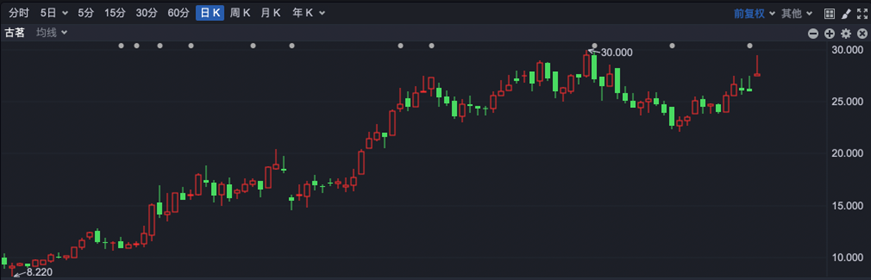
港股收盘(07.07) | 恒指收跌0.12% 外卖大战带飞茶饮股 稳定币概念再度发酵
智通财经网· 2025-07-07 08:55
Market Overview - The US 90-day exemption period is ending this week, leading to ongoing market focus on US tariff negotiations [1] - The Hang Seng Index closed down 0.12% at 23,887.83 points, with a total turnover of HKD 193.79 billion [1] - The Hang Seng Tech Index rose by 0.25% to 5,229.56 points, indicating mixed performance across indices [1] Blue Chip Performance - Sands China (01928) led blue-chip stocks, rising 3.85% to HKD 18.32, contributing 2.58 points to the Hang Seng Index [2] - Macau's June gaming revenue increased by 19% year-on-year to MOP 21.1 billion, exceeding market expectations [2] - Other notable blue-chip movements included China Resources Land (01109) up 3.45% and Ideal Automotive (02015) up 2.8% [2] Sector Highlights Stablecoin Sector - The stablecoin concept is gaining traction, with companies like Guotai Junan International (01788) rising 10.77% [3] - The Hong Kong Stablecoin Regulation is set to take effect on August 1, with limited licenses expected to be issued [3] Beverage Sector - Tea beverage stocks surged, with Cha Bai Dao (02555) up 11.04% amid a competitive delivery market [4] - The delivery battle between Alibaba and Meituan has significantly boosted tea beverage consumption [4] Real Estate Sector - The housing market is under scrutiny, with a focus on stabilizing expectations and activating demand [5] - Analysts suggest that the third quarter will be crucial for policy direction affecting the real estate market [5] Gaming Sector - Gaming stocks continued to rise, with MGM China (02282) up 2.38% and overall positive sentiment in the Macau gaming market [6] - Morgan Stanley forecasts a 10% year-on-year increase in Macau's July gaming revenue [6] Power Sector - Power stocks saw a general increase, driven by record electricity demand due to high temperatures [7] - The maximum national electricity load reached 14.65 billion kilowatts, marking a significant year-on-year increase [7] Gold Sector - Gold stocks faced pressure, with Shandong Gold (01787) down 5.96% as gold prices fell below USD 3,310 per ounce [7] - The decline in gold prices is attributed to reduced expectations for US interest rate cuts [7] Notable Stock Movements - H&H International Holdings (01112) issued a profit warning, falling 7.14% [8] - Jihong Co. (02603) saw a significant rise of 11.62%, with projected net profit growth of 97.25% to 108.21% for the first half of 2025 [9] - Lao Pu Gold (06181) reached a new high, reflecting strong growth potential compared to industry peers [10] - FWD Group (01828) debuted on the market, closing up 1.05% with a net fundraising of approximately HKD 29.53 billion [11]


恒生指数收盘跌0.12%,茶饮股大涨
news flash· 2025-07-07 08:14
Group 1 - The Hang Seng Technology Index increased by 0.25% [1] - Tea beverage stocks experienced significant gains, with Cha Bai Dao rising approximately 11%, Gu Ming up about 6%, Hu Shang A Yi increasing around 6%, and Mi Xue Group also up about 6% [1] - Dairy powder stocks declined, with China Feihe falling approximately 17% [1] Group 2 - Most technology stocks saw a decrease, with GDS Holdings down about 3% and Meituan declining by approximately 1% [1]
突发大利好!直线涨停!
中国基金报· 2025-07-07 08:02
Market Overview - The A-share market experienced fluctuations, with the Shanghai Composite Index closing up 0.02% and the ChiNext Index down over 1% [3][4] - A total of 3,255 stocks rose, while 1,978 stocks fell, with a total trading volume of 12,270.67 billion CNY [4][5] Electric Power Sector - Electric power stocks surged against the market trend, with companies like ShaoNeng Co., China Huadian Corp, and Shimao Energy hitting the daily limit [5][6] - The increase in electricity demand was driven by high temperatures across multiple regions, leading to a record high in national electricity load on July 4 [5] Charging Pile Sector - The charging pile sector saw significant gains, with companies like Aotexun hitting the daily limit [12][13] - A notice from the National Development and Reform Commission emphasized the need for scientific planning and construction of high-power charging facilities, aiming for over 100,000 such facilities by the end of 2027 [15][17] - The notice also highlighted the integration of charging facilities with local economic development and the importance of smart management and technology upgrades in the charging infrastructure [16][17] Real Estate Sector - Real estate stocks experienced a rally, with companies like Yuhua Development and Shahe Co. reaching their daily limits [8] - The Ministry of Housing and Urban-Rural Development called for accelerated construction of safe, comfortable, and green housing to stabilize market expectations and activate demand [8] Cross-Border Payment and Stablecoin Sector - Stocks related to cross-border payments and stablecoins showed volatility, with companies like Zhongyi Technology and Jingbeifang hitting the daily limit [7]



“外卖铲子股”,301501,爆发
新华网财经· 2025-07-07 04:51
Core Viewpoint - The article discusses the recent market trends driven by the competition between Alibaba and Meituan in the food delivery sector, as well as the strong performance of tea beverage stocks and football-related stocks, highlighting potential investment opportunities in these areas [5][8]. Group 1: Market Trends - The "takeaway war" between Alibaba and Meituan has sparked significant market interest, with both companies offering substantial discounts and incentives to consumers [5]. - The tea beverage sector has seen a surge in stock prices, with companies like Gu Ming and Nai Xue's Tea experiencing notable gains [5]. - The overall consumer sector has rebounded, with strong performances in real estate and financial sectors, while the TMT sector has faced a pullback [5][10]. Group 2: Company Performance - Hengxin Life (301501), known as the "takeaway shovel stock," saw its shares rise over 13%, benefiting from the increased demand for disposable food packaging [5][8]. - Hengxin Life specializes in biodegradable plastic dining utensils and has established partnerships with major brands like Heytea and Starbucks [7]. - In 2024, Hengxin Life reported a revenue of 1.594 billion yuan, a year-on-year increase of 11.86%, and a net profit of 220 million yuan, up 2.82% [8]. Group 3: Financial Sector Activity - The financial sector, particularly in multi-financial and cross-border payment services, has shown strong performance, with significant gains in stocks like Huafeng Super Fiber and Xinya Data [10][12]. - The People's Bank of China has released a draft for the rules governing the Cross-border Interbank Payment System (CIPS), which aims to enhance the operational framework for cross-border payments [12][13].

港股午评:恒生指数跌0.45% 恒生科技指数跌0.15%
news flash· 2025-07-07 04:02
港股午间收盘,恒生指数跌0.45%,恒生科技指数跌0.15%。美团跌超2%。港股茶饮股早盘活跃,茶百 道涨超13%,古茗涨超7%。 ...