
医药

Search documents
【财经早报】7000亿元!央行,今日操作
Sou Hu Cai Jing· 2025-11-05 00:10
Group 1 - The People's Bank of China will conduct a 700 billion yuan reverse repurchase operation today, with a term of 3 months (91 days) [3] - The China Securities Regulatory Commission emphasizes risk prevention, strong regulation, and promoting high-quality development in the capital market, with plans for more open measures [4] - The National Healthcare Security Administration announced that the negotiation for the 2025 National Basic Medical Insurance Drug List has concluded, with a new list to be published in December and implemented from January 1, 2026 [4] Group 2 - True Love Home announced a potential change in control, leading to a suspension of trading from November 5, with the suspension expected to last no more than two trading days [8] - Shida Group plans to acquire 95% of Fujian Shuchan Ming Shang Technology Co., with an estimated transaction price of 185 million yuan, aimed at enhancing its main business revenue and market competitiveness [8] - Fuyao Glass has completed the registration of a change in its legal representative, with no other changes to its business license [10]
新华财经早报:11月5日
Zhong Guo Jin Rong Xin Xi Wang· 2025-11-04 23:51
Group 1 - The Ministry of Commerce spokesperson expressed hope that the Netherlands would adopt a responsible attitude towards China regarding the ASML semiconductor issue, emphasizing the importance of maintaining stable supply chains and constructive solutions [3] - Goldman Sachs CEO expressed optimism about China's economic prospects during a meeting with Chinese officials, highlighting the importance of implementing agreements reached by the leaders of China and the U.S. for stable bilateral economic relations [3] - The National Healthcare Security Administration announced negotiations for the 2025 National Basic Medical Insurance Drug List, with participation from 120 domestic and foreign companies, aiming for a new drug list to be published in December [3] Group 2 - The People's Bank of China reported a net injection of 200 billion yuan through government bond transactions and 4 trillion yuan through reverse repos in October, marking the resumption of bond trading since January [3] - The 138th Canton Fair concluded with over 310,000 overseas buyers attending, a 7.5% increase from the previous session, with significant growth in buyers from the EU, Middle East, U.S., and Brazil [3] - The State Administration for Market Regulation released a national standard for the transformation of scientific and technological achievements into standards, aiming to bridge the gap between laboratory results and production [3] Group 3 - The China Securities Regulatory Commission announced plans to deepen cooperation between mainland and Hong Kong capital markets, including expanding the scope of eligible stocks for trading [3] - Jilin Chemical Fiber announced a capital increase from 809 million yuan to 2.508 billion yuan, with new shareholders including government entities, while the controlling shareholder remains unchanged [3] - Baose shares clarified its involvement in a specific project, stating it only delivered part of the contract and is not involved in other related contracts [3]


盘前必读丨第八届进博会今日开幕;美股全线下挫纳指跌超2%
Di Yi Cai Jing· 2025-11-04 23:26
Market Overview - The U.S. stock market experienced significant declines, with the S&P 500 and Nasdaq recording their largest single-day drops since October 10. The Dow Jones fell by 0.53%, the S&P 500 dropped by 1.17%, and the Nasdaq decreased by 2.04% [4] - Major technology stocks mostly declined, with notable drops including Nvidia down 3.96% and Tesla down 5.15%. Only Apple saw a slight increase of 0.37% [4] - Cryptocurrency assets faced pressure, with Ethereum falling below $3100, a drop of 14%, and Bitcoin decreasing over 7%, nearing the $99,000 mark [4] Commodity Market - International oil prices fell, with WTI crude oil futures down by $0.49 to $60.56 per barrel, a decrease of 0.80%. Brent crude oil also fell by $0.45 to $64.44 per barrel, down 0.69% [5] - COMEX gold futures dropped by $53.50, settling at $3960.5 per ounce, reflecting a decline of 1.33% [5] Company News - Xpeng Motors held a technology day event, showcasing advancements and future plans [2] - Meituan has repurchased A-shares totaling 9.575 billion yuan [7] - Standard Shares indicated that its stock price may be subject to market sentiment risks [7] - ST Lingnan is facing legal issues related to collusion in bidding [7] Policy and Economic Outlook - Huachuang Securities predicts a policy vacuum in the next 1-2 months, suggesting potential market fluctuations [8] - Dongwu Securities remains optimistic about the market's ability to challenge the 4000-point mark, while cautioning about individual stock movements [8] - Huashang Securities maintains a steady outlook despite short-term market fluctuations, citing improvements in the fundamental market conditions and policy support for long-term capital inflows [8]

上海宣泰医药科技股份有限公司关于持股5%以上股东减持计划时间届满暨减持股份结果公告
Zhong Guo Zheng Quan Bao - Zhong Zheng Wang· 2025-11-04 22:55
Group 1 - The major shareholder, Nanjing Qihe Venture Capital Partnership, held 25,798,000 shares of Shanghai Xuantai Pharmaceutical Technology Co., Ltd., accounting for 5.6907% of the total share capital before the reduction plan [1] - The reduction plan announced on July 15, 2025, indicated that the shareholder planned to reduce up to 4,500,000 shares through centralized bidding and up to 2,500,000 shares through block trading between August 5, 2025, and November 4, 2025 [1] - As of November 4, 2025, the shareholder reduced 3,218,000 shares through centralized bidding, representing 0.7098% of the current total share capital [2] Group 2 - The reduction plan was fully implemented as the actual reduction met the minimum reduction quantity disclosed earlier [3] - There were no early terminations of the reduction plan, confirming that the plan proceeded as scheduled [3]

11/4财经夜宵:得知基金净值排名及选基策略,赶紧告知大家
Sou Hu Cai Jing· 2025-11-04 16:10
Core Insights - The article provides a ranking of mutual funds based on their net asset value updates, highlighting the top-performing and bottom-performing funds in the market [2][3][4]. Fund Performance Summary - The top 10 funds with the highest net value growth as of November 4, 2025, include: 1. Tianhong Zhongzheng Bank ETF: Unit Net Value 1.5043, Cumulative Net Value 1.5043, with a growth of 0.03 2. Zhongzheng Bank ETF: Unit Net Value 1.4720, Cumulative Net Value 1.6680, with a growth of 0.02 3. Huaxia Zhongzheng Bank ETF: Unit Net Value 1.7798, Cumulative Net Value 1.7798, with a growth of 0.03 4. Fuguo Zhongzheng 800 Bank ETF: Unit Net Value 1.3649, Cumulative Net Value 1.3649, with a growth of 0.02 5. Huabao Zhongzheng Bank ETF: Unit Net Value 0.8391, Cumulative Net Value 1.6782, with a growth of 0.01 6. Nanfang Zhongzheng Bank ETF: Unit Net Value 1.6954, Cumulative Net Value 1.8624, with a growth of 0.03 7. Hu'an Zhongzheng Bank ETF: Unit Net Value 1.4270, Cumulative Net Value 1.4270, with a growth of 0.02 8. Penghua Zhongzheng Bank ETF: Unit Net Value 1.7185, Cumulative Net Value 1.7185, with a growth of 0.03 9. Yifangda Zhongzheng Bank ETF: Unit Net Value 1.3836, Cumulative Net Value 1.3836, with a growth of 0.02 10. Dongcai Zhongzheng Bank Index C: Unit Net Value 1.3390, Cumulative Net Value 1.3390, with a growth of 0.02 [2][4]. - The bottom 10 funds with the lowest net value growth include: 1. Debang High-end Equipment Mixed Initiation C: Unit Net Value 1.0852, with a decline of -0.06 2. Debang High-end Equipment Mixed Initiation A: Unit Net Value 1.0869, with a decline of -0.06 3. Furong Fuxin Mixed C: Unit Net Value 2.2756, with a decline of -0.12 4. Furong Fuxin Mixed A: Unit Net Value 2.3155, with a decline of -0.13 5. Great Wall Emerging Industry Mixed A: Unit Net Value 2.4973, with a decline of -0.12 6. Great Wall Emerging Industry Mixed C: Unit Net Value 2.4651, with a decline of -0.12 7. AVIC Trend Navigation Mixed Initiation A: Unit Net Value 2.3952, with a decline of -0.11 8. AVIC Trend Navigation Mixed Initiation C: Unit Net Value 2.3750, with a decline of -0.11 9. Minsheng Jianyin Frontier Technology Mixed: Unit Net Value 1.0935, with a decline of -0.05 10. Qianhai Kaiyuan Jiaxin Mixed C: Unit Net Value 2.1170, with a decline of -0.09 [4][6]. Market Analysis - The Shanghai Composite Index experienced a pullback after a rise, closing slightly lower, while the ChiNext Index showed a similar trend. The total trading volume reached 1.93 trillion, with a market breadth of 1,630 gainers to 3,650 losers. The banking sector led the market with a rise of over 2%, while the non-ferrous metals and pharmaceutical sectors saw declines of over 2% [6]. Fund Holdings - The Tianhong Zhongzheng Bank ETF has a concentrated holding of 64.57% in its top ten stocks, with significant daily gains from major banks such as: - China Merchants Bank: 2.92% increase - Industrial Bank: 2.82% increase - Agricultural Bank: 1.75% increase - Shanghai Bank: 3.20% increase - The fund's total assets amount to 5.844 billion [7]. - Conversely, the Debang High-end Equipment Mixed Initiation C fund has a holding concentration of 60.76%, with significant declines in its top holdings, including: - Yinlun Co.: -6.07% decrease - Zhejiang Songtai: -6.34% decrease - Hanwei Technology: -6.70% decrease - This fund's total assets are 1.169 billion [7].
金融工程日报:沪指缩量收跌,银行股逆势攀升-20251104
Guoxin Securities· 2025-11-04 13:35
- The report does not contain any quantitative models or factors for analysis
这家地产链公司是否可以困境反转?| 1104 张博划重点
Hu Xiu· 2025-11-04 13:17
Market Overview - The market is experiencing a pullback with trading volume dropping below 2 trillion, led by declines in the ChiNext and Shenzhen indices, while the Shanghai Composite Index is supported by dividend sectors [1] - The ChiNext index has broken below the 30-day moving average, indicating a bearish trend, while the Shanghai Composite Index is currently supported by the 20-day moving average, suggesting a potential range-bound structure in the short term [1] Investment Insights - Goldman Sachs and Morgan Stanley have warned investors of a potential market pullback over the next two years after a strong rally earlier this year [4] - Both firms highlight that Asia is expected to become a focal point in global markets, with continued interest in China from global capital allocators [6] - Infrastructure construction is identified as a key investment theme for the coming years [6] Sector Analysis - There is a significant concentration of institutional funds in the TMT (Technology, Media, and Telecommunications) sector, creating a "historic level of consensus" among investors [7] - The high concentration of holdings in the TMT sector increases vulnerability to negative news, as stock prices have already factored in optimistic expectations [7] - Public funds are currently at high stock positions, and the TMT sector's performance relies on additional capital inflows from other sources, as the capacity for public funds to increase their positions is limited [9]
杰特贝林与百洋医药强强联合,深度布局中国血液制品黄金赛道
Da Zhong Ri Bao· 2025-11-04 12:03
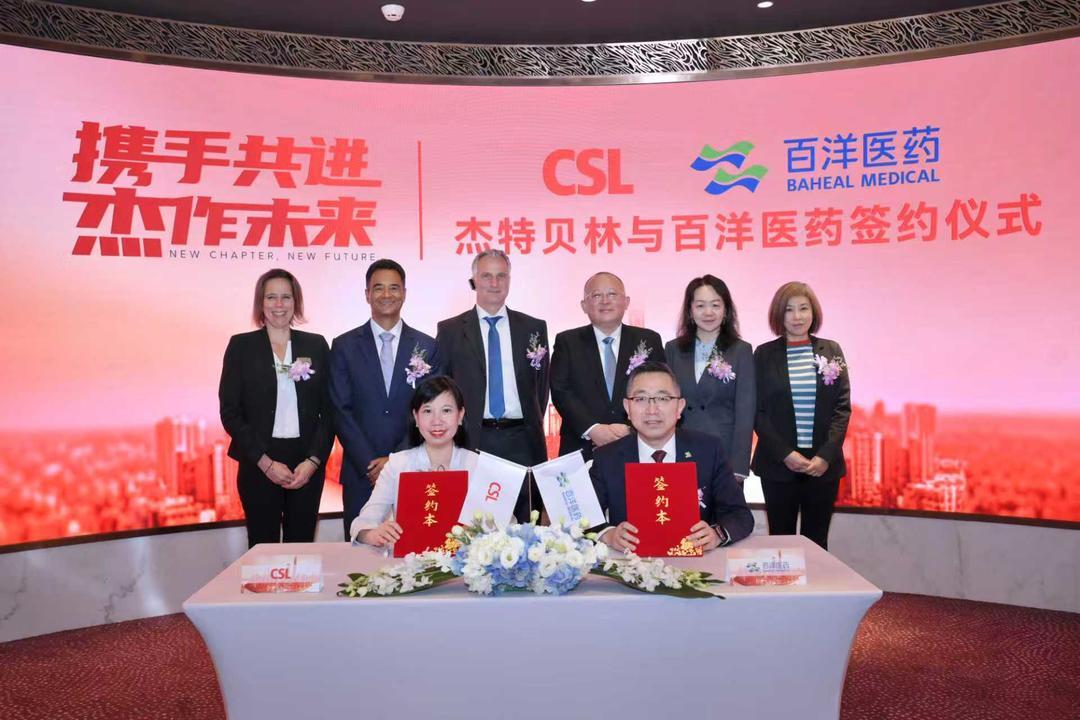
Core Viewpoint - Qingdao Baiyang Pharmaceutical Co., Ltd. has signed a deepening cooperation agreement with global biotechnology leader CSL to exclusively promote, sell, and distribute CSL's human albumin product, Ambu, in specific markets in China, excluding Hong Kong, Macau, and Taiwan [1][3] Group 1: Market Opportunity - The human albumin market in China is the largest therapeutic drug market, exceeding 30 billion yuan, and has a long-standing import-dominated structure [3] - The market for human albumin is expected to grow to 57 billion yuan by 2030, with a compound annual growth rate (CAGR) of 6.0% from 2025 to 2030 [3] - In 2024, the import of human albumin products in China is projected to increase by approximately 17%, accounting for nearly 70% of the market [3] Group 2: Product and Collaboration Benefits - CSL's human albumin product, Ambu, is designed for the Chinese market and can be stored at temperatures not exceeding 30°C, reducing reliance on complex cold chain logistics and improving drug accessibility [4] - The collaboration aims to create strong synergies in the liver disease field, addressing the growing demand for albumin as a key treatment for severe complications like cirrhotic ascites [4][5] - Both companies aim to enhance the availability of albumin in China, improving the quality of life for critically ill patients and contributing to the "Healthy China 2030" initiative [5][7] Group 3: Strategic Vision - The partnership is expected to drive the standardization, specialization, and high-quality development of the blood products market in China [7] - Baiyang Pharmaceutical is committed to enriching its product matrix and advancing high-quality pharmaceutical health products into clinical applications [6] - CSL has been a key player in the Chinese market for nearly 40 years, with its products accounting for nearly 24% of the market share [3]
新里程:11月4日召开董事会会议
Mei Ri Jing Ji Xin Wen· 2025-11-04 10:34
Group 1 - The core point of the article highlights that New Mileage (SZ 002219) held its 36th meeting of the sixth board of directors on November 4, 2025, to discuss the proposal for applying for credit limits from banks [1] - For the first half of 2025, New Mileage's revenue composition shows that the medical industry accounts for 86.85%, while the pharmaceutical industry accounts for 13.15% [1] - As of the report, New Mileage has a market capitalization of 7.7 billion yuan [1] Group 2 - The article reports a significant increase in overseas orders for a certain industry, with a surge of 246%, covering over 50 countries and regions [1] - Entrepreneurs have raised concerns about some companies selling products at a loss, warning of the potential for vicious competition extending to overseas markets [1]

森萱医药(920946):2025Q3业绩修复,新产品已形成商业化订单
Jianghai Securities· 2025-11-04 10:33
Investment Rating - The investment rating for the company is upgraded to "Accumulate" [1][5] Core Views - The company has shown a recovery in performance with revenue and profit growth. For the first three quarters of 2025, the company achieved revenue of 411 million yuan, a year-on-year increase of 5.90%, and a net profit attributable to the parent company of 104 million yuan, up 13.45% year-on-year [3][5] - The company focuses on a multi-dimensional product layout and market expansion, primarily leading with APIs while extending into new materials and ensuring a solid reserve of intermediates [5][6] - The company plans to register 1-2 new API varieties annually and is actively pursuing registrations for both old and new products in high-end regulatory markets in Europe and the United States [5][6] Financial Performance Summary - For the first three quarters of 2025, the company reported a gross margin of 47.15%, an increase of 3.61 percentage points year-on-year, and a net margin of 26.31%, up 2.20 percentage points year-on-year [5] - The company’s Q3 revenue was 150 million yuan, representing a 29.45% increase, with a net profit of 35.73 million yuan, up 64.79% year-on-year [5] - The company’s financial forecasts for 2025-2027 indicate expected revenues of 604.89 million yuan, 662.66 million yuan, and 765.83 million yuan, with corresponding net profits of 147.17 million yuan, 170.59 million yuan, and 201.32 million yuan [6][8] Market Position and Strategy - The company is enhancing its competitiveness by extending its industrial chain and exploring emerging markets, aiming for a transition towards proprietary APIs [5][6] - The company has successfully formed commercial orders for new products, indicating a robust pipeline and commitment to innovation [5][6] - The company’s first major shareholder is Jinghua Pharmaceutical Group Co., Ltd., holding a 72.31% stake, which provides a strong backing for its strategic initiatives [1][5]