
低空经济

Search documents
成都:1-7月新能源汽车产量增长326.2%|首席资讯日报
首席商业评论· 2025-08-23 04:48
Group 1 - Chengdu's new energy vehicle production increased by 326.2% from January to July this year, with overall industrial added value growing by 8.0% and fixed asset investment rising by 4.5% [2] - The automotive manufacturing industry in Chengdu saw a growth of 22.9%, while the production of lithium-ion batteries increased by 41.4% [2] Group 2 - Elon Musk attempted to persuade Mark Zuckerberg to participate in an informal acquisition offer for OpenAI, but Zuckerberg and Meta did not sign any letter of intent [3] - OpenAI's board formally rejected Musk's acquisition offer in February [3] Group 3 - During the "14th Five-Year Plan" period, national market regulatory authorities handled 89.03 million complaints and recovered economic losses of 21.71 billion yuan for consumers [4] - Consumer complaints received by national consumer associations totaled 5.75 million, recovering 5.78 billion yuan in losses [4] Group 4 - The summer box office in 2025 surpassed 10.5 billion yuan as of August 22 [5] Group 5 - Citic Securities estimates that over 90 trillion yuan in deposits will mature in 2025, with 4.5 to 9 trillion yuan potentially seeking higher returns, likely flowing into "fixed income+" products rather than directly into equity markets [6] Group 6 - The low-altitude tourism market in Shenzhen has seen a 30% increase in flight orders compared to last year, with family bookings making up 60% of the total [7] - Educational low-altitude tourism activities for students are also experiencing significant growth, providing insights into the low-altitude economy [7] Group 7 - Since the beginning of the "14th Five-Year Plan," China has seen a net increase of 19.99 million enterprises and 33.94 million individual businesses [8] Group 8 - The African smartphone market grew by 7% year-on-year in Q2 2025, with shipments reaching 19.2 million units, driven by improved purchasing power in key markets like Egypt, Nigeria, and South Africa [9] - The market is expected to maintain a compound annual growth rate (CAGR) of 2.1% from 2025 to 2029 [9] Group 9 - Tianfeng Securities predicts that the overall electricity price level for coal-fired power plants in Guangdong will remain relatively stable in 2026, with limited downward space due to the near-bottom trading prices [10] Group 10 - The China Consumers Association reported a doubling of complaints related to concert ticket refunds in the first half of 2025, with over 90% of these complaints concerning refund requests [11] - Recommendations include establishing a tiered refund standard similar to those in the railway and aviation sectors [11] Group 11 - Google's report on its Gemini model indicates that each query consumes approximately 0.24 watt-hours of energy, equivalent to running a microwave for one second [12] Group 12 - Many cities have seen land plots being "re-planned and re-sold," increasing the proportion of residential land and boosting the enthusiasm of real estate companies for land acquisition [13][14]


市场监管总局发布首批21个跨区域质量强链联动项目
Xin Lang Cai Jing· 2025-08-22 23:29
Core Viewpoint - The State Administration for Market Regulation has officially launched the first batch of 21 cross-regional quality strong chain linkage projects to enhance the resilience and safety of industrial and supply chains [1] Group 1: Project Overview - The 21 cross-regional quality strong chain linkage projects encompass both emerging industries such as robotics, brain-computer interfaces, low-altitude economy, and commercial aerospace, as well as traditional industries like textiles, engineering machinery, and coal chemical [1] - The projects aim to promote cross-regional collaboration in industrial chain supply division, addressing quality issues through targeted cooperation [1] Group 2: Implementation and Goals - The State Administration for Market Regulation has instructed leading provinces of each project to strengthen coordination and promote a series of "small but beautiful" quality collaborations [1] - The initiative focuses on solving specific quality problems, breaking through key common quality bottlenecks, and achieving significant landmark breakthroughs in quality [1]
120所高校拟增设低空技术与工程专业 培养低空经济人才
Yang Guang Wang· 2025-08-22 16:39
Core Viewpoint - The Ministry of Education has announced the addition of the low-altitude technology and engineering major in 2025, reflecting the rapid growth of the low-altitude economy, which is expected to become a strategic emerging industry in China [1][5]. Group 1: Industry Overview - The low-altitude economy is defined as a comprehensive economic form that relies on low-altitude airspace and various manned and unmanned aircraft for diverse low-altitude flight activities [1]. - The market size of China's low-altitude economy is projected to reach 1.5 trillion yuan by 2025 and 3.5 trillion yuan by 2035, indicating a significant growth trend and strong employment demand [3]. Group 2: Educational Initiatives - A total of 120 universities are planning to add the low-altitude technology and engineering major, with six universities already offering it [1]. - Universities like Anhui University and Nanjing University of Posts and Telecommunications are focusing on training talents in low-altitude communication networks and integrating their existing strengths in electronic and communication engineering [2][4]. Group 3: Talent Demand and Industry Needs - There is a high demand for professionals who understand both technology and air traffic planning, as the low-altitude economy requires interdisciplinary knowledge [3][4]. - The expansion of the low-altitude technology and engineering major is seen as a response to the strategic direction of the country, the need for industrial upgrades, and educational reforms [5]. Group 4: Recommendations for Educational Institutions - Educational institutions are advised to tailor their talent training programs to local industry needs, focusing on specific areas such as electric aircraft technology and operational economics [4][5]. - The establishment of a closed-loop ecosystem involving technology research, talent training, and practical application is essential for the sustainable development of the low-altitude economy [5].
大名城: 大名城2025年半年度报告
Zheng Quan Zhi Xing· 2025-08-22 13:07
Core Viewpoint - The report highlights the financial performance of Shanghai Greattown Holdings Limited for the first half of 2025, indicating a significant decline in net profit and total profit, while revenue increased compared to the previous year. The company is focusing on strategic optimization and exploring new business areas such as artificial intelligence and low-altitude economy. Financial Performance - Total revenue for the first half of 2025 reached approximately CNY 1.59 billion, a year-on-year increase of 28.93% compared to CNY 1.23 billion in the same period last year [2][4] - Total profit decreased by 71.39% to CNY 57 million from CNY 199 million year-on-year [2][4] - Net profit attributable to shareholders dropped by 77.04% to CNY 33.4 million from CNY 145.5 million in the previous year [2][4] - The net cash flow from operating activities turned positive at CNY 152.6 million, compared to a negative CNY 307.1 million in the same period last year [2][4] Business Strategy and Market Conditions - The company continues to implement strategic optimization in its real estate business, focusing on key regions and cities while exploring new business models [3][4] - The real estate market shows signs of stabilization, with a narrowing decline in new home transaction areas and prices compared to the previous year [3][4] - The company is actively investing in artificial intelligence computing power and low-altitude economy sectors, with initial operations of its computing center and investments in eVTOL aircraft [3][4] Operational Efficiency - The company achieved a significant reduction in operating expenses, with sales expenses decreasing by 38.26% and management expenses increasing by only 7.43% [4][5] - The financial structure remains robust, with a low debt level and high proportion of net assets, providing flexibility for future financing [5][6] Regional Performance - The East China region accounted for a significant portion of the revenue, with a slight increase in gross margin due to the delivery of pre-sold projects [8] - The Southeast region experienced a decline in revenue and gross margin, primarily due to lower prices in existing home sales [8]

四维图新:公司参股公司六分科技已形成完整的低空经济解决方案
Zheng Quan Ri Bao Zhi Sheng· 2025-08-22 11:44
Group 1 - The core viewpoint is that Siwei Tuxin's subsidiary, Liufen Technology, has developed a comprehensive low-altitude economy solution, which includes high-precision positioning services, low-altitude flight licenses, and a low-altitude safety supervision platform [1] - The company has signed strategic cooperation agreements with enterprises such as Aerospace Shiyuan to further integrate into China's low-altitude economy industry system [1] - The goal is to secure more orders related to the low-altitude economy [1]

生意做不大?看看这个痛点是否解决了
创业家· 2025-08-22 10:14
Core Viewpoint - The article emphasizes the importance of addressing customer pain points in business, suggesting that entrepreneurs should base their business models on genuine customer needs and ensure that solutions do not create new pain points while targeting sufficiently large markets [1]. Group 1: Entrepreneurial Insights - Entrepreneurs should first identify real customer needs and verify the authenticity of these pain points [1] - When solving a pain point, it is crucial to avoid creating additional pain points [1] - Targeting a market with a sufficiently large pain point is essential for business success [1] Group 2: Investment Opportunities - Wu Shichun, a notable angel investor, is expected to invest no less than 1.5 billion in the second half of the year [5] - The article promotes an upcoming offline learning event led by Wu Shichun, aimed at exploring innovative growth engines in various industries [8][10] - The event will cover sectors such as robotics, smart manufacturing, low-altitude economy, and satellite communication, indicating a focus on high-potential industries [8][21][22] Group 3: Event Details - The event will take place from September 21 to 23, featuring a series of activities designed to foster deep connections among entrepreneurs and investors [17][18] - Participants will engage in immersive learning experiences, including discussions on technology innovation and commercialization strategies [10][18] - The event will also include networking opportunities with industry leaders and potential investors [10][19] Group 4: Target Audience - The event targets entrepreneurs and companies in sectors such as industrial robotics, smart manufacturing, low-altitude economy, satellite communication, and AI applications [20][21][22][24] - It aims to attract startups and established businesses looking to innovate and expand within these rapidly growing fields [20][21][22]

创业板亏损企业上市,第三套标准解读
Sou Hu Cai Jing· 2025-08-22 09:38
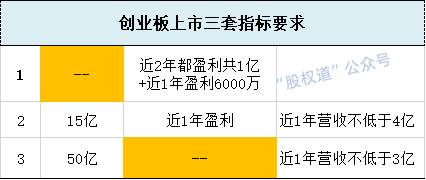
Group 1 - The core viewpoint is that loss-making companies can now list on both the Sci-Tech Innovation Board and the ChiNext Board, expanding the scope of eligible industries beyond biomedicine to include artificial intelligence, commercial aerospace, and low-altitude economy [1][2] - The ChiNext Board has introduced a third set of standards that allows unprofitable innovative companies to go public, which is a significant shift in the listing criteria [2][3] - The first and second sets of standards on the ChiNext Board require profitability, while the third set allows for losses, focusing instead on revenue and market capitalization [3][4][5] Group 2 - The first set of standards on the ChiNext Board requires a minimum net profit of 60 million yuan in the most recent year and 40 million yuan in the previous year [3][7] - The second set of standards requires a minimum revenue and market capitalization, with no specific profit requirement [4][5] - The third set of standards does not require profitability but mandates a minimum revenue of 3 billion yuan and a market capitalization of 30 billion yuan, which is less stringent than the first set of standards on the Sci-Tech Innovation Board [5][6] Group 3 - The ChiNext Board is positioned to support growth-oriented innovative enterprises, focusing on the integration of traditional industries with new technologies and business models [10][13] - Companies seeking to list on the ChiNext Board must demonstrate a compound annual growth rate of at least 25% in revenue over the past three years if their most recent year's revenue is below 3 billion yuan [11] - Certain industries, such as traditional sectors and those with overcapacity, are prohibited from listing on the ChiNext Board, while companies that integrate with new technologies are encouraged [13][14] Group 4 - The ChiNext Board has specific requirements regarding equity ownership, ensuring that the issuer's shareholding is clear and free from significant disputes that could affect control [15] - Complex equity structures can lead to listing failures, even if financial performance meets the requirements [16][17] - The review of financial data spans three years, while equity issues are scrutinized indefinitely, highlighting the importance of clear ownership structures for successful listings [17][18]

跻身全国工业百强区前十 龙华交出“华丽转型”城区样本
2 1 Shi Ji Jing Ji Bao Dao· 2025-08-22 08:40
Core Insights - Longhua District has achieved significant economic growth and structural transformation during the "14th Five-Year Plan" period, focusing on new quality productivity and integrating new technologies, industries, urban areas, and environments [1][2]. Economic Performance - The GDP of Longhua increased from 249.1 billion in 2020 to 315.445 billion in 2024, reflecting a robust growth trajectory [2]. - In the first half of this year, Longhua's GDP reached 156.711 billion, marking a 6.2% year-on-year increase, surpassing national, provincial, and municipal averages [3]. Industrial Development - Longhua has established itself as a core area for the digital economy, transitioning from a "pioneering area" to a "core area" [2]. - The district's industrial structure has improved, with strategic emerging industries accounting for 47.1% of GDP and the tertiary sector contributing 51.43% [2]. - Longhua is now ranked 10th among the top 100 industrial districts in China, with over 40 listed companies and a significant number of specialized small and medium enterprises [2]. Innovation and Talent - The number of national high-tech enterprises in Longhua is expected to exceed 4,000 by 2024, with innovative small and medium enterprises increasing to 2,940 [2]. - The total R&D expenditure as a percentage of GDP is projected to reach 4.15%, indicating a strong focus on innovation [2]. - Longhua has attracted 1,384 high-level talents and 25 high-level teams, contributing to a talent pool exceeding 900,000 [2]. Emerging Industries - The district has seen a surge in new industries, with 22 new low-altitude economy enterprises established in the first half of the year, driving a 14% growth in industry output [3]. - Longhua is home to notable companies in 3D printing, optical technology, and robotics, with several firms recognized for their innovation and excellence [4]. Future Outlook - The district aims to enhance development momentum, stimulate market vitality, and expand effective demand to achieve its annual goals and successfully conclude the "14th Five-Year Plan" [4].
广清产业协同发展中心揭牌运营
Nan Fang Ri Bao Wang Luo Ban· 2025-08-22 08:05
Group 1 - The establishment of the Guangqing Industrial Collaborative Development Center and the Qingcheng Huangpu Collaborative Innovation Center aims to promote the low-altitude economy and regional coordinated development through a cross-regional platform [1] - The "Guangqing Integrated Development Front" has been set up in Guangzhou, integrating 22 incubators, agricultural product exhibition platforms, and talent stations to facilitate efficient resource flow [1] - The "reverse enclave" model will leverage Guangzhou's technological advantages and Qingyuan's spatial and cost advantages to create a synergistic effect, enhancing both regions' industrial capabilities [1] Group 2 - The low-altitude economy is at a critical juncture of technological maturity and application explosion, with significant growth expected in drone logistics, urban air traffic, and low-altitude tourism over the next 3-5 years [2] - The Guangqing Industrial Park has developed a "3+2" industrial system, focusing on smart home, automotive parts, new materials, and modern agricultural biotechnology, with a total industrial output value nearing 1200 billion [2] - The automotive parts industry accounts for nearly 30% of the industrial output value in the Guangqing Industrial Park, creating a "2-hour supply chain ecosystem" with major manufacturers [2] Group 3 - The low-altitude economy is recognized as a strategic emerging industry, with plans to support automotive parts companies in transitioning to low-altitude equipment production [3] - The development of applications such as drone logistics and aerial tourism will be driven by the ecological, agricultural, and tourism resources in Qingyuan, forming a dual-driven model of "manufacturing + services" [3]
国内首个低空经济创新中心成立
Jing Ji Guan Cha Bao· 2025-08-22 02:46
Core Insights - The establishment of the Future Low-altitude Economy Innovation Center in Sichuan Tianfu New Area marks a significant advancement in the development of low-altitude economy in China [1] - The center has formed an expert advisory committee composed of domestic and international research institutions and scholars [1] Infrastructure and Development - Current air and ground infrastructure, along with supporting service facilities for flight assurance, are not yet fully developed [1] - There is a recommendation for cities to identify their development direction based on local conditions and to create a roadmap for low-altitude economy development [1] - The development of low-altitude economy should proceed with the continuous improvement of infrastructure before launching application scenarios and demonstration applications [1]