稀土

Search documents
中国稀土出口管制政策对全球高端制造业的影响分析
Sou Hu Cai Jing· 2025-10-19 06:57
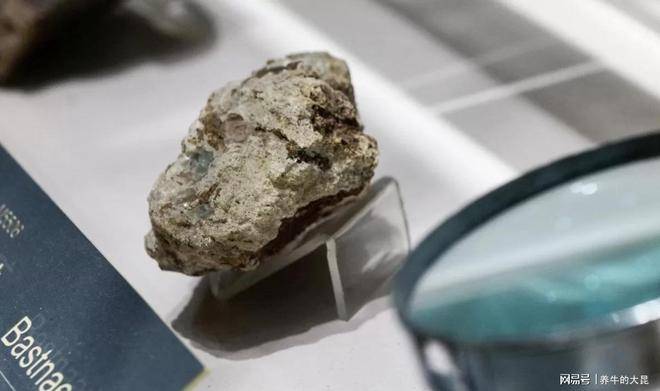
Core Insights - China's new rare earth export regulations, effective from October 9, 2025, significantly impact the global supply chain, reflecting a shift in strategic resource management and the competitive landscape in technology [1][11] - The regulations introduce a comprehensive control system that includes not only the export of raw materials but also extends to products containing Chinese rare earth elements, with a threshold of 0.1% for controlled substances [3][11] Regulatory Framework - The new regulations feature a "full-chain penetration control" approach, covering all aspects of the rare earth industry from mining to recycling [3] - Key elements include a 0.1% content threshold focusing on critical applications like high-performance magnets and semiconductor materials, and a 45-day approval cycle affecting global supply chain timelines [3][11] Global Manufacturing Impact - Rare earth elements are essential in high-end manufacturing, with significant applications in products like the F-35 fighter jet and Tesla Model 3 [4] - China dominates the rare earth market, controlling 70% of global mining, 90% of separation processing, and 93% of permanent magnet manufacturing [4] Case Studies - ASML, the sole producer of advanced EUV lithography machines, faces potential production disruptions due to the new regulations, as its products contain 0.3% dysprosium, exceeding the new threshold [5] - The U.S. military and semiconductor industries are also at risk, with rising costs and potential delays in production schedules due to increased rare earth prices [5][6] Market Reactions - The stock market has reacted variably, with Chinese rare earth companies seeing price increases while U.S. firms like Applied Materials experienced declines, indicating a reassessment of the strategic value of rare earths [6][11] Strategic Responses - Countries are diversifying their supply chains in response to the new regulations, with the U.S. supporting domestic rare earth industries and forming partnerships with countries like Australia and Canada [8] - Companies are adjusting inventory and procurement strategies, with some exploring alternative technologies to reduce reliance on rare earths [8] Industry Evolution - China's rare earth industry is focusing on upgrading and transitioning towards high-end, circular, and clustered development, enhancing its competitive edge in advanced processing technologies [9] - The new regulations signify a shift in China's role in global governance, moving from rule adaptation to active participation in rule-making [11][12]


彻底被打疼了,美财长请中方收回稀土管制,美国愿休战3个月以上
Sou Hu Cai Jing· 2025-10-19 05:32
Core Viewpoint - China's new round of rare earth export control policies has effectively impacted U.S. interests, leading to pressure on the Trump administration to seek concessions from China [1][3]. Group 1: Impact on U.S. Interests - The announcement of China's rare earth regulations prompted U.S. Treasury Secretary to request China to withdraw the export controls, indicating significant domestic pressure [1]. - If no new agreement is reached before the tariff buffer period ends next month, the U.S. may impose tariffs as high as several hundred percent on China, increasing the risk of market decoupling [1]. Group 2: China's Stance - China maintains a firm position against U.S. confrontation, indicating readiness to engage fully if necessary [3]. - The U.S. recognizes that continued tariff wars would ultimately harm its own economy, as evidenced by the request for a three-month tariff buffer in exchange for the withdrawal of rare earth controls [3]. Group 3: Importance of Rare Earths - Rare earths are critical for the production of high-precision chips and military equipment, making their availability more crucial to the U.S. than high-tech chips themselves [5]. - The lack of rare earths could lead to significant risks for U.S. chip manufacturers and military industries, highlighting the strategic importance of these resources [5]. Group 4: Development of Domestic Chip Industry - China has significantly reduced its reliance on U.S. chips by promoting domestic chip development, achieving comprehensive coverage in many sectors [9]. - The rapid growth of China's chip industry is attributed to U.S. pressure, which has accelerated domestic innovation rather than reliance on imports [9]. Group 5: U.S. Global Position - The effectiveness of U.S. tariffs against China has diminished, raising questions about America's ability to negotiate from a position of strength [9]. - The ongoing trade tensions have led to a reassessment of whether the U.S. can maintain its status as the world's leading power, especially as it faces challenges in its trade policies [9].

钟声:全球产供链安全稳定需要共同维护
Ren Min Ri Bao· 2025-10-19 05:09
Core Viewpoint - The ongoing trade tensions between China and the U.S. are characterized by the U.S. imposing high tariffs and export controls, which are deemed ineffective for managing relations with China. China is enhancing its export control system as a legitimate exercise of sovereignty, urging the U.S. to adopt a rational and pragmatic approach to maintain global supply chain stability [1][2][3][4]. Group 1: U.S. Trade Measures - The U.S. has implemented multiple trade restrictions against China, including adding several Chinese entities to export control lists and expanding the scope of these controls, affecting thousands of Chinese companies [1][2]. - The U.S. has ignored China's concerns and continued to enforce measures against China's maritime, logistics, and shipbuilding industries, which has negatively impacted bilateral trade discussions and disrupted international trade rules [1][2]. Group 2: China's Export Control Justification - China argues that its export controls on rare earths and related items are necessary for national security and international obligations, particularly in the context of global peace and regional stability [2]. - The number of items on China's export control list is approximately 900, while the U.S. has over 3,000 items, indicating a disparity in the application of export controls [2]. Group 3: China's Response to U.S. Actions - China maintains a clear stance against U.S. threats, asserting readiness to respond firmly while remaining open to dialogue and cooperation based on mutual respect and equality [3][4]. - The Chinese government emphasizes the importance of maintaining a healthy international trade order and global supply chain stability, urging the U.S. to engage sincerely in dialogue [4]. Group 4: Public Sentiment and Future Outlook - A recent survey indicates that a majority of American respondents perceive the U.S. as becoming more protectionist, with many viewing protectionist policies as a significant barrier to trade [4]. - There is a strong public desire for reduced tariffs and increased trade liberalization, suggesting that the U.S. should align its policies with public sentiment to foster a more stable economic relationship with China [4].
G7紧急开会应对中国稀土管控,欧洲日本为何对美国如此依恋?
Sou Hu Cai Jing· 2025-10-19 05:04
Group 1: Global Tensions and Dependencies - The international competition surrounding rare earth elements has become a focal point, with G7 countries expressing intentions to "resist China," while simultaneously seeking cooperation with Chinese firms [2] - 31 countries are anxious about their reliance on China for rare earths, with Europe and Japan aware of the risks yet unwilling to diverge from the U.S. stance [2][12] - The U.S. has threatened to increase pressure on China, but has also shown signs of retreat, indicating a complex geopolitical landscape [2] Group 2: Importance of Rare Earth Elements - Rare earth elements are critical for modern technology, with estimates suggesting that over half of the high-tech industry would stagnate without them [4] - China dominates the global rare earth market, producing 70% of the world's supply and holding 93% of refining capacity, making it difficult for other countries to compete [4] - Europe imports 72% of its rare earths from China, highlighting the continent's significant dependency [6] Group 3: Recent Policy Changes - In October 2023, China announced new export controls on rare earths, primarily restricting military applications while allowing compliant civilian applications [8] - The new regulations are set to take effect on December 1, 2023, and aim to ensure normal industrial cooperation while addressing misuse [8] Group 4: Historical Context of Dependency - The dependency of Europe and Japan on the U.S. has historical roots, stemming from post-World War II dynamics and the establishment of a Western hegemony [12] - Japan views its alliance with the U.S. as crucial for both security and economic growth, while Europe has similarly aligned itself with U.S. interests despite potential conflicts [12][13] Group 5: Consequences of U.S. Policies - The U.S. has faced challenges in its own rare earth industry, which is unable to recover, leading to significant impacts on its technology sector [15] - Internal conflicts within European countries are emerging, as they grapple with the implications of U.S. policies on their own industries [15] Group 6: Future of Rare Earth Supply Chains - Historical precedents show that Western sanctions on Chinese materials have often been short-lived due to the critical nature of these resources for production [16] - Canada claims to have rich rare earth resources, but establishing refining capabilities would take years and be costly, making it uncompetitive with China [16] Group 7: China's Position in the Market - China has developed not only extraction and processing technologies but also holds a significant share of patents in rare earth applications, making it difficult for Western companies to bypass these barriers [18] - China's collaborations with other countries for rare earth processing further complicate the potential for Western nations to sever ties with Chinese supply chains [18] Group 8: Call for Cooperation - The pressure from 31 countries is more about gaining control over rare earth regulations than ensuring supply chain security, as they are uncomfortable with China's assertive stance [20] - A shift from confrontation to cooperation is suggested as the more viable path for resolving the rare earth issue, emphasizing the interdependence of global supply chains [20]
中方加码稀土管制第六天,美国爆发示威,特朗普再喊中国购买大豆
Sou Hu Cai Jing· 2025-10-19 04:31
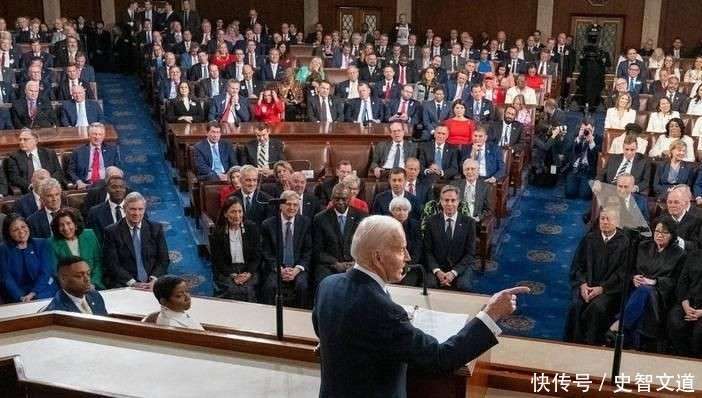
Group 1 - The competition between China and the US has evolved beyond traditional trade disputes into a complex struggle involving national resources, political instability, and technological innovation [1] - China's recent decision to tighten rare earth export controls is framed as a national security and sustainable resource management measure, but it also reflects strategic considerations [4][5] - The US's initial restrained response to China's export management has shifted to criticism, revealing a sense of vulnerability in its strategic approach to China [3][5] Group 2 - The US's reliance on rare earth elements, crucial for high-tech industries, particularly in military and renewable energy sectors, highlights its dependency on China [4] - The US's previous "decoupling" strategy in the rare earth sector has not yielded significant results, exposing its weaknesses in securing alternative suppliers [5] - Domestic pressures in the US, including protests against concentrated presidential power and government shutdowns, are linked to the broader context of US-China competition [7][8] Group 3 - The US's agricultural sector, particularly soybean farmers, faces challenges due to reduced Chinese imports, leading to increased dissatisfaction among Trump's voter base [8][10] - Trump's strategy of urging China to purchase more soybeans appears ineffective, as the US market's dependency on certain Chinese products is not as strong as perceived [10] - In contrast, China is focusing on technological innovation, with significant breakthroughs in chip development indicating a shift towards self-reliance in critical technologies [10] Group 4 - The ongoing US-China competition is deepening into resource control, technological rivalry, and institutional resilience, with implications for future global dominance [12] - The US is experiencing dual pressures from domestic political challenges and external competition, constraining its policy options [12] - China's strategic approach involves leveraging technology, institutional advantages, and global cooperation to navigate challenges and expand its development space [12][13]

杨振宁逝世|首席资讯日报
首席商业评论· 2025-10-19 03:47
Group 1 - The 2025 Financial Street Forum will be held from October 27 to 30 in Beijing, focusing on "Innovation, Transformation, and Reshaping Global Financial Development" with 27 main and parallel forum topics and 11 fintech activities [5] - CITIC Securities predicts that the recent strengthening of rare earth export controls by the Ministry of Commerce will lead to increased overseas stockpiling actions and a potential rise in rare earth prices, reinforcing China's strategic position in the industry [6] - The consumption voucher program in Hunan Province will distribute a total of 100 million yuan, with 65% allocated to the catering sector, aimed at stimulating local consumer spending [11] Group 2 - Nvidia's Blackwell chip has officially entered mass production in the U.S., marking a significant milestone in reshaping the global supply chain [10] - The Chinese selenium industry has seen its annual output value exceed 400 billion yuan, with a total output value of 447.84 billion yuan in 2024, reflecting a growth of nearly 60 billion yuan from 2023 [12] - Okoyi's research indicates that the company has made significant advancements in the development of cutting tools for robotic components, enhancing production efficiency and precision [8]

中国打响对美关税反击战,印度嘴上说要加入,行动时却扯中方后腿
Sou Hu Cai Jing· 2025-10-19 01:54
Core Viewpoint - The article discusses India's reluctance to effectively retaliate against the U.S. in the ongoing trade war, highlighting its tendency to undermine China's efforts while failing to take decisive action against the U.S. [1][6][14] Group 1: India's Response to U.S. Tariffs - India has previously announced plans to impose retaliatory tariffs on U.S. goods but has not followed through, indicating a lack of resolve in confronting the U.S. [7] - The Indian government has expressed intentions to learn from China's approach to countering U.S. tariffs, yet has not taken significant steps to implement such measures [3][6]. - Despite initial enthusiasm, India's actions have resulted in higher tariffs on its own goods, with a reported 50% maximum tariff imposed, leading to stalled negotiations with the U.S. [9] Group 2: China's Position in the Trade War - China has actively engaged in countermeasures against the U.S., utilizing its leverage in rare earth exports and other sectors, which has put pressure on the U.S. [3][16]. - The article emphasizes that China's success in the trade war could benefit global markets, including India, if India chose to align with China rather than undermine it [16]. - China's recent actions, such as imposing anti-dumping duties on Indian solar panels, reflect its strategy to protect its interests while responding to India's provocations [9][14]. Group 3: Implications for India - India's attempts to impose anti-dumping duties on Chinese solar panels, with rates up to 30%, are seen as counterproductive and indicative of its narrow-minded approach [9][14]. - The article suggests that India's lack of support for China in the trade war could lead to negative consequences for its own economy, as it risks losing out on potential benefits from a successful Chinese counter-offensive against the U.S. [16]. - The ongoing tensions and India's actions may ultimately harm its relationship with both China and the U.S., as it navigates its position in the trade landscape [6][14].
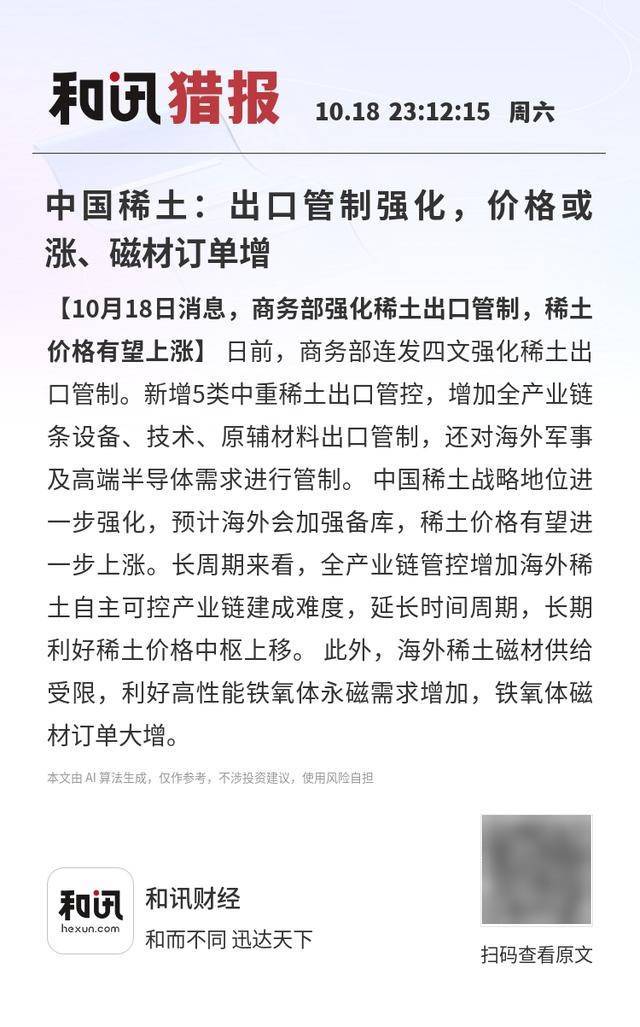
中国稀土:出口管制强化,价格或涨、磁材订单增
Sou Hu Cai Jing· 2025-10-19 01:11
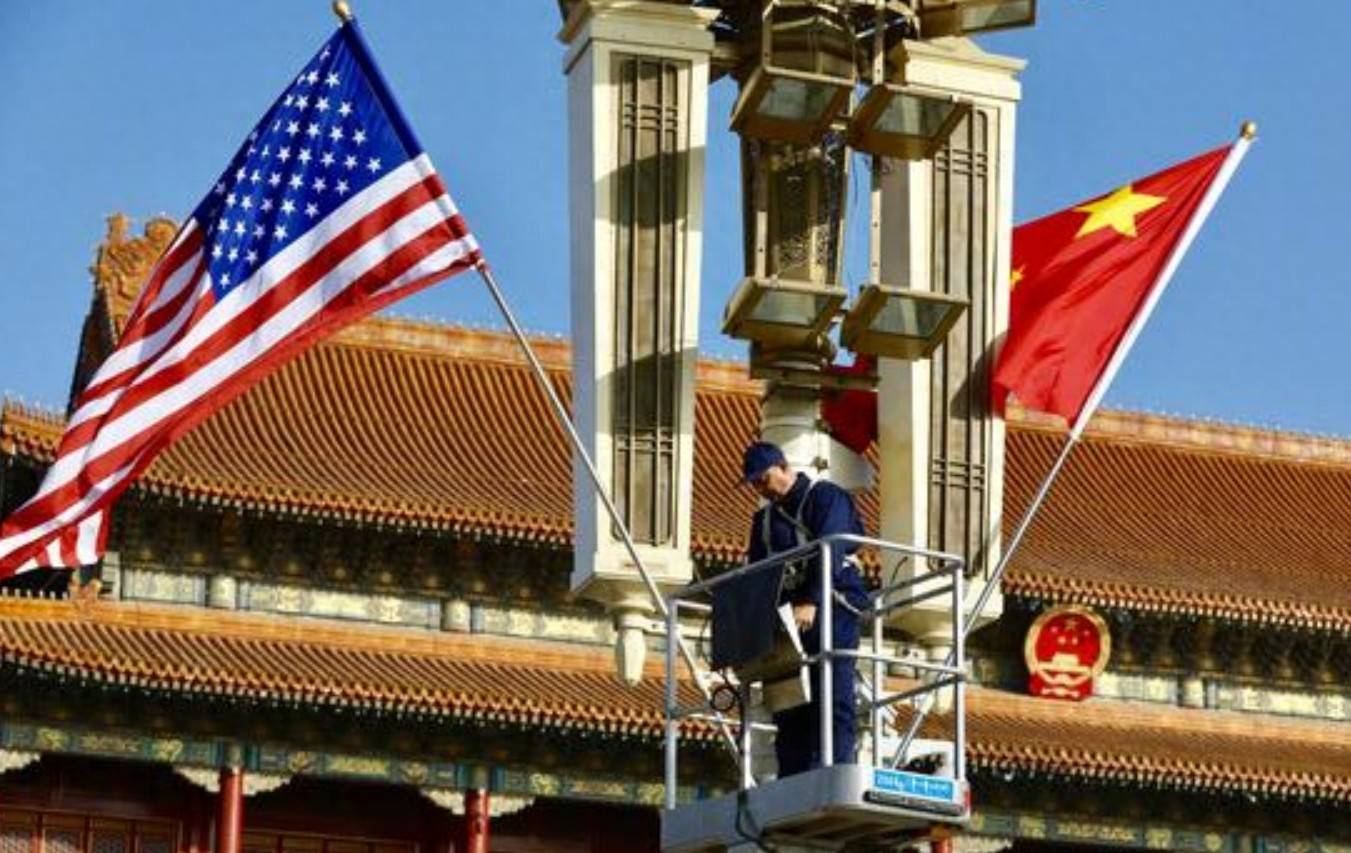
Core Viewpoint - The Chinese Ministry of Commerce has strengthened export controls on rare earths, which is expected to lead to an increase in rare earth prices and a surge in orders for high-performance ferrite magnets [1][2]. Group 1: Export Control Measures - The Ministry of Commerce has issued four documents to enhance export controls on rare earths, adding five categories of medium and heavy rare earths to the export control list [1][2]. - The new measures include controls on the export of equipment, technology, and raw materials across the entire industry chain, as well as restrictions on overseas military and high-end semiconductor demands [1][2]. Group 2: Market Implications - China's strategic position in the rare earth sector has been further reinforced, leading to expectations that overseas entities will increase their stockpiling of rare earths, which may drive prices higher [1][2]. - Over the long term, the comprehensive control measures are expected to complicate the establishment of a self-sufficient rare earth supply chain overseas, extending the time required for its development and benefiting the upward movement of rare earth price levels [1][2]. Group 3: Demand for Ferrite Magnets - The limited supply of rare earth magnetic materials overseas is expected to boost demand for high-performance ferrite magnets, resulting in a significant increase in orders for ferrite materials [1][2].
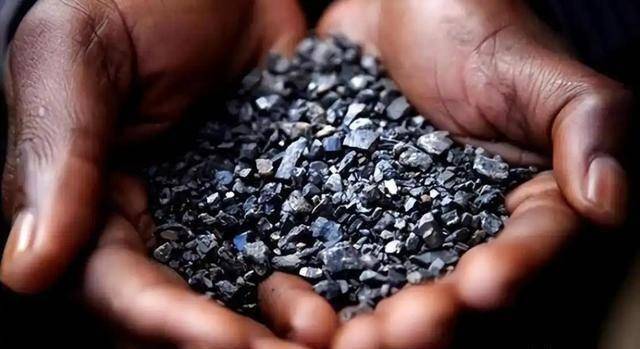
中国稀土领跑欧美,美国军工雷达也得靠,西方砸3000亿难追赶
Sou Hu Cai Jing· 2025-10-18 23:16
Core Insights - The global manufacturing industry increasingly relies on rare earth elements, often referred to as "industrial vitamins," essential for products like smartphones, chips, wind power, and electric vehicles [1][14] - Despite many countries' efforts to reduce dependence on China for rare earths, actual production capabilities remain limited, indicating a systemic issue rather than a mere lack of resources [1][3] Group 1: U.S. Rare Earth Production Challenges - The U.S. holds the world's third-largest rare earth reserves, primarily consisting of light rare earths, while heavy rare earths, crucial for advanced military equipment, account for less than 1% of global reserves [3][5] - Even with plans to produce 32,000 tons of REO concentrate by 2025, 70% of this will still need to be sent to China for processing, highlighting the U.S.'s inability to refine these materials domestically [5][6] - The U.S. produces only 1,000 tons of neodymium-iron-boron magnets annually, which is less than 1% of China's production in 2018, and the purity level is significantly lower than China's military-grade standards [5][6] Group 2: Talent and Regulatory Barriers - Since 2000, fewer than 200 graduates in relevant fields have emerged from U.S. universities, while China produces thousands annually, dominating the global talent pool [6][14] - Environmental regulations and community lawsuits pose significant hurdles, with new project development taking five to ten years and requiring investments exceeding $300 billion to rebuild a complete supply chain [6][16] Group 3: China's Historical and Current Position - China initially faced a disadvantage in the 1970s, possessing valuable resources but lacking core technologies, leading to the sale of raw materials at low prices [8][10] - The turning point came in the 1970s when Chinese researchers developed advanced extraction techniques, achieving a purity level of 99.9999%, significantly reducing costs and improving efficiency [10][12] - Currently, Chinese companies have mastered ultra-high purity refining capabilities, producing materials used in advanced technologies like the F-35 radar systems and Tesla motors [14][16] Group 4: Strategic Control and Future Outlook - Recent export control measures by China, including comprehensive restrictions on design documents and process parameters, aim to safeguard national interests and prevent proliferation [16][17] - The industry is witnessing a shift towards self-sufficiency, with a focus on building robust domestic capabilities while remaining open to international collaboration when needed [17] - Continuous innovation, including AI monitoring and environmentally friendly recycling methods, is enhancing the overall competitiveness of the industry, suggesting that long-term success will depend on sustained research and development efforts [17]
美元霸权现脆弱性!特朗普政府“滥用特权”,透支美元信用!
Sou Hu Cai Jing· 2025-10-18 17:12
Group 1: Energy Strategy - Russia's use of energy as a weapon has proven effective since the onset of the Ukraine conflict, leveraging Europe's dependency on its energy supplies to gain leverage [1] - Despite efforts to reduce reliance on Russian oil, Europe remains unable to fully escape this dependency in the short term [1] - Energy cooperation has become a crucial link for Russia to strengthen economic ties with various countries, creating a stable network to counter external pressures [1] Group 2: U.S. Energy Sector Challenges - The U.S. has seen some short-term success in increasing oil and gas production, but long-term prospects face significant challenges due to declining costs of non-fossil energy [1] - Many energy companies are becoming more cautious about investing in fossil fuels, indicating that U.S. production efforts may not be sustainable in the long run [1] Group 3: Strategic Minerals and Dollar Dependence - The U.S. faces difficulties in the strategic minerals sector, particularly in the rare earth industry, which has seen a decline despite government support [2] - The reliance on the dollar as a geopolitical tool has been emphasized, with concerns about the potential crisis of confidence in the dollar due to aggressive policies [2] Group 4: Dollar's Global Position - The dollar's dominance in the global financial system is acknowledged, but its position is not unassailable, with historical examples of financial centers losing their status [4] - The search for alternatives to the dollar is considered less challenging than revitalizing the U.S. rare earth industry, with advancements in blockchain technology facilitating the development of a multi-currency global monetary system [4] Group 5: Financial Crisis Implications - In the event of a financial crisis in the U.S., stable currencies like the Australian dollar, Canadian dollar, Swiss franc, or even gold-backed stablecoins could quickly fill the void left by the dollar [5] - The aggressive use of the dollar as a geopolitical weapon may inadvertently accelerate its decline, especially in the context of rising fiscal deficits and debt levels [5]