
汽车

Search documents
马年春节之际,美国给中国拜年,特朗普提台湾问题,放关键信号?
Sou Hu Cai Jing· 2026-02-21 07:22
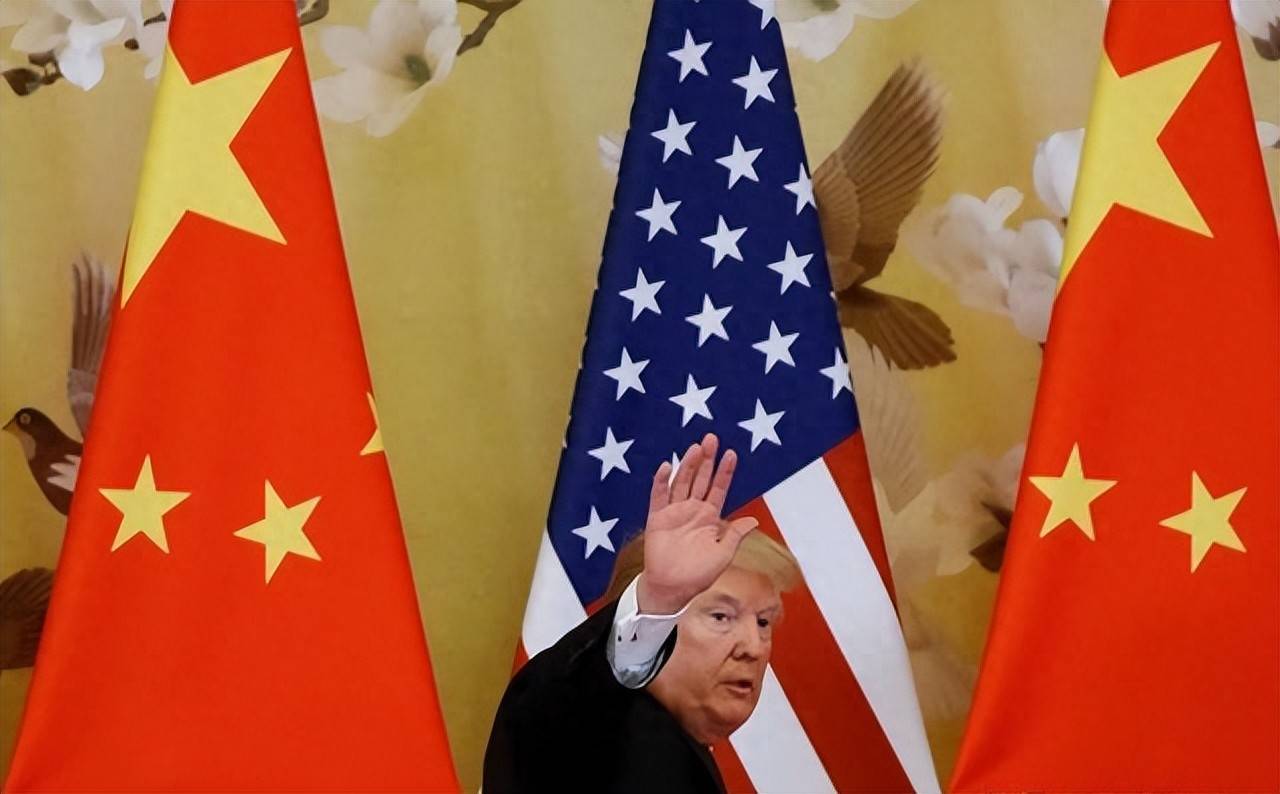
Group 1 - The trade conflict between the US and China escalated significantly starting in early 2025, with the US imposing a 25% tariff on Chinese electronic devices and steel, leading to a total tariff amount reaching several hundred billion dollars [1] - In retaliation, China imposed tariffs on a range of US goods, including soybeans and corn, resulting in a direct drop of over 20% in trade volume between the two countries [1] - The economic impact was severe, with farmers in the US Midwest reporting losses and Chinese factories experiencing a significant decrease in orders, leading to stock market volatility and rising unemployment rates [1] Group 2 - By mid-2025, the US government began to reconsider its confrontational approach, recognizing that it could harm economic growth and affect voter support ahead of the 2026 elections [3] - High-level negotiations took place in October 2025 during the APEC summit in Busan, where both sides agreed to stabilize bilateral relations, with the US gradually reducing tariffs and China committing to increase purchases of US energy and agricultural products [3] - Following the negotiations, the Dow Jones index rose by 2%, indicating a positive market reaction to the easing of tensions [3] Group 3 - In December 2025, the US approved a military sales package worth $11.15 billion to Taiwan, which China strongly opposed, viewing it as interference in its internal affairs [5] - Despite a slight improvement in bilateral relations entering 2026, the US was reportedly considering an additional $20 billion in military sales, including upgrades to fighter jets and naval equipment, which raised alarms in China [5] - China reiterated that the Taiwan issue is a core interest and any military sales would negatively impact economic cooperation between the two nations [5] Group 4 - Amidst rising tensions, US diplomats released light-hearted videos to ease the atmosphere, which were well-received by the public and sparked discussions about improving relations [7][9] - President Trump indicated that he had communicated with China regarding the military sales, suggesting a potential for policy adjustment to stabilize relations ahead of his planned visit to China [9][10] - The situation remains complex, with the US using military sales as a means to counterbalance China, while Taiwan seeks international support through these purchases, and China maintains a firm stance on its territorial claims [10]

【环球财经】巴西工商界警告新关税风险
Xin Hua Cai Jing· 2026-02-21 06:45
Core Viewpoint - The U.S. Supreme Court's ruling that the Trump administration's large-scale tariff policy was illegal may help to revoke previously imposed tariffs on Brazil and other countries, but new tariffs are still being implemented through other legal means, leaving Brazilian exports in a state of uncertainty [1] Group 1: Tariff Implications - The São Paulo Industrial Federation noted that the Supreme Court's decision deemed the 40% tariff imposed on Brazil by Trump as illegal, which is beneficial for Brazilian exports [1] - Despite the favorable ruling, the situation requires cautious assessment, and the federation will closely monitor subsequent developments [1] Group 2: Ongoing Tariff Measures - The federation highlighted that tariffs imposed by the U.S. under the justification of "national security" remain effective, particularly affecting strategic industries such as steel, aluminum, timber, and automobiles, which were not included in the Supreme Court's ruling [1] - Following the ruling, Trump announced a new 10% global temporary tariff, and the U.S. has decided to initiate new investigation procedures under "Section 301" [1] - Brazil has been under "Section 301" investigation since July 2025, indicating that Brazilian products may face new tariffs sooner than those from other countries [1]
俄媒:美国最高法院驳回美高层的全面关税政策,但这并不能改变既有的关税讹诈
Sou Hu Cai Jing· 2026-02-21 06:41
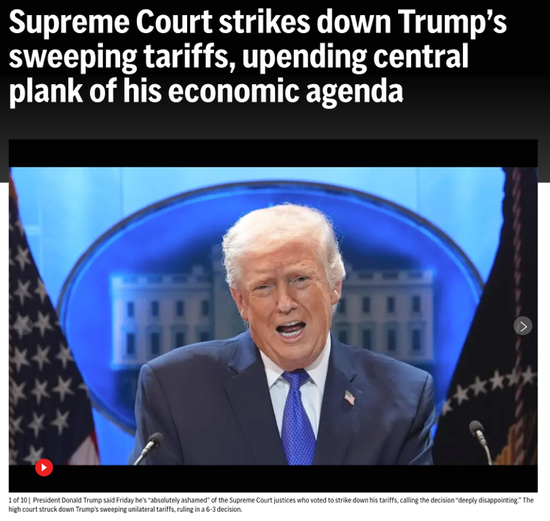
Core Viewpoint - The U.S. Supreme Court recently rejected the comprehensive tariff policy of the U.S. administration with a 6-3 vote, which limits its trade dominance but does not completely eliminate its ability to exert pressure through other means [1] Group 1: Legal and Trade Implications - The ruling does not resolve the core conflicts surrounding tariff disputes, as the U.S. administration can still utilize tools like the Trade Act Amendment 301 and national security clauses for "coercive" negotiations with trade partners [1] - The decision reflects a power imbalance, where the U.S. administration's attempts to reshape global trade order face strong resistance from the judicial system and specific interest groups [3] Group 2: Potential Retaliatory Actions - Following the judicial setback, the U.S. administration is predicted to retaliate against the EU by increasing tariffs on key sectors such as automobiles and agricultural products, or using energy supply as leverage [5] - There are warnings from EU member states regarding the energy crisis and inflation pressures, indicating that extreme measures from the U.S. could lead to a new economic shock in Europe, with some countries potentially facing recession risks [5] Group 3: Broader Context of Trade Relations - The ongoing trade power struggle highlights structural contradictions within Western governance models, where judicial independence becomes a tool in political conflicts and alliances are reduced to mere calculations of interest [10] - The typical characteristics of U.S. internal conflicts may signal a period of turbulence and adjustment for the transatlantic alliance [10]

最大的“支柱”被折断,特朗普政府的下一步怎么走?
Xin Lang Cai Jing· 2026-02-21 04:22
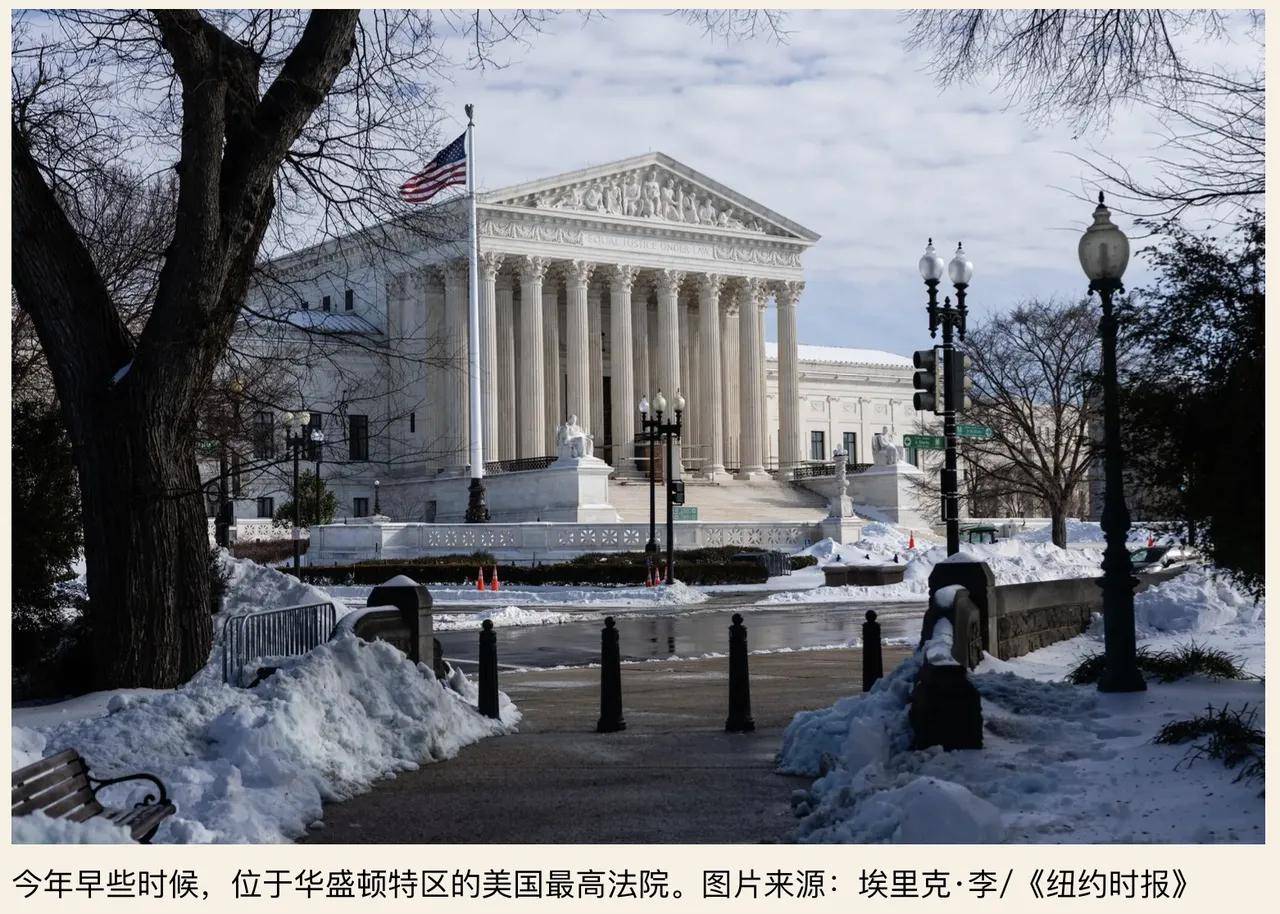
Group 1 - The U.S. Supreme Court ruled that the global tariffs imposed by the Trump administration under the International Emergency Economic Powers Act (IEEPA) lack legal basis, rendering most tariffs invalid [2][22] - This ruling significantly impacts Trump's economic agenda, particularly his tariff policy, which was a key component of his administration's trade strategy [12][31] - The decision forces the White House to shift from aggressive administrative measures to more traditional and procedural trade paths, which are slower and more susceptible to litigation [2][22] Group 2 - The ruling clarifies that the IEEPA, originally intended for sanctions, cannot be used as a "universal key" for imposing global tariffs [25][26] - The majority opinion emphasized that the Constitution assigns the power to levy taxes, including tariffs, to Congress, and any delegation of this power must be explicit [26][28] - The court's decision is seen as a limitation on presidential power, indicating that significant economic policies affecting the national economy cannot be enacted through vague legal provisions [33][34] Group 3 - Following the ruling, Trump announced plans to impose a new 10% global tariff using a different legal framework, the Trade Act of 1974, which has specific time and procedural limitations [35][36] - The administration is expected to rely more on established trade tools like Section 232 and Section 301 to impose tariffs, which, while legally clearer, involve more complex procedures [35][36] - The ruling may lead to new investigations and potential trade conflicts as the administration seeks to maintain pressure on trade partners [38]
韩国称美韩贸易协议仍然有效,最高法院关税裁决未改框架
Hua Er Jie Jian Wen· 2026-02-21 04:18
韩国政府表示,尽管美国最高法院作出关税裁决,但韩美之间的整体贸易协议框架仍将保持完整。这一 表态旨在稳定市场预期,减轻出口商对贸易前景的担忧。 据央视新闻,当地时间20日周五,美国最高法院裁定,特朗普政府依据《国际紧急经济权力法》 (IEEPA)实施的相关大规模关税措施缺乏明确法律授权。据报道,该裁决使目前对韩国商品征收的 15%对等关税失效。 周六,韩国产业通商资源部部长金正官召开紧急会议,评估美国最高法院的裁决影响。金正官表示: 尽管该裁决加剧了对美出口的不确定性,但韩美关税协议下保障的出口条件总体框架将保持 不变。 他承诺将采取全面应对措施,以保护国家利益和韩国企业。韩国政府表示,针对汽车和钢铁行业的分项 关税仍然有效,不受美国最高法院裁决影响。 在最高法院裁决后,特朗普政府另行宣布根据《贸易法》第122条征收10%的全球关税。 韩国方面承诺将全面监测美国后续措施,同时继续就去年签署的贸易协议实施问题展开对话,并为受影 响企业提供支持。 分析认为,这项裁决出台之际,韩美之间的关税关系本已十分脆弱。 根据一项包含3500亿美元投资承诺的协议,美国对包括汽车在内的韩国进口商品加征了15%的关税。 特朗普上个 ...
韩国:与美国贸易协议在关税裁决后仍然有效
Xin Lang Cai Jing· 2026-02-21 03:54
Core Viewpoint - The U.S. Supreme Court's decision to overturn Trump's tariffs will not affect the overall trade agreement between South Korea and the U.S. [1] Group 1 - The ruling invalidates the 15% reciprocal tariffs currently imposed on South Korean goods [1] - Industry-specific tariffs on automobiles and steel remain in effect [1] - South Korea will closely monitor subsequent actions from the U.S. and collaborate with business groups to support affected companies [1]
特斯拉 Autopilot 辅助驾驶致死案败诉:2.43 亿美元天价赔偿落定,曾拒绝以 6000 万美元庭外和解
Xin Lang Cai Jing· 2026-02-21 03:25
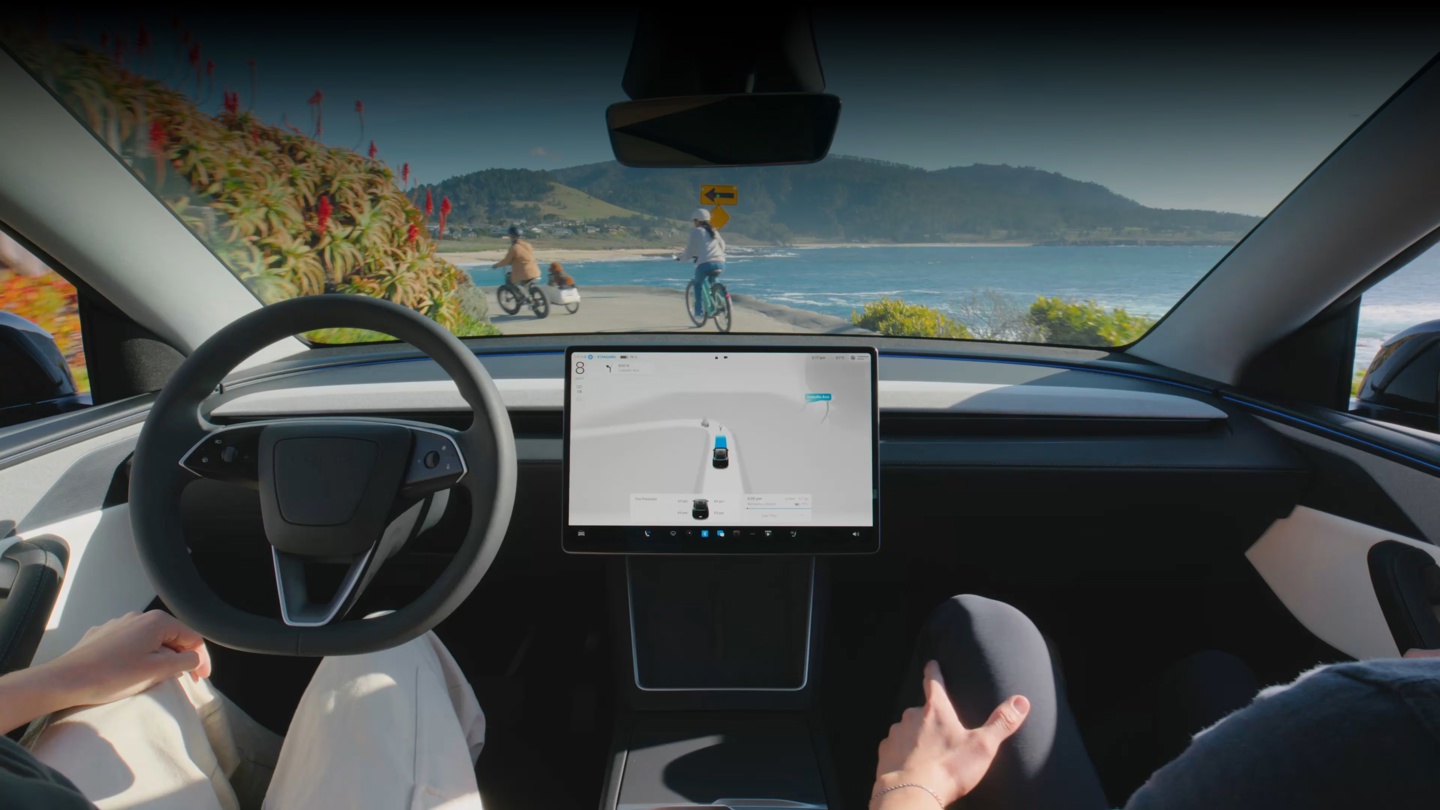
Core Viewpoint - A federal judge has officially rejected Tesla's request to overturn a jury verdict requiring the company to pay $243 million in damages related to a fatal accident involving its Autopilot system, marking a significant legal setback for the company [1][5]. Group 1: Legal Proceedings - The Miami federal court ruled that the evidence presented during the trial "fully supported" the jury's decision, and Tesla did not provide sufficient new arguments to overturn the verdict [1][5]. - The jury found Tesla 33% at fault for the accident, which resulted in a $43 million compensatory award and $200 million in punitive damages, marking Tesla's first loss in a wrongful death case involving Autopilot [5][7]. - Tesla had previously rejected a $60 million settlement offer before the trial, but now faces a much larger payout [5][7]. Group 2: Ongoing Legal Challenges - Following the August 2025 verdict, Tesla is facing a wave of lawsuits related to Autopilot incidents, with at least four additional cases settled to avoid further uncertainty [7]. - New lawsuits continue to emerge, including a January 2026 case involving a Model X accident that resulted in the deaths of a family of four [7]. - Tesla is also under increasing regulatory scrutiny, with a California judge ruling in December 2025 that the use of the term "Autopilot" in marketing is misleading and violates state law [7][8]. Group 3: Corporate Response - Tesla has indicated plans to appeal the ruling and is attempting to limit punitive damages to three times the compensatory amount, although this would still result in a nine-figure payout [7]. - To avoid a 30-day sales ban in California, Tesla agreed to completely abandon the "Autopilot" name [8].

日本、韩国要慌了?如今的中国乌鲁木齐,正在悄然崛起
Sou Hu Cai Jing· 2026-02-21 02:13
全球贸易格局在2026年初已经显现出明显的重塑迹象,美国的关税政策持续施压于依赖出口的国家,这 让韩国这样的经济体面临多重考验。韩国经济在2025年仅增长0.8%,早期甚至出现收缩,主要因为出 口导向型产业遭遇瓶颈。 特朗普政府从2025年4月开始对韩国商品征收25%的关税,虽然7月谈判后降至15%,但2026年1月又威 胁升回25%,直接影响汽车、半导体和制药等关键出口品类。韩国对美国的出口份额从2024年的4%降 到2025年的3.6%,排名滑至第九,被台湾地区和爱尔兰超越。 这种政策不确定性让韩国企业难以规划供应链,投资信心受挫。日本也在中亚地区加大布局,2025年12 月东京峰会承诺五年内投资3万亿日元,相当于190亿美元,针对稀土、石油和基础设施,以稳固影响 力。但这些举措难以逆转市场流失,因为消费者偏好转向性价比更高的选项。 这些数据反映出乌鲁木齐从单纯资源输出转向高附加值制造,甘泉堡地区形成完整的新材料产业链,高 新区则专注生物医药和高端装备扩产。能源成本优势明显,风光资源丰富,让本地工厂在生产效率上领 先资源短缺的日韩企业。 阿拉山口通行中欧班列8165列,增长6.3%,机场国际货运线达36条 ...
【财经早报】利好!香港两大交易所发声
Zhong Guo Zheng Quan Bao· 2026-02-21 00:40
Group 1: Consumer Demand and Sales Performance - During the Spring Festival holiday, the average daily sales of key retail and catering enterprises increased by 8.6% compared to the same period in 2025 [1] - The "old for new" policy benefited 28.88 million people, driving sales of 198.02 billion yuan, with 612,000 vehicles exchanged, leading to new car sales of 100.53 billion yuan [1] - Sales of smart wearable devices increased by 19.7%, with smart glasses sales growing by 2.5 times and smart blood glucose meters by 48.6% [1] - Hainan's offshore duty-free sales reached 970 million yuan, a growth of 15.8% during the first four days of the holiday [1] - Domestic travel consumption on key platforms grew by 4.5%, with car rental orders increasing by 26% and cross-regional orders rising by 196% [1] Group 2: Hong Kong Stock Market and IPO Activity - In 2025, Hong Kong's IPO fundraising reached 37.4 billion USD, a year-on-year increase of 231%, making it the top global center for new stock financing [2] - As of 2026, 24 new stocks have been listed, raising over 87 billion HKD, with 488 companies currently in the IPO queue [2] - The Hong Kong government aims to establish the city as an international gold trading center, targeting over 2,000 tons in gold storage within three years [2] Group 3: Technological Advancements - Chinese scientists developed an astronomical AI model "Xingyan" based on computational optics and AI algorithms, capable of detecting signals from dark celestial bodies and capturing images from over 13 billion light-years away [4]