稀土

Search documents
过去72小时,中美稀土博弈没再“打嘴仗”,直接动了“真刀真枪”!
Sou Hu Cai Jing· 2025-10-18 03:43
Group 1 - The core viewpoint is that the U.S. attempts to pressure China through legislation have backfired, as China has restricted rare earth processing technology exports, effectively limiting U.S. access to essential materials for industries like electric vehicles and missiles [1][3] - The market reaction has been significant, with rare earth prices on the London exchange experiencing the largest increase since 2012, prompting companies like Shin-Etsu Chemical to announce a 25% price hike for Q4, citing uncertainties in Chinese export licenses [3] - The U.S. has allocated a budget of $1.97 billion aimed at achieving "zero China" for heavy rare earths by April 2026, but this ambition is seen as unrealistic given the complexities of rare earth mining and processing, which require decades of accumulated technology and environmental systems [3] Group 2 - The article highlights that while the U.S. imposes high tariffs, it cannot produce rare earths domestically due to the shutdown of local processing facilities, leading to inflationary pressures being passed onto American consumers [3] - The narrative suggests that China has effectively redefined the rules of engagement in this resource sovereignty conflict without resorting to overt sanctions, using strategic documents, pricing, and communication to maintain control over the global supply chain [3]

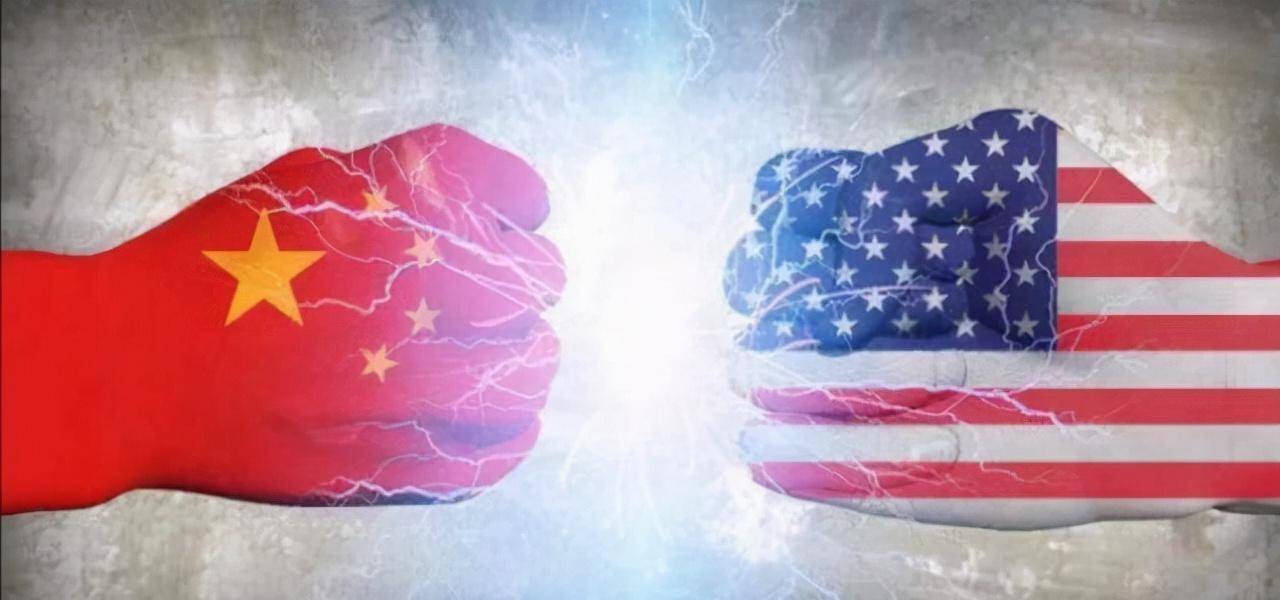
被中国暴揍后,美国风向变了,称中美关系良好,可能放弃加征关税
Sou Hu Cai Jing· 2025-10-18 01:58
Core Insights - The article highlights a significant shift in the U.S. stance towards China, indicating that unilateral tariffs are no longer effective in the current interdependent global economy [1][3] - The dynamics of U.S.-China relations are evolving from a "pressure-response" model to a long-term balance based on power principles [3][5] Group 1: U.S. Policy Changes - U.S. Treasury Secretary Bessent has expressed a more optimistic view regarding U.S.-China relations, stating that "100% tariffs do not necessarily have to happen" [3] - This change in tone follows China's firm stance in response to U.S. actions, indicating a strategic recalibration in the bilateral relationship [3][5] Group 2: Economic Interdependence - The article emphasizes the deep economic ties between the U.S. and China, illustrated by the significant market reactions such as the sharp decline in U.S. stock prices and the loss of trillions in market value [5][7] - The interdependence creates invisible boundaries for both parties in their negotiations and strategies [5] Group 3: Trade War Dynamics - The trade conflict is characterized as a process of "promoting peace through struggle," with China's countermeasures targeting critical sectors like rare earths and lithium batteries, which are vital to U.S. high-tech and military industries [5][7] - The U.S. is realizing the high costs of a complete decoupling from China, leading to a tactical retreat in its aggressive trade policies [5][7] Group 4: Future Scenarios - Several potential future scenarios for U.S.-China relations are outlined, including: 1. A fragile balance with temporary compromises [8][9] 2. A "new normal" of competitive coexistence in key technology sectors [11] 3. Long-term competition over trade and technology standards [11] 4. Strategic stability through effective crisis management mechanisms [11][13] Group 5: China's Strategic Position - China is portrayed as exhibiting impressive resolve and wisdom in its approach to the U.S., choosing to respond strategically rather than emotionally [13] - The confidence of China in this geopolitical struggle is bolstered by its large domestic market, complete industrial system, and growing technological capabilities [13]

海南板块利好来了,这些股高增长
Zheng Quan Shi Bao Wang· 2025-10-18 01:13
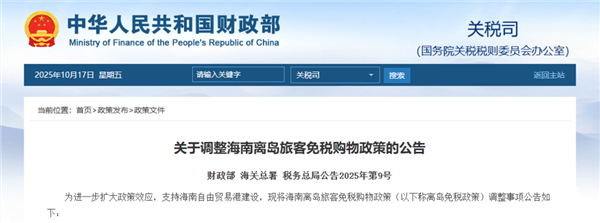
Core Viewpoint - The A-share market experienced a significant decline on October 17, with the Shanghai Composite Index dropping by 1.95%, the Shenzhen Component down by 3.04%, and the ChiNext Index falling by 3.36%. Despite this, the Hainan sector received positive policy news, leading to a surge in certain local stocks [1][3]. Market Performance - On October 17, the overall market saw 598 stocks rise while 4781 stocks fell, with a total trading volume of 1.95 trillion yuan, an increase of approximately 5.7 billion yuan from the previous day [1]. - The banking sector showed strong performance, with Agricultural Bank of China reaching a historical high, while ZTE Corporation faced a rare trading halt [1][2]. Hainan Policy Benefits - The Ministry of Finance, General Administration of Customs, and State Taxation Administration announced adjustments to the Hainan duty-free shopping policy, effective November 1. This includes expanding the range of duty-free goods and allowing more domestic products to be sold in duty-free shops [3][5][6]. - The policy changes aim to enhance consumer shopping experiences and support the development of Hainan as an international tourism consumption center [7][10]. Stock Performance in Hainan - Notable Hainan stocks that received significant net purchases from financing clients include Haixia Co., Intercontinental Oil & Gas, and Zhongtung High-tech, with net purchases exceeding 500 million yuan [8]. - Haixia Co. has seen consecutive trading gains, with expectations that the new policies will boost passenger flow and benefit the company's growth [10]. Profit Forecasts for Hainan Stocks - Guangsheng Youse expects to achieve a net profit of 100 million to 130 million yuan for the first three quarters of 2025, driven by favorable market conditions in the rare earth sector [12]. - Predictions for 2025 net profit growth among Hainan stocks include Hainan Rubber (96.83%), Guangsheng Youse (46.13%), and Jindada Co. (33.45%) [12][13].
“就算美国和所有盟友把稀土当做国家级项目,赶上中国至少要5年”
Sou Hu Cai Jing· 2025-10-17 18:04
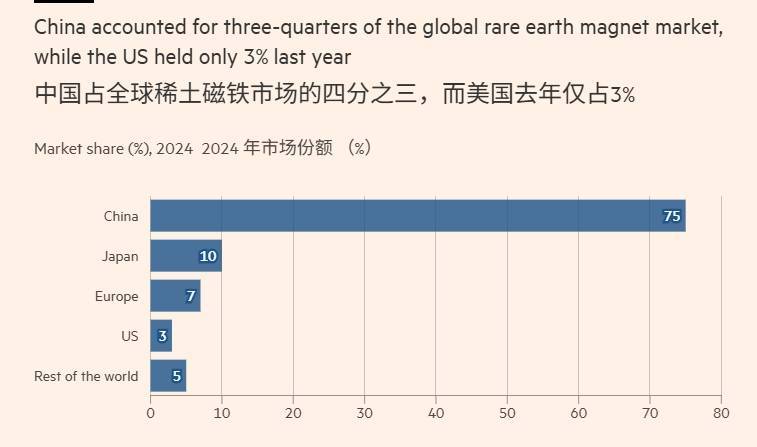
Core Viewpoint - China's recent export controls on rare earths have significantly impacted the fragile trade truce with the U.S., highlighting China's dominance in the global supply of critical minerals and its leverage in trade negotiations with the U.S. [1][5] Group 1: China's Rare Earth Dominance - China accounts for approximately 70% of the global supply of metals used in electric vehicle motors, positioning itself as a critical player in the rare earth market [2] - The country has developed a substantial talent pool and advanced R&D networks in the rare earth sector, making it difficult for the U.S. and its allies to catch up, with estimates suggesting a minimum of five years to do so [2][4] - Rare earths are essential for various technologies, including smartphones, solar panels, electric vehicles, and military equipment, underscoring their strategic importance [1][2] Group 2: Impact on U.S.-China Trade Relations - The recent export restrictions by China are seen as a strategic move to pressure the U.S. for favorable trade agreements, disrupting the U.S. negotiation timeline [1][2] - Analysts suggest that while the U.S. has options to respond, such as proposing tariff reductions, the effectiveness of these measures may be limited compared to the impact of China's rare earth supply control [4][7] - The U.S. Treasury Secretary has indicated that China's actions represent a confrontation with the global community, hinting at potential coordinated responses from U.S. allies [7] Group 3: Economic Implications - Despite a reported over 30% year-on-year decline in China's key mineral exports, analysts believe this will not significantly harm the Chinese economy, as rare earths hold more strategic than economic value [4] - The recent measures are compared to the U.S. Foreign Direct Product Rule, indicating a shift in trade dynamics and China's intent to strengthen its bargaining position in upcoming negotiations [5]
美股异动 | 稀土板块多数下跌 MP Materials(MP.US)跌超4.9%
Zhi Tong Cai Jing· 2025-10-17 15:36
Core Viewpoint - The rare earth sector experienced a decline, with most companies reporting significant drops in stock prices, indicating a bearish trend in the market [1] Company Performance - Energy Fuels (UUUU.US) saw a decline of over 8% [1] - USA Rare Earth (USAR.US) dropped by more than 4% [1] - MP Materials (MP.US) fell by over 4.9% [1] - Critical Metals (CRML.US) was an exception, increasing by more than 1.8% [1]



美媒:再买不到中国稀土,美国不但贸易战打不赢,热战恐怕也要输
Sou Hu Cai Jing· 2025-10-17 15:34
Core Viewpoint - China's new rare earth export regulations, which require strict approvals, have raised concerns in the U.S., highlighting the strategic importance of rare earths in national security and technology [1][5][12] Group 1: China's Position - China has dominated the global rare earth supply chain for the past 30 years, managing everything from mining to processing, which has made it a leader in this industry [3][5] - The new regulations aim to manage resources more effectively, ensuring that exports are controlled based on the buyer and intended use, rather than being sold indiscriminately [5][12] - This move signals a shift in how resource-rich countries view their assets, emphasizing that resources are strategic rather than just commodities [16][21] Group 2: U.S. Response - The U.S. military and defense contractors are particularly alarmed by the new regulations, as rare earths are critical for advanced military technology and weaponry [5][10] - Despite attempts to develop domestic sources and partnerships with allies, the U.S. has struggled to establish a complete supply chain for rare earths, particularly in processing and refining [8][19] - The U.S. has historically relied on sanctions and trade wars, but the current situation reveals vulnerabilities in its industrial base, particularly in securing essential materials [10][21] Group 3: Global Implications - The rare earth conflict is not merely a trade dispute but represents a broader reconfiguration of global supply chains and industrial power dynamics [14][16] - Countries rich in resources are beginning to realize that controlling processing and technology grants them greater influence and respect in international relations [16][21] - The ongoing situation illustrates that the ability to manage and control critical resources will be a key factor in future geopolitical stability and power [21]

被中国拒绝通话,美贸易代表破大防:忍不了,中国在教美国做人
Sou Hu Cai Jing· 2025-10-17 12:43
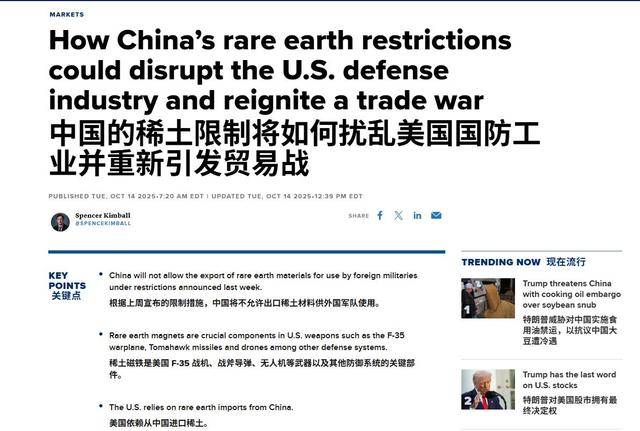
Core Viewpoint - The intensifying trade conflict between China and the U.S. has led to significant retaliatory measures from China, particularly affecting critical sectors such as rare earth materials, high-tech industries, and military applications [1][3]. Group 1: U.S. Response - President Trump criticized China on social media, suggesting a potential 100% tariff increase, which resulted in a loss of $1.65 trillion in U.S. stock market value [3]. - U.S. Vice President Pence expressed a desire for rational negotiations with China, while Treasury Secretary Mnuchin indicated that the 100% tariff may not be implemented, highlighting a complex relationship [3]. - U.S. Trade Representative Lighthizer stated that the decision to impose tariffs depends on China's actions, reflecting a sense of arrogance and a belief in U.S. dominance in global trade [7][10]. Group 2: China's Position - China has firmly rejected U.S. attempts to negotiate under current conditions, emphasizing that high tariffs are not an acceptable approach to dealing with them [10]. - The Chinese government has indicated that it will not easily back down in the face of U.S. pressure, suggesting a shift towards a more aggressive stance in the trade conflict [12].
多家稀土产业链公司业绩将翻倍
Xin Lang Cai Jing· 2025-10-17 12:01
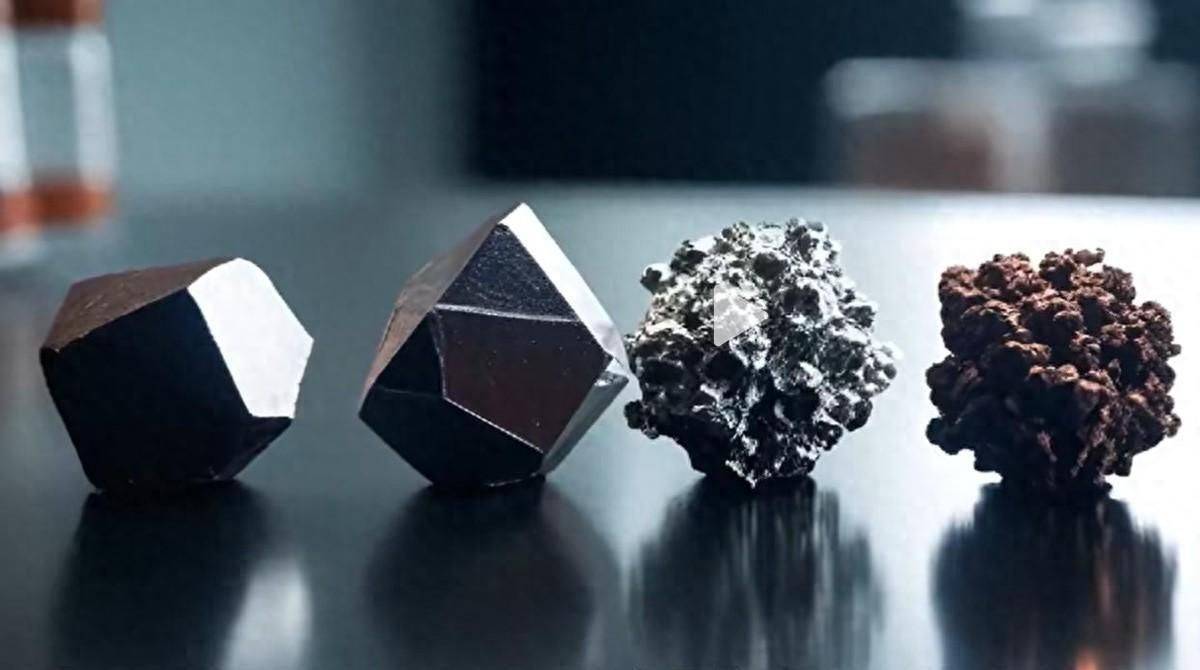
Core Viewpoint - The rare earth industry chain companies are experiencing a significant surge in performance, with several leading firms forecasting a doubling of net profits for the third quarter [1] Company Performance - Northern Rare Earth (600111.SH), Shenghe Resources (600392.SH), and Jien Mining (300748.SZ) have all predicted a doubling of net profits for the third quarter [1] - Guangsheng Nonferrous (600259.SH) has also reported a turnaround, expecting to return to profitability in the third quarter [1] Industry Outlook - The demand for rare earth products is overall positive, with continuous price increases observed [1] - Rare earth resources are becoming a core aspect of national security, as they are essential for high-end manufacturing and strategic emerging industries [1] - The rare earth industry chain is anticipated to enter a new era of high-quality development [1]




金价冲击4400美元
Xin Lang Cai Jing· 2025-10-17 12:00
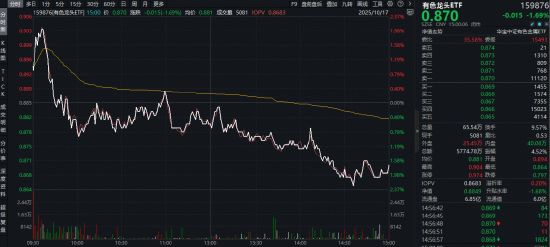
Core Viewpoint - The market is currently consolidating, with the Nonferrous Metal Leaders ETF (159876) experiencing fluctuations, ultimately closing down by 1.69% despite an early gain of over 2% [1][3]. Market Performance - The Nonferrous Metal Leaders ETF (159876) had a total trading volume of 57.74 million yuan and a latest scale of 606 million yuan as of October 16, with an average daily trading volume of 12.2 million yuan in October [1]. - Among the three ETFs tracking the same index, this ETF leads in both scale and liquidity [1]. Component Stocks - Notable performers include the copper leader Baiyin Nonferrous Metals, which hit the daily limit, and lithium leaders Shengxin Lithium and Zhongfu Industrial, both rising over 2% [3]. - The top ten gainers included five gold leaders, with Western Gold rising over 3% and Zhongjin Gold increasing over 2% [3]. - Conversely, stocks like Bowei Alloy and Chuangjiang New Materials saw declines exceeding 6%, negatively impacting the index [3]. Gold Price Influences - International gold prices are approaching 4,400 USD/ounce, driven by three main factors: 1. Historical trends show gold prices typically rise during the Federal Reserve's rate-cutting cycles, with an average increase of 6% within 60 days of such announcements [4]. 2. The recent U.S. government shutdown has heightened risk aversion, increasing demand for gold [5]. 3. The ongoing trend of de-dollarization and diversification of reserve currencies is expected to sustain global central bank gold purchases, with global official gold reserves reaching a record high of 36,274 tons as of June [5]. Future Gold Price Predictions - Some institutions remain optimistic about gold prices, with Bank of America predicting a potential rise to 6,000 USD in spring 2024 [6]. - Current allocations of gold in global investment portfolios are relatively low, indicating room for growth [6]. Sector Opportunities - The rare earth sector is expected to see significant performance in Q3, with companies like Northern Rare Earth and Shenghe Resources projecting substantial profit increases due to rising prices and capacity releases [6]. - In lithium, advancements in solid-state battery technology are anticipated to boost demand, with leading companies maintaining a high self-sufficiency rate in lithium supply [7]. - Copper prices are expected to rise due to supply disruptions, particularly from the Grasberg mine in Indonesia, which is crucial for energy transition and new production capabilities [7]. Long-term Outlook - The nonferrous metals sector is positioned as a key player in the current commodity bull market, driven by long-term capital expenditure cycles and increasing demand for strategic metal resources [8]. - The Nonferrous Metal Leaders ETF (159876) offers a diversified investment approach across various metals, including copper, gold, aluminum, rare earths, and lithium, which can mitigate risks associated with investing in a single metal [10].
包钢集团:建强创新平台 激发新质生产力
Zhong Guo Jin Rong Xin Xi Wang· 2025-10-17 11:38
Core Viewpoint - The Baogang Group is focusing on technological innovation and the integration of research and industry, establishing numerous innovation platforms to enhance high-quality development and support national strategies [1][5][9]. Group 1: Innovation Platforms - Baogang Group has built 14 national-level and 33 regional-level innovation platforms, gathering high-end talent and accelerating industrial upgrades [1]. - The group has received over 1 billion yuan in funding for its 14 national-level innovation platforms and has participated in 2,463 research projects [8]. Group 2: Research and Development - The Rare Earth New Materials Technology Innovation Center has been pivotal in transforming research outcomes, focusing on high-end applications and key technology breakthroughs in the rare earth sector [5]. - The center is conducting 74 research projects in eight fields, including green low-carbon extraction and magnetic materials, and has overcome 11 key industry technologies [5]. Group 3: Collaboration and Projects - The Baogang Group collaborates with various research institutions, such as the Chinese Academy of Sciences, to explore resource extraction and utilization [6]. - The group has initiated 266 research projects in the White Cloud Ebo area, contributing to the national mineral exploration strategy [8]. Group 4: Future Directions - Looking ahead, Baogang Group aims to continue enhancing its research platforms and strengthen the role of technology in supporting industrial growth, contributing to the construction of a technology-driven nation [9].