锂电

Search documents
碳酸锂周报:去库节奏加快,碳酸锂偏强运行-20251027
Zhong Hui Qi Huo· 2025-10-27 06:13
碳酸锂周报: 去库节奏加快,碳酸锂偏强运行 分析师:张清 咨询账号:Z0019679 中辉期货研究院 2025.10.24 本周碳酸锂市场观点摘要 【供给端】本周碳酸锂产量继续增加,周度产量维持在2万以上并创下年内新高。行业平均开工率回升至50%以上,分原料来看, 锂辉石增量受限,云母和盐湖贡献一定增量。 【需求端】乘联分会发布数据,10月1日—19日,全国乘用车市场新能源零售63.2万辆,较去年10月同期增长5%,较上月同期增 长2%,全国乘用车市场新能源零售渗透率为56.1%,今年以来累计零售950.2万辆,同比增长23%;全国乘用车厂商新能源批发 67.6万辆,较去年10月同期增长6%,较上月同期增长5%,全国乘用车厂商新能源批发渗透率为58.5%,今年以来累计批发1112.3 万辆,同比增长30%。 【成本利润】本周矿端价格环比上升。非洲SC 5%报价为605美元/吨,环比上周上涨15美元;澳大利亚6%锂辉石到岸价为908美元 /吨,环比上周上涨73美元/吨;锂云母市场价格为2525元/吨,环比上周上涨195元。碳酸锂生产成本为68679元/吨,环比上周增 加1537元,碳酸锂行业利润为7424元/吨 ...
高工锂电15周年策划 | 付文辉:智能装备企业必须坚持长期主义
高工锂电· 2025-10-27 04:10
Group 1 - The core viewpoint emphasizes that the lithium industry has experienced several cycles of volatility, and smart equipment companies must adopt different development strategies at various stages [2] - During the upward cycle, companies should seize opportunities for rapid growth, while in the downturn, they need to maintain their fundamentals and prepare for the next cycle [2] - The lithium battery industry presents vast development prospects but also faces challenges such as rapid technological iteration and intense market competition [2] - Companies in the smart equipment sector must adhere to a long-term development approach to maintain their competitive edge and sustain leadership in the industry [2]


增长未止步 轻装上阵迎发展新阶段
Zhong Guo Neng Yuan Wang· 2025-10-27 02:09
Core Viewpoint - In the competitive landscape of the lithium battery industry in 2025, EVE Energy (300014.SZ) reported strong performance in its Q3 results, showcasing significant growth in both revenue and profit despite previous challenges related to one-time accounting impacts and incentive costs [1][2]. Financial Performance - In Q3 2025, EVE Energy achieved a revenue of 16.832 billion yuan, marking a year-on-year increase of 35.85%, setting a new record for quarterly revenue [1]. - The net profit attributable to shareholders reached 1.211 billion yuan, reflecting a year-on-year growth of 15.13% and a substantial quarter-on-quarter increase of 140.16% [1]. - For the first three quarters of 2025, cumulative revenue was 45.002 billion yuan, up 32.17% year-on-year, with a net profit of 2.816 billion yuan [2]. - Excluding the impacts of stock incentive costs and bad debt provisions, the net profit for the first three quarters would have been 3.675 billion yuan, indicating an 18.40% year-on-year increase [2]. Market and Customer Expansion - EVE Energy has expanded its customer base in the power battery sector, adding two new passenger car customers and increasing the number of compatible models to ten [3]. - The company has established partnerships with major automotive brands, including GAC Aion, BAIC, Geely, and BMW, enhancing its market presence [3]. - In the energy storage segment, EVE Energy's battery shipments reached 48.41 GWh in the first three quarters, a year-on-year increase of 35.51% [4]. Industry Trends and Demand - The domestic energy storage market is experiencing growth due to supportive policies and market reforms, with a projected doubling of installed capacity by 2027 [4]. - The global energy storage market is also expected to see significant growth, with a forecasted increase in global shipments to over 390 GWh in 2025, up 16% year-on-year [5]. Technological Advancements - EVE Energy is focusing on key technological advancements, particularly in large cylindrical batteries, which are becoming the mainstream choice for high-performance vehicles [6]. - The company has successfully mass-produced large cylindrical batteries, achieving over 60,000 units in production and establishing a competitive edge in the market [6]. - EVE Energy is also advancing in solid-state and sodium-ion battery technologies, expanding its product matrix and market opportunities [7]. Future Outlook - The company is expected to benefit from the production ramp-up of BMW's new generation models and the delivery peaks of new customer vehicles, leading to increased sales of large cylindrical batteries [8]. - With the reduction of stock incentive costs anticipated in 2026, EVE Energy is positioned for improved profit margins alongside revenue growth [8].

储能锂电需求强劲、风电看海风和出海 | 投研报告
Zhong Guo Neng Yuan Wang· 2025-10-27 01:33
Industry Overview - In September, lithium battery and solid-state battery sales reached 1.6 million units, representing a month-on-month increase of 25% and a year-on-year increase of 15%. The annual growth is expected to be 30%, with a projected growth of over 15% in 2026 [1][7] - In Europe, the combined electric vehicle sales in nine major countries reached 310,000 units in September, showing a month-on-month increase of 35% and a year-on-year increase of 76%. The annual growth forecast has been revised up to 30-35% [1][7] - The energy storage sector continues to show strong performance, with battery supply unable to meet demand. Production is expected to increase by 10% in October, with further slight increases anticipated in November, indicating sustained high demand [1][7] Company Performance - CATL reported a revenue of 283.072 billion yuan for the first three quarters of 2025, a year-on-year increase of 9.28%, with a net profit of 49.034 billion yuan, up 35.56% [5] - Huichuan Technology expects a revenue of 31.663 billion yuan for the first three quarters of 2025, a year-on-year increase of 24.67%, with a net profit of 4.254 billion yuan, up 26.84% [5] - Yiwei Lithium Energy anticipates a revenue of 4.5 billion yuan for the first three quarters of 2025, a year-on-year increase of 32.17%, with a net profit of 2.816 billion yuan, down 11.7% [5] - Tongwei Co. reported a revenue of 646 billion yuan for the first three quarters of 2025, a year-on-year decrease of 5.38%, with a net loss of 5.37 billion yuan [5] - Aosheng Technology expects a revenue of 73.99 billion yuan for the first three quarters of 2025, a year-on-year increase of 33.92%, with a net profit of 5.03 billion yuan, up 8.3% [5] Market Trends - The demand for energy storage is expected to grow by 30-40% in the coming years, driven by the U.S. Inflation Reduction Act and increasing demand in Europe and the Middle East [7] - The lithium battery sector is experiencing a price increase of 1-3 cents per watt-hour, with expectations for further price increases in Q4 [7] - The wind power sector is projected to see significant growth, with domestic offshore wind capacity expected to double in 2025 [8] Investment Recommendations - Companies such as CATL, Yiwei Lithium Energy, and Aosheng Technology are highlighted as strong investment opportunities due to their market leadership and growth potential [9] - The report emphasizes the importance of focusing on energy storage and lithium battery sectors, with a recommendation to invest in leading companies in these areas [9]




储能与AI电力再更新
2025-10-27 00:30
Summary of Key Points from Conference Call Records Industry Overview - The energy storage and AI sectors are critical for future renewable energy development, with a significant increase in data center installations expected in the U.S. by 2026, driven by the removal of grid access bottlenecks [1][2] - The domestic wind energy development targets have been raised, with policies shifting towards demand-side control, promoting models like green electricity direct connection and source-grid-load-storage [1][4] Key Companies and Their Performance Tesla - Emphasized the importance of battery storage as a flexible resource, capable of doubling U.S. electricity output without new power plants [5] - Noted a significant increase in demand for AI and data center applications [5] CATL (宁德时代) - Reported Q3 results in line with expectations, with potential for exceeding growth in commercial vehicles and energy storage [8] - Anticipated 2026 profits between 92 to 93 billion yuan, supported by supply chain strategies to mitigate raw material price increases [9] EVE Energy (亿纬锂能) - Q3 performance slightly below expectations due to one-time rebates for major clients, but Q4 is expected to see a rise in both volume and profit for energy storage batteries [10] - Projected 2026 profits between 8.2 to 8.3 billion yuan, with a significant increase in overseas client contributions [10] Sungrow Power Supply (阳光电源) - Benefiting from overseas energy storage growth, with an upward revision of 2026 profit estimates to between 18 to 19 billion yuan [6][7] Market Trends and Projections - The lithium battery supply chain is approaching a supply-demand inflection point, with potential price increases in lithium hexafluorophosphate and lithium iron phosphate processing fees expected by 2026 [3][11] - The battery industry may see a general price increase in 2026, with a shift in profit distribution across the lithium battery supply chain [12][13] Regulatory and Policy Impacts - U.S. Energy Secretary's directive to expedite data center grid access approvals from 3-5 years to 60 days could significantly increase electricity demand and prices in 2026 [2] - The shift in domestic policies towards demand-side control is expected to enhance the development of high-utilization, stable-output renewable energy supported by energy storage technologies [4] Additional Insights - The gas turbine market in the U.S. is experiencing strong order growth, with GE and Westinghouse reporting higher-than-expected new orders, indicating a robust demand outlook despite recent stock price adjustments [18][19] - The nuclear power sector is seeing renewed interest, with potential for new large-scale projects and a significant increase in uranium prices expected by 2027 [22] Conclusion - The energy storage and lithium battery sectors are poised for significant growth, driven by regulatory changes, technological advancements, and increasing demand from data centers and commercial vehicles. Key players like Tesla, CATL, EVE Energy, and Sungrow are well-positioned to capitalize on these trends.

以双碳目标牵引全面绿色转型,十五五战略目标已清晰勾勒
SINOLINK SECURITIES· 2025-10-26 09:17
Investment Rating - The report maintains a "Buy" rating for key companies in the wind energy sector, including Goldwind Technology, Yunda Co., and Mingyang Smart Energy, based on their competitive advantages and expected market share growth [9][12]. Core Insights - The report outlines China's strategic tasks in the energy sector during the 14th Five-Year Plan, emphasizing a green transition driven by dual carbon goals, including specific measures such as carbon emission control, industrial decarbonization, and the development of renewable energy [6][13]. - The wind energy sector is expected to see a significant increase in installed capacity, with a target of no less than 120GW of new installations annually during the 14th Five-Year Plan, including at least 15GW from offshore wind [7][5]. - Hydrogen energy has been recognized as a key future industry, with strong policy support anticipated to accelerate its industrialization and commercialization, positioning it as a new growth driver [13][15]. Wind Energy - The "Wind Energy Beijing Declaration 2.0" has revised the market's expectations for wind power installations, indicating a slowdown in the trend of larger wind turbines, with a focus on products that meet market demands for power trading [7][8]. - Goldwind's Q3 performance exceeded expectations, with a revenue increase of 25.4% year-on-year and a net profit growth of 170.6% [9]. - The competitive landscape in the wind turbine sector is expected to undergo a "value reshaping" as companies adapt to market conditions and enhance product offerings [7][8]. Hydrogen and Fuel Cells - Hydrogen energy has been elevated to a national strategic level, with policies expected to support its rapid development and integration into various sectors [13][15]. - The report highlights the acceleration of green hydrogen projects and the rising demand for fuel cell vehicles, indicating a significant market opportunity [14][15]. - The establishment of a complete commercial model for green hydrogen in shipping is seen as a breakthrough that could lead to broader applications in other industries [15][16]. Photovoltaics and Energy Storage - The introduction of new measures in Henan Province is expected to enhance the profitability of independent energy storage projects, confirming the report's previous assertions about the growing demand for large-scale energy storage [17][18]. - The export of photovoltaic components remains strong, with a notable increase in shipments to emerging markets, indicating sustained demand [19][20]. - The report suggests a bottom-up investment approach in the solar and storage sectors, focusing on leading companies and innovative technologies [20]. Lithium Batteries - The lithium battery sector is experiencing a surge in demand, with some negative electrode manufacturers raising prices due to increased production capacity utilization [21][24]. - A significant breakthrough in solid-state battery technology has been achieved by XINWANDA, with a new polymer solid-state battery reaching an energy density of 400Wh/kg [26][27]. - The report emphasizes the importance of strategic partnerships in the lithium battery supply chain, particularly for enhancing sustainability and competitive advantage [22].



锁定10万吨磷酸铁锂大长单,丰元再签头部电池客户
高工锂电· 2025-10-26 08:21
Core Viewpoint - The lithium battery industry is undergoing a significant supply chain reshuffle, with stronger binding among various segments, leading to a new competitive landscape. Stable material supply is crucial for battery manufacturers, while material companies benefit from rising lithium carbonate prices and securing orders from leading enterprises to mitigate future risks [2]. Group 1: Market Dynamics - In 2025H1, China's lithium iron phosphate (LFP) material shipment is projected to reach 1.61 million tons, a year-on-year increase of 68% [4]. - The top 10 energy storage battery companies have an average capacity utilization rate of 80%, with some nearing 90%, indicating robust demand for materials driven by full production and sales from battery companies [3][5]. - The lithium battery market has seen high order volumes in the first half of the year, with LFP battery installations accounting for 81.4% of total installations in the power market [4]. Group 2: Company Developments - Fengyuan Lithium Energy has achieved full production in Q3 2025, supported by a three-year order of 100,000 tons of lithium iron phosphate from Chuangneng New Energy [4][8]. - The collaboration between Fengyuan Lithium Energy and Chuangneng New Energy aims to enhance the iteration and cost optimization of cathode materials, driving technological innovation and industry upgrades [7]. Group 3: Product Evolution - The demand for higher-density lithium iron phosphate (≥ 2.6g/cm³) is becoming essential for the performance upgrades of power and energy storage batteries [12]. - Fengyuan Lithium Energy has developed a fourth-generation product with a powder density of 2.6g/cm³, which has already entered mass production, while the fifth-generation product (2.7g/cm³) is being validated for large-scale output [12][14]. - The next-generation energy storage batteries, such as the 588Ah model, are expected to drive demand for higher-density lithium iron phosphate materials [11][13].


卫蓝新能源/航盛锂能/超业精密/当升科技/孚能科技/易鸿智能/新宙邦/誉辰智能等企业亮相 高工金球奖第三批公示(持续更新)
高工锂电· 2025-10-26 08:21
Core Viewpoint - The article highlights the upcoming 2025 High-Performance Lithium Battery Annual Conference and the Golden Ball Awards, emphasizing the event's significance in recognizing innovation and excellence in the lithium battery industry [2][24]. Group 1: Event Details - The 2025 High-Performance Lithium Battery Annual Conference will take place from November 18-20, 2025, at the JW Marriott Hotel in Shenzhen [2]. - The event is organized by GGII and features various sponsors, including HaiMuxing Laser and Dazhu Lithium Battery [2]. - The Golden Ball Awards, often referred to as the "Oscar of the lithium battery industry," aims to recognize credible products and brands within the sector [2]. Group 2: Participating Companies - Over 160 companies are participating in the 2025 Golden Ball Awards evaluation, showcasing the industry's growth and competitiveness [2]. - Notable participants include Beijing Weilan New Energy, which focuses on solid-state lithium batteries and has achieved significant technological breakthroughs [3]. - Hangsheng Lithium Energy specializes in new energy battery materials and has a planned annual production capacity of 200,000 tons for electrolyte [6]. Group 3: Technological Innovations - Solid-state lithium batteries developed by Weilan New Energy demonstrate superior safety features, including extended time before thermal runaway occurs compared to liquid batteries [4]. - Changsheng Lithium Energy has developed high-energy density battery technologies and is advancing solid-state electrolyte products, expecting significant revenue growth by 2026 [6]. - Beijing Dingsheng Materials has made strides in solid-state lithium battery materials, achieving high capacity and long cycle life, with energy density exceeding 400 Wh/kg [9][10]. Group 4: Industry Trends - The lithium battery industry is experiencing rapid innovation, with companies like Yihong Intelligent Equipment focusing on automated production solutions to enhance efficiency and quality [14][21]. - The market is seeing a shift towards solid-state technologies, with multiple companies investing in research and development to meet the growing demand for safer and more efficient battery solutions [3][9][10].

华盛锂电发布前三季度业绩,归母净亏损1.03亿元
智通财经网· 2025-10-26 07:39
智通财经APP讯,华盛锂电(688353.SH)发布2025年三季度报告,该公司前三季度营业收入为5.39亿元, 同比增长62.29%。归属于上市公司股东的净亏损为1.03亿元。归属于上市公司股东的扣除非经常性损益 的净亏损为1.16亿元。基本每股亏损为0.66元。 ...

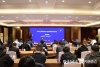
2025山东省锂电产业创新应用发展会议顺利召开
Qi Lu Wan Bao Wang· 2025-10-26 04:03
Core Insights - The 2025 Shandong Province Lithium Battery Industry Innovation Application Development Conference was successfully held in Zaozhuang, highlighting the region's commitment to advancing the lithium battery sector [1][3] - The conference featured over 60 participants, including representatives from academic institutions and lithium battery companies, indicating strong industry collaboration [1][3] Industry Development - Zaozhuang has been recognized as one of the "Most Competitive Cities in China's Lithium Battery Industry" due to its robust lithium battery ecosystem and government support [5] - The conference emphasized the importance of technological innovation and collaboration among government, enterprises, and research institutions to overcome core technology bottlenecks in the lithium battery sector [5] Market Performance - Shandong Province's new energy battery industry is projected to exceed 100 billion yuan in scale by 2024, with a year-on-year growth of over 20%, contributing approximately 7.6% to the national total output [7]