天然气

Search documents
顶级能源专家警告:全球市场或面临史上最大规模石油断供
财富FORTUNE· 2026-03-11 13:06
Core Viewpoint - The ongoing conflict between the U.S. and Iran is evolving into a global energy crisis, exacerbated by the blockade of the Strait of Hormuz, which is critical for oil transportation [2][3]. Group 1: Oil Production and Pricing - Major oil-producing countries are forced to cut production due to the inability to export oil, leading to saturated storage facilities [4]. - Iraq has reduced its oil production by approximately 60%, from around 4.3 million barrels per day to between 1.7 million and 1.8 million barrels per day. Kuwait and the UAE have also followed suit with production cuts [5]. - Since the outbreak of the conflict, crude oil prices have surged by 36%, with Brent crude oil priced at $92.69 per barrel and West Texas Intermediate at $90.90 per barrel [5][6]. Group 2: Natural Gas Market Impact - Qatar has been compelled to lower its liquefied natural gas production, significantly impacting the LNG market. Asian spot prices for LNG have nearly doubled, while European natural gas prices have increased by about 50% since the conflict began [5]. - The potential for severe damage to energy infrastructure and a prolonged blockade of the Strait of Hormuz raises concerns about long-term supply shortages [5]. Group 3: Geopolitical Tensions and Military Actions - The U.S. and Iran show no signs of backing down, with the U.S. demanding unconditional surrender from Iran and Iran vowing to continue its military actions, including targeting civilian infrastructure [6]. - The logistical challenge of protecting numerous oil tankers in the region is significant, and the threat posed by Iranian drones complicates the situation further [7].


高盛闭门会-中东局势动荡后的全球能源商品与股票市场展望
Goldman Sachs· 2026-03-11 08:12
Investment Rating - The report indicates a positive outlook for the energy sector, particularly for U.S. refining companies and chemical industries, suggesting potential investment opportunities due to current market dynamics [11][20]. Core Insights - The geopolitical tensions in the Middle East, particularly the risks associated with the Strait of Hormuz, could lead to significant increases in oil prices, potentially exceeding $150 per barrel if supply disruptions persist [1][3]. - The global natural gas market is experiencing significant divergence, with prices in Asia and Europe expected to rise above $20 per million British thermal units, while U.S. prices remain relatively stable due to export capacity limits [5][16]. - U.S. refining companies are positioned advantageously due to their ability to source both heavy and light crude oil, coupled with a cost advantage in natural gas, which is expected to enhance their profitability in the current market [11][12]. Summary by Sections Oil Market Dynamics - Brent crude oil prices are nearing $120 per barrel, with potential for further increases if supply disruptions continue, particularly from the Strait of Hormuz, which has seen a reduction of approximately 18 million barrels per day in exports [3][9]. - The tightness in refined oil products is more pronounced than in crude oil, with jet fuel prices experiencing significant spikes due to supply chain disruptions [9][10]. Natural Gas Market - The Asian JKM and European TTF natural gas prices are projected to rise significantly, driven by supply disruptions from Qatar, which accounts for 20% of global gas supply [5][15]. - U.S. natural gas prices remain independent of global fluctuations due to export capacity constraints, providing a competitive edge in the domestic market [5][16]. Chemical Industry Outlook - The U.S. chemical sector is poised to benefit from a steepening cost curve, with increased operational rates expected to enhance EBITDA significantly, despite long-term pressures from new capacities in China [20][21]. - Companies like Methanex are highlighted as potential investment opportunities due to their exposure to market dynamics influenced by geopolitical tensions affecting supply chains [21]. Refining Sector Performance - U.S. refining companies have shown strong stock performance, with a 30% increase in stock prices this year, driven by rising refining margins and favorable market conditions [11][12]. - The report emphasizes the structural advantages of U.S. refiners, particularly in the context of global supply constraints and rising product prices [11][12]. Geopolitical Impact - The ongoing geopolitical risks in the Middle East are expected to have lasting effects on oil and gas supply chains, necessitating a reevaluation of investment strategies in the energy sector [14][19].
如果油价居高不下
HTSC· 2026-03-11 02:45
Group 1: Impact of Middle East Conflict on Oil Prices - The ongoing military conflict in the Middle East is expected to significantly impact global oil supply, with potential reductions of 14-16 million barrels per day, accounting for approximately 15% of global supply[2] - The conflict has already led to a 28% increase in Brent crude oil prices since its outbreak, indicating a strong market reaction to geopolitical tensions[32] - The physical blockade of the Strait of Hormuz, which transports about 20 million barrels of oil daily, represents a critical supply disruption, with implications for global oil prices being non-linear[19] Group 2: Economic Consequences of High Oil Prices - If the average oil price rises to $80 per barrel, global GDP growth could decline by 0.1-0.3 percentage points, while inflation could increase by 0.5-0.6 percentage points; at $100 per barrel, the impacts could worsen to a 0.5-0.8 percentage point decline in growth and a 1.5-2.0 percentage point increase in inflation[3] - High oil prices are likely to exacerbate inflationary pressures in major economies, with U.S. CPI potentially rising to 3.1% or 3.5% if oil prices reach $80 or $100 per barrel, respectively[43] - Countries with high energy dependence, such as those in South Asia and Europe, are expected to suffer income losses, while energy-exporting nations may benefit from increased revenues[3] Group 3: Financial Market Reactions - Historical data suggests that high-intensity energy supply shocks can lead to increased inflation expectations, pushing up bond yields and risk premiums[4] - The U.S. dollar is likely to strengthen in response to rising oil prices, with potential increases in the dollar index of 0.6-2.3% at $80 per barrel and 1.2-3.6% at $100 per barrel[4] - Emerging market currencies and those of net energy importers may weaken under the dual pressures of a stronger dollar and deteriorating trade conditions[4] Group 4: Broader Commodity and Asset Price Effects - Rising oil prices are expected to increase the prices of alternative energy sources and precious metals, while negatively impacting the demand and prices of other industrial commodities[5] - The tightening liquidity resulting from higher oil prices and a stronger dollar is likely to elevate risk premiums, compressing valuations of risk assets[5] - The conflict's impact on energy supply is anticipated to disrupt the production and transportation of other commodities, leading to increased costs and extended delivery times across global supply chains[21]
欧洲:伊朗战事的最大输家?
虎嗅APP· 2026-03-10 14:06
Core Viewpoint - The article discusses the severe economic consequences of the ongoing military conflict involving Iran, particularly its impact on global oil prices and Europe's energy supply chain [5][6][9]. Oil Price Fluctuations - Oil prices surged to $119 per barrel, the highest since 2022, due to concerns over global oil supply, before retreating to below $100 after G7 finance ministers indicated readiness to use emergency oil reserves [6][7]. - The conflict has led to significant disruptions in oil supply, with Gulf oil-producing countries reducing output, potentially marking one of the largest oil supply interruptions in history [6][9]. Europe's Energy Vulnerability - Europe is particularly vulnerable due to its reliance on imported refined oil products, especially diesel and aviation fuel from the Middle East, despite having a relatively low dependence on crude oil imports [10][12]. - The ongoing conflict has caused a spike in aviation fuel prices in Europe, reaching the highest levels since early 2023, due to disruptions in shipping routes through the Strait of Hormuz [10][12]. Supply Chain Disruptions - The conflict has severely impacted Europe's supply chains, with 20% of global maritime oil and 18% of global air freight being disrupted, leading to significant delays and increased costs for European industries [14][15]. - Key sectors such as pharmaceuticals and chemicals are facing acute shortages and price surges due to their reliance on Middle Eastern supply routes, which have been effectively blocked [15][16]. Central Bank Responses - The European Central Bank and other central banks may be forced to raise interest rates in response to rising energy prices, which have reignited inflation concerns in the Eurozone [17][18]. - The conflict has complicated fiscal policies for European governments, which are already constrained by high debt levels and previous pandemic-related expenditures, limiting their ability to respond effectively to rising energy costs [19][20]. Strategic Oil Reserves - The G7 finance ministers discussed the potential release of strategic oil reserves to stabilize prices, but no consensus was reached on the amount to be released [22][24]. - The strategic oil reserves of European countries are relatively low compared to the U.S., making them more vulnerable to supply disruptions [25][26].

中东能源行业战略:霍尔木兹海峡长期封锁或将推升油价至超100美元/桶
Haitong Securities International· 2026-03-10 11:47
Investment Rating - The report assigns an "Outperform" rating to several companies in the Middle East energy sector, including Abu Dhabi National Oil Company and various other firms, indicating a positive outlook for their stock performance [2]. Core Insights - The report highlights that a potential long-term blockade of the Strait of Hormuz could drive oil prices above $100 per barrel, with estimates suggesting a nominal supply shock of up to 20 million barrels per day in a pessimistic scenario [5][6]. - In the event of a blockade lasting more than 14-30 days, Brent crude prices could test or exceed the $100-$120 per barrel range due to sustained supply shortages [6]. - The report also discusses the cost of oil production, noting that OPEC's production costs are generally low, with Saudi Aramco's extraction cost around $3-4 per barrel, while the fiscal breakeven price for Saudi Arabia is significantly higher, estimated at $80-90 per barrel [8]. Summary by Sections Investment Focus - Abu Dhabi National Oil Company is rated "Outperform" with a target price of $3.9 and projected P/E ratios of 15.7 for 2026 and 14.9 for 2027 [2]. - Other companies such as Borouge, Fertiglobe, and Clearway Energy also received "Outperform" ratings, indicating strong expected performance in the market [2]. Geopolitical Risks - The report emphasizes the escalating geopolitical tensions in the Middle East, particularly between the U.S. and Iran, which could impact oil supply and prices significantly [5]. - The potential for U.S. underestimating Iran's resolve and capabilities in the region is highlighted as a critical factor influencing market dynamics [5]. Supply and Demand Analysis - The report provides a detailed analysis of global oil supply and demand, projecting that OPEC's production will need to adjust to meet changing market conditions, with specific figures for 2025-2027 demand and supply balances [12]. - It notes that the International Energy Agency and OPEC have differing projections for global oil demand, with slight increases expected over the coming years [12]. Price Trends - Recent price trends indicate fluctuations in Brent crude and WTI prices, with Brent averaging around $72.5 per barrel as of late February 2026, reflecting a 1% increase from the previous week [18]. - The report also discusses the implications of these price movements on various energy products and their respective margins [18].
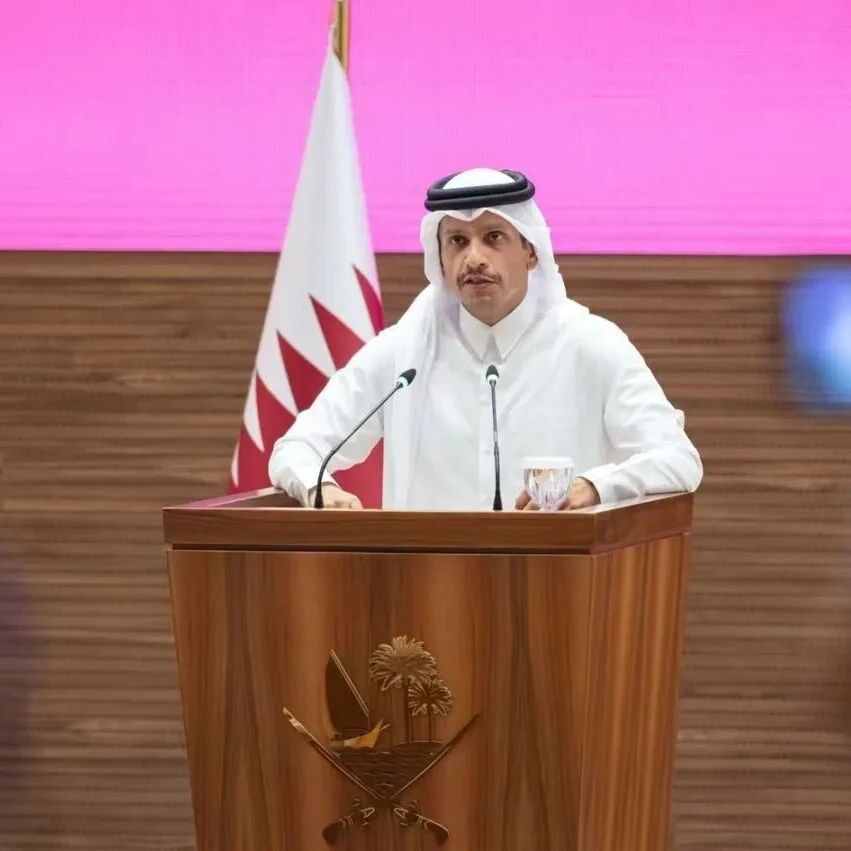
卡塔尔首相:局势稳定后将全面恢复能源供应
中国能源报· 2026-03-10 11:34
Group 1 - The Prime Minister of Qatar, Mohammed, stated that Qatar is committed to maintaining global energy market stability and will fully resume energy supplies once regional stability is restored [3] - Current regional conflicts pose serious risks to both regional security and the global energy market and supply chains [3] - Qatar's decision to suspend liquefied natural gas production is a temporary precautionary measure due to drone attacks on its energy facilities [3] - Qatar holds the third-largest natural gas reserves globally and is one of the most important natural gas producers [3]
广汇能源20260309
2026-03-10 10:17
Summary of Guanghui Energy Conference Call Company Overview - **Company**: Guanghui Energy - **Date**: March 9, 2026 Key Points Industry and Market Dynamics - **LNG Pricing Mechanism**: Long-term contracts for LNG are linked to a mix of Brent crude oil (3-month average) and Henry Hub (10-day spot price), resulting in a lag in cost transmission from short-term oil price fluctuations. Current international sales cost is approximately $9 per million British thermal units (MMBtu), indicating strong competitiveness [2][3][4] - **Coal Chemical Sector**: The coal chemical segment is advancing through technological upgrades and new projects, with expectations to stabilize ethylene glycol production at 400,000 tons by 2026. The capacity for quality coal is projected to increase from 3.7 million tons to 5.1 million tons, and coal-to-oil production is expected to exceed 1.2 million tons [2][6] - **Coal Production Goals**: The target for raw coal production in 2026 is over 65 million tons, with external sales of 59 million tons. The eastern mining area has received "priority development" approval, with production expected to be released starting in 2027, supporting the goal of 100 million tons in sales during the 14th Five-Year Plan [2][8] Financial Performance and Projections - **Profit Forecast**: The company anticipates a net profit range of 1.32 to 1.47 billion yuan for 2025, with a clear dividend policy stating that cumulative dividends from 2025 to 2027 will not be less than 90% of the average annual net profit, translating to approximately 30% per year [2][14][15] Operational Insights - **LNG Supply Strategy**: The company has a 10-year LNG supply contract with Total, starting in 2020 and ending in 2030, with an annual delivery of 12 ships, totaling approximately 700,000 to 800,000 tons. The pricing mechanism is designed to stabilize supply despite geopolitical tensions affecting international gas prices [3][4] - **Coal Chemical Product Pricing**: Recent price rebounds in coal chemical products include methanol rising from 1,300 yuan to over 1,900 yuan per ton, and coal-to-oil products expected to exceed 3,000 yuan per ton. The company maintains a competitive cost structure due to its own coal supply [2][6] Exploration and Development - **Kazakhstan Oil and Gas Exploration**: The exploration at the Zaisan oil and gas field in Kazakhstan has exceeded expectations, with plans to transition from exploration to production by 2026, aiming for an annual output of 3 million tons during the 14th Five-Year Plan [2][10][11] Additional Considerations - **Market Adaptability**: The company has maintained flexibility in its sales strategy, shifting focus between domestic and international markets based on price competitiveness. The current cost structure remains stable, with profitability largely dependent on spot market prices [3][5] - **Future Projects**: Ongoing projects in coal chemical production are expected to be completed by the end of 2028, with significant capital expenditures anticipated in 2027, 2028, and 2029 [6][13] This summary encapsulates the essential insights from Guanghui Energy's conference call, highlighting the company's strategic positioning, financial outlook, and operational developments within the energy sector.

突发!黎巴嫩出击!以军空袭伊朗核实验室!普京最新发声,欧洲突陷紧急状态
券商中国· 2026-03-10 06:45
Group 1 - The Lebanese Hezbollah launched missiles at an Israeli military factory in response to Israeli attacks on Lebanese towns [1][3] - Hezbollah also targeted Israeli settlements and military gathering points in northern Israel [3][4] Group 2 - Russian President Putin emphasized the importance of energy supply security and expressed willingness to cooperate with European countries on oil and gas supplies [6][7] - Putin warned that reliance on oil transport through the Strait of Hormuz could soon be completely disrupted, leading to increased oil and gas prices [6][7] Group 3 - Goldman Sachs reported that the ongoing conflict in Iran poses significant energy risks, adjusting their stock rating to tactical neutrality and favoring cash [9] - The report indicated that if oil flow through the Strait of Hormuz remains low, prices could exceed previous peaks from 2008 and 2022 [9] Group 4 - Economic forecasts suggest that inflation rates could average 3% by 2026, higher than the previous year's average of 2.6%, impacting the Federal Reserve's ability to provide market support [9][10] - Analysts predict that sustained high oil prices may lead to a delayed easing of monetary policy by the Federal Reserve [10]

别再只盯着原油!“霍尔木兹危机”对这一能源冲击更大
财联社· 2026-03-10 03:29
据了解,全球大约20%的液化天然气都要经由霍尔木兹海峡运输,其中大部分来自卡塔尔。数据显示,仅仅卡塔尔一国,就贡献 了全球近20%的LNG出口量。 上周,在伊朗无人机袭击后,全球液化天然气出口的绝对巨头——卡塔尔能源公司,发布了一则震动全球的公告:其位于拉斯拉凡工业城 (Ras Laffan)的全球最大LNG出口综合设施,因遭受军事袭击而被迫全面停产。公司同时宣布,液化天然气的交付遭遇"不可抗力"。 周一早些时候,由于霍尔木兹海峡航运几乎停滞,国际油价直线飙升。 但有分析指出,海峡关闭对液化天然气(LNG)市场的长期影响可 能更为严重,部分原因是液化天然气比原油更难运输,而且其生产也更加集中。 Munton还表示,全面重启运营需要数周而非数天时间,并补充说,整个工厂此前从未停产过。 "我认为在这场冲突发生的最初几天——现在才一周,人们还没有意识到卡塔尔将停摆多久,以及这将对全球供应和全球市场产生怎样的影 响,"他补充称。 没有替代供应 受此消息影响,全球天然气价格迅速飙升:欧洲天然气价格上周大涨63%,创下几乎自2022年3月俄乌冲突爆发以来最大单周涨幅。亚洲天 然气价格则更高,周一早盘报每百万英热单位23. ...
油价回落,日韩市场大幅高开
Wind万得· 2026-03-10 00:36
Oil Market - Oil prices continue to decline, with Brent crude trading above $91 per barrel and WTI crude trading below $90 per barrel [2] - Current prices for WTI crude are $87.87, down 7.28%, and for Brent crude are $91.81, down 7.23% [3] Economic Data - Japan's Q4 actual GDP annualized quarter-on-quarter final value is 1.3%, exceeding the expected 1% and initial value of 0.2% [4] - South Korea's GDP growth for 2025 is projected at 1%, consistent with previous forecasts, while Q4 GDP growth is 1.6%, slightly above the expected 1.5% [4] Geopolitical Factors - U.S. President Trump announced a temporary lifting of some oil-related sanctions to ensure sufficient oil supply and lower prices, although specific details were not provided [5] - Trump's comments also included threats towards Cuba and plans to transport 100 million barrels of oil from Venezuela [5] - Japan's Finance Minister stated that the decline in oil futures is a result of the G7's unified stance, though it remains uncertain if the drop is sufficient [5]