
服务

Search documents
【齐鲁创业嘉年华】2025山东(济南)连锁加盟展览会
Sou Hu Cai Jing· 2025-08-07 02:20
Group 1 - The core viewpoint of the article emphasizes that chain franchising has become a key engine of business innovation in the context of consumption upgrades and digitalization [1][11] - Jinan, as a major economic hub and a node city of the "Belt and Road" initiative, is highlighted for its strategic importance in the expansion of chain brands due to its large population base of 100 million and a retail sales total of 3.8 trillion yuan [1][3] - The upcoming annual event focusing on the chain franchising industry will take place from November 21 to 23, 2025, at the Shandong International Exhibition Center, featuring a significant exhibition area and a large number of participating brands [1][3] Group 2 - The exhibition is strategically scheduled over the weekend to accommodate entrepreneurs, allowing them to engage fully in the event and make informed decisions quickly [3][5] - The event will cover four major industries: catering, retail, education, and services, with an expected attendance of over 50,000 professional visitors [3][5] - The exhibition aims to serve as a comprehensive resource hub for the entire industry chain, facilitating connections between brand owners and potential franchisees [3][5] Group 3 - Participants will have opportunities to enhance brand visibility and market expansion through innovative display activities and direct engagement with investors and agents [5][9] - The event will feature various sectors, including food and beverage, education, and retail, providing a platform for investors to explore potential investment projects [5][9] - The exhibition will also include thematic forums and industry seminars, offering insights into new trends and opportunities in the franchising sector [9][11]



上半年新登记经营主体增长超九成,广州黄埔再现“创业热”
2 1 Shi Ji Jing Ji Bao Dao· 2025-08-03 12:14
Economic Performance - Huangpu District's GDP reached 206.91 billion yuan in the first half of 2025, with a year-on-year growth of 4.0% at constant prices, indicating a stable economic recovery [1] - The district's industrial output value for above-scale enterprises was 395.1 billion yuan, with significant contributions from the automotive industry, particularly in new energy vehicles, which achieved an output value of 62.36 billion yuan, growing by 8.7% [1] - The integrated circuit industry saw a 17.1% increase in output value, while the energy sector reported an output value of 90.62 billion yuan, maintaining positive growth [1] Investment and Consumption - Huangpu District accounted for 23% of the city's total fixed asset investment, with 235 newly signed industrial projects and a total agreed investment exceeding 100 billion yuan [2] - The social retail sales in Huangpu reached 93.8 billion yuan, representing 16.7% of the city's total, with a growth rate of 11.2%, and new energy vehicle sales surged by 68.5% [2] - The district implemented a housing ticket system, facilitating the purchase of 1,489 residential units, covering approximately 150,000 square meters, with a total value of about 2.6 billion yuan [2] Future Development Plans - Huangpu aims to promote 77 expansion projects and implement a three-year plan for new quality productivity manufacturing space, expecting to add 1.5 million square meters of new capacity [3] - The district is accelerating the approval process for urban village renovations, with eight reconstruction projects underway, aiming to build 1.27 million square meters of resettlement communities [3] - Efforts will be made to enhance consumer engagement through initiatives like trade-in programs and the promotion of commercial projects to stabilize the real estate market [3]

周日市场传来4大消息,将影响下周开盘!
Sou Hu Cai Jing· 2025-08-03 09:25
Group 1 - The announcement from two national departments indicates that starting from August 8, 2025, interest income from newly issued government bonds, local bonds, and financial bonds will be subject to value-added tax again [1] - The decision to reinstate the tax is based on the current lack of necessity to encourage bond purchases through tax reductions and aims to adjust the funding structure to prevent excessive concentration of funds in interest-bearing bonds [1] Group 2 - Berkshire Hathaway reported a revenue of $92.515 billion for Q2 2025, a decrease from $93.653 billion in the same period last year [2] - The net income attributable to Berkshire shareholders fell to $12.370 billion, down 59% from $30.348 billion year-over-year [2] - Operating profit for Berkshire decreased by 4% year-over-year to $11.16 billion, primarily impacted by a decline in insurance underwriting business, while profits from railroads, energy, manufacturing, services, and retail sectors showed growth compared to the previous year [2] Group 3 - A recent study from Yale University revealed that as of July 31, the average effective tariff rate on imported goods in the U.S. reached 18.3%, the highest level in 91 years [3] - Consumers may face price increases of 40% for footwear and 38% for clothing in the short term due to these tariffs [3] - Concerns regarding the future of the U.S. economy were also highlighted in Berkshire's financial report [3]

罕见遭遇“滑铁卢”?巴菲特保持谨慎,连续11个季度抛售股票
Ge Long Hui· 2025-08-03 02:03
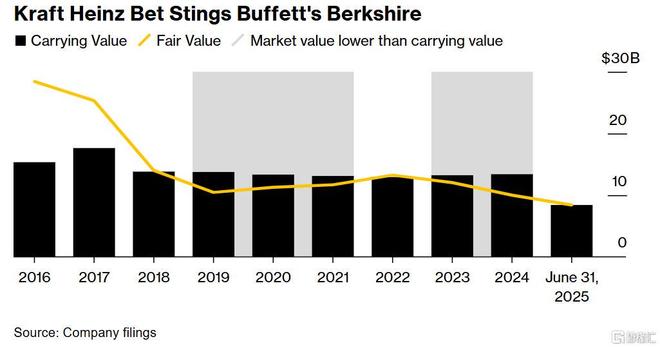
Core Viewpoint - Berkshire Hathaway's recent quarterly earnings report reveals a decline in net profit and raises concerns about the impact of tariffs and trade policies on its operations and investments [2][3][4]. Financial Performance - In Q2, Berkshire achieved revenue of $92.515 billion, down from $93.653 billion year-over-year, but above market expectations of $91.963 billion [2]. - Operating profit was $11.16 billion, a 3.8% decrease year-over-year, attributed to lower underwriting profits from its insurance segment, despite growth in profits from railroads, energy, manufacturing, services, and retail [2]. - Net profit fell to $12.37 billion, significantly down 59% from $30.348 billion in the same quarter last year, exceeding market expectations of $10.703 billion [3]. Earnings Per Share - Earnings per share were reported at $8,601, surpassing market expectations of $7,443, but down from $21,122 in the previous year [4]. Cash Reserves and Stock Sales - Cash reserves decreased by 1% to $344 billion, marking the first decline in three years, down from $347 billion in the previous quarter [5]. - Berkshire continued a cautious approach to the stock market, net selling approximately $3 billion in stocks during the quarter, marking the 11th consecutive quarter of net stock sales [6]. Investment Strategy - The top five holdings of Berkshire, including American Express, Apple, Bank of America, Coca-Cola, and Chevron, accounted for 67% of the fair value of its portfolio [6]. - Stock investment income for the quarter was $6.4 billion, but there was a net loss of $710 million for the first half of the year [7]. Stock Buybacks - The company has been cautious with stock buybacks, not repurchasing any shares in the first half of the year, maintaining a standstill for the fourth consecutive quarter [8]. Impairment and Future Outlook - Berkshire recorded a $3.8 billion impairment on its investment in Kraft Heinz, reducing its book value from over $17 billion at the end of 2017 to $8.4 billion [12]. - Analysts suggest that Berkshire may be preparing to exit its investment in Kraft Heinz, as the company has faced significant stock price declines and is considering business divestitures [13]. - Concerns have been raised about Berkshire's performance amid management transition and market conditions, with some analysts rating the company as "hold" [13].
中华内房股指数收报1398.9255点,跌幅1.34%
Jin Rong Jie· 2025-07-30 08:33
Core Viewpoint - The China Real Estate Stock Index closed at 1398.9255 points on July 30, experiencing a decline of 19.02 points, or 1.34% [1] Group 1: Index Performance - The index reached a high of 1440.1084 points and a low of 1397.007 points during the trading day [1] - The China Real Estate Stock Index was launched on March 18, 2019, with a base value of 2000 points and consists of 30 constituent stocks [1] Group 2: Index Composition - The index includes stocks within the Hong Kong Stock Connect that are classified under real estate development, services, management, and parks [1]
贸易风险解除,日股“第二波”行情要来了?
Hua Er Jie Jian Wen· 2025-07-30 06:32
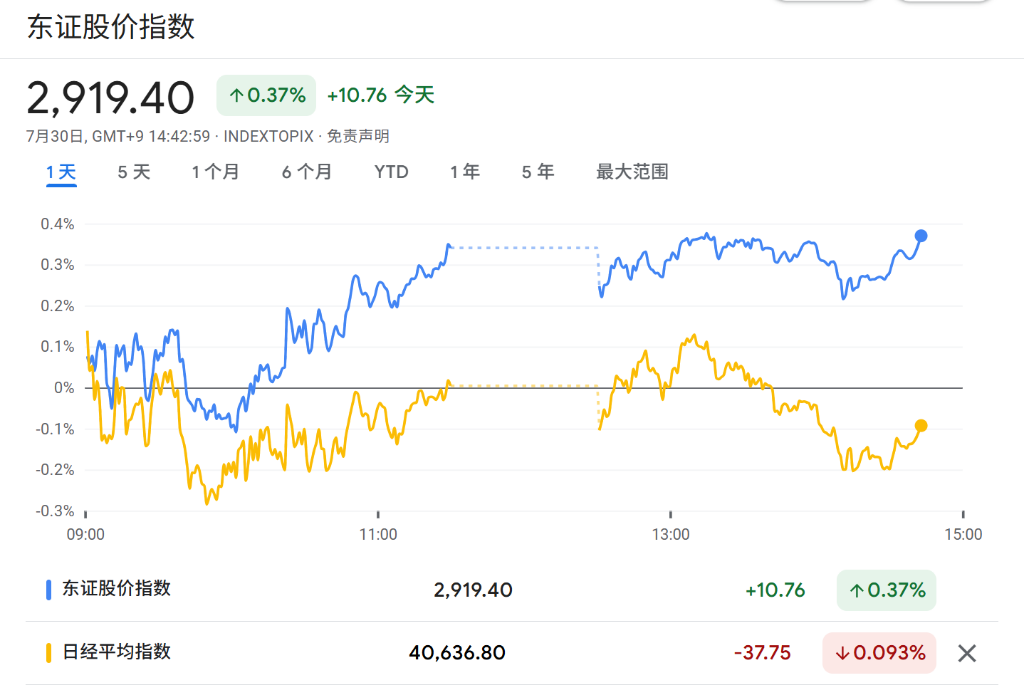
美银策略部门上调了对日本股市的年终预测,认为关键的积极催化剂——美日贸易协议和国内财政扩张预期——已经到来。 据追风交易台消息,该机构近日将2025年底的东证指数(TOPIX)目标从2850点上调至3050点,日经225指数目标从40000点上调至43000点。截止发稿, 东证指数上涨0.37%至2919点,日经225指数微跌至40636点。 美银表示,此次上调基于以下几点:首先,美日贸易协议的达成显著降低了不确定性,尤其是对关税影响的担忧。其次,参议院选举后市场对政府扩大财 政支出的预期升温。最后,强劲的资金流入和大规模股票回购构成了有利的供需环境。美银同时将其估值模型中的预期市盈率(P/E)从之前的水平微调 至14.5倍。 美银认为,虽然短期内日本股市可能出现涨势放缓,但盈利预期见底与改善有望支撑年内"第二波"行情。与此同时,国内政局不确定性、美日5500亿美元 对美投资分歧、美方滞胀风险仍需警惕。 盈利见底,第二波行情可期 美银表示,当前日股的上涨模式是市盈率(P/E)的扩张速度超过了每股收益(EPS)的增长。这在历史上并不罕见。回顾2019年(美国贸易协议预期) 和2020年(疫情期间的财政货币刺激) ...
中华交易服务内房股指数下跌0.01%,前十大权重包含万物云等
Jin Rong Jie· 2025-07-29 14:29
Group 1 - The core index of the China Trading Service Real Estate Index (CESCPD) experienced a slight decline of 0.01%, closing at 1417.95 points with a trading volume of 2.491 billion [1] - Over the past month, the CESCPD index has increased by 8.47%, by 9.17% over the last three months, and has risen 16.00% year-to-date [1] - The CESCPD index tracks the overall performance of publicly listed companies in the mainland real estate development, services, management, and park industries within the Hong Kong Stock Connect [1] Group 2 - The top ten weighted stocks in the CESCPD index include China Resources Land (10.41%), China Overseas Development (9.49%), Beike-W (8.86%), Longfor Group (8.68%), China Resources Mixc Lifestyle (7.62%), Country Garden Services (4.86%), Sunac China (4.67%), China Jinmao (4.12%), Wanwu Cloud (3.99%), and Poly Property (3.65%) [1] - The CESCPD index is fully composed of stocks listed on the Hong Kong Stock Exchange, with a 100% allocation [1] - The index's holdings are entirely focused on the real estate sector, with a 100% allocation to this industry [1]



21专访|民生银行温彬:下半年财政、货币等宏观政策有很大空间
2 1 Shi Ji Jing Ji Bao Dao· 2025-07-28 08:49
Economic Performance - In the first half of the year, China's GDP reached 66.05 trillion yuan, with a year-on-year growth of 5.3%, laying a solid foundation for achieving the annual target of around 5% [1] - The economic performance exceeded external expectations, driven by the "old-for-new" policy that boosted consumption and resilient foreign trade [1][3] - However, investment growth slowed in the second quarter, indicating a need for enhanced macroeconomic policies in the second half [1] Economic Structure and Growth Potential - The growth rate of 5.3% reflects the resilience of the Chinese economy, with significant contributions from high-tech manufacturing and the digital economy [3] - The proportion of traditional sectors like real estate is declining, while new growth drivers are emerging, such as high-tech manufacturing, which saw a 9.5% increase in value-added output [3] - There is potential for exceeding the annual GDP growth target if external conditions, such as US-China trade negotiations, remain favorable [3] Consumption and Investment Strategies - To stimulate economic growth, there is a focus on enhancing internal economic momentum and boosting consumer demand, particularly in service consumption as residents' income levels rise [3][5] - Recommendations include optimizing subsidy structures for consumption, controlling subsidy distribution to prevent demand vacuums, and expanding the scope of subsidies to include service consumption [5] - Long-term strategies involve improving residents' income and consumption capabilities, enhancing social security systems, and shifting consumer attitudes towards spending [5][9] Real Estate Market Dynamics - The real estate market has shown signs of stabilization, but recent data indicates a renewed decline in housing prices and sales since April [10] - The government is expected to increase support for the real estate sector in the second half of the year to stabilize the market [10] - Innovative financial models are suggested, including asset securitization of existing housing, special bond financing for local governments, and green finance initiatives to support sustainable development in real estate [11]


报告:超九成新西兰在华企业对中国市场前景乐观,看好二三线城市新机遇
第一财经· 2025-07-28 08:12
Core Viewpoint - The bilateral trade relationship between China and New Zealand is showing a positive trend, with over 90% of surveyed New Zealand companies operating in China expressing optimism about the market outlook [1][3]. Group 1: Trade Data and Economic Impact - In 2024, the total bilateral trade volume between China and New Zealand reached 143.39 billion, with China exporting 55.04 billion and New Zealand exporting 88.35 billion to China [3]. - New Zealand's exports to China accounted for 20.6% of its total exports, with 31% of dairy products, 61% of timber, and 24% of meat exported to China [3]. - In the first quarter of 2025, trade volume was 10.51 billion New Zealand dollars, a year-on-year increase of 8.9%, with New Zealand's exports to China growing by 12.5% [3]. Group 2: Business Sentiment and Growth Expectations - 51% of surveyed New Zealand companies in China reported revenue growth in 2024, and 66% expect revenue to continue rising in 2025 [4]. - 62% of respondents expressed optimism about second-tier cities in China, while 48% were positive about third-tier cities, indicating a shift in focus from traditional first-tier cities [5]. - 20% of surveyed companies are now producing or sourcing locally in China, reflecting a 13 percentage point increase from 2024 [5]. Group 3: Strategic Opportunities - Over 55% of surveyed companies view market share acquisition as the primary opportunity for future growth, with higher profit potential following closely [5]. - The report emphasizes the importance of early market share acquisition to stimulate future consumer demand, particularly in the expanding roles of second- and third-tier cities [5]. Group 4: Trade Agreements and Government Relations - New Zealand was one of the first countries to sign a free trade agreement with China, which has been in effect since 2008, and has undergone upgrades to deepen cooperation [7]. - High-level interactions between the two countries have increased, with significant business agreements signed during recent visits, totaling over 1 billion New Zealand dollars [7]. - The report suggests that New Zealand should optimize visa processes for Chinese travelers and enhance aviation connectivity to further strengthen bilateral relations [8]. Group 5: Future Outlook - The evolving trade dynamics between China and New Zealand are supported by policy backing, market potential, and business confidence, forming a solid foundation for their economic relationship [9].
报告:超九成新西兰在华企业对中国市场前景乐观,看好二三线城市新机遇
Di Yi Cai Jing· 2025-07-28 06:32
Group 1 - The core viewpoint of the articles highlights the optimistic outlook of New Zealand businesses operating in China, with over 90% expressing positive sentiments about the market prospects [1][2][3] - The bilateral trade between China and New Zealand reached 143.39 billion yuan in 2024, with New Zealand exporting 88.35 billion yuan to China, marking a significant trade relationship [2][5] - New Zealand has seen a consistent increase in exports to China, with 31% of dairy products, 61% of timber, and 24% of meat being exported to China in the previous year [2][3] Group 2 - The report indicates that 51% of surveyed New Zealand companies in China expect revenue growth in 2024, with 66% anticipating continued revenue increases in 2025 [3][4] - There is a notable shift in focus towards second and third-tier cities in China, with 62% of respondents optimistic about the market potential in second-tier cities and 48% in third-tier cities [3][4] - The New Zealand businesses are increasingly adopting localization strategies, with 20% of surveyed companies choosing to produce or source products locally in China, reflecting a 13 percentage point increase from 2024 [3][4] Group 3 - The New Zealand-China Free Trade Agreement, signed in 2008, is the first comprehensive trade agreement between China and a developed country, covering various sectors including goods, services, and investment [5][6] - Recent negotiations have focused on the service trade negative list, with significant progress made in the first round of talks held in April 2024 [6][7] - The report emphasizes the importance of policy support, market potential, and business confidence as the three pillars sustaining the economic relationship between China and New Zealand [7]