
外卖

Search documents
美团启动中小商户发展扶持计划,加大助力金投入力度和覆盖范围
Jing Ji Guan Cha Wang· 2025-08-05 10:46
据美团官方公众号,8月5日起,美团正式启动中小商户发展扶持计划,向中小商户发放助力金,支持更 多餐饮小店实现稳定增长。 据悉,美团曾在去年12月推出首期"10亿助力金计划",以现金和补贴形式助力优质餐饮商家发展。截至 今年7月,美团助力金已覆盖30余万餐饮商家,近半数商家反馈"小店订单量显著增长",四成商家的收 入明显提升。 美团方面表示,未来会进一步追加资金和资源投入,努力帮助餐饮商家规避行业低价、无序竞争的侵 害,让更多商家有精力沉下心来专注于产品和服务,把生意做得更长久。 受近期外卖行业低价、无序竞争影响,部分餐饮商家尤其是中小餐饮门店遭受了普遍冲击。为落实"反 内卷",促进行业健康发展,美团在此前"十亿助力金"基础上进一步追加投入,重点支持长期经营、复 购高、口碑好的中小餐饮商户。 预计到今年年底,美团助力金将新增覆盖超10万家餐饮小店,单店助力金最高5万元。 据悉,除真金白银帮扶外,美团还将充分发挥在餐饮基建、数字化运营等方面的能力,努力为中小餐饮 商家提供更多经营保障。相关举措包括帮助20万家小店完成基建升级;扩大"到店自提专属优惠"覆盖, 引导堂食消费;免费开放AI工具,帮助中小商家提高经营效率 ...

淘宝即将上线大会员体系
Zheng Quan Shi Bao Wang· 2025-08-05 09:21
Group 1 - The core point of the article is that Taobao is set to launch a new membership system that integrates resources from other Alibaba platforms such as Ele.me, Fliggy, and Hema, offering benefits across shopping, food delivery, travel, and transportation [1]

淘宝即将上线大会员体系:打通饿了么、飞猪、盒马
Zheng Quan Shi Bao Wang· 2025-08-05 07:10
Core Insights - Taobao is launching a new membership system that integrates resources from Ele.me, Fliggy, and Hema, covering various consumer needs such as shopping, food delivery, travel, and transportation [1] - The 88VIP user benefits will be significantly upgraded as part of this initiative [1] - This move signifies Alibaba's strategic shift from e-commerce to a broader consumer platform, with Ele.me and Fliggy being incorporated into the China e-commerce business group [1]
独家|淘宝即将上线大会员体系:打通饿了么飞猪盒马,88VIP权益全面升级
Xin Lang Ke Ji· 2025-08-05 06:49
Core Insights - Taobao is launching a new membership system that integrates resources from Ele.me, Fliggy, and Hema, covering various consumer needs such as shopping, food delivery, travel, and transportation [1] - The 88VIP user benefits will be significantly upgraded, indicating a strategic shift towards a comprehensive consumer platform [1] - This move is seen as a key step in Alibaba's strategy to transition from e-commerce to a broader consumer platform, enhancing user engagement and loyalty on Taobao [1]
外卖消费券预计撬动7000亿元消费增量 消费溢出效应显著
Zheng Quan Ri Bao· 2025-08-05 06:45
Group 1 - The article emphasizes the strong consumer potential driven by "small services" contributing to "big consumption," highlighting the government's focus on boosting consumption as a key economic task for 2025 [1] - Major platforms are exploring innovative measures, such as issuing takeaway consumption vouchers, to stimulate service consumption [1] - A report from Peking University indicates that the integration of online and offline consumption promotion models amplifies the effectiveness of flash purchase coupons, showcasing the unique advantages of digital platforms in enhancing consumption cycles [1] Group 2 - The issuance of takeaway consumption vouchers not only boosts macro-level consumption growth but also provides tangible benefits to small and medium-sized businesses [2] - Research shows that participation in flash purchase activities on platforms like Taobao leads to an average weekly revenue increase of approximately 101.5% for merchants [2] - The impact of takeaway consumption vouchers is widespread, with significant growth in service consumption observed in county economies, where many small shops are seizing new opportunities [2][3] Group 3 - The number of "ten-thousand-order stores" in the restaurant sector increased by 274% in July compared to June, with Yiwu ranking first nationally [3] - Over 60,000 small shops in county areas have actively joined Taobao's flash purchase program, seeking new growth avenues [3] - Platforms are responding to changing consumer demands by expanding product categories and enhancing the shopping experience, thereby stimulating consumption potential [3]
8月消费的方向:国补、生育补与创新药
2025-08-05 03:20
Summary of Key Points from Conference Call Records Industry or Company Involved - **Chinese Economy and Various Industries**: The records discuss the overall economic performance of China and specific sectors such as food and beverage, light industry, electric two-wheelers, textiles, and pharmaceuticals. Core Points and Arguments 1. **Economic Growth and Projections**: China's economic growth rate for the first half of 2025 reached 5.3%, exceeding the annual target of 5.0%. A slowdown to approximately 4.8% is expected in the second half due to structural adjustments [5][1][6]. 2. **Inflation and Foreign Investment**: Global credit expansion and rising inflation are favorable for pushing domestic inflation in China, potentially attracting foreign investment as the RMB faces appreciation pressure [6][1]. 3. **Food and Beverage Sector**: Focus on growth categories and valuation shifts in the food and beverage sector, with recommendations for leading companies like Moutai and Wuliangye. The introduction of national fertility subsidies is expected to positively impact consumption [8][1]. 4. **Light Industry Opportunities**: The light industry is benefiting from policy changes, particularly in the paper and packaging sector. Recommendations include companies like Sun Paper and Jiulong Paper [9][10]. 5. **Electric Two-Wheeler Market**: The electric two-wheeler sector is seeing government subsidies, with a focus on companies like Yadea and Aima Technology, which are expected to perform well in terms of sales [12][1]. 6. **Textile and Apparel Sector**: Brands like Nike are seeing improvements in inventory and channel issues, with a recommendation for manufacturers like Jiuxing Holdings due to strong order growth [14][1]. 7. **Pharmaceutical Industry Trends**: The innovative drug sector is highlighted as a hot market, with strong demand from global pharmaceutical companies for Chinese innovations. Recommendations include focusing on CXO and upstream supply chains [33][34]. Other Important but Possibly Overlooked Content 1. **Debt and Deflation Measures**: China is implementing measures to stabilize the currency and boost stock indices to address debt and deflation issues, which have improved market confidence [2][1]. 2. **Impact of External Factors on Domestic Markets**: The records discuss how external factors, such as U.S. tariffs and interest rate changes, are influencing domestic industries, particularly in the appliance and tool sectors [19][20]. 3. **Tourism and Hospitality Sector**: The hotel industry is stable, with economic hotels outperforming mid-to-high-end hotels. The opening of the Shenbei High-Speed Railway is expected to boost tourism in the Changbai Mountain area [37][41]. 4. **Agricultural Sector Dynamics**: The pig farming industry is undergoing supply adjustments, with a target reduction in breeding stock, which may lead to higher prices in the future [42][1]. 5. **Extreme Weather Effects on Agriculture**: Extreme weather conditions are impacting crop production, with potential implications for grain prices and agricultural companies like Longping High-Tech [44][1]. This summary encapsulates the key insights and recommendations from the conference call records, providing a comprehensive overview of the current economic landscape and sector-specific opportunities in China.
平台集体叫停外卖大战!“秋一杯”前,茶饮店面临新考验
2 1 Shi Ji Jing Ji Bao Dao· 2025-08-05 00:30
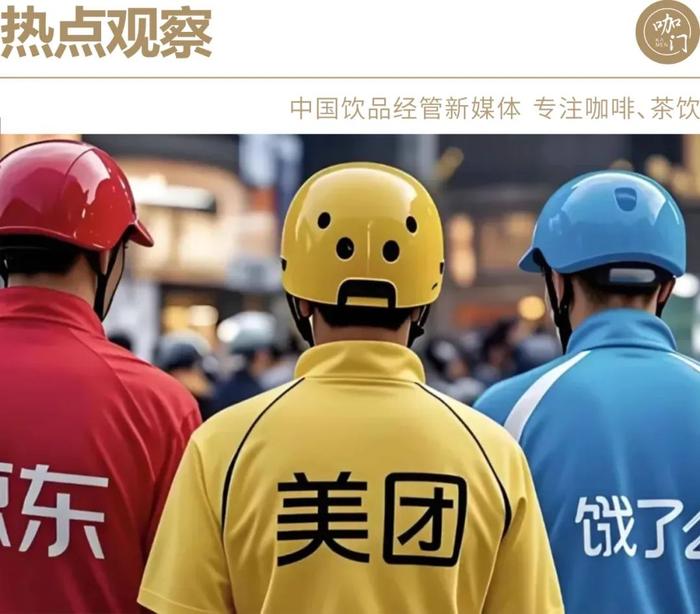
饮品"秋一杯"即将到来,平台与商家又将面临什么样的全新考验? 集体抵制恶性竞争 消息发布当天,美团(3690.HK)、京东(9618.HK)、阿里巴巴(9988.HK)等港股平台股价全线上 涨,美团盘中涨近3%,阿里涨超3%。 多个外卖平台集体发声 刚刚过去的周末,外卖行业风向突变。美团、京东、饿了么、淘宝闪购等平台集体发布声明,宣布将抵 制"0元购"等非理性促销行为,规范补贴机制,保障商家自主定价与合理利润。 8月1日,美团、饿了么、淘宝、京东等平台相继发声,叫停"0元购"等补贴行为,集体按下"外卖大 战"暂停键。 这一外卖巨头平台的"联动叫停",标志着自今夏以来轰轰烈烈的"外卖大战"暂告一段落。 这场从7月持续至今的补贴狂欢曾带来全网狂欢,但也带来了行业压力和消费乱象。 咖门采访中,一些商家表示:高峰时段部分品牌订单量增长20%,但平均到手利润却跌破35%,更有商 家表示"做一单反赔2~3元"。(传送门:"一天卖光半年库存",外卖再次大爆单,茶饮店真赚吗?) 图 美团在其声明中强调,将严格遵守《反垄断法》《价格法》等法规,杜绝以显著低于成本价进行补贴, 不强制或变相强制商家参与活动,并保障商家的定价权与知 ...

告别“烧钱”时代!外卖平台同步叫停“0元购”
Cai Jing Wang· 2025-08-04 12:17
Core Viewpoint - The Chinese food delivery industry has reached a historic turning point as major platforms like Meituan, Taobao Shanguo (in collaboration with Ele.me), and JD.com jointly announced a commitment to regulate promotional activities and resist malicious competition, marking the end of the prolonged "delivery subsidy war" [1][3][8] Summary by Sections Price War Overview - The price war began in February 2025 when JD.com entered the food delivery market with a "100 billion subsidy + five insurances and one fund for riders" strategy, disrupting the duopoly of Meituan and Ele.me [1] - By July 2025, Meituan launched a "0 yuan purchase" campaign, leading to a surge in orders, with over 1.2 billion instant retail orders on the same day [1][2] Impact of Subsidy War - The subsidy war resulted in a significant increase in order volume, from an average of 100 million orders per day at the beginning of the year to approximately 250 million orders per day by mid-July [2] - However, this led to a dilemma for merchants, who faced increased orders but declining profits, and riders who experienced heightened workloads and potential burnout [2][5] Regulatory Intervention - In May 2025, the State Administration for Market Regulation (SAMR) began addressing the issue by urging platforms to avoid distorting competition through subsidies [4] - By July 18, SAMR reiterated the need for platforms to comply with various laws and regulations, promoting a healthy ecosystem for consumers, merchants, riders, and platforms [4] Industry Reflection and Future Direction - The joint statement from major platforms reflects a response to the chaotic subsidy situation and regulatory pressure, aiming to shift competition from price wars to quality and service [3][6] - Analysts suggest that the industry must move beyond reliance on subsidies to focus on efficiency and customer experience [6][8] Challenges Ahead - Despite the commitment to regulate promotional activities, challenges remain, such as unclear cost boundaries and the potential for platforms to circumvent regulations through cross-subsidization [7] - The SAMR has introduced guidelines to further regulate platform fees and encourage innovation, aiming for a sustainable business model that balances cost reduction and service enhancement [7] Conclusion - The end of the subsidy war signifies a shift towards rational competition, where success will depend on balancing user experience, rider protection, and merchant profitability, paving the way for a healthier growth trajectory in the food delivery market [8]

公平竞争,做大外卖“蛋糕”
Ren Min Ri Bao· 2025-08-04 04:40
Group 1 - The core viewpoint emphasizes the need for regulating low-price disorderly competition to correct market failures and establish a fair competitive environment for various business entities in the national unified market [1][2] - Major food delivery platforms, including Meituan, Ele.me, and JD.com, have publicly committed to adhering to relevant laws and resisting unfair competition practices [1][2] - The recent surge in promotional activities like "0 yuan purchase" and "1 cent grab" reflects the intense competition among platforms for user traffic and market share in local life services [1][2] Group 2 - Disorderly competition is detrimental not only to the industry's healthy development but also to the platforms themselves, potentially distorting market consumption structures and impacting normal business operations [2] - Rational competition is essential for creating greater value, as irrational competition leads to a lose-lose situation, while rational competition can enhance overall productivity and benefit both consumers and businesses [2] - The new Anti-Unfair Competition Law, effective from October 15, prohibits platform operators from forcing or indirectly compelling merchants to sell products below cost, aiming to maintain market order [3]
大摩:料内地外卖业第2至3季总补贴额达300-500亿元人民币
Zhi Tong Cai Jing· 2025-08-04 03:52
摩根士丹利发布研报称,预计内地外卖业第2至3季的总补贴额将分别达300亿及500亿元人民币,或达投 资高峰且竞争将持续。阿里巴巴-W(09988)、美团-W(03690)及京东集团-SW(09618)三家外卖平台,已分 别宣布将共同抵制"内卷式"竞争,包括抵制"零元购"以及允许商家自主参与促销活动等。 对于阿里巴巴,该行认为其近期盈利压力已反应在股价中,但市场低估集团作为中国最佳人工智能赋能 者的地位,而云计算收入加速增长是其催化剂。另亦预期京东集团自9月起将面临更高的收入年增速, 并在长期内维持外卖和快消业务的较小规模。 ...