证券业

Search documents
多部门多举措支持加快构建科技金融体制
Yang Guang Wang· 2025-05-23 01:13
Group 1 - The core viewpoint of the news is the introduction of policies to accelerate the construction of a technology finance system to support high-level technological self-reliance and strength [1][2] - The Ministry of Science and Technology and other departments have jointly issued 15 policy measures focusing on seven areas including venture capital, monetary credit, capital markets, technology insurance, and bond markets [1] - The establishment of a "National Venture Capital Guidance Fund" aims to encourage early, small, long-term, and hard technology investments [1] - The People's Bank of China has differentiated arrangements for bond issuance by technology enterprises, with around 100 institutions already issuing technology innovation bonds exceeding 250 billion [1] Group 2 - The Financial Regulatory Authority has expanded the pilot program for financial asset investment companies' equity investments to 18 cities, with signed intention amounts exceeding 380 billion [2] - The pilot program allows banks in these cities to extend the term of merger loans from 7 years to 10 years and increase the loan-to-merger fund ratio from 60% to 80% [2] - All pilot banks have fully implemented these measures [2]
美国的股市,日本的债市,中国的楼市
吴晓波频道· 2025-05-23 00:41
Group 1: Global Financial Market Overview - The global financial market is currently facing significant turmoil, with the U.S. stock market, Japanese bond market, and Chinese real estate market being highlighted as the three most in need of rescue [1][8] - Japan's recent 20-year government bond auction was notably poor, with a bid-to-cover ratio of only 2.5, the lowest since 2012, and a "tail" spread reaching 1.14, the worst since 1987 [2] - The U.S. bond market also experienced a "black Wednesday," with the 20-year Treasury yield surpassing 5%, marking the second time in history this threshold has been crossed [4][12] Group 2: U.S. Market Dynamics - Moody's downgraded the U.S. sovereign credit rating, citing unsustainable debt levels and a growing deficit, which has led to a loss of investor confidence in U.S. Treasuries [10][12] - The U.S. stock market reacted negatively to the downgrade, with major indices like the Dow Jones dropping over 800 points, reflecting the interconnectedness of the bond and equity markets [4][6] - The U.S. government is projected to increase its debt by an additional $3.8 trillion due to the recent tax cuts proposed by the Trump administration, exacerbating the existing debt crisis [20][21] Group 3: Japanese Debt Situation - Japan's public debt has reached 234.9% of GDP, significantly higher than Greece's 142.2%, indicating a severe fiscal challenge [26] - The Japanese government faces a dilemma between continuing quantitative easing to support bond purchases or tightening monetary policy to combat rising inflation [32] - The recent surge in Japanese bond yields is attributed to the Bank of Japan's reduced bond purchases, leading to concerns about the sustainability of Japan's fiscal situation [28][29] Group 4: Chinese Real Estate Market - China's real estate market is under pressure, with a 0.1% month-on-month decline in residential sales prices and a 4.5% year-on-year decrease, indicating ongoing challenges [7][35] - Goldman Sachs predicts a 40% reduction in new home sales over the next decade, while anticipating a significant increase in second-hand home transactions, which could reshape the housing market dynamics [43][44] - The shift towards a "stock" market for real estate, driven by aging properties and community operations, is expected to create new opportunities in related sectors such as building materials and home renovation [46]

央行、证监会等四部门发声;商务部再回应美国对人工智能芯片出口管制……盘前重要消息还有这些
证券时报· 2025-05-23 00:07
重要的消息有哪些 端午A股休市安排公布 5月22日,上交所、深交所、北交所均发布端午休市安排。根据安排,5月31日(星期六)至6月2日(星期一)休市,6月3日(星期二)起照常开市。 证监会严伯进:更大力度支持优质未盈利科技企业上市 证监会首席风险官、发行监管司司长严伯进5月22日在国新办新闻发布会上表示,在精准支持硬科技企业上市方面,坚持有为政府和有效市场结合,更加精准地识 别筛选优质的科技企业,对于突破关键核心技术的科技企业上市适用绿色通道。针对科技企业的特点用好现有制度,更大力度支持优质未盈利科技企业上市。积极 稳妥推动科创板第五套标准要有新的案例推出。 证监会严伯进:持续优化科技企业境内上市环境 支持优质红筹科技企业回归境内上市 证监会首席风险官、发行监管司司长严伯进表示,证监会将持续优化科技企业境内上市的环境,会实施更加灵活精准的新股发行逆周期调节机制,把握好新股发行 的节奏。健全投融资相协调机制,进一步增强制度的包容性和适应性,继续发挥好创新试点的相关制度,支持优质红筹科技企业回归境内上市。 证监会严伯进:将为科技企业境外上市提供更加透明、更加高效、可预期的监管政策 证监会首席风险官、发行监管司司长 ...

提升科技贷款投放强度和服务能力
Zhong Guo Zheng Quan Bao· 2025-05-22 21:02
中国人民银行副行长、国家外汇局局长朱鹤新在回答本报记者提问时表示,要提升科技贷款的投放强度 和服务能力,建设债券市场"科技板"。中国证监会首席风险官、发行监管司司长严伯进在发布会上表 示,支持优质的红筹科技企业回归境内上市,积极稳妥推动科创板第五套上市标准新的案例落地。 建设好债券市场"科技板" 日前,科技部等七部门联合印发了《加快构建科技金融体制 有力支撑高水平科技自立自强的若干政策 举措》。 科技部副部长邱勇表示,希望通过《政策举措》的深入实施,建立面向国家重大科技任务的金融支持安 排。引导各类金融资源对国家科技重大项目、科技领军企业、国家级科研平台基地等加大融资支持,创 设更大力度、更有突破性、更符合创新规律的科技金融政策工具,有力支撑高水平科技自立自强。 为构建与科技创新相适应的科技金融体制,朱鹤新表示,要提升科技贷款的投放强度和服务能力。规模 上要更有力度,人民银行已将科技创新和技术改造再贷款规模提升至8000亿元,同时下调再贷款利率至 1.5%,目的是引导金融机构为企业研发创新和设备更新提供更大力度、更加精准的贷款支持;服务上 要更有温度,推动银行深化科技信贷服务能力建设,让更多中小科技企业获得优 ...
科技部和金融管理部门联手健全多层次科技金融服务体系 央行:提升科技贷款的投放强度和服务能力
Shang Hai Zheng Quan Bao· 2025-05-22 18:56
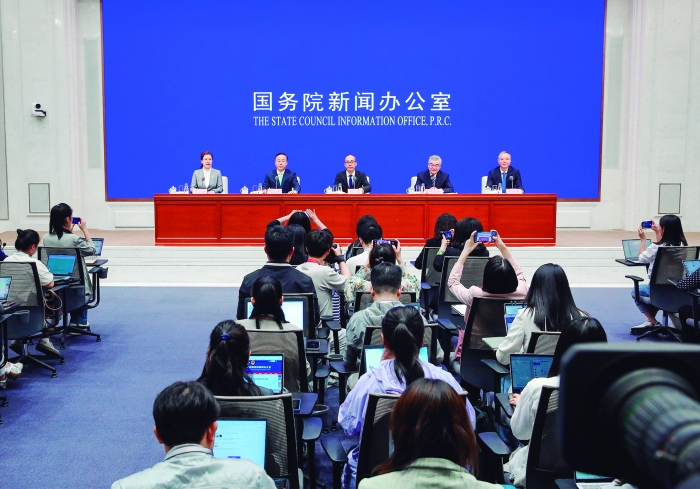
◎记者 李雁争 常佩琦 韩宋辉 七部门近日联合印发《加快构建科技金融体制 有力支撑高水平科技自立自强的若干政策举措》(下称 《政策举措》)。在国务院新闻办公室5月22日举行的新闻发布会上,科技部、中国人民银行、金融监 管总局、中国证监会等部门有关负责人介绍了具体的落实思路。 5月22日,国新办举行新闻发布会,科技部副部长邱勇,中国人民银行副行长、国家外汇局局长朱鹤 新,金融监管总局新闻发言人、政策研究司司长郭武平,中国证监会首席风险官、发行监管司司长严 伯进介绍科技金融政策有关情况,并答记者问。 记者 史丽 摄 《政策举措》提出,建立债券市场"科技板"。中国人民银行副行长、国家外汇局局长朱鹤新表示,希望 通过这样的工具创新,给市场化的股权投资机构拓展一条资金的渠道,解决募资难的问题。 "创新积分制"2.0版将推出、科技贷款的投放强度将提升、科技保险高质量发展的政策正加紧制定…… 一系列举措将健全多层次科技金融服务体系,打通科技成果向现实生产力转化的通道。 适时推出"创新积分制"2.0版本 《政策举措》提出,推广创新积分制。科技部副部长邱勇介绍,"创新积分制"是2022年科技部推出的一 项创新性的科技金融政策工 ...
创新积分制2.0版要来了,科技部、央行等多部门解读科技金融政策
Xin Lang Cai Jing· 2025-05-22 12:30
Core Viewpoint - The recent announcement by multiple government departments regarding the "Accelerating the Construction of a Technology Finance System" aims to strengthen the integration of technology and finance, supporting high-level technological self-reliance and innovation. Group 1: Policy Measures - The Ministry of Science and Technology has taken the lead in refining the division of responsibilities among seven departments, emphasizing the importance of the "Innovation Points System" to facilitate technology innovation loans and guarantee plans, with over 7,000 enterprises signing contracts worth 88 billion yuan [2]. - The "Innovation Points System" will be further optimized and upgraded to enhance its effectiveness in identifying the technological innovation attributes of enterprises [2]. Group 2: Regional Focus - Key regions such as Beijing, Shanghai, and the Guangdong-Hong Kong-Macao Greater Bay Area will pilot technology finance innovation policies, with local governments and financial institutions encouraged to actively participate in these initiatives [3]. Group 3: Financial System Development - The People's Bank of China reported that the loan balance for technology-based SMEs exceeded 3.3 trillion yuan, growing by 24% year-on-year, while loans for "specialized, refined, and innovative" enterprises reached over 6.3 trillion yuan, up 15.1% [4]. - The central bank plans to increase the scale of technology innovation loans from 500 billion yuan to 800 billion yuan and reduce the interest rate from 1.75% to 1.5% [5]. Group 4: Financial Ecosystem - Efforts will be made to cultivate a comprehensive technology finance ecosystem, enhancing collaboration among various financial institutions and promoting cross-border financial services for technology enterprises [6]. Group 5: Regulatory Framework - The Financial Regulatory Bureau indicated that the loan balance for high-tech enterprises reached 17.7 trillion yuan, with a year-on-year growth of 20%, and will guide financial institutions to incorporate technology finance into their strategic planning [7]. - The China Securities Regulatory Commission has streamlined listing conditions for technology companies, with nearly 2,700 companies in strategic emerging industries listed, representing over 40% of market capitalization [8]. Group 6: Support for Technology Enterprises - The regulatory body will continue to support technology enterprises in utilizing both domestic and international capital markets, with 242 domestic companies completing overseas listing filings, including 83 technology firms [8][9].
降准是对债市行情的确认还是催化?
Orient Securities· 2025-05-22 11:11
Group 1: Report's Investment Rating on the Industry - No information provided regarding the report's industry investment rating Group 2: Core Views of the Report - Since 2020, there have been three main scenarios for reserve requirement ratio (RRR) cuts: 1) RRR cuts change the market's expectation of the liquidity situation, catalyzing a decline in bond market interest rates; 2) RRR cuts do not significantly change market expectations and continue the bond market trend, with the yield curve steepening; 3) After RRR cuts, the market's expectation of the liquidity situation changes from loose to tight, and there is upward pressure on interest rates [6][53]. - The impact of RRR cuts on the bond market mainly includes: 1) After RRR cuts, the liquidity rate usually remains stable or drops significantly, and short - term interest rates are likely to decline, with the curve often showing a bull - steepening pattern; 2) In most cases, long - term interest rates decline with RRR cuts and liquidity easing, but there are two exceptions; 3) The scale of other tool injections after RRR cuts is positively correlated with the liquidity rate [6][54]. - The current RRR cut is similar to the second scenario, where it continues the bond market trend and increases the possibility of curve steepening. For long - term interest rates, the catalytic effect of this RRR cut is limited, and they are likely to remain volatile [6][55]. Group 3: Summary Based on the Report's Content 1. Three Scenarios of RRR Cuts Since 2020 - **Scenario 1: Catalyzing Bond Market Interest Rate Decline** - RRR cuts occur after a significant seasonal increase in the liquidity rate. After the RRR cut, the central bank's net injection may decline or increase, but the liquidity rate will eventually return to stability or decline significantly, and long - term interest rates will decline due to the shift from tight to loose monetary expectations [6][53]. - Examples include July 2021, December 2021, December 2022, and March 2023. Before these RRR cuts, the DR007 central rate increased by more than 10bp compared to the historical average. After the RRR cuts, most of the central bank's other liquidity injection tools reduced their scale, and the liquidity rate returned to stability or declined significantly, and long - term interest rates also declined [10][13][18]. - **Scenario 2: Continuing the Bond Market Trend** - RRR cuts do not occur after a sudden tightening of liquidity. After the RRR cut, the central bank's open - market operation net injection scale decreases or remains low, but the liquidity pressure can be effectively hedged. The liquidity rate remains stable or drops significantly, and short - term interest rates decline. The long - term interest rate depends on whether the fundamental expectation can be quickly improved, and there are opportunities to steepen the yield curve [6][53]. - Examples are April 2022, February 2024, and September 2024. After the RRR cuts, the central bank's open - market operation net injection scale decreased, and the liquidity rate remained stable or declined. Short - term interest rates declined, and the impact on long - term interest rates was uncertain, but there were opportunities to steepen the curve [23][28][30]. - **Scenario 3: Upward Pressure on Interest Rates After RRR Cuts** - RRR cuts do not occur after a sudden tightening of liquidity, and are accompanied by a significant increase in other liquidity injections. Usually due to factors such as the Spring Festival and high government bond supply, the liquidity rate increases in the month of the RRR cut. The interest rate trend depends on the persistence of the liquidity tightening [6][53]. - Examples are January 2020 and September 2023. After the RRR cuts, the central bank maintained a high - scale injection, but the liquidity rate still increased. The bond market trend depends on the duration of the liquidity tightening [39][42][47]. 2. Comparison of the Current RRR Cut with Historical Scenarios - The current RRR cut is similar to the second scenario. Since April, the market's expectation of loose money has been restored. In May, although the net financing of interest - bearing bonds has increased marginally, the bank's liability pressure has eased. If the liquidity rate remains stable during the current period, short - term rates such as certificate of deposit (CD) rates may decline further in June [6][55]. - For long - term interest rates, the catalytic effect of this RRR cut is limited, and they are likely to remain volatile. The RRR cut did not occur after a sudden tightening of liquidity or a significant decline in the capital market, and the impact on the market's liquidity expectation is limited. The probability of significant weakening or strengthening of the fundamental expectation after the RRR cut is low [6][55].
每日机构分析:5月22日
Xin Hua Cai Jing· 2025-05-22 09:57
新加坡瀚亚投资:美国经济不确定性推动资金流向新兴市场 瑞讯银行:美国国债收益率受财政政策与全球资本行为主导 SMBC日兴证券:日本7月参议院选举结果或影响超长债收益率 汉堡商业银行:法国制造业温和回升德国服务业衰退拖累经济 【机构分析】 新加坡瀚亚投资公司称,美国经济不确定性将促使对新兴市场国家进行多元化投资,多元化投资有助于 分散风险并可能提供更丰富的回报。 (文章来源:新华财经) 瑞讯银行策略师指出,美国国债收益率的未来走势将主要受美国的财政选择以及全球投资者的行为影 响。地缘政治关系的恶化、对美元兴趣的减少以及对美国国债作为避险资产信心的下降等,这些都可能 削弱市场对美国国债的信心。 市场分析称,如果美国实施一项削弱美元价值的计划,可能会导致违约风险增加;这样的行动可能导致 巨大的市场波动,对全球经济造成冲击。如果美元大幅贬值,其幅度和速度可能超过1985年广场协议后 的贬值情况(当时美元在九个月内贬值了25%,三年内几乎贬值了一半);当前美国的债务规模远超以 往,政策制定者还在计划进一步增加债务,这使得美元贬值的影响更加复杂。 SMBC日兴证券策略师指出,日本7月即将举行的参议院选举可能是影响超长期限 ...

刚刚!央行、证监会等四部门发声,事关科技金融!全文来了→
Zheng Quan Shi Bao· 2025-05-22 09:55
四部门重磅发声。 2025年5月22日(星期四)下午,国务院新闻办公室举行新闻发布会,请科技部副部长邱勇,中国人民银行副行长、国家外汇局局长朱鹤新,金融监管总局 新闻发言人、政策研究司司长郭武平,中国证监会首席风险官、发行监管司司长严伯进介绍科技金融政策有关情况,并答记者问。 朱鹤新在回答证券时报记者提问时表示,希望推动加大科技金融的风险补偿力度。财政政策对于激励引导金融机构支持科技创新具有重要作用。央行将配 合好财政部门,用好用足贷款贴息、风险补偿等政策,有效发挥政府性融资担保体系的作用。 来看看发布会具体内容: 科技部 将充分发挥牵头部门作用进一步细化构建科技金融体制任务分工 邱勇表示,近日,科技部等七部门印发《政策举措》。希望通过该文件建立金融支持科技创新的长效投入机制。通过该文件形成科技金融发展的政策框架 体系,完善激励约束机制,在金融资本和科技创新之间搭起一座纽带和桥梁,构建多元化、多层次、多渠道的科技投入格局,持续引导金融活水浇灌科技 创新的沃土。 依托创新积分制已推动7000多家科技型企业与银行签约贷款合同 邱勇表示,此前推出的"创新积分制"可以帮助金融机构更加精准地识别科技创新企业,识别企业的 ...

全国科技支行达2178家!将实施科技金融创新“揭榜挂帅”
Nan Fang Du Shi Bao· 2025-05-22 09:41
Core Viewpoint - The recent joint release of the "Policies and Measures to Accelerate the Construction of a Science and Technology Financial System" aims to support high-level technological self-reliance and innovation through 15 specific financial policies targeting venture capital, monetary credit, capital markets, and technology insurance [2][3][4]. Group 1: Venture Capital and Financing - Establishment of a "National Venture Capital Guidance Fund" to enhance the entire chain of venture capital, including fundraising, investment, management, and exit strategies [2]. - Encouragement for the development of secondary market funds for venture capital to improve exit channels [2]. - Optimization of the evaluation mechanism for state-owned venture capital to enhance its effectiveness in supporting technological innovation [2]. Group 2: Monetary Policy Tools - Utilization of structural monetary policy tools to guide financial institutions in increasing credit support for technology enterprises, particularly private SMEs [3]. - Expansion of re-loan programs for technological innovation and technology transformation, with a focus on optimizing structure, increasing scale, and reducing interest rates [3]. - Encouragement for commercial banks to establish specialized technology finance institutions to facilitate easier access to loans for technology enterprises [3]. Group 3: Capital Market Support - Establishment of a "green channel" mechanism for technology enterprises in the capital market, enhancing the reform of the Sci-Tech Innovation Board and the Growth Enterprise Market [3]. - Introduction of a "Technology Board" in the bond market to raise long-term, low-interest, and easily accessible bond funds for technological innovation [3][6]. Group 4: Technology Insurance Development - Development of high-quality technology insurance policies to provide risk-sharing and compensation for technology enterprises [4]. - Establishment of a comprehensive technology insurance product and service system covering the entire innovation cycle [4]. - Exploration of a co-insurance mechanism for major technological breakthroughs to support national key technology tasks [4][20]. Group 5: Regional Innovation Practices - Focus on key regions such as Beijing, Shanghai, and the Guangdong-Hong Kong-Macao Greater Bay Area to pilot innovative technology finance policies [18]. - Encouragement for local governments and financial institutions to actively explore unique innovative practices in technology finance [18]. Group 6: Financial Institution Roles - Establishment of 2,178 technology branches nationwide to enhance financial support for high-level technological self-reliance [13][14]. - Implementation of a "345" technology finance service system, including policy, product supply, and professional organization frameworks [14][16]. Group 7: Bond Market Innovations - Nearly 100 institutions have issued technology innovation bonds exceeding 250 billion, with measures in place to support flexible issuance and simplified disclosure requirements [6][7]. - Creation of risk-sharing tools for technology innovation bonds to lower financing costs and extend maturity periods [7]. Group 8: Capital Market Financing Trends - Significant increase in the number of strategic emerging industry companies listed, with over 2,700 companies representing more than 40% of market capitalization [9][10]. - Active mergers and acquisitions in the technology sector, with over 1,400 asset restructuring cases reported, marking a 40% year-on-year increase [10]. Group 9: Insurance Sector Contributions - Insurance industry provided approximately 9 trillion in technology insurance coverage, with over 600 billion invested in technology enterprises [20]. - Ongoing development of policies to optimize the technology insurance service system and enhance the role of insurance in supporting technological innovation [20].