
农产品

Search documents
抢粮、惜售!玉米2601罕见涨过2605,逼仓行情?
Hong Ye Qi Huo· 2025-12-05 06:47
Group 1: Investment Rating - No investment rating information provided Group 2: Core Views - The main corn 2601 contract has seen a rare continuous sharp rise and formed a squeeze market, with a premium over the far - month 2605 contract. The spot price has risen steadily but with a small increase, and the corn basis has continued to weaken. The main starch 2601 contract has followed the corn's continuous rebound, and its basis has weakened in an oscillating manner. The new grain sales are accelerating, the market's grain - grabbing and stockpiling sentiment is rising, but the main futures price of the 2601 contract has shown an irrational rise. It is recommended that grain - using enterprises purchase spot goods on dips and moderately increase safety reserves, and traders buy low and sell high. Do not chase the high of the 2601 contract, and pay attention to the low - price opportunities of the 2605 contract [4][7] Group 3: Summary of Key Factors Supply - side Factors - **Grain - grabbing and hoarding in the Northeast**: Due to the serious differentiation of grain quality in North China, the damaged corn offsets the impact of the national corn production increase. Industrial players go to the Northeast to stockpile grain actively. The cold weather makes corn easy to store, and farmers are reluctant to sell, expecting price increases. As of December 4th, the national grain sales progress was 36%, 5% faster than the same period last year, with the Northeast region being 34%, 9% faster [4] - **Port inventory and downstream demand**: As of November 28th, the corn inventory in the northern ports was 136900 tons and continued to rise, while the weekly shipping volume was 53500 tons, a decline from the previous week. The domestic - trade corn inventory in Guangdong Port was 18100 tons and continued to decline, and the foreign - trade corn inventory was 33600 tons, a slight increase. Downstream deep - processing procurement has slowed down, while feed enterprises are still increasing their inventory. As of December 5th, the corn inventory of deep - processing enterprises was 275400 tons, a slight increase, and the corn inventory of feed enterprises was 28.67 days and continued to rise, but still lower than the same period in previous years [4] - **Grain substitution and imports**: The price difference between wheat and corn has narrowed to around 177, and substitution is still not feasible. In October, domestic corn imports rebounded significantly, with 35900 tons imported, a five - fold increase from the previous month and a 114.7% increase year - on - year. From January to October, the cumulative import volume was 129200 tons, a 90.2% decrease year - on - year. Imports of barley and other grains decreased month - on - month. If the domestic corn supply is tight in the later stage, there may be a possibility of expanding and resuming imports [5] - **Foreign market situation**: The US corn in the external market has continued to rebound in an oscillating manner, but the amplitude is limited. Attention should be paid to the guidance of the US Department of Agriculture's December supply - demand report [5] Demand - side Factors - **Feed demand**: Pig prices are low, and pig farming is suffering large losses. As of December 5th, the profit of purchasing piglets for breeding was -$259.39 per pig, and the self - breeding and self - raising profit was -$167.69 per pig, both with increasing losses. The adjustment of the sow inventory is slow. In September, the national sow inventory was 40.35 million, a decrease of 30000 from the previous month, far from the regulatory target. The sow inventory of large - scale farms increased in October. Market pig retention and secondary fattening have increased. At the end of the third quarter, the live - pig inventory was 436.8 million, a 29% increase from the previous quarter and a 23% increase year - on - year. In the short term, the inventory is difficult to decrease. In the poultry sector, egg prices have fallen, egg - laying hen farming has continued to lose money, chicken - chick sales have decreased, and the culling of old hens has increased. In October, the inventory of laying hens in production decreased slightly. Feed demand is relatively strong. In October, the national industrial feed production was 2.907 million tons, a month - on - month increase and a 6% year - on - year increase [6] - **Deep - processing demand**: The processing profits of starch processing enterprises have been differentiated, and the operating rate has stopped falling and rebounded. As of December 5th, the operating rate of starch processing enterprises was 61.66%, a month - on - month increase. Starch inventory remains at a high level and continues to decline. Alcohol processing enterprises are still in a loss, but the operating rate is at a high level of 70.28%. The operating rate of downstream starch - sugar enterprises is insufficient, while the operating rate of paper - making enterprises is relatively strong [6]
东营:本周肉类价格稳中有降,鸡蛋价格略涨
Zhong Guo Fa Zhan Wang· 2025-12-05 06:28
Core Insights - The overall prices of major consumer goods in Dongying City, Shandong Province, have remained stable, with 55 monitored items showing a mixed trend in price changes as of December 4 [1] Group 1: Grain and Oil Prices - Grain and oil prices are generally stable, with 12 monitored items showing 11 unchanged and 1 increase week-on-week. Specific prices include: - Special flour at 1.900 CNY per 500g, unchanged week-on-week, down 6.59% year-on-year - Japonica rice at 2.860 CNY, unchanged week-on-week, down 0.69% year-on-year - Millet at 5.200 CNY, unchanged week-on-week, down 2.62% year-on-year - Peanut oil (5L) at 147.000 CNY, unchanged week-on-week, down 2.65% year-on-year [2] Group 2: Meat, Poultry, and Egg Prices - Meat prices have shown a slight decline, with the average price of 7 monitored meat items at 20.143 CNY. Specific price changes include: - Lean pork at 13.200 CNY, down 1.49% week-on-week, down 15.38% year-on-year - Pork belly at 11.400 CNY, down 1.72% week-on-week, down 24.00% year-on-year - Fresh beef at 35.000 CNY, unchanged week-on-week, up 6.71% year-on-year - Fresh lamb at 42.000 CNY, unchanged week-on-week, up 2.44% year-on-year - Whole chicken at 8.500 CNY, down 1.16% week-on-week, down 3.41% year-on-year [3] - Egg prices have slightly increased, with an average price of 3.640 CNY, up 5.20% week-on-week, down 27.20% year-on-year [4] Group 3: Vegetable and Fruit Prices - Vegetable prices have shown a slight increase, with the average price of 17 monitored vegetables at 3.798 CNY. Specific changes include: - Celery at 2.560 CNY, down 5.19% week-on-week - Leeks at 4.600 CNY, down 4.96% week-on-week - Tomatoes at 5.000 CNY, down 1.96% week-on-week - Cucumbers at 4.900 CNY, up 8.89% week-on-week - Cabbage at 2.720 CNY, up 8.80% week-on-week - White radish at 1.920 CNY, up 5.49% week-on-week - Year-on-year, 5 vegetables decreased in price while 12 increased, with an average increase of 18.72% [5] - Fruit prices have shown slight fluctuations, with an average price of 3.800 CNY, with 2 unchanged and 3 increasing week-on-week, and 2 decreasing and 3 increasing year-on-year [5]
【国富期货早间看点】USDA美豆当周出口合计净增124.85万吨 Secex巴西大豆11月出口419.7万吨-20251205
Guo Fu Qi Huo· 2025-12-05 05:38
1. Report Industry Investment Rating - Not provided in the content 2. Core Viewpoints of the Report - The report comprehensively presents the overnight and spot market conditions of multiple commodities, including palm oil, soybean, and their products. It also details important fundamental information such as weather conditions in major production areas, export - sales reports, and domestic and international supply - demand situations, along with macro - economic news and capital flow data [1][2][5] 3. Summary by Relevant Catalogs Overnight Market - The closing prices and daily/overnight percentage changes of various futures are presented, such as the closing price of BMD palm oil 02 being 4123.00, with a previous - day decline of 1.20% and an overnight increase of 0.41%. Also, exchange - rate data including the US Dollar Index and multiple currency pairs are provided [1] Spot Market - The spot prices, basis, and basis daily changes of DCE palm oil 2601, DCE soybean oil 2601, and DCE soybean meal 2601 in different regions are given. Additionally, CNF premiums and quotations for imported soybeans from different regions are presented [2] Important Fundamental Information Production Area Weather - A cold front will bring scattered showers to central Brazil, and soil moisture in the south is worthy of attention. Argentina's soybean - growing areas are dry, and rainfall may return this weekend or early next week. The probability of a weak La Niña event in the next three months is increasing, reaching 55% [5][6] International Trade and Supply - Demand - Indian refiners have canceled about 70,000 tons of soybean oil orders. As of October 30, the net increase in US soybean export sales was 1.2485 million tons, in line with expectations. Brazil's soybean exports in November were 4.197 million tons, a 64.40% increase year - on - year. Anec predicts that Brazil's soybean exports in December will be 2.81 million tons [7][8][9] Regional Production and Processing - In the EU, the processing volume of three major oilseeds decreased by 2% from July to September. Canada's rapeseed production increased by 13.3% to 21.8 million tons in 2025 [10][11] Shipping Freight - The Baltic Dry Index fell from a two - year high on Thursday, with various ship - type freight rates dropping [12] Domestic Supply - Demand - On December 4, the total trading volume of soybean oil and palm oil increased by 7.7% compared to the previous day. The trading volume of soybean meal decreased, and the national average opening rate of oil mills increased. The "Agricultural Product Wholesale Price 200 Index" and the "Vegetable Basket Product Wholesale Price Index" both rose [14] Macro - economic News International News - The probability of the Fed cutting interest rates by 25 basis points in December is 87%. The number of initial jobless claims in the US for the week ending November 29 was 191,000, lower than expected [16] Domestic News - The US Dollar/RMB exchange rate was adjusted downwards on December 4. The central bank conducted 180.8 billion yuan of 7 - day reverse repurchase operations, with a net withdrawal of 175.6 billion yuan. On December 5, the central bank will conduct 1 trillion yuan of 3 - month (91 - day) outright reverse repurchase operations [19] Capital Flow - On December 4, the futures market had a net capital outflow of 4.923 billion yuan, with commodity futures having a net inflow of 3.947 billion yuan, stock index futures having a net outflow of 8.568 billion yuan, and bond futures having a net outflow of 310 million yuan [22] Arbitrage Tracking - Not provided in the content
11月份大宗商品“成绩单”出炉 利好叠加为实现全年经济增长目标提供稳支撑
Yang Shi Wang· 2025-12-05 05:17
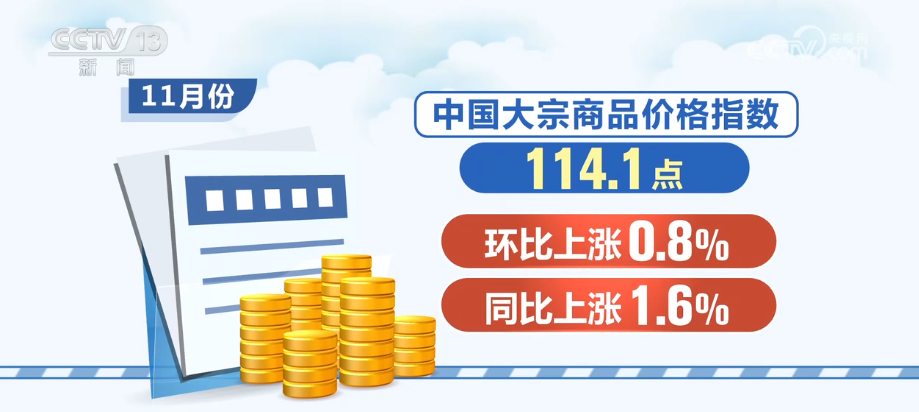
Core Insights - The China Logistics and Purchasing Federation reported that the commodity price index for November has increased for seven consecutive months, performing better than the same period in 2024 [1] Group 1: Commodity Price Index - The commodity price index for November stood at 114.1 points, reflecting a month-on-month increase of 0.8% and a year-on-year increase of 1.6% [3] - Among the 50 monitored commodities, 25 saw price increases month-on-month, with lithium carbonate, coke, and corrugated paper leading the gains at 15%, 7.2%, and 7.1% respectively [6] Group 2: Industry Performance - The non-ferrous metal price index rose by 1.4% month-on-month, driven by the rapid development of the global new energy industry and the continued expansion of domestic high-tech manufacturing [9] - The energy price index and agricultural product price index rebounded, increasing by 1.2% and 0.9% respectively, due to seasonal heating demand and tight supply of certain agricultural products [11] Group 3: Economic Outlook - Overall, the commodity market is showing a recovery in prosperity levels, indicating a stable and positive trend. This reflects the strengthening of domestic economic resilience and internal momentum, supported by various economic stabilization measures [14]

农产品期权:农产品期权策略早报-20251205
Wu Kuang Qi Huo· 2025-12-05 04:52
1. Report Investment Rating - No investment rating for the industry is provided in the report. 2. Core Viewpoint - The agricultural product options market shows different trends: oilseeds and oils are weakly volatile, agricultural by - products maintain a volatile trend, soft commodities like sugar have slight fluctuations, cotton is strongly consolidating, and grains such as corn and starch are narrowly consolidating in a bullish direction. The recommended strategy is to construct option portfolio strategies mainly as sellers, along with spot hedging or covered strategies to enhance returns [2]. 3. Summary by Relevant Catalogs 3.1 Futures Market Overview - Various option - underlying futures have different price movements. For example, the price of soybean No.1 (A2601) is 4,091, down 29 (-0.70%); soybean meal (M2601) is 3,034, unchanged (0.00%); and corn (C2601) is 2,302, up 29 (1.28%). Their trading volumes and open interests also vary [3]. 3.2 Option Factors - Quantity and Position PCR - Different option varieties have different quantity and position PCR values. For instance, the quantity PCR of soybean No.1 is 0.53, and the position PCR is 0.91; the quantity PCR of soybean meal is 0.77, and the position PCR is 0.76. These values help describe the strength of the option - underlying market trends and potential turning points [4]. 3.3 Option Factors - Pressure and Support Levels - Each option variety has corresponding pressure and support levels. For example, the pressure level of soybean No.1 is 4,250, and the support level is 4,000; the pressure level of soybean meal is 3,100, and the support level is also 3,100 [5]. 3.4 Option Factors - Implied Volatility - The implied volatility of different option varieties varies. For example, the at - the - money implied volatility of soybean No.1 is 9.83%, and the weighted implied volatility is 12.00% with a change of - 0.22%. The implied volatility can reflect the market's expectation of future price fluctuations [6]. 3.5 Option Strategies and Recommendations - **Oilseeds and Oils Options**: - **Soybean No.1**: The fundamental situation shows high domestic soybean and soybean meal inventories with slow inventory depletion. The price has shown a rebound after a decline. The implied volatility is below the historical average, and the position PCR indicates a volatile market. Recommended strategies include constructing a neutral short call + put option combination and a long collar strategy for spot hedging [7]. - **Soybean Meal**: The oil mill operating rate is about 61.41%. The price has shown a downward - then - upward trend. The implied volatility is below the historical average, and the position PCR indicates a weak market. Recommended strategies include constructing a short - biased call + put option combination and a long collar strategy for spot hedging [9]. - **Palm Oil**: Malaysian palm oil production has increased, while exports have decreased. The price has shown a weak downward trend. The implied volatility is below the historical average, and the position PCR indicates a weak market. Recommended strategies include constructing a bear spread strategy for put options, a short - biased call + put option combination, and a long collar strategy for spot hedging [9]. - **Peanut**: The peanut market is in a high - level consolidation phase. The price has shown a short - term bullish trend. The implied volatility is at a relatively high historical level, and the position PCR indicates a volatile and strong market. The recommended strategy is a long collar strategy for spot hedging [10]. - **Agricultural By - products Options**: - **Pig**: The average weight of pig slaughter has increased. The price has shown a weak downward trend. The implied volatility is above the historical average, and the position PCR indicates a weak market. Recommended strategies include constructing a short - biased call + put option combination and a covered call strategy for spot [10]. - **Egg**: The domestic egg price has shown a slight increase with sufficient supply. The price has shown a volatile rebound. The implied volatility is at a high level, and the position PCR indicates a weak market. Recommended strategies include constructing a neutral short call + put option combination [11]. - **Apple**: The new - season apple storage situation is complex. The price has shown a continuous upward and volatile trend. The implied volatility is above the historical average, and the position PCR indicates strong support. Recommended strategies include constructing a long - biased short call + put option combination and a long collar strategy for spot hedging [11]. - **Jujube**: The new - season jujube has a strong expected production cut but with inventory pressure. The price has shown a weak downward trend. The implied volatility has rapidly risen above the historical average, and the position PCR indicates a weak market. Recommended strategies include constructing a short - biased wide - straddle option combination and a covered call strategy for spot hedging [12]. - **Soft Commodities Options**: - **Sugar**: The sugar - mill opening situation in Guangxi is behind schedule. The price has shown a weak downward trend. The implied volatility is at a low historical level, and the position PCR indicates a range - bound market. Recommended strategies include constructing a short - biased call + put option combination and a long collar strategy for spot hedging [12]. - **Cotton**: The spinning mill operating rate is stable, and the commercial inventory has increased. The price has shown a short - term bullish trend. The implied volatility is at a low level, and the position PCR indicates a weak market. Recommended strategies include constructing a long - biased short call + put option combination and a covered call strategy for spot [13]. - **Grain Options**: - **Corn**: The corn inventory in northern ports is accumulating, and the trading in Guangdong ports is light. The price has shown a weak rebound. The implied volatility is at a low historical level, and the position PCR indicates a weak market. Recommended strategies include constructing a long - biased short call + put option combination [13]. - **Starch**: The price has shown a bullish trend. The implied volatility is at a low historical level, and the position PCR indicates a weak market. The recommended strategy is a long collar strategy for spot hedging [13].
中国农产品出口规模、品类、市场覆盖面提升 精准服务架起出海“快车道”
Yang Shi Wang· 2025-12-05 02:59
Core Insights - China's agricultural product exports reached nearly 600 billion yuan in the first ten months of 2025, with 838 categories exported to 223 countries and regions, indicating a simultaneous increase in export scale, variety, and market coverage [1] Group 1: Export Performance - The Yellow River Basin, a significant agricultural region in China, exported agricultural products worth 178.1 billion yuan in the first ten months of 2025, with new products like milk protein, fresh vegetables, and selenium sand melons entering international markets in Central Asia and the Middle East for the first time [5] Group 2: Market Expansion Strategies - To further expand export share and diversify markets, companies need to understand and master the technical regulations and standards of target markets, ensuring quality control from the source to better access international markets [8] - A training session on compliance and international market access rules was attended by nearly 100 representatives from over 70 agricultural product companies in Yinchuan, providing professional support for agricultural exports [9] Group 3: New Market Opportunities - A goji berry export company in Ningxia reported that in 2025, their products were exported to emerging markets in Southeast Asia, the Middle East, and South America for the first time [11] Group 4: Support Initiatives - Customs authorities are conducting nationwide seminars on agricultural product exports to address the challenges of differentiated exports and to facilitate a "fast track" for Chinese agricultural products to reach global markets [14]

从田间到世界:我国农产品出口“量、品、市”齐升 成稳外贸、惠民生新支柱
Yang Shi Wang· 2025-12-05 02:45
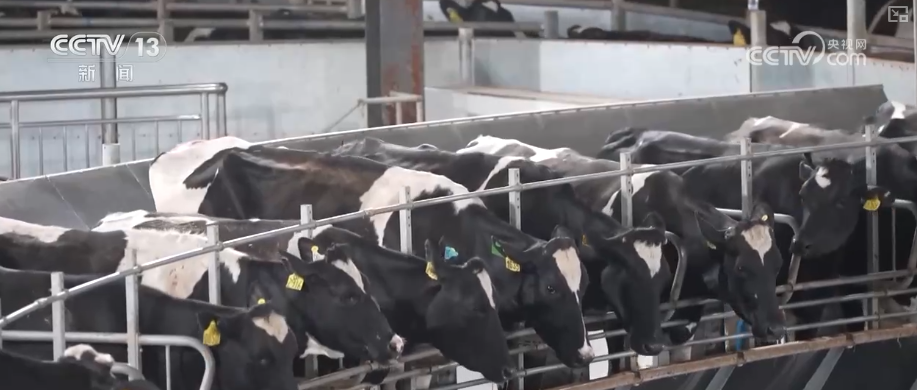
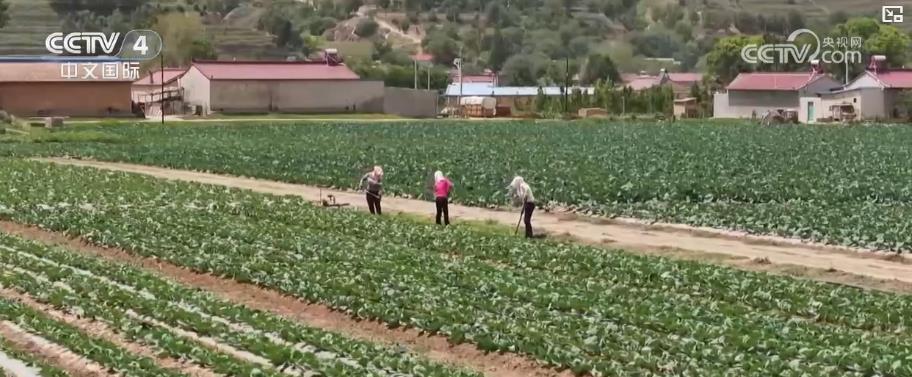
Core Insights - China's agricultural product exports reached nearly 600 billion yuan in the first ten months of this year, with 838 categories exported to 223 countries and regions, indicating a simultaneous increase in export scale, variety, and market coverage, which supports stable foreign trade and benefits people's livelihoods [1] Group 1 - The Yellow River Basin, an important agricultural region in China, exported agricultural products worth 178.1 billion yuan in the first ten months, with new products like milk protein, fresh vegetables, and selenium-rich melons entering international markets in Central Asia and the Middle East [3] - A training session on compliance and international market access rules was held in Yinchuan, Ningxia, attended by nearly 100 representatives from over 70 agricultural product companies, providing professional support for agricultural exports [3] Group 2 - To address the challenges of differentiated agricultural product exports and to eliminate key bottlenecks in the "going global" strategy, customs authorities are conducting specialized seminars nationwide to provide precise services that facilitate the global reach of Chinese agricultural products [5]
连涨七个月!国内大宗商品市场“暖意”延续 经济内生动力和韧性稳步增强
Yang Shi Wang· 2025-12-05 02:45
Core Viewpoint - The China Logistics and Purchasing Federation reported that the commodity price index for November has shown a continuous month-on-month increase for seven consecutive months, indicating a better performance compared to the same period last year [1]. Group 1: Commodity Price Index - The commodity price index for November stands at 114.1 points, reflecting a month-on-month increase of 0.8% and a year-on-year increase of 1.6% [3]. - Among the 50 monitored commodities, 25 experienced a month-on-month price increase, with lithium carbonate, coke, and corrugated paper leading the gains at 15%, 7.2%, and 7.1% respectively [3]. Group 2: Industry Analysis - The non-ferrous metal price index rose by 1.4% month-on-month, driven by the rapid development of the global new energy industry and the continued expansion of domestic high-tech manufacturing [5]. - Energy and agricultural product price indices rebounded, increasing by 1.2% and 0.9% respectively, influenced by seasonal heating demand and tight supply of certain agricultural products [5]. Group 3: Economic Outlook - The overall commodity market is showing a recovery in prosperity levels, maintaining a stable and positive trend, which suggests that the domestic economic resilience and internal driving forces are steadily strengthening [7]. - The acceleration of the transition between old and new growth drivers is providing strong support for achieving the annual economic growth targets [7].

“甘味”在新马泰等地建成5个海外仓储中心
Zhong Guo Xin Wen Wang· 2025-12-05 02:38
Group 1 - The core viewpoint of the articles highlights the development of Gansu's agricultural brand "Guanwei," which has established overseas warehouses and expanded its market presence internationally [1][2] - Gansu has set up a total of 100 "Guanwei" authorized stores and five overseas storage centers in countries like Singapore, Thailand, and Malaysia, creating a three-tier brand matrix [1] - The export value of "Guanwei" agricultural products is projected to reach 3.7 billion RMB in 2024, reflecting a year-on-year growth of 27.8%, with sales in the first three quarters of this year increasing by 28.8% [1] Group 2 - Gansu's eight major characteristic industries, including livestock, vegetables, and grains, have a total industrial chain output value of 577.2 billion RMB, with significant contributions to national seed production [2] - The province has initiated the construction of a modern cold and drought-resistant agricultural base, focusing on developing eight industrial clusters and 25 industrial belts [2] - The total industrial chain output value is expected to reach 620 billion RMB this year, indicating robust growth in Gansu's agricultural sector [2]
“文昌鸡师傅”劳务品牌人气旺
Hai Nan Ri Bao· 2025-12-05 02:24
Core Viewpoint - The 28th China (Hainan) International Tropical Agricultural Winter Trade Fair showcases the "Wenchang Chicken Master" labor brand, highlighting its full industry chain products and immersive culinary culture experience [1] Group 1: Industry Development - The exhibition presents a comprehensive view of the Wenchang Chicken's development path, from original breed protection, ecological farming, standardized processing to brand dining [1] - The displayed fresh products include various flavors such as white cut, salt-baked, and coconut chicken, demonstrating achievements in standardization and industrialization [1] Group 2: Cultural and Economic Impact - Wenchang Chicken is recognized as both a "National Geographical Indication Product" and an "Intangible Cultural Heritage," showcasing its dual value [1] - The "Wenchang Chicken Master" labor brand transforms traditional skills into modern industrial momentum that drives employment and revitalizes rural areas [1]