电商

Search documents
吉宏股份股价涨5.17%,中欧基金旗下1只基金重仓,持有31.31万股浮盈赚取25.36万元
Xin Lang Cai Jing· 2025-12-19 05:18
Core Insights - Xiamen Jihong Technology Co., Ltd. focuses on cross-border social e-commerce and paper packaging for fast-moving consumer goods (FMCG) [1] - The company's revenue composition is 65.45% from e-commerce, 34.49% from packaging, and 0.06% from other businesses [1] - The stock price of Jihong shares increased by 5.17% to 16.48 CNY per share, with a total market capitalization of 7.423 billion CNY [1] Company Overview - Xiamen Jihong Technology was established on December 24, 2003, and went public on July 12, 2016 [1] - The company operates primarily through three divisions: cross-border social e-commerce, paper packaging, and other marketing and advertising services [1] Fund Holdings - One fund, the China Europe Data Mining Mixed A (001990), holds a significant position in Jihong shares, with 313,100 shares, representing 0.62% of the fund's net value [2] - The fund has generated a floating profit of approximately 253,600 CNY from its investment in Jihong [2] Fund Manager Performance - The fund manager, Qu Jing, has been in position for over 10 years, with a total fund size of 3.359 billion CNY [3] - The best return during Qu Jing's tenure is 189.5%, while the worst return is -24.21% [3]

AI全面渗透电商场景,线上消费ETF基金(159793)冲击3连涨
Xin Lang Cai Jing· 2025-12-19 03:32
Core Insights - The online consumption theme index (931481) has shown a positive trend, with significant increases in key component stocks such as Yonghui Supermarket (up 4.55%) and Kid King (up 4.34%) [1] - AI tools have become integral to the e-commerce landscape, enhancing user experience and operational efficiency during the 2025 Double 11 shopping festival [1] - The online retail sector in China has seen a year-on-year growth of 5.7%, with the online retail sales of physical goods reaching 11.82 trillion yuan, indicating a strong consumer demand [2] Group 1: Market Performance - The online consumption ETF fund (159793) has risen by 0.30%, marking its third consecutive increase, with the latest price at 1.01 yuan [1] - The top ten weighted stocks in the online consumption theme index account for 55.21% of the index, with major players including Alibaba-W, Tencent Holdings, and Meituan-W [3] Group 2: E-commerce Trends - AI tools launched by Alibaba have significantly improved click-through rates and return on investment for merchants, with a 10% increase in total clicks and a 12% rise in ROI [1] - The e-commerce platforms are focusing on enhancing user experience and operational efficiency rather than just scaling, which is beneficial for the long-term health of the industry [2]




AI 时代,如何定义电商营销新范式
Sou Hu Cai Jing· 2025-12-19 03:08
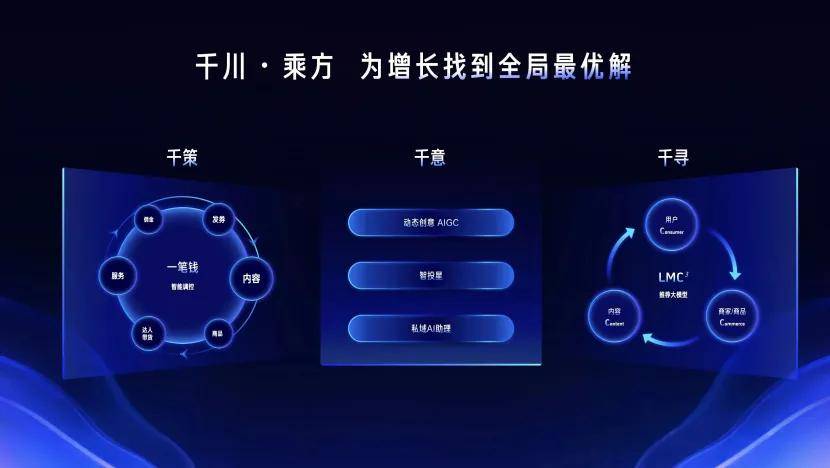
Core Viewpoint - The e-commerce industry is undergoing a significant transformation through AI, with Douyin e-commerce leading the way by launching "Qianchuan·Chengfang," which simplifies operations for merchants and enhances user experience, ultimately achieving a win-win for merchants, users, and the platform [3][4][7]. Group 1: AI Transformation in E-commerce - The e-commerce sector has long discussed AI transformation, but actual implementations have been limited to isolated capabilities like "recommended for you" and "image search," lacking a comprehensive system-level upgrade [2]. - The breakthrough in AI application in e-commerce is attributed to the availability of abundant data and mature technology, which Douyin e-commerce currently possesses [4][7]. - Douyin's internal data shows significant engagement, with 11.6 billion daily views of e-commerce short videos and 4.86 billion views of user-generated content, indicating a strong foundation for AI-driven marketing [4]. Group 2: Key Technological Breakthroughs - Three major technological advancements have enabled AI to play a central role in e-commerce: the integration of agent capabilities with reinforcement learning, the maturity of model control technologies like MCP, and the successful deployment of multimodal large models [5][6]. - The agent system allows AI to make real-time decisions based on various performance metrics, optimizing budget allocation dynamically [5]. - The MCP technology enables large models to operate marketing tools more effectively, reducing the need for manual intervention [6]. Group 3: Components of Qianchuan·Chengfang - Qianchuan·Chengfang consists of three main components: Qianxun, Qianshe, and Qianyi, each addressing different aspects of e-commerce marketing [8][9]. - Qianxun focuses on accurately predicting user needs and personalizing recommendations by integrating content, products, and user data [8]. - Qianshe automates marketing strategy formulation, allowing merchants to input basic parameters and receive optimized marketing plans without needing extensive expertise [16]. - Qianyi enhances dynamic content generation and customer service, enabling real-time adjustments based on user interactions and feedback [20][23]. Group 4: Implications for Merchants - The introduction of Qianchuan·Chengfang significantly lowers the marketing barrier for small and medium-sized enterprises, allowing them to focus on product quality rather than complex marketing strategies [24]. - Larger businesses can save time and resources, enabling them to concentrate on innovation and brand development [24]. - The combination of Qianxun, Qianshe, and Qianyi represents a shift towards a more efficient and effective e-commerce marketing landscape, driven by AI [24][25].

96家企业携千余岗位进校,苏高职双选会赋能千余学子高质量就业
Yang Zi Wan Bao Wang· 2025-12-19 02:39
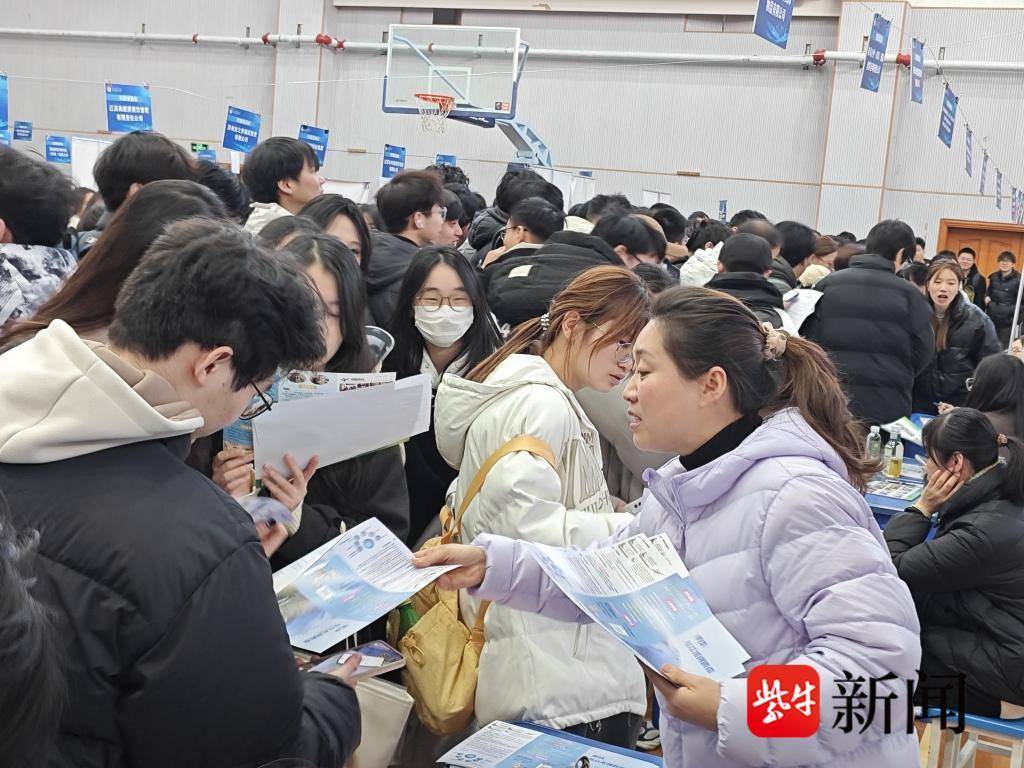
事实上,这场火爆的双选会,正是苏州高等职业技术学校创新就业服务模式的生动缩影。学校创新打造"系部专场+校企恳谈+校园双选"三维就业服务体 系,为2026届千余名毕业生搭建高效就业桥梁。招聘月期间,各系部立足专业特色举办专场招聘会,实现人才供需精准匹配:11月7日,机电工程系邀请 通用电气航空苏州有限公司等5家行业领军企业组团参会,为200余名学子带来智能制造、设备运维等岗位,现场达成实习意向86份;11月19日,经济贸易 系携手江苏银行(600919)、明基电通等知名企业,推出金融、电商类岗位,吸引学子踊跃投递,达成意向112份,28人获优先录用资格;12月12日,电 子工程系联合京隆科技开展专场招聘,35名学子与企业达成初步就业意向。 12月18日下午,苏州高等职业技术学校校园双选会在塔园路校区体育馆举办,96家品牌企业携千余个优质岗位进校揽才,岗位专业覆盖率达100%,千余 名学子现场与企业面对面洽谈,供需两端实现精准对接,为学子高质量就业筑牢根基。 扬子晚报/紫牛新闻记者在现场看到,双选会现场人气爆棚,企业摊位前挤满咨询、应聘的学生,火热氛围持续升温。据统计,本场招聘会汇聚96家品牌 企业,提供千余个优 ...
魏宏丞“接班”康师傅CEO:他负责的饮品业务下滑中
2 1 Shi Ji Jing Ji Bao Dao· 2025-12-19 01:51
Group 1 - The core point of the article is the leadership transition at Master Kong, with the announcement of a new CEO, Wei Hongcheng, who will take over from the current CEO, Chen Yingrang, in 2026 [1][4] - Wei Hongcheng, aged 43, has been with Master Kong for 10 years and has held various positions, including Chairman of Master Kong Beverages since 2019, where he has contributed to steady revenue and profit growth [1][2] - Master Kong is undergoing a transformation towards becoming a high-quality, full-category beverage company, although its beverage business is currently facing challenges, with a 2.6% year-on-year decline in beverage revenue to 26.359 billion yuan in the first half of 2025 [2][3] Group 2 - The decline in Master Kong's beverage revenue is attributed to several factors, including a shift in consumer demand for sugary tea, a reduction in the number of marketing distributors, and price increases affecting sales [3] - In contrast, Nongfu Spring's beverage business saw an 18.6% year-on-year revenue increase to 16.18 billion yuan during the same period, highlighting a significant performance gap between the two companies [2][3] - Master Kong remains optimistic about its beverage business, expecting continued growth from new product contributions and a richer product matrix [3]
美股强势反弹,科技股领涨,中概股普涨,CPI数据提振市场信心、美光强劲财测重燃AI赛道交易热情
Jin Rong Jie· 2025-12-19 01:16
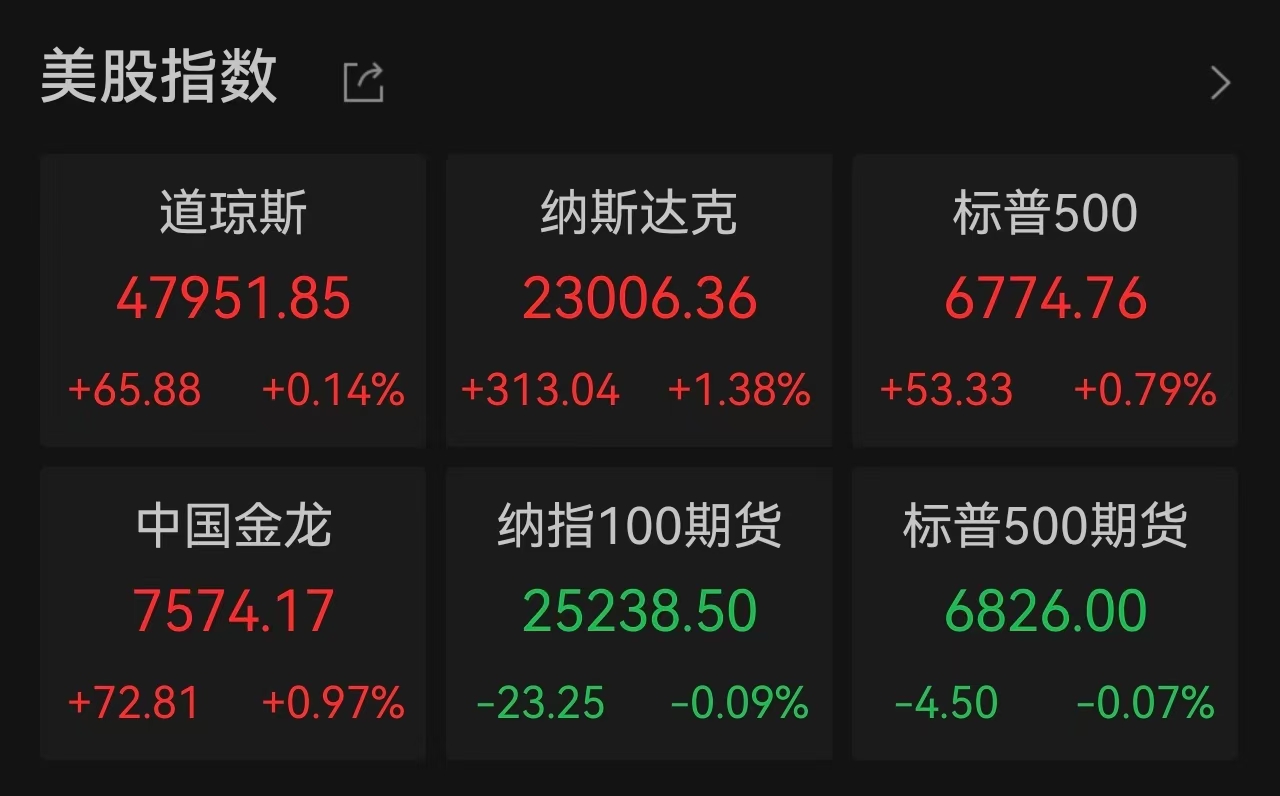
截至收盘,道琼斯工业平均指数上涨65.88点,涨幅0.14%,报47951.85点;标普500指数上涨53.33点,涨幅0.79%,报6774.76点;纳斯达克综合指数表现尤 为亮眼,上涨313.04点,涨幅1.38%,报23006.36点,结束此前连续回调的走势。小盘股同步走强,罗素2000指数上涨0.62%。 在利好通胀数据的提振下,美股市场于当地时间12月18日迎来全面反弹,三大指数集体收高,科技股成为推动市场上涨的主要动力。美国劳工部当日公布的 11月消费者价格指数(CPI)同比上涨2.7%,显著低于市场预期的3.1%,核心CPI同比上涨2.6%,同样低于预期,创下2021年3月以来新低。这一数据缓解了 投资者对通胀压力的担忧,强化了美联储明年降息的预期。 科技股普遍大涨,人工智能相关需求依旧强劲。美光科技股价飙升10.21%,公司发布的季度利润指引接近分析师预期的两倍,显示存储芯片需求旺盛,带 动费城半导体指数上涨2.6%。其他大型科技股中,特斯拉上涨3.45%,亚马逊上涨2.48%,Meta上涨2.30%,英伟达上涨1.87%,微软上涨1.65%,谷歌上涨 1.93%,苹果微涨0.13%。非必需消 ...
今日国际国内财经新闻精华摘要|2025年12月19日
Sou Hu Cai Jing· 2025-12-19 00:11
Group 1: TikTok and ByteDance Developments - TikTok CEO Zhou Shouzi announced the establishment of a new joint venture named TikTok USDS Joint Venture LLC, which will focus on data protection, algorithm security, content review, and software assurance in the U.S. [1] - ByteDance will fully control the new joint venture, while other TikTok entities in the U.S. will continue to handle e-commerce, advertising, market operations, and global connectivity of TikTok products [1] - The agreement related to the joint venture is expected to be completed by January 22, 2026 [1] Group 2: Stock Market Performance - U.S. stock indices closed higher, with the Dow Jones up 0.14%, Nasdaq up 1.38%, and S&P 500 up 0.79% [2] - Notable stock movements included Amazon and Meta rising over 2%, while Tesla increased by over 3% [2] - Oracle's stock rose by 3% in after-hours trading, while Nike's stock saw a decline of up to 10% after reporting Q2 revenue of $12.4 billion, exceeding market expectations of $12.2 billion [3][6] Group 3: Commodity Market Insights - Bitcoin fell below $85,000, with a daily decline of 1.44% [8] - U.S. natural gas futures prices dropped over 4%, currently at $3.199 per million British thermal units [9][10] - Goldman Sachs predicts that Brent crude oil and West Texas Intermediate crude oil prices will average $56 and $52 per barrel, respectively, by 2026, while iron ore prices are expected to decline by 15% to $88 per ton [11][12][13][14] Group 4: Monetary Policy and Economic Outlook - Federal Reserve officials expressed concerns about premature rate cuts, while the European Central Bank indicated that the rate-cutting cycle may be nearing its end [15][18] - The ECB forecasts that inflation rates will remain below 2% in the first quarter of 2026 and from the third quarter of 2026 to the fourth quarter of 2027 [20] Group 5: Domestic Banking and Economic Policies - Several banks, including Jiangsu Bank and HSBC China, have lowered U.S. dollar deposit product rates in response to the Fed's recent rate cuts [32] - The Russian Foreign Ministry praised the launch of the Hainan Free Trade Port as a significant innovation that will enhance trade opportunities [33]
读创财经晨汇|①央行重启14天期逆回购②深圳核发首张房票 价值4055万元
Sou Hu Cai Jing· 2025-12-19 00:11
Group 1: Real Estate and Urban Development - Shenzhen has issued its first housing voucher worth 40.55 million yuan, allowing displaced residents to choose their preferred location, unit type, and developer, marking a significant innovation in urban relocation compensation methods [1] Group 2: Financial Regulations - The State-owned Assets Supervision and Administration Commission (SASAC) has outlined 98 specific scenarios for accountability regarding violations in the management of central enterprises, emphasizing the importance of safeguarding state assets [2] Group 3: Monetary Policy - The People's Bank of China has resumed 14-day reverse repurchase operations for the first time in nearly three months, indicating a flexible and efficient monetary policy approach to ensure liquidity at year-end [3] Group 4: Industry Growth - The national biomanufacturing industry has reached a total scale of 1.1 trillion yuan, with bioproducts accounting for over 70% of global production [4] Group 5: Banking and Investment Trends - As of the end of November, the total scale of bank wealth management products has reached approximately 34 trillion yuan, marking a historical high and reflecting a trend of capital migration due to declining deposit rates [5] Group 6: International Trade and Cooperation - SF Express Middle East has signed a cooperation agreement with Oman Asyad Group to enhance collaboration in cross-border transportation, supply chain cooperation, and logistics innovation [9] Group 7: Corporate Developments - NIO is introducing a new channel cooperation model where users can open stores without authorization from the company, focusing on community engagement and offline touchpoints [7][8] - Oracle and OpenAI have received approval for power supply to their planned large data center in Michigan, which is expected to involve over 450 billion yuan in investments across the U.S. [15]





周受资内部信曝TikTok美国方案;海南封关首日iPhone最高可减2000多元;腾讯辟谣元宝背后由真人运营丨邦早报
创业邦· 2025-12-19 00:08
Group 1 - TikTok CEO Zhou Shuzi announced the establishment of a new joint venture, TikTok USDS Joint Venture LLC, to handle data protection and algorithm security in the U.S. while ByteDance retains control over e-commerce and advertising [1] - The new joint venture is expected to be finalized by January 22, 2026, and will focus on content review and software security [1] Group 2 - Hainan Free Trade Port officially launched its full island closure operation, leading to significant discounts on iPhone products, with prices reduced by over 2,000 yuan for certain models [3] - The iPhone 17 Pro Max 256GB version is priced at 9,299 yuan, which is 700 yuan cheaper than e-commerce platforms [3] Group 3 - OpenAI is in preliminary talks for a new funding round, aiming for a valuation of approximately $750 billion, with potential funding reaching hundreds of billions [3] - This valuation represents a 50% increase from the previous funding round in October 2022 [3] Group 4 - Elliott Investment Management has accumulated over $1 billion in shares of Lululemon and is advocating for a former Ralph Lauren executive to become the new CEO [12] - Lululemon's current market capitalization is around $25 billion [12] Group 5 - Apple announced adjustments to its iOS rules in Japan, allowing developers to use third-party app stores and payment methods, in compliance with new regulations [12] - This change enables developers to add alternative payment options within their apps [12] Group 6 - Honda confirmed a temporary suspension of production at its joint venture factory in China due to supply chain issues, specifically related to semiconductor shortages [16] - The suspension will last for three days starting December 29, 2023 [16] Group 7 - Xiaomi's founder announced the official release of the Xiaomi 17 Ultra next week, following leaked images of the device [7] - The new model is expected to generate significant consumer interest [7] Group 8 - Amazon is restructuring its AI team, integrating chip and model development under a new business unit led by a veteran from its cloud computing division [18] - This move aims to enhance Amazon's capabilities in artificial intelligence and maintain competitiveness in the market [18]






特朗普突发!美联储降息大消息!美股、中概股爆发!
Zheng Quan Shi Bao· 2025-12-19 00:06
美国三大股指全线收涨,道指涨0.14%报47951.85点,标普500指数涨0.79%报6774.76点,纳指涨1.38% 报23006.36点。美联储方面,降息和换帅又有新消息。 个股方面,特斯拉涨超3%,亚马逊、脸书涨超2%,谷歌、英伟达涨近2%,微软涨超1%,苹果涨 0.13%。 而据CME"美联储观察",美联储明年1月维持利率不变的概率为73.4%,降息25个基点的概率为26.6%。 相较于之前有小幅上升。 中概股多数上涨,纳斯达克中国金龙指数涨0.97%,个股方面,BOSS直聘涨超5%,小鹏汽车涨近3%, 禾赛科技涨近3%,万国数据涨超2%,信也科技涨近2%;名创优品跌超2%,贝壳跌逾1%,雾芯科技跌 超1%。 现货黄金则继续微涨。 事关新一任美联储主席,美国总统特朗普再度发声,不过,他并未明确哪位候选人领先。 特朗普表示,他正在为美联储主席一职面试"三到四位"候选人,并预计将"很快"决定提名谁来接替鲍威 尔。 "我认为他们每个人都会是不错的选择。"特朗普说。 特朗普表示,他不确定是否会在今年年底前宣布人选,但称决定将在"未来几周内"做出。这位总统已多 次表示,他希望美联储的下一任领导者能更积极地降 ...