
建筑

Search documents
美高等教育遭遇重大变革,上大学不再“吃香”
Guo Ji Jin Rong Bao· 2026-02-09 11:21
Group 1 - The trend of "non-college" education is gaining popularity among American students, with more considering alternatives to four-year degrees, such as two-year programs and shorter vocational certificates [1][2] - Rising college tuition and student loan debt are significant factors driving this trend, alongside the new borrowing limits set by the "Big and Beautiful Act" proposed by Trump, which will impact student decisions by 2026 [1][4] - Students are increasingly focusing on vocational training and employment-oriented paths to navigate a slowing labor market, indicating a clear shift towards "non-college" options [1][3] Group 2 - The National Student Clearinghouse Research Center reports a 3% increase in community college enrollment this fall, while public four-year universities saw a 1.4% increase, and private non-profit four-year colleges experienced a 1.6% decline [2] - The "Big and Beautiful Act" has set a lifetime borrowing limit of $257,500 for federal student loans, which may encourage families to choose more cost-effective educational paths, such as starting at community colleges before transferring to four-year institutions [4] - The establishment of new terms for Pell Grants under the "Big and Beautiful Act" will allow students in community college vocational training programs to qualify for financial aid, potentially increasing interest in short-term, low-cost, employment-related programs [5]
日经平均股指创新高,回应高市大选胜利
日经中文网· 2026-02-09 07:20
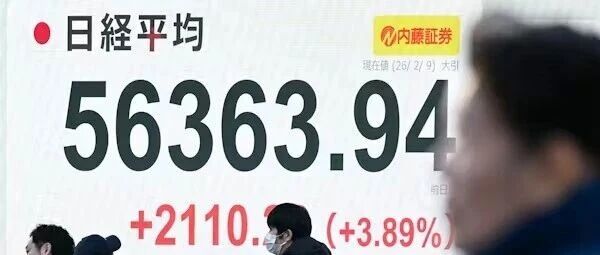
Group 1 - The Nikkei average stock index surged significantly, closing up 2110 points (3.89%) at 56363, reaching a historical high following the overwhelming victory of the Liberal Democratic Party (LDP) in the House of Representatives election on February 8 [2][4] - The market's expectation for enhanced policy execution under Prime Minister Fumio Kishida's government has led to increased capital inflow into the stock market, with nearly 80% of stocks on the Tokyo Stock Exchange rising [4][6] - Key stocks such as Toyota and Kawasaki Heavy Industries saw substantial gains, with Toyota's stock rising 5.82% and Kawasaki's by 17.95%, indicating strong performance in the automotive and defense sectors [4][6] Group 2 - Market focus has shifted to whether the stock market's upward trend can be sustained, as historical patterns show that the market often reacts positively after LDP victories [5][6] - Analysts draw parallels between the current government and past administrations, noting that previous LDP victories led to significant stock market increases, but caution that the current economic environment differs from those times [5][6] - The ability of the Kishida government to enhance Japan's growth strategy and productivity will be crucial for the continued rise of the stock market, as investors are closely monitoring the effectiveness of proposed policies [6][7]

谁在“走钢丝”? A股保壳术全景透视
Jing Ji Guan Cha Wang· 2026-02-09 02:08
Core Viewpoint - The A-share market is witnessing a critical "survival race" as companies face delisting risks due to financial indicators set by the new "National Nine Articles," which include negative profit totals, net profits, and insufficient revenue [2][4]. Group 1: Companies Facing Delisting Risks - *ST Jinglun is experiencing a severe decline, with nine consecutive trading days of limit-down, and a significant drop in trading volume to less than 5 million yuan, as it faces delisting expectations [2]. - Other companies like *ST Dongjing and *ST Huarong are attempting various strategies such as asset restructuring and debt waivers to avoid delisting, focusing on key financial indicators like revenue exceeding 300 million yuan or turning net assets positive [2][4]. Group 2: Financial Performance and Strategies - The new regulations increased the revenue threshold for delisting from 100 million yuan to 300 million yuan, prompting companies to strive for this new target to avoid delisting risks [4]. - *ST Jinglun is attempting to incorporate new business lines into its main revenue stream, while *ST Dongjing is projecting a revenue increase to between 340 million and 370 million yuan, surpassing the 300 million yuan threshold [6][8]. Group 3: Specific Company Actions - *ST Jinglun's revenue forecast for 2025 is approximately 338 million yuan, but after excluding non-core business income, the adjusted revenue is only about 86.22 million yuan, indicating a failure to turn a profit [6][7]. - *ST Huarong expects to achieve a net profit of between 6.5 million and 8 million yuan for 2025, aided by a 30% increase in revenue from its subsidiary, which it acquired a larger stake in [10]. Group 4: Market Reactions and Future Outlook - The market is closely monitoring companies that have narrowly met the revenue thresholds, with concerns about the sustainability of these figures and the potential for revenue adjustments post-audit [11][12]. - Companies are increasingly resorting to mergers and acquisitions as a strategy to enhance their financial performance and meet the new revenue requirements [10][15].



【真灼IPO动向】市值细增长空间大 长乐控股IPO值得留意
Sou Hu Cai Jing· 2026-02-09 00:59
Group 1: Industry Overview - The Singapore construction industry is expected to experience rapid growth driven by large national infrastructure projects and numerous government housing projects, with total construction contract values projected to remain between SGD 47 billion and SGD 53 billion in 2025 and 2026, marking a recent high [2] - The market size of the construction industry in Singapore, based on total contract value, is projected to grow from SGD 33.523 billion in 2019 to SGD 44.248 billion in 2024, reflecting a compound annual growth rate (CAGR) of approximately 5.7% [3] - The residential sector is expected to show strong growth with a CAGR of about 11.2% during the same period, driven by major projects such as Changi Airport Terminal 5 and various MRT line extensions [3] Group 2: Company Profile - Chang Le Holdings, a Singapore-based construction and renovation contractor, is planning to list on the Hong Kong Growth Enterprise Market, showcasing higher profit margins and growth potential compared to peers [2] - The company is projected to generate revenue of SGD 200 million in 2024, with a gross profit of SGD 54 million, and revenue is expected to increase to SGD 219 million in 2025, with a gross profit of SGD 55 million [2] - Chang Le Holdings holds a GB1 license issued by the Building and Construction Authority (BCA) of Singapore, allowing it to undertake general construction projects without monetary limits, which is a significant advantage [4] Group 3: Financial Performance - For the fiscal year ending October 31, 2025, the company expects revenue of SGD 22 million, a year-on-year increase of 9.1%, with a gross profit of SGD 6 million, reflecting a 3.32% increase, while net profit is projected to decrease by 61.9% to SGD 1 million [2] - The gross profit margin for the period is expected to be 25.26%, a decrease of approximately 1.4 percentage points compared to the same period last year [2] Group 4: Competitive Landscape - The construction industry in Singapore is characterized by a polarized profit performance among contractors, with many small to medium-sized contractors experiencing net profit margins between 1% and 5% due to factors such as material price fluctuations and labor shortages [3] - Chang Le Holdings demonstrates a higher profit recovery due to its integration of high-value segments such as renovation and maintenance, positioning itself favorably in a competitive market [3] - The company faces direct competition from larger conglomerates and must navigate challenges related to tightening foreign labor quotas imposed by the government, which may impact future labor cost management [4]

建筑材料行业深度报告:建筑、建材2025Q4公募基金持仓低位回升,持仓集中度有所下降
Soochow Securities· 2026-02-08 14:33
Investment Rating - The report maintains an "Increase" rating for the construction materials industry [1] Core Insights - The report indicates that public fund holdings in the construction materials sector have slightly increased but remain at a low level, with the market value of heavy holdings in the construction and materials sectors accounting for 0.42% and 0.71% of A-shares, respectively [13][14] - The concentration of holdings in the construction and materials sectors has decreased, with 47 and 23 stocks held by sample funds, representing 29% and 32% of their respective industries [12][14] Summary by Relevant Sections 1. Industry Holding Analysis - The market value of heavy holdings in the construction and materials sectors has increased slightly, with respective shares of 0.42% and 0.71% of A-shares, ranking in the 28th and 26th percentiles over the past decade [13] - The concentration of holdings in the construction and materials sectors has decreased, with 47 and 23 stocks held by sample funds, representing 29% and 32% of their respective industries [12][14] 2. Individual Stock Holdings Analysis - The top five stocks by market value in the construction sector are Jin Chengxin (2.74 billion), China Construction (1.96 billion), Honglu Steel Structure (1.20 billion), Shanghai Port (0.88 billion), and Oriental Iron Tower (0.71 billion) [2] - The top five stocks by market value in the materials sector are Oriental Yuhong (2.24 billion), Sankeshu (2.05 billion), China National Materials (1.61 billion), Conch Cement (1.37 billion), and Huaxin Materials (1.11 billion) [2]




优化营商环境丨快速“破冰” 50万纠纷“暖化解”
Xin Lang Cai Jing· 2026-02-08 14:24
近日,靖宇县人民法院高效化解了一起某水泥公司与某建筑公司之间的买卖合同纠纷,促成双方当场达 成调解协议并部分即时履行,实现了法律效果与社会效果的统一。 某水泥公司与某建筑公司签订买卖合同,依约供应水泥后,建筑公司却迟迟未支付货款。经双方对账确 认,建筑公司共欠水泥公司货款50万元。多次催讨无果后,水泥公司诉至靖宇法院,请求判令对方支付 欠款及相应违约金。 案件受理后,承办法官仔细查阅卷宗,认为案件事实清楚、权利义务关系明确,且双方有长期合作关 系,具备调解基础。为减轻当事人诉累,实质性解决纠纷,法官决定在开庭前组织双方进行调解。 经过近两个小时的悉心调解与沟通,双方互谅互让,最终达成一致调解意见,建筑公司当场履行了首笔 30万元的付款义务。双方当事人均对调解结果表示满意,并对法官高效、务实的工作作风给予了高度评 价。 法官提醒 买卖合同纠纷是常见的商事纠纷类型,各类经营主体在开展经济往来时,应签订规范完备的合同、保存 履约凭证等。一旦发生纠纷,应优先通过协商、调解等途径寻求解决。法院调解作为重要的纠纷解决机 制,具有程序简便、周期短、成本低、利于修复关系等独特优势,是化解商事纠纷的有效途径。 来源:靖宇县人民 ...
狂砸7000亿美元,“这么投AI怕是要伤美国元气”
Guan Cha Zhe Wang· 2026-02-08 08:04
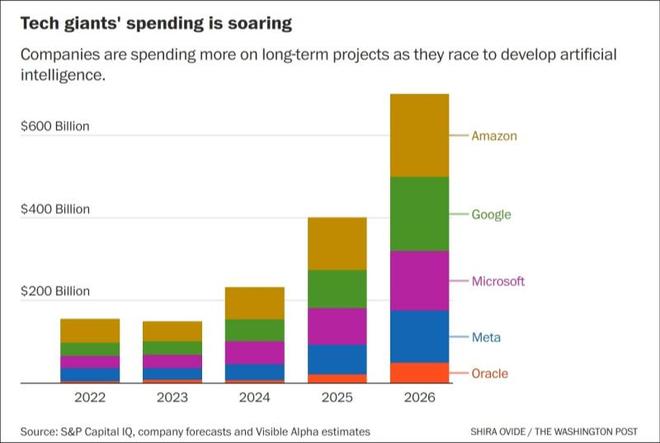
Core Insights - The U.S. AI investment race is intensifying, with five major tech companies projected to spend nearly $700 billion on AI-related capital expenditures by 2026, raising concerns among experts and investors about resource allocation in other sectors [1][3][4] Group 1: Investment Trends - The $700 billion investment in AI is unprecedented and nearly doubles the previous year's spending, equivalent to three-quarters of the U.S. defense budget [1][3] - Companies like Amazon, Google, Microsoft, Meta, and Oracle are focusing on building data centers equipped with powerful computing chips to enhance AI capabilities [1][3] - Critics argue that the massive upfront costs of AI development may not yield returns unless AI fundamentally transforms work and the economy [3][4] Group 2: Economic Impact - The surge in AI investment is causing resource shortages in other industries, leading to difficulties in finding skilled labor, particularly electricians, and resulting in delays for non-AI construction projects [1][4][7] - The construction of AI data centers is consuming significant chip capacity, which is expected to drive up prices for consumer electronics, with analysts predicting at least a 5% price increase for smartphones and PCs later this year [5][6] - The construction spending on new AI data centers has increased by 32% year-over-year, while other commercial real estate construction has stagnated or declined [7][8] Group 3: Market Dynamics - The AI investment boom is causing a disparity in funding within Silicon Valley, with a significant portion of venture capital flowing to a small percentage of high-valuation companies, potentially stifling innovation among less prominent startups [8][9] - The construction industry is projected to face a shortage of nearly 500,000 workers next year, exacerbated by the demand for skilled labor in AI data center projects [8][9] - Concerns are raised about the potential long-term effects of the AI investment frenzy on the overall economic vitality, as resources and attention may be diverted from other critical sectors [8][9]
2025年前11个月,检察机关办理社保领域行政非诉执行监督案3500余件
Xin Lang Cai Jing· 2026-02-08 03:00
Group 1 - In 2025, the national procuratorial organs handled over 4,500 administrative procuratorial supervision cases involving enterprises, with a total amount of over 640 million yuan [1] - The administrative procuratorial department actively participated in the "Standardizing Enterprise-related Law Enforcement Special Action" and the "Judicial Special Supervision on Illegal Extraterritorial Law Enforcement and Profit-driven Law Enforcement" [1] - Focus areas include issues such as "four chaos," illegal extraterritorial law enforcement, improper application of credit punishment measures, and violations of enterprises' legal rights [1] Group 2 - From April to December 2025, the Supreme Procuratorate organized nationwide administrative non-litigation execution procuratorial supervision activities in the social security field, achieving significant results [2] - The collaboration between the Supreme Procuratorate, the All-China Federation of Trade Unions, and the Supreme Court led to the successful recovery of over 2.45 million yuan in unpaid wages for 111 migrant workers [2] - The Jiangxi procuratorial organs assisted 86 migrant workers in recovering over 1.2 million yuan in unpaid wages and addressed issues related to the "second application" for administrative non-litigation execution [2] Group 3 - The procuratorial organs are promoting the establishment of a collaborative mechanism with departments such as human resources and social security, aiming to protect the legal rights of workers [3] - The administrative non-litigation execution procuratorial supervision activities in the social security field will be extended for another year to enhance the tangible benefits for the public [3]
福建:巩固提升制造业支柱产业,培育光电信息、集成电路、新能源等战略性新兴产业集群
Xin Lang Cai Jing· 2026-02-08 00:58
Core Viewpoint - The Fujian Provincial Government has issued implementation opinions to promote high-quality urban development, emphasizing tailored strategies to enhance urban development momentum [1] Group 1: Urban Development Strategies - The government advocates for city-specific policies to boost urban development [1] - There is a focus on enhancing urban industrial parks through intelligent, green, and integrated development [1] Group 2: Industry Focus - The strategy aims to consolidate and elevate the manufacturing sector while fostering strategic emerging industry clusters such as optoelectronics, integrated circuits, and new energy [1] - Future industries will be developed based on local conditions to cultivate new productive forces [1] Group 3: Construction and Modernization - The plan includes the development of intelligent construction and the cultivation of a modern architectural industry chain to accelerate the transformation and upgrading of the construction sector [1] Group 4: Economic Diversification - The government is promoting the development of various economic sectors, including first-release, silver economy, low-altitude, cultural tourism, and marine economies, to create new consumption scenarios and business formats [1] - Support is provided for Xiamen to pilot the construction of an international consumption environment [1] Group 5: Cultural and Tourism Development - The initiative aims to accelerate the creation of distinctive cultural districts, nighttime cultural and tourism consumption clusters, leisure tourism streets, and intangible cultural heritage districts [1]
清理拖欠企业账款不能松懈
Jing Ji Ri Bao· 2026-02-07 22:17
Core Viewpoint - The issue of overdue accounts receivable remains a significant concern for small and medium-sized enterprises (SMEs) in China, despite some improvements in recent years. The government has implemented various measures to address this issue, but challenges persist, particularly with local government financing vehicles and complex debt chains in the construction sector [1][2][3]. Group 1: Current Situation of Overdue Accounts - A survey of 10 private SMEs across five provinces indicates that overdue accounts receivable issues still exist, with prolonged payment periods being a notable problem [1]. - Local government financing vehicles are reported to have significant overdue accounts, with some companies unable to collect payments even after court rulings, leading to a loss of confidence among SMEs [1]. - The construction sector faces severe challenges due to subcontracting practices, resulting in intertwined debts and delayed payments, particularly affecting labor wages [1]. Group 2: Government Actions and Measures - The Chinese government has prioritized the resolution of overdue accounts, implementing numerous initiatives that have yielded positive results, including the handling of over 10,000 major wage violation cases since the start of the 14th Five-Year Plan [2]. - A national complaint platform for overdue payments has been launched, although many SMEs are unaware of it and do not utilize it effectively to protect their rights [2]. - The government aims to enhance the effectiveness of existing laws and increase the costs of dishonesty to improve enforcement and address the challenges of executing legal judgments [2]. Group 3: Importance of SMEs and Future Directions - SMEs are crucial for economic vitality and resilience, but they face significant challenges, including limited financial resources and market competitiveness, especially amid current economic pressures [3]. - The State Council has emphasized the need for financial policy support and the establishment of a long-term mechanism to clear overdue accounts, aiming to create a favorable environment for SME development [3]. - Future efforts should focus on building a comprehensive regulatory framework, enhancing supervision, and ensuring accountability to effectively address overdue accounts and prevent new occurrences [3].