新能源车

Search documents
港股科技ETF(513020)涨超0.6%,市场关注科技板块回暖信号
Mei Ri Jing Ji Xin Wen· 2026-01-09 06:43
Core Viewpoint - The Hong Kong technology sector is showing signs of recovery, with the Hong Kong Stock Technology ETF (513020) rising over 0.6% on January 9, driven by developments in the chip industry and positive market sentiment [1] Group 1: Market Developments - Kunlun Chip has submitted a listing application to the Hong Kong Stock Exchange, and the National Integrated Circuit Industry Investment Fund has increased its stake in SMIC H-shares to 9.25%, boosting market sentiment [1] - The outlook for the Hong Kong technology sector remains positive, particularly with the easing of pressure on the Federal Reserve's liabilities and a rebound in the domestic economy [1] Group 2: Investment Opportunities - The Hong Kong Stock Technology ETF (513020) tracks the Hong Kong Stock Connect Technology Index (931573), which includes core assets in sectors such as internet, semiconductors, innovative pharmaceuticals, and new energy vehicles [1] - The Hong Kong Stock Connect Technology Index has outperformed the Hang Seng Technology Index, with a cumulative return of 256.46% from the base date at the end of 2014 to October 2025, significantly exceeding the Hang Seng Technology Index's return of 96.94% by nearly 160% [1]
国家统计局:12月国内金饰品价格上涨5.6%
21世纪经济报道· 2026-01-09 01:56
Group 1 - The consumer price index (CPI) increased by 0.2% month-on-month and 0.8% year-on-year, with core CPI rising by 1.2% year-on-year, indicating a recovery in consumer demand as the New Year approaches [1][3] - The increase in CPI was primarily driven by rising prices in non-energy industrial consumer goods, which rose by 0.6%, contributing approximately 0.16 percentage points to the month-on-month CPI increase [1] - Food prices rose by 1.1% year-on-year, with significant increases in fresh vegetables (18.2%) and fresh fruits (4.4%), contributing to the overall CPI increase [3] Group 2 - The producer price index (PPI) rose by 0.2% month-on-month, marking the third consecutive month of increases, with the growth rate expanding by 0.1 percentage points compared to the previous month [4] - Key industries such as coal mining and lithium-ion battery manufacturing saw price increases due to improved supply-demand dynamics, with coal prices rising for five consecutive months [4] - Year-on-year, PPI decreased by 1.9%, but the decline rate narrowed by 0.3 percentage points, indicating positive changes in certain sectors due to ongoing macroeconomic policies [5]


涨价潮继续演绎,新技术协同发展
Zhong Guo Neng Yuan Wang· 2026-01-09 01:17
Group 1: Lithium Battery Market Insights - As of December 26, lithium carbonate prices reached 107,000 yuan/ton, an increase of 16% from the previous month, while lithium hydroxide prices were at 89,000 yuan/ton, up 11% month-on-month [1][2] - The lithium battery sector has shown strong performance since December 2025, with most segments outperforming the CSI 300 and SSE 50 indices [2] - The lithium battery electrolyte segment led the gains with an 8% increase, followed by positive growth in cathodes, lithium mines, and lithium battery separators [2] Group 2: Electric Vehicle Sales - In November, domestic wholesale sales of new energy passenger vehicles reached 1.57 million units, reflecting a year-on-year increase of 19% and a month-on-month increase of 5% [4] - Cumulative wholesale sales from January to November totaled 12.8 million units, representing a year-on-year growth of 30% [4] Group 3: Sodium Battery Development - The sodium-ion battery industry is entering a phase characterized by significant commercial growth, with applications in energy storage, two-wheeled vehicles, and passenger cars [3] - The sodium battery is evolving from a strategic supplement to lithium batteries to a competitive energy solution in its own right, particularly in energy storage and light-duty applications [3] Group 4: Energy Storage Market Trends - In November, domestic energy storage installations rebounded strongly to 11.6 GWh, marking a year-on-year increase of 31% and a month-on-month increase of 213% [4] - Cumulative installations from January to November reached 83.4 GWh, with a year-on-year growth of 28% [4] Group 5: Production and Pricing Trends - In January 2026, pre-production for batteries, cathodes, anodes, separators, and electrolytes is expected to increase by 29% to 52% year-on-year, despite a slight month-on-month decrease due to the Spring Festival [5] - Prices for lithium battery materials are rising, with cathode materials and electrolytes experiencing widespread increases, while lithium hexafluorophosphate saw a 15% decline [5] Group 6: Investment Recommendations - The lithium battery sector is anticipated to experience a significant price and volume increase in 2026, driven by breakthroughs in solid-state technology [7] - Companies recommended for investment include Ningde Times, Yiwei Lithium Energy, and Keda Li, particularly in segments like lithium carbonate and solid-state technology [7]



中国经济2025年增长5%总量突破140万亿元
Sou Hu Cai Jing· 2026-01-08 13:08
Core Development Trends: Structural Optimization and Resilience Enhancement - China's GDP is projected to reach 140 trillion yuan in 2025, with a year-on-year growth of approximately 5%, exceeding annual targets [3] - The industrial structure continues to optimize, with high-tech manufacturing value-added growth reaching 10%, and equipment manufacturing contributing over 55% to industrial growth [3] - New production sectors such as new energy vehicles and industrial robots see output growth exceeding 30% [3] Internal and External Demand Synergy - Consumption contributes 52% to economic growth, with retail sales of consumer goods expected to grow by 5% to 6.4% year-on-year [4] - Emerging consumption trends include "emotional consumption" and green health consumption, with increased penetration of new energy vehicles [4] - Exports are expected to grow by 9.3%, with Hainan Free Trade Port's first-year cargo throughput exceeding 80 million tons, indicating diversification in foreign trade to mitigate external risks [4] Core Support Elements: Innovation Drive and Policy Coordination - Significant breakthroughs in frontier technologies include the "China Fusion Reactor" achieving 150 million degrees ion temperature, with AI and quantum communication leading global innovation [4] - R&D investment intensity rises to 2.68%, with China entering the top ten in the global innovation index and improved patent conversion efficiency [4] Policy Precision and Macro Policy Initiatives - Monetary policy measures such as interest rate cuts and targeted support for "new infrastructure, new urbanization, and major projects" are aimed at reducing financing costs [6] - Comprehensive removal of foreign investment restrictions in manufacturing and alignment of Hainan Free Trade Port operations with international rules promote higher levels of openness [6] New Growth Points: Green Economy and Regional Coordination - Rapid acceleration of green transformation, with leading global installed capacity for wind and solar clean energy [6] - Regions like the Qaidam Basin leverage solar and wind resources to develop ecological industries, while PM2.5 concentration continues to decline [6] Regional Coordinated Development - Economic contributions from regions such as Beijing-Tianjin-Hebei, Yangtze River Delta, and Guangdong-Hong Kong-Macao Greater Bay Area are increasing [7] - County economies, exemplified by the sugar orange industry in Qingyuan, Guangdong, drive rural revitalization, increasing farmer income and employment [7] Challenges and Responses: Addressing Deep-Seated Contradictions - There are notable pressures from insufficient demand, with some sectors experiencing a mismatch between supply and demand, particularly in consumer spending recovery [8] - The recovery rate for tourism consumption is at 88.5%, indicating a lag in per capita consumption recovery compared to the increase in visitor numbers [8] Long-Term Transformation - Ongoing challenges include addressing "bottleneck" technologies in the industrial chain, such as high-end chips, and resolving real estate risks [9] - Key reforms in income distribution and social security are essential for unleashing domestic demand [9] Future Layout: "14th Five-Year Plan" Anchoring High Quality - Focus on core technology breakthroughs in AI and integrated circuits, with plans to establish three major international innovation centers in Beijing-Tianjin-Hebei [10] - Implementation of income increase plans for urban and rural residents to expand the middle-income group [10] Upgraded Openness - Deepening the international hub function of Hainan Free Trade Port and promoting trade diversification under the "Belt and Road" initiative are expected to enhance foreign trade resilience by 2026 [11] - The essence of China's economic shift towards "new and superior" is a dynamic process driven by innovation, optimized open systems, and solidified social welfare foundations [11]
罗兰贝格:2026是中企高质量全球化转型的关键节点
Di Yi Cai Jing· 2026-01-08 11:44
Group 1 - The geopolitical pressures are intensifying, leading to challenges in corporate governance, with a rapidly changing external environment for China's development characterized by increasing global economic uncertainty and unpredictability [1] - The traditional rules-based global economic order is weakening, but globalization is not disappearing; instead, it is undergoing a profound transformation to address various national demands such as supply chain security and sustainable development [1] - New technologies are leveling the manufacturing playing field across countries, reshuffling the value-added and technological leadership landscape, with "Global South" countries, particularly in Asia, the Middle East, and Africa, potentially becoming the biggest beneficiaries [1] Group 2 - The year 2026 is identified as a critical juncture for Chinese companies transitioning from "scale expansion abroad" to "high-quality globalization," with leading firms already shifting from a traditional model of "producing in China for the world" to a "born global" approach [2] - The core position of established industrialized nations is increasingly challenged by emerging countries, with the European market becoming more unpredictable for Chinese enterprises despite their efforts to integrate locally [2] - The strategic focus for Chinese companies must be on leveraging technology and innovation as core competitive advantages, necessitating increased investment in foundational research and cutting-edge applications to gain a competitive edge globally [2] Group 3 - After initially benefiting from high growth and profitability from overseas expansion, companies now face the imperative of deepening and refining operations, including building effective risk management systems and balancing local market dynamics with international compliance demands [3] - Chinese companies must adapt their strategies for overseas markets based on local conditions, which includes offering products tailored to local consumer needs, designing localized marketing strategies, and establishing local sales channels [3] - As international trade becomes more transactional and volatile, companies need to develop new response plans, maintaining some strategic ambiguity to remain flexible in complex environments, while also addressing fundamental local needs such as employment and social contributions [3]
量化交易颠覆市场?热点一日游时代,这样操作避免被收割
Sou Hu Cai Jing· 2026-01-07 20:55
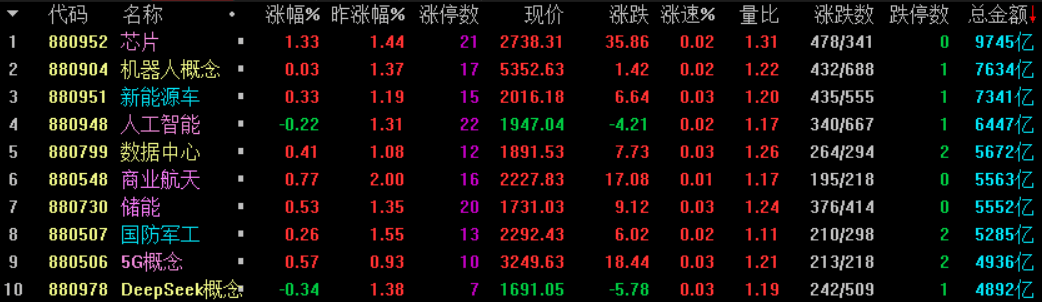
Group 1 - The core market trend shows a strong upward movement, with the Shanghai Composite Index experiencing a 14-day consecutive rise, approaching the 4100-point mark, indicating a prevailing bullish trend despite short-term fluctuations [1][2] - The market structure has fundamentally changed, with trading volumes consistently exceeding 2 trillion, leading to a multi-line approach rather than focusing on one or two core themes [2][3] - The market's behavior has shifted from an A-V structure to an N-shaped structure, where adjustments after a rise are seen as opportunities for further gains rather than declines [2][3] Group 2 - The analysis emphasizes the importance of understanding the overall market dynamics, including the top-level index trends, which indicate that 90% of sectors are in a primary upward trend [2][3] - The focus should be on identifying strong sectors that lead the market, such as the Fujian sector post-National Day and the commercial aerospace sector starting in December, which are examples of strong thematic movements [2][3] - Daily leading sectors are now more varied, and the previous reliance on a single leading stock to drive market sentiment has diminished, resulting in a more chaotic but potentially rewarding trading environment [3][4] Group 3 - The current market requires a shift in trading strategies, moving away from traditional metrics like daily gain percentages and the number of stocks hitting the limit up, as these indicators are less reliable in the current environment [4][5] - The market's decentralization is influenced by factors such as differential price limits across exchanges, regulatory constraints, and the impact of quantitative trading, which has led to a faster-paced and more fragmented trading landscape [4][5] - In a long-term bullish market with short-term chaos, the recommended approach is to focus on a few key sectors, particularly technology stocks, and to track them consistently for opportunities [5][6] Group 4 - The strategy involves concentrating on five key sectors: chips, robotics, new energy vehicles, artificial intelligence, and commercial aerospace, which are expected to experience significant movements throughout the year [5][6] - The approach includes using sector-specific ETFs or selecting 3-5 core stocks within each sector, ensuring alignment between stock performance and sector trends [6][7] - The overall strategy should integrate index analysis with sector and stock selection, using index movements to guide specific trading decisions [6][7]
乘联分会:2025年12月全国乘用车新能源车市场零售138.7万辆 同比增长7%
Zheng Quan Shi Bao Wang· 2026-01-07 09:16
人民财讯1月7日电,据乘联分会初步统计,2025年12月1—31日,全国乘用车新能源车市场零售138.7万 辆,同比增长7%,较上月增长5%,2025年累计零售1285.9万辆,同比增长18%;2025年12月1—31日, 全国乘用车厂商新能源批发155.4万辆,同比增长3%,较上月下降9%,2025年累计批发1531万辆,同比 增长25%。 ...
乘联分会:2025年12月全国乘用车新能源车市场零售138.7万辆,同比增长7%
Di Yi Cai Jing· 2026-01-07 08:29
中国汽车流通协会乘用车市场信息联席分会数据显示,初步统计,2025年12月1-31日,全国乘用车新能 源车市场零售138.7万辆,同比去年同期增长7%,较上月增长5%,今年以来累计零售1285.9万辆,同比 增长18%;12月1-31日,全国乘用车厂商新能源批发155.4万辆,同比去年同期增长3%,较上月下降 9%,今年以来累计批发1531万辆,同比增长25%。 ...
13连阳!A股创33年最长上涨纪录,全球资本为何集体做多中国?
Sou Hu Cai Jing· 2026-01-07 04:12
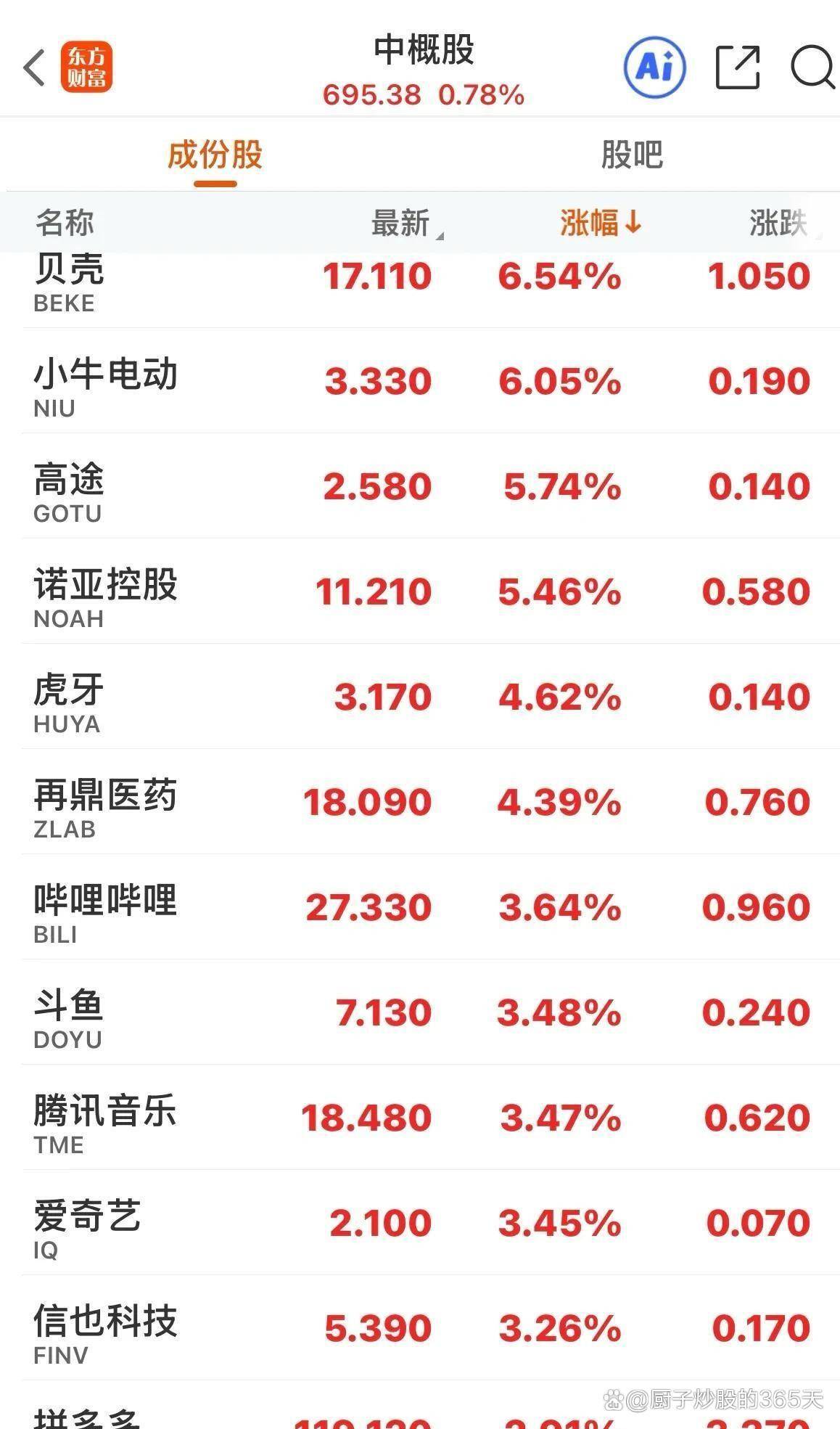
2026年1月6日清晨,当投资者打开行情软件时,历史正在屏幕上的K线图中静静流淌。 A股大盘已连续12个交易日收出阳线,追平了2006年和2008年创下的 纪录。 而这一天,市场期待着一项自1993年以来从未有过的成就——13连阳。 | 旅月 | 中概股 | | (Ai) 17 | | --- | --- | --- | --- | | | 695.38 0.78% | | | | 成份股 | | 股吧 | | | 名称 | 最新, | 涨幅↓ | 淵世 | | 贝壳 | 17.110 | 6.54% | 1.051 | | BEKE | | | | | 小牛电动 | 3.330 | 6.05% | 0.191 | | NIU | | | | | 高途 | 2.580 | 5.74% | 0.141 | | GOTU | | | | | 诺机场合报 | 11.210 | 5.46% | 0.58 | | NOAH | | | | | 虎牙 | 3.170 | 4.62% | 0.14( | | HUYA | | | | | 国鼎医药 | 18.090 | 4.39% | 0.76 | | ZLAB | | | ...
告别“画饼”:今年起,资本市场只信一件事——钱花得明不明白
Sou Hu Cai Jing· 2026-01-07 01:20
Core Viewpoint - The capital markets in 2025 are expected to remain relatively stable, with major indices such as Nasdaq, S&P 500, and CSI 300 reaching new highs [1] Market Performance - The S&P 500 index is projected to increase by approximately 8% in 2025 [1] - The Nasdaq 100 index is anticipated to rise by over 12% throughout the year [1] - The CSI 300 index is expected to grow by around 5% in 2025 [1] Sector Highlights - Certain sub-sectors are expected to perform exceptionally well, including: - New energy vehicle supply chain companies, which are likely to see their stock prices continuously reach new phase highs [1] - Leading pharmaceutical companies with major products [1] - Industrial software and automation equipment manufacturing firms [1]