私募股权

Search documents
224.3亿元!腾讯联手险企 设立私募股权基金
Shang Hai Zheng Quan Bao· 2025-08-25 15:40
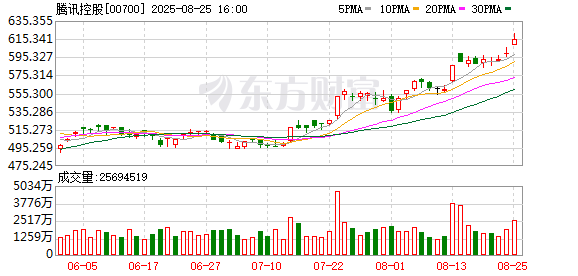
Core Insights - Suzhou Kuanyu Equity Investment Fund Partnership (Limited Partnership) has been established with a registered capital of approximately 22.43 billion RMB, focusing on private equity investment, investment management, and asset management activities [2][3]. Company Summary - The fund is co-established by Tencent-related companies, including Shenzhen Xiaoshu Commercial Management Co., Ltd. and Tencent Technology (Shanghai) Co., Ltd., along with several insurance companies and other enterprises. The contribution ratios include 39.47% from Shenzhen Xiaoshu, 4.93% from Tencent Technology, 19.86% from Sunshine Life, and 2.23% from Zhongying Life [3]. Industry Summary - Private equity funds are considered an important means for insurance capital to engage in long-term equity investments and support the development of the real economy. With the diversification of insurance capital allocation needs and continuous improvement of related policies, insurance companies are expected to increase their participation in the private equity investment market [4]. - In recent years, there has been a notable increase in the establishment of private equity funds by insurance capital. For instance, several funds were established last year, each with a scale of 10 billion RMB, including partnerships with major financial institutions and local governments [5].

国内并购市场火热,上半年交易额同比大增45%,超大型并购成增长主力
Di Yi Cai Jing· 2025-08-25 11:11
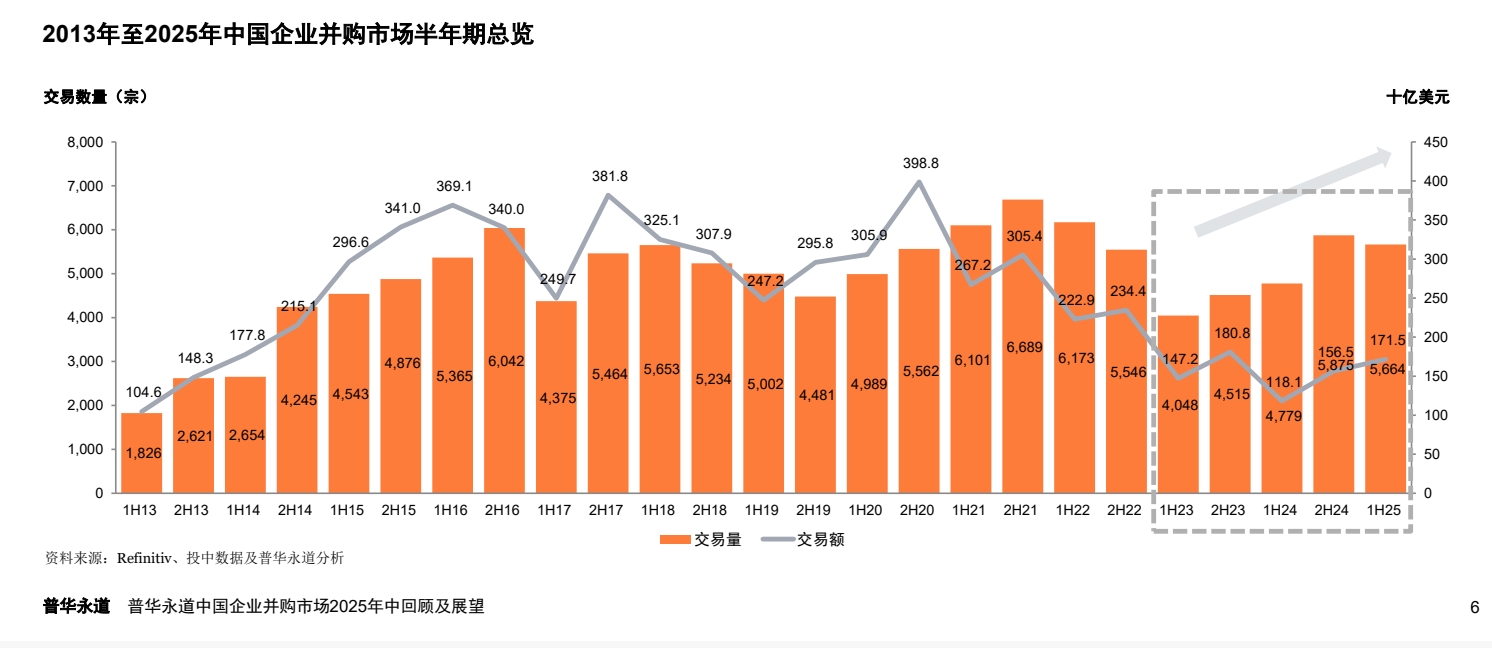
Group 1 - The core viewpoint of the article highlights the acceleration of the domestic M&A market in China, with a significant increase in transaction value driven by large-scale mergers, particularly in high-tech, healthcare, and industrial sectors [1][3] - In the first half of 2025, the total disclosed transaction value in China's M&A market exceeded $170 billion, representing a substantial 45% increase compared to the same period last year [1] - There were 29 mega-mergers (transactions over $1 billion) completed in the first half of 2025, with 20 of these being domestic strategic investments, nearly half of which were led by state-owned enterprises [1][3] Group 2 - Domestic strategic investments and venture capital transactions saw year-on-year increases of 17% and 2%, respectively, while private equity fund transactions declined by 3% [3] - The number of overseas mergers by Chinese companies decreased by 6%, with only 133 transactions recorded [3] - The recovery of the IPO market in Hong Kong has provided private equity with diverse exit options, contributing to a significant increase in exit transactions through mergers and acquisitions [3][4] Group 3 - The venture capital sector, despite a modest overall increase of 2% in transaction volume, remains strong in emerging technology fields such as artificial intelligence and robotics, maintaining high transaction levels [4] - There is an anticipated increase in M&A activity in the second half of 2025, driven by accumulated demand and improved market sentiment, with expectations of a high double-digit growth in total transaction value for the year [4]
谁在“半价”扫货中国核心资产?
3 6 Ke· 2025-08-25 07:28
Group 1 - The Chinese private equity secondary market (S market) is experiencing unprecedented growth, with RMB fund transaction volume reaching a record 77.3 billion yuan in the first half of 2025, a nearly 90% year-on-year increase [1] - A peculiar trading model known as "continuation funds" is becoming the main driving force behind this market, where fund managers sell star assets from old funds to newly established funds, often at prices 40-50% below their net asset value (NAV) [1][7] - The market is facing significant challenges, including a massive exit barrier and geopolitical risks leading to capital withdrawal, which has created a collective anxiety within the industry [1][6] Group 2 - The Chinese private equity market is encountering a "Great Wall of Exit," with only 100 companies successfully listed on the A-share IPO market in 2024, the lowest in a decade, and a total fundraising amount of 67.35 billion yuan, down 81% year-on-year [2] - The tightening of exit channels is exacerbated by the new regulations increasing profit thresholds for IPOs, leading to a significant backlog of projects that were expected to exit within 3-5 years but are now delayed [2][6] Group 3 - Globally, the private equity market is under severe pressure, with over $3 trillion in unexited assets, four times the amount from a decade ago, and a significant decline in cash returns to investors [3] - Major Canadian pension funds have announced a withdrawal from the Chinese private equity market, with CDPQ planning to sell a $2 billion portfolio of Chinese assets [3][4] Group 4 - Geopolitical factors have led many dollar funds to relocate their offices to Singapore or Hong Kong, shifting their focus from investing in China to investing in Asia [4] - The traditional investment chain of "dollar fundraising - VIE investment - US stock listing" has been disrupted, complicating the investment landscape for dollar funds in China [4] Group 5 - In the first half of 2025, RMB fund secondary transactions reached 77.3 billion yuan, with domestic general partners (GPs) accounting for 42% of the transaction volume, a 21 percentage point increase from 2022 [5] - RMB funds are becoming the most active players in the market, primarily supported by state-owned enterprises and government-guided funds, focusing on strategic industries like semiconductors and new energy vehicles [5] Group 6 - The dual pressures of the "Great Wall of Exit" and the "Dollar Retreat" are reshaping the Chinese private equity market, forcing the industry to seek new survival strategies through continuation funds and secondary transactions [6][14] - The continuation fund model allows GPs to sell assets from one fund to another, providing liquidity for private equity funds in need of cash [7][10] Group 7 - Many dollar funds are currently focused on liquidity recovery rather than new investments, leading to significant discounts on Chinese private equity assets, with quality assets being sold at 40-50% below NAV [8] - The supply-demand imbalance is distorting prices, with sellers eager to cash out and buyers demanding substantial discounts as risk compensation [8][9] Group 8 - The lack of regulatory oversight in China creates a trust crisis, as GPs can operate with minimal accountability, leading to potential conflicts of interest in continuation fund transactions [10][11] - The valuation system is fragmented, with different LPs applying varying valuation metrics, complicating the pricing and transparency of transactions [11][12] Group 9 - The Chinese private equity market is at a crossroads, with the number of transactions over $1 billion declining significantly, indicating a challenging environment for large exits [12][14] - If continuation funds can establish transparent rules, they may play a crucial role in revitalizing the $3 trillion of unexited assets in the market [13][14]
另类投资简报 | 卷入“撤资潮”的基金:有的换桌继续,有的下桌出局
彭博Bloomberg· 2025-08-25 06:05
Private Equity Market Review - The Hong Kong Jockey Club is withdrawing up to $1 billion from Blackstone Group and other acquisition firms, selling U.S. assets due to escalating trade tensions since the beginning of Trump's presidency [6] - Other Asian funds and wealthy investors are also reducing investments in the U.S. market, citing concerns over the unpredictability caused by trade conflicts [6] Hedge Fund Market Overview - Bloomberg's preliminary data shows hedge funds rose by 1.2% last month, with the event-driven hedge fund index leading the gains [6] - Year-to-date, hedge funds have increased by 5.3%, with equity funds showing the highest growth at 8.7% [6] - Castle Investment and Dymon Asia Capital are increasing talent acquisition in Asia to expand their operations in the region [6] Fund Performance Data - The Bloomberg All Hedge Fund Index closed on July 31, 2025, with a 1-month return of 1.19%, a 3-month return of 5.95%, and a year-to-date total return of 5.34% [7] - The Bloomberg Equity Hedge Index reported a 1-month return of 1.63% and a year-to-date return of 8.75% [7] - The Bloomberg Event Driven Hedge Index showed a 1-month return of 3.51% and a year-to-date return of 6.16% [7] Industry Developments - New Silk Road Investment Pte, one of Singapore's oldest hedge funds, is set to close due to poor returns and significant asset shrinkage from nearly $2 billion in 2021 to $615 million by the end of last year [6] - The closure reflects the increasing challenges faced by smaller hedge funds amid market volatility and intensified geopolitical competition [6] - Millennium Management has allocated funds to external management companies in South Korea, indicating a trend of diversification in investment strategies [8]

新规!并购贷款比例上限提高至70%
21世纪经济报道· 2025-08-21 13:47
Core Viewpoint - The newly released "Commercial Bank M&A Loan Management Measures (Draft for Comments)" aims to optimize M&A loan services and support the construction of a modern industrial system and new productive forces, marking a significant regulatory upgrade from previous guidelines to a more binding management approach [1][3]. Group 1: Loan Terms and Proportions - The draft distinguishes between "controlling" and "equity" M&A loans, setting different leverage ratios, terms, and bank entry standards for each type. The upper limit for controlling M&A loans is raised to 70% with a maximum term of 10 years, while equity M&A loans have an upper limit of 60% and a maximum term of 7 years [3]. - The "double loosening" of loan terms and financing ratios is expected to significantly benefit large-scale industrial mergers and strategic acquisitions, particularly in capital-intensive sectors like new energy and biomedicine, where longer integration periods are necessary [3][4]. Group 2: Impact on M&A Activities - The extended loan term and increased financing ratio are anticipated to support large industrial integrations and strategic mergers, alleviating financial pressure on companies involved in complex transactions [3][4]. - The measures are expected to facilitate cross-border mergers, providing companies with a buffer against uncertainties in international integration [4]. - The new loan terms align better with private equity (PE) fund investment cycles, enhancing the ability of PE firms to engage in acquisitions without the pressure of loan repayment before fund maturity [4][6]. Group 3: Lowering Financing Barriers - The increase in the loan ratio to 70% is expected to lower the self-funding threshold for acquirers, allowing more companies, especially those in the technology and growth sectors, to participate in M&A activities [6][7]. - The policy is particularly beneficial for private equity funds, as the higher leverage allows them to amplify returns on equity, increasing their willingness to bid and enhancing market liquidity [6][7]. Group 4: Risk Management Enhancements - While loosening financing conditions, the draft also emphasizes the need for banks to strengthen risk identification and control, particularly for cross-border and high-leverage acquisitions [9]. - Banks are required to conduct thorough analyses of financing structures and repayment sources, ensuring a reasonable proportion of equity funding to mitigate high-leverage risks [9]. - The implementation of these measures is expected to favor larger banks with mature risk control systems and specialized M&A teams, while smaller regional banks may face significant challenges due to limited resources [9].

2亿美元,启明创投QFLP项目落地
Sou Hu Cai Jing· 2025-08-20 07:33
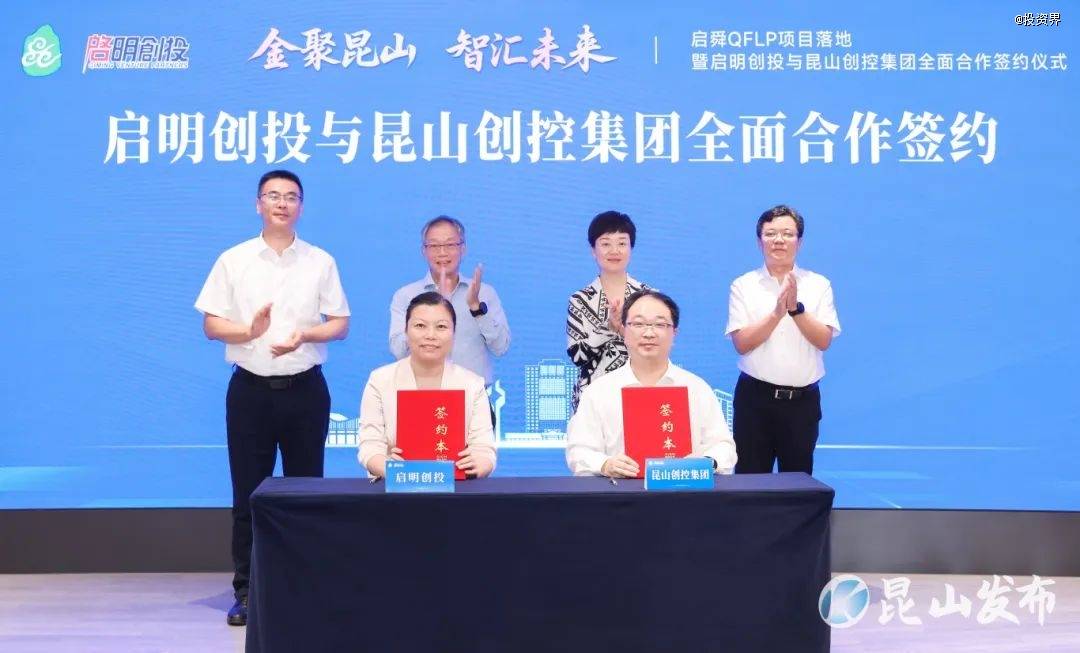
Core Insights - The QFLP project by Qishun has successfully launched, with a total subscription scale of $200 million, focusing on early and growth-stage companies in technology and medical innovation sectors [1][3] - Qishun's first external investment has been completed, with nearly $20 million allocated to innovative medical devices, technology services, and equipment manufacturing [1][3] Group 1 - The QFLP project aims to introduce international cutting-edge technology information and industrial development experience to Kunshan, enhancing the collaboration between the local industrial system and capital [1] - Qiming Venture Partners, managing the QFLP project, has a total managed asset of $9.5 billion and has invested in over 580 high-growth innovative companies [3] Group 2 - Qiming Venture Partners sees strong potential in Kunshan's industrial vitality and investment environment, planning to innovate investment models and strengthen investment layout in key industrial sectors [3] - A comprehensive cooperation agreement has been signed between Qiming Venture Partners and Kunshan Chuangkong Group to integrate top investment capabilities in technology and medical innovation with Kunshan's robust industrial resources [3]
瑞士并购交易激增,远超欧洲其他地区
Jin Rong Jie· 2025-08-18 18:07
Group 1 - The acquisition deal value for Swiss companies has surged by 465% in 2025, reaching 16.7 billion USD [1] - Private equity firms are particularly active in the Swiss market [1] - Advent has agreed to acquire Zurich-listed chip manufacturer U-blox Holding AG for a transaction value of 1.05 billion Swiss francs [1]
北京证监局、中国人民银行北京市分行、北京市科委、中关村管委会、北京基金小镇共同举办投贷联动融资对接活动
Zheng Quan Ri Bao Zhi Sheng· 2025-08-18 09:09
本报讯 (记者朱宝琛)为深入贯彻中国证监会及北京市相关工作部署,做好科技金融大文章,提升金 融支持科技创新质效,服务北京国际科技创新中心建设,8月15日,北京证监局、中国人民银行北京市 分行、北京市科学技术委员会、中关村科技园区管理委员会与北京基金小镇共同举办"中关村科技·金融 汇"第6期投贷联动融资对接活动。 北京证监局私募处处长在主持发言中介绍了北京辖区股权创业投资机构、科技型企业和银行投融资方面 的现实需求和结合点,推动投贷联动融资对接的原则和意义,表示将与各委办局合力搭建具有北京特色 创新性的供需对接平台,围绕首都高精尖产业结构、科创型企业成长周期提供更优质、高效的服务;人 民银行北京市分行负责人介绍了投贷联动平台建设和支持私募基金、科创企业发展方面的情况,以及前 期投贷联动融资对接取得的积极成效;北京基金小镇相关负责人介绍了小镇私募机构发展情况,服务实 体经济情况,以及小镇在服务和引导管理人合规展业方面开展的风险防控、合规培训等方面的做法和成 效。 本次活动聚焦"投贷联动",为科技型企业搭建股权融资与债权融资高效对接的"桥梁",臻知医学、星川 新能源、平方和、东方空间、华龛生物、泰科天润、大橡科技等 ...





养老金融周报(2025.08.11-2025.08.15):挪威GPFG自以色列公司批量撤资-20250818
Ping An Securities· 2025-08-18 08:03
Key Points Summary Group 1: Norwegian GPFG's Investment Actions - Norwegian Government Pension Fund Global (GPFG) has decided to divest from 11 Israeli companies that are not included in the Ministry of Finance's stock benchmark index, following a review by Norges Bank Investment Management (NBIM) [1][5][6] - As of mid-2025, GPFG held shares in 61 Israeli companies, with the divestment aimed at adhering to ethical investment guidelines due to concerns over business activities in the West Bank [1][5][6] - GPFG's total assets decreased from 19.74 trillion Norwegian Krone to 19.59 trillion Norwegian Krone, approximately 1.94 trillion USD, primarily due to significant foreign exchange losses [9][10] Group 2: U.S. Labor Department's Policy Changes - The U.S. Department of Labor (DOL) has officially rescinded the Biden administration's restrictions on alternative investments in 401(k) plans, allowing for greater inclusion of private equity [2][6][7] - This policy shift marks a significant change from previous guidance that questioned the suitability of private investments for retirement plans, reflecting a more favorable stance towards alternative investments [2][6][7] Group 3: GPFG's Performance Metrics - GPFG reported a 5.7% return for the first half of 2025, slightly underperforming its benchmark by 0.05 percentage points [3][11] - The fund's asset allocation as of June 30, 2025, was 70.6% in equities and 27.1% in fixed income, with a slight underweight in equities compared to the benchmark [10][11] - The fund experienced significant foreign exchange losses amounting to 1.01 trillion Norwegian Krone, primarily due to the appreciation of the Norwegian Krone against the U.S. dollar [9][11] Group 4: Global Pension Fund Trends - The UK Local Government Pension Scheme (LGPS) is undergoing significant consolidation, with seven funds initiating exclusive negotiations with Border to Coast for a new partnership [15] - British Columbia Investment Management Corporation (BCI) is considering selling 2 billion USD in private equity assets to rebalance its investment portfolio [16] - Saudi Arabia's Public Investment Fund (PIF) reported an 80 billion USD impairment on large projects, reflecting challenges in diversifying its economy amid low oil prices [17][19] Group 5: Domestic Pension Fund Activities - Domestic pension funds have appeared in the top ten shareholders of 15 stocks, indicating a continued interest in the secondary market with a total holding value of approximately 3.9 billion CNY [22][23] - The largest holdings include companies in the machinery and basic chemical sectors, showcasing a preference for stable growth and relatively certain companies [22][23]
凯雷集团(CG.US)拟10亿美元出售HSO给贝恩资本(BCSF.US) 私募交易市场加速复苏
Zhi Tong Cai Jing· 2025-08-13 07:05
Group 1 - The private equity giant Carlyle Group is nearing a significant deal to sell its Dutch tech services company HSO to Bain Capital, with an estimated valuation of approximately $1 billion [1][2] - HSO's management plans to reinvest in the business through this transaction, indicating a commitment to the company's future development [1] - The deal reflects a resurgence in the private equity market after a prolonged period of inactivity, driven by investor demands for accelerated capital deployment and cash flow [1] Group 2 - HSO specializes in designing, implementing, and operating business application systems based on Microsoft cloud technologies, serving around 1,200 clients globally with approximately 2,800 employees [2] - Carlyle Group made a strategic investment in HSO in 2019 and has since expanded its business through multiple acquisitions, including the purchase of cloud transformation service provider Motion10 in 2022 [2] - If the transaction proceeds, it will mark another landmark deal in the private equity sector, enhancing Bain Capital's influence in the cloud computing and enterprise services space [2]