
节能环保

Search documents
【锋行链盟】科创板IPO流程及核心要点
Sou Hu Cai Jing· 2025-10-13 16:15
Group 1: Core Views - The Sci-Tech Innovation Board (STAR Market) serves as a crucial platform for technology innovation enterprises, with an IPO process that adheres to the basic framework of the A-share registration system while emphasizing the review requirements for "hard technology" attributes [2] Group 2: Detailed IPO Process - The IPO process on the STAR Market consists of six main stages: preparation, application and acceptance, review and inquiry, listing committee deliberation, CSRC registration, and issuance and listing, typically taking 6-12 months excluding preliminary rectification time [3] - The preparation stage lasts 3-6 months, focusing on self-assessment and compliance rectification to meet the basic thresholds for the STAR Market [4] - The application and acceptance stage takes 1-2 weeks, where companies submit their application materials to the Shanghai Stock Exchange after preparing them with intermediaries [6] - The review and inquiry stage lasts 2-3 months, during which the Shanghai Stock Exchange conducts a comprehensive review of the application materials, prompting companies to clarify their submissions through multiple rounds of inquiries [7] - The listing committee deliberation stage takes 1-2 weeks, where a committee of 3-7 members, including industry experts, assesses whether the company meets the issuance and listing conditions [9] - The CSRC registration stage occurs within 20 working days, focusing on the formal review of the Shanghai Stock Exchange's opinions and application materials [10] - The issuance and listing stage lasts 1-2 months, where the company initiates the issuance process with the lead underwriter after registration approval [11] Group 3: Core Points of STAR Market IPO - The core attribute of technology innovation serves as the "ticket" for entry into the STAR Market [12] - Information disclosure is prioritized over formality, emphasizing the substance of the information provided [12] - The review focuses on four major dimensions: authenticity of technology innovation attributes, technological advancement, business sustainability, and financial authenticity [13] Group 4: Review Mechanism - The review mechanism involves a dual-check system by the review department and quality control department, concentrating on the authenticity of technology innovation attributes and the sufficiency of information disclosure [13] - The first round of inquiries typically covers 20-30 questions across various dimensions, requiring companies to respond item by item [13] - If initial responses are insufficient, multiple rounds of inquiries may follow, focusing on core issues such as technological independence and reasons for performance fluctuations [13] Group 5: Issuance Pricing and Special Requirements - The pricing for issuance is market-driven, allowing the issuer and underwriters to negotiate based on market conditions while avoiding price manipulation [16] - Special requirements apply to red-chip companies, allowing them to be priced in USD/HKD, provided they meet specific standards [16] - Companies that are not yet profitable may still list if they meet certain criteria, such as a market capitalization of at least 40 billion and specific industry conditions [16]

舜禹股份成立智算低碳科技公司,含AI业务
Qi Cha Cha· 2025-10-11 06:07
Core Viewpoint - Shunyu Co., Ltd. has established a new subsidiary, Shunyu Intelligent Low-Carbon Technology Co., Ltd., focusing on carbon reduction and AI applications [1] Group 1: Company Overview - Shunyu Intelligent Low-Carbon Technology Co., Ltd. has a registered capital of 40 million yuan [1] - The company is wholly owned by Shunyu Co., Ltd. (stock code: 301519) [1] Group 2: Business Scope - The business scope includes research and development in carbon reduction, carbon conversion, carbon capture, and carbon storage technologies [1] - The company also engages in energy management contracts and provides consulting services related to water resources [1] - Additionally, it focuses on the development of artificial intelligence application software [1]
福建战略性新兴产业方兴未艾 国家级高新企业突破1.5万家
Zhong Guo Fa Zhan Wang· 2025-10-09 07:22
Core Viewpoint - The "14th Five-Year Plan" period has seen significant advancements in Fujian's strategic emerging industries, driven by innovation and policy support, leading to a robust foundation for future development. Policy System - Fujian has established a comprehensive industrial policy framework during the "14th Five-Year Plan," focusing on seven emerging industries including information technology and new energy, with tailored policies for each sector [2][3] - The province has implemented 20 measures to accelerate technological innovation, supporting over 7,726 enterprises with nearly 3.9 billion yuan in R&D funding [2] Innovation Platforms - Fujian has enhanced its innovation platform construction, adding 13 national key laboratories and 32 provincial engineering research centers, creating a dynamic innovation ecosystem [4] - The province has developed 8 provincial innovation laboratories and 150 engineering research centers, attracting over 2,300 high-level researchers and achieving significant technological breakthroughs [4][5] Industrial Competitiveness - The strategic emerging industries in Fujian have shown continuous growth and competitiveness, with the establishment of 4 national and 17 provincial industry clusters, enhancing regional collaboration [6][7] - The industrial output of seven national high-tech zones reached approximately 859.99 billion yuan, with total revenue of about 1,136.09 billion yuan in 2024 [7] Intellectual Support - Fujian has focused on talent acquisition and development, implementing the "Eight Min Talent" plan, selecting 16 top-tier talents and 105 industry-leading teams [8][9] - The province has established partnerships with universities to cultivate engineering talent, aligning educational outcomes with industry needs [9]

借势全球滨海论坛,德国联邦中小企业联合会考察盐城环保科技城
Yang Zi Wan Bao Wang· 2025-09-29 04:01
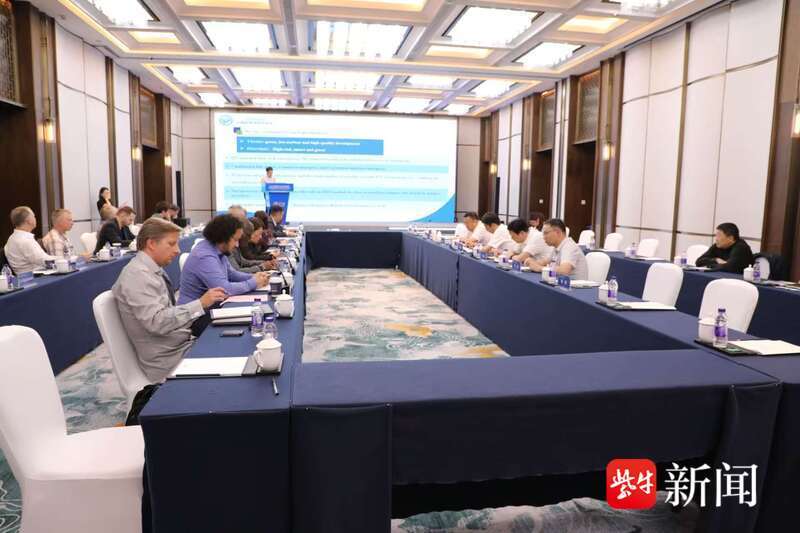
Group 1 - The 2025 Global Coastal Forum, themed "Beautiful Coast: Ecological Priority and Green Development," was held in Yancheng, attracting over 300 representatives from more than 30 countries and regions to discuss coastal ecological protection and green industry development [1] - The Yancheng Environmental Protection Technology City serves as a key platform for green industry, focusing on energy conservation and environmental protection, with a complete industrial chain covering technology research and development, equipment manufacturing, and engineering services [3] - The "Double Carbon" building in the technology city has attracted over 30 leading domestic "Double Carbon" enterprises, creating a comprehensive carbon management service system that aligns with the forum's green development concept [3] Group 2 - Jiangsu Changhong Intelligent Equipment, a representative high-end manufacturing enterprise in the Yancheng Environmental Protection Technology City, specializes in welding and coating production lines for automotive, rail transit, and aerospace industries, achieving a 30% efficiency increase and 15% energy reduction in its self-developed flexible welding production line [4] - German enterprises showed significant interest in Changhong Intelligent's technological achievements, particularly in precision equipment and automation control, indicating a strong potential for collaboration in research and development, component supply, and international market expansion [4] - The delegation also visited the Yancheng Environmental Technology and Engineering Research Institute to explore hardware construction and research platform layout, aiming to promote cooperation and resource sharing between both parties [4]
21社论丨中国积极参与全球治理,彰显负责任的大国担当
21世纪经济报道· 2025-09-25 23:56
Group 1 - China's new round of Nationally Determined Contributions (NDCs) announced at the UN Climate Change Summit emphasizes its commitment to global climate governance and showcases its responsibility as a major power [1][2] - The scale of China's green low-carbon industry is approximately 11 trillion yuan, with over 2 million related enterprises, highlighting the growth in renewable energy, electric vehicles, and energy-saving industries [1] - By the end of 2024, China's installed capacity for wind power is expected to reach 520 million kilowatts, and solar power capacity is projected to reach 890 million kilowatts, both ranking among the highest globally [1] Group 2 - China asserts its role as a responsible major developing country by not seeking new special and differential treatment in WTO negotiations, reinforcing its commitment to multilateral trade systems [3] - The global governance initiative proposed by China aims to enhance and reform existing governance systems, reflecting its commitment to addressing global challenges effectively [2][4] - China's actions in promoting the dual carbon goals and participating in various international agreements demonstrate its leadership in global governance and commitment to sustainable development [3][4]

中国积极参与全球治理,彰显负责任的大国担当
2 1 Shi Ji Jing Ji Bao Dao· 2025-09-25 22:48
Group 1 - China announced a new round of Nationally Determined Contributions (NDCs) at the UN Climate Change Summit, showcasing its commitment to global climate governance and responsibility as a major power [1][2] - The scale of China's green low-carbon industry is approximately 11 trillion yuan, with over 2 million related enterprises, and it leads the global market in affordable lithium batteries and photovoltaic products [1] - By the end of 2024, China's installed capacity for wind power is expected to reach 520 million kilowatts, and solar power capacity is projected to reach 890 million kilowatts, both ranking among the highest in the world [1] Group 2 - China emphasizes the importance of international cooperation in addressing climate change, despite rising unilateralism and protectionism in the global landscape [2] - The country has proposed a global governance initiative to enhance and reform existing governance systems, reflecting its commitment to providing global public goods and taking on major power responsibilities [2][3] - China has declared that it will no longer seek any new special and differential treatment in World Trade Organization negotiations, reinforcing its support for a multilateral trading system [3]
京运通股价涨6.1%,华夏基金旗下1只基金位居十大流通股东,持有788.9万股浮盈赚取197.22万元
Xin Lang Cai Jing· 2025-09-24 01:47
Core Insights - On September 24, Jingyuntong's stock rose by 6.1%, reaching 4.35 CNY per share, with a trading volume of 147 million CNY and a turnover rate of 1.40%, resulting in a total market capitalization of 10.504 billion CNY [1] Company Overview - Beijing Jingyuntong Technology Co., Ltd. is located in Beijing Economic and Technological Development Zone and was established on August 8, 2002, with its listing date on September 8, 2011 [1] - The company's main business areas include high-end equipment manufacturing, photovoltaic power generation, new materials, and energy conservation and environmental protection [1] - The revenue composition of the main business is as follows: silicon wafers 36.93%, electricity 36.00%, silicon rods 16.94%, others 5.26%, denitration catalysts 4.84%, and equipment 0.03% [1] Shareholder Insights - Among the top ten circulating shareholders of Jingyuntong, one fund under Huaxia Fund holds a significant position. The Huaxia CSI 1000 ETF (159845) increased its holdings by 1.8749 million shares in the second quarter, totaling 7.889 million shares, which accounts for 0.33% of the circulating shares [2] - The estimated floating profit from this investment is approximately 1.9722 million CNY [2] Fund Performance - The Huaxia CSI 1000 ETF (159845) was established on March 18, 2021, and currently has a total scale of 38.227 billion CNY [2] - Year-to-date, the fund has achieved a return of 25.57%, ranking 1956 out of 4220 in its category; over the past year, it has returned 67.36%, ranking 1299 out of 3814; since inception, it has returned 26.34% [2]

前8个月广西民生支出3311.43亿元 同比增长8.1%
Zhong Guo Xin Wen Wang· 2025-09-23 21:41
Core Insights - The Guangxi Zhuang Autonomous Region's fiscal expenditure on people's livelihood reached 331.14 billion yuan from January to August this year, marking an 8.1% year-on-year increase and the highest scale, growth rate, and proportion in the past five years [1] Summary by Categories Education - Guangxi's education expenditure amounted to 84.28 billion yuan, reflecting a 12.3% year-on-year increase [1] Employment - Social security and employment expenditure totaled 82.90 billion yuan, with a year-on-year growth of 10.3%, including an 11.1% increase in employment subsidies [1] Health - Health expenditure reached 44.31 billion yuan, showing an 11.4% year-on-year increase [1] Basic Living Security - Minimum living security expenditure was 8.25 billion yuan, with a year-on-year growth of 7.5% [1] Infrastructure and Environment - Transportation expenditure grew by 29.6% year-on-year, while energy conservation and environmental protection expenditure increased by 27.4%, and commercial service expenditures rose by 13.4% [1]
【广发宏观王丹】从EPMI数据看9月经济
郭磊宏观茶座· 2025-09-22 12:29
Core Viewpoint - The September EPMI (Emerging Industry Purchasing Managers Index) increased by 4.6 points to 52.4, indicating a seasonal recovery typical of autumn, although the absolute level remains historically low [1][6][24]. Group 1: EPMI and Industry Trends - The EPMI's increase aligns with the seasonal average of 4.5 points from 2014 to 2024, with the number of industries in the expansion zone rising from 2 to 4 [1][6][7]. - Despite the improvement, the absolute EPMI value of 52.4 is the second lowest for September in history, down 0.9 points from the previous year [6][24]. Group 2: Supply and Demand Indicators - Key supply and demand indicators showed improvement: production volume, product orders, and export orders increased by 7.8, 6.5, and 6.8 points respectively [2][9]. - The production-to-demand ratio turned positive, with an average of 0.7 for the first three quarters of 2025, indicating an improvement in supply-demand balance compared to previous years [9][10]. - Price indicators also improved, with purchase prices and sales prices rising by 0.8 and 0.2 points respectively, although the growth rate has slowed compared to July and August [9][12]. Group 3: Employment and Financing Environment - The EPMI loan difficulty index decreased by 0.9 points, suggesting a more favorable financing environment for emerging enterprises due to increased credit support and coordinated fiscal and monetary policies [15][16]. - Employment indicators have shown a two-month recovery, with a 2.6-point increase in September, indicating stronger demand for jobs in new industries during the graduation season [15][16]. Group 4: Sector Performance - In September, the highest absolute economic performance was observed in the new generation information technology and energy-saving environmental sectors, driven by demand growth related to AI computing power and domestic substitution [19][20]. - The new energy vehicle sector also saw a month-on-month increase in economic performance, with retail sales growing by 6% year-on-year and 10% month-on-month [19][20]. - The performance of traditional sectors varied, with some industries like petroleum asphalt and automotive tires showing increased operating rates, while others like high furnace and PVC saw declines [23][24]. Group 5: Economic Outlook - The third quarter has shown signs of continued economic slowdown, with September data being crucial for short-term economic assessment [24]. - The EPMI data suggests a neutral economic outlook, with seasonal recovery not extending the trends observed in July and August, indicating that achieving annual growth targets will require further policy support [24].

上市苏企ESG信披加速,从“讲故事”迈向“算数据”
Xin Hua Ri Bao· 2025-09-21 21:11
Core Viewpoint - The recent updates to the ESG disclosure guidelines for listed companies in China emphasize the importance of quantifiable data in environmental reporting, particularly in areas such as pollutant emissions, energy utilization, and water resource management [1][2][3]. Group 1: ESG Disclosure Guidelines - The China Securities Regulatory Commission (CSRC) has released the second batch of guidelines for sustainable development reporting, adding specific disclosure requirements for environmental issues [1][2]. - The guidelines aim to provide practical guidance for companies facing complex environmental issues, transitioning from vague disclosures to precise governance [2][3]. - The updated guidelines include detailed examples of common risks and opportunities related to environmental topics, along with standardized calculation methods for data disclosure [2]. Group 2: Current ESG Reporting Trends - As of September 20, 2023, 256 A-share listed companies in Jiangsu have disclosed their 2024 sustainable development reports, achieving a disclosure rate of 35.96%, marking a continuous increase over three years [1]. - Jiangsu companies are shifting their approach to ESG disclosure from compliance to strategic tools, indicating a growing recognition of the importance of sustainability [1][3]. Group 3: Impact on Companies - High-quality ESG information is expected to enhance investor trust and direct long-term capital towards green enterprises, with the updated guidelines lowering the barriers for ESG disclosures [3]. - Companies like Nanjing Steel and Double Good Energy have begun to report quantifiable data on their pollutant emissions and energy usage, reflecting a shift towards data-driven ESG management [4][5]. - The manufacturing sector, which constitutes nearly 80% of Jiangsu's listed companies, faces challenges in addressing environmental issues, but the guidelines encourage proactive governance and standardized reporting [5]. Group 4: Regional Initiatives and Future Goals - Jiangsu is leveraging institutional innovation and regional practices to build a sustainable development ecosystem, with a focus on ESG value accounting and reporting [6]. - The Suzhou Industrial Park aims to establish itself as a testing ground for ESG development, targeting an ESG industry scale of over 65 billion yuan by 2025, representing a growth of over 50% from 2022 [6]. Group 5: Challenges in ESG Data Collection - Despite the push for high-quality ESG disclosures, many companies face challenges in collecting and calculating data related to pollutant emissions, energy use, and water resources, which require robust data governance and analytical capabilities [7].