零食量贩

Search documents
【食品饮料】零食量贩龙头企业, 高效周转重塑零售业态——湖南鸣鸣很忙招股说明书解读(叶倩瑜/董博文)
光大证券研究· 2025-05-22 14:29
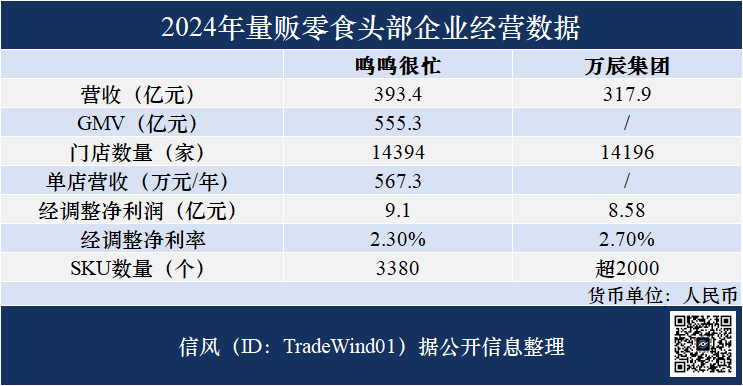
Core Viewpoint - The company, Mingming Hen Mang, is a leading player in the snack retail industry, focusing on high-quality products and rapid expansion through a franchise model, aiming to reach over 10,000 stores by 2024 [3][4]. Group 1: Business Model and Expansion - The company operates two brands, "零食很忙" and "赵一鸣," and has opened its first store in 2017, achieving over 1,000 stores by 2023 and targeting 14,394 stores by the end of 2024 [3]. - The franchise model allows for rapid expansion, with 7,241 franchisees by the end of 2024, adding 3,950 new franchisees in the year [4]. - The company has a strong presence in lower-tier markets, covering 1,224 counties with a 66% coverage rate in county towns [4]. Group 2: Financial Performance - The average revenue per store in 2024 is projected to be 5.67 million yuan, with an average transaction value of approximately 35 yuan and daily sales volume of 452 transactions [4]. - The company's gross merchandise volume (GMV) reached 55.5 billion yuan in 2024, with a gross margin of about 20% based on a 13% tax rate [5]. Group 3: Supply Chain and Product Offering - The company collaborates directly with suppliers to reduce supply chain costs, offering a wide range of products with 3,380 SKUs, of which 25% are custom-made [6]. - Each store maintains at least 1,800 SKUs, which is double the average for similar-sized supermarkets, enhancing product variety and customer experience [6]. - The company has a low dependency on single suppliers, with over 2,300 collaborating manufacturers, and offers products at prices approximately 25% lower than similar products in offline supermarkets [6]. Group 4: Logistics and Inventory Management - The company operates 36 warehouses, with 25 being self-operated, allowing for efficient logistics within a 300 km radius for timely delivery [7]. - The inventory turnover days are 11.6 days, which is lower than other supermarkets, indicating high efficiency in inventory management [7]. - Logistics costs accounted for 1.7% of revenue in 2024, with expectations of reduction as the company expands its store network [7].

湖南鸣鸣很忙招股说明书解读:零食量贩龙头企业,高效周转重塑零售业态
EBSCN· 2025-05-22 09:49
Investment Rating - The industry investment rating is "Buy" [5] Core Insights - The snack wholesale industry is rapidly expanding, with a focus on penetrating lower-tier markets. The retail market for food and beverages is projected to grow from CNY 5.5 trillion in 2019 to CNY 7.1 trillion in 2024, with a CAGR of 5.2% [13][18] - The company, Mingming Hen Mang, is a leading player in the snack wholesale sector, utilizing an efficient model to reshape retail formats. It has achieved significant growth through a franchise model and has expanded its store count to 14,394 by the end of 2024 [1][28] - The company has a strong presence in lower-tier markets, with a store network covering 1,224 counties and a county coverage rate of 66% [2][41] Summary by Sections Industry Overview - The snack wholesale industry is experiencing rapid growth, with the segment of leisure food and beverages maintaining over 50% of GMV share. The retail scale for leisure food and beverages is expected to reach CNY 4.9 trillion by 2029, with a CAGR of 5.8% from 2024 to 2029 [13][18] Company Profile - Mingming Hen Mang operates two brands, "Snacks Are Busy" and "Zhao Yiming," and has opened over 1,000 stores in 2022 and 2023. The company aims to exceed 10,000 stores by 2024, with an average of over 20 new stores opening daily [1][28] - The company has a total GMV of CNY 55.5 billion and continues to expand its franchise model, with 7,241 franchisees by the end of 2024 [1][41] Business Model - The company reduces supply chain intermediaries and offers high-quality products at competitive prices. It has a gross margin of approximately 20% based on its 2024 GMV and revenue [2][52] - Mingming Hen Mang maintains a diverse SKU selection, with 3,380 SKUs in stock, and offers products at an average price 25% lower than similar products in offline supermarkets [3][55] Financial Performance - The company has shown rapid revenue growth, achieving CNY 393 billion in revenue in 2024, with a CAGR of 203% from 2022 to 2024. Adjusted net profits also increased significantly during the same period [38][39] - The gross margin has remained stable, with slight increases from 7.5% in 2022 to 7.6% in 2024, while the adjusted net profit margin has also seen a slight rise [39][40] Market Position - Mingming Hen Mang holds a market share of 1.5% in the leisure food and beverage retail sector, ranking as the leading retailer in this category [24][32] - The competitive landscape in the food and beverage retail sector is relatively fragmented, with a CR5 of 6.0% in the leisure food and beverage segment [24][26]
李维华:特许经营理念助力美天竞保推进普惠医疗
Zhong Guo Jing Ying Bao· 2025-05-21 08:16
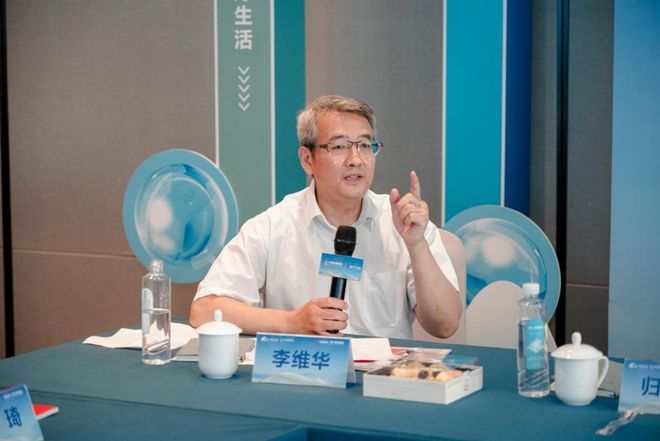
Group 1 - The event "New Business Civilization - Exploring Smart Technology Empowering Inclusive Healthcare" was held in Chengdu, attracting industry experts and company representatives to discuss the application and development of smart technology in the healthcare sector [1] - Li Weihua, a leading figure in franchise and chain management, provided deep insights into the development of the industry and offered constructive suggestions for Meitian Jingbao [1][3] Group 2 - Li Weihua emphasized that a scientific and reasonable business model must meet five primary indicators: politics, law, business, ethics, and emotion, along with 60 secondary indicators [3] - He discussed the evolution of business models, categorizing them into old models (such as distribution and direct sales) and new models (including e-commerce and community-based commerce) [3][5] - Li Weihua highlighted the importance of integrating modern technology tools like the internet, blockchain, and AI into business models, while cautioning that digitalization should not be viewed as the sole solution [5] Group 3 - For the healthcare sector, Li Weihua suggested designing a B2B and B2C profit model to meet diverse market demands, while advocating for a comprehensive franchise system covering various operational functions [5][6] - He noted that the trend of low pricing is crucial in today's market, as evidenced by successful companies like McDonald's and Starbucks, and recommended that Meitian Jingbao leverage this trend to provide affordable healthcare services [6] - Li Weihua recognized the potential of Meitian Jingbao to achieve inclusive healthcare through a nationwide franchise system, aiming to benefit a broad audience rather than just a niche market [6]
量贩零食加盟商,难熬了
投中网· 2025-05-19 07:03
Core Viewpoint - The article discusses the challenges and competitive landscape of the snack retail industry in China, particularly focusing on the company "Mingming Hen Mang" and its franchise model, highlighting the difficulties faced by franchisees and the implications for future growth [4][5][7]. Group 1: Company Overview - "Mingming Hen Mang" is preparing for an IPO and aims to become the first snack retail stock in Hong Kong [5]. - The company started in 2017 and has rapidly expanded to over 14,000 stores with an annual retail revenue of 55.5 billion yuan by the end of 2024 [7]. - The competitive landscape has shifted significantly in 2023, with aggressive pricing strategies from major players like Zhao Yiming and "Hao Xiang Lai" squeezing local snack retailers [7]. Group 2: Franchise Model Challenges - The majority of "Mingming Hen Mang's" revenue (99.5%) comes from selling products to franchisees, which has led to increasing pressure on franchisee profitability [7]. - In 2024, 273 franchise stores closed due to operational issues, indicating a growing concern about the sustainability of the franchise model [7]. - Franchisees report regret over their investment decisions, with many facing high costs and low returns, leading to a perception that new franchisees may become "chopped leeks" [9]. Group 3: Financial Metrics - The gross profit margin for "Mingming Hen Mang" is projected to remain stable at around 7.5% to 7.6% from 2022 to 2024, while the net profit margin is expected to improve slightly from 1.7% in 2022 to 2.1% in 2024 [12]. - The overall industry gross profit margin for snack discount stores is around 18%, with net profit margins dropping below 8% after accounting for costs [14]. Group 4: Market Saturation and Consumer Behavior - The snack retail market is experiencing saturation, particularly in lower-tier cities, with a significant decline in consumer purchasing frequency and average transaction value [22]. - Franchisees are struggling with high operational costs and competition from various retail formats, leading to a challenging business environment [21][22]. - The changing preferences of consumers, particularly younger demographics, are shifting towards health-conscious choices, further complicating the market dynamics for snack retailers [22]. Group 5: Competitive Landscape - The competition between "Mingming Hen Mang" and other major players like "Wanchen" is intensifying, with both companies attempting to increase store density and market share [17][26]. - The article highlights the negative impact of aggressive competition on franchisee profitability, as increased store openings lead to diminished sales for existing stores [17][26]. - The franchise model's inherent weaknesses are exacerbated by the need for rapid expansion to satisfy investor expectations post-IPO, which may not align with the interests of individual franchisees [24][26].

海通国际:“省钱超市”模式试点 量贩零食门店仍有巨大空间
智通财经网· 2025-05-19 07:02
Core Insights - The "省钱超市" model focusing on bulk snacks and trendy toys is being piloted in multiple regions, with the goal of expanding customer demographics, increasing store foot traffic, and enhancing average transaction value [1][6] - The sales performance in Chengdu is expected to decline year-on-year in 2024 due to immature supply chains and slower turnover rates for non-snack categories compared to snacks [1][6] Group 1: Market Trends - A special event hosted by Haitong International on May 15, 2025, will feature experts from the snack consumption sector to discuss industry insights and trends, covering various regions including Hunan, Hubei, Jiangsu, Anhui, Chengdu, and Chongqing [2] - The market for snack stores is categorized into four types: A+ core business district stores, community stores, campus stores, and town stores, with A+ stores requiring the highest initial investment and yielding the highest daily store efficiency [3] Group 2: Product Strategy - The expansion of SKU and category diversification is aimed at attracting a broader consumer base, with the customer demographic shifting from primarily young women to include families, children, and older adults [4] - The average gross profit margin (GPM) for private label and white label products is significantly higher than that of traditional brands, indicating a potential for increased profitability as these products gain market share [5] Group 3: Growth Potential - There is substantial potential for growth in the snack store market, particularly in underdeveloped and blank markets, with many areas still lacking sufficient snack retail presence [7] - Brands are leveraging established supply chain networks and logistics capabilities to enhance service delivery in remote areas, with some brands already achieving nationwide warehouse layouts and same-day delivery systems [7]
食品饮料策略会反馈及板块观点更新
2025-05-18 15:48
Summary of Key Points from Conference Call Records Industry Overview: Baijiu and Snack Food Sectors Baijiu Industry Insights - Moutai prices have slightly rebounded, with expected batch prices fluctuating between 2,100 and 2,200 RMB, and an increase in non-standard products leading to a slight rise in total inventory [1][3] - Wuliangye's batch prices are above 920-925 RMB, but transaction volumes remain low, indicating low channel inventory [5][9] - Fenjiu is optimistic about growth, focusing on mid-tier products, with expectations for significant single-digit growth in marketing and profits for 2025 [1][10][13] - The overall baijiu industry is showing signs of cyclical adjustment, with a decrease in the number of large-scale enterprises and a slight increase in sales but a decline in profits [1][14] - Strict regulations on government consumption have led to a significant decline in business demand, with expectations of nearly double-digit declines [2][7] Snack Food Sector Insights - The snack food industry is still in an expansion phase, with stable single-store profit models and strong franchisee investment returns, averaging about two years [1][18][19] - The number of stores for brands like Mixue Ice City is increasing, with nearly 2,000 new stores opened in the first five months of 2025 [1][16][19] - The zero-sugar snack segment is experiencing rapid growth, with brands like Salted Fish expanding their product lines and improving profit margins through e-commerce channels [1][23] - The overall snack food market is projected to grow, with significant opportunities for companies with strong brands or continuous product innovation [1][31] Key Market Trends and Challenges - The baijiu market is facing challenges due to a decline in government consumption and overall economic conditions, leading to a cautious outlook from distributors [2][8] - Snack food brands are leveraging e-commerce and social media to enhance brand visibility and sales, indicating a shift towards online retail [20][22] - The competitive landscape is tightening, with top brands maintaining strong market positions while mid-tier brands struggle to sustain profitability [21][22] Recommendations for Investors - Focus on high-end baijiu brands and those with strong channel advantages, such as Moutai and Fenjiu, as they show better performance and execution capabilities [1][15] - Monitor the performance of snack food brands in the context of ongoing market expansion and franchisee confidence, as these factors could present investment opportunities [1][32] - Consider the impact of regulatory changes and economic conditions on traditional industries, particularly in the baijiu sector, when making investment decisions [1][7][14]



如何看待零食量贩行业的变化与机遇?
2025-05-13 15:19
Summary of the Snack Retail Industry Conference Call Industry Overview - The snack retail industry has undergone three development phases: - 2010-2019: Model exploration phase - 2020-2022: Model innovation phase focusing on supply chain and store standardization - 2023-present: Rapid store opening and mergers & acquisitions phase, represented by companies like "Snack Busy" and "Wancheng Group" [1][2][9] Key Insights and Arguments - The snack retail industry has lower gross and expense ratios compared to traditional retail, but higher turnover efficiency. For instance, Wancheng Holdings has inventory turnover days between 10-20 days and accounts payable turnover periods also short, allowing better management of payment terms and long-term partnerships with brands [1][3][4] - The industry has an estimated potential for 70,000 to 80,000 stores, with current single-store revenue remaining stable. The return on investment for franchisees has not significantly extended despite increased store density, indicating substantial future market potential [1][5][17] - "Snack Busy" Group is the largest snack and beverage retailer in China, with plans to exceed 14,000 stores by the end of 2024, making it the fastest-growing company in the franchise sector. Fundraising efforts are aimed at enhancing supply chain capabilities, upgrading store types, and expanding product categories [1][6][7] Industry Trends - The snack retail sector is evolving from a single-category focus to a full-category discount supermarket model to enhance single-store revenue and consumer loyalty. Examples include "Three Squirrels" launching discount initiatives and Wancheng testing full-category discount supermarkets [1][8][20] - The industry is characterized by high turnover efficiency, with low inventory and accounts payable turnover days compared to traditional supermarkets, which typically have longer payment terms [4][16] Competitive Landscape - The snack retail industry is primarily strong in third-tier and lower markets, with "Snack Busy" having 70% of its stores in these areas, and over 60% in rural markets. This sector will continue to consolidate its advantages through increased store density [3][18] - In contrast, competition in large cities is intense, with major players like Walmart and Sam's Club expanding rapidly. However, the high rental costs in urban areas limit the profitability of snack retail stores [18][19] Future Opportunities and Challenges - The snack retail industry is expected to continue growing, with the potential for 70,000 to 80,000 stores nationwide. Current single-store revenue has shown stability, with "Snack Busy" increasing from 3.1 million yuan in 2022 to 3.8 million yuan in 2024 [5][17] - The industry is likely to see a consolidation of smaller brands due to cash flow issues, with leading brands like "Snack Busy" and "Wancheng Group" expected to increase their market penetration through mergers and acquisitions [12][17] - The strategy of expanding product categories to include daily necessities is aimed at enhancing consumer loyalty and increasing single-store revenue, positioning the snack retail sector for sustained growth [20][21]
县城零食大王联姻,一年卖出500多亿
FBIF食品饮料创新· 2025-05-10 15:07
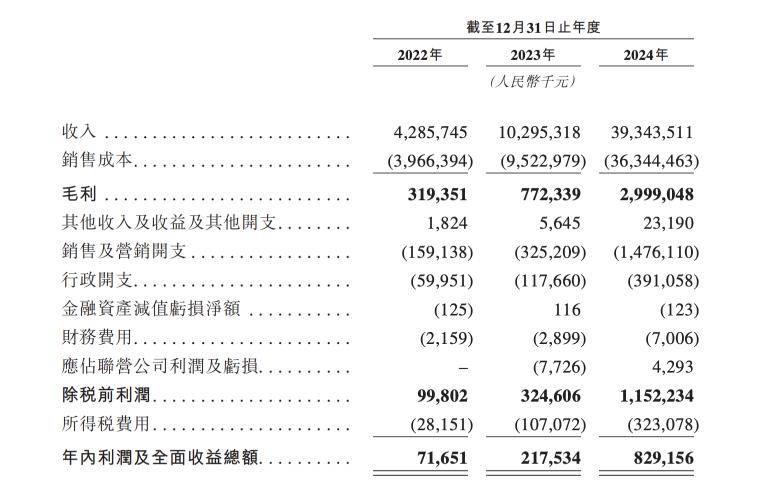
Core Viewpoint - The article discusses the emergence and growth potential of "poor people's supermarkets" in China, exemplified by the listing application of Hunan Mingming Henbang Commercial Chain Co., Ltd. on the Hong Kong Stock Exchange, highlighting its rapid expansion in lower-tier markets and significant revenue growth projections [1][4]. Group 1: Company Overview - Hunan Mingming Henbang has approximately 58% of its stores located in county towns and rural areas, indicating a deep penetration into the lower-tier market [1]. - The company reported revenue figures of RMB 4.285 billion, RMB 10.295 billion, and RMB 39.343 billion for the years 2022, 2023, and 2024 respectively, with a compound annual growth rate (CAGR) of 203.0% [2]. - The total Gross Merchandise Value (GMV) for 2024 is projected to reach RMB 55.5 billion [1]. Group 2: Industry Trends - The retail sector in China is experiencing a transformation, with a notable shift towards discount retailing and the emergence of hard discount models, as seen with companies like Aldi and the rise of discount supermarkets [4][19]. - The discount retail market is expected to grow to RMB 2.28 trillion by 2025, with a CAGR of 11.0% from 2022 to 2025 [19]. - The trend of "quality-price ratio" is becoming prominent, where consumers seek high-quality products at lower prices, reflecting a shift in consumer behavior towards value [8][12]. Group 3: Competitive Landscape - The competitive landscape is intensifying, with major players like Three Squirrels and Yonghui Supermarket facing challenges, including significant shareholder losses and strategic shifts [14][16]. - The concept of private labels is gaining traction, with companies like Aldi achieving over 90% of their product offerings as private labels, which allows for lower prices and higher quality control [27]. - The article highlights the importance of supply chain optimization and operational efficiency as key competitive advantages in the discount retail space [20][22].
鸣鸣很忙冲港股:在万店、低价、品牌间寻找新的护城河
Hua Er Jie Jian Wen· 2025-05-10 08:29
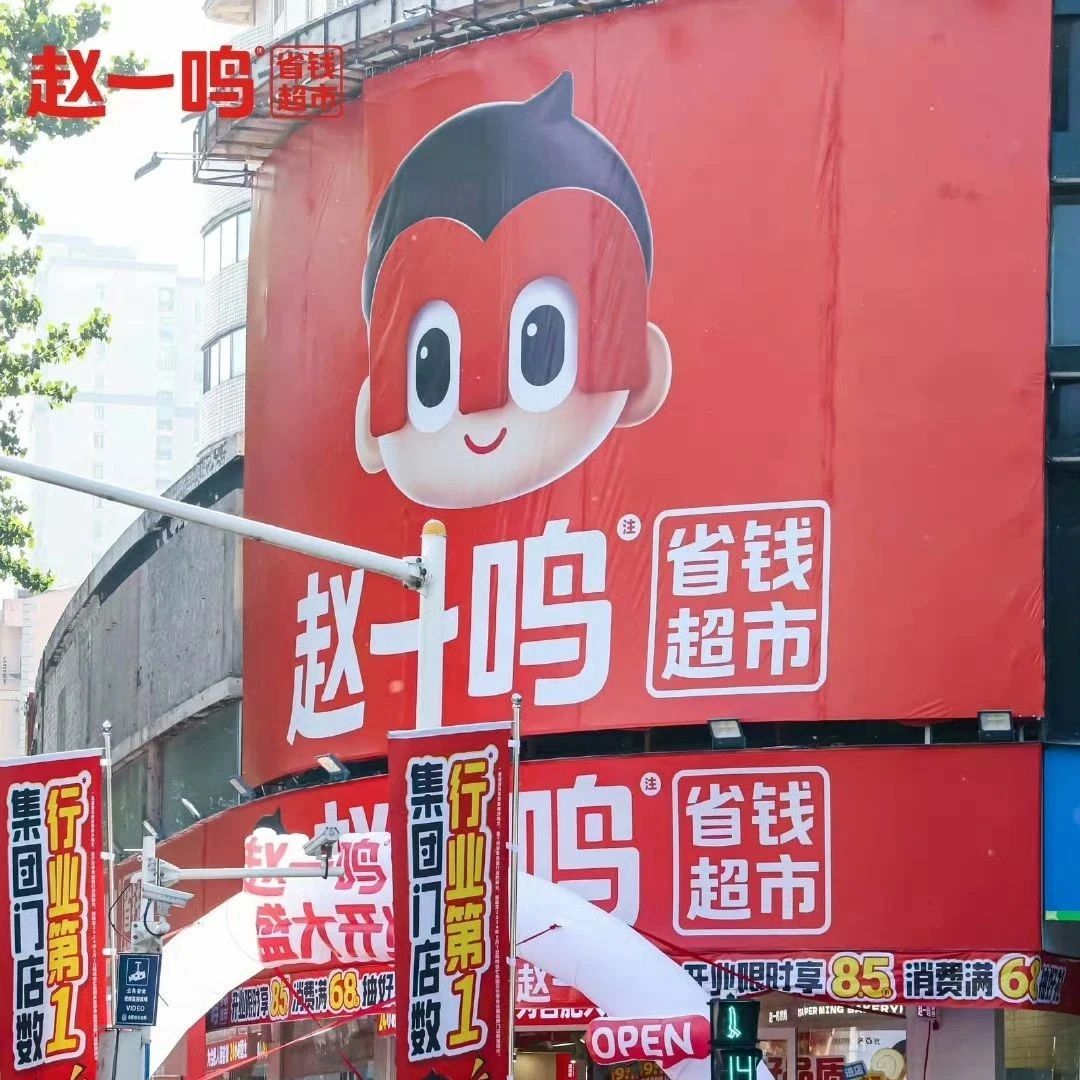
Core Viewpoint - The two major players in the snack retail industry are expected to fully enter the capital market, with Mingming Hen Mang officially submitting its prospectus for a Hong Kong listing, potentially positioning itself alongside Wancheng Group as a leading snack giant in both the Hong Kong and A-share markets [2][8]. Group 1: Company Performance and Market Position - Mingming Hen Mang's revenue projections for 2022 to 2024 are 4.28 billion, 10.29 billion, and 39.34 billion RMB, respectively, with a compound annual growth rate of 203.0% [2]. - By the end of 2024, Mingming Hen Mang is expected to have 14,400 stores and 120 million members, with a total GMV exceeding 55.5 billion RMB [2]. - The market share of Mingming Hen Mang in the leisure food and beverage sector has surpassed Walmart, reaching 1.5% [3]. - The company has achieved a significant increase in store efficiency, with average daily sales per store rising from 38,800 RMB to 45,200 RMB, and daily sales exceeding 15,000 RMB [12]. Group 2: Industry Dynamics and Competition - The snack retail sector has rapidly expanded, with the number of snack retail stores in China increasing from approximately 2,500 at the end of 2021 to 37,500 in just three years [5]. - The merger between "Zero Snacks Very Busy" and "Zhao Yiming Snacks" is seen as a strategic move to counter competition, especially as Wancheng Group has been acquiring multiple snack brands [8][10]. - The competitive landscape is intensifying, with both Mingming Hen Mang and Wancheng Group achieving a combined market share of over 70% by the end of 2024 [28]. Group 3: Financial Metrics and Operational Efficiency - In 2024, Mingming Hen Mang's adjusted net profit is projected to reach 910 million RMB, with an adjusted net profit margin of 2.3% [31]. - The company maintains a stable gross margin of 7.5% to 7.6%, while its net profit margin has improved from 1.7% to 2.1% [23]. - The average inventory turnover days for Mingming Hen Mang is 11.6 days, consistent with two years prior [27]. Group 4: Strategic Initiatives and Future Outlook - Mingming Hen Mang is diversifying its product offerings by introducing a new store model that includes daily necessities, aiming to increase customer frequency and average transaction value [39]. - The company has launched several self-branded products, maintaining a focus on cost-effectiveness [40]. - Marketing efforts have intensified, with partnerships with celebrities and the introduction of innovative store concepts to enhance brand recognition [45][46].
鸣鸣很忙IPO三问:谁挣钱?谁在卷?谁受益?
Sou Hu Cai Jing· 2025-05-08 09:53
Core Viewpoint - The company Mingming Henmang Group, a leading player in the snack retail sector, has submitted its IPO application to the Hong Kong Stock Exchange, marking its entry into the public market [1][2]. Financial Performance - The company has experienced significant revenue growth, achieving revenues of 4.29 billion RMB in 2022, 10.30 billion RMB in 2023, and projected 39.34 billion RMB in 2024, representing an over eightfold increase in three years [6][7]. - Despite the impressive revenue figures, the company has maintained low profit margins, with gross profit margins of 7.5% in 2022, 7.5% in 2023, and 7.6% in 2024, which are lower than its competitor Wancheng Group's 10.76% during the same period [10][11]. Business Model - The company's business model is characterized by a low-cost, high-volume strategy, focusing on a wide range of products and a significant presence in lower-tier cities, with approximately 58% of its stores located in county towns and rural areas [4][8]. - The franchise model has become a mainstream choice in the snack retail industry, with 99.5% of the company's revenue coming from supplying products to its franchise stores [11][13]. Market Competition - The competitive landscape is intensifying, with both Mingming Henmang and its rival Wancheng Group aggressively expanding their store networks, leading to market saturation in certain areas [14][15]. - Both companies have implemented substantial franchise support policies to attract and retain franchisees, resulting in a significant increase in the number of franchise stores for Mingming Henmang from 994 in 2022 to 7,241 in 2024 [17]. Strategic Shifts - The company is shifting its strategy to focus on higher quality and differentiated products, moving away from solely competing on price [22][25]. - Mingming Henmang has initiated a self-branding strategy, launching its own product lines to improve profit margins and enhance its market image [24][26][28]. Future Outlook - The company plans to allocate 70% of the funds raised from its IPO for store expansion, indicating a continued focus on growth [18]. - Additionally, Mingming Henmang is exploring new retail formats, such as community discount supermarkets, to diversify its offerings and meet broader consumer needs [29][30].