
体育用品

Search documents
高盛:超配中国市场 看好“民企十杰”
2 1 Shi Ji Jing Ji Bao Dao· 2025-06-27 14:01
21世纪经济报道 实习生 张长荣 记者 崔文静 北京报道 "中国经济增长仍具韧性,今年下半年还需政策发力支持稳定经济增长。"高盛中国经济学家王立升在6 月25日举行的媒体见面会上表示。 他提到,当前外需仍具较强支撑,上半年中国GDP增速有望达5.2%,这一表现短期内降低了政策宽松 的紧迫性。目前政策宽松不仅仅是稳增长,也支持劳动力市场和稳信心。 高盛中国股票策略分析师付思指出,当前中国股市仍具备估值优势,维持对中国市场的超配建议。她认 为,7-8月关税政策与宏观调控的协同效果,将成为影响市场后续走势的关键变量。 此外,付思强调,私营企业的机会正逐步回归,高盛近期推出的对标美股"七巨头"的"民企10杰"组合具 备显著配置优势。 中国经济表现超预期 王立升表示,关税会影响美国经济下行,推动通胀上行。他预计,美联储首次降息可能始于今年12月, 后续在明年3月和6月或再分别降息,累计降息75个基点。 关于中国经济,他指出当前有两点表现超预期。 一是出口仍具韧性。他提到,高盛测算前5个月出口价格同比下降约5%,但出口数量同比增长约10%, 呈现"走量不走价"特征,与去年趋势相似,显示外需仍具支撑。 二是财政扩张力度显著 ...
耐克盘初涨近16% 高管释放乐观信号
news flash· 2025-06-27 13:49
Core Viewpoint - Nike's sales decline is showing signs of easing, indicating that CEO Elliott Hill's strategic initiatives are beginning to take effect [1] Financial Performance - For the fourth fiscal quarter, Nike reported revenue of $11.1 billion, a year-over-year decline of 12%, but exceeding market expectations of $10.72 billion by 3.8% [1] - Adjusted earnings per share were $0.14, reflecting an 86% decrease, yet surpassing expectations by $0.02 [1]

6月27日电,耐克美股盘前涨超10%,公司第四财季营收超出预期。
news flash· 2025-06-27 08:10
Group 1 - The core viewpoint of the article is that Nike's stock rose over 10% in pre-market trading due to the company's fourth-quarter revenue exceeding expectations [1] Group 2 - Nike's fourth-quarter revenue surpassed market forecasts, indicating strong performance [1]
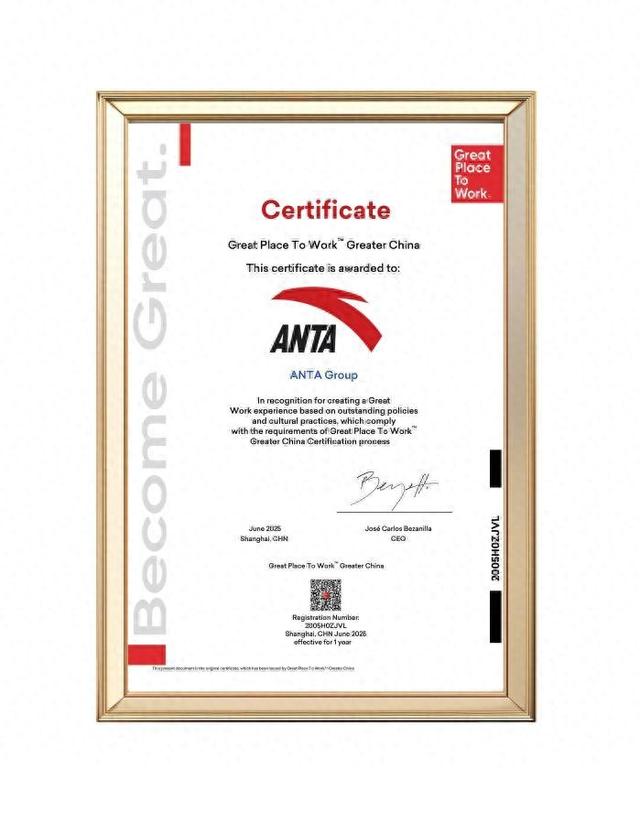
安踏集团荣获全球权威机构 “卓越职场”认证
Zhong Guo Xin Wen Wang· 2025-06-27 06:54
Core Insights - Anta Group has been awarded the "Great Place To Work" certification, becoming the first company in China's sportswear industry to receive this honor, achieving a trust index of 89%, which is above the average score of over 340 participating companies in Greater China for 2024 [1][2] Group 1: Certification and Recognition - The "Great Place To Work" certification is a prestigious recognition that reflects a company's cultural strength, with Anta Group being evaluated through anonymous surveys, cultural audits, and expert reviews [1][2] - Anta Group's first-time participation in the evaluation resulted in a leading score, particularly excelling in employee pride, indicating effective organizational identity construction [2] Group 2: Cultural Framework and Business Success - Anta Group emphasizes a mission of integrating a spirit of self-transcendence into everyday life, establishing a cultural framework that drives business success [2] - The company has implemented a cultural system that combines consumer orientation, high standards, and leadership modeling, creating a consensus among over 60,000 employees [2] Group 3: Talent Development and Employee Engagement - Anta Group promotes a "self-transcendence" employer value proposition, offering over 30 diverse sports clubs and a systematic talent development framework [5][7] - The company invests over 600 million yuan in 2024 to support employee innovation, growth, and well-being, with plans to invest 1 billion yuan by 2027 to enhance employee happiness [7] Group 4: Awards and Future Vision - Anta Group has received multiple accolades, including being named one of the "Forbes Global Best Employers" four times and recognized for its employer brand excellence [9] - The Chairman of Anta Group emphasizes the importance of employees as key partners and the role of deep-rooted corporate culture in achieving success, aiming to enhance workplace happiness and create value [9]


4年合同薪酬2139万美元!中国20岁男孩杨瀚森闯入NBA
第一财经· 2025-06-27 06:24
Core Viewpoint - The selection of Yang Hanshen as the 16th pick in the 2025 NBA Draft represents a significant milestone for Chinese basketball, potentially revitalizing the NBA's influence in China and providing new commercial opportunities for both the player and the league [1][2][16]. Group 1: Player Profile and Significance - Yang Hanshen is the first Chinese player selected in the NBA since 2016 and the ninth overall, marking a notable achievement for Chinese basketball [2]. - His selection at the 16th position is the third highest for a Chinese player, following Yao Ming and Yi Jianlian [2]. - Yang aims to carve out his own identity in the NBA, aspiring to improve his skills while respecting the legacy of Yao Ming [5]. Group 2: Contract and Financial Aspects - Yang's contract with the Portland Trail Blazers is structured as a "2+1+1" deal, totaling $21.39 million over four years, with salaries increasing from $4.42 million in the 2025-26 season to $7.46 million in the 2028-29 season [6]. - The rising salary trends in the NBA are evident, with the current rookie contracts significantly higher than those from previous years, such as Yao Ming's $18 million contract in 2002 [7]. Group 3: Commercial Value and Market Impact - Yang's endorsement with Li Ning marks a significant partnership, as it is the first time a Chinese sports brand has signed a potential NBA first-round pick [11]. - Following Yang's selection, Li Ning's stock surged by 5%, indicating a positive market reaction to his NBA entry [12]. - Yang's commercial potential is expected to exceed $10 million, reflecting the lucrative opportunities available to NBA players in China [15]. - The demand for Yang's jersey in China has reportedly surpassed that of Damian Lillard during his peak, highlighting the immediate commercial interest [17]. Group 4: Broader Market Implications - Yang's entry into the NBA could serve as a "golden key" for the Portland Trail Blazers to tap into the vast Chinese basketball market, which boasts approximately 1.25 billion basketball enthusiasts [18][19]. - The NBA's influence in China has waned since 2016, and Yang's selection may help to rejuvenate the league's presence and commercial viability in the region [16].

中国男孩杨瀚森闯入NBA:拿到2000万美元薪酬 未来商业价值几何
Di Yi Cai Jing· 2025-06-27 05:34
Group 1: Player's Selection and Impact - Yang Hanshen was selected as the 16th pick in the first round of the 2025 NBA Draft, making him the first Chinese player selected since 2016 and the ninth in history [1][2] - His selection is seen as a win-win for both the Portland Trail Blazers and the NBA's expansion in the Chinese market [1][2] - Yang's contract is structured as "2+1+1" over four years, totaling $21.39 million, with salaries increasing from $4.42 million in 2025-26 to $7.46 million in 2028-29 [3] Group 2: Comparison with Previous Players - Yang's selection at 16th is the third-highest for a Chinese player, following Yao Ming (2002) and Yi Jianlian (2007) [2] - The NBA salaries have significantly increased, with the current top pick expected to earn $62 million over four years, compared to Yao Ming's $18 million and Yi Jianlian's $13 million contracts [3] Group 3: Commercial Value and Brand Partnerships - Yang has signed with Li Ning, becoming the main spokesperson for the "Yushuai" series, marking a significant partnership for a Chinese player with a domestic brand [5] - Following the draft, Li Ning's stock rose by 5%, indicating a positive market reaction to Yang's selection [5] - Yang's commercial potential is projected to exceed $10 million, similar to other Chinese players who have seen significant sponsorship growth after entering the NBA [8] Group 4: Market Potential and Fan Engagement - The NBA's influence in China has waned since 2016, and Yang's entry is expected to rejuvenate interest and commercial opportunities in the market [8] - The demand for Yang's jersey in China surged, with orders exceeding three times that of Damian Lillard's peak period [8] - The basketball population in China is approximately 125 million, with over 76 million core fans, highlighting the vast market potential for NBA engagement [9]


耐克发布2025财年第四季度财报,战略转型已到重要拐点
Bei Jing Shang Bao· 2025-06-27 04:12
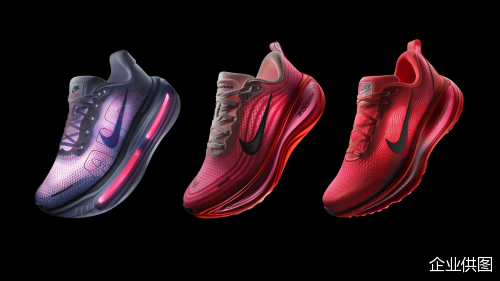
Core Insights - Nike reported Q4 revenue of $11.1 billion and annual revenue of $46.3 billion for FY2025, exceeding analyst expectations, leading to a post-earnings stock price increase of over 10% [1] - The company is advancing its "Win Now" transformation plan, with CEO Elliott Hill indicating that while financial performance met expectations, it has not yet reached their goals [1][3] - The CFO Matthew Friend noted that Q4 marked the most significant financial impact of the "Win Now" plan, with expectations for gradual easing of challenges moving forward [3] Financial Performance - Q4 revenue was $11.1 billion, while annual revenue reached $46.3 billion, surpassing analyst forecasts [1] - The Greater China region generated $6.585 billion in annual revenue, contributing $1.476 billion in Q4 [3] Strategic Initiatives - The "Win Now" plan is a long-term restructuring strategy rather than a short-term tactical adjustment, showing initial success in product mix adjustments and inventory optimization [4] - Nike is focusing on innovation in core sports categories, particularly in running and basketball, to enhance product offerings and regain market momentum [4][6] Product Development - In the running category, Nike has restructured its product matrix, launching key lines such as Vomero, Structure, and Pegasus, with the Vomero 18 achieving over $100 million in sales within 90 days [4] - For basketball, Nike introduced high-performance shoes tailored to local consumer habits, including the S.T. Flare series designed for outdoor courts in China [6] Local Engagement - Nike is enhancing emotional connections with consumers through localized sports events and community engagement, such as the successful high school basketball league finals in Beijing [7] - The company is also focusing on women's running events, exemplified by the "2025 AFTER DARK TOUR" in Shanghai, which attracted over 3,500 female participants [9]
24小时环球政经要闻全览 | 6月27日
Ge Long Hui· 2025-06-27 00:21
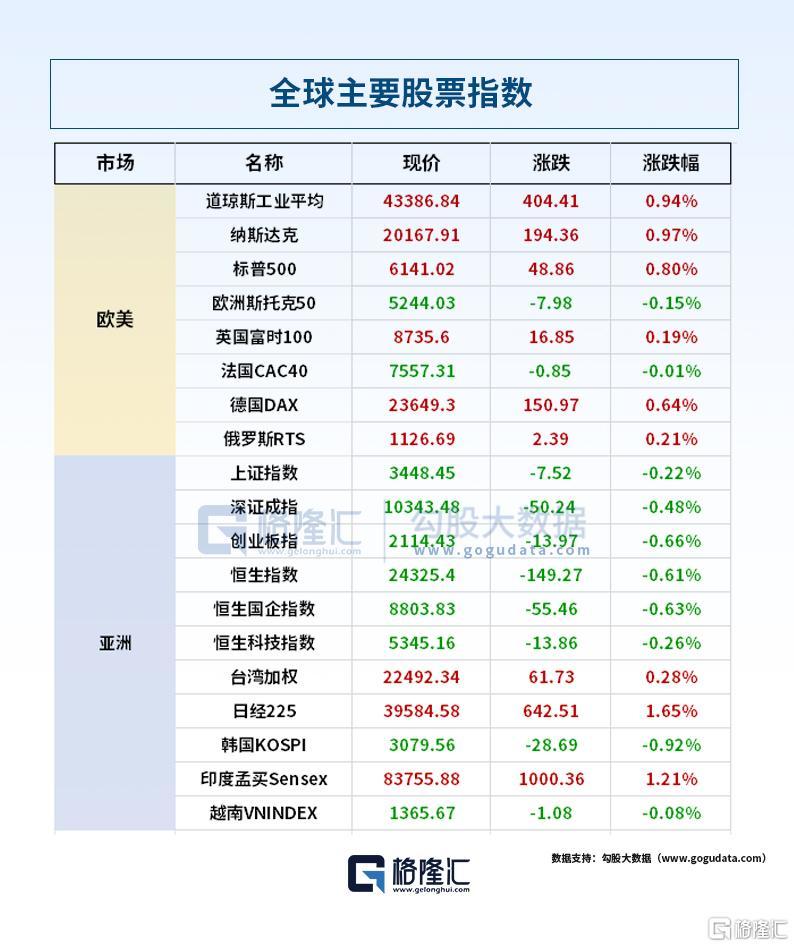
Market Overview - Major global stock indices showed mixed performance, with the Dow Jones Industrial Average rising by 404.41 points (0.94%) to 43,386.84, while the S&P 500 increased by 48.86 points (0.80%) to 6,141.02 [1] - In contrast, the European Stoxx 50 declined by 7.98 points (-0.15%) to 5,244.03, and the Shanghai Composite Index fell by 7.52 points (-0.22%) to 3,448.45 [1] Trade and Economic Policies - U.S. trade partners, including Japan, India, and the EU, are hesitant to sign agreements due to uncertainty over potential tariffs on key exports like chips and pharmaceuticals [2] - The U.S. Treasury Secretary requested the removal of a "retaliatory tax" proposal from a tax bill, which could impose a 20% tax on foreign investors from countries deemed to impose unfair taxes on U.S. companies [2][5] Company Developments - Xiaomi announced that its Yu7 model received over 289,000 pre-orders within the first hour of availability, indicating strong consumer interest [3][4] - Nike's stock surged by 10% following the release of its quarterly earnings report, which showed earnings per share of $0.14, slightly above expectations [4] - Nike's CFO indicated that new tariffs could increase total costs by approximately $1 billion for the fiscal year 2026, prompting the company to adjust its supply chain and pricing strategies [5] Mergers and Acquisitions - CoreWeave is in talks to acquire Core Scientific to expand its cloud computing capabilities, with the deal expected to be finalized in the coming weeks [7][8] - Following the acquisition news, Core Scientific's stock price rose by 33%, reflecting investor optimism [9] Regulatory Changes - Apple modified its App Store policies in Europe to comply with the Digital Markets Act, aiming to avoid a potential €500 million fine [11][12] - The new policy introduces a complex fee structure for app developers, including a 5% commission on digital purchases made outside the App Store [12]
耐克(NKE.US)Q4财报实现111亿美元营收 高管释放乐观信号后股价大涨
智通财经网· 2025-06-26 23:30
Core Viewpoint - Nike's fourth-quarter financial results show a revenue decline of 12% year-over-year, but the results exceeded market expectations, indicating a potential stabilization in sales trends despite ongoing challenges [1][2]. Financial Performance - Nike reported a revenue of $11.1 billion for the fourth quarter, which is 3.8% higher than the market forecast of $10.72 billion [1]. - Adjusted earnings per share fell by 86% to $0.14, yet this was slightly above expectations by 2 cents [1]. - Gross margin contracted by 440 basis points, slightly better than the anticipated 403 basis points decline [1]. Market Dynamics - Sales in North America, Greater China, and Europe, the Middle East, and Africa experienced double-digit declines, but the actual declines were within expected ranges [1]. - Direct sales fell by 14%, which was greater than the 9% decline in wholesale channels, indicating a shift in consumer behavior back towards distributor channels [2]. Product Category Performance - Footwear led revenue with $7.2 billion, despite a 13% decline, outperforming apparel and equipment categories [2]. - Apparel revenue decreased by 10% to $3 billion, while equipment revenue fell by 2% to $567 million [2]. Strategic Initiatives - CEO Elliott Hill emphasized a restructuring strategy focusing on digital capabilities, global supply chain optimization, and core category innovation [1]. - The company aims to reduce reliance on Chinese production to mitigate the impact of U.S. tariffs, targeting a reduction of Chinese imports to a "high single-digit percentage" by May 2026 [3]. Cost Management - CFO Matthew Friend acknowledged the challenges faced in the fourth quarter but noted improvements in key operational metrics [2]. - The company plans to evaluate cost-cutting measures in response to tariff impacts and has announced price increases on some products in the U.S. [3]. Market Reaction - Following the executives' comments, Nike's stock rose over 10% in after-hours trading [4].
足球装备市场活力满满
Jing Ji Ri Bao· 2025-06-26 22:09
Group 1 - The core viewpoint is that the enthusiasm for football in Jiangsu Province is driving a surge in sales of football-related products, with significant growth in professional training equipment [1] - Football shoes, footballs, and football socks are the top three products by sales volume, while various training aids have seen sales growth exceeding 60% year-on-year, indicating a trend towards professionalization in football consumption [1] - The primary consumer demographic for football products is individuals aged 36 to 45, accounting for over 50% of sales, followed by those aged 26 to 35 at 26.1%, reflecting both ongoing participation and parental demand for children's training equipment [1] Group 2 - Female consumers contribute 36.1% to football consumption, showing a significant preference for products like football apparel and sports skirts, highlighting the increasing participation and diverse needs of women in football [1] - Regional preferences in football product consumption are evident, with Guangdong, Beijing, Shandong, Sichuan, and Jiangsu being the top five areas for football equipment sales, each showing unique product preferences [1] - The trend of moving from general fitness to specialized training in football is expanding the consumption ecosystem, with a variety of professional equipment and fashion items emerging as the football culture develops [2]