半导体

Search documents
高盛:韩国和日本市场还有进一步上涨空间
Xin Lang Cai Jing· 2026-02-17 01:45
888、666、188……专属炒股靓号来了!新年定制福利,开启马年投资好运>> 格隆汇2月17日|高盛对冲基金业务全球主管托尼.帕斯夸里洛(Tony Pasquariello)表示,首尔的韩国综合 股价指数上周上涨8%,创下五年来最佳单周表现。自2024年底以来,该指数已增长逾一倍。KOSPI指 数今年已上涨31%。不难看出推动此轮涨势的主要力量是什么。该指数中市值遥遥领先的两家公司是三 星电子和SK海力士,在人工智能相关需求猛增的背景下,这两家芯片制造商的股价今年迄今已分别飙 升51%和35%。帕斯夸里洛说,考虑到涨幅如此之大,许多投资者一直在问是否应该减持韩国头 寸。"我们认为现在减持还为时尚早,"他说。"我们维持增持评级,并将韩国综合指数的目标点位上调 至6,400点,这意味著还有超过20%的上涨空间。"在日本,日经指数今年已经上涨了12.9%。帕斯夸里 洛表示,他看好日本市场有两个原因。首先,高盛分析师认为仓位并未过高。帕斯夸里洛指出,外国投 资者的仓位仍未回到2024年7月日本央行加息造成市场剧烈波动之前的水平。他说,第二个问题是"相关 性模式发生了转变"。近年来的普遍趋势是,相对较低的日本利率导致 ...
DRAM价格暴涨75% AI热潮引发存储芯片短缺危机
Huan Qiu Wang· 2026-02-17 01:28
彭博社称,去年12月到今年1月,某类DRAM价格暴涨75%,越来越多零售商和中间商开始每日调整售价,"内存末日"(RAMmageddon)成为业内形容当前 局面的词汇。 造成短缺的根本原因是AI数据中心扩张。Alphabet、OpenAI等公司大量消耗内存芯片产能,导致消费电子厂商只能争夺日益减少的供应。伯恩斯坦分析师 Mark Li警告,内存价格正呈"抛物线式"上涨。 短缺正冲击下游产业。索尼考虑将下一代PlayStation推迟至2028年甚至2029年推出;任天堂也在考虑2026年提高Switch 2售价。思科上周给出疲软盈利展望 时提及内存短缺,导致股价创近四年最大单日跌幅。 苹果CEO库克表示,这将压缩iPhone利润率;美光科技称这一瓶颈"前所未见";特斯拉CEO马斯克直言将不得不自建内存制造厂:"我们只有两个选择:撞 上芯片墙,或者建一座晶圆厂"。 【环球网财经综合报道】据彭博社消息,人工智能热潮正引发存储芯片抢购潮。自2026年初以来,特斯拉、苹果等十余家大型企业发出警告,动态随机存取 内存(DRAM)短缺将限制生产。 Counterpoint分析师MS Hwang表示,DRAM短缺将在全年持 ...

提前逃顶软件板块的基金经理预言:多数公司将消失
Sou Hu Cai Jing· 2026-02-17 01:26
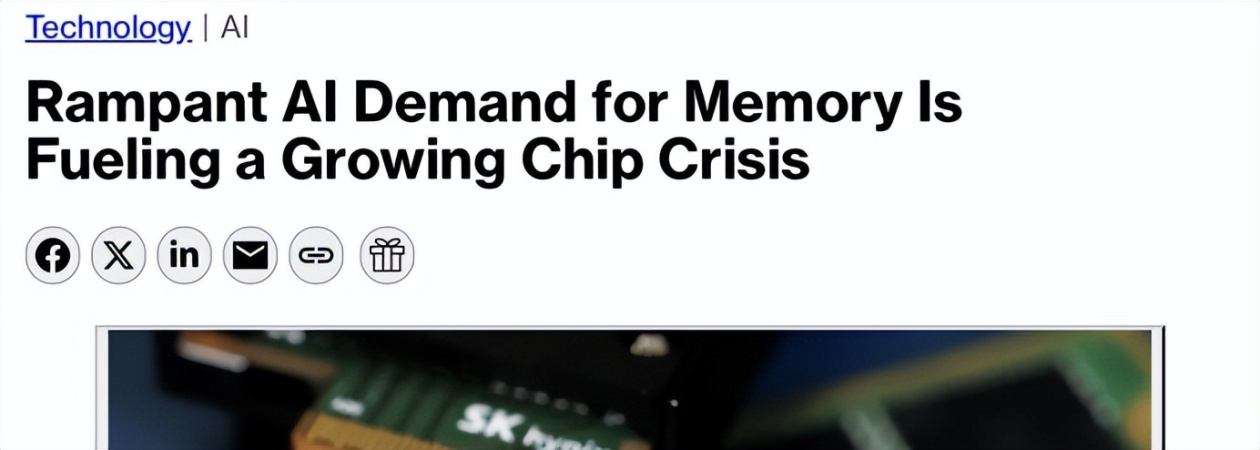
来源:智通财经 Polar Capital基金经理Nick Evans在软件股被抛售前提前离场,他提醒那些想"抄底"的投资者:多数软件 股仍然充满风险,只有少数公司能够存活下来。 "我们认为,应用软件正面临来自人工智能生存性威胁(existential threat)。"Evans管理的一只规模120 亿美元的全球科技基金,过去一年业绩击败99%的同业,过去五年跑赢了97%同行。 近期,市场担心Anthropic推出的Claude Cowork等先进AI工具将颠覆软件行业的商业模式,相关股票大 幅下跌。iShares扩展科技软件行业ETF(IGV)年内已累跌21.53%,半导体股却因算力需求而大涨。 此外,为了提振增长而收购AI初创公司,也会进一步加重财务负担。"我们认为,当前股价并未反映最 终价值的不确定性,也没有计入自由现金流面临的压力。" 当下,华尔街对于AI规模的争论仍在持续。摩根大通的策略师上周表示,近期的"极端价格波动"之后, 软件股可能反弹,他们更看好微软和ServiceNow。 Evans也称,并非所有软件领域都同样脆弱。今年1月,他增持了基础设施软件公司——这些企业为消费 者和企业应用提供底 ...
台积电已经无法向美国交代了!张忠谋没有说谎:美国要掏空台湾半导体
Sou Hu Cai Jing· 2026-02-17 00:21
Core Viewpoint - The recent "US-Taiwan Trade Agreement" announced by US Commerce Secretary Howard Lutnick involves a significant reduction in tariffs on Taiwanese goods, but it comes with stringent conditions that require Taiwan to relocate a substantial portion of its semiconductor supply chain to the US, along with a hefty financial commitment of $500 billion [1][3]. Group 1: Financial Implications - Taiwan is required to invest $500 billion, which represents 56.8% of its GDP, significantly higher than the investment ratios of Japan (12.8%) and South Korea (18.8%) in similar agreements with the US [3][4]. - The $500 billion is divided into $250 billion for direct investments by Taiwanese semiconductor companies like TSMC to build factories in the US, and another $250 billion in credit guarantees from the Taiwanese government to support smaller semiconductor firms [3][4]. Group 2: Operational Challenges - TSMC faces operational difficulties in the US, including high construction costs and regulatory hurdles, which have led to a significant drop in profit margins from 62% in Taiwan to only 8% in Arizona [6][10]. - The construction of TSMC's Arizona factory has been delayed, with the facility not expected to be operational until late 2024, and the company has incurred substantial compliance costs due to stringent US regulations [6][10]. Group 3: Market Dependencies - TSMC's reliance on the US market is critical, with 38% of its exports directed to the US, making it vulnerable to potential punitive tariffs if it does not comply with US demands [4][5]. - The company’s core production technologies and equipment are largely controlled by US firms, creating a dependency that limits TSMC's ability to resist US pressures [5][11]. Group 4: Industry Ecosystem - The semiconductor industry requires a comprehensive ecosystem, including thousands of specialized suppliers, which are predominantly located in Taiwan. The relocation of this ecosystem to the US is deemed nearly impossible [10][11]. - TSMC's founder has previously warned that building factories in the US is significantly more expensive and inefficient compared to Taiwan, highlighting the challenges of replicating Taiwan's established semiconductor ecosystem in the US [11][12].

陆家嘴财经早餐2026年2月17日星期二
Wind万得· 2026-02-17 00:17
Group 1 - The 2026 CCTV Spring Festival Gala featured a variety of robots performing alongside artists, showcasing advanced skills and technology [3] - The Hong Kong stock market saw a positive close on the last trading day before the Lunar New Year, with the Hang Seng Index rising by 0.52% and AI application stocks experiencing significant gains, such as Haizhi Technology Group increasing nearly 30% [3][4] Group 2 - OpenAI announced the recruitment of Peter Steinberger, founder of the open-source AI agent OpenClaw, indicating a strategic shift towards collaborative AI ecosystems [4] - Alibaba released a new generation of the Qwen 3.5 model, which competes with Gemini 3 Pro, achieving a significant performance leap and reducing API costs to 0.8 yuan per million tokens [4] Group 3 - The demand for GLM-5 has surged, prompting Zhipu to initiate a "computing power partner" recruitment plan to enhance service capabilities [11] - The storage chip price increase is intensifying, with Kioxia predicting a 50% rise in average selling prices starting in Q1 2026 [11] Group 4 - The Hong Kong property market saw a 7.33% increase in prices during the Year of the Snake, marking the largest rise in nearly eight lunar years [8] - The U.S. stock market is expected to experience a significant capital expenditure increase in AI, projected to reach $740 billion in 2026, which may lead to a shift in investment patterns [16]

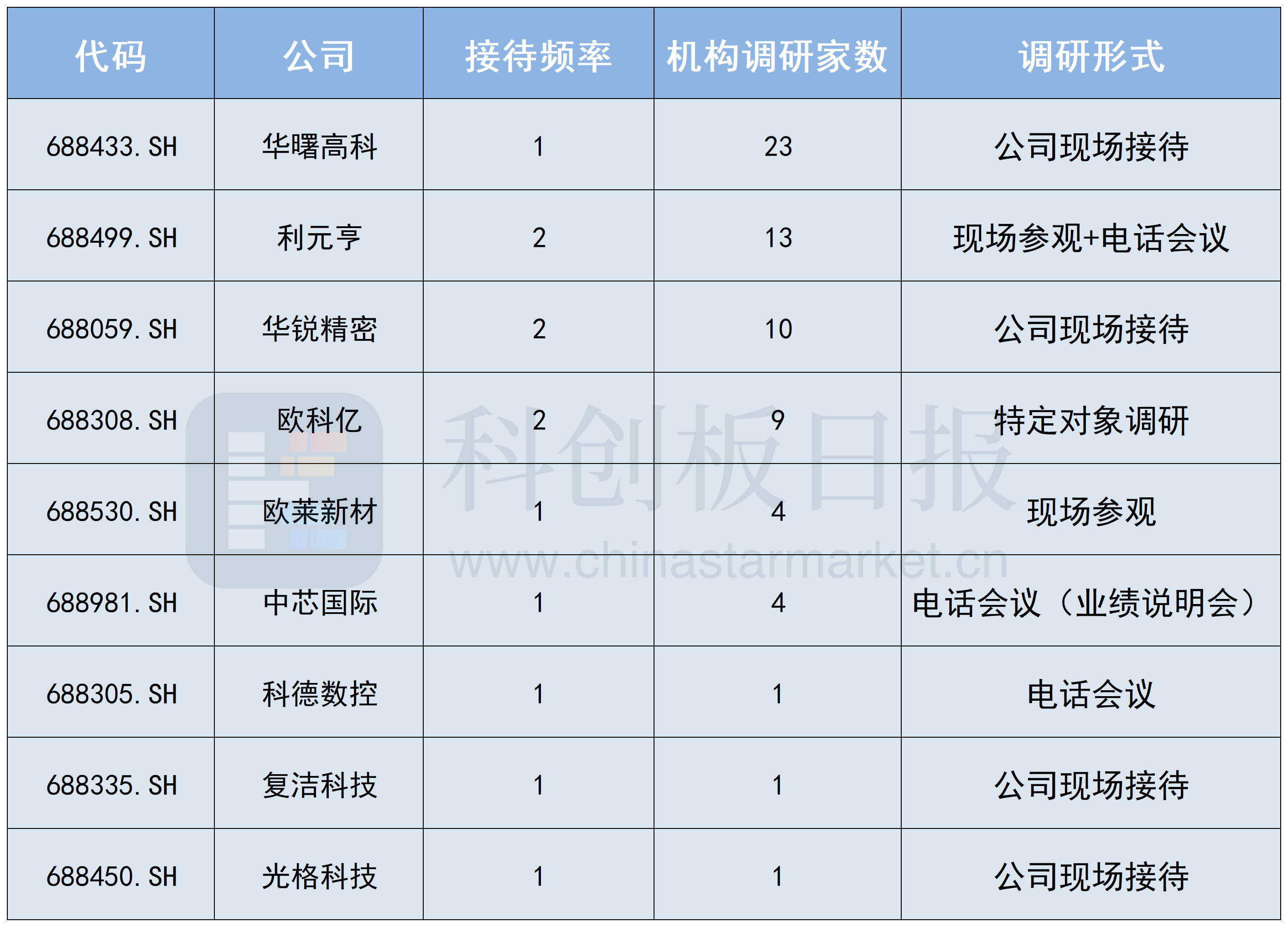
蛇年最后一周 这些科创板公司还在接受机构调研
Feng Huang Wang· 2026-02-16 23:43
Group 1 - A total of 9 companies in the Sci-Tech Innovation Board received institutional research from February 9 to 15, with Huashu High-Tech receiving the most attention from 23 institutions [1] - Liyuanheng, Huarui Precision, and Oke Yi each hosted two batches of institutional research during the week, with Liyuanheng and Oulai New Materials conducting on-site visits [1] - Huashu High-Tech emphasized its 3D printing equipment's applications in the aerospace sector, providing comprehensive solutions for lightweight and complex structures [4][5] Group 2 - Oke Yi highlighted the increasing demand for tools in the aerospace sector, focusing on high-temperature alloys and titanium alloys, and has developed specialized products for this market [4] - The company also noted that AI is transforming the entire lifecycle of tools, enhancing design and manufacturing processes [5] - Semiconductor materials company Oulai New Materials stated that despite rising raw material prices, its profitability remains strong due to ongoing R&D and diversification into high-value fields [7] Group 3 - Semiconductor manufacturer Zhongxin International discussed the impact of strong AI demand on storage chip supply, leading to reduced orders in lower-end markets while increasing orders related to AI and high-end applications [6] - The company expects continued growth in the domestic supply chain due to the return of overseas production and the replacement of old products with new domestic ones [6] - Liyuanheng is focusing on solid-state battery equipment as a key area of development, maintaining technical exchanges with numerous potential clients [8] Group 4 - Fuzhijie Technology is leading a strategic research project aimed at enhancing local biogas resource utilization and developing green methanol technology [9] - The project focuses on an integrated approach to biogas conversion, laying the groundwork for future industrial applications of green fuels [9]
智通港股通资金流向统计(T+2)|2月17日
智通财经网· 2026-02-16 23:34
Group 1 - Tencent Holdings (00700), Yingfu Fund (02800), and Shandong Gold (01787) ranked the top three in net inflow of southbound funds, with net inflows of 736 million, 423 million, and 393 million respectively [1] - Alibaba-W (09988), SMIC (00981), and Hua Hong Semiconductor (01347) ranked the top three in net outflow of southbound funds, with net outflows of -524 million, -391 million, and -199 million respectively [1] - In terms of net inflow ratio, Nanhua Futures (02691), Southern East Select (03441), and Oculent (00501) led the market with ratios of 70.54%, 59.14%, and 56.33% respectively [1] Group 2 - The top ten stocks by net inflow included Tencent Holdings (00700) with 736 million and a closing price of 548.000, Yingfu Fund (02800) with 423 million and a closing price of 27.480, and Shandong Gold (01787) with 393 million and a closing price of 40.180 [2] - The top ten stocks by net outflow included Alibaba-W (09988) with -524 million and a closing price of 160.100, SMIC (00981) with -391 million and a closing price of 70.000, and Hua Hong Semiconductor (01347) with -199 million and a closing price of 99.600 [2] - The top three stocks by net inflow ratio were Nanhua Futures (02691) at 70.54% with a closing price of 11.230, Southern East Select (03441) at 59.14% with a closing price of 11.650, and Oculent (00501) at 56.33% with a closing price of 103.900 [3] Group 3 - The top three stocks by net outflow ratio included Zhengzhou Bank (06196) at -50.51% with a closing price of 1.150, China Energy Construction (03996) at -49.70% with a closing price of 1.180, and Hongye Futures (03678) at -48.03% with a closing price of 3.220 [3] - Other notable stocks with significant net inflow ratios included China Overseas Macro Yang Group (00081) at 55.30% and a closing price of 2.650, and Xinhua Wenhui (00811) at 50.59% with a closing price of 11.080 [3]


金十数据全球财经早餐 | 2026年2月17日
Jin Shi Shu Ju· 2026-02-16 23:14
Group 1 - The U.S. has deployed 18 F-35 fighter jets to the Middle East amid high-stakes negotiations with Iran, indicating rising tensions in the region [2][7] - Gold imports by India in January reached $12.07 billion, highlighting the country's significant demand for gold [2][12] - The Hong Kong stock market showed resilience, closing up 0.52% at 26,705.94 points, with sectors like storage, semiconductors, and precious metals performing well [3][4] Group 2 - The WTI crude oil price increased by 1.48% to $63.6 per barrel, while Brent crude rose by 1.43% to $68.16 per barrel, reflecting market reactions to geopolitical developments [4][5] - The U.S. dollar index rose to 97.09 points, marking a 0.24% increase, indicating a strengthening dollar amidst global market fluctuations [4][5] - European stock indices showed mixed results, with Germany's DAX30 down 0.46% and the UK's FTSE 100 up 0.26%, reflecting varied investor sentiment across the region [2][5]
芝麻AI速递:昨夜今晨财经热点要闻|2026年2月17日
Sou Hu Cai Jing· 2026-02-16 22:20
Group 1: Stock Market Performance - The Hong Kong stock market saw all three major indices rise, with the Hang Seng Index increasing by 0.59%, the Hang Seng Tech Index by 0.13%, and the National Enterprises Index by 0.56% [2] - For the year of the Snake, the Hang Seng Index gained over 32%, the Hang Seng Tech Index rose by over 13%, and the National Enterprises Index increased by over 23% [2] Group 2: Semiconductor Industry - The storage chip shortage crisis is intensifying, leading to significant price increases in DRAM and NAND flash memory, which are expected to rise sharply in Q1 [2] - Companies like Tesla and Apple have reported that DRAM shortages are limiting their production capacity, with Apple warning of compressed iPhone profit margins [2] Group 3: Robotics Industry - Several robotics companies showcased their products during the Spring Festival Gala, indicating a potential wave of IPOs as the industry approaches a critical point for mass production and commercialization [2] - The global demand for robots is projected to reach 30,000 units by 2026, with companies aiming to enhance brand visibility and secure financing through high-profile marketing efforts [2] Group 4: Cryptocurrency Market - Bitcoin experienced significant volatility, dropping below $69,000 after reaching $71,000, resulting in over 110,000 liquidations in the cryptocurrency market [3] - Investors are closely monitoring upcoming economic indicators, including the PCE data and GDP figures, which may influence Federal Reserve interest rate decisions [3] Group 5: Precious Metals Market - Gold prices are hovering around $5,000 per ounce, with recent U.S. CPI data alleviating inflation concerns and supporting the case for Federal Reserve rate cuts [4] - The silver market is showing signs of easing tension, with price increases impacting its application in solar panels [5] Group 6: Financial Sector Trends - In January, non-bank deposits increased by 2.56 trillion yuan year-on-year, while household deposits decreased by 3.39 trillion yuan, indicating a trend of wealth migration from traditional deposits to asset management products [5]
风向变了,美债被集体抛售,接盘者出现,中方不会再为美国兜底
Sou Hu Cai Jing· 2026-02-16 18:56
烟火赴新年 往回翻看历史,2013年前后,中国持有的美债峰值高达1.32万亿美元,稳坐美国"最大债主"的宝座。 十二年间,超过5000亿美元的美国国债从中国的资产负 债表上消失了,减持幅度超过51%。 与此同时,中国人民银行在2026年2月7日更新了另一组数据:截至1月末,中国官方黄金储备为7419万盎司,这已经是央行连续第15个月增持黄金。 一边是 美债持仓跌至十七年冰点,一边是黄金储备持续攀升至历史高位。 这一减一增,不是偶然的市场波动,而是一场持续了十多年的战略性资产大迁徙。 就在中国央行公布黄金数据三天后,2026年2月10日,美国财政部长斯科特·贝森特在巴西圣保罗的一个商业论坛上,通过视频急切地喊话:"当前美中关系 处于一个相当舒适的位置……我们不希望与中国脱钩,但确实需要去风险。 "这番表态的背景,是全球美债市场正在上演一场前所未有的"阵营分裂"。 根据美国财政部同一份报告,海外持有的美国国债总规模在2025年11月环比增加了1128亿美元,达到9.36万亿美元,刷新了历史最高纪录。 但这份"创纪 录"的成绩单背后,是冰火两重天的景象。 增持的主力,清一色是美国的传统西方盟友。 日本仍然是美国国债 ...