软件

Search documents
国产软件板块活跃10月以来融资资金加仓7只概念股均超亿元
Zheng Quan Shi Bao· 2025-10-13 18:18
Group 1 - The domestic software sector is experiencing significant activity, with industrial software and Xinchuang direction leading the gains, as stocks like Rongji Software, China Software, and Yingjianke hit the daily limit, while Chengmai Technology, Dameng Data, Kingsoft Office, and Kirin Information Security also saw substantial increases [1] - The Ministry of Industry and Information Technology and six other departments recently issued a plan for promoting service-oriented manufacturing innovation from 2025 to 2028, highlighting key productive service industries including technology services, industrial design, software and information services, financial services, intellectual property services, and energy-saving and environmental protection services [1] - The potential for domestic software to replace foreign products is vast across various fields, with industrial software being crucial for enhancing China's manufacturing autonomy and global competitiveness [1] Group 2 - The average stock price of domestic software concept stocks has risen by 31.15% this year, with Huasheng Tiancai and Dongtu Technology leading the gains at 170.85% and 135.19% respectively [2] - Zhongke Shuguang, Kingsoft Office, and Inspur Information are among the three domestic software stocks with market capitalizations exceeding 100 billion [1][2] - Kingsoft Office has received the highest net buy amount in financing, totaling 643 million since October, with its WPS Office software suite being a key product [3]

国产软件板块活跃 10月以来融资资金加仓7只概念股均超亿元
Zheng Quan Shi Bao· 2025-10-13 18:07
Group 1 - The domestic software sector is experiencing significant activity, with industrial software and Xinchuang direction leading the gains, as stocks like Rongji Software, China Software, and Yingjianke hit the daily limit, while others like Chengmai Technology and Kingsoft Office also saw substantial increases [1] - The Ministry of Industry and Information Technology and six other departments recently issued a plan to promote service-oriented manufacturing innovation from 2025 to 2028, highlighting key productive service industries including technology services, industrial design, software and information services, and more [1] - The potential for domestic software to replace foreign products is vast across various fields, with industrial software being crucial for enhancing China's manufacturing autonomy and global competitiveness [1] Group 2 - Domestic software concept stocks have seen an average price increase of 31.15% this year, with Huasheng Tiancai and Dongtu Technology leading with gains of 170.85% and 135.19% respectively [2] - Zhongke Chuangda, a global leader in intelligent platform technology, has a research and development team spread across 16 countries, enabling quick responses to market trends and customer needs [2] - Runhe Software focuses on innovation in domestic and intelligent sectors, with significant efforts in open-source Hongmeng and Euler, impacting industries like finance, energy, healthcare, and education [2] Group 3 - As of October 10, over 70% of concept stocks have seen an increase in financing, with companies like Kingsoft Office and Zhongke Chuangda receiving net financing inflows exceeding 100 million yuan [3] - Kingsoft Office has the highest net financing inflow, accumulating 643 million yuan since October, with its WPS Office suite being a key product [3]




“关键软件”投资机会梳理
2025-10-13 14:56
Summary of Key Points from Conference Call Industry Overview - The focus is on the **key software** industry, particularly in the context of potential U.S. export controls and their implications for the capital market [1][2][10]. Core Insights and Arguments - The U.S. is expected to implement **export controls on key software** related to high-end computing, semiconductor design, artificial intelligence, and cybersecurity, which may lead to capital market volatility [1][2]. - Historical context includes previous restrictions on EDA tools and cloud computing services, with a notable emphasis on preventing the misuse of AI models for malicious activities [1][4]. - The experience of **Russia** facing IT restrictions serves as a cautionary tale, highlighting the potential for significant impacts from comprehensive bans on foundational software and industrial management software [5][6]. Investment Opportunities - There is a notable opportunity for **domestic industrial software** replacement, particularly in the EDA tools sector, where the current domestic replacement rate is low (7% to 30%) [7]. - Companies to watch in the EDA space include **Galen Electronics**, **Hualai Jiutian**, and **Guangli Micro**. In the CAD sector, **Zhongwang Software** and **Suzhou Haocen** are highlighted as key players [7]. - The **industrial software** sector is crucial in manufacturing, with domestic companies achieving varying levels of localization in areas like MASS, APC, and DCS [9]. Market Dynamics - The **domestic operating system market** is led by **Kylin**, which holds a 70% market share, while Windows remains dominant overall [11]. - The **database market** is characterized by strong positions held by **Dameng** and **Kingbase**, with significant market share still occupied by international players like Oracle and Microsoft [12]. - **WPS** by Kingsoft has a market share exceeding 90% in the replacement market, with expectations for continued growth in the upcoming quarters [13][14]. Other Important Insights - The **ERP market** is primarily driven by domestic players like **Yonyou** and **Kingdee**, but international firms still hold a substantial share of the high-end market [15]. - Current trends indicate that many software companies are beginning to recover from previous downturns, with potential for improved performance in the coming year [16]. - The emphasis on **domestic computing power** is critical, especially in light of semiconductor restrictions, with significant growth expected in the AI sector [16].
A股周一低开高走,稀土永磁板块强势
Mei Ri Jing Ji Xin Wen· 2025-10-13 13:53
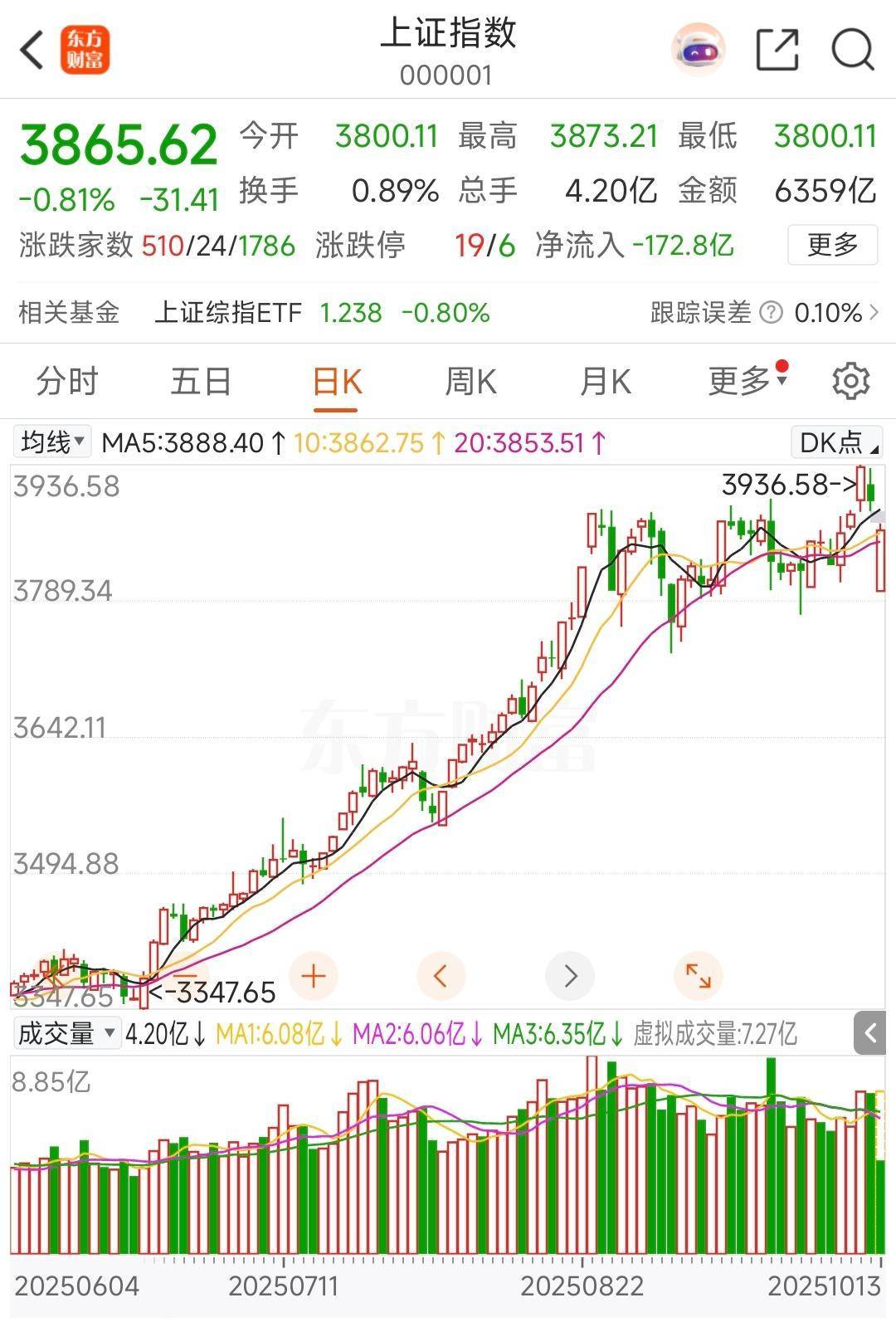
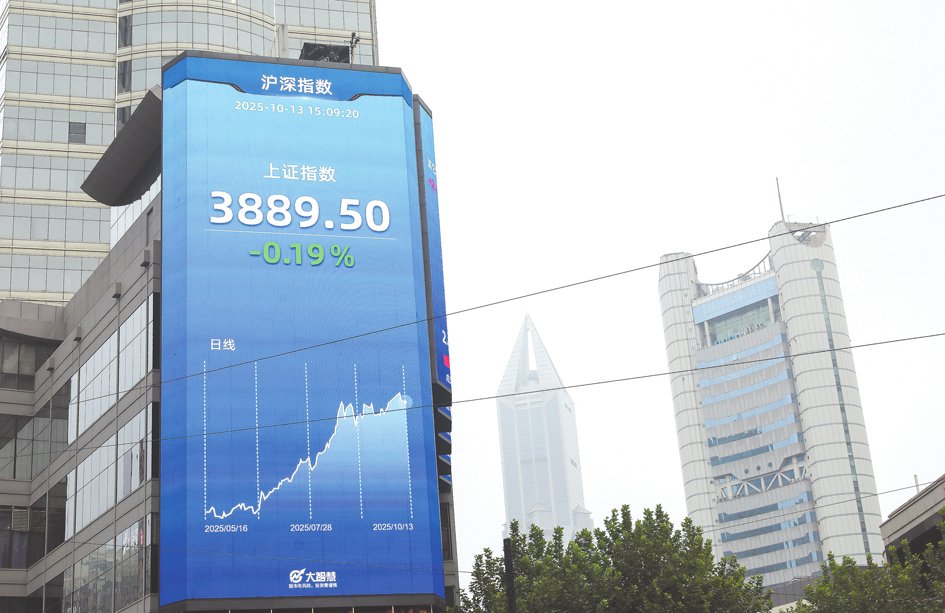
Market Overview - The A-share market experienced a significant adjustment following the recent tariff impacts, with major indices showing mixed performance. The Shanghai Composite Index closed at 3889.50 points, down 0.19%, while the Shenzhen Component Index and the ChiNext Index fell by 0.93% and 1.11% respectively [3][4] - The technology sector, which has been heavily leveraged, faced a notable decline, contributing to the overall market adjustment. The Nasdaq, S&P 500, and Nasdaq Golden Dragon Index in the US dropped by 3.56%, 2.71%, and 6.10% respectively [1][9] Sector Performance - The market showed a structural characteristic of "hotspot clustering + stable heavyweight," with a rebound after an initial drop indicating some market support, although trading volume remained insufficient [6] - Key sectors that attracted capital included semiconductor chips, software, and rare earths, particularly those related to domestic substitution and export control concepts [4][6] - The banking sector acted as a stabilizing force, with notable gains from banks like Shanghai Pudong Development Bank, which rose over 5% [4][5] Comparison with Previous Tariff Impacts - The current tariff disturbance differs from the one in April, with a significant reduction in the expected impact. The market's response is more measured, with a focus on long-term policy expectations and a more robust policy toolbox in place to stabilize the market [7][8][15] - Analysts suggest that the current market conditions are more favorable for a rebound in the technology sector, with expectations of new highs in Q4, despite short-term adjustments [15][16] Investment Strategy - The focus remains on sectors that can benefit from domestic demand and technological advancements, particularly in AI, semiconductor equipment, and related industries. The recommendation is to maintain a long-term view on technology while being cautious of short-term volatility [15][16]
美股三大指数集体高开,稀土概念股大涨
Feng Huang Wang Cai Jing· 2025-10-13 13:42
Market Overview - US stock indices opened higher with the Dow Jones up 0.79%, Nasdaq up 1.71%, and S&P 500 up 1.18% [1] - Rare earth stocks surged, with USA Rare Earth rising over 18% and Critical Metals increasing over 13% [1] - Broadcom shares increased by over 8% following a strategic partnership announcement with OpenAI [1] - Kingsoft Cloud saw a rise of over 6% [1] Company News - Microsoft will stop providing security updates and technical support for Windows 10 starting October 14, making many users' computers more vulnerable to cyberattacks [2] - Users are encouraged to upgrade to Windows 11, but older devices may not meet hardware requirements, leading to potential costs for extended security updates [2] - Tesla's Shanghai Gigafactory has begun ramping up production for Q4, with a record delivery of 497,000 vehicles globally in Q3 2025 [3] - MKS Inc., a supplier for TSMC, is reportedly considering selling its specialty chemicals division for $1 billion to focus on semiconductor supply [4] - Strategy acquired 220 bitcoins for approximately $27.2 million, achieving a 25.9% return year-to-date in 2025 [5] - XPeng's subsidiary has secured orders for 600 flying cars in the Middle East, marking the largest overseas order in this sector [6] - UBS forecasts that Nvidia's demand for CoWoS wafers will reach 678,000 units by 2026, a nearly 40% increase from this year [7]



三大股指期货齐涨,财报季开幕
Zhi Tong Cai Jing· 2025-10-13 13:09
Market Overview - US stock index futures are all up, with Dow futures rising by 0.77%, S&P 500 futures by 1.14%, and Nasdaq futures by 1.69% [1] - European indices show mixed results, with Germany's DAX up by 0.21%, UK's FTSE 100 down by 0.06%, France's CAC 40 up by 0.23%, and the Euro Stoxx 50 up by 0.54% [2][3] - WTI crude oil prices increased by 1.26% to $59.64 per barrel, while Brent crude rose by 1.13% to $63.44 per barrel [3][4] Earnings Season Insights - The upcoming earnings season is critical for the market, with major banks like JPMorgan, Goldman Sachs, Morgan Stanley, Bank of America, Citigroup, and Wells Fargo expected to report strong Q3 results due to a recovery in investment banking and resilient economic conditions [5] - The options market indicates that stock prices of S&P 500 companies are expected to fluctuate by an average of 4.7% post-earnings announcements, reflecting heightened volatility [6] Bull Market Analysis - The current bull market in the US stock market is celebrating its third anniversary, with the S&P 500 index having risen by 83% since October 12, 2022, adding approximately $28 trillion in market value [7] - Historical data suggests that for bull markets to sustain momentum, they need to broaden their gains beyond a few sectors [7] Strategic Moves in Defense Sector - The US Department of Defense plans to invest up to $1 billion in key minerals to enhance strategic reserves, marking one of the largest expansions of strategic material reserves in years [8] Trade and Investment Strategies - Amid rising US-China trade tensions, Wall Street strategists are recommending a shift towards undervalued and defensive Chinese value stocks as a new type of safe haven, alongside traditional assets like gold and US Treasuries [9] Oil Market Outlook - OPEC maintains its global oil demand growth forecast and anticipates a significant narrowing of supply gaps by 2026, with recent production increases reflecting compliance with approved output quotas [10] Company-Specific Developments - Oracle's upcoming AI World Conference is seen as a pivotal moment for the company to validate its substantial market cap increase of approximately $370 billion this year, driven by its cloud computing business [11][12] - Tritax Big Box REIT is acquiring a £1 billion ($1.3 billion) UK warehouse portfolio from Blackstone, with part of the payment made in shares, indicating strategic moves in the real estate sector [12] - Marathon Digital Holdings (MARA) has purchased 400 bitcoins for $46.29 million, indicating institutional interest in the cryptocurrency market following recent price declines [13] - Samsung Electronics is expected to report its highest quarterly profit in three years, driven by rising memory chip prices due to increased server demand [14]



政府部门公文附件使用WPS格式上热搜 国产软件迎来机遇
Zheng Quan Ri Bao Wang· 2025-10-13 13:05
Core Insights - The recent announcement by the Ministry of Commerce regarding the use of WPS format for official documents has sparked significant interest, indicating a shift towards domestic software solutions in government operations [1][3] - Kingsoft Office, the company behind WPS, saw its stock price rise by 8.32% to 321.7 yuan per share, reflecting market optimism about the implications of this policy change [1] - The move is viewed as a strong signal of China's commitment to technological self-reliance and information security, reinforcing the practical value of domestic software [3][5] Company Developments - Kingsoft Office reported that its WPS Office has surpassed 650 million monthly active devices globally, with over 100 million daily active devices in China, highlighting its extensive user base [2] - The company is focusing on product upgrades to enhance enterprise collaboration and maintain information security, aligning with its core strategy of AI, collaboration, and internationalization [2] - Kingsoft Office's market share in the document processing sector remains strong, as it actively participates in government procurement for domestic software [2] Industry Trends - The use of domestic software for government documents is seen as a confidence booster for the domestic software industry, indicating its readiness to support core office functions [3] - Other companies in the software sector, such as China Software and Technology Services Co., Ltd., are also advancing in the domestic software space, focusing on foundational software and core applications for government and enterprise [4] - The convergence of policy support and market demand is creating significant opportunities for domestic software, with expectations of growth in the domestic software market driven by digital transformation in various industries [5]
美股前瞻 | 三大股指期货齐涨,财报季开幕
智通财经网· 2025-10-13 12:35
Market Overview - US stock index futures are all up, with Dow futures rising by 0.77%, S&P 500 futures up by 1.14%, and Nasdaq futures increasing by 1.69% [1] - European indices show mixed results, with Germany's DAX up by 0.21%, UK's FTSE 100 down by 0.06%, France's CAC40 up by 0.23%, and the Euro Stoxx 50 up by 0.54% [2][3] - WTI crude oil prices increased by 1.26% to $59.64 per barrel, while Brent crude rose by 1.13% to $63.44 per barrel [3][4] Earnings Season Insights - The upcoming earnings season is critical for the US market, with major banks like JPMorgan, Goldman Sachs, Morgan Stanley, Bank of America, Citigroup, and Wells Fargo expected to report strong Q3 results due to a recovery in investment banking and resilient economic conditions [5] - The options market indicates that stock prices of S&P 500 companies are expected to fluctuate by an average of 4.7% post-earnings announcements, reflecting heightened volatility [6] Bull Market Analysis - The current bull market in the US stock market has reached its three-year anniversary, with the S&P 500 index rising by 83% since October 12, 2022, adding approximately $28 trillion in market value [7] - Historical data suggests that for bull markets to sustain momentum, they need to broaden their gains beyond a few sectors [7] Strategic Moves in Defense Sector - The US Department of Defense plans to invest up to $1 billion in key minerals to enhance strategic reserves, marking one of the largest expansions of strategic material reserves in years [8] Trade and Investment Strategies - Amid rising US-China trade tensions, Wall Street strategists suggest that investors should consider undervalued defensive value stocks in the Chinese market as a new safe haven, alongside traditional assets like gold and US Treasuries [9] Oil Market Outlook - OPEC maintains its global oil demand growth forecast and anticipates a significant narrowing of supply gaps by 2026, as OPEC+ accelerates production increases [10] Company-Specific Developments - Oracle's upcoming AI World Conference is seen as a pivotal moment for the company to validate its substantial market cap increase of approximately $370 billion this year, driven by its cloud computing business [11][12] - Tritax Big Box REIT is acquiring a £1 billion portfolio of UK warehouse assets from Blackstone, with part of the payment made in shares, indicating a strategic move in the real estate sector [12] - Marathon Digital Holdings (MARA) has made a significant investment of $46.29 million to acquire 400 bitcoins, reflecting confidence in the cryptocurrency market despite recent volatility [13] - Samsung Electronics is expected to report its highest quarterly profit in three years, driven by rising memory chip prices due to increased server demand [14]

主力资金 | 尾盘抢筹6股超亿元
Sou Hu Cai Jing· 2025-10-13 11:17
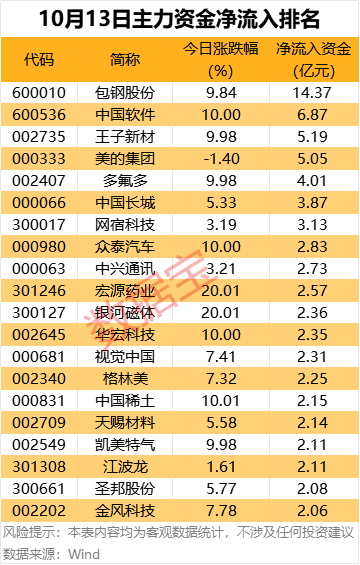
Core Viewpoint - The A-share market experienced significant fluctuations on October 13, with major indices opening lower but recovering throughout the day. The overall trend showed a net outflow of 39.864 billion yuan in main funds, while six industries saw net inflows, particularly in steel, environmental protection, and agriculture [1][2]. Group 1: Industry Performance - The A-share market saw a net outflow of 39.864 billion yuan in main funds, with six industries experiencing net inflows, including steel with 0.892 billion yuan, and environmental protection, agriculture, and light manufacturing each exceeding 0.2 billion yuan [1]. - The electronic and power equipment industries faced the largest net outflows, each exceeding 6 billion yuan, while the automotive and machinery sectors also saw outflows exceeding 3 billion yuan [1]. Group 2: Individual Stock Performance - Seven stocks received net inflows exceeding 0.3 billion yuan, with Baogang Co. leading at 1.437 billion yuan, followed by China Software with 0.687 billion yuan. Baogang Co. saw a significant increase due to active trading in the rare earth sector [2][3]. - A total of 44 stocks experienced net outflows exceeding 0.2 billion yuan, with BYD, Luxshare Precision, and Dongfang Wealth each seeing outflows exceeding 0.7 billion yuan [4][5]. Group 3: Tail-End Fund Flows - At the end of the trading day, the main funds saw a net inflow of 4.031 billion yuan, with the non-ferrous metal industry attracting over 1 billion yuan in buying [6]. - Individual stocks such as New Yi Sheng, ZTE, and North Rare Earth saw net inflows exceeding 0.1 billion yuan in the tail-end trading [7]. Group 4: Earnings Forecasts - Changchuan Technology announced an earnings forecast for the first three quarters, expecting a net profit of 0.827 to 0.877 billion yuan, representing a year-on-year growth of 131.39% to 145.38%, driven by strong demand in the semiconductor market [8].





三大股指大幅低开 黄金坑机会来了?
Sou Hu Cai Jing· 2025-10-13 11:05
Market Overview - The three major stock indices opened significantly lower, with the ChiNext Index dropping over 4% due to concerns over U.S.-China trade tensions and the U.S. government shutdown [1] - Last week, U.S. stocks experienced a sharp decline, particularly in technology stocks, raising fears among investors about a potential repeat of the April 7 market crash in A-shares [1] Historical Context - On April 7, A-shares faced extreme volatility, with the Shanghai Composite Index plunging 7.34% and the ChiNext Index falling 12.5%, primarily triggered by U.S. tariff policies escalating the global trade war [2] - Current market analysts believe that the impact of trade tensions on A-shares is less severe than in April, citing a decrease in the degree of expectation shock and the establishment of market stabilization policies [2] Market Sentiment and Predictions - Analysts from Galaxy Securities suggest that while short-term volatility may increase due to external uncertainties and profit-taking pressures, the core factors driving the current market trend remain unchanged, with liquidity expected to continue improving [2] - The current market dynamics indicate that the short-term drop is largely a result of heightened global risk aversion, but the long-term outlook for A-shares remains positive, especially with the "14th Five-Year Plan" in focus [2] Investment Opportunities - According to Guotai Junan Securities, the current external shocks present a good opportunity to increase investments in the Chinese market, as the boundaries of trade risks are clearer now compared to April [2] - Analysts from招商证券 believe that despite the inevitability of short-term adjustments, the market shows resilience, and there is a significant possibility for indices to reach new highs post-adjustment, suggesting that this could be an opportunity to optimize investment structures [3] - Recommended sectors for investment include military, semiconductor, software autonomy, new consumption, and non-ferrous metals, focusing on areas with relatively low positions and marginal improvements [3]