
低空经济

Search documents
科创板成长层投资机会全扫描
Zhong Guo Zheng Quan Bao· 2025-07-30 02:28
Core Viewpoint - The Sci-Tech Innovation Board's "Growth Layer" aims to support technology-driven companies that have significant breakthroughs, broad commercial prospects, and substantial R&D investments but are not yet profitable [2][3]. Group 1: Target Companies - The Growth Layer includes technology companies that are not yet profitable but have the potential to become future "tech giants" [3]. - Companies in the Growth Layer are characterized by high R&D investments and significant technological advancements [2]. Group 2: Upgrade Conditions - To exit the Growth Layer and upgrade to the Sci-Tech Innovation Board, companies must meet one of two conditions: either achieve profitability for two consecutive years with a cumulative net profit of 50 million or achieve profitability in the most recent year with a revenue of 100 million [4][5]. - The existing unprofitable companies will continue to follow the previous criteria for exiting the Growth Layer until the new policy is implemented [7]. Group 3: Policy Implications - The Growth Layer serves as a "testing ground" for new policies that can later be applied to other market segments, providing a controlled environment for reform [9][10]. - The establishment of a dedicated "observation zone" for unprofitable tech companies allows for better risk identification and investor protection [10]. Group 4: Investment Opportunities - Potential investment opportunities exist in emerging industries such as artificial intelligence, commercial aerospace, and low-altitude economy, but careful evaluation of company prospects is necessary [12]. - The introduction of experienced institutional investors in the Growth Layer can help identify high-quality tech companies, providing insights for potential investments [13]. - Companies nearing profitability or meeting revenue standards may present opportunities for investment as they are expected to exit the Growth Layer [14].


低空 +”赋能千行百业 中国低空经济“振翅高飞
Zhong Guo Chan Ye Jing Ji Xin Xi Wang· 2025-07-30 00:14
Core Insights - The low-altitude economy and commercial space have emerged as significant new industries driving new productive forces in China [1] - The integration of "low-altitude+" into various sectors has accelerated the development of the low-altitude economy across multiple applications, including urban governance, aerial transportation, emergency rescue, and low-altitude tourism [1] Group 1: Shenzhen's Initiatives - Shenzhen has launched a comprehensive drone testing center covering over 12,000 square meters, integrating drone technology testing, flight training, and event operations [2] - The city has introduced a "one network for unified low-altitude smart inspection service platform" that spans eight urban management areas, enhancing governance through smarter and more refined approaches [2] Group 2: Guangdong's Economic Scale - Guangdong has established a complete low-altitude economic chain, with the scale exceeding 100 billion yuan, and has attracted over 15,000 related enterprises [3] - The province has opened more than 700 drone flight routes, with nearly 800,000 drone logistics deliveries annually, and is developing a 30-minute aerial medical rescue network [3] Group 3: Hefei's Meteorological Support - Hefei, known as a "super experimental field" for low-altitude economy, has deployed mobile boundary layer meteorological observation stations to capture real-time weather data, enhancing flight safety and economic efficiency [4] Group 4: Xi'an's Industrial Ecosystem - Xi'an has established a drone industry chain with 106 upstream and downstream enterprises, facilitating high-frequency transportation of scientific samples and precision instruments via low-altitude logistics routes [5] Group 5: Market Potential - The low-altitude economy market in China is projected to reach 1.5 trillion yuan by 2025 and is expected to grow to 3.5 trillion yuan by 2035, driven by continuous policy improvements and technological innovations [6]
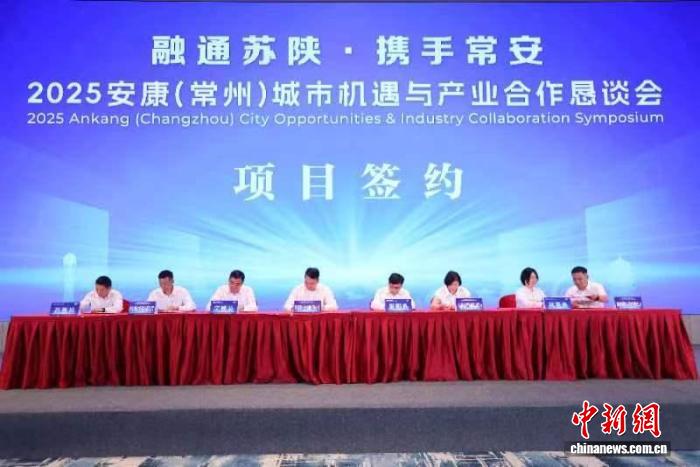
2025安康(常州)城市机遇与产业合作恳谈会举行
Zhong Guo Xin Wen Wang· 2025-07-29 17:44
Core Insights - The "2025 Ankang (Changzhou) Urban Opportunities and Industrial Cooperation Seminar" was held to promote collaboration between Ankang and Changzhou, focusing on their complementary industries and market expansion opportunities [1][3]. Group 1: Regional Advantages - Ankang is strategically located, connecting multiple economic circles and is set to benefit from the completion of the Xiyu High-speed Railway in 2026, enhancing its transportation network [1][3]. - The city has established nine key industrial chains, including selenium-rich products and ecological tourism, emphasizing an eco-friendly and green upgrade path [1][3]. Group 2: Investment Environment - The seminar featured presentations from Ankang's investment and economic cooperation bureau, showcasing the city's resource endowments, development advantages, and robust industrial foundation [3][7]. - A total of 107 enterprises participated in the seminar, including local and potential investors, indicating strong interest in the region's investment climate [7]. Group 3: Project Signings - Thirteen investment cooperation projects were signed, covering various sectors such as selenium-rich food, ecological tourism, traditional Chinese medicine, new materials, and manufacturing [5][7]. - Specific projects include a modern egg-laying chicken breeding project, a traditional Chinese medicinal herb base, and a POY raw silk processing project, highlighting the diversity of investment opportunities [5][7].
今年上半年城阳新登记外资企业49户,总量占全市20.85%
Qi Lu Wan Bao Wang· 2025-07-29 12:29
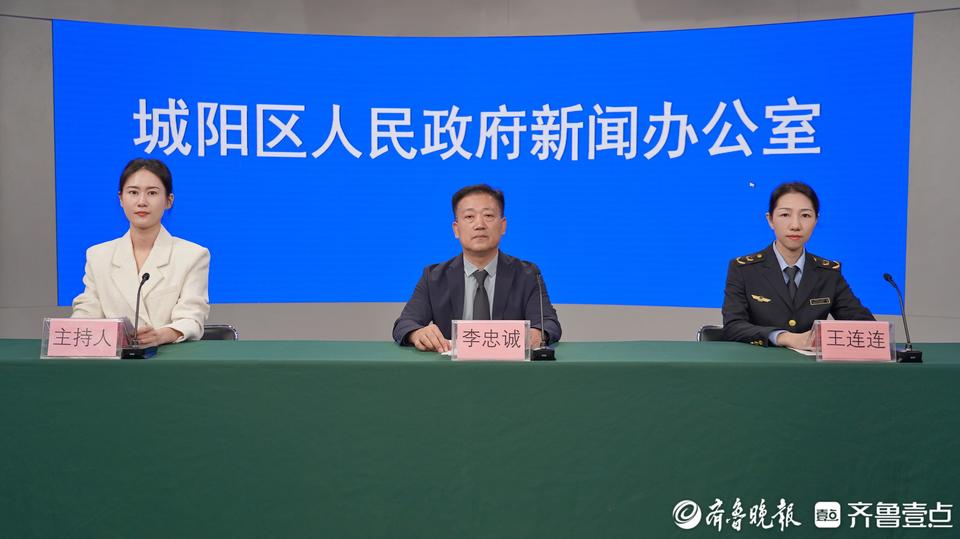
质量与标准助力产业升级,围绕全区"四轮驱动"产业布局,构建质量基础设施"一站式"服务网络,在轨道交通、低空经济等产业集聚区 设立质量服务站4个,惠及企业超2600家;全区质量管理体系认证证书达3148张,ISO9000认证企业数量居全省首位;主导制修订国家标 准、行业标准27项,推动中车四方等企业承担国家级标准化试点验收,为产业升级注入强劲动能。 营商环境持续优化激发市场活力,全国首创健康证"移动车+云端+送证"闭环服务,惠及外卖骑手400余人次;全市首发企业数据填报"一 件事"方案,整合6部门10项事项实现"一网通办",惠及市场主体超8万户;外资吸引力强劲,新登记外资企业49户,总量占全市20.85%, 两项指标均列全市第一。 齐鲁晚报.齐鲁壹点李自强通讯员徐婷 在青岛首发企业数据填报"一件事"方案,整合6部门10项事项实现"一网通办",惠及市场主体超8万户;外资吸引力强劲,新登记外资企 业49户,总量占全市20.85%……日前,青岛市城阳区召开市场监管领域工作情况新闻发布会,会议全面总结回顾了上半年市场监管领域 工作的成果与亮点,并对下半年重点任务作出规划部署。 上半年城阳区在质量提升、营商环境优化、安全 ...
高质量发展看中国|政策护航 产业协同 低空经济迎风“高飞”
Yang Guang Wang· 2025-07-29 12:15
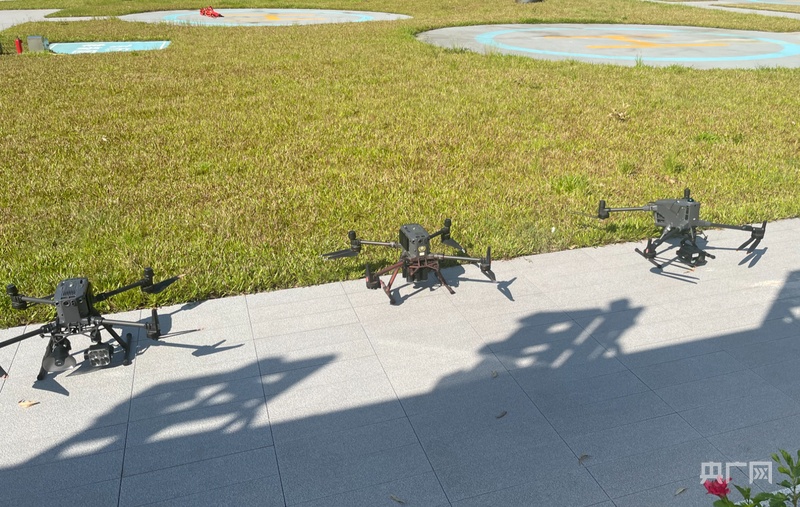
央广网广州7月29日消息(记者张顺鹏实习记者宫艳楠)近年来,低空经济作为新质生产力的典型代表,在国家政 策大力支持下蓬勃发展。2021年2月,中共中央、国务院印发的《国家综合立体交通网规划纲要》首次将"低空经 济"概念写入国家规划,标志其正式上升为国家战略。2023年12月,中央经济工作会议把低空经济列入战略性新兴 产业,2024年《政府工作报告》提出积极打造低空经济等新增长引擎。政策体系的不断完善,为低空经济发展筑 牢根基。 在国家政策"东风"的劲吹下,广东在低空经济技术创新、基础设施建设、多元化应用场景等方面全面发力,打造 全球领先的低空经济产业高地。2024年,广东印发《广东省推动低空经济高质量发展行动方案(2024—2026 年)》,明确立下到2026年产业规模超3000亿元的宏远目标,为全省低空经济发展锚定方向。 央广网记者梳理发现,在该《行动方案》中,广州这一低空经济产业发展的"优等生"被多次"点名",寄予厚望。 《行动方案》提出,要支持广州先行先试低空空域管理改革、适度超前布局低空基础设施、积极拓展应用场景, 创建国家低空经济产业综合示范区。 专注于智能载荷的无人机产品广泛应用于应急救援等场景( ...
广州上半年GDP增3.8%,消费增速跑赢京沪津渝
2 1 Shi Ji Jing Ji Bao Dao· 2025-07-29 11:00
上半年广州经济数据有何特点?南方财经记者梳理发现,上半年广州全市需求端率先回暖,促进效益回 升、预期回稳。从消费看,二季度社会消费品零售总额累计增速逐月提升;从外贸看,上半年进出口持 续两位数增长,远超全国平均水平。 南方财经记者谭海燕 广州报道 7月29日,广州公布上半年经济运行情况。 根据广东省地区生产总值统一核算结果,2025年上半年,广州市地区生产总值(GDP)突破1.5万亿 元,达15080.99亿元,按不变价格计算,同比增长3.8%。 上半年,全市美妆产业继续厚积薄发,规上化妆品制造业增加值、限上化妆品零售额在前两年较快增长 的基础上继续扩容,同比分别增长9.6%和3.7%;金银珠宝、文化办公用品、体育娱乐用品等时尚休闲 产品需求旺盛,实现零售额分别增长16.3%、50.7%、33%。 整体看,虽然上半年GDP增速仍不及全国(5.3%)与广东(4.2%),但已呈现房地产开发投资加快恢 复、汽车和医药制造业降幅收窄趋势,经济转型任务艰巨。 广州市统计局进一步解释称,上半年,随着一系列稳增长政策持续发力显效,全市流量经济激发消费潜 能,新兴产业加速聚势蓄能,经济稳中向好的积极因素加快累积。不过,结构性 ...
3.8%↑!广州经济半年报出炉
证券时报· 2025-07-29 10:21
Economic Overview - In the first half of 2025, Guangzhou's GDP reached 1,508.099 billion yuan, showing a year-on-year growth of 3.8% at constant prices [1] - The primary industry added value was 11.234 billion yuan, growing by 4.2%; the secondary industry added value was 370.587 billion yuan, growing by 2.1%; and the tertiary industry added value was 1,126.278 billion yuan, growing by 4.3% [1] Industrial Performance - Guangzhou's industrial output above designated size increased by 0.7% year-on-year in the first half of the year [3] - The automotive manufacturing sector faced challenges, with added value declining by 5.7%, although the decline narrowed by 0.7 percentage points compared to the first quarter due to product transformation and new model sales [3] - New energy vehicle production accelerated, with cumulative output increasing by 9.5%, up 8.8 percentage points from the first quarter [3] - The integrated circuit manufacturing sector saw a significant increase in added value by 30.0%, with production of LCD modules, analog chips, and industrial robots growing by 150%, 19.5%, and 19.0% respectively [3] - The aerospace and aviation equipment manufacturing sector's added value grew by 17.1%, with civil drone production surging by 37.7% [3] Investment Trends - Fixed asset investment in Guangzhou increased by 0.8% year-on-year, with infrastructure investment growing by 4.2% and real estate development investment recovering with a growth of 4.1% [3] - Investment in the automotive manufacturing sector increased by 19.3%, while investment in computer communication and other electronic equipment manufacturing grew steadily by 6.0% [3] Consumer Market Dynamics - The retail sales of consumer goods in Guangzhou reached 561.122 billion yuan in the first half of the year, reflecting a year-on-year growth of 5.9%, which is an increase of 2.4 percentage points from the first quarter [5] - Demand for goods in sectors such as new energy vehicles, communication equipment, home appliances, and furniture saw significant growth due to subsidy coverage [5] - Online shopping and booking trends increased, with online retail sales of physical goods growing by 16.4% and restaurant revenues through public networks increasing by 10.9% [5] Financial Sector Insights - As of the end of June, the balance of deposits and loans in Guangzhou's financial institutions reached 17.69 trillion yuan, a year-on-year increase of 4.8% [5] - The deposit balance was 9.23 trillion yuan, growing by 4.7%, with household deposits increasing by 10.5% [5] - The loan balance was 8.46 trillion yuan, up by 5.0%, with significant growth in household medium- and long-term loans and loans to enterprises [5]

海岛地区发展低空经济的实施策略
Zhong Guo Zi Ran Zi Yuan Bao· 2025-07-29 08:21
Core Viewpoint - The development of low-altitude economy in island regions is essential for overcoming geographical constraints and achieving high-quality marine economic development, as well as serving national strategies and cultivating new industrial advantages [1][2]. Infrastructure Development - It is necessary to improve low-altitude infrastructure by establishing a tiered take-off and landing network, utilizing general airports and floating water airports as core hubs, and creating differentiated facilities for manned and unmanned aircraft based on island size and needs [3]. - A comprehensive communication and navigation network should be constructed, integrating satellite, 5G, and Beidou systems, and establishing a low-altitude digital airspace map [3]. Industry Chain Formation - The focus should be on overcoming technical bottlenecks specific to island environments, such as developing low-altitude aircraft that can withstand salt mist and high humidity, and establishing technical standards for island-specific applications [4]. - The industry should promote technological innovation and develop upstream and downstream industries related to aviation parts manufacturing, drone assembly, and software development [4]. Safety Regulation - A comprehensive safety regulation system must be established, innovating airspace management models and simplifying approval processes for remote island routes and marine monitoring scenarios [5]. - An intelligent regulatory platform should be developed for real-time monitoring and risk warning, ensuring safety in low-altitude operations [5]. Talent Development - A targeted training program should be implemented in collaboration with vocational schools to cultivate local talent in fields such as airworthiness maintenance and airspace management [6]. - Mechanisms to attract and retain talent should be established, including incentives for returning local talents and creating platforms for youth entrepreneurship [7].
中国科技如何将童年幻想照进现实?
21世纪经济报道· 2025-07-29 08:00
Core Viewpoint - The article highlights the rapid advancements in technology in China, particularly in robotics, low-altitude economy, and autonomous driving, showcasing significant investment opportunities and industry developments by 2025 [1][6][8]. Robotics - Robotics has seen substantial improvements in motion control, transitioning from simple movements to complex actions and precise operations [2]. - The integration of large models into robotics has enhanced their intelligence, allowing for better task planning and execution [2]. - Various companies are demonstrating robots in practical applications, such as sorting packages and providing medical assistance, indicating a shift towards real-world utility [2][3]. - The investment focus is shifting towards humanoid robot components as they enter commercial applications, with upcoming IPOs expected to boost market enthusiasm [4]. Low-altitude Economy - The low-altitude economy, encompassing drones and eVTOLs, is gaining attention for its potential in logistics, transportation, and urban management [6][7]. - The eVTOL showcased at the event has a maximum range of 200 kilometers and a cruising speed of 260 kilometers per hour, although commercial operation may take time due to technical and regulatory challenges [6]. - Drones are already widely used across various sectors, with significant growth observed in the past two years, particularly in smart city management [7]. - Investment opportunities in the manufacturing sector of the low-altitude economy are considered substantial, covering drone production and key components [7]. Autonomous Driving - Autonomous driving is identified as a critical focus for the next decade, with the commercial rollout of Robotaxi services in Shanghai marking a significant milestone [8]. - Regulatory challenges and the current level of technology (mostly L2 automation) are seen as barriers to widespread adoption [9]. - The cost of retrofitting vehicles for autonomous capabilities is high, limiting rapid fleet expansion [9]. - Advances in domestic chip production are reducing costs and enhancing capabilities in the autonomous driving sector [10]. Large Models and AI - The development of large models is progressing, with a narrowing gap between domestic and international capabilities [12]. - Companies are diversifying their strategies, moving from general-purpose models to more specialized applications [12]. - The emergence of intelligent agents is highlighted as a transformative trend in AI, with practical applications already in use [13]. - Investment in AI hardware is crucial at the initial stages of model development, with expectations of explosive growth as applications mature [14].

直击WAIC现场:中国科技如何将童年幻想照进现实
2 1 Shi Ji Jing Ji Bao Dao· 2025-07-29 06:28
Group 1: Overview of Technological Advancements - The 2025 World Artificial Intelligence Conference (WAIC 2025) showcased over 3,000 cutting-edge technology products from more than 800 domestic and international companies, marking the largest scale in history [1] - China has rapidly transformed sci-fi concepts into reality, with advancements in autonomous driving, humanoid robots, and drones [1] Group 2: Robotics Developments - Robotics has seen significant improvements in motion control, enabling complex dynamic actions and precise operations [3] - The integration of large models into robotics has enhanced their intelligence, allowing for better task planning and execution [3][4] - Various companies demonstrated robots capable of performing intricate tasks in real-world applications, such as sorting and scanning packages [3] Group 3: Low-altitude Economy - The low-altitude economy, focusing on drones and eVTOLs, is gaining attention for its potential in logistics, transportation, and urban management [7][9] - The eVTOL aircraft "E20" was highlighted at the conference, featuring a maximum range of 200 kilometers and a cruising speed of 260 kilometers per hour [8] - Drones are already widely used across multiple sectors, reshaping operational models and value chains [9] Group 4: Autonomous Driving Progress - Shanghai has officially entered the commercial operation phase for Robotaxi services, marking a significant milestone in autonomous driving [10] - The main challenges for large-scale commercialization of Robotaxi include regulatory issues and high modification costs for vehicles [10][11] - The domestic automotive chip market is gradually being dominated by local manufacturers, enhancing cost efficiency and computational power [12] Group 5: Developments in Large Models - The gap between domestic and international large model capabilities is narrowing, with a trend towards specialization in vertical applications [13] - AI agents are emerging as a significant focus, showcasing capabilities in various practical applications [13][14] - Investment in AI hardware is crucial during the initial stages of model development, with expectations for explosive growth in applications as models mature [14]