储能

Search documents
新能源+AI展望(第3期):重视储能产业链
Tai Ping Yang Zheng Quan· 2026-03-19 00:24
Investment Rating - The report does not provide specific investment ratings for the industry or companies mentioned [2]. Core Insights - The overall industry strategy emphasizes the importance of the energy storage industry chain, suggesting increased investment in upstream materials like lithium carbonate and focusing on midstream materials such as separators and electrolytes [3][4]. - Leading companies in the solid-state battery industry, such as CATL and others, are expected to benefit from advancements in technology and production capabilities [3][4]. - The new energy sector is experiencing significant growth, with a notable increase in new energy storage installations in February 2026, reaching 10.06 GWh, a year-on-year increase of 242% [4][24]. Summary by Sections Industry Outlook Tracking - The report highlights the cancellation of import tariffs on offshore wind power components in the UK, which is expected to lower production costs and stimulate investment in clean energy [9][23]. - The report notes that BYD has made significant advancements in lithium iron phosphate battery technology, achieving rapid charging capabilities even in extreme temperatures [9][10]. - The EU is pushing for energy localization and has set ambitious renewable energy targets, which may pose challenges for Chinese companies entering the European market [9][10]. Company Outlook Tracking - CATL has announced a new patent for solid-state battery technology, aiming for small-scale production by 2027 and large-scale commercialization by 2030 [21][22]. - Tianqi Lithium is planning to build a new production facility for lithium battery materials, with an investment of up to 2.1 billion yuan [24]. - Trina Storage has secured over 6 GWh of contracts in Europe, indicating strong growth in the energy storage market [28].




新能源+AI展望(第3期20260308-20260314):重视储能产业
Tai Ping Yang Zheng Quan· 2026-03-18 14:26
Investment Rating - The report does not provide specific investment ratings for the industry or companies mentioned [2] Core Insights - The overall industry strategy emphasizes the importance of the energy storage industry chain, suggesting increased investment in upstream materials like lithium carbonate and focusing on midstream materials such as separators and electrolytes [3][4] - Leading companies in the solid-state battery industry, such as CATL and others, are expected to benefit from advancements in technology and production capabilities [3][4] - The new energy sector is experiencing significant growth, with a notable increase in installed capacity for energy storage, particularly in February 2026, where new installations reached 10.06 GWh, a year-on-year increase of 242% [4][24] Summary by Sections Industry Outlook Tracking - The report highlights the cancellation of import tariffs on offshore wind power components in the UK, which is expected to lower production costs and stimulate investment in clean energy [9][23] - The report notes that the EU is pushing for energy localization and has set ambitious renewable energy targets, which may pose challenges for Chinese companies entering the European market [9][10] - The domestic energy storage market is in a favorable position, with significant growth in new installations and a focus on lithium iron phosphate technology [4][24] Company Outlook Tracking - CATL has announced a new patent for solid-state battery technology, aiming for small-scale production by 2027 and large-scale commercialization by 2030 [21][22] - Tianqi Lithium is planning to build a new production facility for lithium battery materials, indicating a strategic move to enhance its market position [24] - Trina Storage has secured over 6 GWh of contracts in Europe, reflecting its strong market presence and the growing demand for energy storage solutions [20][21]

广西独立储能首次以“报量报价”方式进入电力现货市场
中关村储能产业技术联盟· 2026-03-18 12:08
Core Viewpoint - The successful trading of the Guangxi 220 kV Honghua Energy Storage Power Station in the southern regional electricity spot market marks the first independent energy storage participation in the market through "quantity-based pricing," indicating a shift to fully market-oriented operations [2][3]. Group 1: Market Participation and Innovations - The Honghua Energy Storage Power Station autonomously declared its charging and discharging capacity curves, operational limits, and storage status, optimizing its participation in the market based on supply-demand dynamics and safety constraints [2]. - The innovative "long-term segmented self-selected charging and discharging + spot independent quantity-based pricing" model allows energy storage enterprises to participate as independent entities, enhancing their ability to respond to market demands and mitigate price volatility risks [2][3]. - The maximum charging and discharging power of the Honghua Energy Storage Power Station is 150,000 kW, significantly contributing to grid peak load regulation over the past year [3]. Group 2: Industry Growth and Future Prospects - As of February 2026, Guangxi's energy storage installed capacity has exceeded 3.4 million kW, representing a year-on-year growth of 40.5% [4]. - The participation of independent energy storage stations in electricity spot trading signifies their proactive role in market dynamics, establishing them as new market entities with autonomous operations and strong market competitiveness [4].


谷歌/腾讯/亚马逊/长时储能理事会等核心代表出席!国际长时储能专题边会(闭门研讨会)报名启动
中关村储能产业技术联盟· 2026-03-18 08:32
Core Viewpoint - The article discusses the organization of an international closed-door seminar on long-duration energy storage during the 14th Energy Storage International Summit and Exhibition (ESIE 2026), aimed at promoting the industrial development of long-duration energy storage technologies and enhancing international cooperation [3]. Group 1: Event Details - The seminar will gather key representatives from the long-duration energy storage sector, with 24 high-level guests confirmed to attend [5]. - Notable participating organizations include LDES Council, Redox One, ESB, ExxonMobil, Infinity Energy Systems, Google, Tencent, Amazon, Energy Vault, Kraftblock, and Sumitomo Corporation [6][7][9][10][12][15]. - The event is scheduled for April 2, 2026, from 09:30 to 12:00 at the Beijing Capital International Exhibition Center [17]. Group 2: Agenda Highlights - The opening remarks will be delivered by Chen Haisheng, Chairman of the Zhongguancun Energy Storage Industry Technology Alliance [18]. - Keynote presentations will include topics such as global long-duration energy storage policy trends and industry outlook, and advancements in China's long-duration energy storage technology [18][19]. - A closed-door discussion will follow the keynote presentations, involving all attending guests [19]. Group 3: Participation and Registration - The seminar invites core technology companies, project developers, investment institutions, and relevant stakeholders in the long-duration energy storage field, limited to ESIE 2026 exhibitors [20]. - Registration must be completed by March 23, 2026, with an approval process for participants [21][23]. - Limited seating is available, encouraging prompt registration [24].
海博思创与光大金租达成合作 共拓独立储能、算电协同等创新赛道
海博思创· 2026-03-18 07:50
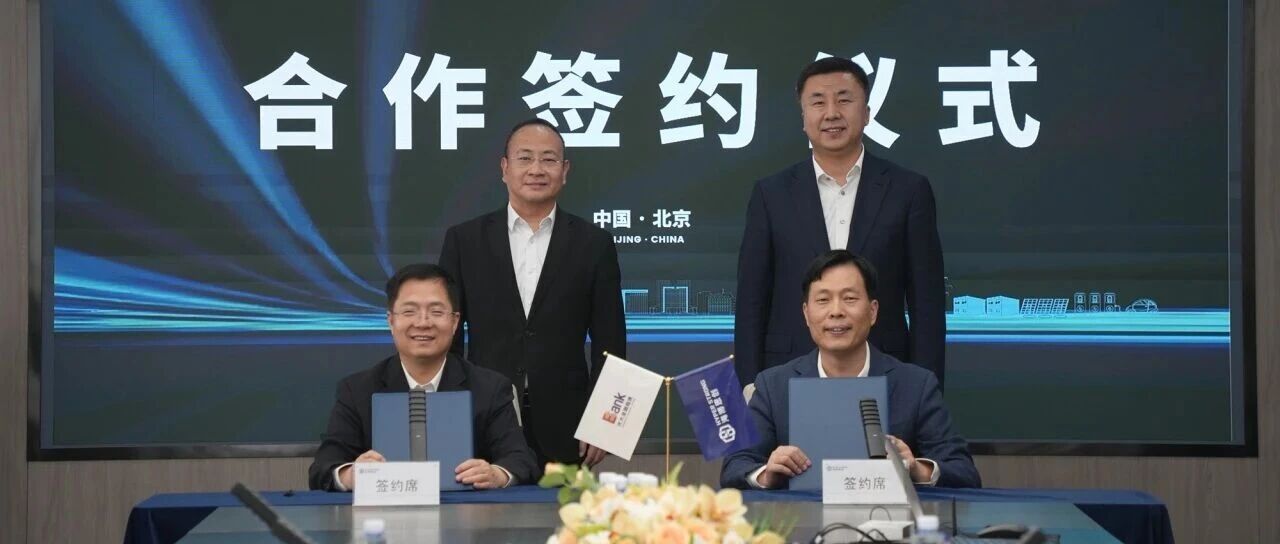
Core Viewpoint - The partnership between Haibo Sichuang Technology Co., Ltd. and Everbright Financial Leasing Co., Ltd. aims to enhance collaboration in the energy storage sector, focusing on innovative models such as independent energy storage, electricity collaboration, and solar-storage integration to support the construction of a new power system and promote green and low-carbon transformation [1][3]. Group 1: Partnership Details - The signing ceremony marks the beginning of a collaboration centered on the integration of production and finance, with both companies committed to exploring various applications in the energy storage industry [1][3]. - Haibo Sichuang's CEO highlighted the significance of the 14th Five-Year Plan, which emphasizes the development of new energy storage, indicating a strategic shift towards a trillion to multi-trillion scale industry [3]. - Everbright Financial Leasing's president noted that the energy storage industry is crucial for achieving carbon neutrality and is entering a critical phase of high-quality development [3]. Group 2: Future Collaboration - The partnership will leverage Haibo Sichuang's technological advantages in system integration, power station operation, and smart maintenance, combined with Everbright Financial Leasing's financial expertise to create benchmark independent energy storage projects [6]. - Both companies aim to deepen their cooperation in the energy storage sector, focusing on innovative practices in electricity collaboration and solar-storage integration to empower the green energy transition [6].
12.6GWh!阳光电源、隆基、华为等再获海外储能大单
中关村储能产业技术联盟· 2026-03-18 05:47
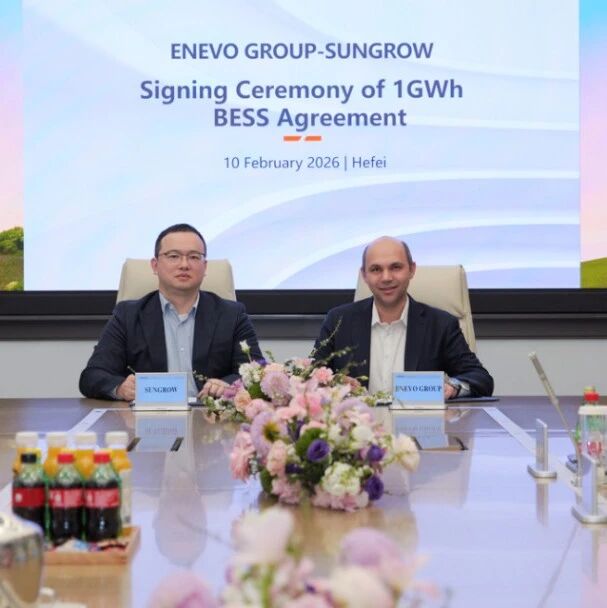
Core Insights - The article highlights significant developments in the energy storage sector, showcasing various companies securing large-scale contracts for energy storage systems across Europe and South America [3][4][6][7][8][10]. Group 1: Company Contracts and Projects - Sungrow Power Supply has signed a storage cooperation agreement with ENEVO Group in Romania for a total installed capacity of 1GWh, with the first phase involving a 440MWh project to be completed by December 2026 [3]. - LONGi Green Energy has reached strategic cooperation agreements in Europe, securing a total of 600MWh of storage systems and 100MW of anti-glare components [4]. - Canadian Solar's subsidiary, Canadian Solar Energy, has signed a supply agreement for a 500MW/2,493MWh storage project aimed at supporting data center electricity demands, with delivery expected to start in March 2027 [6]. - Huawei Digital Energy has partnered with Aggreko to provide a battery storage system for Brazil's largest microgrid project, with a total investment of approximately 1.1 billion RMB [7]. - Ruipu Lanjun has signed supply agreements for a total of 8.3GWh of storage systems with seven European partners, reinforcing its market position [8]. - Nandu Power has secured a 117MWh storage project in Australia, utilizing its self-developed liquid-cooled storage system [10]. Group 2: Industry Events - The 14th International Energy Storage Summit and Exhibition (ESIE 2026) will take place from March 31 to April 3, 2026, in Beijing, featuring participation from leading companies in the energy storage sector [12].




储能可同时参与调频和现货市场,长时储能享容量补偿倾斜!山东电力市场规则征求意见
中关村储能产业技术联盟· 2026-03-18 05:47
Core Viewpoint - The article emphasizes the new regulations for energy storage participation in the electricity market in Shandong, highlighting the flexibility for storage systems to engage in both energy and ancillary service markets, and the preferential treatment for long-duration storage systems [4][27]. Group 1: Energy Storage Positioning - Energy storage can act as an independent entity participating in both the energy market and the ancillary service market [4]. - The policy encourages long-duration storage through the daily available capacity assessment (K value) and a market-based capacity compensation mechanism, which tests the reliability and dispatch response of power stations [4]. Group 2: Participation Flexibility - Energy storage systems can choose to switch participation modes daily (energy market, ancillary services, or both) [5]. Group 3: Market Access and Participants - Traditional participants include power generation companies, electricity sales companies, and electricity users, while new participants include energy storage companies, virtual power plants, distributed energy sources, electric vehicle charging facilities, and smart microgrids [6]. - Independent energy storage must have a charge and discharge power of ≥5 MW and a continuous charge and discharge time of ≥2 hours, while distributed energy storage must have a charge and discharge power of ≥1 MW and a continuous charge and discharge time of ≥2 hours [6]. Group 4: Market Participation Mechanism - Participants can engage through volume bidding and voluntarily participate in the day-ahead market clearing [7]. - Options include simultaneous participation in energy and ancillary services or daily participation in only one of them [8]. Group 5: Capacity Compensation Mechanism - The capacity compensation fee is sourced from users and is determined by the provincial development and reform commission [18]. - The distribution principle allocates compensation based on the monthly marketable available capacity ratio of generation-side entities [18]. Group 6: Key Technical Parameters and Capacity Recognition - The daily available capacity assessment (K value mechanism) affects the available capacity recognition if the "operational + standby" hours are less than 24 hours [15]. - Long-duration storage benefits from a higher weight in capacity recognition based on discharge duration, with a 4-hour storage system having double the daily available capacity of a 2-hour system [17]. Group 7: Ancillary Service Market - The main participants include direct-adjustment public thermal power and new operating entities (including independent storage, pumped storage, and virtual power plants) [11]. - The participation principle for storage in ancillary services is voluntary [12]. Group 8: Conclusion - The draft clarifies that energy storage entities have the flexibility to choose daily participation in either the energy or ancillary service market, allowing simultaneous participation in frequency regulation and spot markets [27]. - The combination of "daily available capacity (K value) + capacity compensation distribution" increases the requirements for operational reliability and dispatch response of energy storage stations, with a policy tilt towards long-duration storage reflected in the capacity assessment [27].

超2.6GWh!储能订单主力指向AIDC
行家说储能· 2026-03-18 04:11
Core Viewpoint - The article highlights the increasing demand for energy storage solutions in the AIDC (Artificial Intelligence Data Center) sector, emphasizing recent orders secured by companies like Canadian Solar and Nandu Power, which indicate a growing market opportunity in this field [2][3][5][6][7]. Group 1: Company Developments - Canadian Solar's subsidiary, e-STORAGE, signed a supply agreement for a 2.5GWh energy storage system for a data center project in the U.S., with delivery expected to start in March 2027 [3][5]. - Nandu Power announced a 117MWh energy storage project in Australia, utilizing its self-developed Center L Plus liquid-cooled storage system, which has been successfully applied in various large-scale projects globally [7][9]. - Nandu Power's total disclosed energy storage orders since 2026 amount to approximately 1.85GWh, including projects in Greece and Gansu [7][9]. Group 2: Market Trends and Predictions - The AIDC energy storage market is projected to experience explosive growth, with an expected addition of 20-30GWh in 2026, representing a year-on-year increase of 40%-50% [6]. - The global market for energy storage in the AIDC sector is anticipated to exceed 300GWh from 2026 to 2030, indicating significant growth potential [6]. - The competitive landscape in the U.S. AIDC energy storage market is currently dominated by 3-4 major players, with only a few leading Chinese companies making slow progress in order fulfillment due to performance and certification barriers [6]. Group 3: Industry Collaboration and Events - To enhance collaboration within the AIDC energy storage ecosystem, two forums are scheduled: one on April 10 focusing on the synergy between energy storage and third-generation semiconductors, and another on June 2 addressing multi-scenario applications [10]. - These forums aim to create a comprehensive closed-loop system for resource allocation, application needs, and commercialization within the AIDC supply chain [10].
7.18亿元!天宏锂电拟在陕西延安投建独立储能项目
鑫椤储能· 2026-03-18 03:46
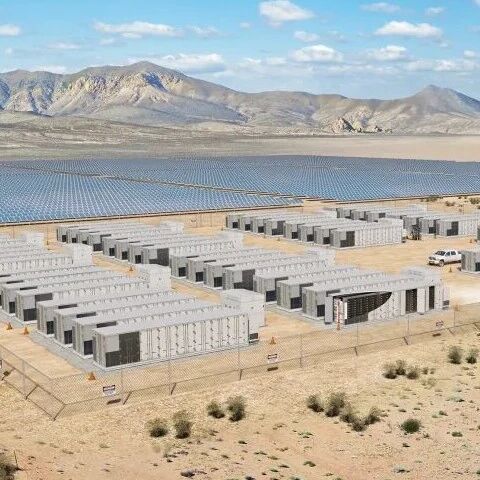
Core Viewpoint - Zhejiang Tianhong Lithium Battery Co., Ltd. announced the investment in a 200MW/600MWh independent energy storage project in Huangling County, Shaanxi Province [1][4]. Group 1: Project Overview - The subsidiary Yijian Tianhong plans to invest approximately 71.8 million yuan in the Huangling County project, with a preliminary total investment estimated at around 60 million yuan [4]. - The project will be located in the Huangling High-tech Industrial Development Zone, covering an area of about 50.67 acres [4]. - The project will utilize lithium iron phosphate batteries and is scheduled to commence construction in April 2026, with full capacity expected to be operational by the end of September 2026 [4]. Group 2: Revenue Sources - Revenue for the project will be generated from various sources, including spot arbitrage income, peak shaving service income, capacity leasing income, and capacity compensation income [5].
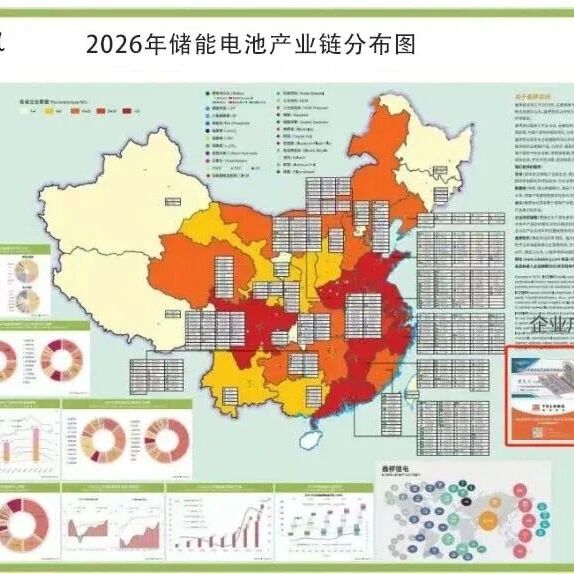
招商!鑫椤资讯2026中国储能产业分布图
鑫椤锂电· 2026-03-18 01:22
Group 1 - The article emphasizes the importance of a distribution map for energy storage companies, serving as a targeted advertisement to decision-makers in the industry [1] - The map will be distributed to over 30,000 key personnel in the energy storage supply chain, acting as an invitation to enter core circles [1][3] - It highlights the significance of precise communication to stakeholders, including procurement decision-makers, upstream and downstream enterprises, government departments, and investment institutions [3] Group 2 - The regional layout heat map marks leading enterprises and industrial clusters in key provinces and cities across the country [4] - The industry chain panorama covers core enterprises from lithium mining to battery cells, PCS, system integration, EPC, and applications [4] - The policy heat index provides clear insights into subsidy levels, storage requirements, and electricity pricing policies across provinces [5] Group 3 - The article outlines various sponsorship opportunities, including naming sponsorship, brand sponsorship, and business card displays on the distribution map [8] - Specific details on the sponsorship options are provided, indicating the visibility and promotional benefits for participating companies [8]