
现代服务业

Search documents
宏观点评:广义财政盼增量-20250922
CAITONG SECURITIES· 2025-09-22 10:15
Revenue and Expenditure Overview - From January to August 2025, general public budget revenue totaled CNY 14.82 trillion, a year-on-year increase of 0.3%[2] - General public budget expenditure for the same period reached CNY 17.93 trillion, with a year-on-year growth of 3.1%[2] - In August 2025, general public budget revenue was CNY 1.24 trillion, up 2.0% year-on-year, while expenditure was CNY 1.86 trillion, reflecting a 0.8% increase[4] Tax Revenue Insights - Tax revenue continues to outperform non-tax revenue, with August tax revenue growing by 3.4% year-on-year, marking five consecutive months of positive growth[5] - Manufacturing accounted for over 30% of total tax revenue, with a growth rate exceeding 5% in the first eight months of 2025[5] - Securities transaction stamp duty surged by 226% in August, driven by increased market activity, contributing significantly to tax revenue growth[8] Fiscal Pressure and Challenges - The fiscal data for August indicates mounting pressure, with weakened consumption impacting tax revenue and a declining real estate sector exacerbating fiscal income challenges[23] - Government fund revenue fell by 5.7% year-on-year in August, primarily due to a 5.8% drop in land transfer income[18] - Infrastructure spending remains weak, with related expenditures showing a significant decline of 13.2% when combined[13] Future Outlook and Policy Implications - The necessity for incremental policy measures is rising due to anticipated economic pressures and the nearing end of government bond issuance in the fourth quarter[23] - The potential for early utilization of next year's debt quota and the timing of policy financial tools will be critical in supporting economic stability[23]
8月多项主要指标回落幅度收窄,我国经济“稳”的态势未变
Xin Hua Cai Jing· 2025-09-16 00:07
Economic Overview - The national economic performance in August shows a stable and improving trend, with key indicators reflecting a steady state [1][2] - The overall economic operation in August is characterized by stability, with a solid foundation for continued growth in the third quarter [1][8] Production and Demand Indicators - In August, the industrial added value for large-scale industries grew by 5.2% year-on-year, a decrease of 0.5 percentage points from the previous month, but the decline was smaller than the previous month's 1.1 percentage points [2] - The service production index decreased by 0.2 percentage points to 5.6%, showing strong resilience [2] - Retail sales of consumer goods increased by 3.4% year-on-year, with a smaller decline of 0.3 percentage points compared to the previous month [2] - Fixed asset investment grew by 0.5% year-on-year from January to August, with a slowdown of 1.1 percentage points compared to the previous period [2] Employment and Price Stability - The urban unemployment rate in August was 5.3%, slightly up from the previous month but consistent with the same period last year, indicating stable employment [3] - The Consumer Price Index (CPI) fell by 0.4% year-on-year, primarily due to a drop in food prices, while the core CPI rose by 0.9%, marking a continuous increase over four months [3] New and Old Growth Drivers - The transition from old to new growth drivers is progressing steadily, with significant growth in high-tech manufacturing and modern services [4] - In August, the added value of equipment manufacturing and high-tech manufacturing increased by 8.1% and 9.3% year-on-year, respectively [4] - The online retail sales from January to August grew by 9.6%, outpacing the overall retail sales growth [5] Policy and Future Outlook - The government is expected to implement new measures to stabilize the macroeconomic environment and support employment in the fourth quarter [8] - Recent policies aim to enhance urban development and improve resource allocation efficiency, which may further stimulate economic growth [7][8]
【新华解读】8月多项主要指标回落幅度收窄 我国经济“稳”的态势未变
Xin Hua Cai Jing· 2025-09-15 14:53
Economic Overview - The national economic performance in August shows a stable and improving trend, with key indicators reflecting a steady state [2][5][11] - The overall economic operation remains stable, with a solid foundation for continued growth in the third quarter [2][11] Production Sector - In August, the industrial added value for large-scale industries grew by 5.2% year-on-year, a decrease of 0.5 percentage points from the previous month, but the decline was smaller than the 1.1 percentage points drop in July [2][5] - The service production index decreased by 0.2 percentage points to 5.6%, showing strong resilience [2][5] Demand Side - The total retail sales of consumer goods in August saw a year-on-year growth of 3.4%, down 0.3 percentage points from the previous month, but the decline was less than the 1.1 percentage points drop in July [4][5] - Fixed asset investment from January to August increased by 0.5% year-on-year, with a slowdown of 1.1 percentage points compared to January to July, but the decline was less than the previous month's 1.2 percentage points [4][5] Employment and Prices - The urban unemployment rate in August was 5.3%, slightly up from the previous month but unchanged from the same period last year, indicating stable employment [5] - The Consumer Price Index (CPI) in August fell by 0.4% year-on-year, primarily due to a drop in food prices, while the core CPI, excluding food and energy, rose by 0.9%, marking an expansion in growth for four consecutive months [5] New and Old Growth Drivers - The transition from old to new growth drivers is progressing steadily, with significant growth in high-tech manufacturing and modern services [6][7] - In August, the added value of equipment manufacturing and high-tech manufacturing increased by 8.1% and 9.3% year-on-year, respectively, outpacing the overall industrial growth [7] Policy Impact - Policies aimed at expanding domestic demand, such as large-scale equipment updates and consumer replacement programs, are showing positive effects [8] - Investment in equipment and tools increased by 14.4% year-on-year in the first eight months, contributing to a 2.1 percentage point rise in fixed asset investment [8] Future Outlook - The economic indicators suggest that the third quarter is likely to maintain a stable and improving development trend, supported by ongoing macroeconomic policies [9][11] - New incremental measures may be introduced in the fourth quarter to stabilize the macroeconomic environment and employment market [10]

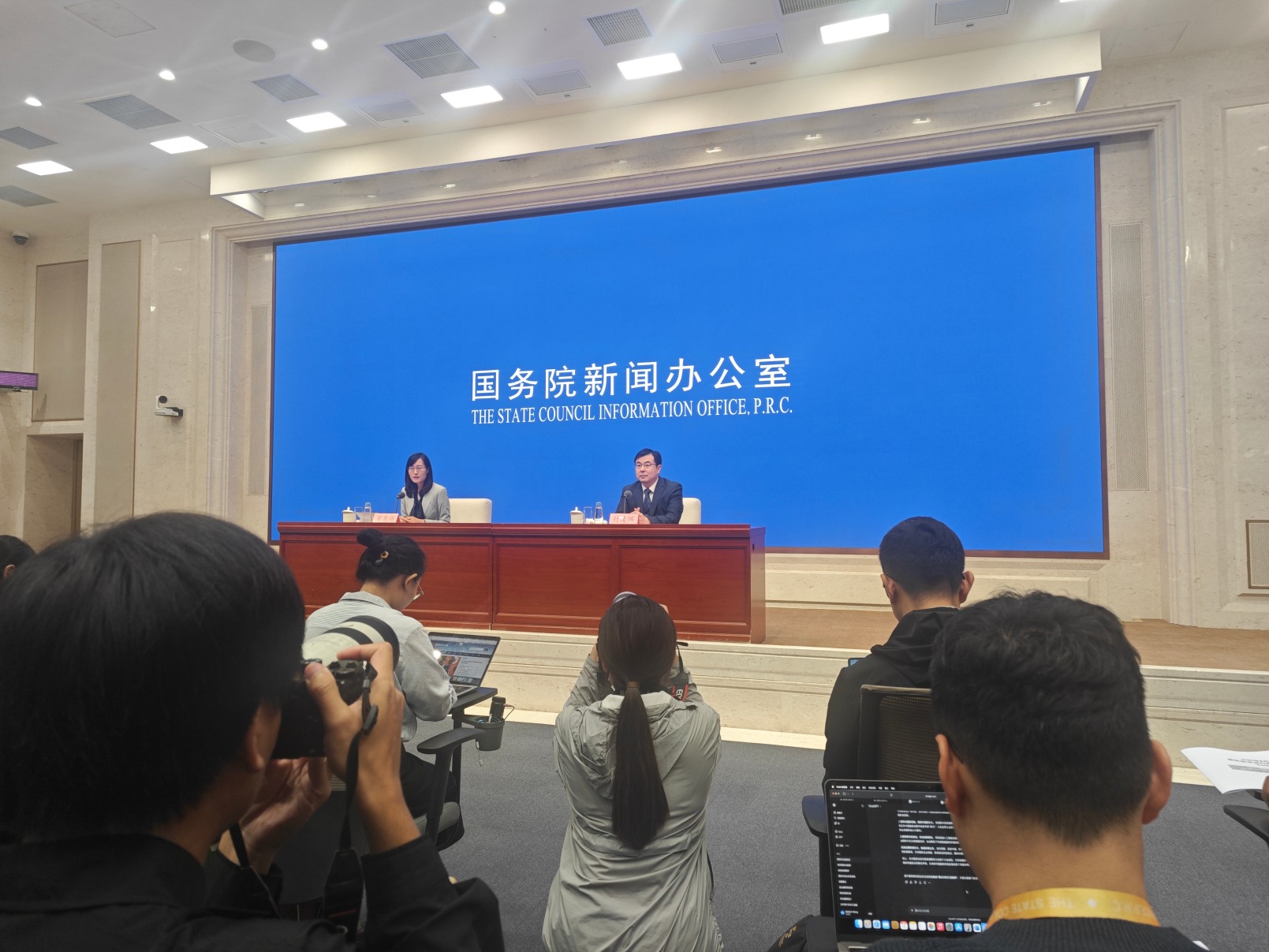
8月份国民经济运行稳中有进
Chang Jiang Shang Bao· 2025-09-15 09:13
Economic Overview - In August, the national economy maintained overall stability with steady progress, supported by stable production demand, employment, and prices [1][3][4] - Industrial production showed rapid growth, with the industrial added value for large-scale enterprises increasing by 5.2% year-on-year and 0.37% month-on-month in August [1] - The manufacturing purchasing managers' index (PMI) was at 49.4%, a slight increase of 0.1 percentage points from the previous month, indicating a stable manufacturing sector [1] Service Sector - The service sector experienced robust growth, with the service production index rising by 5.6% year-on-year in August [1] - Online retail sales reached 99.828 billion yuan, reflecting a year-on-year growth of 9.6% [1] Investment Trends - Fixed asset investment (excluding rural households) totaled 326.111 billion yuan from January to August, showing a year-on-year increase of 0.5% [2] - Manufacturing investment grew rapidly, while private investment saw a decline of 2.3% year-on-year [2] Trade Performance - In August, the total value of goods imports and exports was 38,744 billion yuan, marking a year-on-year increase of 3.5% [2] - Exports amounted to 23,035 billion yuan, up by 4.8%, while imports were 15,709 billion yuan, increasing by 1.7% [2] Employment and Prices - The urban survey unemployment rate averaged 5.2% from January to August, with a slight increase to 5.3% in August [3] - The Consumer Price Index (CPI) decreased by 0.4% year-on-year in August, while the Producer Price Index (PPI) saw a year-on-year decline of 2.9%, with a narrowing of the decline compared to the previous month [3] Policy and Future Outlook - The government is implementing proactive macro policies to stabilize employment, businesses, and market expectations, aiming for steady economic growth [4] - The overall economic operation is stable, with a focus on high-quality development and addressing external uncertainties [4]
以绿色低碳转型引领土地生产率提升
Zhong Guo Huan Jing Bao· 2025-09-15 02:09
Core Viewpoint - The green low-carbon transition of land is essential for enhancing land productivity and achieving high-quality development in the context of global climate change and China's dual carbon goals [1][2]. Strategic Significance of Green Low-Carbon Transition - The green low-carbon transition is a necessary response to global climate challenges and is crucial for ensuring land resource security and driving industries towards high-quality development [2]. - Traditional land use models contribute to high carbon emissions and ecological degradation, necessitating a shift to low-carbon and zero-carbon models through practices like ecological agriculture and organic fertilizers [2]. - Optimizing land resource allocation and improving resource utilization efficiency are key measures to address the pressures on land resources from population and economic factors [2]. Core Driving Force for Industrial Upgrading - The green low-carbon transition of land is closely linked to industrial upgrading, promoting a shift from traditional extensive land use to intensive and intelligent use [3]. - The application of green building technologies and low-carbon parks enhances resource efficiency and attracts high-end elements, injecting new momentum into economic high-quality development [3]. Key Issues Hindering Productivity Improvement - Outdated and extensive land use methods are major obstacles to improving land productivity, leading to ecological degradation and resource wastage [4]. - High-carbon models result in severe ecological damage, while low land utilization efficiency in urban and rural areas exacerbates resource waste [4][5]. Implementation Pathways for Enhancing Land Productivity - Optimizing land use structure and promoting industrial low-carbonization are essential steps, including reducing high-carbon crop planting and expanding ecological agriculture [6]. - Strengthening technological innovation and enhancing resource utilization efficiency through smart agriculture and low-carbon building technologies are critical [7]. - Encouraging market mechanisms and social capital participation in green low-carbon projects can activate land factor value and support land productivity enhancement [7][8]. - Establishing a robust policy framework and enhancing public awareness are necessary to foster a collaborative effort towards the green low-carbon transition [8].
广西出台20条措施支持下半年经济稳增长
Guang Xi Ri Bao· 2025-09-13 01:50
Group 1 - The article discusses a comprehensive package of measures approved by the Guangxi government to support economic growth in the second half of the year, focusing on investment, consumption, foreign trade, employment, and new productivity development [1][2][3] - The government aims to enhance effective investment by focusing on county-level特色产业, major project construction, and the effective use of government bond funds [1] - To stimulate consumption, Guangxi plans to allocate fiscal funds for various activities such as trade-in programs, large-scale equipment upgrades, vehicle purchase subsidies, and the issuance of consumption vouchers [1] Group 2 - The measures include support for foreign trade by enhancing border trade export capabilities and fostering new foreign trade formats like cross-border e-commerce [2] - Employment stability is a priority, with increased fiscal support for employment services, vocational training, and initiatives aimed at key groups such as college graduates and migrant workers [2] - The government is also focusing on developing new productivity engines in areas like artificial intelligence, smart agriculture, and modern service industries, with dedicated fiscal resources for these initiatives [3]
海南组团亮相服贸会集中展示自贸港建设成果
Hai Nan Ri Bao· 2025-09-11 01:24
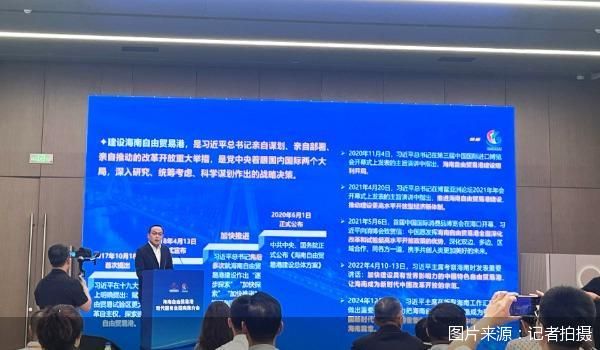
Group 1 - The 2025 China International Service Trade Fair has commenced in Beijing, showcasing Hainan's free trade port policies, latest projects, and development achievements to promote international economic and trade cooperation [1][2] - The Hainan pavilion features a central display that highlights the achievements of the Hainan free trade port and its closure policies, attracting significant interest from visitors, many of whom are considering investment or relocation to Hainan [1][2] - The slogan for this year's Hainan pavilion is "New Blue Ocean for Free Trade, Setting Sail at the Right Time," emphasizing the rapid growth of Hainan's service trade, which reached a total import and export value of 56.74 billion yuan in 2024 [2] Group 2 - A promotional event for Hainan's free trade port policies and modern service industry was held in Beijing, attracting over 50 key business associations and enterprise leaders, providing insights into investment opportunities [3] - Officials from various Hainan provincial departments detailed the free trade port policies and investment opportunities, while leaders from key economic zones showcased the potential and advantages of modern service industries [2][3] - The event has encouraged participants to accelerate their exploration and investment plans in Hainan, recognizing the significant opportunities presented by the development of the free trade port [3]
武汉GDP每年跃升一个千亿台阶
Chang Jiang Ri Bao· 2025-09-11 00:13
Economic Growth and Transformation - Wuhan's economy has achieved a significant transformation, with GDP surpassing 2 trillion yuan, and an annual increase of 100 billion yuan over the past five years [1] - The city's GDP growth rate for the first half of 2025 is projected at 5.5%, ranking 5th among 15 sub-provincial cities in terms of both scale and growth [1] - The average annual growth rate of social retail sales increased from 3.0% during the 13th Five-Year Plan to 8.8% during the 14th Five-Year Plan [1] Innovation and Industrial Development - Wuhan is shifting its development model from factor-driven to innovation-driven, with the number of high-tech enterprises expected to reach 16,500 by 2024, doubling in three years [1] - The city's industrial output value exceeded 1.67 trillion yuan during the first four years of the 14th Five-Year Plan, with an average annual growth rate of 7.1% [2] - Industrial investment surpassed 200 billion yuan, accounting for nearly 25% of the city's total investment [2] Service Sector and New Economy - The service sector's value added accounted for 92% of GDP last year, with a focus on high-end, digital, and green services [3] - The Hanyang District has developed a multi-level venture capital system, with the pharmaceutical supply chain platform achieving over 27 billion yuan in transactions within a year [3] - The East Lake High-tech Zone has established a strategic emerging industry system, with 5,850 high-tech enterprises and 172 national-level specialized "little giant" companies [3]
176个国家和地区投资、外向度跃升至35%,海南自由贸易港建设提速
Bei Jing Shang Bao· 2025-09-10 13:37
Core Insights - The Hainan Free Trade Port is showcasing its achievements and future prospects in service trade, digital trade, industrial innovation, and policy openness at the 2025 China International Service Trade Fair [2] Group 1: Policy and Economic Impact - The Hainan Free Trade Port was officially established with the release of the overall construction plan in 2020 and the enactment of the Hainan Free Trade Port Law in 2021, which has led to increased foreign trade [2] - As of now, 176 countries and regions have invested in Hainan, with the province's economic openness increasing from 17.3% in 2018 to 35% in 2024, and both goods and service trade growing at an annual rate exceeding 20% [2] - The actual foreign investment in Hainan has seen an annual growth rate of 36% [2] Group 2: Tax Incentives and Infrastructure Development - From January 1, 2020, to December 31, 2027, enterprises registered and operating in encouraged industries within the Hainan Free Trade Port will benefit from a reduced corporate income tax rate of 15%, subject to specific conditions [3] - Hainan has established international communication infrastructure, including the commercial operation of the Hainan-Hong Kong international submarine cable, and is accelerating the construction of additional cables to Southeast Asia [3] Group 3: Regional Development and Support Services - The Haikou Jiangdong New District has developed 107,000 square meters of rental housing, over five international schools, and a 15-minute basic medical service circle, along with dedicated services for enterprises [4] - Currently, 43 Fortune 500 companies have established a presence in Haikou Jiangdong New District [4] Group 4: Future Developments and Opportunities - The full island closure of the Hainan Free Trade Port is set to officially start on December 18, which marks a new beginning for the port's construction [5] - Post-closure, Hainan will implement various policies to enhance its openness, including tax policies for imported goods and customs supervision measures [5] - Hainan aims to become a new high ground for China's open economy by 2035, facilitating trade, investment, cross-border capital flow, personnel movement, transportation, and data security [4][5]
湖北多措并举推动鄂澳两地融合发展 2024年全省赴澳门旅客同比上升11%
Chang Jiang Shang Bao· 2025-09-07 23:10
Group 1 - The core event "Hubei·Wuhan Macao Week" will take place from September 5 to 8, 2024, showcasing Macao's latest tourism resources and cooperation opportunities [1][2] - Hubei's outbound tourists to Macao are projected to increase by 11% year-on-year in 2024, with 567,000 visitors expected [3][4] - The event aims to deepen cooperation between Hubei and Macao across various sectors, enhancing economic prosperity and regional development [1][2] Group 2 - Since 2020, "Macao Week" has been held in 10 cities, attracting nearly 6 million participants and generating 7.86 billion exposures [2] - The event in Wuhan marks the first time "Macao Week" is held in a central city, emphasizing the importance of Hubei as a key market for Macao's tourism [2][3] - Hubei has established direct flights and high-speed rail connections to Macao, facilitating increased travel and exchanges [3][4] Group 3 - The collaboration between Hubei and Macao is supported by various cultural and economic initiatives, including the "Mazu Cultural Tourism Festival" and cross-border financing promotion [3][5] - Hubei's rich traditional Chinese medicine resources and Macao's advantages in the health industry present opportunities for joint development in the health sector [5][6] - Hubei aims to leverage Macao's international exhibition and service industry to enhance its own cultural tourism profile [6]