
通信运营

Search documents
自然风里的绿色密码—中国移动新风系统引领机房低碳转型
Jiang Nan Shi Bao· 2025-12-08 09:04
Core Insights - The demand for cooling in communication rooms has surged in the 5G era, leading to significant energy consumption challenges, with air conditioning accounting for 40%-70% of total electricity costs in these facilities [1] - Traditional air conditioning systems are prone to failures due to high local temperatures and humidity, resulting in high maintenance costs and increased carbon emissions, which contradicts carbon neutrality goals [1] Group 1 - China Mobile's Taizhou branch has introduced an energy-saving, maintenance-free fresh air system that combines natural cooling and automated dust removal to address these challenges [1] - The new system utilizes intelligent controllers to monitor temperature and humidity, switching to fresh air mode when outdoor conditions are favorable, thus reducing reliance on air conditioning [1] - The implementation of this system has led to a significant reduction in energy costs, with a single station achieving over 35% energy savings on air conditioning and an annual savings of nearly 10,000 yuan per machine room [1] Group 2 - The new system requires maintenance only once a year, which is 80% less than traditional systems, and has reduced air conditioning failure rates by 20%, significantly lowering operational costs [1] - Dust concentration in the machine room has decreased by 60%, which helps prolong equipment lifespan and enhances network stability [1] - Moving forward, the Taizhou branch plans to expand the deployment of the fresh air system, integrating AI to optimize temperature control strategies and further explore the potential of natural cooling [2]

国家队开挖数据金矿
3 6 Ke· 2025-12-08 00:37
Core Insights - The National Petroleum and Natural Gas Pipeline Group (referred to as "National Pipeline") is focusing on utilizing over 10 billion core data points accumulated over five years of operation to enhance efficiency and safety in data usage and potential trading [1][2] - The initiative is part of a broader effort to integrate data resource development with state-owned enterprise reform, aiming to transform governance and operational models [2][3] - The pilot program launched by the National Data Bureau and the State-owned Assets Supervision and Administration Commission (SASAC) includes 12 central enterprises, emphasizing collaboration with private companies and research institutions to explore the transition of data from resources to assets and capital [1][2] Data Utilization and Transformation - The pilot program aims to significantly improve data utilization levels by 2027, targeting to support over 100,000 small and medium-sized enterprises [3] - Central enterprises like China Southern Power Grid and China Mobile are already initiating projects to create trusted data spaces and large data platforms, respectively, to enhance data sharing and operational efficiency [4][5] - The data resources of state-owned enterprises vary, including real-time pressure and flow data from pipelines, agricultural machinery operation data, and electric grid load data [5][6] Challenges in Data Ownership and Valuation - A significant challenge in the data utilization process is the ambiguity surrounding data ownership, which complicates its classification as an asset [7][8] - The lack of clear ownership leads to difficulties in pricing and circulation of data, hindering market valuation and potential monetization [8][10] - The pilot program aims to address these challenges through real-world case studies to inform legislative and standard-setting efforts [8][10] Asset Integration and Financial Implications - The integration of data as an asset is being explored, with some enterprises already registering data assets valued over 1.2 million yuan at the Beijing International Big Data Exchange [11] - The process involves establishing clear ownership, quality control, and valuation models to recognize data as intangible assets [11] - Companies are seeking to leverage data for operational improvements, such as predictive models for pipeline safety and efficiency [11][12] Emerging Industry Dynamics - The pilot program is expected to stimulate a new industry chain driven by data elements, with increased interest from market players in data asset registration and trading [12][13] - Technology companies specializing in data security and privacy are seeing heightened demand for their services as enterprises seek compliant data circulation frameworks [12][13] - The evolving landscape is prompting a shift in regulatory focus from traditional asset management to capital and data management, presenting new challenges for oversight [13][14]
国家队开挖数据金矿
经济观察报· 2025-12-07 04:31
Core Viewpoint - The new round of state-owned enterprise reform is enhanced by the integration of data as a key resource, aiming to break down industry barriers through data circulation and drive deep changes in corporate governance and business models [1][3][19]. Group 1: Data Utilization and Collaboration - The National Pipeline Corporation is focusing on utilizing over 10 billion core data points accumulated over five years to enhance operational efficiency and safety [2]. - A pilot program initiated by the National Data Bureau and the State-owned Assets Supervision and Administration Commission aims to explore the transition of data from resources to assets and capital, involving 12 central enterprises [3][5]. - The pilot program emphasizes collaboration between state-owned enterprises and private companies to create a "cooperative ecosystem" for data utilization [3][5]. Group 2: Challenges in Data Ownership and Valuation - The primary challenges in the data element process include difficulties in ownership confirmation, pricing, and circulation, which are critical for the marketization of data [3][11]. - The ambiguity surrounding data ownership complicates its classification as an asset, as seen in the case of pipeline pressure data and user consumption data [10][11]. - The lack of clear ownership leads to difficulties in fair market valuation and internal conflicts regarding data sharing within enterprises [11][12]. Group 3: Technological Solutions and Innovations - Companies are adopting technologies like blockchain and privacy computing to create "trusted data spaces" that allow for secure data circulation without transferring ownership [14]. - The establishment of data-sharing ecosystems, such as China Mobile's "Renew Community," aims to facilitate collaborative development and revenue sharing among partners [14]. - The first successful registration of data assets at the Beijing International Big Data Exchange highlights the potential for data to be recognized as intangible assets, opening avenues for financing [14][15]. Group 4: Emerging Industry Chains and Market Dynamics - The pilot program is expected to stimulate a new industry chain driven by data elements, with increased interest from market players in data asset registration and trading [17]. - Small and medium-sized enterprises are benefiting directly from data-driven credit support initiatives, showcasing the practical impact of data resource development [17]. - The evolving landscape of data utilization is prompting a shift in regulatory focus from traditional asset management to capital and data management [18].


30家A股分拆上市,机构早已布局完毕!
Sou Hu Cai Jing· 2025-12-07 00:13
Group 1 - The core viewpoint of the article highlights the trend of companies in the A-share market pursuing spin-off listings, with 30 companies currently in line for this process, indicating a significant shift towards independent financing for subsidiaries [2][5] - Spin-offs allow parent companies to focus on their core business while providing subsidiaries with independent financing channels, which has attracted institutional investors who are quick to capitalize on policy changes [2][5] - The article emphasizes the information asymmetry in the market, where institutional investors have the advantage of early access to signals and trends, leaving retail investors at a disadvantage [2][3] Group 2 - The biggest risk in a bull market is not a downturn but missing out on opportunities, as many investors become overly cautious after experiencing bear markets [3][5] - Market consensus plays a crucial role in bull markets, where the value of assets is often driven by the collective agreement among institutional investors [5][6] - Understanding institutional behavior is essential for retail investors, as true market intentions are often hidden behind superficial trading patterns [6][8] Group 3 - The article provides examples of specific stocks, such as Cambrian and Tibet Tianlu, to illustrate how institutional activity can signal potential price movements and the importance of monitoring these trends [8][10] - Quantitative data can help retail investors visualize capital flows, providing insights that traditional technical analysis may miss [11][13] - The relationship between spin-off announcements and institutional accumulation of shares is highlighted, suggesting that retail investors can benefit from observing these patterns [13][14] Group 4 - Recommendations for retail investors include focusing on who is buying rather than what to buy, establishing a personal observation system, and maintaining patience and emotional control in investment decisions [14]




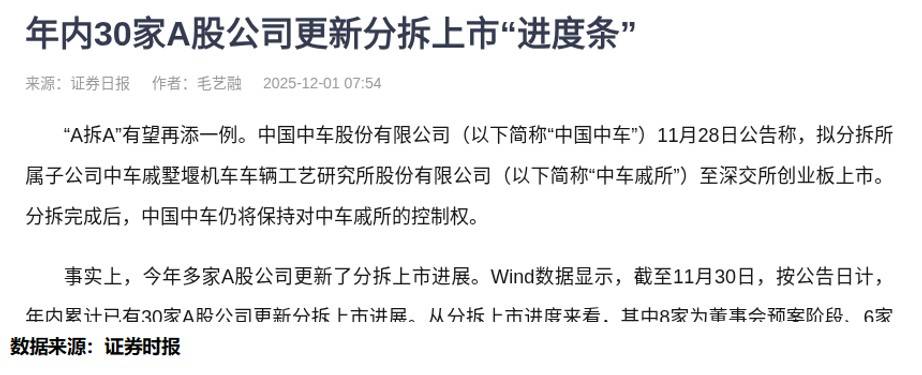
冷湖火星营地已基本实现联通无线网络连续覆盖
Zhong Guo Qing Nian Bao· 2025-12-06 11:08
Core Insights - China Unicom's subsidiary in Haixi Prefecture has invested 7.29 million yuan in the Cold Lake Mars Camp area, laying 129 kilometers of optical cable and establishing 12 4G base stations and 1 5G base station, achieving continuous wireless network coverage in the region [1][3] Group 1: Investment and Infrastructure Development - The investment of 7.29 million yuan has been directed towards enhancing communication infrastructure in a remote area known for its unique Martian-like landscape [1] - A total of 129 kilometers of optical cable has been laid, which supports the connectivity of the newly established base stations [1] - The construction of 12 4G base stations and 1 5G base station has been completed, significantly improving wireless network coverage [1][3] Group 2: Tourism and Scientific Research - The Cold Lake area is being developed as a "science fiction tourism" destination, leveraging its unique geological features to attract visitors [1] - The region has also seen the establishment of an astronomical observation base, with investments totaling 3 billion yuan since 2018, making it the largest optical astronomy observation base in Asia [1] - The ongoing development of scientific research facilities includes the construction of new 4G base stations to support the Tsinghua University Deep Space Technology Center and the Purple Mountain Observatory [3] Group 3: Future Network Requirements - As more astronomical observation stations are built, there will be an increasing demand for high-speed networks, massive data storage, and high-performance computing [3] - China Unicom plans to enhance wireless network coverage and improve network quality to meet future challenges related to data storage and computing power [3]


数据资产之战开启 国家队开挖数据金矿了
Jing Ji Guan Cha Wang· 2025-12-06 06:32
Core Insights - The National Petroleum and Natural Gas Pipeline Group (referred to as "National Pipeline") is focusing on utilizing over 10 billion core data points accumulated over five years of operation to enhance efficiency and safety in data usage and potential trading [2][3] - The initiative is part of a broader effort to integrate data resource development within state-owned enterprises, aiming to transform data into a marketable asset and address challenges related to data ownership, pricing, and circulation [3][12] Group 1: Data Utilization and Collaboration - National Pipeline is engaged in discussions to facilitate the use of its extensive data network, which includes production, transportation, and transaction information, to break market barriers and activate the industrial chain [2][3] - The State Data Bureau and the State-owned Assets Supervision and Administration Commission have initiated a pilot program involving 12 central enterprises, including National Pipeline, to explore collaborative data utilization with private enterprises and research institutions [2][4] Group 2: Challenges in Data Ownership and Valuation - A significant challenge identified is the ambiguity surrounding data ownership, which complicates the ability to classify data as an asset, particularly in relation to national energy security and user privacy [10][12] - The lack of clear ownership leads to difficulties in pricing and circulation of data, as companies struggle to establish fair market valuations without defined rights [12][13] Group 3: Technological Innovations and Solutions - Companies are adopting technologies such as blockchain and privacy computing to create "trusted data spaces" that allow for secure data circulation without transferring ownership [15] - The establishment of collaborative platforms, like China Mobile's "Huanxin Community," aims to create a closed-loop ecosystem for data sharing, joint research, and scenario co-creation [6][15] Group 4: Emerging Market Opportunities - The pilot program is expected to stimulate a new industry chain driven by data elements, with increased interest from enterprises in data asset registration and trading processes [17][18] - Small and medium-sized enterprises are benefiting directly from data-driven initiatives, such as credit support facilitated by large energy companies using consumer data [17][18] Group 5: Regulatory and Strategic Implications - The integration of data as a measurable and tradable asset poses new regulatory challenges, necessitating a shift in oversight from traditional asset management to include data capital management [18][20] - The evolving landscape of state-owned enterprise reform is being influenced by the potential of data to penetrate industry barriers and enhance operational efficiency [19][20]

沪市公司今年前11月已实际派发现金分红1.81万亿元
Zhong Guo Xin Wen Wang· 2025-12-05 11:40
Group 1 - The total amount of cash dividends distributed by listed companies in Shanghai reached 1.81 trillion yuan from January to November 2025, representing a 2% year-on-year increase [1] - A total of 193 companies in the Shanghai market distributed more than 1 billion yuan in dividends, with 28 companies exceeding 10 billion yuan in actual cash payouts, including major players like Industrial and Commercial Bank of China, China Mobile, and China Construction Bank, each distributing over 100 billion yuan [1] - The number of companies on the Sci-Tech Innovation Board that increased their cash dividend payouts reached 164, indicating a growing trend in shareholder returns [1] Group 2 - As of the end of November 2025, the overall dividend yield for Shanghai-listed companies was 2.25%, with 28 companies yielding over 2.5%, and 11 companies exceeding 4% [2] - Over the past three years, 342 companies in the Shanghai market maintained a cash dividend payout ratio of over 40%, with 199 companies achieving a payout ratio exceeding 50% consistently [2]




前11个月沪市上市公司已实际派发现金分红1.81万亿元
Xin Hua Cai Jing· 2025-12-05 10:42
新华财经上海12月5日电(记者杜康)记者从上交所获悉,今年1-11月,沪市上市公司已合计实施分红 派发总额1.81万亿元,同比增加2%。其中,193家沪市公司2025年分红落地金额超过10亿元,28家公司 年内实际派现金额超过百亿元,工商银行、中国移动、建设银行的实际派现金额更是超千亿元。 资本市场的高质量发展需要更好满足投资者多元化财富管理诉求,而与投资者获得感最直接相关的,就 是真金白银的现金分红。从沪市公司最新披露的数据,可以感知到市场的积极变化。 综合来看,沪市已经形成了一大批稳定高分红群体,以近三年数据看,沪市342家公司连续三年分红比 例(现金分红占公司归母净利润的比例)在40%以上,其中长江电力、福耀玻璃、宇通客车等199家公 司的分红比例连续三年超过50%。 (文章来源:新华财经) 此外,记者了解到,沪市2025年中期分红同比增加11%。具体而言,截至12月5日,沪市公司已有510家 上市公司公布中期(一季报、半年报、三季报)分红方案,共宣告中期分红计划总额6441亿元,较2024 年同期数5828亿元增加11%。 其中,中国石油、贵州茅台、伊利股份等65家公司中期分红金额超10亿元。510家 ...
通信行业双周报(2025、11、21-2025、12、4):前10个月我国电信业务收入累计完成14670亿元-20251205
Dongguan Securities· 2025-12-05 08:37
Investment Rating - The report indicates a positive investment outlook for the communication industry, suggesting an "overweight" rating, expecting the industry index to outperform the market index by more than 10% in the next six months [42]. Core Insights - The communication industry has shown stable performance in the first ten months of the year, with telecom business volume and revenue continuing to grow. New infrastructure construction is progressing steadily, and user scales for 5G, gigabit, and IoT are expanding. The report anticipates that the industry will experience a period of technological iteration and policy dividends, with new growth drivers emerging from AI, quantum communication, and low-altitude economy [3][37]. - The report highlights the significant increase in mobile internet access traffic and the recovery of cellular IoT module inventories, suggesting ongoing demand for communication facilities such as base stations, optical cables, and data centers [3][37]. Summary by Sections 1. Communication Industry Market Review - The communication sector has seen a cumulative increase of 6.31% over the past two weeks, outperforming the CSI 300 index by 6.72 percentage points, ranking first among 31 primary industries. Year-to-date, the sector has risen by 68.87%, surpassing the CSI 300 index by 53.32 percentage points [10][12]. 2. Industry News - TikTok plans to invest $38 billion in building a data center in Brazil, marking its first project in Latin America [16]. - In the first ten months, China's telecom business revenue reached 1.467 trillion yuan, a year-on-year increase of 0.9% [17][18]. - The global shipment of foldable smartphones reached a record high, with a 14% year-on-year increase in Q3 2025 [19]. 3. Company Announcements - China Mobile announced the approval of a state-owned share transfer, involving the transfer of 41.98 million A-shares to China National Petroleum Corporation [23]. - Meixin Technology reported the redemption of idle raised funds, yielding an investment return of 180,830 yuan [22]. 4. Industry Data Updates - As of October 2025, the number of mobile phone users in China reached approximately 1.83 billion, a year-on-year increase of 2.47% [25]. - The total number of 5G base stations reached 4.758 million, with a net increase of 507,000 from the previous year [34]. 5. Weekly Perspective on the Communication Sector - The report suggests focusing on companies that align with the themes of "technology commercialization, policy catalysis, and performance certainty," recommending stocks such as China Mobile, China Telecom, and FiberHome [37][39].
山东移动聊城东阿分公司:打通电梯通信“堵点”实现信号满格
Qi Lu Wan Bao· 2025-12-05 04:17
Core Insights - Shandong Mobile Dong'a Branch has effectively addressed the issue of weak signal and call interruptions in elevator networks, enhancing user experience and receiving positive feedback from residents [1][2] Group 1: Problem Identification and Response - Residents reported poor mobile signal in elevators, leading to call disruptions and inconvenience during daily commutes [1] - The company promptly responded to customer feedback by conducting on-site inspections and professional assessments to identify the root cause of the signal issues [1] Group 2: Technical Solutions Implemented - To improve signal coverage, the company added a 6db coupler to the existing equipment and extended a 10-meter feeder line to the top of the elevator cabin [1] - External directional antennas were strategically installed within the elevator to ensure comprehensive and uniform signal coverage [1] Group 3: Results and Future Plans - Post-implementation tests showed that mobile network signal strength in the elevator reached full bars, with clear calls and stable 4G/5G network speeds, meeting customer communication needs [1] - The initiative reflects the company's commitment to customer service and will serve as a valuable experience for future network optimization efforts [2]