
电动汽车

Search documents
外资巨头,集体发声!
中国基金报· 2025-08-08 02:34
【导读】多家外资巨头唱多中国:"此乃参与中国市场绝佳时机" 中国基金报记者 格林 近日,瑞银资产管理中国股票主管施斌撰文表示,此乃参与中国市场的绝佳时机。近期,美国万亿资管巨头资本集团、管理规模为8457亿 美元的美国巨头Federated Hermes也发表文章表达了对中国科技的乐观看法。 瑞银资产管理施斌: "此乃参与中国市场绝佳时机" 瑞银资产管理中国股票主管施斌在一篇题为"关注中国股票市场的复兴(Watching for a renaissance in China equities)"的文章中表 示,复杂的经济前景、审慎的投资者心态和政府的支持,三者结合为股市创造了有利条件。施斌写道,"在我们看来,当前的时机非常有 利,此乃参与中国市场的绝佳时机"。 施斌说,全球机构投资者对中国市场的信心有所回升。其中,专注于新兴市场的投资者信心回升尤其明显。尽管如此,国际资本流入相对 缓慢。截至目前,国际投资者对重新进入中国市场仍心存犹豫。他认为背后的原因包括,刺激消费的广泛结构性改革需求仍未得到满足, 房地产市场尚待企稳。尽管面临挑战,但这不应成为阻止投资者考虑中国市场的原因。 施斌认为,零售投资者尚未大规模回 ...


马斯克叫停芯片自研项目
财联社· 2025-08-08 00:34
Core Viewpoint - Tesla is disbanding its Dojo supercomputer team, which disrupts its plans for developing autonomous driving chips and indicates a strategic shift towards relying on external technology partners like Nvidia, AMD, and Samsung [2][3]. Group 1: Project Closure and Strategic Shift - Tesla CEO Elon Musk has ordered the closure of the Dojo project, with team leader Peter Bannon leaving the company [3]. - The decision marks a significant turning point for Tesla, which had invested billions into the Dojo project, seen as a core component for enhancing its AI capabilities [3]. - The Dojo system was designed to train Tesla's autonomous driving software and support the development of its humanoid robot, Optimus [3]. Group 2: Financial Implications and Market Position - Morgan Stanley previously estimated that the Dojo project could potentially add up to $500 billion to Tesla's valuation, highlighting its importance as a competitive advantage [3]. - Tesla recently signed a $16.5 billion agreement with Samsung, indicating a shift towards external partnerships for technology and chip manufacturing [3]. Group 3: Talent Movement and Industry Impact - Approximately 20 employees from the Dojo team have left to join a new startup, DensityAI, which is focused on developing AI data center technologies [4][5]. - DensityAI is in talks for several hundred million dollars in funding and aims to create hardware and software for various applications, including robotics and automotive [5]. - The departure of key personnel from Tesla, including the head of the Optimus project and other senior executives, reflects ongoing challenges in retaining talent amid increasing competition and sales declines [7].

突发,特斯拉解散Dojo团队
是说芯语· 2025-08-08 00:02
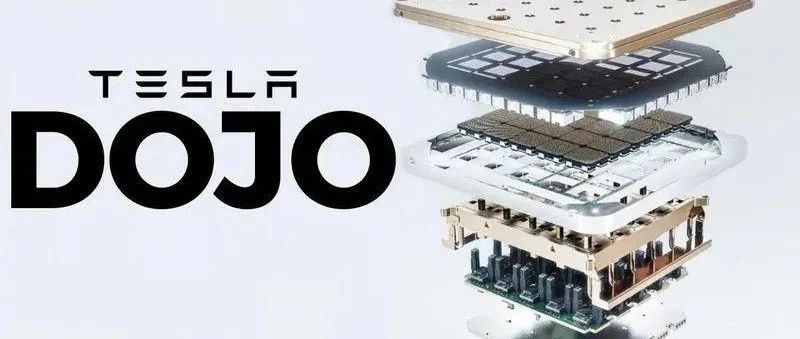
Core Viewpoint - Tesla is disbanding its Dojo supercomputer team, which will disrupt its internal efforts to develop autonomous driving technology chips [1][4][5] Group 1: Changes in Dojo Project - Peter Bannon, the head of the Dojo project, is leaving, and CEO Elon Musk has ordered the project to be halted [1] - Approximately 20 employees from the Dojo team have recently left for a new company called DensityAI, while remaining staff will be reassigned to other Tesla data centers and computing projects [1][2] Group 2: Shift to External Partnerships - Tesla plans to increase reliance on external technology partners, including Nvidia, AMD, and Samsung Electronics for chip manufacturing [2] - DensityAI, founded by former Dojo leaders, is developing chips and hardware for AI data centers applicable in various fields [2] Group 3: Impact on Tesla's Stock and Talent - Following the news, Tesla's stock price fell slightly in after-hours trading [3] - The company is experiencing a talent drain amid increasing competition, declining sales, and consumer dissatisfaction with Musk's political activities [3] Group 4: Strategic Shift in Technology Development - Tesla has signed a $16.5 billion agreement with Samsung to secure AI semiconductor supply until 2033, diversifying its procurement channels beyond TSMC [3] - Musk hinted at a strategic transformation, suggesting future internal technology iterations may integrate with partner technologies [3][4] Group 5: Historical Context of Dojo - Dojo was initially introduced in 2019 as a supercomputer designed to train Tesla's Full Self-Driving (FSD) neural networks [6][8] - The project has undergone various phases and discussions, with Musk previously acknowledging that Tesla might not always pursue Dojo and could rely more on external partners [4][5]
“我对中国经济发展前景充满信心” ——访埃及埃中商会秘书长赫尔米
Ren Min Ri Bao· 2025-08-07 22:38
赫尔米表示,中国各部门陆续出台一系列政策举措,助推民营经济高质量发展。他认为,民营企业在推 动科技进步、发展新质生产力、推动中国式现代化等方面发挥了重要作用,民营企业发展将进一步提振 经济、增加就业、激发潜力和增强信心。 "中国致力于推动全球治理朝着更加公正合理的方向发展,为世界发展提供更多机遇。"赫尔米说,在全 球面临不确定性加剧的背景下,中国作为全球第二大经济体,经济保持稳健前行态势,为世界经济发展 提供了稳定支撑。赫尔米相信,未来埃中双边贸易将实现更大突破,两国将从制造业、农业、贸易、旅 游和文化等各领域的合作中获益,这也将对埃中双边关系以及阿中、非中关系发展产生重要影响。 (文章来源:人民日报) 为促进中国与埃及两国企业家之间的商业和贸易往来,迪亚·赫尔米2012年创立了非营利性的埃及埃中 商会。他经常在埃及媒体上撰文介绍中国发展经验和中国经济成就。在接受本报记者专访时,赫尔米表 示,中国经济运行稳中有进,尤其在科技创新和绿色发展领域发展步伐较快,"我对中国经济发展前景 充满信心"。 "多年来,我一直满怀热情地关注着中国的发展。"赫尔米高度评价中国科技创新实力,"中国高技术制 造业持续增长,处处展现出 ...
特斯拉据称解散Dojo超算团队,自研AI芯片计划遇挫
Hua Er Jie Jian Wen· 2025-08-07 22:35
新近消息显示,特斯拉要解散其Dojo超级计算机团队,标志着这家电动汽车巨头在自主研发无人驾驶技 术芯片方面遭遇重大挫折。 美东时间8月7日周四,媒体援引知情者的消息称,特斯拉CEO马斯克已下令关闭Dojo项目,团队负责人 Peter Bannon即将离职。 媒体称,马斯克的上述决定将迫使特斯拉更加依赖外部技术合作伙伴。特斯拉计划加强与英伟达和 AMD在计算方面的合作,并与三星电子在芯片制造方面展开更深入合作。 分析师此前认为Dojo系统可能成为特斯拉的关键竞争优势,摩根士丹利曾在2023年估计该系统可为特斯 拉增加5000亿美元的价值。 Dojo项目的终止凸显了特斯拉在人工智能竞赛中战略重心的转移。约20名Dojo团队成员最近已跳槽至新 成立的DensityAI公司,剩余员工正被重新分配至特斯拉内部其他数据中心和计算项目。 Dojo团队被解散的消息传出后,盘后转跌的特斯拉股价跌幅扩大,一度跌近1%。 风险提示及免责条款 市场有风险,投资需谨慎。本文不构成个人投资建议,也未考虑到个别用户特殊的投资目标、财务状况或需要。用户应考虑本文中的任何 意见、观点或结论是否符合其特定状况。据此投资,责任自负。 ...
订阅服务涨价,小牛得了特斯拉的病?
Tai Mei Ti A P P· 2025-08-07 12:32
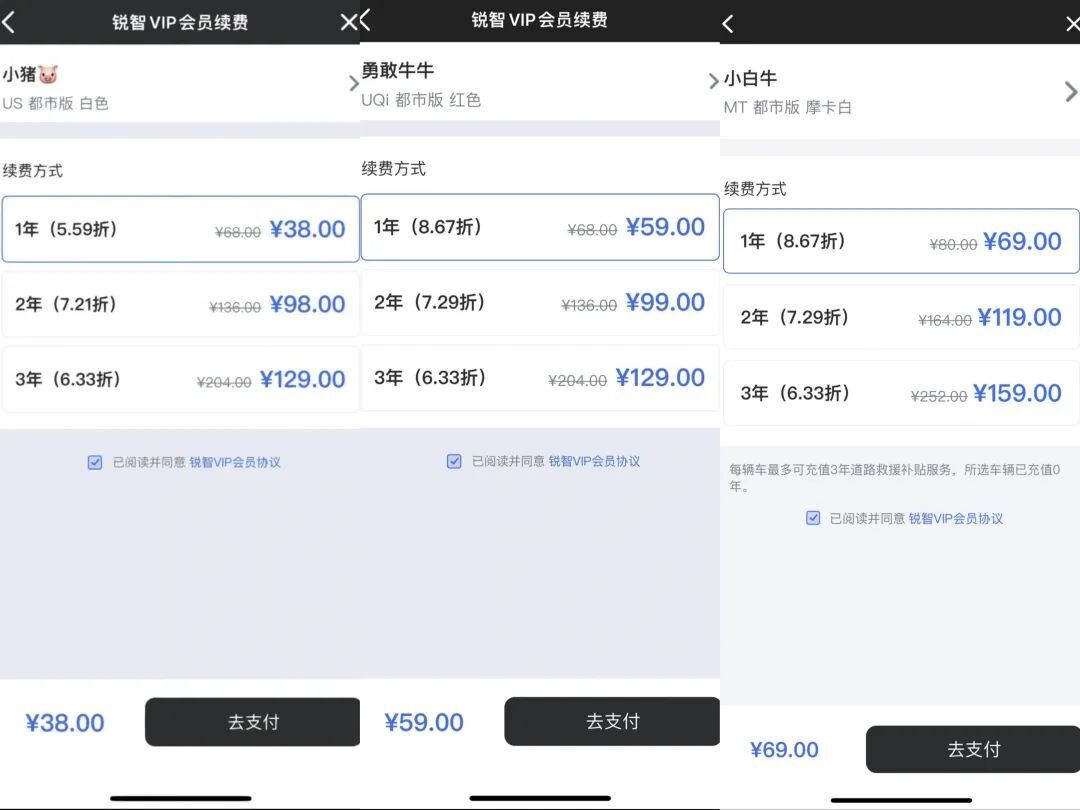
Core Viewpoint - The article discusses the challenges faced by Niu Technologies in maintaining its high-end positioning and pricing strategy in the increasingly competitive electric two-wheeler market, particularly as smart features become more common and subscription service costs rise [2][10][12]. Group 1: Smart Service Pricing - Niu's subscription service fees have increased significantly over the years, from 38 yuan per year in 2015 to 69 yuan per year currently, with three-year packages rising from 129 yuan to 159 yuan [4][10][11]. - Users are questioning the value of Niu's smart services, perceiving them as overpriced compared to competitors [6][10]. - The increase in subscription fees has led to dissatisfaction among long-term users, with some opting not to renew after the free service period [6][10]. Group 2: Competitive Landscape - The electric two-wheeler market has seen a rise in competitors offering similar smart features at lower prices, diminishing Niu's unique selling proposition [11][12][15]. - Niu's smart service fees are the highest in the market, compared to competitors like Ninebot and Yadea, which offer lower annual fees [11][12]. - The gap in technology and features among brands is narrowing, making it harder for Niu to justify its premium pricing [12][15]. Group 3: Financial Performance and R&D Investment - Niu's R&D investment from 2019 to 2024 totaled 764 million yuan, significantly lower than Ninebot's 826 million yuan in 2024 alone [18]. - Despite a temporary increase in sales due to favorable policies, Niu has not demonstrated the profitability expected from a high-end brand [17][21]. - Niu's average selling price has decreased from 4,928 yuan in 2019 to 3,203 yuan in 2024, indicating a shift towards a more price-sensitive market strategy [17][21]. Group 4: Future Strategies - Niu is exploring international markets and higher-end electric motorcycle segments to sustain growth and maintain its high-end narrative [18][19]. - The company faces intense competition from both traditional motorcycle manufacturers and emerging electric brands, necessitating a strong product offering to convince consumers [19][21].

汽车,最终还是走了手机的老路?
虎嗅APP· 2025-08-07 10:13
Core Viewpoint - The electric vehicle market is experiencing significant growth, with new models like Li Auto i8, Leapmotor L90, and AITO M8 leading the charge, indicating a shift towards electric vehicles replacing traditional fuel and hybrid cars [2][3] Group 1: Market Trends - The transition from fuel vehicles to electric vehicles is driven by technological advancements, making it essential for companies to invest in R&D and marketing resources [2] - The competition in the electric vehicle sector is intensifying, with a focus on systematic capabilities rather than just product optimization [3] Group 2: Three-Generation Law - The "Three-Generation Law" describes the product development cycle where a new product evolves through three stages: initial idea, user feedback optimization, and systematic capability integration [5][6] - Successful examples from the smartphone industry, such as Huawei's P series, illustrate how this law applies to electric vehicles, with companies needing to enhance their capabilities to create market-leading products [5][6] Group 3: Huawei's Strategy - Huawei's approach with its smart electric vehicle brand, Zhijie, involves establishing design centers in Shanghai and Shenzhen to enhance product aesthetics and technology [12] - The company is investing heavily in R&D, with plans to increase personnel to 5,000 and invest over 10 billion yuan in the next three years [12][14] - Huawei is deeply involved in the construction and operation of Zhijie's manufacturing facilities, ensuring high standards of automation and quality control [14][16] Group 4: Product Development and Market Position - The upcoming models, Zhijie S7 and R7, are set to launch with advanced features and technology, including Huawei's high-voltage battery platform and intelligent digital platform [20][22] - The differentiation of Zhijie lies in its role as a pioneer for Huawei's new technologies in the automotive sector, positioning it uniquely in the market [19][24] - The market response to the new models will be crucial in validating Huawei's application of the Three-Generation Law and its overall strategy in the electric vehicle market [24]
小米手机欧洲份额超苹果,全球出货受印度拖累
Guan Cha Zhe Wang· 2025-08-07 09:38
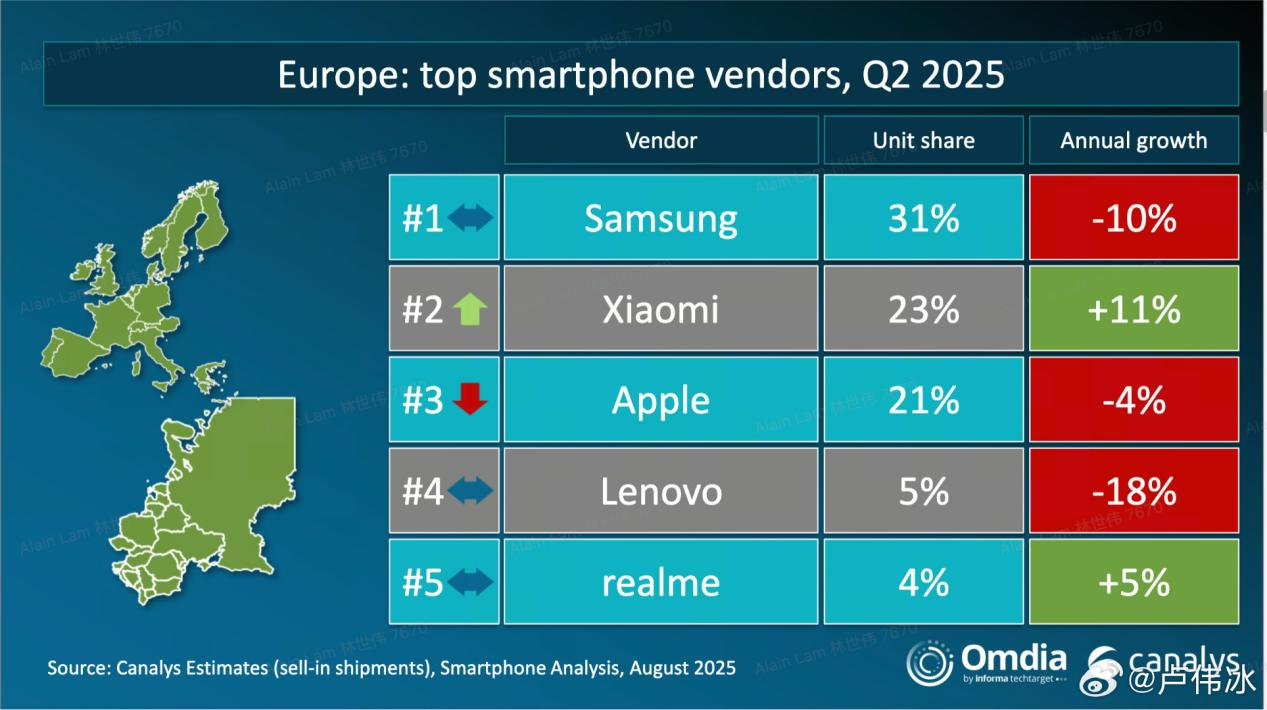
Group 1 - Xiaomi's smartphone market share in Europe ranked second in Q2 2025, with a focus on high-end strategy for future growth [1] - In Q2 2025, Xiaomi held a 23% market share in Europe, showing an 11% annual growth, while Samsung led with 31% but experienced a -10% annual growth [2] - Globally, smartphone shipments slightly declined to 288.9 million units in Q2 2025, with Xiaomi maintaining stable shipments of 42.4 million units and a 15% market share [3] Group 2 - Xiaomi's smartphone shipments in India dropped by 25% year-on-year, impacting overall performance [4][5] - Despite achieving a historical high of 15% global market share, Xiaomi's gross margin declined, with total revenue for Q2 2025 estimated at 112.6 billion RMB, slightly below market expectations [5] - In the electric vehicle sector, Xiaomi is expected to deliver 82,000 units in Q2 2025, with an average selling price of 242,000 RMB and an improved gross margin of 25% [6] Group 3 - Due to revised forecasts for smartphone gross margins, analysts have lowered Xiaomi's earnings per share estimates for 2025 to 2027 by 2% to 7%, and reduced the target price from 78 HKD to 72 HKD while maintaining a "buy" rating [7]
小米手机欧洲份额超苹果,股价却创近两月新低
Guan Cha Zhe Wang· 2025-08-07 09:13
Group 1: Market Position and Performance - Xiaomi ranked second in the European smartphone market with a 23% market share in Q2 2025, following Samsung at 31% and ahead of Apple at 21% [1][2] - Xiaomi's annual growth rate in Europe was 11%, contrasting with Samsung's decline of 10% and Apple's decline of 4% [2] - Globally, Xiaomi maintained a stable shipment volume of 42.4 million units, achieving a 15% market share in Q2 2025, with a year-on-year growth rate of 0% [3] Group 2: Financial Outlook and Adjustments - Xiaomi's total revenue for Q2 2025 is projected at 112.6 billion RMB, slightly below market expectations, while adjusted net profit is expected to be 10.2 billion RMB, in line with market expectations [3][4] - Due to a downward revision in smartphone gross margin forecasts, Daiwa Securities lowered Xiaomi's earnings per share estimates for 2025 to 2027 by 2% to 7% and adjusted the target price from 78 HKD to 72 HKD [4] Group 3: Electric Vehicle Business - Xiaomi's electric vehicle deliveries are expected to reach 82,000 units in Q2 2025, with an average selling price of 242,000 RMB and an improved gross margin of 25% [4] - The company is set to launch its second factory by the end of September, which is anticipated to enhance production capacity [4]

小米大跌!创近两个月新低
Shen Zhen Shang Bao· 2025-08-07 08:04
Core Viewpoint - Xiaomi Group's stock price has recently declined, reaching a two-month low, primarily due to downward revisions in smartphone shipment forecasts, particularly in the Indian market [1][2] Group 1: Smartphone Market Performance - Xiaomi's smartphone shipment volume for Q2 2025 is expected to be slightly lower than previous forecasts, with a 25% year-on-year decline in the Indian market impacting overall performance [1] - The global smartphone market experienced a 1% decline in shipments compared to the same period last year, marking the first drop in six consecutive quarters [1] - Despite a stable performance, Xiaomi achieved a historical high of 15% market share globally in Q2 2025, although this was accompanied by a decrease in gross margin [1] Group 2: Financial Projections - Total revenue for Xiaomi in Q2 2025 is projected to be 112.6 billion RMB, slightly below market expectations, while adjusted net profit is forecasted at 10.2 billion RMB, aligning with market expectations [1] - Forecasts for IoT revenue in the second half of 2025 have been revised downward due to changes in national subsidy policies [1] Group 3: Electric Vehicle Business - Xiaomi's electric vehicle deliveries are expected to reach 82,000 units in Q2 2025, benefiting from the delivery of the SU7 Ultra, with an average selling price of 242,000 RMB and an improved gross margin of 25% [1] - The company has initiated deliveries of the YU7 in July, with the second-phase factory expected to commence production by the end of September [1] Group 4: Analyst Ratings and Price Targets - Due to downward revisions in smartphone gross margin forecasts, analysts have lowered Xiaomi's earnings per share estimates for 2025 to 2027 by 2% to 7%, and reduced the target price from 78 HKD to 72 HKD [2] - Nomura has raised Xiaomi's target price by 79% to 61 HKD based on SOTP valuation but downgraded the rating from "Buy" to "Neutral" due to limited upside potential [2] - Analysts expect Xiaomi to face challenges in the coming quarters, including lower-than-expected smartphone shipments and high market expectations for its electric vehicle business [2]