中药

Search documents
云南白药(000538):工业收入双位数增长
Xin Lang Cai Jing· 2025-09-03 00:37
Core Viewpoint - The company reported a solid performance in 1H25, with revenue and net profit growth driven by high-margin industrial income, and plans to maintain a "buy" rating due to its strong core business and ongoing improvements in efficiency [1][5]. Financial Performance - 1H25 revenue, net profit attributable to shareholders, and net profit excluding non-recurring items were 21.26 billion, 3.63 billion, and 3.46 billion CNY, representing year-on-year increases of 4%, 14%, and 10% respectively [1]. - In 2Q25, revenue, net profit attributable to shareholders, and net profit excluding non-recurring items were 10.42 billion, 1.70 billion, and 1.57 billion CNY, with year-on-year growth rates of 8%, 14%, and 9% respectively [1]. Industrial Revenue Growth - Industrial revenue reached 8.50 billion CNY in 1H25, marking an 11% year-on-year increase, with a gross margin of 67.9%, up 0.6 percentage points year-on-year [2]. - The pharmaceutical business group generated 4.75 billion CNY in revenue, also up 11% year-on-year, with notable performance in aerosol products and a doubling of revenue for the Qi Xue Kang product to 200 million CNY [2]. Operational Metrics - The company's selling, administrative, and R&D expense ratios were 11.8%, 1.7%, and 0.7%, reflecting increases of 0.6, 0.1, and 0.0 percentage points year-on-year, respectively [3]. - Accounts receivable stood at 10.5 billion CNY, up 600 million CNY year-on-year, while inventory decreased by 500 million CNY to 5.8 billion CNY [3]. R&D Progress - The company is advancing several key R&D projects, including short-term developments for Yunnan Baiyao and Qi Xue Kang, and mid-term projects like the completion of Phase II for Sanqi tablets [4]. - Long-term projects include the initiation of Phase III clinical trials for INR101 and Phase I for INR102, with ongoing research in AI and cutting-edge technologies published in notable journals [4]. Rating and Forecast - The company maintains its profit forecast, expecting net profits attributable to shareholders of 5.27 billion, 5.83 billion, and 6.44 billion CNY for 2025-2027, reflecting year-on-year growth rates of 11%, 11%, and 10% respectively [5]. - A target price of 76.82 CNY is set, with a price-to-earnings ratio of 26x for 2025, reflecting a premium due to the company's diversified business model [5].

日本收购中国自来水厂、中药药企、中国盐业公司:这是要干什么?
Sou Hu Cai Jing· 2025-09-03 00:22
Core Viewpoint - The recent rumors regarding Japanese investments in Chinese water, pharmaceutical, and salt industries are largely exaggerated and misinterpreted, with a need for rational analysis based on facts and data [1][2][21]. Group 1: Water Industry - The claim that Japanese companies are secretly acquiring Chinese water plants is a misinterpretation; they are actually investing in 29 wastewater treatment plants, which is publicly disclosed information [2]. - The water industry is under strict regulatory oversight in China, with foreign investments being transparent and not posing a risk of losing control [5][10]. - Historical examples, such as the BOT model used in Chengdu, demonstrate that cross-border cooperation in infrastructure is common and beneficial [3]. Group 2: Pharmaceutical Industry - Japanese investments in Chinese traditional medicine companies are primarily aimed at acquiring raw materials and learning about traditional Chinese medicine techniques, enhancing international influence [7]. - The market size of the Chinese traditional medicine industry has surpassed 700 billion, attracting global capital due to its significant commercial value [7]. Group 3: Salt Industry - There is no factual basis for claims regarding foreign acquisitions in the salt industry, as the China Salt Industry Corporation is a state-owned enterprise with strict legal protections against foreign control [8]. Group 4: Investment Motivations - Foreign investments in these sectors are driven by market opportunities, technological complementarity, and risk diversification [9]. - The Chinese market's vast consumer base is a significant attraction for foreign enterprises [9]. Group 5: Regulatory Framework - China has established clear legal frameworks for foreign investments, ensuring that any potential threats to national security are thoroughly evaluated [10]. - The regulatory system aims to balance openness with safety, allowing for orderly foreign investments [10]. Group 6: Public Perception and Education - Transparency and public education are crucial in dispelling misconceptions about foreign investments; the government and media should work together to clarify facts [19]. - Consumers should focus on the quality of products and services rather than the nationality of the investing companies [13]. Group 7: Globalization and Cooperation - The trend of cross-border capital flow is a natural outcome of globalization, promoting technological exchange and market expansion [12]. - Maintaining a rational perspective on foreign investments can enhance mutual understanding and reduce tensions between countries [15][21].


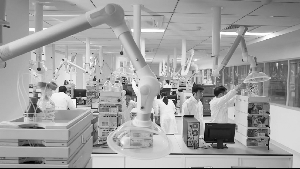
天士力创新中药关键技术国家实验室 公司供图
Zhong Guo Zheng Quan Bao - Zhong Zheng Wang· 2025-09-03 00:06
Core Insights - The article discusses the recent financial performance of a leading technology company, highlighting a significant increase in revenue and net income compared to the previous year [1] Financial Performance - The company reported a revenue of $50 billion, representing a 20% increase year-over-year [1] - Net income reached $10 billion, which is a 25% increase compared to the same period last year [1] - Earnings per share (EPS) rose to $5, up from $4 in the previous year, indicating strong profitability [1] Market Position - The company has strengthened its market position, capturing a larger share of the technology sector, now holding 15% of the market [1] - Increased demand for cloud services and artificial intelligence solutions has driven growth, with cloud revenue alone increasing by 30% [1] Future Outlook - The company plans to invest $5 billion in research and development over the next three years to enhance its product offerings [1] - Analysts predict continued growth, with an expected revenue increase of 15% for the next fiscal year [1]

云南白药净利增速14%远超营收 回归主业四大产品市占率第一
Chang Jiang Shang Bao· 2025-09-02 23:53
Core Insights - Yunnan Baiyao's operating performance shows steady growth, with a revenue of 21.257 billion yuan and a net profit of 3.633 billion yuan for the first half of 2025, marking a year-on-year increase of nearly 4% and 14% respectively [2][5][6] - The company has achieved three consecutive increases in mid-term revenue and net profit since 2023, with the first half of 2025 setting historical highs for both metrics [2][5][6] - Yunnan Baiyao maintains a leading market position in multiple business areas, including aerosol sprays, adhesive bandages, and toothpaste, with the highest market shares in their respective categories [2][6][7] Financial Performance - For the first half of 2025, Yunnan Baiyao's revenue and net profit growth rates were 3.92% and 13.93% respectively, with quarterly revenues of 10.841 billion yuan and 10.416 billion yuan for Q1 and Q2 [5][6] - The company reported a net cash flow from operations of 3.961 billion yuan, an increase of 21.45% year-on-year [9][10] - As of June 30, 2025, Yunnan Baiyao's cash and cash equivalents amounted to approximately 11.3 billion yuan, indicating a strong liquidity position [3][10] Shareholder Returns - Yunnan Baiyao has a history of high cash dividend payouts, distributing a total of 10.697 billion yuan in cash dividends from 2022 to 2024, exceeding 90% of the cumulative net profit [2][10] - The company plans to issue a special dividend of 1.818 billion yuan for the first half of 2025, representing about 50% of the net profit for that period [11] Product Portfolio and Market Position - Yunnan Baiyao has developed a diverse product portfolio with 40 categories and 416 varieties, including 567 approved drug products, of which 222 are traditional Chinese medicine products [6][7] - The company's core products, such as aerosol sprays and adhesive bandages, have shown significant sales growth, with aerosol spray sales reaching 1.453 billion yuan, a year-on-year increase of 20.9% [7][8]

中泰证券:中药板块毛利率有望2025H2修复 看好品牌OTC龙头与创新管线
Zhi Tong Cai Jing· 2025-09-02 23:44
Core Viewpoint - The Chinese herbal medicine sector is expected to see a gradual recovery in gross margins in H2 2025 as the pressure from high-priced raw materials diminishes, despite ongoing operational challenges for companies and weak OTC demand [1][2]. Group 1: Industry Performance - In H1 2025, the total revenue of 64 Chinese herbal medicine companies was 172.9 billion yuan, a year-on-year decrease of 4.95%, while the net profit excluding extraordinary items was 19.1 billion yuan, down 9.31% year-on-year [2]. - The gross margin for the sector in H1 2025 was 42.05%, a decline of 1.01 percentage points year-on-year, and the net profit margin excluding extraordinary items was 11.04%, down 0.56 percentage points year-on-year [2]. - The prices of Chinese medicinal materials have stabilized since mid-2024, with a notable decline starting in May 2025, which is expected to alleviate cost pressures in H2 2025 [2]. Group 2: Financial Metrics - The median expense ratio for the herbal medicine sector in H1 2025 was 44.5%, an increase of 1.5 percentage points compared to the same period in 2024, while the median sales expense ratio was 31.6%, a slight decrease of 0.1 percentage points [3]. - The ratio of accounts receivable plus notes receivable to total revenue was 48.8%, and the inventory to total assets ratio was 12.3%, indicating an increase in accounts receivable as a proportion of total revenue compared to 2024 [3]. - Operating cash flow showed a slight improvement year-on-year in H1 2025, indicating enhanced collection efforts by herbal medicine companies [3]. Group 3: OTC Market Dynamics - The OTC demand remains weak, with a median revenue growth rate of -7.6% and a net profit growth rate of -19.7% for 22 OTC-focused herbal medicine companies in Q2 2025, indicating greater operational pressure compared to the overall sector [4]. - The retail scale of physical pharmacies in China for H1 2025 was 296.1 billion yuan, reflecting a year-on-year decline of 2.2%, which corroborates the weak OTC demand [4]. - Despite short-term demand pressures, the consolidation of retail pharmacies is expected to accelerate the concentration of the OTC market, with leading products gaining market share [4].

医药板块中报总结及投资展望
2025-09-02 14:41
Summary of Key Points from the Conference Call Records Industry Overview - The pharmaceutical sector shows a clear performance divergence, with innovative drug companies outperforming generic drug companies. The focus should be on multi-antibody therapies, dual antibodies, and treatments for unmet clinical needs in chronic diseases, such as ADC dual antibodies and small molecule therapies [1][4] - The medical device sector benefits from favorable policies, with a recovery in bidding processes and reduced channel inventory pressure. Leading companies are expected to gain market share, and the infrastructure sector is anticipated to reach a turning point [1][5] - The distribution sector's revenue remains flat, but the net profit excluding non-recurring items has decreased year-on-year. Gross margins have slightly declined, and accounts receivable turnover days have increased, indicating significant collection pressure [1][6] - The formulation sector shows stable overall performance, with net profit growth benefiting from innovative formulation products entering overseas markets. R&D expenses are growing faster than revenue, indicating increased investment in innovation [1][7] - Biotech companies are experiencing rapid revenue growth, driven by the overseas expansion of core products and unique indications. R&D and sales expense ratios are declining, reflecting improved commercial capabilities [1][9] Key Insights on Sub-sectors Innovative Drugs - Innovative drugs represent one of the largest investment opportunities in 2025, particularly in areas with potential for multi-antibodies and dual antibodies, as well as innovative therapies for cancer [4] Medical Devices - The medical device sector is seeing significant policy support, with a notable recovery in bidding trends and reduced inventory pressure for manufacturers. This is expected to drive performance improvements in the infrastructure sector [5][22] Distribution Sector - The distribution sector's performance is under pressure, with a notable decline in net profit. However, leading companies like Guokong, China Resources, and Shanghai Pharmaceuticals are performing relatively well [6] Formulation Companies - Formulation companies are showing steady performance, with a 20% growth in net profit driven by innovative products. Companies with high barriers to entry and rapid transformation are demonstrating stronger profitability [7] Biotech Companies - From 2019 to 2024, the cumulative revenue of 22 representative biotech companies in China grew from 7.7 billion to 66.8 billion, with a compound annual growth rate (CAGR) of 54%. In the first half of 2025, total revenue reached 38.9 billion, reflecting nearly 30% growth [9][10] Performance Trends - The medical device sector's revenue declined by approximately 5% in the first half of 2025, with profits down 24%. This decline is attributed to the impact of centralized procurement and cost control measures [20] - The biotech sector's core products are experiencing significant growth due to overseas sales and unique therapeutic advantages, with some products seeing revenue increases of over 50% [11] - The traditional Chinese medicine sector is under short-term pressure, but several companies are advancing innovative pipelines that may drive future growth [3][27] Future Outlook - The medical device sector is expected to see a turning point in the second half of 2025, with improved bidding data and a recovery in demand anticipated [22] - The distribution sector is likely to stabilize, with leading companies expected to gain market share as the industry undergoes consolidation [40][41] - The overall outlook for the pharmaceutical sector remains positive, with expectations for continued growth driven by innovation and market expansion [12][41] Additional Considerations - The impact of regulatory changes, such as the drug traceability code policy, is expected to enhance compliance within the industry [39] - The performance of the vaccine sector has been under pressure, with many companies transitioning from profit to loss due to market saturation and pricing pressures [17][18] - The blood products sector is experiencing steady revenue but faces challenges due to price declines in key products [19] This summary encapsulates the key insights and performance trends across various sectors within the pharmaceutical and medical device industries, highlighting both opportunities and challenges ahead.
反内卷:157个细分行业供给侧全景
2025-09-02 14:41
Summary of Conference Call Notes Industry Overview - The conference call discusses the supply-side reform across various industries, highlighting a slower capacity reduction compared to previous reforms. The overall capacity and inventory cycles for non-financial enterprises in the second quarter remain at the bottom, indicating a need for time and policy accumulation for recovery [3][4]. Key Points and Arguments - **Supply Capacity Assessment**: Analysts evaluate supply capacity using three dimensions: current supply capacity (capacity utilization rate and inventory), future supply changes (expansionary capital expenditure), and industry profitability (gross margin and proportion of loss-making enterprises) [4][5]. - **Manufacturing Sector**: - Industries such as construction, chemicals, and coke are categorized as "three lows" (low capacity utilization, low inventory, low expansionary capital expenditure), indicating low production willingness and limited future production capacity, accelerating capacity clearance [6]. - In contrast, cyclical products like textile chemicals, glass fiber, and fluorochemicals show profit growth, particularly fluorochemicals [6]. - Manufacturing areas like inverters, silicon materials, and silicon wafers are performing well, while lithium batteries and photovoltaic cell components are at the left-side bottom [6]. - **Consumer Goods Sector**: Chemical pharmaceuticals and clothing/home textiles are performing well, while traditional Chinese medicine is positioned in the middle to later stages of the left side [6]. - **TMT Sector**: Electronic chemicals, integrated circuit manufacturing, and security equipment are in relatively good positions, with no observed left-side bottom industries [2][6]. Additional Important Insights - The current supply-side framework is based on listed company data, reflecting the latest industry conditions as of the second quarter. The introduction of anti-involution policies has led to some positive factors across industries, but the overall situation remains at the bottom, requiring further time and policy efforts for noticeable changes [3]. - The assessment of supply capacity includes measuring capacity utilization through fixed asset turnover ratios and inventory through cumulative year-on-year comparisons over the past decade [4][5]. - Continuous tracking of data across different sectors is essential for making accurate judgments regarding potential investment opportunities and risks [6].
广东嘉应制药回购股份达总股本2.048% ,推进员工持股或股权激励计划
Xin Lang Cai Jing· 2025-09-02 14:20
Group 1 - The company Guangdong Jiaying Pharmaceutical announced the progress of its share repurchase plan, with a total of 2.048% of its total share capital repurchased as of August 31, 2025 [1][3] - The repurchase plan was approved on December 12, 2024, aiming to buy back between 7 million and 13.5 million shares at a maximum price of 9.80 yuan per share, with a total repurchase amount not exceeding 132.3 million yuan [2] - As of August 31, 2025, the company had repurchased 10.396 million shares at a maximum price of 7.04 yuan per share [3] Group 2 - The company has complied with relevant regulations during the repurchase process, ensuring no repurchase occurred during significant events that could impact stock prices [4] - The company will make repurchase decisions based on market conditions and fulfill its information disclosure obligations in a timely manner [4]

天士力:2025年第四次临时股东大会决议公告
Zheng Quan Ri Bao· 2025-09-02 13:22
(文章来源:证券日报) 证券日报网讯 9月2日晚间,天士力发布公告称,公司2025年第四次临时股东大会审议通过了《2025年 半年度利润分配预案》。 ...
贴出来的百亿帝国 羚锐制药如何应对后专利时代?
Xi Niu Cai Jing· 2025-09-02 13:15
Core Insights - The core product of the company, Tongluo Pain Relief Plaster, has a patent expiring in November 2026, raising concerns about future revenue streams [3][4] - The company reported a revenue of 2.099 billion yuan for the first half of 2025, a year-on-year increase of 10.14%, and a net profit of 474 million yuan, up 14.85% [4][5] - The company has a high dependency on its core product, which accounted for nearly one-third of total revenue in 2023, with a gross margin of 81.33% [4][11] Financial Performance - The company’s R&D expenses increased by 33.63% to 63.06 million yuan, but this still represents less than 1.3% of net profit, indicating a lower investment in innovation compared to industry peers [5] - Total sales, management, and financial expenses reached 1.097 billion yuan, accounting for 52.25% of revenue, which is a 7.55 percentage point increase year-on-year [6] - Accounts receivable rose by 54.4%, suggesting potential channel inventory issues, as revenue only grew by 10% [8] Market Challenges - The expiration of the patent is expected to lead to over 200 competitors entering the market, resulting in price wars and market share dilution [4][10] - The company lacks other significant products with annual sales exceeding 100 million yuan, raising concerns about its product pipeline post-patent expiration [10] - The potential for the core product to enter centralized procurement could further pressure prices, threatening the high gross margin currently enjoyed [11] Strategic Responses - The company is exploring acquisitions of innovative pharmaceutical companies to enhance its R&D pipeline, although specific targets and amounts have not been disclosed [8] - The company aims to drive transformation through both internal development and external expansion, focusing on enhancing its digital platform and production systems [12] - The established nationwide sales network may provide a competitive edge, but its effectiveness in the face of generic competition remains uncertain [12] Market Sentiment - As of August 25, 2025, the company's stock price was 23.68 yuan per share, reflecting a nearly 10% decline from its yearly high, with a TTM P/E ratio of 17.13, below the industry average [12]