投资银行

Search documents
港股上市潮涌 中资投行逐鹿香江
2 1 Shi Ji Jing Ji Bao Dao· 2025-05-27 13:30
Core Viewpoint - The Hong Kong stock market is experiencing a new wave of IPO activity, with significant participation from mainland companies, leading to a record fundraising amount and a surge in the number of companies applying for listings [1][3][4]. Group 1: IPO Activity and Fundraising - As of May 27, 2023, 28 companies have listed on the Hong Kong Stock Exchange (HKEX), including major players like Midea Group and CATL [1]. - The total fundraising amount from new IPOs in Hong Kong has exceeded HKD 76 billion, representing an increase of over seven times compared to the same period last year, and reaching nearly 90% of last year's total fundraising [1][3]. - More than 140 companies have submitted IPO applications to HKEX this year, a nearly 50% increase from 97 companies in the same period last year [1][4]. Group 2: Drivers of IPO Surge - The surge in IPOs is driven by three main factors: the outbound strategy of A-share companies, regulatory conveniences, and improved liquidity in the Hong Kong market [5][6]. - A significant number of A-share companies have cited the need for offshore funding to support their international expansion in their prospectuses [5]. - Regulatory bodies in Hong Kong have optimized the listing application process, reducing the approval timeline for qualified A-share companies to no more than 30 business days [6]. Group 3: Market Outlook and Future Predictions - Deloitte predicts that approximately 80 new stocks will be listed on the Hong Kong market by 2025, with expected fundraising between HKD 130 billion to 150 billion, primarily from large A-share companies and leading mainland enterprises [4]. - The current environment is seen as favorable for Hong Kong to become a financing hub for technology innovation industries amid the ongoing US-China tech rivalry [7]. Group 4: Role of Chinese Investment Banks - Chinese investment banks are increasingly active in the Hong Kong IPO market, with firms like Huatai Securities and CITIC Securities leading in the number of IPOs sponsored [8]. - The understanding of domestic enterprises and established relationships with mainland investors are key competitive advantages for Chinese investment banks in the IPO process [8]. - The current IPO boom presents both opportunities and challenges for Chinese investment banks, including the need to navigate regulatory differences between A-share and H-share markets [8]. Group 5: Global Investment Implications - The influx of high-quality manufacturing companies from A-shares to Hong Kong is expected to attract global investment, potentially leading to a return of foreign capital and repatriation of Chinese residents' overseas funds [9].

人民币升值1%,中国股票就能涨3%,真是如此吗?
Sou Hu Cai Jing· 2025-05-27 01:20
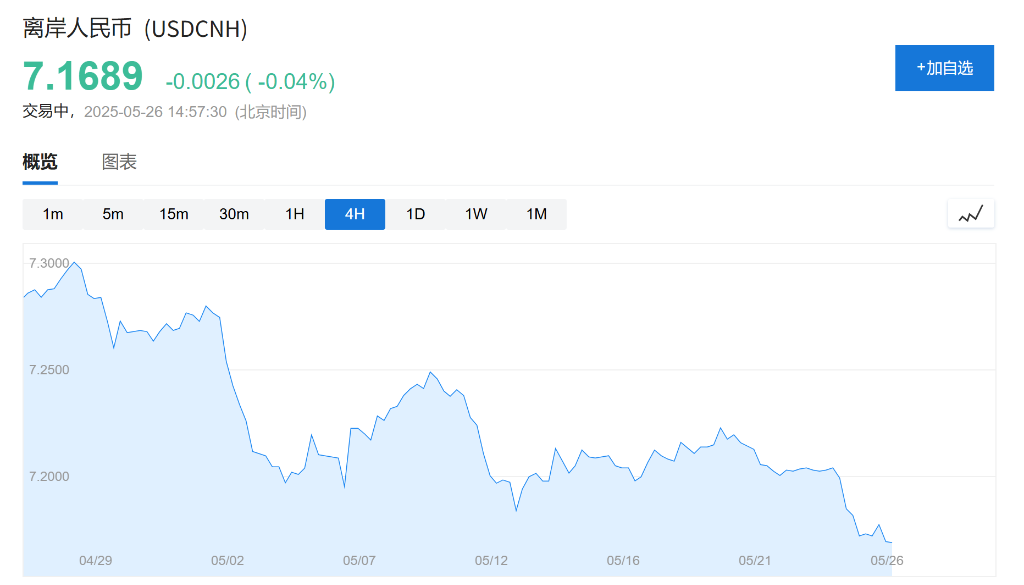
Group 1 - The core viewpoint of the report indicates that the appreciation of the Renminbi (RMB) positively impacts the Chinese stock market, with a 1% increase in RMB leading to a 3% rise in Chinese stocks, driven by corporate prospects and foreign capital inflows [1] - Historical trends show that during periods of RMB appreciation, foreign investors tend to adopt a positive stance towards Chinese stocks, particularly favoring core assets in sectors like consumer discretionary, real estate, and brokerage firms [1] - The recent strength of the RMB is attributed to the central bank's proactive measures to stabilize the exchange rate and the overall market confidence, preventing capital outflows [1] Group 2 - The offshore RMB reached its lowest point at 7.42 on April 8, but has since appreciated to 7.17, marking a rise of 2500 basis points or 3% [2] - While the RMB shows potential for further appreciation, the central bank aims to maintain a stable exchange rate to avoid excessive gains that could harm export-oriented businesses [2] - The current upward potential for the RMB appears limited, suggesting that when it approaches the 7.1 to 7 range, the appreciation may pause [3] Group 3 - Despite the RMB's appreciation, the A-share market has not shown significant movement, remaining within a trading range, while the Hong Kong stock market has seen a substantial increase of over 20% since April 8 [6] - The disparity in performance between A-shares and Hong Kong stocks indicates that the latter benefits more from RMB appreciation due to its globalized market and easier access for foreign capital [6][7] - The conclusion emphasizes the importance of focusing on investment opportunities in Hong Kong stocks post-adjustment, while considering synchronized investments in both A-shares and Hong Kong stocks for potentially greater returns [8]

长期美债承压、日债拍卖亮起“警报灯”……高盛指出债市近期风险点:需求疲弱
智通财经网· 2025-05-26 13:35
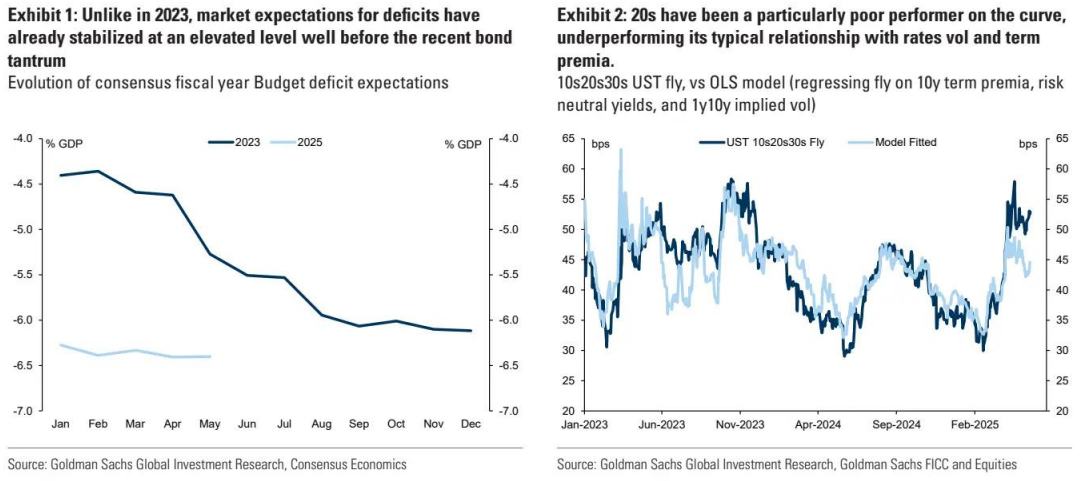
Group 1 - Goldman Sachs reports that global long-term bonds are under pressure, with Japan's 30-year government bond yields continuing to rise, while U.S. fiscal issues remain a concern [1] - The recent soft performance of 20 to 40-year Japanese government bonds is seen as localized, reflecting technical factors, which reduces the urgency for policy adjustments [1][6] - In the context of rising global inflation and high fiscal deficits, Goldman believes that the spillover risks from the sell-off of Japanese long-term bonds are unlikely to dissipate quickly [1][10] Group 2 - The recent market dynamics are driven more by weak demand rather than the scale of deficits, with concerns heightened by Moody's credit rating downgrade and fiscal proposals in the U.S. Congress [2] - Goldman notes that the risks facing U.S. Treasury bonds are more related to a lack of stabilizing forces for overall fiscal trajectories amid declining demand for U.S. assets globally [2][3] - The 20-year U.S. Treasury bonds are particularly sensitive to signals of sustained weak demand, performing poorly relative to 10-year and 30-year bonds [5] Group 3 - A weak auction of 20-year Japanese government bonds has triggered significant price declines, continuing a trend of volatility since April, influenced by fiscal concerns and ongoing quantitative easing [6][10] - The long-term price trends of Japanese government bonds are primarily affected by technical factors, including macro position adjustments and insufficient demand from institutional investors [6] - If the current trend of rising Japanese bond yields continues, it may pose spillover risks to global interest rates, with potential adjustments in supply or monetary policy needed to stabilize the situation [10]

学生贷冲击!摩根士丹利:还贷挤压消费,今年美国GDP或下滑0.1%
Hua Er Jie Jian Wen· 2025-05-26 13:03
Core Viewpoint - The end of the federal student loan repayment pause has led to a significant increase in default rates, posing a risk not only to individuals but also to the broader U.S. economy [1][2][4]. Group 1: Default Rates and Credit Impact - In the first quarter of this year, 5.6 million borrowers began to default on their student loans, with the default rate soaring from 0.7% in Q4 of the previous year to 8% [2][3]. - Among the new defaulters, 2 million had credit scores between 620-719, and 400,000 had scores above 720, with average score drops of 140 and 177 points respectively [2][3]. - Many borrowers were unaware of the repayment resumption due to a lack of communication from loan servicers, leading to sudden drops in credit scores [2][3]. Group 2: Economic Implications - Morgan Stanley estimates that the monthly repayment burden will increase by $10 billion to $30 billion, which will squeeze consumer spending and potentially reduce U.S. GDP by 0.1% in 2025 [1][4]. - The situation may worsen as approximately 8 million borrowers are enrolled in the SAVE plan, which is facing legal challenges, delaying their repayment obligations [4]. Group 3: Vulnerable Borrowers - The most affected borrowers are those from two-year or for-profit institutions, or those who dropped out without a degree, facing higher default risks and often coming from economically fragile backgrounds [5]. - In Mississippi, 45% of student loan borrowers are in default, highlighting the correlation between poverty rates and loan repayment difficulties [5].

高盛人民币看7,还强调“每升1%,中国股市有望涨3%”
华尔街见闻· 2025-05-26 10:40
Core Viewpoint - Goldman Sachs believes that the appreciation of the RMB will drive the Chinese stock market up, with a 1% appreciation potentially leading to a 3% increase in stock prices [1][9]. Group 1: RMB Appreciation and Stock Market Impact - A 1% appreciation of the RMB is expected to push the Chinese stock market up by 3%, indicating a strong positive correlation between currency strength and stock performance [3][9]. - Empirical data shows that Chinese stocks tend to perform well during periods of currency appreciation, with a historical correlation coefficient of 35% and a beta of 1.9 since 2012 [4]. Group 2: Factors Supporting RMB Resilience - The resilience of the RMB is attributed to several factors, including effective central bank management, improved competitiveness and diversification of Chinese exports, potential undervaluation of the RMB, and a general weakness of the USD [2]. - The direct trade exposure of China to the US has decreased over the past decade, with the US market accounting for approximately 15% of China's exports and 1.2% of listed company revenues in 2024, down from 19% and 1.6% in 2017 [2]. Group 3: Future RMB Exchange Rate Predictions - Goldman Sachs has revised its forecast for the USD/RMB exchange rate, predicting it will reach 7.20, 7.10, and 7.00 in the next 3, 6, and 12 months, respectively, indicating a potential 3% appreciation over the next year [2]. Group 4: Channels of Impact from RMB Appreciation - RMB appreciation can benefit Chinese stocks through various channels, including accounting effects, fundamental improvements, risk premium adjustments, and portfolio flows [5][6][7][8]. - Companies with USD-denominated debt or short positions in USD assets are expected to gain from foreign exchange trading profits when the USD weakens [6]. - A moderate appreciation of the RMB may alleviate concerns about capital outflows, positively impacting equity risk premiums and portfolio flows [8].

A股大利好连着来,难怪外资提前动手!
Sou Hu Cai Jing· 2025-05-26 10:27
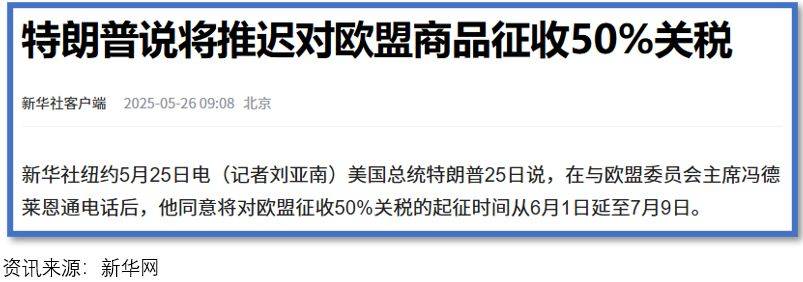
Group 1 - The article highlights the recent escalation of trade tensions between the US and the EU, with the US imposing a 50% tariff on the EU and then granting a one-month reprieve, creating significant economic uncertainty [1][2] - The situation is described as a "battle" that has led to a chaotic market environment, prompting foreign investors to reconsider their strategies and potentially shift investments towards the Chinese market [2][4] Group 2 - Foreign investment firms like Nomura and Goldman Sachs have increased their allocation to Chinese stocks, indicating a strong belief in the potential of the Chinese market amidst the US-EU tensions [2][4] - Domestic institutions are also employing strategic maneuvers in the stock market, utilizing a "three-step strategy" to manipulate stock prices and maximize gains [6][8] - The use of quantitative models is enabling retail investors to better understand institutional trading behaviors, allowing them to identify potential market movements more effectively [8][10] Group 3 - Recent statistics show a significant increase in institutional trading activities, with nearly 900 firms engaging in "institutional shakeout" strategies, indicating a high level of market activity and potential future volatility [12][14]
高盛人民币看7,还强调“每升1%,中国股市有望涨3%”
Hua Er Jie Jian Wen· 2025-05-26 07:45
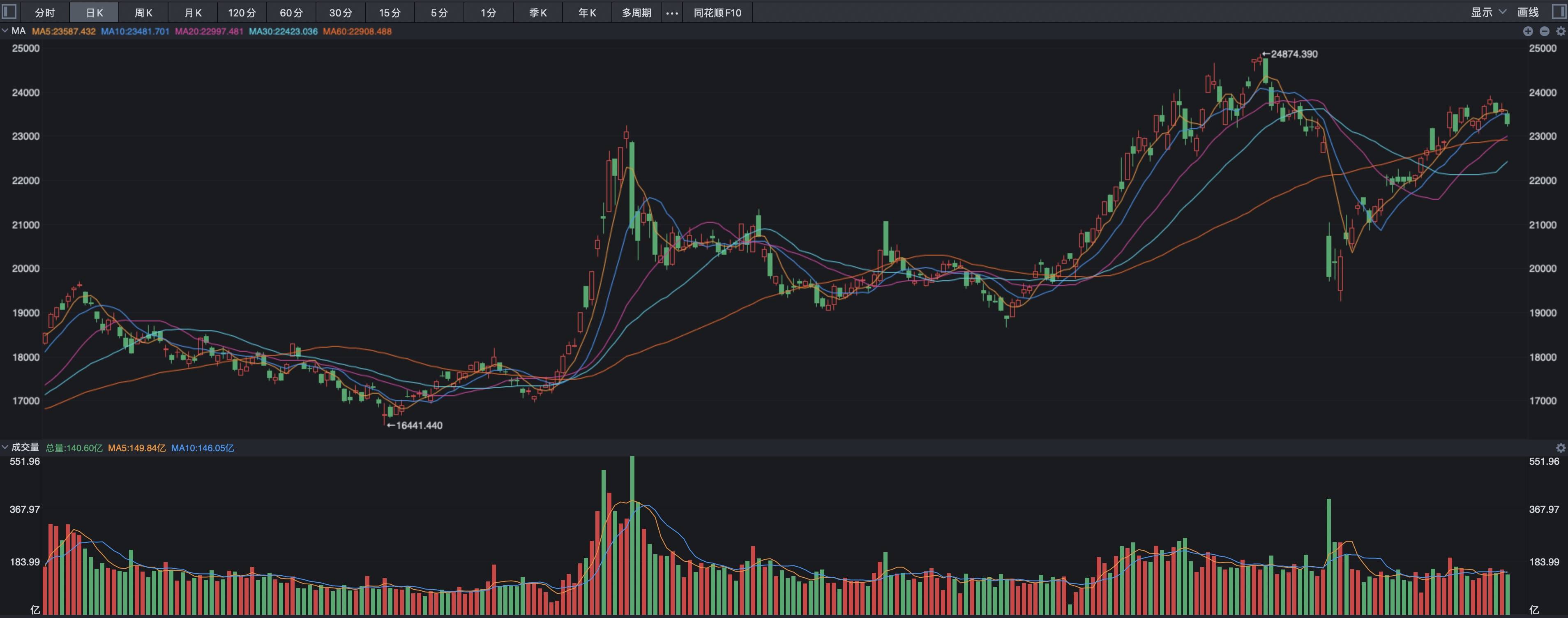
高盛认为,人民币汇率升值将带动中国股市上涨,每1%升值可推动股市上涨3%。在人民币走强的情况下,非必需消费品、房地产和券商股将表现优异。 商务部官方消息,此前中美经贸高层会谈取得实质性进展,大幅降低双边关税水平,美方取消了共计91%的加征关税,中方相应取消了91%的反制关税; 美方暂停实施24%的"对等关税",中方也相应暂停实施24%的反制关税。 据追风交易台信息,高盛在5月26日的报告中表示,本轮中美贸易冲突期间,人民币显示出极强的韧性,与2018年3月至2020年1月期间人民币兑美元贬值 13%不同,自4月2日以来,人民币兑美元升值了1%。 替代政策工具是更优解 对于本轮人民币保存韧性的原因,常见的解释包括:央行的货币管理、中国出口部门相比2017年竞争力和多元化程度的提升、人民币潜在低估、以及美元 的广泛疲软和由此产生的投资者对美元资产的多元化需求。 在出口方面,中国对美国的直接贸易和收入敞口在过去十年中有所下降,美国市场在2024年约占中国出口的15%和上市公司收入的1.2%,而2017年分别为 19%和1.6%。 高盛外汇团队最近下调了美元兑人民币预测(意味着人民币升值),预期汇率将在3个月、6个月 ...
摩根士丹利:上调中国经济增速及股指目标
天天基金网· 2025-05-26 03:26
Core Viewpoint - Morgan Stanley has raised its GDP growth forecast for China to 4.5% for this year, while also increasing its stock index targets, suggesting that investors can achieve excess returns through selective stock and sector investments [2][3]. Economic Outlook - The chief economist of Morgan Stanley, Xing Ziqiang, noted that while trade tensions have eased, challenges in real estate and consumption persist. The GDP growth forecasts for this year and next have been adjusted from 4.2%/4.0% to 4.5%/4.2% respectively. The GDP growth for Q4 this year is expected to be 4.0%, up from a previous estimate of 3.7% [3]. - The report anticipates that the U.S. tariffs on China will remain at the current 30% level for the next two years, reducing the urgency for new policy measures. The existing policy framework aims to stabilize the economy while gradually addressing structural issues like debt and economic imbalances [3]. - It is expected that the government may introduce additional fiscal stimulus of 0.5 trillion to 1 trillion RMB to support infrastructure investments, alongside potential interest rate cuts of 15-20 basis points and a reserve requirement ratio reduction of 50 basis points [3]. Risks and Optimistic Scenarios - Key risk factors include tariffs and domestic policy directions. In an optimistic scenario, Morgan Stanley predicts that the U.S. may further eliminate 20% of the fentanyl tariffs by the end of Q3 this year, coupled with more consumer stimulus and accelerated structural reforms from Chinese policymakers. Under this scenario, actual GDP growth could reach 4.7% and 4.5% for the next two years [4]. Stock Market Outlook - Morgan Stanley's chief equity strategist, Wang Ying, has raised the stock index targets for China due to structural improvements such as a rebound in return on equity (ROE) and stabilization in earnings. However, macroeconomic pressures persist, leading to a maintained market weight rating for Chinese stocks, with a recommendation for selective stock and sector investments [5]. - The reasons for the upgraded rating include: (1) a rebound in net asset returns and upward adjustments in valuation, particularly for offshore stocks; (2) confirmed government support for the private sector; (3) the emergence of leading tech companies in AI and smart manufacturing that can compete globally [5]. - The projected index targets for June 2026 are: MSCI China Index at 78 points (up 5%), Hang Seng Index at 24,500 points (up 5%), Hang Seng China Enterprises Index at 8,900 points (up 5%), and CSI 300 Index at 4,000 points (up 3%) [5]. Market Preferences and Sector Recommendations - Morgan Stanley favors offshore Chinese stocks, recommending an overweight position in Hong Kong stocks and American Depositary Receipts (ADRs). The expectation of a stronger RMB and continued inflow of southbound capital into the Hong Kong market are seen as positive factors [6]. - In terms of sector allocation, the recommendation is to overweight two main areas: (1) leading companies in technology and internet sectors, particularly those involved in AI and smart manufacturing; (2) high dividend strategies to hedge against volatility. Conversely, it suggests underweighting cyclical sectors such as energy and real estate [6].
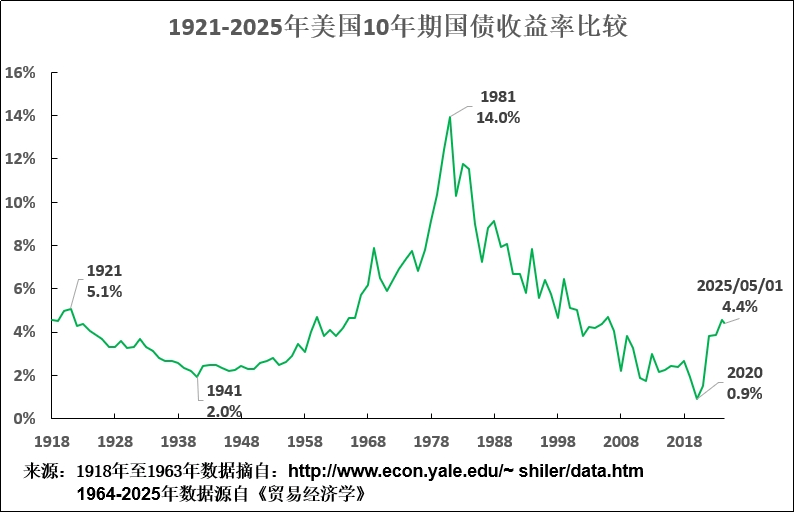
美债收益率突破5%!穆迪降级+特朗普减税,金融市场急了
Sou Hu Cai Jing· 2025-05-26 01:58
Group 1 - The financial market is facing unprecedented challenges with U.S. assets, as the yield on 30-year U.S. Treasuries has surpassed 5%, and demand for 20-year Treasuries has significantly declined [1][4] - The U.S. government debt has exceeded $36 trillion, and the fiscal deficit is rapidly expanding, with the tax cut plan proposed by the Trump administration expected to reduce taxes by over $4 trillion over the next decade, further increasing the debt-to-GDP ratio from 98% to 125% [3][4] - The surge in U.S. Treasury yields has caused notable impacts on global financial markets, with major U.S. stock indices experiencing their largest declines in a month, and the 20-year Treasury yield reaching 5.1% [4] Group 2 - Morgan Stanley has shifted to a bullish outlook on U.S. assets, upgrading U.S. stocks and Treasuries to "overweight," citing relative advantages amid a slowing global economy [5] - The firm anticipates that U.S. corporate earnings will soon hit a bottom, and easing inflation along with potential further rate cuts by the Federal Reserve will support U.S. equities [5] - Morgan Stanley projects the S&P 500 index to reach 6,500 points by Q2 2026, while forecasting a decline in the 10-year Treasury yield to 3.45% [5]

罗思义|“躁郁症式”分析不可取:什么是决定中美竞争胜负的关键?
Sou Hu Cai Jing· 2025-05-25 23:40
Group 1 - The core viewpoint of the article is that the trade conflict between China and the U.S. is a long-term battle rather than a single event, and understanding the economic dynamics of both countries is crucial for strategic planning [1][2][4] - The article emphasizes the importance of recognizing the underlying factors that influence long-term economic growth in both the U.S. and China, rather than focusing solely on short-term fluctuations [4][5] - It critiques the "manic-depressive" analysis of the U.S. economy, which oscillates between exaggerated optimism and pessimism, suggesting that such views misrepresent the actual economic conditions [3][5][6] Group 2 - The U.S. financial markets have shown volatility since the announcement of tariffs, but these fluctuations are within the normal economic cycle range, indicating no immediate crisis [34] - The article discusses the performance of the U.S. stock market, noting that significant declines have occurred but are less severe than in previous economic downturns, suggesting stability in the long-term outlook [19][24][27] - The U.S. dollar index experienced a notable drop following the tariff announcement but rebounded after strategic concessions from the Trump administration, reflecting the complex interplay between policy decisions and market reactions [28][33]