
在线旅游

Search documents
酒旅三国杀,同程往哪走?
Hu Xiu· 2025-07-16 00:00
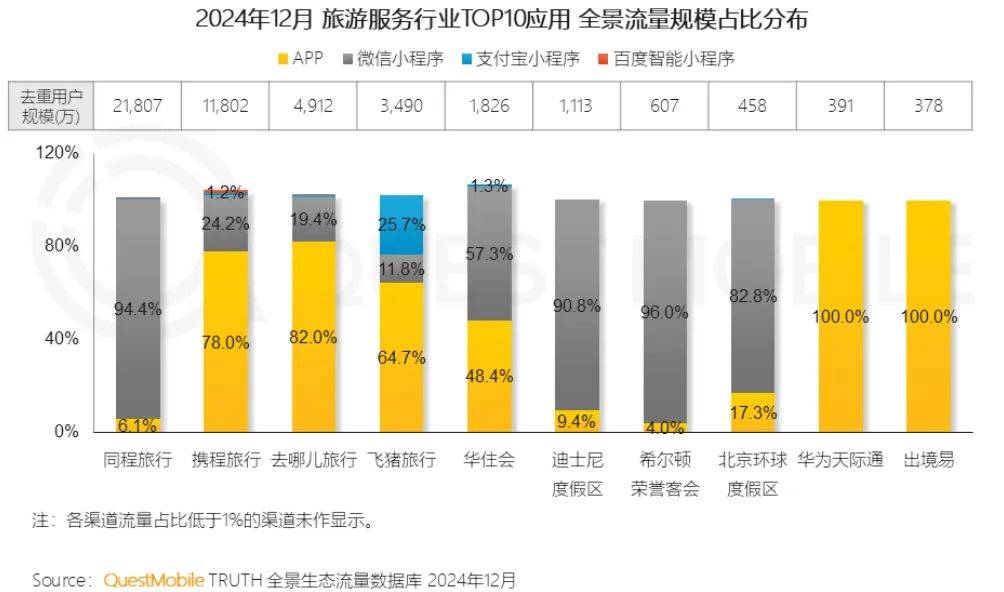
Core Insights - The competition in the local lifestyle service sector, particularly in the instant retail and travel industry, is intensifying among major players like JD, Alibaba, and Meituan, each adopting aggressive strategies to capture market share [2][6][36]. Group 1: Instant Retail and Order Volume - Taobao Flash Sale and Ele.me announced that their daily order volume for instant retail has surpassed 80 million as of July 14, while Meituan reported 150 million orders on July 12, and JD exceeded 25 million in June [1]. Group 2: Local Lifestyle Services - The local lifestyle service sector encompasses a wide range of services beyond food delivery, including travel and accommodation, with Meituan leading in this space [2]. - Meituan's core local business includes food delivery, in-store services, and travel, indicating a comprehensive approach to local services [2]. Group 3: JD's Entry into Travel - JD launched a "JD Hotel PLUS Membership Plan" on June 18, 2025, offering up to three years of zero commission, marking a significant push into the travel sector [4]. - Following JD's move, Alibaba integrated Ele.me and Fliggy into its China e-commerce group, showcasing its ambitions in the travel sector [5]. Group 4: Competition Dynamics - The competition among JD, Alibaba, and Meituan is reshaping the landscape of the local lifestyle service sector, particularly in travel [6]. - The online travel agency (OTA) market is witnessing strategic shifts, with players like Tongcheng Travel maintaining growth despite fierce competition [8][11]. Group 5: Tongcheng Travel's Market Position - Tongcheng Travel has shown impressive growth, with a market share of 15% in the OTA sector, trailing behind Ctrip [8]. - As of December 2024, Tongcheng's user base reached 218 million, significantly outpacing competitors like Ctrip and Fliggy [8]. Group 6: Financial Performance - Tongcheng reported a revenue of 43.77 billion yuan in Q1 2025, a 13.2% increase year-on-year, with adjusted net profit rising by 41.1% [21]. - The company's revenue primarily comes from transportation ticket bookings, with accommodation bookings contributing 27.1% of total revenue [21]. Group 7: Supply Chain and Partnerships - Tongcheng's supply chain is partially shared with Ctrip, allowing it to enhance its product offerings and competitiveness [22][24]. - The partnership with Tencent has provided Tongcheng with a significant advantage in user acquisition through WeChat [12][17]. Group 8: Market Challenges - The OTA market is facing increased competition, with hotels seeking to reduce reliance on platforms by building direct sales channels [40]. - The rise of self-operated channels among hotels poses a long-term challenge to OTA platforms like Tongcheng [40]. Group 9: Future Outlook - The domestic tourism industry is recovering, with projections indicating a rise in tourist numbers and spending [35]. - However, the competitive landscape is evolving, with established players like Meituan and emerging platforms like Douyin intensifying their focus on the travel sector [39][43].

三项研学旅游行业标准出台
Mei Ri Shang Bao· 2025-07-15 23:32
Core Viewpoint - The recent release of standards for outbound study tours and online travel platforms aims to enhance the quality and safety of the study tourism industry in China, addressing existing issues and promoting a more structured development approach [1][2]. Group 1: Outbound Study Tour Service Requirements - The "Outbound Study Tour Service Requirements" sets mandatory safety measures, including the necessity for operators to have outbound qualifications and to establish an evaluation mechanism for overseas suppliers [1]. - It mandates that study tour guides possess educational backgrounds, cultural knowledge of the destination, and cross-language communication skills [1]. - Operators are required to purchase global emergency rescue insurance with a minimum compensation limit of 10 million yuan per incident and over 600,000 yuan per person [1]. - The guidelines stipulate that study tour course duration must constitute at least 50% of the overseas itinerary, prohibiting false advertising and requiring clear disclosure of additional fees [1]. Group 2: Curriculum and Route Design Guidelines - The "Curriculum and Route Design Guidelines" outlines a core framework for course design, emphasizing the integration of study resources, interdisciplinary learning, and mandatory safety education [2]. - This standard is applicable to all domestic study tourism service providers, aiming to enhance educational value and market competitiveness while curbing issues like "travel without learning" and false advertising [2]. - The guidelines are intended to ensure that study tourism activities are safe and orderly, positioning them as vital for cultural dissemination and talent cultivation [2]. Group 3: Online Travel Platform Accommodation Booking Service Norms - The "Online Travel Platform Accommodation Booking Service Norms" addresses common issues such as default bundling, low-price traps, and difficulties in order modifications [2]. - It encourages online travel platforms and related operators to enhance self-regulation and continuously improve service quality [2]. - The aim is to elevate the consumer experience in online bookings and drive service quality upgrades and value creation within the industry [2].
途牛报告:上半年低线及县域旅游目的地蓬勃发展
Xin Hua Cai Jing· 2025-07-15 12:26
Core Insights - The report by Tuniu indicates a robust recovery in domestic tourism consumption in the first half of 2023, driven by various seasonal activities and cultural tourism trends [1][2][3] - Emerging destinations, particularly in lower-tier cities and county-level areas, are experiencing significant growth in tourist visits, expanding the overall tourism consumption landscape [1][2] - The popularity of self-driving and free travel options is increasing, particularly among younger demographics, with notable growth in user participation [2] Domestic Tourism Trends - Major cities like Beijing, Shanghai, and Guangzhou remain popular, while lower-tier destinations such as Liupanshui and Qiandongnan show remarkable growth, with visitor numbers increasing over 200% [1] - Guizhou province has implemented various cultural tourism incentives, leading to a surge in tourist visits to cities like Liupanshui and Qiandongnan [1] Emerging Destinations - Shanxi province continues to attract visitors due to its rich cultural heritage and culinary offerings, with places like Shuozhou and Changzhi seeing over 150% growth in visitor numbers [2] - The trend of exploring lesser-known destinations is gaining traction, with significant increases in tourist activity in various regions [1][2] Travel Preferences - Self-driving trips and free travel are becoming increasingly popular, with 32% and 20% of domestic travel respectively, and a majority of users being from the post-80s and post-90s generations [2] - Popular domestic self-driving destinations include Shanghai, Guangzhou, and Sanya, reflecting a shift towards more flexible travel options [2] International Travel Insights - For outbound travel, Hong Kong and Macau are favored for their diverse experiences, while destinations like Japan and Southeast Asian countries remain popular among travelers [2] - Long-haul travel to Europe, Australia, and the Middle East is also on the rise, with significant increases in bookings for countries like Italy and the UAE [3] - Emerging destinations such as Luxembourg and Georgia have seen visitor numbers more than double, indicating a growing interest in less traditional travel spots [3]

出海速递 | 欧洲电动车,进退两难/中餐出海,为啥有人抓住了万亿商机,有人只得到教训
3 6 Ke· 2025-07-15 10:45
Group 1 - The article discusses the contrasting outcomes of Chinese restaurants expanding overseas, highlighting that some have seized a trillion-dollar opportunity while others have faced challenges [2] - It emphasizes the necessity for some production capacity to relocate for healthy development [2] Group 2 - Pop Mart anticipates a profit increase of no less than 350% for the six months ending June 30, 2025, compared to the same period last year [3] - The company expects its revenue for the same period to grow by no less than 200% compared to the six months ending June 30, 2024 [3] Group 3 - Qunar Travel launched an English version of its platform, providing English booking services for hotels, flights, trains, and vacation products [4] - Users can switch to English by adjusting settings in the app [4] Group 4 - XPeng Heavens completed a $250 million Series B financing round, which will support the development, mass production, and commercialization of flying cars [4] - The first flying car production facility is nearing completion and is expected to be operational by the fourth quarter of this year, with mass production scheduled for 2026 [4] Group 5 - The domestic consumer electronics industry is accelerating its globalization efforts, with companies like Lens Technology and Luxshare Precision pursuing listings in Hong Kong [4] - The trend reflects a deeper global development strategy, emphasizing the need for comprehensive local production, sales, and service capabilities [4] Group 6 - Meta plans to invest hundreds of billions of dollars in artificial intelligence, with expectations of becoming the first to launch a 1GW+ supercluster laboratory [5] - Following this announcement, Meta's stock price rose by 1.5% [5]




飞猪上线“特价酒店”,500元住万豪?
3 6 Ke· 2025-07-15 09:22
继外卖大战后,淘宝又接入飞猪"特价酒店",优惠力度不小。有些高星级酒店300元就能入住,直接补贴至全网最低价。甚至不少住客500元一晚薅到了入 住万豪酒店的"羊毛"! 真相又是如何?这一次阿里平台的"泼天流量",飞猪会接住多少?空间秘探作了相关调查。 淘宝上线"特价酒店",500元住万豪? 作为淘龄多年的"资深玩家",自然是不会错过这次的薅羊毛大战。在点开淘宝闪购准备买早餐时,发现主页面上多了新的补贴方向——"特价酒店"。 点进特价酒店界面,飞猪的顶部Banner广告图上打出"全网低价、特价5折"的slogan,下面是平台赠送的闪购专享券,而参加活动的酒店清一色被打上了闪 购标。 飞猪特价酒店页面 观察发现,此次淘宝闪购上线的"特价酒店"主要集中在"低价领域",而这个低价领域分成三大类。 一种是以民宿/客栈为主的旅社,价格通常在30-200元左右。这类房源通常不成规模,大多是业主自营或者租赁商业用地开设,品牌概念弱,比较依赖 OTA的流量,也不会在各大OTA平台同步上线。比如独侠客青年旅舍杭州西湖店在携程上就搜索不到,美团上的价格也没有飞猪便宜,京东旅行上则显示 没有房源。 一种是以酒店集团旗下热门的知名经济 ...


途牛:近两周出游人次较去年同比增长超30%
news flash· 2025-07-15 07:53
Core Insights - The travel industry is experiencing a significant increase in travel volume, with over 30% growth in the number of travelers compared to the same period last year [1] Summary by Category Travel Trends - During the past two weeks of the summer season, popular domestic travel destinations include Beijing, Shanghai, Sanya, Hangzhou, Nanjing, Guangzhou, Chengdu, Chongqing, Zhuhai, and Xi'an, indicating a strong interest in these locations [1]
抖音投入亿级补贴加入酒旅大战
news flash· 2025-07-15 04:51
Core Insights - Douyin announced a significant investment in its local lifestyle business, committing to a billion-level platform subsidy to support various initiatives [1] Group 1: Business Initiatives - The investment will support official live broadcasts for chain brand hotels, regional matrix accounts, merchant live streams, and celebrity influencer store visits [1] - New offerings include special discount calendars for hotel bookings, hotel exchange vouchers, and membership experience voucher packages [1] - Discounted room bookings will start from 60% off [1]
社会服务行业双周报(第110期):社服板块二季报业绩前瞻:预计延续分化表现-20250714
Guoxin Securities· 2025-07-14 09:44
Investment Rating - The report maintains an "Outperform" rating for the social services sector, indicating expected performance above the market index by over 10% [3][29]. Core Insights - The social services sector is anticipated to continue showing a differentiated performance in Q2, with various segments such as travel, hospitality, and education demonstrating varying levels of recovery and growth [1][11]. - The report highlights that the consumer services sector increased by 2.49% during the reporting period, outperforming the broader market by 0.12 percentage points [16][18]. - Key companies in the sector, such as Nayuki Tea and Meituan, have shown significant stock price increases, with Nayuki Tea rising by 37.50% [1][19]. Summary by Sections Q2 Earnings Outlook - The travel chain is expected to show a mixed performance, with leading hotel brands experiencing a narrowing decline in RevPAR and strong brand expansions [1][11]. - The restaurant chain sector is projected to stabilize, particularly in tea and fast-food segments, benefiting from increased subsidies from major platforms [1][12]. Industry and Company Dynamics - Huazhu has upgraded its membership system, introducing a price guarantee feature [20]. - Meituan has launched a centralized kitchen initiative to enhance food safety and has seen a significant increase in daily order volumes [22]. - The report notes changes in shareholding for several companies, with increases for Tianli International Holdings and Mixue Group [28]. Investment Recommendations - The report suggests a focus on companies such as Guming, Mixue Group, and Atour, among others, as potential investment opportunities in the current economic environment [3][29]. - Mid-term recommendations include companies like China Duty Free, Meituan, and Huazhu Group, indicating a broad range of investment options across the sector [3][29].
携程租车:2025年暑期国内租车自驾订单量预计同比激增近四成
news flash· 2025-07-14 07:34
Core Insights - Ctrip's car rental data predicts a nearly 40% year-on-year increase in domestic self-driving car rental orders for the summer of 2025 [1] - The demand for self-driving tours is particularly strong among younger generations, with orders from the post-00s demographic increasing by 70% and those from the post-05s demographic soaring by 230% [1] - The acceptance of new energy vehicles has significantly improved, with orders for pure electric cars expected to surge by 148% [1] Group 1 - Domestic self-driving car rental orders are expected to see a significant increase of nearly 40% in summer 2025 compared to the previous year [1] - The outbound self-driving travel market is also experiencing robust growth, with rental order volume anticipated to rise by 60% year-on-year [1] - The majority of self-driving rental customers this summer are from the post-80s and post-90s generations, accounting for nearly 70% of the total orders [1] Group 2 - There is a notable increase in mid to long-distance self-driving orders, which have grown by 48% year-on-year [1] - The younger demographic, particularly the post-00s and post-05s, is driving the growth in rental orders, indicating a shift in consumer behavior towards self-driving options [1] - The surge in demand for electric vehicles reflects a broader trend towards sustainability and eco-friendly travel options [1]

同程旅行(00780):深度报告:造梦大鱼,乘势腾盈
Changjiang Securities· 2025-07-13 12:43
Investment Rating - The report assigns a "Buy" rating for the company [5][14]. Core Insights - The travel economy is thriving, with resilient consumer spending on travel, indicating significant growth potential in the tourism sector. The OTA industry is experiencing improved operational ecology and a more favorable competitive landscape. The strategic partnerships with major shareholders Tencent and Ctrip provide low-cost traffic and resource sharing, enhancing stability and growth prospects. The company is expanding its tourism value chain through acquisitions and developing its hotel management business as a second growth curve, benefiting from the recovery of outbound travel. The company's profitability is on an upward trajectory due to optimized user marketing strategies and improved ROI from outbound travel. The report anticipates revenue growth from 197 billion to 260 billion CNY from 2025 to 2027, with adjusted net profits increasing from 33 billion to 46 billion CNY during the same period [5][10][12]. Company Overview - The company, formed from the merger of two leading online travel platforms, has established itself as a dominant player in the OTA sector, particularly in lower-tier markets. The merger has allowed for a deep integration of user resources and supply chains, enhancing its competitive position against major rivals [9][22][25]. OTA Industry Analysis - The current tourism environment is robust, with domestic travel showing steady growth. The OTA sector is well-positioned to benefit from the high resilience of travel demand, the establishment of online booking habits, and the increasing preference for personalized travel experiences among younger consumers. The competitive landscape is stabilizing, with major players focusing on differentiated strategies to capture market share [10][35][44]. Competitive Advantages - The company leverages its partnerships with Ctrip for resource sharing and Tencent for low-cost customer acquisition through its ecosystem. It has a strong supply chain, covering over 720 airlines and 390 million hotels, which enhances its service offerings. The focus on lower-tier cities is expected to drive user growth, with a significant portion of new users coming from non-first-tier cities [11][29][36]. Growth Highlights - The company is deepening its supply chain through acquisitions and investments, particularly in hotel management and travel agency businesses. This strategy aims to capture growth opportunities in the recovering outbound travel market. The report highlights the potential for improved profitability as marketing strategies and operational efficiencies are optimized [12][66].