疫苗

Search documents
8点1氪|香港火灾已致44人遇难;罗永浩喊话华杉公开道歉,无人应声;飞机锁座变相收费,10家航空公司被约谈
3 6 Ke· 2025-11-27 00:07
Group 1 - The fire incident in Hong Kong has resulted in 44 fatalities and 45 injuries, with three individuals arrested for suspected manslaughter due to negligence in fire safety standards [1] - The investigation revealed that the building's exterior had materials that did not meet fire safety standards, potentially contributing to the rapid spread of the fire [1] - The engineering company responsible for the installation of these materials is believed to have acted with serious negligence, leading to significant casualties [1] Group 2 - A total of 10 airlines, including China Eastern Airlines and China Southern Airlines, were summoned for discussions regarding issues related to seat locking and paid seat selection, which have raised consumer complaints [2] - The average seat locking rate in economy class was reported at 38.7%, with concerns over transparency and unfair terms in agreements affecting consumer rights [2] Group 3 - Singshan Group is seeking new investors for its restructuring after a previous proposal was rejected, with Far East Carbon agreeing to participate in the restructuring process [3] - The restructuring process will include initial and final selections, as well as a vote by the creditors' committee [3] Group 4 - Sinovac Biotech has secured a $700 million contract with Brazil to supply approximately 60 million doses of vaccines over the next decade, marking the largest international order for a Chinese vaccine company [4] - This contract includes the development of a vaccine production platform in Brazil, enhancing local vaccine manufacturing capabilities [4] Group 5 - HP Inc. announced a global workforce reduction of approximately 10%, equating to 4,000 to 6,000 jobs, as part of its AI transformation plan aimed at saving $1 billion annually [5] - The company's stock fell over 5% following the announcement, reflecting investor concerns over the impact of layoffs on future performance [5] Group 6 - OpenAI anticipates that by 2030, it will have 220 million paid subscribers for its ChatGPT service, representing 8.5% of its projected 2.6 billion weekly users [6] - The company expects to generate approximately $20 billion in revenue by the end of the year, despite increasing losses due to high development costs [6] Group 7 - Li Auto reported a revenue of 27.4 billion yuan for Q3 2025, a year-on-year decline of 36.2%, with a net loss of 624 million yuan [7] - The company plans to invest over 60 billion yuan in AI development as part of its overall R&D budget of 120 billion yuan for the year [7] Group 8 - High途 announced a revenue of 1.579 billion yuan for Q3 2025, reflecting a year-on-year growth of 30.7%, while reporting a net loss of 147.1 million yuan [8] Group 9 - ByteDance's "Tomato" business is projected to generate over 60 billion yuan in revenue this year, with significant contributions from its various platforms [9] - The company has denied reports regarding the accuracy of these revenue figures [9] Group 10 - Xiaomi has recruited a former Tesla Optimus team member to lead its robotics division, focusing on the development of dexterous robotic hands [10] - This move is part of Xiaomi's strategy to enhance its capabilities in robotics technology [10]


浙商早知道-20251127
ZHESHANG SECURITIES· 2025-11-26 23:30
Market Overview - On November 26, the Shanghai Composite Index decreased by 0.15%, while the CSI 300 increased by 0.61%, the STAR Market 50 rose by 0.99%, the CSI 1000 fell by 0.02%, and the ChiNext Index increased by 2.14%. The Hang Seng Index rose by 0.13% [4][6] - The best-performing sectors on November 26 were telecommunications (+4.64%), comprehensive (+1.79%), electronics (+1.58%), retail (+1.11%), and home appliances (+0.96%). The worst-performing sectors were defense and military (-2.25%), social services (-0.97%), media (-0.82%), oil and petrochemicals (-0.8%), and banking (-0.79%) [4][6] - The total trading volume for the A-share market on November 26 was 17,971.9 billion yuan, with a net outflow of 3.952 billion Hong Kong dollars from southbound funds [4][6] Important Recommendations - The report recommends Chengda Biological (688739) due to the synergistic effects of shareholder involvement and continuous innovation. The company is expected to see accelerated transformation and revenue growth driven by mergers and acquisitions and new vaccine commercialization [7] - Revenue forecasts for Chengda Biological from 2025 to 2027 are 1,347.93 million yuan, 1,418.37 million yuan, and 1,530.02 million yuan, with growth rates of -19.59%, 5.23%, and 7.87% respectively. Net profit is projected to be 200.23 million yuan, 222.63 million yuan, and 253.73 million yuan, with growth rates of 41.59%, 11.19%, and 13.97% respectively [7] Industry Insights Agriculture, Forestry, Animal Husbandry, and Fishery - The core viewpoint emphasizes deepening value in the agricultural sector and positioning for new cyclical opportunities. The market outlook indicates continued pressure on pig prices, uncertainty in beef prices, and persistent low prices for poultry, with intensified competition in feed and animal health sectors [8][9] - The report suggests that leading pig enterprises can maintain profitability through cost advantages and structural optimization despite production capacity constraints. The feed sector is expected to see growth potential for companies with cost control and integrated supply chains, while the animal health sector may benefit from pet care and international expansion [9][12] Non-Banking Financial Sector - The non-banking financial sector is anticipated to experience a rebound in 2026, characterized by a combination of high probability and favorable odds. The market outlook for this sector is cautious due to the high base in 2025, but a potential recovery is expected amid a long-term "slow bull" market for equities [10][13] - The report highlights that the asset and liability sides of the financial sector are expected to resonate positively, supporting the overall growth of the sector [13]
年内港股公司合计回购金额逾1500亿港元;新国都等三家A股公司递表港交所丨港交所早参
Mei Ri Jing Ji Xin Wen· 2025-11-26 16:51
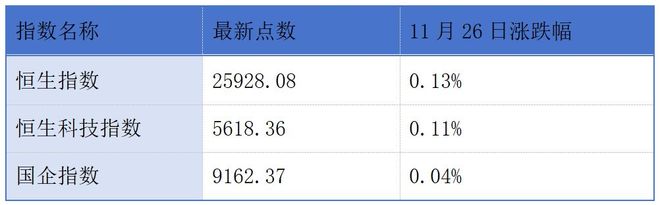
Group 1: Stock Buybacks in Hong Kong - Hong Kong companies have repurchased shares worth approximately 1544.15 billion HKD, with 247 companies buying back a total of 67.69 million shares as of November 25 [1] - In November alone, 90 companies repurchased shares totaling around 83.33 million HKD, with a concentration in sectors such as finance, information technology, consumer goods, healthcare, and energy [1] - The trend of stock buybacks is expected to continue into 2025, with leading companies demonstrating confidence in their valuations and contributing to market stability [1] Group 2: New Listings on Hong Kong Stock Exchange - Newguodu (SZ300130) has submitted its prospectus to the Hong Kong Stock Exchange, aiming to expand its financing channels and enhance its competitiveness in the global payment sector [2] - Olin Bio (SH688319) has also filed for a listing on the Hong Kong Stock Exchange, focusing on innovative vaccines, particularly in the areas of "super bacteria vaccines" and "adult vaccines" [3] - Zhongjian Technology (SZ002779) has applied for a listing on the Hong Kong Stock Exchange, seeking to leverage the capital market to expand its business in outdoor power equipment [4] Group 3: Hong Kong Stock Market Performance - The Hang Seng Index closed at 25928.08, with a slight increase of 0.13% on November 26 [5] - The Hang Seng Tech Index reached 5618.36, reflecting a gain of 0.11% [5] - The National Enterprises Index stood at 9162.37, showing a modest rise of 0.04% [5]


速递|GLP-1授权甘李出海拉美!科兴博凡格鲁肽出海巴西7亿美元合同
GLP1减重宝典· 2025-11-26 15:30
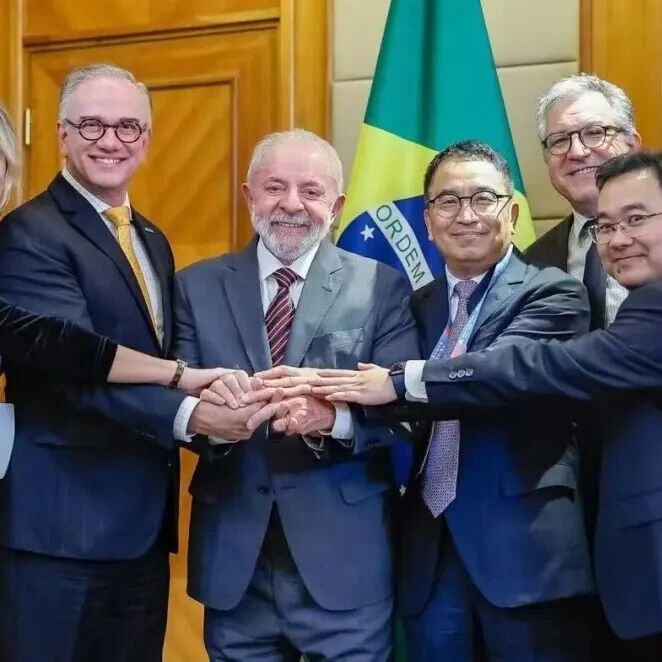
Group 1 - The core viewpoint of the article highlights the significant partnership between Chinese vaccine company Sinovac and the Brazilian government, marking a milestone in international vaccine collaboration with a contract worth over $700 million for the supply of vaccines over the next decade [4][9]. - Sinovac becomes the first Chinese vaccine company to enter Brazil's Product Development Partnership (PDP) program, which aims to enhance local vaccine production capacity rather than merely supplying finished products [4][6]. - The collaboration is seen as a strategic move to strengthen Brazil's public health system by localizing key medicines and ensuring sustainable self-sufficiency [4][6]. Group 2 - The signing ceremony took place in São Paulo, attended by key Brazilian officials, indicating the high-level support for this partnership [4]. - Sinovac's rapid response during public health emergencies in Brazil, such as providing hepatitis A vaccines during severe flooding, has built trust with local authorities and the public [8]. - The partnership is an extension of previous collaborations, including a deal witnessed by Brazilian President Lula during the China-Latin America Forum [6].
“父女档”带队,疫苗企业欧林生物闯关港交所
Mei Ri Jing Ji Xin Wen· 2025-11-26 15:11
Core Viewpoint - Company Olin Bio is seeking to list on the Hong Kong Stock Exchange to become an "A+H" listed company, aiming to raise funds for innovative vaccine research and to reduce reliance on its single core product, the adsorbed tetanus vaccine [1][6]. Group 1: Company Overview - Olin Bio was founded by industry veteran Fan Shaowen and his daughter Fan Fan, with a focus on the adsorbed tetanus vaccine as its core product [1][3]. - The company became the first private enterprise in China to produce and sell the adsorbed tetanus vaccine in 2017, which has since become its main revenue source [1][3]. Group 2: Financial Performance - In 2024, Olin Bio achieved a revenue of 589 million yuan, a year-on-year increase of 18.7%, with a net profit of 20.76 million yuan, up 18.2% [3]. - For the first half of 2025, the company reported a revenue of 306 million yuan, representing a year-on-year growth of 35.17%, and a net profit of approximately 13.2 million yuan, marking a turnaround from losses [3]. Group 3: Product and Market Dynamics - The adsorbed tetanus vaccine accounted for over 90% of the company's revenue in 2024, with sales reaching 536 million yuan, a 15.7% increase from the previous year [3]. - The company faces challenges from increasing competition in the vaccine market, despite having a first-mover advantage as the first private producer of the adsorbed tetanus vaccine [3][6]. Group 4: Research and Development - Olin Bio is developing four new Class 1 vaccines, including a recombinant Staphylococcus aureus vaccine and an oral recombinant Helicobacter pylori vaccine, with clinical trials planned for 2026 [4]. - The company has faced funding challenges, with a net cash flow from operating activities of -9.73 million yuan in 2024, indicating ongoing financial pressure [5][6]. Group 5: IPO and Market Conditions - The company has recently attempted to raise funds through a private placement, which was terminated due to market conditions and stock price fluctuations [5]. - Olin Bio plans to issue up to 25% of its total share capital in H-shares to fund research, production upgrades, and international expansion, but faces uncertainty regarding market acceptance due to its reliance on a single product and cash flow issues [6].
流感「抬头」,疫苗价「雪崩」,行业协会坐不住了
3 6 Ke· 2025-11-26 13:48
Core Insights - The price war in the vaccine industry is driven by changes in supply and demand dynamics, leading to significant price reductions and financial losses for companies [2][10][15] Group 1: Price Trends - The price of a three-valent flu vaccine has dropped to 5.5 yuan, lower than the price of a cup of milk tea, indicating a drastic reduction in vaccine prices [3][7] - The price of the four-valent flu vaccine has decreased from 128 yuan to 88 yuan, with further reductions expected as competition intensifies [7][8] - HPV vaccines have also seen significant price drops, with the two-valent HPV vaccine priced at 27.5 yuan, down over 90% from previous prices [8] Group 2: Industry Response - The China Vaccine Industry Association issued an initiative to combat "involutionary" competition, urging members to avoid bidding below cost and maintain price stability [4][5] - The association's initiative aims to stabilize price expectations but may not address the underlying issue of overcapacity in the industry [3][10] Group 3: Market Dynamics - The vaccine market is experiencing overcapacity due to an influx of companies entering the sector, leading to intense competition and price wars [10][11] - Demand for vaccines is under pressure, with declining public trust in vaccines and a decrease in birth rates affecting the market for childhood vaccines [11][12] Group 4: Financial Impact - Vaccine companies have reported significant financial losses, with overall revenue for listed vaccine companies dropping by 60% and net profits declining by 113% in the first half of 2025 [12][14] - Major companies like Zhifei Biological and Wantai Biological have reported substantial revenue declines and net losses, reflecting the severe impact of the price war [12][14] Group 5: Future Outlook - Experts suggest that the industry may need to undergo a period of consolidation and restructuring, which could last five to ten years, to address the current challenges [15] - Companies are exploring international markets and differentiation strategies to navigate the competitive landscape, with some reporting significant increases in exports [15]





流感「抬头」,疫苗价「雪崩」,行业协会坐不住了
36氪· 2025-11-26 13:39
Core Viewpoint - The article discusses the ongoing price war in China's vaccine industry, driven by changes in supply and demand dynamics, leading to significant price reductions and financial losses for companies [4][15][22]. Group 1: Price War Dynamics - The price of a three-valent flu vaccine has dropped to 5.5 yuan, cheaper than a cup of milk tea, indicating a severe price competition in the vaccine market [5][11]. - The China Vaccine Industry Association has issued an initiative to combat "involution-style" competition, urging members to avoid bidding below cost and threatening penalties for violations [6][8][10]. - The price war has persisted for two years, with the association's initiative being the first formal stance against low-price competition, although it may not resolve the underlying issue of overcapacity [6][10][22]. Group 2: Supply and Demand Changes - The supply side is characterized by homogenization and overcapacity, with many companies entering the vaccine market, leading to intense competition and price wars [16][17]. - Demand is also under pressure, with declining public trust in vaccines and a decrease in vaccination rates, particularly for flu vaccines, which averaged below 4% in China from 2020 to 2023 [17][19]. - The shift in focus from childhood vaccines to adult vaccines due to declining birth rates has intensified competition in the adult vaccine market [17][19]. Group 3: Financial Impact on Companies - The financial repercussions of the price war are evident, with vaccine companies experiencing a 60% drop in revenue and a 113% decline in net profit in the first half of 2025 [19][20]. - Major companies like Zhifei Biological and Wantai Biological have reported significant losses, with Zhifei's revenue down 66.53% and net profit loss of 12.06 billion yuan [20][21]. - Despite some companies showing growth in sales, the overall trend indicates that increased revenue does not equate to increased profit due to drastic price reductions [21][22]. Group 4: Future Outlook and Strategies - Experts suggest that the industry is in a "deep cold moment," requiring a period of consolidation and restructuring that could last five to ten years [23]. - Companies are exploring two main strategies to navigate the competitive landscape: expanding into emerging markets and focusing on differentiated products to meet unmet clinical needs [24].


当带状疱疹疫苗开始“买一送一”
3 6 Ke· 2025-11-26 12:15
Core Insights - The article discusses the competitive landscape of the shingles vaccine market in China, highlighting the unexpected price war initiated by GSK's vaccine, Shingrix, which is being promoted through a "buy one get one free" offer [1][2][4]. Market Dynamics - Shingrix's original price for two doses is 3,260 yuan, but with the promotion, the cost is reduced to 1,652 yuan, effectively a 50% discount [2]. - The vaccine has shown exceptional efficacy, reducing the risk of shingles by 97.2% in individuals aged 50 and above, and offers long-lasting immunity [2][7]. Competitive Landscape - Following GSK's price reduction, domestic competitor, Baike Biological, has also adjusted its pricing strategy, with its vaccine now priced around 1,400 yuan, and further discounts being offered [4]. - The domestic market for shingles vaccines has not met expectations, with Baike Biological reporting a significant drop in sales and revenue due to high return rates and low demand [8]. Consumer Behavior and Market Potential - Despite the high demand for shingles vaccines among the elderly population, the uptake has been low, with only 0.1% vaccination rate among those aged 50 and above in 2021 [9][11]. - The mismatch between the high cost of the vaccine and the financial capability of the target demographic is a significant barrier to market growth [11]. Challenges in Market Expansion - The competitive landscape in China is more fragmented compared to overseas markets, with both imported and domestic vaccines vying for market share, complicating the expansion efforts for Shingrix [11][13]. - There is a lack of awareness and understanding of the vaccine among the target demographic, which hinders its adoption [12][13].
氪星晚报|星动纪元与联合国工业发展组织达成战略合作;阿里千问进入电脑桌面,覆盖超1亿用户;渠江特大桥主桥成功合龙,成达万高铁全线路基工程进度超98%
3 6 Ke· 2025-11-26 11:23
Group 1 - Sinovac has signed a ten-year vaccine cooperation agreement with Brazil, marking the largest international order for a Chinese vaccine company, valued at over $700 million for approximately 60 million doses of varicella and rabies vaccines [1] - The partnership involves collaboration with local Brazilian partners Tecpar Institute and Eurofarma to enhance local vaccine production capabilities [1] Group 2 - Starry Era has established a strategic cooperation agreement with the United Nations Industrial Development Organization (UNIDO) during the 21st Industrial Development Conference, focusing on potential collaboration in the field of embodied intelligent humanoid robots and technological innovation [2] Group 3 - Suno, an AI platform, has reached a cooperation agreement with Warner Music Group to jointly develop a new generation of licensed AI music, resolving previous legal disputes over copyright infringement [4] Group 4 - Alibaba's Qianwen has integrated with the new Quark AI browser, becoming a desktop-level intelligent assistant, with over 110 million installations, marking a significant step in expanding its capabilities beyond a single app [5] Group 5 - Bain & Company predicts that the global humanoid robot market will enter a golden development period in the next 5 to 10 years, with annual sales potentially reaching 6 million units and a market size exceeding $120 billion by 2035, with an optimistic scenario suggesting sales could exceed 10 million units and a market size of $260 billion [5] Group 6 - ByteDance's Tomato series business is expected to exceed 30 billion yuan in revenue in 2024, with a projected overall revenue of over 60 billion yuan this year, primarily driven by Tomato Novel [6] Group 7 - ByteDance plans to launch a new generation of PICO products in 2026, featuring a self-developed chip for low-latency, high-precision processing of high-definition video [7] Group 8 - Guohai Securities' chief economist predicts that the A-share market is likely to continue a slow bull trend, with technology remaining a key focus, supported by strong liquidity from household deposits [8] Group 9 - China Galaxy Securities acknowledges the existence of an AI bubble but considers the overall risk to be manageable at this time, drawing comparisons to the internet bubble [8] Group 10 - The Ministry of Industry and Information Technology and other departments have outlined plans to optimize the supply structure of consumer goods by 2027, aiming to create three trillion-level consumption fields and ten hundred-billion-level consumption hotspots [9] Group 11 - The Chengdu-Dazhou-Wanzhou high-speed railway, a significant project in China's high-speed rail network, has achieved over 98% completion in its foundation engineering, with the main bridge successfully capped [9]

50亿元!昔日“疫苗之王”科兴生物拿下业内最大国际订单
Xin Lang Cai Jing· 2025-11-26 10:36
Core Viewpoint - Sinovac Biotech has secured a significant vaccine contract worth approximately 5 billion RMB, marking the largest international order for a Chinese vaccine company to date [1] Group 1: Contract Details - Sinovac signed two PDP (Product Development Partnership) projects with the Brazilian Ministry of Health to supply a total of approximately 60 million doses of varicella and rabies vaccines over the next 10 years, valued at over 700 million USD [1] - This contract represents the longest-term and highest-value international order obtained by a Chinese vaccine company [1] Group 2: Market and Regulatory Challenges - Sinovac has been under market scrutiny due to a delisting notice received from NASDAQ, which stated that unless the company requests a hearing, its securities will be suspended from trading on November 21, 2025 [1] - The delisting decision was attributed to the company's failure to comply with NASDAQ listing rules, specifically not submitting the 20-F annual report for the fiscal year ending December 31, 2024, by the extended deadline [1] - The delay in submitting the report was due to the resignation of the company's independent registered accounting firm [1] Group 3: Company Background and Financial Performance - Founded in 2001, Sinovac is a biotechnology and vaccine production company that became the first Chinese vaccine company to be listed in the U.S. through a reverse merger in 2003 [3] - The company experienced significant growth during the COVID-19 pandemic, reporting total revenue of 19.375 billion USD and a net profit of 8.46 billion USD in 2021 [4] - However, recent financial reports indicate a decline in sales, with 12.13 million USD in revenue for the first half of 2024, a decrease of 13.6% year-on-year, and a net loss of 6.86 million USD [4] - As of June 30, 2024, the company had cash and cash equivalents totaling 1.1 billion USD [4]