节能环保

Search documents
女星内幕交易股票一审获刑两年多 曾出境躲避监管调查
Hua Xia Shi Bao· 2025-09-09 10:08
Core Points - The article discusses the insider trading case involving actress Chu Yinan and the chairman of a company, which resulted in a loss of 5 million yuan due to a failed restructuring attempt [1][9] - Chu Yinan has been sentenced to over two years in prison for her involvement in the insider trading case, which is currently under appeal [1][8] Group 1: Insider Trading Case - The insider trading case is linked to the restructuring of Tongfang Co., Ltd. in 2017, where the company aimed to acquire shares of Shanghai Laishi Blood Products Co., Ltd. [3][4] - Chu Yinan was found to have a close relationship with insider information holder Zheng Yuewen, and she engaged in insider trading using both trust and personal accounts [4][7] - The Beijing Securities Regulatory Bureau previously fined Chu Yinan 400,000 yuan for her actions, which included evading investigation by changing phone numbers and leaving the country [2][5] Group 2: Financial Impact - Chu Yinan's insider trading involved buying approximately 1.8 million shares of Tongfang Co., Ltd. for about 25.12 million yuan, leading to a loss of around 512,000 yuan when sold [5][7] - In addition, she spent over 3.6 million yuan on insider trading through her personal account, resulting in a profit of only 6,400 yuan [7] - The case highlights the severe consequences of insider trading, as the actions were deemed to have no legitimate information source, constituting a violation of the Securities Law [7][10]

重庆发布64个首台(套)重大技术装备产品,体现最新突破
Zhong Guo Xin Wen Wang· 2025-09-08 00:46
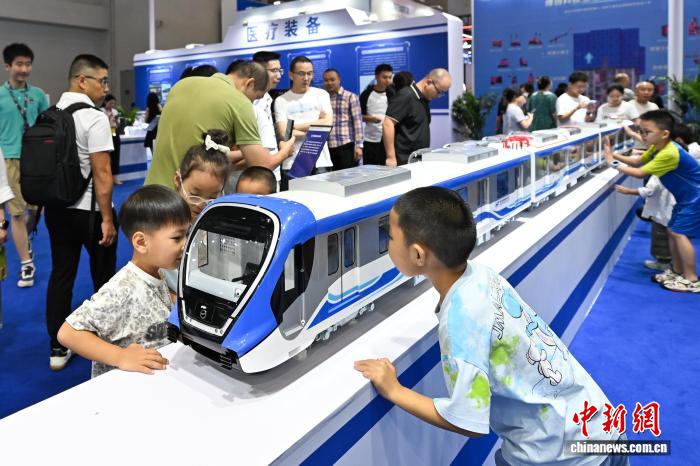
Core Points - The Chongqing Economic and Information Commission officially released the third batch of major technological equipment products, highlighting breakthroughs in high-end equipment research and industrial upgrades in Chongqing [1] - The new products cover six key areas: intelligent manufacturing, energy conservation and environmental protection, power and electrical, transportation, intelligent detection, and medical equipment [1] - Notable products include a coal mine gas extraction drilling robot, a heavy-duty robotic arm joint reducer, an intelligent ventilation controller, a dual-flow urban train, and a nano time gauge [1] Summary by Category Product Highlights - The coal mine gas extraction drilling robot is the first of its kind in China, integrating positioning navigation, autonomous movement, condition perception, and automatic drilling [1] - The heavy-duty robotic arm joint reducer fills a gap in the domestic market for precision joint reducers used in electric-driven heavy-duty robotic arms [1] - The intelligent ventilation controller is the first electromechanical integrated product in the ventilation market, enhancing the localization level of core components [1] - The dual-flow urban train utilizes a domestically developed dual-flow automatic switching technology for interconnectivity between suburban and urban areas [1] - The nano time gauge breaks through traditional displacement measurement technology limitations, overcoming foreign technological barriers in precision displacement measurement [1] Collaboration and Market Impact - Several companies in Chongqing signed cooperation agreements with research institutes and key user units across various fields, including rail transportation, clean energy, intelligent manufacturing, and green environmental protection [2] - The implementation of these projects is expected to accelerate the application of major technological equipment from "first set" to "multiple sets," expanding market application space [2] - Since 2015, nearly 700 equipment products have been included in the first set promotion directory, achieving sales of over 1,500 sets, amounting to more than 8 billion yuan [2] - As of 2023, Chongqing has recognized 97 companies with 160 products, continuously promoting the transformation of technological breakthroughs into real production capacity [2]
重庆发布64个首台(套)重大技术装备产品 体现最新突破
Zhong Guo Xin Wen Wang· 2025-09-06 12:13
Core Insights - Chongqing has officially released the third batch of major technological equipment products, showcasing advancements in high-end equipment research and industrial upgrades [1][3] Group 1: Product Categories - The newly recognized products span six key areas: intelligent manufacturing, energy conservation and environmental protection, power and electrical, transportation, intelligent detection, and medical equipment [3] - Notable products include: - A coal mine gas extraction drilling robot, the first of its kind in China, featuring integrated navigation and autonomous drilling capabilities [3] - A precision joint reducer for electric-driven heavy-duty robotic arms, filling a domestic market gap [3] - An intelligent ventilation controller, enhancing domestic production levels of core components [3] - A dual-flow regional train utilizing innovative automatic switching technology for urban and suburban connectivity [3] - A nano time grid that overcomes traditional measurement limitations, breaking foreign technological monopolies [3] Group 2: Market Impact - Since 2015, nearly 700 equipment products have been included in the first set promotion directory, resulting in over 1,500 units sold, generating more than 8 billion yuan in revenue [4] - As of 2023, 97 companies have been recognized with 160 products, indicating a continuous push for technological breakthroughs to be transformed into productive capabilities [4]

天津宁河区“十四五”落地京冀实体项目115个
Bei Jing Ri Bao Ke Hu Duan· 2025-09-05 10:10
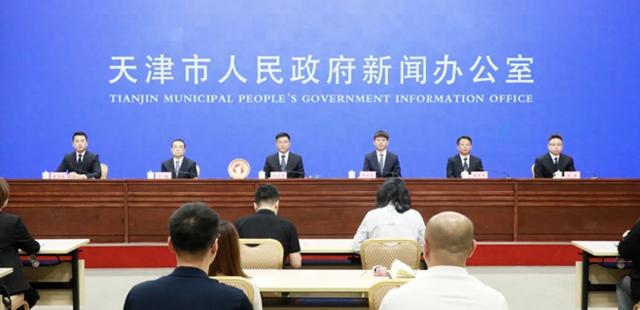
Core Viewpoint - The news highlights the progress and initiatives taken by Ninghe District in Tianjin to integrate into the Beijing-Tianjin-Hebei collaborative development strategy during the 14th Five-Year Plan period, focusing on industrial cooperation, ecological governance, transportation connectivity, shared livelihoods, and the establishment of a demonstration zone [1][3][4]. Group 1: Industrial Cooperation - Ninghe District has introduced over 50 projects from Beijing with a total investment exceeding 203 billion yuan, establishing long-term partnerships with state-owned enterprises like China Nuclear Group and China General [3]. - Key projects include the construction of a new campus for Civil Aviation University of China and the relocation of Beijing Red Star Brewery's Tianjin branch, contributing to a positive cycle of project signing, implementation, and reserve [3]. Group 2: Ecological Governance - The district has implemented a collaborative approach to air pollution control for seven consecutive years, establishing the first aerial video monitoring system for open burning in the Beijing-Tianjin-Hebei region [3]. - Joint waterway inspections and emergency drills have been conducted, leading to Ninghe being recognized as a "Biodiversity Charming City" by the United Nations [3]. Group 3: Transportation Connectivity - A multi-node, grid-like transportation network has been developed, with the completion of inter-provincial roads such as Binyu Road and Meifeng Road, and seamless public transport connections with "flying areas" [3]. - Ongoing projects like the G112 expansion are accelerating cross-regional infrastructure development to facilitate industrial collaboration [3]. Group 4: Shared Livelihoods - Initiatives such as "instant approval" for business registrations and cross-province service agreements have been implemented to enhance administrative efficiency [4]. - The district has organized job fairs targeting high-skilled talent and improved healthcare access through inter-regional medical billing [4]. Group 5: Demonstration Zone Development - Ninghe District is committed to advancing the Beijing-Tianjin cooperation demonstration zone, establishing a dedicated task force to streamline management processes and expedite key projects [4]. - Recent developments include the opening of Xinjinhan Road and the Central Park, with ongoing efforts to revitalize the Yuxiangjun project [4].
信能低碳涨超15% 公司参与环保项目扩大收入 近期发生转仓异动
Zhi Tong Cai Jing· 2025-09-04 06:57
Core Viewpoint - Xinneng Low Carbon (00145) experienced a significant stock price increase of over 15%, closing at 0.249 HKD with a trading volume of 1.8339 million HKD, indicating positive market sentiment towards the company [1] Financial Performance - For the six months ending June 30, 2025, Xinneng Low Carbon reported revenues of 8.72 million HKD, a decrease of 15.03% year-on-year [1] - The revenue breakdown shows that energy-saving business contributed 8.083 million HKD, while loan financing business generated 0.637 million HKD [1] - The company recorded a loss attributable to shareholders of 8.761 million HKD, which represents a narrowing of 1.65% compared to the previous year [1] - Basic loss per share was reported at 0.043 HKD [1] Shareholder Activity - On September 3, shareholders transferred shares from Yingli Securities to Yue Shang International Securities, with a transfer market value of 2.4699 million HKD, accounting for 5.03% of the total shares [1] Strategic Initiatives - The company continues to engage in energy-saving business operations in mainland China and is also participating in environmental projects to diversify its revenue sources and expand its market share in green solutions [1]
京运通股价跌5.03%,南方基金旗下1只基金位居十大流通股东,持有1339.61万股浮亏损失294.71万元
Xin Lang Cai Jing· 2025-09-04 03:30
Group 1 - The core point of the news is that Beijing Jingyuntong Technology Co., Ltd. experienced a stock decline of 5.03%, with a current share price of 4.15 yuan and a total market capitalization of 10.021 billion yuan [1] - The company, established on August 8, 2002, and listed on September 8, 2011, operates in four main industries: high-end equipment manufacturing, photovoltaic power generation, new materials, and energy conservation and environmental protection [1] Group 2 - From the perspective of major circulating shareholders, Southern Fund's Southern CSI 1000 ETF (512100) increased its holdings by 2.5518 million shares in the second quarter, now holding a total of 13.3961 million shares, which represents 0.55% of the circulating shares [2] - The estimated floating loss for Southern CSI 1000 ETF today is approximately 2.9471 million yuan [2] - The Southern CSI 1000 ETF was established on September 29, 2016, with a latest scale of 64.953 billion yuan, and has achieved a year-to-date return of 22.23% [2]

湖北聚焦产业倍增战略“三线并进” 五大支柱产业2025年有望全部迈入万亿级
Chang Jiang Shang Bao· 2025-09-02 23:55
Core Insights - Hubei Province is committed to enhancing its industrial economy during the "14th Five-Year Plan" period, aiming for significant growth in industrial output and modernization of its industrial structure [1][2][7] Industrial Growth and Structure - By 2024, Hubei's industrial enterprises are projected to generate revenues of 4.7 trillion yuan, ranking second in Central China, with a manufacturing value added of 1.76 trillion yuan [1] - The province has over 20,000 industrial enterprises, with 19 industries expected to reach a scale of 100 billion yuan [2] - Hubei's strategic focus includes upgrading traditional industries, nurturing emerging sectors, and planning for future industries [2][9] Technological Innovation - Hubei has been recognized as one of five provinces in the "National Action to Stimulate Industrial Innovation" initiative, with significant advancements in manufacturing innovation centers and R&D capabilities [3][8] - The province's R&D investment is expected to grow by 12.2% in 2024, with a strong emphasis on patent generation and technology breakthroughs [8] Digital Transformation - The number of 5G base stations in Hubei has increased from 31,000 at the end of the "13th Five-Year Plan" to 176,000, marking a 4.6-fold increase [4] - Over 58,000 industrial enterprises have adopted cloud computing, representing nearly 60% of the total, with significant growth in the digital economy [4] Green Manufacturing - Hubei has achieved an 11.8% reduction in energy consumption per unit of industrial value added, with a strong focus on green manufacturing practices [5] - The province has created 268 national-level green factories, contributing to 24.72% of the total industrial output [5] Emerging Industries - Strategic emerging industries are expected to play a crucial role in Hubei's economic future, with high-tech manufacturing value added growing at an annual rate of 19.7% [7] - By 2024, the value added from the digital economy is projected to exceed 50% of the total, maintaining Hubei's leading position in Central China [7] Investment and Support - Hubei plans to continue its support for strategic emerging industries during the "15th Five-Year Plan," focusing on enhancing innovation capabilities and promoting the integration of technology and industry [9]
湖北高新技术企业近五年增长2.9倍
Zhong Guo Xin Wen Wang· 2025-09-02 15:28
Group 1 - Hubei Province's high-tech enterprises have increased by 2.9 times since the beginning of the 14th Five-Year Plan, with projections to exceed 30,000 by 2024, ranking first in Central China [1] - The province's focus on emerging industries, represented by "light, chip, screen, terminal, and network," is seen as a new competitive advantage, with key clusters continuously developing [1] - By 2024, three major industries in Hubei—optoelectronics information, automotive manufacturing and services, and health—are expected to surpass 1 trillion yuan in scale, while several advantageous industries will exceed 500 billion yuan [1] Group 2 - The biopharmaceutical manufacturing revenue in Hubei is projected to reach 123.5 billion yuan in 2024, reflecting a year-on-year growth of 3.5% [1] - China Information Communication Technology Group is focusing on AI and computing infrastructure opportunities, aiming to enhance development scale and strengthen collaboration with leading enterprises in Hubei [2] - Hubei will continue to increase support for strategic emerging industries, emphasizing the construction of innovation platforms led by national laboratories and research institutions [2]
我国碳市场领域首份中央文件发布,碳中和ETF(159790)逆势翻红
Mei Ri Jing Ji Xin Wen· 2025-09-02 06:24
Group 1 - The A-share market experienced a decline with over 4,300 stocks falling, while the Carbon Neutrality ETF (159790) rose against the trend, achieving a trading volume exceeding 24 million and a total scale of 2 billion [1] - The recent issuance of the document "Opinions on Promoting Green and Low-Carbon Transition and Strengthening National Carbon Market Construction" marks the first central government document in China's carbon market sector, outlining a long-term development timetable, roadmap, and tasks for the national carbon market [1] - Over four years of development, the national carbon market has shown stable progress and operation, achieving significant results, with the "14th Five-Year Plan" energy achievements on track [1] Group 2 - The Carbon Neutrality ETF (159790) is the largest carbon neutrality-themed ETF in the market, tracking the China Securities Low-Carbon Economy Theme Index, focusing on companies in batteries, electricity, and photovoltaic equipment [2] - The ETF benefits from the national "3060" carbon peak and carbon neutrality goals, with substantial growth potential for related new energy and energy-saving environmental protection companies [2] - The index covers various sectors and enterprises related to carbon reduction, allowing investors to accurately grasp market hotspots [2]
【广发宏观王丹】8月中观面的四个景气线索
郭磊宏观茶座· 2025-09-01 11:42
Core Viewpoint - The manufacturing PMI for August slightly increased by 0.1 points to 49.4, with 7 out of 15 sub-sectors remaining in the expansion zone, consistent with previous values [1][5][6]. Group 1: Industry Performance - Industries showing improvement in August primarily include high-tech manufacturing (computers, pharmaceuticals), equipment manufacturing (specialized, automotive), and some raw material sectors (non-ferrous, non-metallic, petrochemical, chemical), along with the textile and apparel industry. This improvement is driven by macroeconomic factors such as policy benefits, strong export orders, and price recovery due to "anti-involution" [1][9][10]. - The sectors with significant declines in August include general equipment, electrical machinery, metals, chemical fibers and plastics, and food. This decline is attributed to high capital usage for "equipment renewal" in the first half of the year, a decrease in export orders, and self-imposed constraints on capital expenditure by companies [2][13]. - The absolute prosperity index shows that specialized and general equipment sectors are relatively leading, with specialized equipment reaching over 95% in the past four years, driven by "dual heavy" projects and "AI+" initiatives [2][14]. Group 2: Emerging Industries - In emerging industries, both new energy and energy-saving environmental protection sectors are in the expansion zone, likely due to accelerated fiscal funding and project bidding since the end of the second quarter. The sales prices in these sectors increased by 4.6% and 2.6% respectively [3][17][18]. - The construction industry saw a notable decline in prosperity, dropping 1.5 points to 49.1, with infrastructure construction experiencing a downturn but new orders improving, indicating a potential acceleration in project funding and signing [3][19][21]. Group 3: Service Sector Performance - The service sector PMI rose by 0.5 points to 50.5, reaching a new high for the year. Key drivers include increased activity in travel-related sectors during the summer, high capital market service activity, and continued strength in information technology services [4][22][23]. - The service sector's performance indicates a recovery in consumer spending related to summer travel and robust capital market activities, with various service industries showing improvements in their respective PMIs [4][24]. Group 4: Summary Insights - The short-term indicators of prosperity in August highlight four key areas: raw materials related to "anti-involution," large projects and "AI+" related industries, summer travel-related service consumption, and capital market services. These indicators exhibit structural characteristics, while the overall economic momentum is still adjusting [4][25].