
AI

Search documents
A股超4600股上涨,AI应用批量涨停,港股智谱狂飙近40%
2 1 Shi Ji Jing Ji Bao Dao· 2026-02-09 07:53
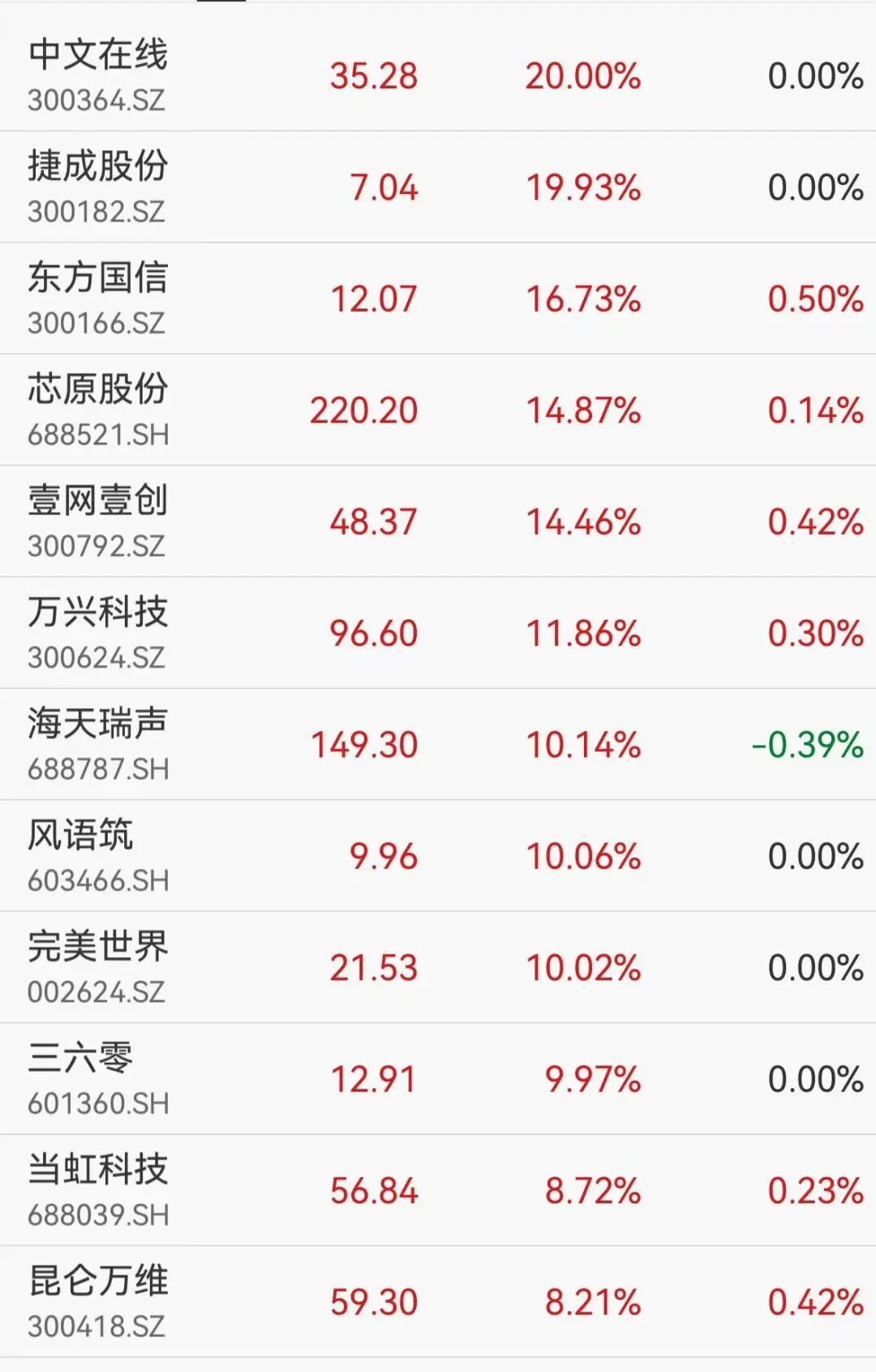
Market Overview - The A-share market saw a strong opening with the Shanghai Composite Index rising over 1% and the Shenzhen Component Index increasing by more than 2% [1] - The total trading volume in the Shanghai and Shenzhen markets reached 2.25 trillion yuan, an increase of 103.8 billion yuan compared to the previous trading day, with over 4,600 stocks rising [1] AI Sector Performance - The AI application sector experienced a significant surge, with multiple stocks hitting the daily limit, including 360 (601360), Ingravity Media (603598), Rongxin Culture (301231), and others [1] - The launch of new AI models by companies such as Keling AI and ByteDance indicates rapid advancements in video generation technology, marking a breakthrough in the multi-modal field [3] Semiconductor and Related Industries - The semiconductor sector showed strong performance, with stocks like Juguang Technology rising over 17% and Chipone Technology increasing nearly 15% [4] - The overall trend in the semiconductor industry reflects a growing interest and investment in technology, particularly in AI and related applications [4] Precious Metals and Communication Services - The precious metals sector saw a short-term rally, with Hunan Silver (002716) hitting the daily limit and other related stocks following suit, as gold and silver prices increased [4] - The communication services sector also experienced gains, with stocks like Guanghuan New Network (300383) rising over 10% [4] Individual Stock Highlights - Shanshan Holdings (600884) achieved a limit-up on the opening day, marking its second consecutive limit-up, following the announcement of a restructuring investment agreement [5] - In the Hong Kong market, the Hang Seng Index and Hang Seng Technology Index both rose over 1%, with semiconductor and AI stocks performing well [5] - Pop Mart's stock price reached a new high since October 2025, with significant growth in global employee numbers and registered members [5]

沸腾!暴涨原因,找到了!
Zhong Guo Ji Jin Bao· 2026-02-09 07:52
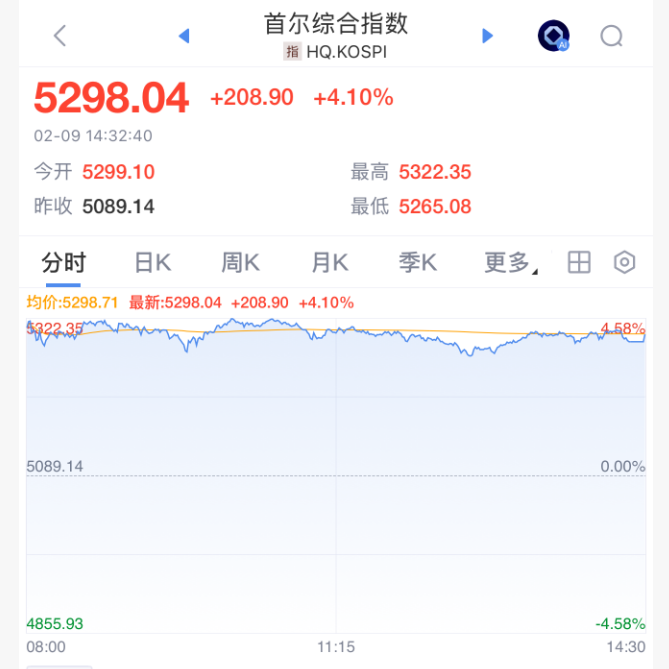
【导读】全线暴涨,一起找找原因! 中国基金报记者 泰勒 兄弟姐妹们啊,今天亚洲时段,风险资产全线暴涨,A股、日韩股市、黄金、白银价格都在上涨,就连大幅溢价的白银基金,也在跌停板上直线拉 涨,相信大家今天都挣钱了吧! 一起看看发生了什么事情。 日韩暴涨 中国资产暴涨 2月9日,A股、港股全线大涨。市场全天高开高走,沪指涨超1%,重返4100点上方,截至收盘,沪指涨1.41%,深成指涨2.17%,创业板指涨 2.98%。 港股方面,三大指数均涨近2%。 2月9日,MSCI亚太指数一度上涨2.4%,刷新历史最高点;被视为AI投资"风向标"的韩国KOSPI指数上涨4.1%。日经225指数在高市早苗赢得大选 后,一度大涨5.7%并创纪录新高。这一切发生在美股上周五大约反弹2%之后,帮助市场收复了部分当周跌幅。 黄金、白银也继续走高。 分析师表示:"这次反弹,与其说是在追逐风险,不如说是在对冲不确定性消退后的回补。上周五美国市场的表现强劲,日本和泰国更清晰的政治 结果也帮助稳定了情绪。如果全球波动继续缓和,亚洲看起来更占优势。" 东方汇理财富管理亚洲首席策略师Francis Tan也表示:"国际投资者正在花时间重新思考并 ...
中信建投:自主Agent发展迅速,多模态催化内容市场迭代
Xin Lang Cai Jing· 2026-02-09 06:24
Group 1 - The core viewpoint of the article highlights the advancements in AI technologies by companies like Anthropic and OpenAI, showcasing their new products and capabilities [1] - Anthropic has released Claude Opus 4.6, which utilizes Agent Teams and adaptive thinking to enhance integration within the Office ecosystem and manage complex engineering tasks, facilitating deeper penetration of AI in vertical sectors such as finance and law [1] - OpenAI has introduced GPT-5.3-Codex, which not only sets new standards in programming and terminal operations but also demonstrates an internal cycle of AI automated development through edge environment takeover and self-building capabilities [1] Group 2 - In the multimodal field, ByteDance's Seedance 2.0 has entered internal testing, addressing consistency issues in video generation through comprehensive multimodal references and refined lens control [1] - The collaboration between Seedance 2.0, Doubao, and Seedream is expected to form a full multimodal matrix, significantly reducing content production costs and accelerating commercialization [1]

A股三大重磅,突然来袭!三大变数,隐现!
券商中国· 2026-02-09 04:11
全球股市大反攻! 早盘,亚太股市承接上周五美股大举反攻。A股上证指数一度涨超50点,创业板指涨超2%,深成指涨超 1.5%,光伏、影视、算力硬件、化工等板块涨幅居前,沪深京三市上涨个股超4500只。 从结构上来看,三大驱动因素来袭:一是上周五英伟达大反弹,引爆了AI相关板块;二是特斯拉正评估美国 多个选址,计划扩大太阳能电池制造业务,引爆了太阳能板块;三是港股内房股持续大涨,带飞了A股房地产 板块。 那么,市场是否还存在变数? 光伏更猛,金晶科技一字涨停,聚和材料涨超10%,协鑫集成、连城数控、奥特维、钧达股份、晶科能源跟 涨。马斯克"带飞"整个板块。据报道,特斯拉正评估美国多个选址,计划扩大太阳能电池制造业务,目标在未 来三年内实现每年100吉瓦的太阳能制造能力。 房地产板块最近也蠢蠢欲动。港股内房股率先异动,旭辉控股集团涨超9%,富力地产涨超5%,融创中国涨超 4%,龙光集团、融信中国、碧桂园跟涨。 据西南证券研报,房地产行业阶段性企稳,成交同比大幅回升,政策持续宽松驱动市场回暖。2月43城新房、 14城二手房成交同比分别增长360.3%、443.7%,一线及核心二线城市回暖显著。包括大宗在内的资产价格飙 ...

港股IPO“提质”信号:一场质量保卫战的欢乐进行曲
Sou Hu Cai Jing· 2026-02-09 02:39
Core Insights - The Hong Kong IPO market is experiencing a significant transformation focused on quality, with regulatory bodies emphasizing the need for improved standards amidst a surge in new listings and fundraising [1][3][4] Group 1: Market Performance - As of February 8, 2026, the Hong Kong IPO market has seen 18 new listings, a year-on-year increase of 125%, with total fundraising reaching 67.55 billion HKD, a staggering increase of 1029.23% [1] - New economy sectors such as AI, semiconductors, and renewable energy are prominently represented, with over 60% of the 550 companies that filed for IPOs in 2026 coming from these fields [4] Group 2: Regulatory Changes - The Hong Kong Securities and Futures Commission has adopted a "zero tolerance" approach, halting the review of 16 problematic applications to ensure compliance and quality [3][4] - New regulatory measures include a quality assessment mechanism and stricter responsibilities for sponsors, ensuring that they thoroughly verify the accuracy of prospectus data [7][8] Group 3: Market Structure and Future Outlook - The "A+H" listing model is becoming more prevalent, with five A-share companies successfully listing in Hong Kong in 2026, indicating a shift towards a more integrated market structure [5] - Future innovations may include a "sandbox regulatory" approach to provide more flexible listing paths for tech companies, enhancing the overall market environment [6][9] - The introduction of advanced technologies like blockchain and AI is expected to improve the efficiency of the review process, making it more streamlined and effective [9]

东方证券:视频生成进入精准控制时代 创作平权带动BC两端加速渗透
Zhi Tong Cai Jing· 2026-02-09 02:24
东方证券发布研报称,应重视垂类多模态AI应用机会,看好技术突破、成本优化带来产业趋势加速发 展,带动用户增长、付费渗透和商业化再上台阶。此外,尤其关注有多模态AI应用出海布局的公司, 起量速率或更快。 东方证券主要观点如下: 年初至今,多模态视频生成赛道国产模型加速迭代,推动行业技术整体上行,与海外差距显著收窄 最大的边际变化在于,智能分镜降低用户进入门槛,多模态统一架构支持创作意图表达更高效灵活且可 控性提升,该行判断26年B端和C端拓展均会有较大进展,模型厂商在卷技术的同时,重点观测景气内 容赛道的AI渗透。 视频生成赛道迭代提速,推动行业技术跃升,海内外技术差距持续收窄 今年整体看,国内视频生成厂商进一步加速模型研发节奏,如快手可灵【2.0版本(25年4月)→2.5版本(25 年9月)→2.6版本(25年12月)→3.0版本(26年2月)】、即梦Seedance【1.0版本(25年6月)→1.5版本(25年12 月)→2.0版本(26年2月)】。随着各家最新模型发布,国内供给侧的技术天花板进一步提升,物理规律合 理性、运动流畅性、指令遵循能力等基础属性均显著增强,分镜能力、音画同出(海外前沿模型率先突 ...

【申万宏源策略 | 一周回顾展望】震荡区间下限逐步探明
申万宏源研究· 2026-02-09 01:32
以下文章来源于申万宏源策略 ,作者申万宏源策略 申万宏源策略 . 我们强调体系性、实战性 一、小波段调整到什么阶段了?总体赚钱效应、成长相对价值的赚钱效应回落至历史中高位。短期低性价比不再极端,快速回调阶段已经过去, 反弹随时发生,但后续可能还有确认震荡区间下限的过程。 小波段调整到什么阶段了?从量化情绪指标看,总体赚钱效应、成长相对价值的赚钱效应均已回落至历史中高位。浮盈偏高、过度交易、拥挤交 易的问题短期也有所缓和。短期低性价比不再极端,但性价比改善也尚不充分。快速回调阶段可能已经过去,但基于市场自身力量的反弹力量仍 有限。这个阶段,有效反弹需要新催化、新亮点再打开市场向上空间。美股反弹,A股科技也会反弹,但后续可能还有确认震荡区间下限的过 程。 二、中波段定位不变:2026年开门红行情是2025年结构性行情的拓展和延伸,当前仍处于第一阶段上涨行情高位区域。当主线板块静态估值提升 至历史高位后,抢跑远期基本面改善的行情阻力增加,市场开启中期震荡行情符合历史规律。等待产业趋势再进一步 + 缓和性价比问题,开启二 阶段上涨行情。只要震荡区间下限探明,基于中期机会做配置的窗口就会打开,而这更可能是一个可以从容配 ...

机构看涨昆仑万维至九百亿市值
2 1 Shi Ji Jing Ji Bao Dao· 2026-02-09 01:31
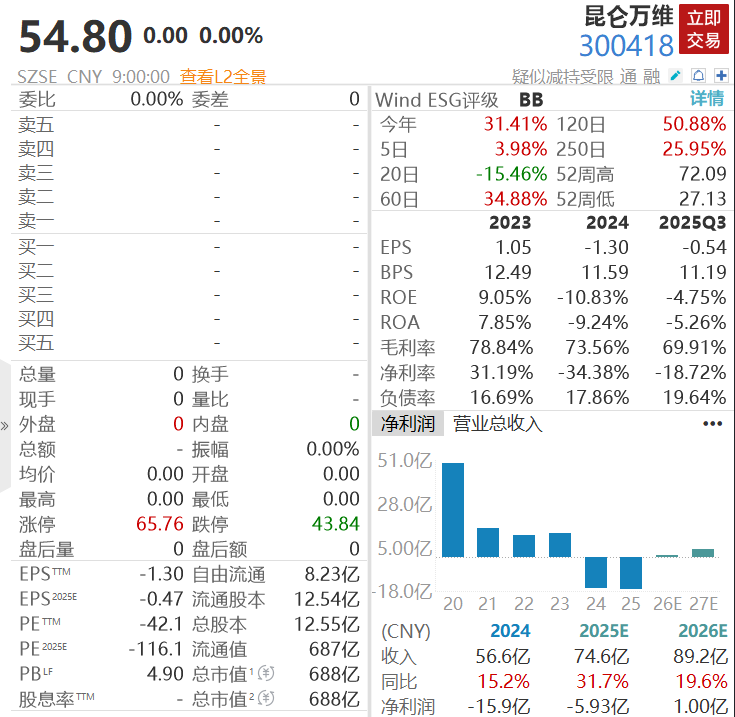
Core Viewpoint - Kunlun Wanwei is strategically shifting its focus from competing directly with major players in the AI field to building a differentiated competitive advantage in vertical markets and overseas expansion, aiming for long-term market positioning and ecological advantages rather than short-term profitability [2][5][9]. Financial Performance - For 2025, Kunlun Wanwei forecasts a net loss attributable to shareholders between 1.35 billion to 1.95 billion CNY, continuing the trend of losses from the previous year [2]. - The company expects a revenue growth of over 40% year-on-year for 2025, with an increasing proportion of revenue coming from overseas markets [2][3]. - In Q3 2025, the company achieved a net profit of 190 million CNY, marking a 180.13% year-on-year increase, but ended Q4 with losses [3][11]. Investment and R&D - From 2021 to 2024, Kunlun Wanwei's R&D expenditures increased from 628 million CNY to 1.598 billion CNY, with a total of 1.211 billion CNY spent in the first three quarters of 2025 [4]. - Sales expenses also rose significantly, reaching 2.891 billion CNY in the first three quarters of 2025, primarily for global promotion of AI applications [4]. Market Strategy - The company has opted for a differentiated competition strategy, focusing on vertical markets and AI application ecosystems rather than engaging in direct competition with leading firms in the general AI model space [5][6]. - Kunlun Wanwei has developed various AI models and applications, including the Skywork series and Mureka, which have shown significant advancements and commercial viability [6][7]. Growth Areas - The short drama segment has emerged as an unexpected growth point, with platforms like DramaWave and FreeReels achieving substantial user engagement and revenue growth [8]. - The company anticipates that its short drama business will generate 1.68 billion CNY in revenue for 2025, reflecting a 900% year-on-year increase [8]. Future Outlook - Analysts predict that 2026 will be a pivotal year for Kunlun Wanwei, with expectations of narrowing losses and potential profitability by 2027 [11]. - The company's total market value is currently estimated at 68.8 billion CNY, with a projected target market value of 93.2 billion CNY based on a sum-of-the-parts valuation approach [11].

童年的滚球兽「走进」现实?华为天才少年创业,全球首个虚实融合的实时交互视频模型来了
机器之心· 2026-02-09 01:18
Core Viewpoint - The article discusses the emergence of Xmax AI's real-time interactive video model X1, which allows users to seamlessly integrate virtual characters into their real-world environment, marking a significant advancement in the field of AI video generation and interaction [3][10][26]. Group 1: Technology and Innovation - Xmax AI has developed the X1 model, which enables real-time interaction with virtual characters using just a smartphone camera, eliminating the need for complex prompts or lengthy rendering times [4][10]. - The global AI video generation market is projected to grow from $614.8 million in 2024 to $2.5629 billion by 2032, indicating strong demand and competition in the sector [8]. - Xmax AI's approach focuses on making AI video generation accessible to the general public by lowering interaction barriers and enhancing real-world integration [10][26]. Group 2: Features of X1 Model - The X1 model offers four core functionalities: dimensional interaction, world filters, touch animations, and expression capture, allowing users to interact with virtual characters in a natural and engaging manner [10][11][14][16]. - Dimensional interaction allows users to summon characters into their environment using a reference image, while world filters enable real-time transformation of video styles based on uploaded images [11][14]. - Touch animations bring static images to life, allowing users to control movements through touch, and expression capture generates dynamic emojis based on real-time facial recognition [15][16]. Group 3: Technical Challenges and Solutions - Xmax AI faces significant technical challenges, including achieving ultra-low latency for real-time interactions, understanding user intent, and addressing data scarcity for training models [19][20]. - The company has innovated an end-to-end streaming re-rendering video model architecture to meet the demand for real-time responsiveness, reducing latency to milliseconds [24]. - To tackle the issue of intent understanding, Xmax AI has developed a unified interaction model that comprehensively interprets user gestures and actions [24]. Group 4: Team and Expertise - The founding team of Xmax AI comprises individuals with strong technical backgrounds, including experience at leading AI companies and academic institutions, which enhances their capability to address complex engineering challenges [22][23]. - The team has successfully built a robust technical foundation that combines algorithmic knowledge with practical engineering skills, positioning them well to innovate in the AI video generation space [22][24]. Group 5: Future Vision - Xmax AI aims to redefine user interaction with AI-generated content, envisioning a future where virtual characters can seamlessly integrate into daily life, serving as virtual companions or pets [26][28]. - The company's slogan, "Play the World through AI," encapsulates its mission to make the virtual world more interactive and accessible, allowing users to engage with digital content in a tangible way [28].

天风证券:建议投资主线降维为三个方向
Jin Rong Jie· 2026-02-09 00:37
天风证券表示,根据经济复苏与市场流动性,可以把投资主线降维为三个方向:1、AI产业革命带来的 算力、存力、 电力及应用的科技主线机会,2、内外共振,经济逐步修复,牛市主线风格"强者恒强", 但周期后半段易有所表现,3、赔率思维,即考虑风格轮动、底部反转的可能性。连续三年跑输但第四 年跑赢概率较大的行业有 食品饮料、农林牧渔、社会服务、 医药生物。AI产业趋势的进展取决于 AI应 用端和消费端的突破,重视AI巨头的布局。牛市初期资金更偏好少数高景气赛道,后期资金抱团聚焦 主线,新增资金获利难度提升,而周期股又具备低估值、高贝塔的属性,易随着基本面回暖的深化而发 挥较好的业绩弹性,获得增量资金青睐。 ...
