白酒

Search documents
刚性出厂价成历史,茅台拿回定价权 | 品牌新事
吴晓波频道· 2026-01-18 00:30
Core Viewpoint - The article discusses the dual pricing system of Moutai products, highlighting the challenges consumers face in purchasing at official prices due to market speculation and price manipulation [3][4][5]. Group 1: Pricing System and Market Dynamics - Moutai has experienced a "dual pricing system" where the factory price remains stable around 1,000 yuan, while market prices have historically peaked near 3,000 yuan, creating significant profit margins for resellers [3][4]. - The speculative frenzy has led to a distortion of brand value and consumer experience, pushing genuine demand for appreciation, dining, and collection to the sidelines [5]. - Moutai's recent initiatives, including the launch of its products on the iMoutai platform, are seen as tactical moves against scalpers and traditional distribution channels [6][8]. Group 2: Reform Strategy - Moutai's board approved a comprehensive market-oriented reform plan aimed at restructuring the interests of manufacturers, distributors, and consumers [8][10]. - The reform plan outlines a return to a "pyramid" product structure, with different tiers for various product lines, aiming to enhance brand value and consumer engagement [10][14]. - The operational model will shift from traditional sales to a multi-faceted approach that includes direct sales, consignment, and agency sales, transforming distributors into service providers [11]. Group 3: Pricing Mechanism Changes - A key aspect of the reform is the establishment of a dynamic pricing mechanism that replaces the rigid factory price with a market-driven retail price, aiming to eliminate the dual pricing system [11][12]. - This new pricing strategy is designed to enhance profit distribution and adapt the sales network to market conditions, focusing on consumer value rather than speculative pricing [12][22]. - The introduction of market-based pricing is expected to redirect consumer focus from speculation to the intrinsic value of the products [12][22]. Group 4: Long-term Vision and Brand Value - Moutai's reform is characterized as a deep self-revolution, aiming to reclaim brand value by aligning it with genuine consumer demand and cultural recognition [22][24]. - The company seeks to foster sustainable growth by redistributing profits across channels and enhancing its understanding of consumer needs, moving from a production-driven to a market-driven approach [24]. - The ultimate goal is to establish a transparent pricing mechanism that reflects real consumption, thereby improving capital market valuations based on market share and brand loyalty rather than speculative expectations [24][25].



2025年1-11月中国白酒(折65度,商品量)产量为321.5万千升 累计下降11.3%
Chan Ye Xin Xi Wang· 2026-01-17 23:58
上市企业:贵州茅台(600519),五粮液(000858),洋河股份(002304),泸州老窖(000568),山西汾酒 (600809),古井贡酒(000596),水井坊(600779),舍得酒业(600702),酒鬼酒(000799),老白干酒 (600559) 相关报告:智研咨询发布的《2026-2032年中国白酒行业市场现状分析及投资前景规划报告》 根据国家统计局数据显示:2025年11月中国白酒(折65度,商品量)产量为31.8万千升,同比下降13.8%; 2025年1-11月中国白酒(折65度,商品量)累计产量为321.5万千升,累计下降11.3%。 2020-2025年1-11月中国白酒(折65度,商品量)产量统计图 数据来源:国家统计局,智研咨询整理 知前沿,问智研。智研咨询是中国一流产业咨询机构,十数年持续深耕产业研究领域,提供深度产业研 究报告、商业计划书、可行性研究报告及定制服务等一站式产业咨询服务。专业的角度、品质化的服 务、敏锐的市场洞察力,专注于提供完善的产业解决方案,为您的投资决策赋能。 ...

陈光明向上海交大捐赠1.3亿元!投资界大佬扎堆反哺高校
券商中国· 2026-01-17 23:50
Core Viewpoint - The trend of investment professionals giving back to their alma maters to support higher education has been growing, exemplified by significant donations from notable figures in the investment community [1][7]. Group 1: Donations by Chen Guangming - On January 16, Chen Guangming, founder of Ruifeng Fund, donated 130 million yuan to Shanghai Jiao Tong University, marking a significant contribution in celebration of the university's 130th anniversary [2][5]. - Since 2015, Chen has made over ten donations to his alma mater, totaling nearly 200 million yuan, aimed at supporting talent development and academic construction [5]. - Chen established the "Ruifeng Youth Science Award" and "Ruifeng Technology Award," which have been well-received and have encouraged outstanding researchers and young scientists [5]. Group 2: Broader Trends in Donations - In recent years, it has become common for investment professionals to make large donations to universities, supporting academic development and research innovation [7]. - Notable donations include 220 million yuan from investor Duan Yongping to Beijing Normal University for the development of interdisciplinary studies and talent cultivation [7]. - Duan Yongping has a history of significant contributions, including a donation of over 1 billion yuan to Zhejiang University for infrastructure and talent development [8].

新浪财经资讯AI速递:昨夜今晨财经热点一览 丨2026年1月18日
Xin Lang Cai Jing· 2026-01-17 23:25
Group 1: Policy Changes and Industry Impact - The Ministry of Finance and the State Taxation Administration announced the cancellation of export tax rebates for photovoltaic products starting April 1, 2026, with battery product rebates gradually phasing out, aimed at curbing low-price competition in overseas markets [1][10] - The photovoltaic industry is currently not profitable, and this policy is expected to directly reduce company revenues, causing short-term pain [1][10] - Experts believe that while the policy may help rationalize overseas market prices, addressing the issue of "involution" requires technological breakthroughs and industry self-discipline [1][10] Group 2: Commodity Price Fluctuations - Recent significant increases in tomato prices across multiple regions in China have been observed, with retail prices ranging from 5 to 18 yuan per pound, and wholesale prices rising over 80% year-on-year [1][11] - The price surge is attributed to continuous rainfall during the summer and autumn seasons, leading to plant damage and reduced yields [1][11] - It is expected that prices will significantly decline by late January as new batches of tomatoes come to market [1][11] Group 3: Market Challenges and Company Responses - Shenzhen's Shui Bei and Cheng Xing Silver Tower have been accused of delivery delays, with some merchants claiming losses exceeding 300,000 yuan, and over 350 people in a rights protection group [1][12] - The past year saw a 214% increase in spot silver prices, leading many silver merchants to adopt a "payment before delivery" model, which has raised credit risks due to market volatility [1][12] - Legal experts advise investors to verify qualifications and clarify delivery and refund terms when signing contracts, emphasizing the importance of preserving evidence [1][12] Group 4: Resource Supply and Industry Development - The first shipment of 200,000 tons of iron ore from the world's largest iron ore project, Simandou, has arrived at Zhejiang Shengsi Port, marking the full integration of its supply chain [1][13] - The project, located in Guinea, has a massive reserve and is expected to supply 120 million tons annually once fully operational, significantly enhancing China's direct supply and security of iron ore resources for the steel industry [1][13] Group 5: Economic Indicators and Trends - China's total electricity consumption is projected to exceed 10 trillion kilowatt-hours for the first time in 2025, reaching 10.4 trillion kilowatt-hours, a 5% year-on-year increase, setting a new global record for a single country [1][14][15] - This milestone reflects the strong resilience and large scale of the Chinese economy, driven by stable macroeconomic conditions, increased electrification, and sustained high temperatures [1][14][15] - Notably, electricity consumption in emerging industries such as new energy vehicles and the digital economy is growing rapidly, while high-energy-consuming industries are experiencing a slowdown, indicating a shift towards high-tech and high-value-added sectors [1][14][15] Group 6: Corporate Financial Health - Bosch, the world's largest automotive supplier, has warned that its operating profit margin will fall below 2% in 2025, significantly lower than its long-term target of 7% [1][4][15] - The company's revenue is approximately 91 billion euros, but actual revenue has declined when excluding acquisition impacts [1][4][15] - The profit reduction is primarily due to restructuring costs of 3.1 billion euros and market challenges, prompting Bosch to initiate layoffs to cope with the pressures of electrification, weak demand, and intense competition [1][4][15]
从酒糟制成的笔记本,看绿色消费新政下茅台如何“精打细算”
Xin Lang Cai Jing· 2026-01-17 14:27
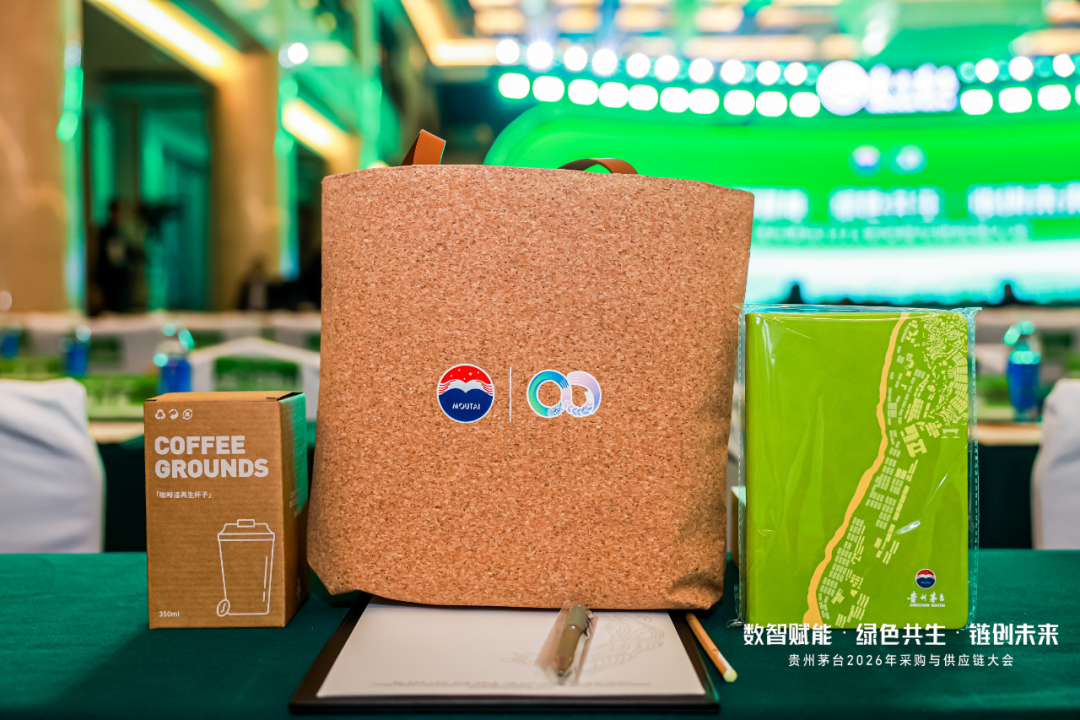
Core Viewpoint - The article emphasizes the commitment of Moutai to green development and sustainable practices, showcasing its initiatives in eco-friendly packaging and supply chain management as part of a broader industry trend towards environmental responsibility [1][3][18] Group 1: Green Practices and Innovations - Moutai's 2026 Procurement and Supply Chain Conference highlighted the theme of "digital empowerment, green coexistence, and chain innovation," showcasing a notebook made from brewing by-products as a symbol of its green philosophy [1] - The company promotes a comprehensive green approach, from sourcing high-quality sorghum to ensuring traceability and sustainability throughout the production process, reflecting a deep-rooted commitment to ecological preservation [3][5] - Moutai has upgraded its packaging materials, replacing traditional components with environmentally friendly alternatives, such as using bamboo pulp paper instead of plastic, thereby enhancing the sustainability of its product offerings [9][11] Group 2: Supply Chain and Collaboration - Moutai is actively integrating green principles into its supply chain, collaborating with suppliers to achieve green certifications and reduce carbon emissions, resulting in a cumulative reduction of 35,000 tons of carbon emissions [12][14] - The company has initiated a glass bottle recycling program, successfully recovering over 525,000 bottles in a pilot scheme, which significantly reduces energy consumption compared to producing new glass [12][14] - Moutai's efforts have earned it national and provincial "green factory" titles, recognizing its commitment to sustainable practices in land use, raw material safety, and waste resource utilization [14] Group 3: Consumer Engagement and Industry Impact - Moutai's approach to green consumption is designed to resonate with consumers, integrating environmental considerations into product design without compromising quality, thus promoting a higher standard of consumer choice [15][18] - The company's MSCI ESG rating has improved to A, positioning it as a leader in the Chinese liquor industry, and its sustainable packaging initiatives serve as a model for other companies in the sector [15][18] - Moutai's long-term commitment to sustainability is expected to influence industry standards and consumer behavior, fostering a culture of eco-consciousness within the market [18]
“智谷趋势”解读茅台开年10日新政:全产业链回归初心
Xin Lang Cai Jing· 2026-01-17 14:27
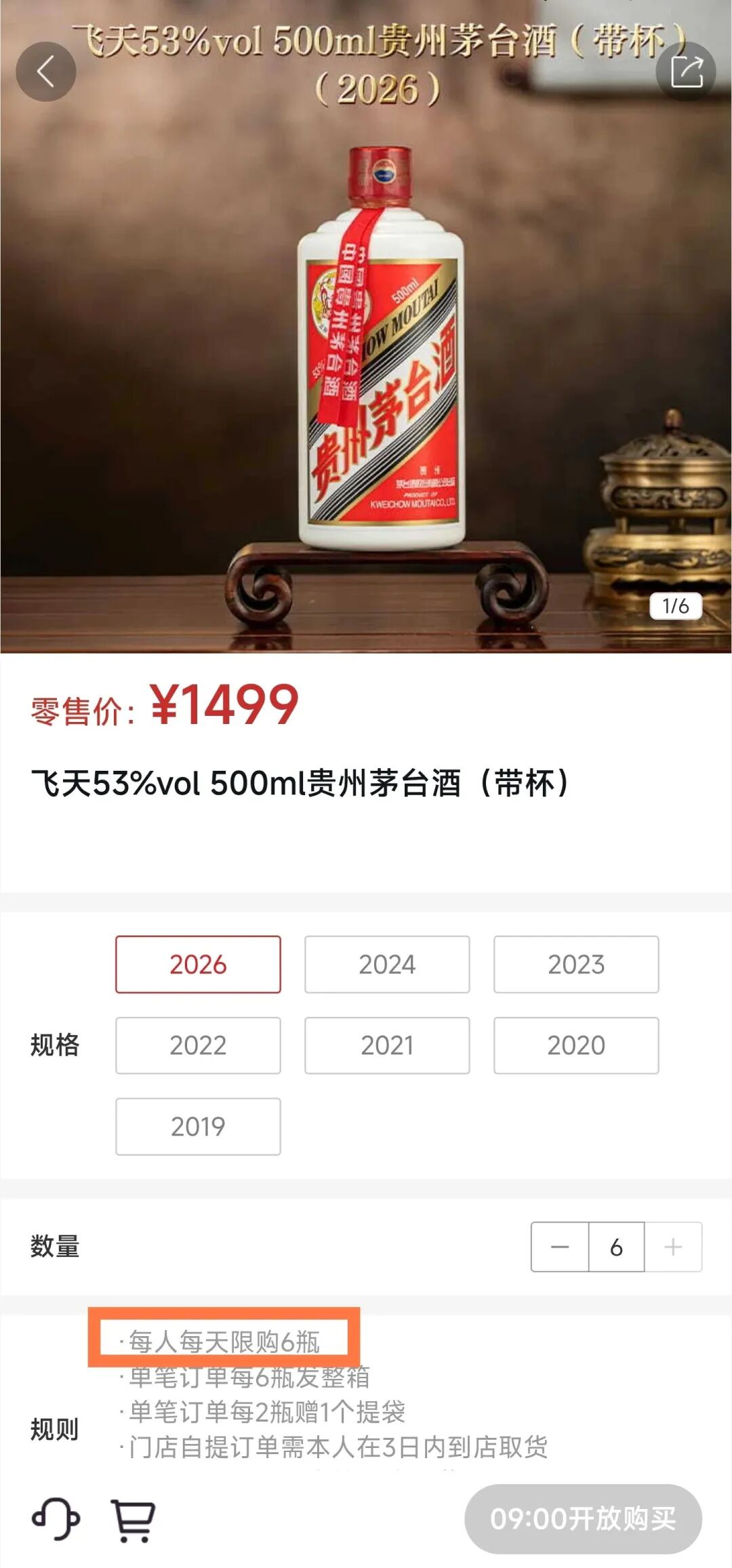
Core Viewpoint - The article discusses the significant transformation in the Chinese liquor industry initiated by Moutai's new policies in January 2026, emphasizing a return to consumer-centric practices and a comprehensive reform of the entire industry chain [1][30]. Group 1: Moutai's New Policies - On January 1, 2026, Moutai launched its 53-degree 500ml Flying Moutai at a price of 1499 yuan per bottle, allowing each user to purchase up to 12 bottles, marking a significant shift towards direct consumer access [4][1]. - The launch of the iMoutai app facilitated a seamless connection between Moutai and its consumers, allowing for a more transparent and accessible purchasing process [4][1]. - Moutai established Guizhou Ai Moutai Digital Technology Co., Ltd. with a registered capital of 600 million yuan to accelerate its direct sales system and digital marketing efforts [4][1]. Group 2: Quality and Safety Focus - Moutai's leadership emphasized the importance of quality control in production, ensuring that every bottle meets high standards to maintain consumer trust [5][14]. - The company is focusing on enhancing its supply chain and logistics to ensure safe and timely delivery of products, which is crucial for improving consumer experience [8][10]. Group 3: Cultural and Brand Development - Moutai introduced the 2026 annual traditional color "Qi Zi" to connect with cultural heritage and appeal to younger consumers, indicating a shift from merely selling products to selling culture and identity [11][13]. - The company aims to build a narrative that resonates with modern consumers while maintaining its high-end image, thus broadening its brand value [32][33]. Group 4: Market Strategy and Consumer Focus - Moutai's new strategy emphasizes a dual-channel approach where online platforms manage efficiency and reach, while offline channels focus on conversion and service [22][24]. - The company is restructuring its product hierarchy to better align with market demands, moving away from a one-size-fits-all approach to a more dynamic pricing and distribution strategy [22][24]. Group 5: ESG and Social Responsibility - Moutai is actively building its ESG framework, focusing on quality, social responsibility, and community engagement through its philanthropic initiatives [20][28]. - The establishment of the Guizhou Moutai Public Welfare Foundation has led to significant contributions to social projects, benefiting over 5.5 million people [20][28]. Group 6: Future Outlook - The reforms initiated by Moutai signal a shift in the liquor industry towards a consumer-centric model, moving away from traditional channel-driven growth [30][32]. - Moutai's leadership is committed to long-term sustainable growth, prioritizing quality and consumer relationships over short-term performance metrics [31][30].
股神巴菲特的「护城河」理论,如何帮企业摆脱内卷、长期赚钱 | 螺丝钉带你读书
银行螺丝钉· 2026-01-17 13:37
Core Viewpoint - The article discusses the concept of "economic moats" as proposed by Warren Buffett, emphasizing the importance of competitive advantages for companies to achieve long-term profitability and returns for investors [4][5]. Summary by Sections Introduction to Economic Moats - The article introduces a new investment book titled "Investment Moats," which elaborates on Buffett's investment philosophy regarding economic moats [2]. Definition and Importance of Economic Moats - Economic moats are defined as competitive advantages that allow companies to maintain profitability over time, thus providing returns to investors [4]. Characteristics of Companies with Economic Moats - Companies that possess economic moats typically have stable and significant profits, distinguishing them from early-stage or startup companies [5]. Avoiding Market Saturation - Economic moats help companies avoid "involution," where excessive competition leads to homogenization and price wars, ultimately resulting in losses [6][7]. Types of Economic Moats 1. **Scale Advantage**: Companies like BlackRock and Vanguard dominate the index fund market, controlling over 80% of the global market share, benefiting from lower management fees due to their scale [10][12][14]. 2. **Network Effects**: The value of networks increases with the number of users, making it difficult for new entrants to compete against established players like the Hong Kong Stock Exchange [16][20]. 3. **Brand Advantage**: Strong brands in consumer and pharmaceutical sectors create recognition and loyalty, making it hard for new brands to penetrate the market [22][27]. 4. **Switching Costs**: High switching costs, as seen with integrated product ecosystems like Apple's, make it challenging for customers to change to competitors [28][32]. 5. **Resource Advantage**: Companies with access to low-cost resources, such as mining operations, have a competitive edge in their industries [33]. Conclusion - Companies need unique advantages that are not easily replicable to protect their profits and ensure sustained revenue generation. Financially, companies with economic moats often exhibit high gross margins and long-term return on equity (ROE) levels of 15% or higher [36][37].

高端白酒局︱高端白酒或将迎来“矩阵式竞争”
Sou Hu Cai Jing· 2026-01-17 11:18
Core Insights - The high-end liquor market is undergoing significant changes as Guizhou Moutai shifts from a centralized model to a pyramid/matrix model, leading to a competitive landscape characterized by "ultra-high-end," "high-end," and "sub-high-end" products [1] Group 1: Ultra-High-End Segment - Guizhou Moutai's flagship product, Feitian Moutai, has lost its ultra-high-end status as its price drops to 1499 yuan, allowing aged Guizhou Moutai to emerge as a representative ultra-high-end product [1] - Competitors like Wuliangye and Jiangxianglang have also developed corresponding ultra-high-end products, with Wuliangye's aged variants priced similarly to aged Guizhou Moutai [1] - Langjiu has established a matrix of ultra-high-end products, including the premium Hongyunlang and the strategic Qingyunlang, indicating early competitive positioning [1] Group 2: High-End Market Dynamics - The high-end liquor market is expected to experience structural contraction, with a focus on the 1000 yuan price range during the 14th Five-Year Plan [2] - Feitian Moutai's pricing power is weakening, leading to intensified competition among top brands like the eighth-generation Wuliangye and Qinghua Lang around the 1000 yuan price point [2] - The concept of "adaptability" is emphasized, with Moutai facing market pressures that may influence its pricing strategy, raising questions about its price floor [2] Group 3: Sub-High-End Market - Guizhou Moutai has introduced two sub-high-end products, including a lower-alcohol version of Moutai, recognizing the importance of maintaining stability in the sub-high-end market [2] - Wuliangye is also prepared to compete in the sub-high-end segment with its lower-alcohol offerings, while Guojiao 1573 stands to benefit significantly from this price range [3] - Langjiu has positioned its sub-high-end brand, Honghualang Hong15, independently, showcasing a strategic approach to the sub-high-end market [3] Group 4: Market Growth Trends - The high-end liquor market is experiencing "expansive growth" when both volume and price increase, while "squeezed growth" occurs during volume and price contraction [4] - The industry is entering a phase of structural contraction, suggesting that only a few high-end liquor players will remain competitive in the future [4]

茅台与习酒交流座谈;西凤酒与赛夫集团战略合作;川酒集团赴水井坊考察学习
Sou Hu Cai Jing· 2026-01-17 11:18
Group 1: Moutai and Xijiu Cooperation - Moutai Group and Xijiu Group held a meeting to discuss deepening cooperation and promoting high-quality development of the Guizhou sauce liquor industry [1] - Moutai's chairman emphasized the need for both companies to support each other during industry adjustments and proposed four initiatives to enhance collaboration [1] - Xijiu's chairman highlighted the importance of ecological protection, traditional brewing methods, market order maintenance, technological innovation, and cultural integration in their partnership [2] Group 2: Xifeng Liquor and Saif Group Strategic Cooperation - Xifeng Liquor and Saif Group signed a strategic cooperation agreement to enhance their marketing and distribution capabilities [3] - The partnership aims to leverage Xifeng's brand and product quality with Saif's channel and technology strengths to create a comprehensive marketing loop [3] - The collaboration focuses on product innovation, channel expansion, and refined user operations to drive growth in the liquor industry [3] Group 3: Industry Developments and Collaborations - Chuan Liquor Group visited Shui Jing Fang to learn about advanced production management and smart manufacturing practices [4] - Yima Delivery announced that it has surpassed 2,200 stores nationwide, aiming to expand its service to more urban and rural areas [5] - The government of Fenyang, Shanxi University, and Fenjiu Group are collaborating to establish the Shanxi Xinghua Village Academy to cultivate talent in the brewing industry [6][7] Group 4: Industry Performance Metrics - The China Liquor Index for January to November 2025 showed a static index of 116.74 points, a decrease of 3.93 points, and a dynamic index of 95.81 points, a decrease of 9.59 points [8] - The white liquor index recorded a static index of 109.50 points, down 3.77 points, and a dynamic index of 92.15 points, down 11.25 points [8] Group 5: Export Performance - In 2025, the Zunyi Comprehensive Bonded Zone supported 75 liquor companies, facilitating exports totaling 6,745.93 million yuan, with local companies directly exporting 6,495.82 million yuan [8] Group 6: Technological Innovations - Luzhou Laojiao applied for a patent for an intelligent liquor picking method and system, aimed at improving production efficiency and reducing costs through automation [9]

A股突然降温!融资收紧保证金调整,是打压市场还是保护散户?
Sou Hu Cai Jing· 2026-01-17 10:21
Core Viewpoint - The adjustment of the financing margin ratio from 80% to 100% by the Shanghai, Shenzhen, and Beijing stock exchanges aims to reduce excessive leverage in the A-share market, which has seen record-high trading volumes and margin balances, thereby ensuring market stability and protecting investors' rights [1][15]. Group 1: Policy Changes and Market Reactions - The new financing margin ratio will take effect on January 19, significantly reducing investors' new financing capabilities and directly lowering the overall leverage level by 20% [4][6]. - Following the announcement, the A-share market experienced a sharp decline, with major indices turning negative and significant sell orders observed in heavyweight stocks, such as China Merchants Bank with over 6.5 billion yuan in sell orders [1][4]. - The adjustment is a response to the overheated margin trading environment, with the A-share margin trading volume reaching a record 427.2 billion yuan on January 12 and the margin balance exceeding 2.7 trillion yuan on January 15 [1][12]. Group 2: Impact on Investors and Market Dynamics - The increase in the financing margin ratio raises the entry barrier for retail and aggressive investors, making them more cautious about leveraging their investments [6][17]. - The "new and old separation" rule allows existing financing contracts to continue under the previous 80% margin ratio, providing a buffer period for the market to adjust without forcing existing investors to add margin or face liquidation [6][10]. - The current leverage level in the A-share market is relatively low, with margin balances accounting for only 2.56% of the A-share market's circulating value, indicating that the market is not in a bubble [12][15]. Group 3: Long-term Market Outlook - The adjustment is seen as a moderate normalization of policy rather than a drastic measure to suppress the market, aiming for a sustainable "slow bull" market rather than a speculative "crazy bull" [10][15]. - The regulatory intent is to guide the market from being driven by capital to being driven by performance, fostering a more rational investment environment [14][17]. - Analysts believe that while high-volatility sectors may face profit-taking pressures, blue-chip stocks will be less affected, and the overall market is unlikely to experience systemic risks [12][15].