智能手机

Search documents
“有 AI 的 Air”:联想 moto X70 Air 手机官宣 10 月底见!科创人工智能ETF华夏(589010)午后拉升翻红,盘中向上振幅达3.22%!
Xin Lang Cai Jing· 2025-09-29 06:43
Group 1 - The Shanghai Composite Index has increased by 1.18%, with the Huaxia Sci-Tech AI ETF (589010) rising by 0.67%, showcasing the high volatility of the Sci-Tech AI sector [1] - The Huaxia Sci-Tech AI ETF has reached a scale of 522 million, doubling in size over the past month, indicating its emergence as a new force in the market for investing in Sci-Tech AI [1] - Key holdings in the ETF include Lianqi Technology, which surged by 6.90%, and other stocks like Obit Light and Optics, which rose by 4.25% and 3.47% respectively [1] Group 2 - Huazhong Securities believes that the AI competition between China and the US is shifting from "single-card performance" to "system-level efficiency," with China making significant advancements in AI infrastructure through cluster construction and open-source ecosystems [2] - Major domestic companies, represented by Alibaba, are accelerating capital expenditures, establishing a solid foundation for AI application development [2] - The Huaxia Sci-Tech AI ETF closely tracks the Sci-Tech Board AI Index, covering high-quality enterprises across the entire industry chain, benefiting from high R&D investment and policy support [2]
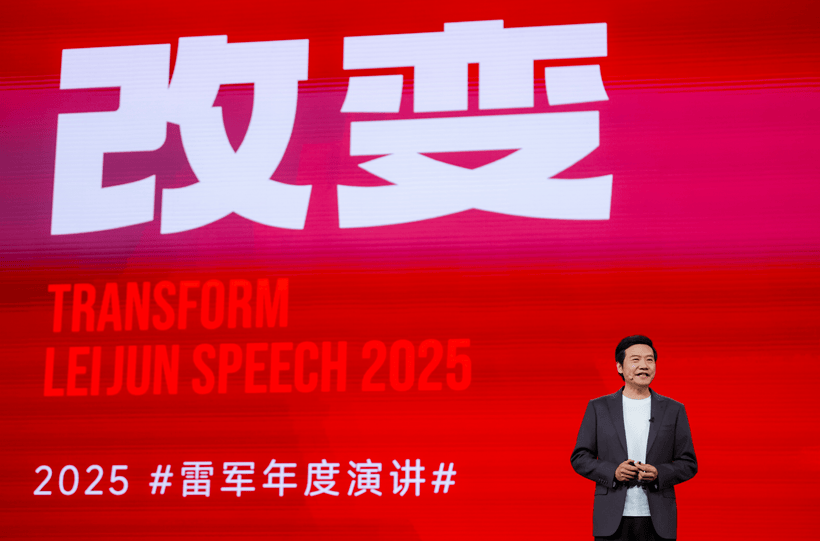
雷军亲述玄戒芯片及造车幕后故事:压上10年家底、5年蜕变
Sou Hu Cai Jing· 2025-09-29 06:11
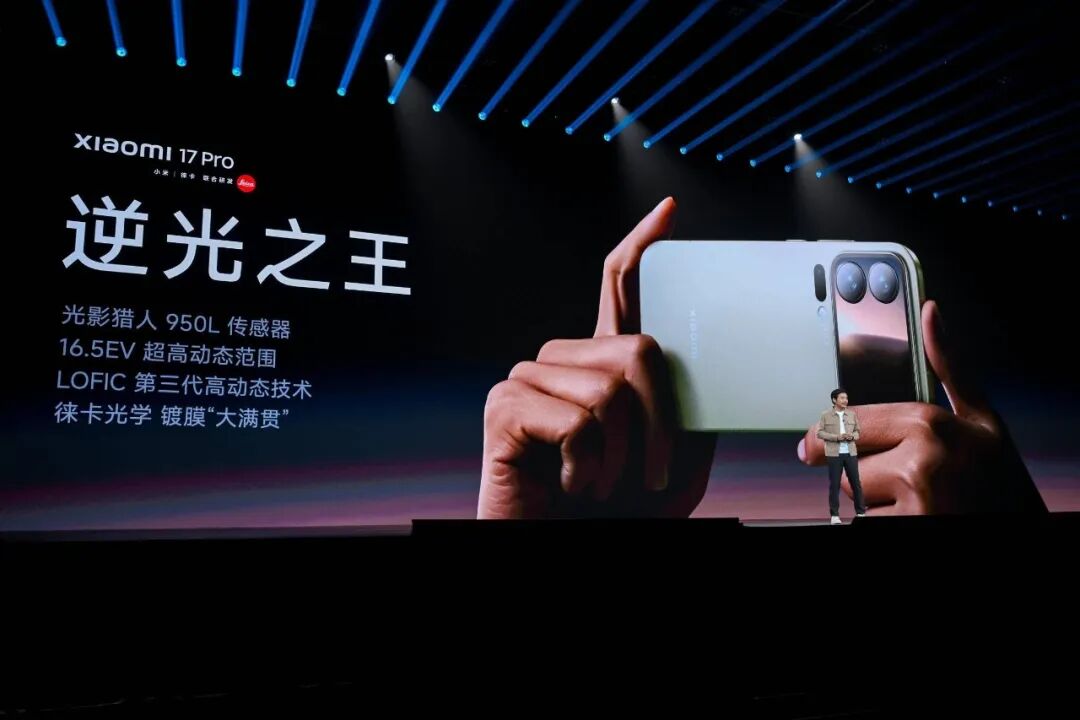
Core Insights - The core theme of the event was "Change," presented by Lei Jun, founder and CEO of Xiaomi, highlighting the launch of the Xiaomi 17 series and the introduction of various new products across its ecosystem [1][3][21] Product Launch and Innovations - Xiaomi unveiled multiple new products, including the Xiaomi 17 series smartphones, Xiaomi custom services, Xiaomi Pad 8 series, and various home appliances, showcasing its continuous innovation in mobile, automotive, and technology ecosystems [1][3][20] - The Xiaomi 17 Pro series features the "Miao Xiang Back Screen" innovation, which redefines smartphone interaction and enhances user experience in personalization, imaging, and gaming [3][6][7] - The Xiaomi 17 series is equipped with the fifth-generation Snapdragon 8 processor, utilizing a 3nm process, with CPU performance comparable to A19 Pro and a 34.6% GPU improvement over A19 Pro [6][11] Custom Services and Automotive Developments - Xiaomi introduced a new "Xiaomi Custom Service" for its vehicles, offering 26 customizable options, aiming to provide a luxury experience comparable to high-end brands like Rolls-Royce and Porsche [18][20] - The Xiaomi YU7 SUV has seen significant success, with over 40,000 units delivered since its launch, appealing particularly to family users [16][25] Strategic Shift and Company Evolution - Over the past five years, Xiaomi has transitioned from an "Internet company" to a "hardcore technology company," focusing on core technology investments and aiming to invest 100 billion yuan in R&D over the next five years [21][23] - The company has significantly increased its R&D budget from 9.3 billion yuan in 2020 to an expected 30 billion yuan in 2024, doubling its R&D personnel from over 10,000 to more than 20,000 [23][25] Market Position and Performance - Xiaomi's smartphone business has established itself as a leader in the 4,000 to 5,000 yuan price range and is making strides in the high-end market, surpassing Apple in Europe in Q2 [25] - The company's home appliance segment has seen a 66.2% year-on-year revenue growth in Q2, indicating a strong performance across its product lines [25]


AI语音操控 方言轻松识别 京东联合荣耀发布首款大屏AI手机
Xin Jing Bao· 2025-09-29 05:35
Core Insights - JD.com and Honor launched the Honor Play 70 Plus, a large-screen AI smartphone, focusing on simplifying user experience and enhancing daily life convenience [1][4] - The phone is priced at 1199 yuan, with promotional offers bringing the price down to 1019.15 yuan in certain regions [1] Product Features - The Honor Play 70 Plus includes a physical AI button for quick access to various functions, such as clearing the phone and accessing ride codes [2] - It features advanced AI voice recognition capable of understanding regional dialects, allowing users to perform tasks like ordering food and checking the weather through voice commands [3] - The device is built with a new Taiji shock-absorbing structure and has a drop resistance of up to 2 meters, certified by SGS for durability [3] Performance and Battery Life - The smartphone is equipped with a 7000mAh battery, ensuring long-lasting usage, with a super power-saving mode that allows for extended standby time [4] - It runs on the third-generation Snapdragon 6s processor, providing smooth performance, and features a 6.77-inch eye-care display [4] Strategic Collaboration - The collaboration between JD.com and Honor leverages JD's consumer insights and supply chain capabilities to create a product that meets market demands [4] - This launch marks the first large-screen AI smartphone developed through deep collaboration between JD.com and manufacturers, aiming to explore new market segments [4]

小米15周年,豪赌与耐心
3 6 Ke· 2025-09-29 04:22
Core Insights - The core theme of the recent speech by Xiaomi's founder Lei Jun is "change," highlighting the company's transformation from an internet company to a hard-tech company, as well as its high-end strategy advancement [1] Product Launch and Pricing - Xiaomi introduced the 17 series smartphones, customized automotive services, and various new products such as TVs, washing machines, routers, and speakers, with noticeable price increases [3] - The starting price for the automotive customization service is 100,000 yuan, targeting high-end models like YU7 Max and SU7 Ultra [3] - The new router is priced at 1,699 yuan and the speaker at 1,999 yuan, exceeding traditional Xiaomi user price expectations [3] Competitive Positioning - Lei Jun emphasized that Xiaomi's standard version of the 17 series is designed to be comparable to the iPhone 17 Pro, showcasing a commitment to high performance [4] - Xiaomi 17 features aggressive specifications, including a 7,000mAh battery, which is nearly double the iPhone 17's 3,692mAh, offering a battery life of 22.1 hours, surpassing the iPhone by 11.5 hours [9] Technological Advancements - The Xiaomi 17 series utilizes the fifth-generation Snapdragon 8 processor, manufactured with the latest 3nm process technology, and claims to maintain lower temperatures than the iPhone 17 during intensive use [4] - The device also features a new red-emitting material developed in collaboration with LumiBlue, which reportedly has higher luminous efficiency than the best imported materials [7] AI and User Experience - The introduction of a back screen feature allows users to set clocks and notifications, catering to the growing trend of "rear selfies" among social media users [9] - AI functionalities were mentioned briefly, focusing on AI-assisted image generation for wallpapers [10] Chip Development Strategy - Xiaomi's journey in chip development has been tumultuous, with the company previously halting its chip project in 2018 due to low sales and high R&D costs [11] - The company is now planning to release its next generation of chips, aiming for a minimum of 10 million units per generation to achieve breakeven [12] - Xiaomi will continue to collaborate with Qualcomm and MediaTek while testing its self-developed chips in suitable products [12] Long-term Vision - Lei Jun stated that developing self-made SoCs is essential for Xiaomi's success, requiring a commitment of at least ten years and an investment of 50 billion yuan [12]
为终端侧AI规模化扩展提供“加速度”,高通携手中国伙伴启动“AI加速计划”
Cai Fu Zai Xian· 2025-09-29 01:30
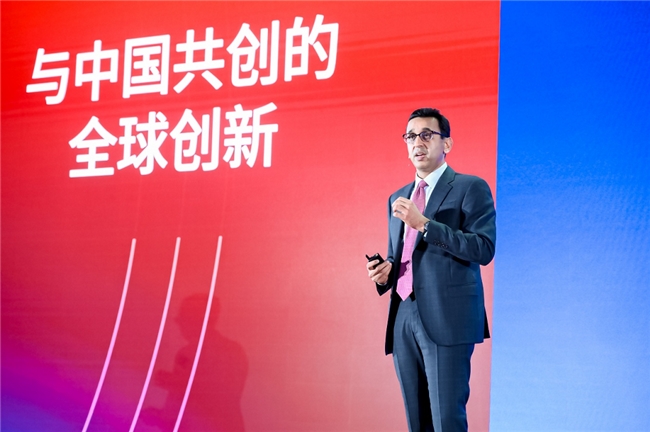
Core Insights - The rise of open-source AI models by companies like DeepSeek and OpenAI is enabling businesses and consumers to access AI technology at lower costs [1] - Qualcomm's "AI Acceleration Plan" aims to enhance edge intelligence capabilities and applications in collaboration with various industry partners [1][4] - The integration of AI into personal devices, vehicles, and industrial applications is transforming the landscape of AI technology [2][4] Group 1: AI Technology Trends - Personal AI, physical AI, and industrial AI are undergoing significant transformations, with personal devices evolving into "personal AI terminals" [2] - Physical AI is being deployed in automotive systems and robotics, utilizing edge AI for processing [2] - Industrial AI is leveraging edge intelligence to make real-time decisions based on sensor data [2] Group 2: Qualcomm's Initiatives - Qualcomm's "AI Acceleration Plan" focuses on three key pillars: enhancing AI capabilities in smartphones, expanding personal AI experiences across devices, and collaborating with local model providers [4] - The fifth-generation Snapdragon 8 processor, launched at the Snapdragon Summit, is designed to empower personalized AI assistants in smartphones [6] - Major smartphone brands, including Xiaomi and others, are adopting the Snapdragon 8 processor to enhance user experiences with generative AI [6] Group 3: Broader AI Applications - The concept of embodied intelligence is gaining attention, particularly in humanoid robots, which require advanced connectivity and processing capabilities [7] - Generative AI is expanding beyond smartphones to PCs, vehicles, and XR devices, indicating a trend towards ubiquitous AI experiences [7] - The collaborative efforts across the industry are expected to accelerate the deployment of edge AI applications, making AI accessible across various platforms [7]

连续9年全国第一,广东凭什么稳坐创新王座
21世纪经济报道· 2025-09-29 00:01
Core Viewpoint - Guangdong continues to rank first in the national innovation capability evaluation for nine consecutive years, showcasing its strong enterprise innovation and innovation environment, but faces challenges in maintaining its leading position as other provinces catch up [1][3][5]. Group 1: Innovation Performance - Guangdong ranks first in enterprise innovation and innovation environment, second in knowledge creation, fourth in knowledge acquisition, and second in innovation performance [3][5]. - The province's research and development (R&D) expenditure reached 342.664 billion yuan, accounting for 16.34% of the national total, indicating a strong commitment to innovation [5][10]. - Guangdong has a high conversion efficiency from patents to products, with 143,141 invention patents granted and 164,853 invention patent applications, both ranking first in the country [5][10]. Group 2: Economic and Industrial Growth - The advanced manufacturing and high-tech manufacturing sectors in Guangdong are projected to increase their value-added shares to 56.7% and 31.6% respectively by 2024, with significant growth in new energy vehicles and industrial robots [6][10]. - Approximately 77,000 high-tech enterprises form a robust support system for innovation, with private enterprises contributing over 60% of invention patents and 80% of new products [6][10]. Group 3: Strategic Initiatives - Guangdong is focusing on enhancing its innovation ecosystem by investing in high-level technology innovation platforms and improving the research system to support sustainable economic growth [7][10]. - The province aims to solidify its position as a long-term leader by addressing challenges in efficiency and potential, particularly in the context of international trade and technological decoupling [10][12]. Group 4: Talent and Investment - Guangdong has attracted over 1 million college graduates to work in the province, exceeding its initial target, and plans to conduct recruitment events across major universities [11]. - The provincial government has committed to increasing R&D funding, with a focus on basic research, ensuring that at least one-third of provincial financial technology funds are allocated to this area [11]. Group 5: Global Innovation Standing - The "Shenzhen-Hong Kong-Guangzhou" innovation cluster has surpassed the "Tokyo-Yokohama" cluster to become the top global innovation cluster, excelling in PCT patent applications, scientific publications, and venture capital [12]. - The province's advancements in basic research and scientific publications indicate a significant leap in its global innovation capabilities [12].
雷军千亿豪赌转型硬核科技 小米“基因重塑”市值增万亿
Chang Jiang Shang Bao· 2025-09-28 22:59
Core Insights - The core theme of the article is the transformation of Xiaomi under the leadership of Lei Jun, focusing on the company's shift from an "internet company" to a "hardcore technology company" through significant investment in core technologies and innovation [2][3][13]. Summary by Sections Transformation Journey - Xiaomi's transformation began with a deep reflection in 2020, marking its 10th anniversary and a pivotal moment for the company [3][4]. - Despite achieving over 200 billion yuan in annual revenue and entering the Fortune Global 500, Lei Jun faced intense criticism regarding Xiaomi's technological capabilities [3][4]. Strategic Decisions - Lei Jun decided to invest 100 billion yuan in core technology over the next five years, marking a significant shift in Xiaomi's strategy [4][18]. - The company aimed to focus on high-end products and core technology development, particularly in chip and automotive sectors [5][6]. Chip Development - Xiaomi restarted its chip development journey in 2021, aiming for high-end 3nm technology, despite facing significant challenges and a 14.7% revenue decline in 2022 [5][6]. - By 2025, Xiaomi successfully launched its self-developed chip, the玄戒O1, marking a significant milestone in its technology journey [7][8]. Automotive Ambitions - Xiaomi announced its ambitious plan to develop high-performance electric vehicles, aiming to compete with brands like Porsche and Tesla [10][11]. - The company faced numerous challenges in its automotive development but managed to overcome them, achieving significant performance milestones with its SU7 Ultra model [11][12]. Talent Acquisition and Financial Strategy - Lei Jun emphasized the importance of talent acquisition and financial management, stating that finding the right people and securing sufficient funds are crucial for success [14][18]. - Xiaomi's workforce includes a significant number of R&D personnel, with 21,190 employees dedicated to research, representing 48.5% of the total workforce [17]. Financial Performance - As of mid-2025, Xiaomi's total funds reached 192.768 billion yuan, reflecting a strong financial position to support its ambitious projects [19]. - The company's market capitalization increased significantly from 245.4 billion yuan in 2020 to 1.42 trillion yuan by 2025, showcasing investor confidence in its transformation strategy [19].
小米涨价,远超iPhone
3 6 Ke· 2025-09-28 13:56
Core Viewpoint - Xiaomi has aligned its product line with Apple after five years of exploration, with the Xiaomi 17 series starting at a price of 4499 yuan, maintaining the pricing level of the previous generation Xiaomi 15, while high-end configurations have seen price increases of 200 to 500 yuan [1][2]. Pricing Strategy - Xiaomi's pricing strategy has shown a consistent upward trend, with each generation since Xiaomi 6 experiencing annual price increases of over 10%, peaking with the Xiaomi 10 series which saw a price jump of 1000 yuan, marking a 30% increase [2][4]. - The Xiaomi 15 maintained a starting price of 4499 yuan, indicating a successful shift to a high-end positioning in the 4000 to 5000 yuan price range [2][4]. Comparison with Apple - In contrast, Apple's pricing strategy has been more stable, with lower price increases compared to Xiaomi, particularly during the iPhone 7 to 11 market rise, where Apple maintained a steady pricing approach [4][5]. - The price gap between the starting prices of iPhone and Xiaomi has narrowed to 1500 yuan, down from nearly 3000 yuan in 2011 [4][5]. Sales Impact - Historically, Xiaomi's price increases have led to short-term declines in sales, such as a 35% drop in Q2 2020 following the Xiaomi 10 launch [5]. - Despite short-term impacts, Xiaomi's sales have stabilized and even increased over time, with projections for the Xiaomi 14 indicating sales between 880,000 to 1.2 million units [5][6]. Profitability and Margin - Xiaomi's shift to high-end products has significantly improved its gross margin, rising from around 2% to approximately 12% in recent years, while Apple maintains a gross margin of 30% to 40% [6][7]. - The focus on high-end products has resulted in increased single-unit profits for Xiaomi, despite initial commitments to keep hardware profit margins below 5% [6][7]. Competitive Landscape - The competitive landscape is shifting as Apple has begun to adjust its pricing strategy with the iPhone 17, moving from a focus on maintaining high margins to protecting market share, indicating a more aggressive approach against Xiaomi [9]. - Both companies are now positioned for direct competition in the high-end market, with uncertain outcomes [9]. Valuation Dynamics - Xiaomi's valuation logic is evolving, with a decreasing correlation between its smartphone business's gross margin and overall market valuation [10][12]. - The market is increasingly valuing Xiaomi based on its electric vehicle business growth prospects, which has a significantly higher gross margin compared to its smartphone segment [13][14].


连续9年全国第一,广东凭什么稳坐“创新王座”?
2 1 Shi Ji Jing Ji Bao Dao· 2025-09-28 12:56
Core Insights - Guangdong continues to rank first in the national innovation capability for nine consecutive years, showcasing strong performance in enterprise innovation and innovation environment [2][5] - The report indicates a marginal convergence in Guangdong's leading advantage, with a decline in innovation efficiency and growth potential rankings, necessitating a reassessment of its innovation leadership [2][5] Innovation Performance - Guangdong ranks first in enterprise innovation and innovation environment, second in knowledge creation, fourth in knowledge acquisition, and second in innovation performance [2][3] - The province's R&D investment from large-scale industrial enterprises reached 342.66 billion yuan, accounting for 16.34% of the national total, maintaining the top position [3][6] Patent and Product Development - Guangdong leads the nation with 143,141 invention patents granted and 164,853 invention patent applications from large-scale industrial enterprises [3][4] - New product sales revenue in Guangdong reached 5.19 trillion yuan, also the highest in the country, with new products accounting for the third-largest share of operating income [3][4] Manufacturing and Technology - The advanced manufacturing and high-tech manufacturing sectors in Guangdong are projected to increase their value-added shares to 56.7% and 31.6% respectively by 2024 [4] - The province produces 43% of the nation's new energy vehicles, 44% of industrial robots, over 40% of smartphones, and 18% of integrated circuits, indicating a strong industrial cluster [4] Talent and Investment - Guangdong aims to attract over 1 million college graduates by July 2025, with recruitment events planned across major cities [6] - The province's R&D expenditure has reached 510 billion yuan, with a research intensity of 3.6%, leading the nation in several key technology indicators [6] Global Innovation Standing - The "Shenzhen-Hong Kong-Guangzhou" cluster has surpassed the "Tokyo-Yokohama" cluster to become the top global innovation cluster according to the Global Innovation Index [7][8] - This cluster excels in PCT patent applications, scientific publications, and venture capital, indicating a balanced strength across key innovation dimensions [8]
追觅科技大举跨界胜算几何?批量IPO仍需谨慎
中国基金报· 2025-09-28 11:46
Core Viewpoint - The article discusses the ambitious plans of Chasing Technology to pursue multiple IPOs for its various business units, highlighting the potential benefits and risks associated with this strategy [2][3]. Business Expansion - Chasing Technology is rapidly expanding into diverse sectors, including smartphones, astronomy, and electric vehicles, with plans to launch its first smartphone and a luxury electric vehicle by 2027 [3]. - The company aims to leverage the valuation differences across various sectors by splitting its businesses for independent IPOs, which could maximize overall company value [2]. Market Evaluation - Experts caution that while Chasing Technology has experience in hardware development, the new sectors it is entering require significant capital and technical expertise, raising questions about the feasibility of its expansion strategy [4]. - The company’s primary revenue still relies heavily on its cleaning devices, with other ventures in early investment stages, indicating a need for careful evaluation of resource allocation [3]. Risks of Expansion - There are concerns that if the core business does not establish a stable profit model, the company's aggressive expansion into high-investment areas could lead to financial risks and resource dilution [4]. - The long-term nature of some of its new ventures, such as asteroid mining, poses challenges for immediate commercialization, necessitating caution against overextending investor expectations [4]. Employee Investment Controversy - Allegations have surfaced regarding Chasing Technology's requirement for employees to invest in private equity funds, potentially linking this to job security, which raises ethical and legal concerns [6][8]. - The company has publicly denied any mandatory investment policies, asserting that participation in investment schemes is voluntary and aimed at fostering a long-term incentive structure [7][8].