
交通运输

Search documents
机器学习因子选股月报(2026年2月)
Southwest Securities· 2026-01-30 07:20
Investment Rating - The report does not explicitly state an investment rating for the industry or specific companies [3]. Core Insights - The top five sectors with the highest excess returns for long positions in January 2026 (excluding comprehensive) are Defense and Military, Communication, Agriculture, Home Appliances, and Electric Equipment & New Energy, with excess returns of 11.41%, 8.40%, 7.85%, 6.01%, and 4.98% respectively [2]. - Over the past year, the sectors with the highest average monthly excess returns (excluding comprehensive) are Real Estate, Home Appliances, Retail, Construction, and Defense and Military, with excess returns of 2.17%, 2.09%, 1.69%, 1.69%, and 1.58% respectively [2]. - The GAN_GRU factor has shown a mean Information Coefficient (IC) of 0.1107 and an annualized excess return of 22.36% from January 2019 to January 2026 [41]. - As of January 28, 2026, the latest IC for the GAN_GRU factor is 0.0003, with a one-year mean IC of 0.0553 [41]. - The top five sectors based on the recent IC performance of the GAN_GRU factor are Defense and Military, Construction, Real Estate, Banking, and Communication, with IC values of 0.3498, 0.2478, 0.2165, 0.1993, and 0.1976 respectively [41]. - The long position combination based on the GAN_GRU factor has shown the highest excess returns in the sectors of Defense and Military, Communication, Agriculture, Home Appliances, and Electric Equipment & New Energy [45]. Summary by Sections GAN_GRU Model Overview - The GAN_GRU model utilizes Generative Adversarial Networks (GAN) for processing time-series features and GRU for encoding these features into stock selection factors [4][13]. GAN_GRU Factor Performance - The GAN_GRU factor has demonstrated significant performance metrics, including a mean IC of 0.1107 and an annualized excess return of 22.36% [41]. - The recent IC rankings for various sectors indicate strong performance in Defense and Military, Construction, and Real Estate [41][45]. Long Position Combinations - The report lists the top ten stocks selected based on the GAN_GRU factor, including companies like Xinhua Insurance, Guanghong Technology, and Guangdong Expressway [50].



从“腹地”到“前哨”:重庆如何交出内陆开放高能级答卷?
Zhong Guo Xin Wen Wang· 2026-01-30 06:44
Core Viewpoint - The article discusses Chongqing's strategic plan to enhance its role as an inland open highland, aiming to establish a logistics and trade hub connecting Europe, China, and ASEAN by 2030 [1]. Group 1: Development Goals - The Chongqing government aims to form a comprehensive industrial chain and logistics trade hub by 2030, connecting three major markets: Europe, China, and ASEAN [1]. - The focus is on creating a "raw material import - local processing - finished product export" model to facilitate global resource allocation and industrial chain collaboration [2]. Group 2: Infrastructure and Logistics - The region is developing a multi-modal transport system ("road, rail, water, air") to enhance logistics capabilities, with global reach to 127 countries and regions [1]. - The government plans to optimize transport connections and strengthen railway port facilities to accelerate the construction of international logistics corridors [2]. Group 3: Policy and Innovation - Institutional innovation and service optimization are emphasized as critical components for enhancing logistics efficiency, including the promotion of multi-modal transport systems [3]. - Financial incentives are being provided to support enterprises in international exhibitions and order acquisition, with subsidies reaching up to 40% [3]. Group 4: Future Projections - By 2030, the cargo volume through the Western Land-Sea New Corridor is projected to reach 500,000 TEUs, with the annual operation of the China-Europe Railway Express (Chongqing) expected to exceed 4,800 trains [3].
宁夏2025年交通固定资产投资超目标完成
Zhong Guo Jing Ji Wang· 2026-01-30 06:28
"十五五"时期,宁夏交通将以"全面融入现代化高质量国家综合立体交通网,推进一体化融合、安全化 提升、数智化升级、绿色化转型"为重点任务,注重完善现代基础设施、发展现代物流、数智升级绿色 转型、安全应急能力提升等。 近日,从2026年宁夏交通运输工作会议获悉,2025年宁夏交通建设投资强劲,全年完成固定资产投资 47.1亿元,超出年度目标17.9%。基础设施实现突破,高速公路通车里程达2409公里;运行效率持续提 升,社会物流总费用与GDP的比率降至15.6%。 今年,宁夏将做好强化项目攻坚,提升路网承载能力;强化降本增效,提升物流系统韧性;强化科技支 撑,提升转型升级能力;强化服务保障,提升运输惠民水平等八方面的工作。 ...
关注红利国企ETF国泰(510720)投资机会,红利配置价值获关注
Sou Hu Cai Jing· 2026-01-30 03:27
注:分红情况具体详见基金分红公告,基金分红规则以基金法律文件为准,鉴于本基金的特点,本基金 分红不一定来自基金盈利,基金分红并不代表总投资的正回报。提及个股仅用于行业事件分析,不构成 任何个股推荐或投资建议。指数等短期涨跌仅供参考,不代表其未来表现,亦不构成对基金业绩的承诺 或保证。观点可能随市场环境变化而调整,不构成投资建议或承诺。提及基金风险收益特征各不相同, 敬请投资者仔细阅读基金法律文件,充分了解产品要素、风险等级及收益分配原则,选择与自身风险承 受能力匹配的产品,谨慎投资。 每日经济新闻 长钱与制度托底:监管下调股票风险因子与长期资金入市政策持续落地,直接扩张险资权益配置空间并 提升红利资产的边际需求。2024年~2025年险资举牌显著加速,港股/高股息标的占比高,反映负债久 期匹配下对高股息低波资产的"确定性"偏好;新国九条强化现金分红监管与激励,叠加央企市值管理要 求落地,长期估值重塑逻辑增强。 红利国企ETF(510720)跟踪的是上国红利指数(000151),该指数从市场中筛选具备高分红能力与稳 定分红记录的优质企业,覆盖银行、煤炭、交通运输等行业,重点聚焦传统高股息领域。指数通过严格 考察 ...
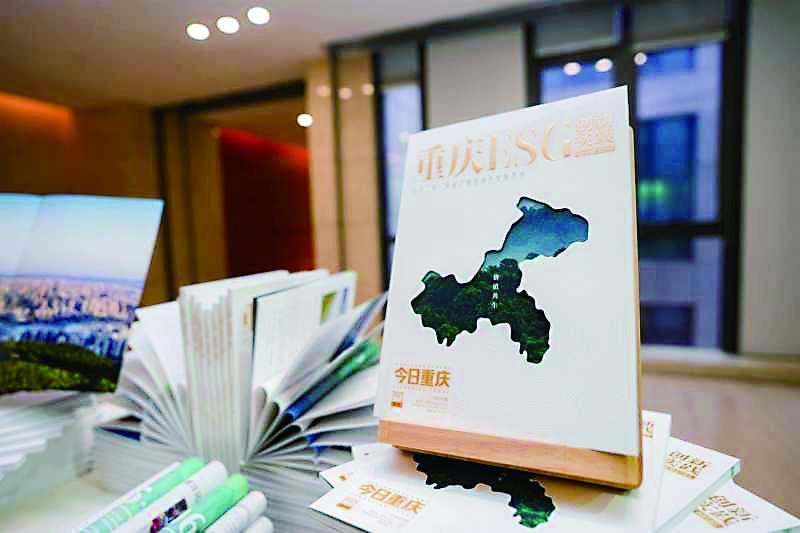
首部《重庆ESG创新实践绿皮书》发布
Xin Lang Cai Jing· 2026-01-29 18:46
《重庆ESG创新实践绿皮书》 1月29日,由市商务委、市国资委、市工商联指导,重庆日报报业集团主办,上游新闻承办,重庆上市公司协会协 办的首部《重庆ESG创新实践绿皮书》发布活动举行。本次活动,现场发布了《重庆ESG创新实践绿皮书》,有 20家企业和5个实践案例入选该书。 从企业一线到成书出版 《绿皮书》的编撰源于上游新闻2025年启动的"重庆ESG先锋企业寻访"主题宣传活动。在历时数月的走访中,记 者团队深入重庆多家企业、园区,记录一系列鲜活的ESG实践——从传统制造业的"零碳转型",到金融领域的绿 色产品创新;从乡村振兴的企业赋能,到科技驱动的循环经济探索。越来越多的企业正从ESG的"实践者"转变 为"创新者",在结合国家战略与本地实际中走出特色发展路径。 这些来自一线的实践与思考,经过系统整理与提炼,最终汇编成《重庆ESG创新实践绿皮书》。 多领域实践彰显"重庆特色" 《绿皮书》中收录的案例显示,重庆企业在ESG各领域均展现出积极的创新活力。 在绿色低碳方面,重庆交通开投集团完成轨道交通碳排放交易,并实现了全国首例公交低碳出行核证自愿减排量 交易;同时,重庆港加速推进"零碳港口"建设,大力推动新能源技术 ...

【环球财经】土耳其2028年贸易逆差预计扩大至1020亿美元
Xin Hua Cai Jing· 2026-01-29 14:50
在货物贸易领域,土耳其政府提出通过提升产品和市场多元化水平、加强战略贸易伙伴关系以及完善出 口融资体系,增强出口竞争力。相关政策还包括提升"土耳其品牌"国际能见度,以提高商品出口的稳定 性和抗风险能力。 新华财经伊斯坦布尔1月29日电(记者许万虎)土耳其近期提交欧盟委员会的《经济改革计划》显示, 到2028年该国贸易逆差将小幅扩大至1020亿美元,其中出口额预计达到3085亿美元,进口额为4105亿美 元。与2025年相比,出口和进口分别增长12.8%和12.3%,贸易逆差扩大约10.9%。 报告显示,服务贸易将继续在平衡外部收支中发挥重要作用。到2028年底,土耳其旅游收入预计增至 682亿美元,较2025年增长14.8%,带动服务贸易顺差扩大至753亿美元,同比增长18.9%。其中,交通 运输作为服务顺差的重要组成部分,将通过新增基础设施投资,提高对主要出口市场的通达效率,强化 其在全球供应链中的枢纽地位。 (文章来源:新华财经) 政策文件同时强调改善经常账户结构、降低对外部融资的依赖。土耳其计划重塑进出口银行业务模式, 减轻出口企业融资担保压力,并加快对接欧盟碳边境调节机制和本国排放交易体系,推动高碳行 ...
2026年以来A股尽显分化: 科创、有色领跑“老登”失落
证券时报· 2026-01-29 13:00
2026年以来,A股市场总体呈现较明显的结构性分化。一方面,科创类股票、有色金属类股票强势领跑,被市场戏称为"老登"的银行、白酒等 传统行业板块表现则明显滞后。 与此同时,个股的分化则更为明显,翻倍股与"腰斩"股均已陆续出现。 2026年以来指数和板块分化明显:科创、有色领跑 "老登"板块失落 2026年以来近一个月的时间里,尽管市场跌宕起伏,但A股市场总体呈现较大分化,这一分化首先体现在主要指数表现的差异上。 数据显示,A股市场主要指数中,中证500指数表现亮眼,2026年以来累计已上涨14.09%。据Wind数据,该指数成份股2026年以来不到一个月的时间合计 成交额超过11万亿元,超过2025年9月的月度数值。这意味着,该指数的成份股月度合计成交额将创出历史新高。 在中证500指数之外,科创50指数的表现也不遑多让,2026年以来累计涨幅已达12.16%,这是在此前一年该指数大涨的基础上。2025年,科创50指数已大 幅上涨35.92%。在指数大幅上行的同时,2026年以来科创板交投活跃度也随之进一步提升,不到一个月的时间里合计成交额已超过6万亿元,超过科创板 此前任何一个月份的月度成交额。 北证50指 ...

2月金股报告:指数震荡,行业关注资源、出海、科技
ZHONGTAI SECURITIES· 2026-01-29 11:18
Group 1 - The report indicates that the A-share market is experiencing a typical spring rally characterized by initial strength followed by stabilization and structural differentiation, with major indices recording positive returns as of January 28, 2026 [6] - The average daily trading volume in January reached 3.04 trillion yuan, an increase of 1.16 trillion yuan month-on-month, indicating a significant influx of new capital and a loose liquidity environment driving the index upward [2] - Regulatory measures, including raising the minimum margin requirement from 80% to 100%, have led to fluctuations in market sentiment and a deceleration in the index's upward momentum [3] Group 2 - The report highlights that technology assets are experiencing a rotation between thematic and cyclical investments, with thematic investments (e.g., commercial aerospace, AI applications) initially favored but cooling off due to increased margin requirements [4] - In the cyclical sector, non-ferrous metals, basic chemicals, and oil & petrochemicals have shown strong performance driven by three factors: demand from high-end manufacturing, proactive supply-side adjustments, and external geopolitical risks [4] - The report anticipates a structural market characterized by a focus on "resources + technology + overseas expansion," with low-risk preference assets potentially outperforming in certain phases [5] Group 3 - The investment strategy emphasizes focusing on "external demand cyclical + AI industry chain," highlighting the potential for global manufacturing recovery to support resource prices and opportunities for Chinese manufacturing to expand overseas [5] - The AI industry remains a clear investment theme, with a shift from thematic to performance-driven investments, particularly in areas with supply shortages such as power supply and semiconductor sectors [5] - The report recommends a selection of stocks across various sectors, including Invesco's Nonferrous ETF, Dongpeng Beverage, and Huazhong Precision, among others, reflecting a diversified investment approach [10]




红利国企ETF(510720)收涨超1.6%,机构称价值风格或占优
Sou Hu Cai Jing· 2026-01-29 10:06
红利国企ETF(510720)跟踪的是上国红利指数(000151),该指数从市场中筛选具备高分红能力与稳 定分红记录的优质企业,覆盖银行、煤炭、交通运输等行业,重点聚焦传统高股息领域。指数通过严格 考察成分股的股息率和分红持续性,并采用跨行业分散配置策略,以有效控制投资风险,反映高股息企 业的整体市场表现。根据基金公告,红利国企ETF可月月评估分红,在上市后的每个月都做到了分红。 1月29日,红利国企ETF(510720)收涨超1.6%,机构称价值风格或占优。 注:分红情况具体详见基金分红公告,基金分红规则以基金法律文件为准,鉴于本基金的特点,本基金 分红不一定来自基金盈利,基金分红并不代表总投资的正回报。提及个股仅用于行业事件分析,不构成 任何个股推荐或投资建议。指数等短期涨跌仅供参考,不代表其未来表现,亦不构成对基金业绩的承诺 或保证。观点可能随市场环境变化而调整,不构成投资建议或承诺。提及基金风险收益特征各不相同, 敬请投资者仔细阅读基金法律文件,充分了解产品要素、风险等级及收益分配原则,选择与自身风险承 受能力匹配的产品,谨慎投资。 平安证券指出,在低利率和中长期资金入市的环境下,红利资产仍具配置价值 ...
河南国企改革板块1月29日跌0.1%,中原高速领跌,主力资金净流入1.48亿元
Sou Hu Cai Jing· 2026-01-29 09:38
从资金流向上来看,当日河南国企改革板块主力资金净流入1.48亿元,游资资金净流出3.11亿元,散户 资金净流入1.63亿元。河南国企改革板块个股资金流向见下表: 证券之星消息,1月29日河南国企改革板块较上一交易日下跌0.1%,中原高速领跌。当日上证指数报收 于4157.98,上涨0.16%。深证成指报收于14300.08,下跌0.3%。河南国企改革板块个股涨跌见下表: 以上内容为证券之星据公开信息整理,由AI算法生成(网信算备310104345710301240019号),不构成 投资建议。 ...

