
服装

Search documents
波司登品牌创始人、集团董事局主席兼总裁高德康:ESG引领可持续时尚美好未来
Zheng Quan Ri Bao Wang· 2025-10-18 02:45
Core Insights - The 2025 Sustainable Global Leaders Conference was held in Shanghai, focusing on global action, innovation, and sustainable growth, co-hosted by the World Green Design Organization and Sina Group [1] Group 1: ESG Development Strategy - The company emphasizes a strategic approach to build ESG development competitiveness, having invested in environmental initiatives since 2000, including a 10 million yuan fund for river protection [2] - In 2024, the company established a 1+3+X ESG strategic framework, focusing on consumer orientation and setting clear phased goals for sustainable fashion [2] Group 2: Product Innovation - The company integrates sustainable low-carbon and circular fashion concepts throughout its product value chain, making responsibility a core principle of fashion [3] - It has developed eco-friendly protective fabrics with over 70% bio-content and achieved 100% Responsible Down Standard (RDS) certification for its down products [3] Group 3: Carbon Neutrality Goals - The company aims for net-zero carbon emissions through technological innovation and management optimization, including the development of an intelligent manufacturing system to enhance energy efficiency [4] Group 4: Human-Centric Approach - The ultimate goal of sustainable fashion is human development, with the company fostering an inclusive workplace culture and engaging in social welfare initiatives since its early years [5] - The company is committed to the global development initiative and UN Sustainable Development Goals, aiming to lead sustainable fashion with a focus on consumer needs and contribute to the global fashion industry's sustainable development [5]
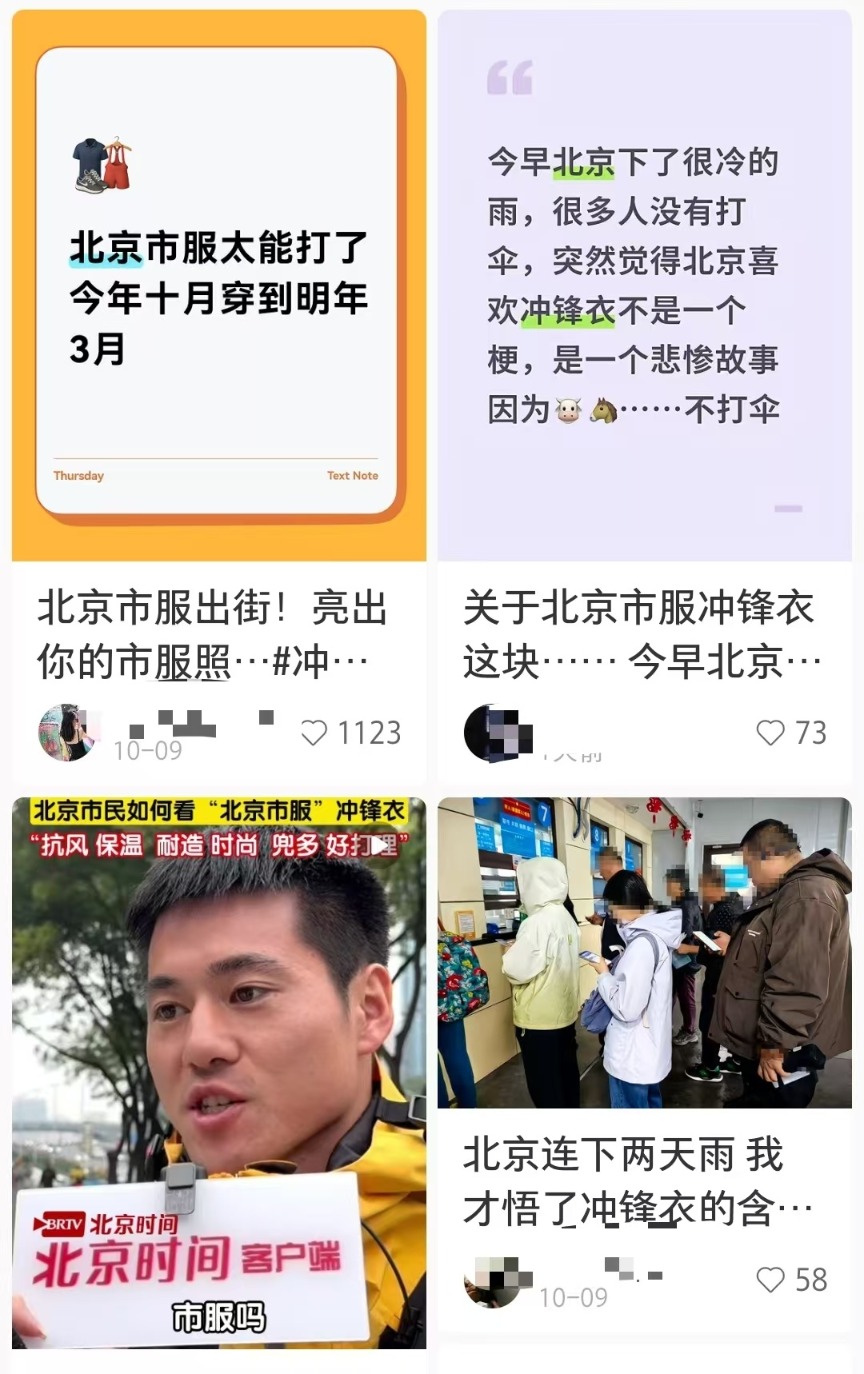
“土气”冲锋衣 凭什么成为“北京市服”?
Zhong Guo Jing Ying Bao· 2025-10-18 02:43
Core Viewpoint - The rapid transformation of the jacket from an outdoor item to a fashionable everyday wear in Beijing, referred to as "Beijing's clothing," reflects changing consumer preferences and market dynamics in the outdoor apparel sector [5][6][7]. Market Trends - The Chinese jacket market is projected to reach a scale of 75.4 billion yuan by 2029, with a compound annual growth rate (CAGR) of 20.2% from 2024 to 2029, significantly outpacing the overall apparel industry growth [5]. - The popularity of jackets surged during the "revenge outing" trend in 2022, where outdoor activities became a social norm, leading to increased demand for outdoor gear [6]. Consumer Behavior - The jacket has evolved into a practical choice for urban commuters, offering versatility and functionality, which appeals to the working population in Beijing [6][7]. - The perception of jackets has shifted from being seen as "uncool" to becoming a fashionable staple, driven by their practicality and variety compared to traditional winter wear [6][7]. Brand Competition - The competitive landscape of the jacket market is changing, with a "dumbbell" structure emerging where international brands dominate the high-end segment while domestic brands focus on the mid-range market [9]. - Key players include high-end brands like Arc'teryx and popular brands like The North Face and Columbia, while domestic brands like Toread and KAILAS are carving out their niches [9]. Marketing and Consumer Preferences - Young urban professionals prioritize factors such as usage scenarios, aesthetics, and celebrity endorsements when purchasing jackets, with technical features being less significant [11]. - The market is witnessing aggressive marketing strategies, including collaborations with influencers and the introduction of niche products like children's and pet jackets [11]. Regulatory Developments - A new national standard for jackets (GB/T 32614—2023) was implemented on April 1, 2024, emphasizing the importance of clear labeling for consumers [15]. - The market is expected to undergo a reshuffling of brand hierarchies as consumer demands diversify and regulatory standards tighten [15].

知名品牌创始人坠崖身亡,“80后”儿子成头号嫌疑人,事发时父子俩正一起爬山
Mei Ri Jing Ji Xin Wen· 2025-10-18 01:19
Core Points - The founder of the Spanish fashion giant Mango, Isak Andic, died in a fall while hiking with his family, leading to a police investigation that has shifted from an accidental death to a suspected murder case with his son as the primary suspect [1][2][6] Group 1: Incident Details - Isak Andic fell approximately 150 meters from a steep canyon while hiking with his son, Jonathan Andic, who was the only witness present at the time [1][2] - Jonathan Andic reported hearing rocks and sand sliding before witnessing his father fall, and he called emergency services shortly after the incident [2][6] - The police initially treated the incident as an accident but reopened the investigation due to inconsistencies in Jonathan's testimony and evidence from the scene [6][7] Group 2: Company Background - Isak Andic founded Mango in 1984, and under his leadership, the brand expanded to nearly 2,800 stores in over 120 countries, with projected revenues of €3.33 billion (approximately 33.3 billion euros) for 2024 [4][5] - Mango entered the Chinese market in 2002, establishing a significant presence with up to 200 stores at its peak in 2013, although this number has drastically reduced to just one store by 2024 [4] Group 3: Family and Financial Context - Isak Andic was one of the wealthiest individuals in Spain, with a net worth of approximately $4.5 billion (around 32.07 billion yuan) and family assets exceeding €8 billion (approximately 66.5 billion yuan) [5] - Tensions between Isak and his son Jonathan had reportedly escalated due to disagreements over company management and finances, with Jonathan being named as a potential successor prior to the incident [7]
湖北加快打造消费新高地 向“新”而行 消费市场活力更足(活力中国调研行)
Ren Min Ri Bao· 2025-10-17 21:59
Core Insights - The consumption market in Hubei shows strong vitality, with retail and catering sectors achieving a total transaction volume of 52.606 billion yuan during the National Day and Mid-Autumn Festival holidays, and online retail sales reaching 10.32 billion yuan, a year-on-year increase of 15.3% [1] Group 1: E-commerce and Cross-border Trade - The Huazhu International Airport's cross-border e-commerce industrial park offers a wide range of products, including popular Southeast Asian accessories and clothing, as well as electronic products and toys that are in demand in Europe and America [2] - The cross-border e-commerce industry chain is rapidly gathering, allowing consumers worldwide to access diverse products [2] - The Tianmen textile and clothing e-commerce platform has about 7,000 textile and clothing businesses and over 13,000 registered e-commerce stores, establishing a complete supply chain from production to marketing [2][3] Group 2: Technological Innovation in Agriculture - Hubei is a major producer of crayfish, with the comprehensive output value of the crayfish industry in Qianjiang reaching approximately 87 billion yuan [4] - The Hubei Crayfish Industry Technology Research Institute is working on technologies to enable year-round crayfish production, achieving a winter crayfish output of 24,000 tons and a value of 2.19 billion yuan from December to February [5] - In the first half of this year, the Qianjiang Ecological Crayfish Industrial Park recorded a transaction volume of 177,000 tons and a transaction value of 7.527 billion yuan [5] Group 3: Cultural and Tourism Integration - The Five Peaks County has transformed its tea industry into a tourism attraction, with a focus on integrating tea culture with tourism, resulting in 3.47 million visitors and a tourism revenue of 3.29 billion yuan in the first eight months of the year, representing a year-on-year increase of 27% and 31% respectively [7] - Hubei has built and put into operation 104 cultural and tourism complex projects, significantly boosting various tourism-related sectors [8] - During the National Day and Mid-Autumn Festival holidays, Hubei's A-level tourist attractions received 20.3634 million visitors, a year-on-year increase of 12.9% [8]
A股公司扎堆港股上市
Bei Jing Ri Bao Ke Hu Duan· 2025-10-17 21:16
Group 1 - The core viewpoint of the article highlights the increasing trend of A-share companies seeking to list on the Hong Kong Stock Exchange (HKEX), driven by the need to broaden financing channels and accelerate internationalization of Chinese assets [1][3][4] - As of September, over 20 A-share companies have announced plans or progress towards listing in Hong Kong, with more than 10 companies already completing the "A+H" listing this year, including industry leaders like CATL and Heng Rui Medicine [2][4] - The internationalization strategy is a key motivation for A-share companies to pursue HKEX listings, as it allows them to access a more global capital market and enhance their overseas business operations [3][4] Group 2 - The Hong Kong IPO market is expected to remain strong, with projections indicating over 80 new listings and total fundraising between 250 billion to 280 billion HKD for the year [5] - The active secondary market in Hong Kong, along with favorable conditions such as improved liquidity and valuation recovery, has made it more attractive for companies to issue new shares [4][5] - The "A+H" listing model has become a significant part of fundraising in Hong Kong, accounting for 70% of total fundraising in the first half of the year [4]





科技点燃引擎 产业向“新”而行
Zhong Guo Jing Ying Bao· 2025-10-17 18:30
Core Insights - The "14th Five-Year Plan" is nearing completion, with technology innovation driving industrial upgrades and high-quality economic development in China [3][7] - Significant achievements in technology innovation have been reported, including record-breaking advancements in construction machinery and the rise of "lighthouse factories" [3][4] Group 1: Technology Innovation and Industrial Upgrades - The "Jinghua" 16.07-meter diameter shield machine set a new record by tunneling 542 meters in a month, showcasing advancements in construction technology [3] - China's "lighthouse factories" account for over 40% of the global total, indicating a strong focus on smart manufacturing [3] - The Ministry of Science and Technology highlighted that technology innovation is igniting industrial upgrades across various sectors, from traditional manufacturing to future industry labs [3][7] Group 2: Case Studies of Successful Transformation - In the first half of 2023, Guangzhou's cross-border e-commerce exports exceeded 100 billion yuan, a year-on-year increase of over 43%, driven by companies like SHEIN [4] - SHEIN's "Supplier Empowerment Program" has provided over 6,000 digital tools to suppliers, improving process efficiency by an average of 80% [4][5] - Haier's interconnected factory system has transitioned from mass production to mass customization, achieving order response times of just 30 seconds [5] - Yangsen CNC has increased its output from 460 million yuan to 1.05 billion yuan over three years, becoming a leader in high-end CNC machine tools [6] Group 3: Broader Impacts of Technology Innovation - Technology innovation is reshaping China's industrial development path, leading to significant advancements in quality and efficiency across various sectors [7] - The focus on key core technology breakthroughs is essential for empowering traditional industries and fostering the growth of emerging sectors [7] - The integration of advanced technologies such as AI, big data, and 5G is driving a comprehensive upgrade towards high-end, intelligent, and green manufacturing [5][7]
升级中国服装制造,Shein 独有的算术题
晚点LatePost· 2025-10-17 07:29
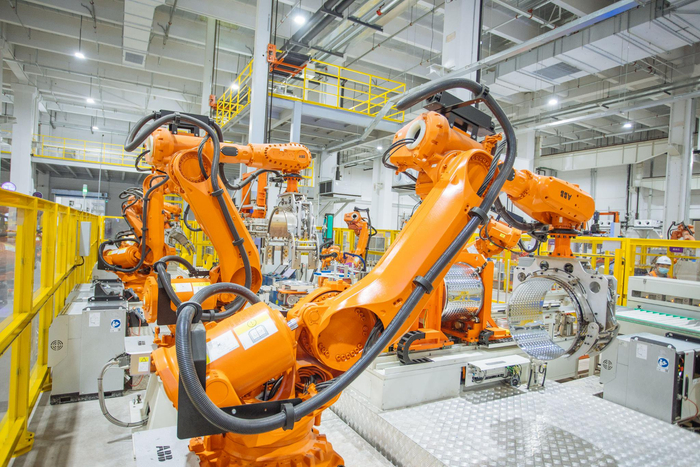
Core Viewpoint - Shein is transforming the Chinese apparel manufacturing industry by implementing intelligent systems and green innovations, enhancing efficiency and resilience across the supply chain [3][4][25]. Group 1: Shein's Impact on Supply Chain - Shein's sales surpassed ZARA starting in 2022, driven by its flexible supply chain model and digital management systems [4][5]. - The company is influencing the entire supply chain, from garment manufacturing to raw material innovation, by investing in digital systems and new technologies [5][12]. - By 2024, Shein is projected to capture 1.53% of the market share, becoming the third-largest fashion retailer globally, following Nike and Adidas [5]. Group 2: Digital Transformation and Efficiency - Shein's "small order quick response" model allows suppliers to maintain inventory rates in the low single digits, compared to the industry average of around 30% [6][9]. - The company has invested over 600 million yuan to empower suppliers, helping over 200 factories upgrade their operations and benefiting approximately 33,000 workers [9][12]. - Shein's digital systems have improved production management, reducing errors and enhancing efficiency in factories [7][10]. Group 3: Technological Innovations - Shein has developed over 170 innovative tools that can enhance process efficiency by an average of 80% [11][14]. - The company is pioneering sustainable practices, such as the cold transfer printing technology that significantly reduces water usage and chemical reliance [15][19]. - Shein's collaboration with East China University of Science and Technology aims to develop advanced recycling technologies for polyester, enhancing material recovery and reducing costs [16][18]. Group 4: Broader Industry Influence - Shein's model has led to a digital transformation of nearly 5,000 apparel manufacturers in Guangdong province [12]. - The company is fostering a collaborative ecosystem, linking production partners, suppliers, and service providers to create a more efficient and sustainable industry [25]. - Shein's investments in smart logistics and manufacturing facilities are expected to create thousands of jobs and significantly boost export volumes [23][24].

在这个“铁幕”时代,优衣库的应对策略是教科书级的
3 6 Ke· 2025-10-17 02:09
Core Insights - The article discusses the impact of the U.S. protectionist tariff policies on multinational companies, particularly focusing on Uniqlo, a fast-fashion brand under Japan's Fast Retailing Group, which is facing challenges due to increased tariffs on goods from Asia [1][4]. Group 1: Tariff Impact on Uniqlo - By 2025, tariffs on goods from Southeast Asian countries like Vietnam and Bangladesh will range from 20% to 49%, and Japan will face a 24% tariff on non-automotive products, putting pressure on companies reliant on Asian supply chains [1][4]. - Uniqlo's global supply chain is heavily dependent on Asia, with approximately 30% of production in China and significant reliance on Southeast Asia, which will be affected by these tariffs [4][5]. - Fast Retailing expects a 1% profit erosion due to tariffs in the 2025 fiscal year, with a more pronounced impact in the second half of the year [5]. Group 2: Uniqlo's Business Strategy - Uniqlo's success is attributed to a model combining Japanese quality with Asian scale, allowing for high-quality products at affordable prices [6][8]. - The company plans to increase North American store count from 106 to 200 by 2027, capitalizing on a 24.5% revenue growth and a 35.1% profit increase in the North American market for the 2025 fiscal year [3][12]. - To mitigate tariff impacts, Uniqlo has stockpiled goods in advance and plans to raise prices by 10%-15% on certain products starting in the fall of 2025 [9][11]. Group 3: Leadership Perspective - Tadashi Yanai, Uniqlo's founder, views the U.S. market as a personal ambition and has expressed a commitment to maintaining the supply chain in Asia despite tariff threats [2][12]. - Yanai has criticized U.S. isolationist policies, arguing they are irrational and detrimental to global trade [5][12]. - The company’s strategy reflects a broader trend among global businesses to prioritize cost efficiency and supply chain resilience over local manufacturing [12][13].
我国使用商品条码消费品达2.3亿种
Ren Min Ri Bao Hai Wai Ban· 2025-10-17 02:08
Core Insights - As of the end of September, the total number of consumer goods registered for barcode use in China reached 230 million [1] - The growth rate of product upgrades in categories such as furniture and building materials is particularly notable [1] - In the first three quarters of this year, the top ten categories of registered barcodes accounted for 86.6% of the total new additions, totaling 17.259 million items [1] Summary by Category - **Total Barcode Registration**: The total number of consumer goods with registered barcodes in China is 230 million, indicating a significant scale of market activity [1] - **Category Growth**: Notable growth in product upgrades is observed in furniture and building materials, reflecting evolving consumer preferences and market dynamics [1] - **Top Categories**: The leading categories by quantity of registered barcodes include clothing, furniture, daily necessities, food, healthcare, hardware, cosmetics, office supplies, building materials, and home appliances, with a total of 17.259 million items in these categories [1]
苏州探路行者服饰有限公司成立 注册资本100万人民币
Sou Hu Cai Jing· 2025-10-17 01:04
天眼查App显示,近日,苏州探路行者服饰有限公司成立,法定代表人为梁纪亮,注册资本100万人民 币,经营范围为一般项目:服装制造;服装服饰批发;服装服饰零售;箱包制造;箱包销售;鞋帽批 发;鞋帽零售;皮革制品制造;皮革制品销售;皮革销售;家居用品制造;日用品销售;销售代理;品 牌管理;互联网销售(除销售需要许可的商品)(除依法须经批准的项目外,凭营业执照依法自主开展 经营活动)。 ...