
农产品加工

Search documents
综合晨报-20250813
Guo Tou Qi Huo· 2025-08-13 05:47
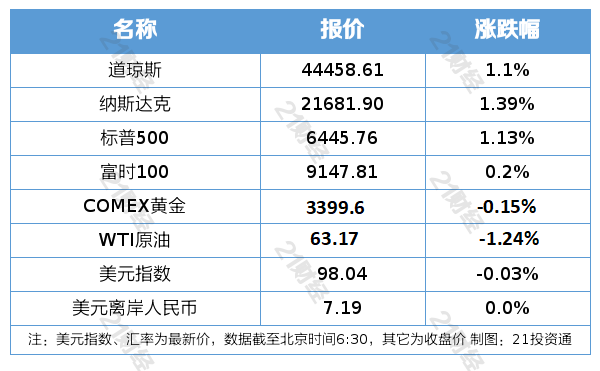
gtaxinstitute@essence.com.cn 综合晨报 2025年08月13日 (原油) 隔夜国际油价回落,布伦特10合约跌0.9%。上周美国API原油库存超预期增加151.9万桶,馏分油 库存亦录得增长,四季度旺季过后需求回落叠加OPEC+220万桶/天剩余产能完成回归,盈余幅度约 是前三季度的两倍,中期供需宽松压力始终存在。原油市场仍在等待美俄会谈带来新的方向指引, 而谈判的双向结果均将引发油价较大波动,本周暂以震荡行情看待,关注SC10合约虚值期权的双买 机会。 (责金属) 隔夜贵金属表现震荡,美国公布7月CP1年率持平在2.7%略低于预期,不过核心CP1年率录得3.1%高 于预期为五个月高位,数据发布后市场维持美联储9月重启降息的押注,特朗普发文再度敦促降息。 聚焦本周美俄领导会谈,市场情绪面临波动,贵金属震荡趋势中耐心等待回调布局机会。 (铜) 隔夜铜价走高,中美延长现行关税政策,且美国7月CPI增幅低于预期,支持9月降息,美元走低, 美股再高。沪铜夜盘再临7.95万,关注今日现货报价。7月国内铜产出再创新高,市场预计8月环降 幅度不大。倾向铜价难有效突破7.95万,逢高空配。 (铝) ...
国投期货综合晨报-20250813
Guo Tou Qi Huo· 2025-08-13 02:57
gtaxinstitute@essence.com.cn 综合晨报 2025年08月13日 (原油) 隔夜国际油价回落,布伦特10合约跌0.9%。上周美国API原油库存超预期增加151.9万桶,馏分油 库存亦录得增长,四季度旺季过后需求回落叠加OPEC+220万桶/天剩余产能完成回归,盈余幅度约 是前三季度的两倍,中期供需宽松压力始终存在。原油市场仍在等待美俄会谈带来新的方向指引, 而谈判的双向结果均将引发油价较大波动,本周暂以震荡行情看待,关注SC10合约虚值期权的双买 机会。 (责金属) 隔夜贵金属表现震荡,美国公布7月CP1年率持平在2.7%略低于预期,不过核心CP1年率录得3.1%高 于预期为五个月高位,数据发布后市场维持美联储9月重启降息的押注,特朗普发文再度敦促降息。 聚焦本周美俄领导会谈,市场情绪面临波动,贵金属震荡趋势中耐心等待回调布局机会。 (铜) 隔夜铜价走高,中美延长现行关税政策,且美国7月CPI增幅低于预期,支持9月降息,美元走低, 美股再高。沪铜夜盘再临7.95万,关注今日现货报价。7月国内铜产出再创新高,市场预计8月环降 幅度不大。倾向铜价难有效突破7.95万,逢高空配。 (铝) ...
铜冠金源期货商品日报-20250813
Tong Guan Jin Yuan Qi Huo· 2025-08-13 02:12
1. Report Industry Investment Rating The provided report does not mention the industry investment rating. 2. Core Views of the Report - The weakening of the US CPI has boosted the interest - rate cut trading, and the domestic consumer loan interest subsidy has been implemented. In the overseas market, inflation is mild, and the probability of a September interest - rate cut has risen to 95%. In the domestic market, consumption - end incremental policies have been introduced, but the policy strength is moderately weak [2][3]. - The 7 - month CPI data in the US has consolidated the market's expectation of a September interest - rate cut. However, the optimistic global trade sentiment has boosted investors' confidence, and the market risk preference is rising. It is expected that the silver price trend will continue to be stronger than the gold price [4][5]. - The expectation of monetary policy easing has been strengthened, and the copper price has oscillated upwards. The downstream has entered a new replenishment cycle, and the LME inventory accumulation rate has slowed down [6]. - The mild inflation in the US has released an interest - rate cut signal, and the progress of Sino - US economic and trade negotiations has boosted the macro - sentiment. The aluminum price is temporarily oscillating with a positive bias, but the electrolytic aluminum is expected to continue to accumulate inventory [8][9]. - The news of the adjustment of the mineral resource registration authority in Shanxi has led to a sudden upgrade of the expectation of a shortage of domestic mines, and the alumina futures have strongly rebounded. However, the actual impact on the current domestic ore supply is limited [10]. - The mild inflation has consolidated the expectation of an interest - rate cut, and the zinc price is oscillating with a positive bias. The low - inventory and high - concentration of warehouse receipts still support the zinc price [11]. - The market sentiment has slightly improved, and the lead price has oscillated with a positive bias following the non - ferrous metal sector. However, the peak consumption season is less than expected, and there is resistance at the integer - level mark [12][13]. - The expectation of an interest - rate cut has supported the tin price, and the center of the tin price has risen. The tin price is oscillating with a positive bias following the non - ferrous metal sector, and the market shows an external - strong and internal - weak trend [14]. - The industrial silicon is in the process of capacity clearance and is strongly oscillating. The supply has not significantly expanded, and the demand is weak. The social inventory has increased, and the spot market price has slightly declined [15][16]. - The bullish sentiment in the lithium market has cooled, and the lithium price is testing the support of the window. The supply and demand in the fundamentals are both strong, and the lithium price is in a wide - range oscillation [17][18]. - The nickel price is oscillating. The market's expectation of an interest - rate cut in September is rising, and attention should be paid to the resistance at the previous high [19][20]. - The oil price is oscillating. The market is waiting for the results of the Putin - Trump meeting. The fundamentals of the oil market are bearish in the medium - term [21]. - The steel price is oscillating. The spot market transactions are stable, and the inventory pressure is not large due to the expected production restrictions in the north [22][23]. - The iron ore price is oscillating. The port inventory has increased, and the supply pressure has been relieved due to the seasonal decline in shipments from mainstream mines [24]. - The soybean meal and rapeseed meal prices may oscillate with a positive bias. The USDA report is bullish, and the anti - dumping investigation on Canadian rapeseed has ignited the sentiment in the rapeseed market [25][26][27]. - The palm oil price may oscillate with a positive bias. The export demand for Malaysian palm oil in early August has increased, and the domestic rapeseed oil has led the rise in the oil market [28][29]. 3. Summaries According to Relevant Catalogs 3.1 Metal Main Variety Trading Data - **Copper**: SHFE copper closed at 79020 yuan/ton with no change; LME copper closed at 9840 dollars/ton, up 1.17% [30]. - **Aluminum**: SHFE aluminum closed at 20735 yuan/ton, up 0.17%; LME aluminum closed at 2623 dollars/ton, up 1.41% [30]. - **Alumina**: The futures of alumina closed at 3308 yuan/ton, up 4.16% [10][30]. - **Zinc**: SHFE zinc closed at 22630 yuan/ton, up 0.18%; LME zinc closed at 2848 dollars/ton, up 1.42% [30]. - **Lead**: SHFE lead closed at 16915 yuan/ton, up 0.18%; LME lead closed at 2016 dollars/ton, up 0.93% [30]. - **Nickel**: SHFE nickel closed at 122440 yuan/ton, up 0.25%; LME nickel closed at 15360 dollars/ton, up 0.23% [30]. - **Tin**: SHFE tin closed at 270200 yuan/ton, up 0.68%; LME tin closed at 33770 dollars/ton, up 0.16% [30]. - **Precious Metals**: COMEX gold closed at 3399.60 dollars/ounce, down 0.15%; COMEX silver closed at 37.94 dollars/ounce, up 0.40% [4][30]. - **Steel Products**: SHFE rebar closed at 3258 yuan/ton, up 0.25%; SHFE hot - rolled coil closed at 3484 yuan/ton, up 0.55% [30]. - **Iron Ore**: DCE iron ore closed at 801.0 yuan/ton, up 1.52% [30]. - **Coking Coal and Coke**: DCE coking coal closed at 1313.0 yuan/ton, up 4.54%; DCE coke closed at 1812.0 yuan/ton, up 2.98% [30]. - **Industrial Silicon**: GFEX industrial silicon closed at 8840.0 yuan/ton, down 1.78% [30]. - **Soybean and Meal**: CBOT soybeans closed at 1032.3 yuan/ton, up 2.18%; DCE soybean meal closed at 3091.0 yuan/ton, up 0.62%; CZCE rapeseed meal closed at 2653.0 yuan/ton, down 2.61% [30]. 3.2 Industrial Data Perspective - **Copper**: The SHFE copper main contract price remained unchanged at 79020 yuan/ton on August 12. The LME copper price increased by 113.5 dollars/ton to 9840 dollars/ton. The SHFE warehouse receipts remained unchanged at 26296, and the LME inventory decreased by 700 tons to 155000 tons [31]. - **Nickel**: The SHFE nickel main contract price increased by 310 yuan/ton to 122440 yuan/ton on August 12. The LME nickel price increased by 35 dollars/ton to 15360 dollars/ton. The SHFE warehouse receipts decreased by 30 to 20693, and the LME inventory increased by 450 tons to 211746 tons [31]. - **Zinc**: The SHFE zinc main contract price increased by 40 yuan/ton to 22630 yuan/ton on August 12. The LME zinc price increased by 40 dollars/ton to 2848 dollars/ton. The SHFE warehouse receipts increased by 274 to 15768, and the LME inventory decreased by 875 tons to 79550 tons [34]. - **Lead**: The SHFE lead main contract price increased by 30 yuan/ton to 16915 yuan/ton on August 12. The LME lead price increased by 18.5 dollars/ton to 2016 dollars/ton. The SHFE warehouse receipts increased by 1108 to 5874, and the LME inventory decreased by 3550 tons to 262250 tons [34]. - **Aluminum**: The SHFE aluminum continuous - three contract price increased by 5 yuan/ton to 20660 yuan/ton on August 12. The LME aluminum price increased by 36.5 dollars/ton to 2622.5 dollars/ton. The SHFE warehouse receipts increased by 378 to 48710, and the LME inventory increased by 1250 tons to 477100 tons [34]. - **Alumina**: The SHFE alumina main contract price increased by 126 yuan/ton to 3308 yuan/ton on August 12. The national alumina spot average price decreased by 1 yuan/ton to 3273 yuan/ton. The SHFE warehouse inventory increased by 7801 tons to 38182 [34]. - **Tin**: The SHFE tin main contract price increased by 1820 yuan/ton to 270200 yuan/ton on August 12. The LME tin price increased by 55 dollars/ton to 33770 dollars/ton. The SHFE warehouse receipts increased by 71 to 7397, and the LME inventory increased by 15 tons to 1765 tons [34]. - **Precious Metals**: The SHFE gold price remained unchanged at 776.04 yuan/gram, and the SHFE silver price remained unchanged at 9187.00 yuan/kilogram. The COMEX gold price remained unchanged at 3399.00 dollars/ounce, and the COMEX silver price remained unchanged at 38.002 dollars/ounce [34]. - **Rebar**: The rebar main contract price increased by 8 yuan/ton to 3258 yuan/ton on August 12. The Shanghai spot price increased by 10 yuan/ton to 3370 yuan/ton [36]. - **Iron Ore**: The iron ore main contract price increased by 12.0 yuan/ton to 801.0 yuan/ton on August 12. The Rizhao Port PB powder price increased by 9 yuan/ton to 787 yuan/ton [36]. - **Coke and Coking Coal**: The coke main contract price increased by 52.5 yuan/ton to 1812.0 yuan/ton on August 12. The coking coal main contract price increased by 57.0 yuan/ton to 1313.0 yuan/ton [36]. - **Carbonate Lithium**: The carbonate lithium main contract price increased by 0.71 to 8.61 on August 12. The electric - carbon spot price increased by 0.30 to 7.52, and the industrial - carbon spot price increased by 0.30 to 7.31 [36]. - **Industrial Silicon**: The industrial silicon main contract price decreased by 160.00 yuan/ton to 8840.0 yuan/ton on August 12. The average price of East China oxygen - passing 553 remained unchanged at 9400 yuan/ton [36]. - **Soybean and Meal**: The CBOT soybean main contract price increased by 22.00 to 1032.25 on August 12. The DCE soybean meal main contract price increased by 19 to 3091, and the CZCE rapeseed meal main contract price decreased by 71 to 2653 [36].
提振消费进行时 | 科技赋能“桂字号”农产品提质增效
Guang Xi Ri Bao· 2025-08-13 01:39
Group 1 - The flagship store in Nanning showcases various agricultural products with labels indicating "selenium-rich" and "ecological," attracting consumer interest [1] - A prominent feature is the traceability QR code on products, allowing consumers to access detailed information about the product's origin and quality assurance [1] - The integration of technology in agriculture is enhancing the market competitiveness of local products, such as mangoes and jasmine tea [1] Group 2 - Traditional drying methods for mango products have been improved through technological upgrades, resulting in better texture and flavor [2] - The upgraded mango processing technology has led to successful partnerships with global supermarket chains and online platforms, boosting sales domestically and internationally [2] - The collaboration between companies and research institutions in Guangxi is driving innovation in agricultural processing, leading to increased sales and market presence for local products [2]

符合条件的个人消费贷款可享贴息;美国国债总额首次超过37万亿美元|早新闻
2 1 Shi Ji Jing Ji Bao Dao· 2025-08-12 23:43
Economic Policy - The U.S. and China have agreed to suspend the implementation of 24% tariffs on each other's goods for 90 days starting August 12, 2023, as part of the Stockholm Economic and Trade Talks [1] - The Chinese government has introduced a fiscal subsidy policy for personal consumption loans and service industry loans to stimulate consumer spending by reducing credit costs [1][6] Macro Economy - In the first half of 2023, 13.278 million new business entities were established in China, including 4.62 million new enterprises and 8.629 million new individual businesses, indicating stable growth [3] - The National Development and Reform Commission reported that the recent round of fuel price adjustments will not change gasoline and diesel prices due to insufficient price change amounts [3] - The Ministry of Commerce has initiated anti-dumping investigations on imported canola seeds and pea starch from Canada, citing evidence of dumping [3] - The Shanghai GDP for the first half of 2023 reached 2.622215 trillion yuan, with Zhoushan showing the highest GDP growth rate of 6.9% [3] Company Performance - Cambricon Technologies saw its stock price hit a historical high amid rumors of increased procurement, although the company advised against relying on external speculation [9] - Kweichow Moutai reported a revenue of 89.389 billion yuan for the first half of 2023, a year-on-year increase of 9.1%, with a net profit of 45.403 billion yuan, up 8.89% [9] - China Unicom's revenue exceeded 200 billion yuan in the first half of 2023, with a 1.5% year-on-year growth and a pre-tax profit of 17.8 billion yuan, up 5.1% [9] - Golden Dragon Fish achieved a revenue of 115.682 billion yuan in the first half of 2023, a 5.67% increase, with a net profit of 1.756 billion yuan, up 60.07% [9] Market Trends - The A-share financing balance reached 2.0122 trillion yuan as of August 11, 2023, marking a new high for the year and the first time it has surpassed 2 trillion yuan since July 2015 [7] - Hong Kong's IPO market saw significant growth in the first half of 2023, with 53 IPOs raising approximately 127 billion HKD, a year-on-year increase of over 600% [7] - Over 250 acquisition transactions involving listed companies occurred from 2024 to July 2025, indicating heightened market activity [8]

倪欣深入企业调研 纾困解难强信心 产业升级添动能
Sou Hu Cai Jing· 2025-08-12 15:06
Group 1 - The core focus of the article is on the efforts made by local government officials, led by Ni Xin, to support and enhance the development of enterprises in the region through direct engagement and problem-solving initiatives [2][7] - Ni Xin emphasized the importance of accelerating intelligent transformation in companies to improve product quality and efficiency, ensuring a stable supply chain to support local economic development [4] - The article highlights the need for companies to increase investment in technological innovation and market expansion to enhance their competitiveness and contribute to high-quality local economic growth [7] Group 2 - Dazhou Zhenxi Agricultural Products Co., Ltd. is a key player in the agricultural sector, providing over 20,000 tons of quality food ingredients annually to various institutions, and is currently constructing an intelligent sorting and processing facility [4] - Dazhou Jiaxing Industrial Co., Ltd. is recognized for its "Jiaxing" brand belt conveyor, which holds a strong reputation in the industry, and is encouraged to continue investing in technology and market development [4] - Dazhou Daba Mountain Selected Trade Co., Ltd. operates in the e-commerce sector, focusing on local specialty products and cultural industries, achieving a record of zero negative reviews and returns, and is advised to enhance brand building and integrate with e-commerce live streaming [5]

商务部:中方对自加拿大进口豌豆淀粉发起反倾销调查与加方近期对中方采取的违反世贸组织规则的歧视性措施有本质区别
Ge Long Hui· 2025-08-12 12:50
(责任编辑:宋政 HN002) 【免责声明】本文仅代表作者本人观点,与和讯网无关。和讯网站对文中陈述、观点判断保持中立,不对所包含内容 的准确性、可靠性或完整性提供任何明示或暗示的保证。请读者仅作参考,并请自行承担全部责任。邮箱: news_center@staff.hexun.com 格隆汇8月12日|商务部新闻发言人就对原产于加拿大的进口豌豆淀粉发起反倾销调查答记者问。问: 我们关注到商务部对原产于加拿大的进口豌豆淀粉发起了反倾销调查。可以介绍下相关情况吗? 调查机关收到国内产业申请后,根据中国有关法律法规并遵循世贸组织规则对申请书进行了审查,认为 申请符合反倾销调查立案条件,决定发起调查。调查机关将依法开展调查,根据调查结果客观公正作出 裁决。 我想强调的是,反倾销调查是符合世贸组织规则,保护国内产业的正当贸易措施,中方对自加拿大进口 豌豆淀粉发起反倾销调查与加方近期对中方采取的违反世贸组织规则的歧视性措施有本质区别。 答:本次反倾销调查是应国内产业申请发起的,被调查产品为豌豆淀粉。申请人提交的初步证据显示, 近年来,自加拿大倾销进口豌豆淀粉的数量显著增长,进口价格持续低于国内产品销售价格,造成国内 产 ...
晨光生物:新疆是公司重要的原材料产区之一
Zheng Quan Ri Bao Wang· 2025-08-12 11:44
证券日报网讯晨光生物(300138)8月12日在互动平台回答投资者提问时表示,新疆是公司重要的原材 料产区之一,新藏铁路建设有利于新疆经济发展及区域稳定,为公司经营业务开展创造优质环境。 ...

晨光生物:公司在植物有效成分提取、分离、纯化方面拥有成熟的技术平台
Zheng Quan Ri Bao Wang· 2025-08-12 11:14
证券日报网讯晨光生物(300138)8月12日在互动平台回答投资者提问时表示,公司在植物有效成分提 取、分离、纯化方面拥有成熟的技术平台,具备对红薯叶中黄酮、多酚等潜在抗癌活性成分进行提取、 分离及纯化的能力。 ...
我国对原产于加拿大的进口豌豆淀粉发起反倾销调查
Xin Hua Wang· 2025-08-12 09:53
Core Viewpoint - The Ministry of Commerce of China announced an anti-dumping investigation into imported pea starch from Canada, set to begin on August 12, 2025, due to significant increases in imports and pricing below domestic sales prices, causing operational difficulties for the domestic industry [1][1][1] Group 1: Investigation Details - The investigation was initiated in response to a domestic industry's application, which provided preliminary evidence of a notable increase in the quantity of imported pea starch from Canada in recent years [1] - The application indicated that the import prices of Canadian pea starch have consistently been lower than those of domestic products, leading to losses for the domestic industry [1][1] - The investigation will be conducted in accordance with Chinese laws and WTO rules, ensuring an objective and fair judgment based on the findings [1][1][1] Group 2: Product Information - The product under investigation is unmodified starch made from peas, primarily used in the production of noodles and jelly, and can also serve as a thickening agent, stabilizer, emulsifier, and adhesive [1] - Applications of pea starch span various industries, including food, pharmaceuticals, papermaking, textiles, coatings, and animal feed [1][1] Group 3: Context and Implications - The spokesperson emphasized that this anti-dumping investigation aligns with WTO rules and is a legitimate trade measure to protect domestic industries [1] - The investigation is positioned as fundamentally different from recent discriminatory measures taken by Canada against China, highlighting the complexities of international trade relations [1][1]