动画电影

Search documents
投资正在锚定动画电影?
3 6 Ke· 2026-01-04 23:58
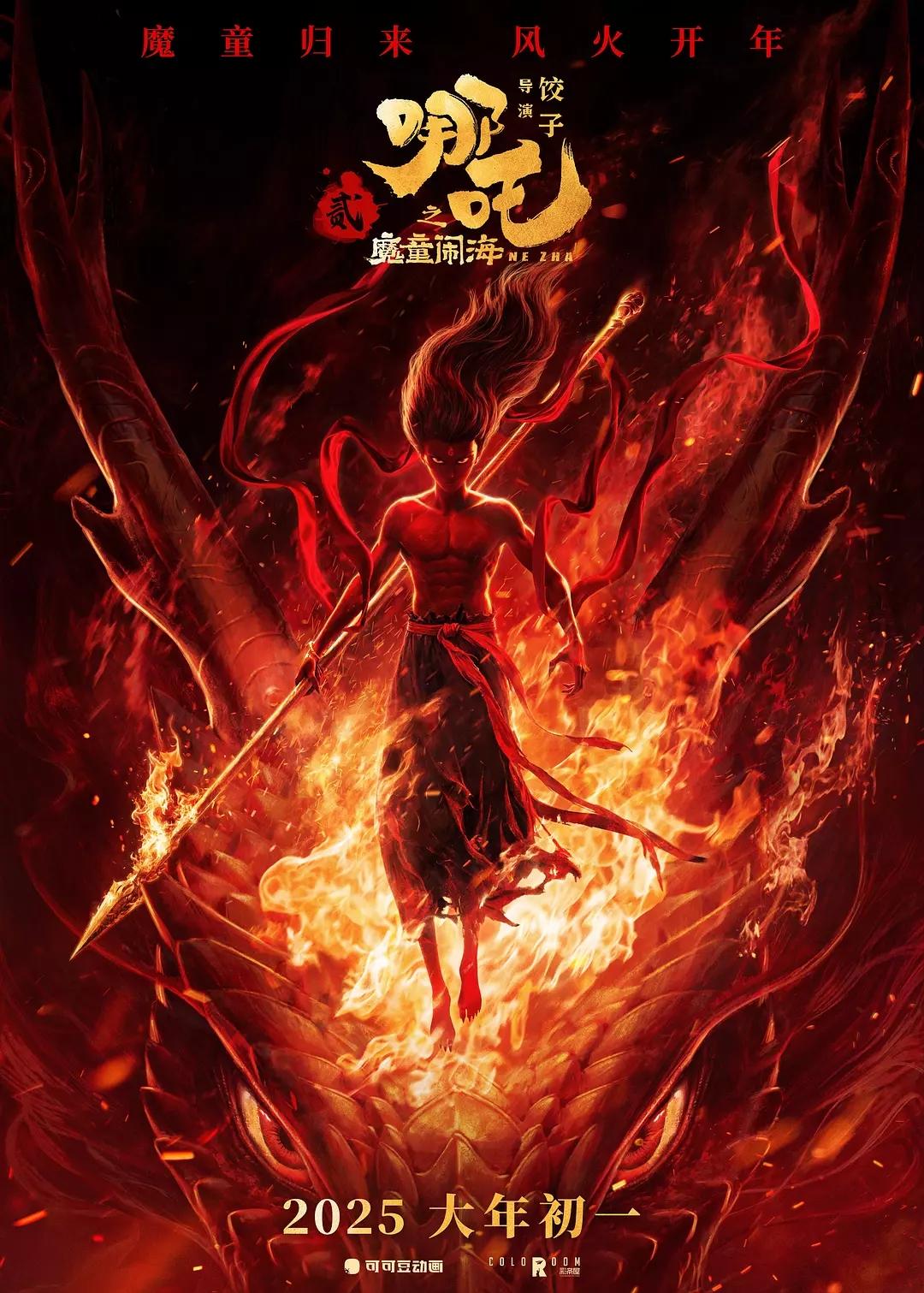
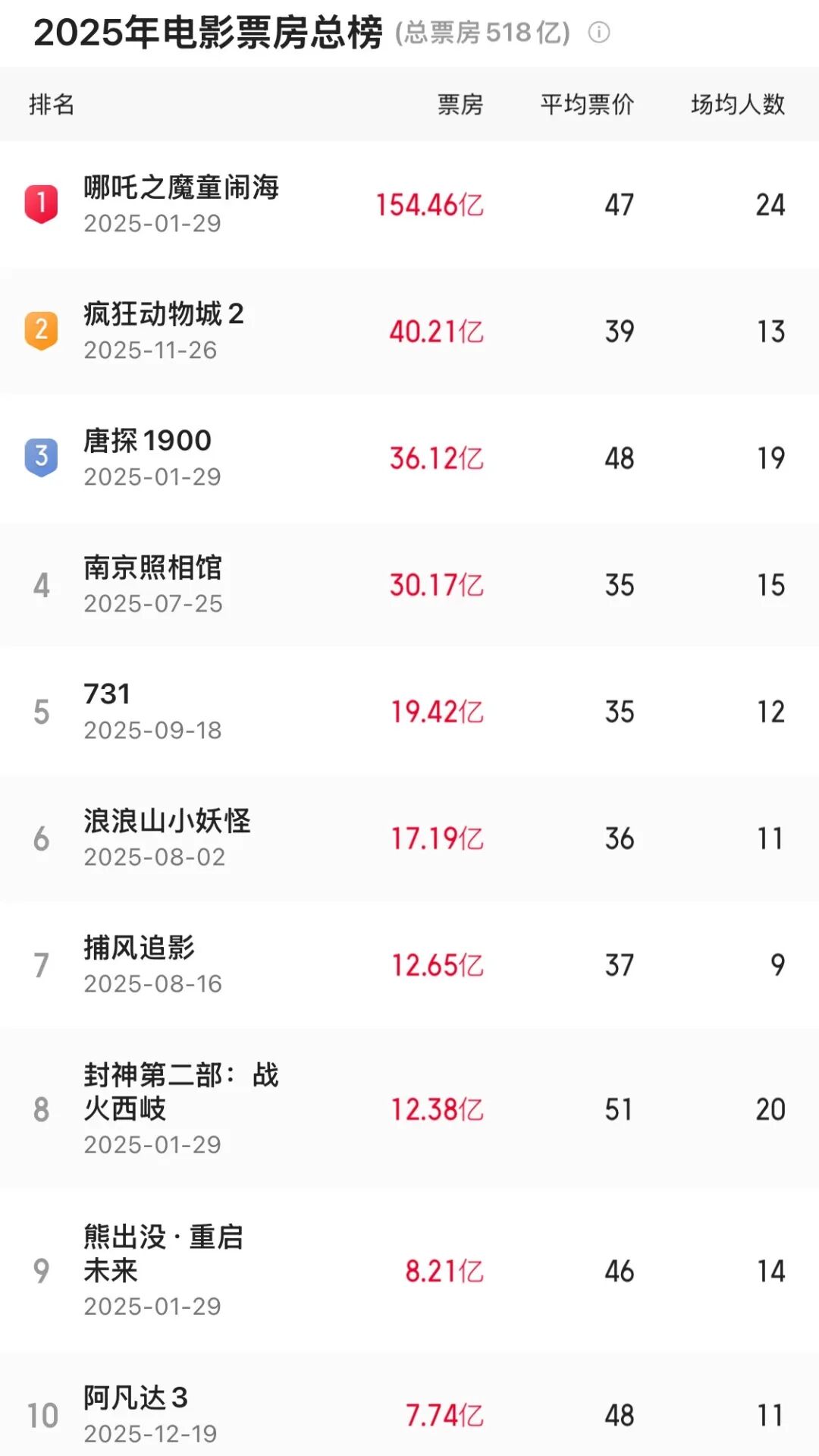
Core Insights - The animation film sector is experiencing significant growth, with domestic animated films capturing 48.63% of the total box office in 2025, amounting to 252.07 billion yuan, which is double the peak in 2019 [1] - "Nezha: Birth of the Demon Child" led the box office with 154.46 billion yuan, significantly outperforming the second-place film by over 118.34 billion yuan, indicating a clear market leader [1] - The overall box office for 2025 reached 518.32 billion yuan, with four animated films in the top ten [1] Box Office Performance - The top five films by box office in 2025 include: 1. "Nezha: Birth of the Demon Child" - 154.46 billion yuan 2. "Zootopia 2" - 40.21 billion yuan 3. "Detective Chinatown 1900" - 36.12 billion yuan 4. "Nanjing Photo Studio" - 30.17 billion yuan 5. "731" - 19.42 billion yuan - "Wang Wang Mountain Little Monster" set a record for domestic 2D animation with 17.19 billion yuan [2] Market Trends - The number of domestic animated films registered for production increased from 53 in 2022 to over 150 in 2025, reflecting heightened investor interest [4] - Animation films are favored for their lower costs and risks compared to live-action films, making them attractive investment opportunities [5][7] - The animation industry has seen a consolidation phase, with weaker companies being eliminated, leaving behind those with robust production capabilities [13] Investment Dynamics - Animation films allow for greater investor involvement and decision-making power due to lower investment thresholds compared to live-action films [9] - The potential for IP development and merchandise sales provides long-term revenue opportunities beyond initial box office performance [7] - The animation sector is characterized by a shift towards quality over quantity, with a focus on established production companies and successful IPs [10][13] Audience Engagement - The audience for animation films is expanding across all age groups, with a significant increase in acceptance and viewership compared to previous years [14][16] - The domestic "pan-second dimension" user base has reached approximately 580 million, indicating strong growth potential in the animation market [14] - High engagement on social media platforms and a growing willingness to pay for animation content further support the sustainability of this market [14][16]

中国第1部彩色水墨动画长片来了 转发期待!影院见!
Xin Lang Cai Jing· 2026-01-04 04:33
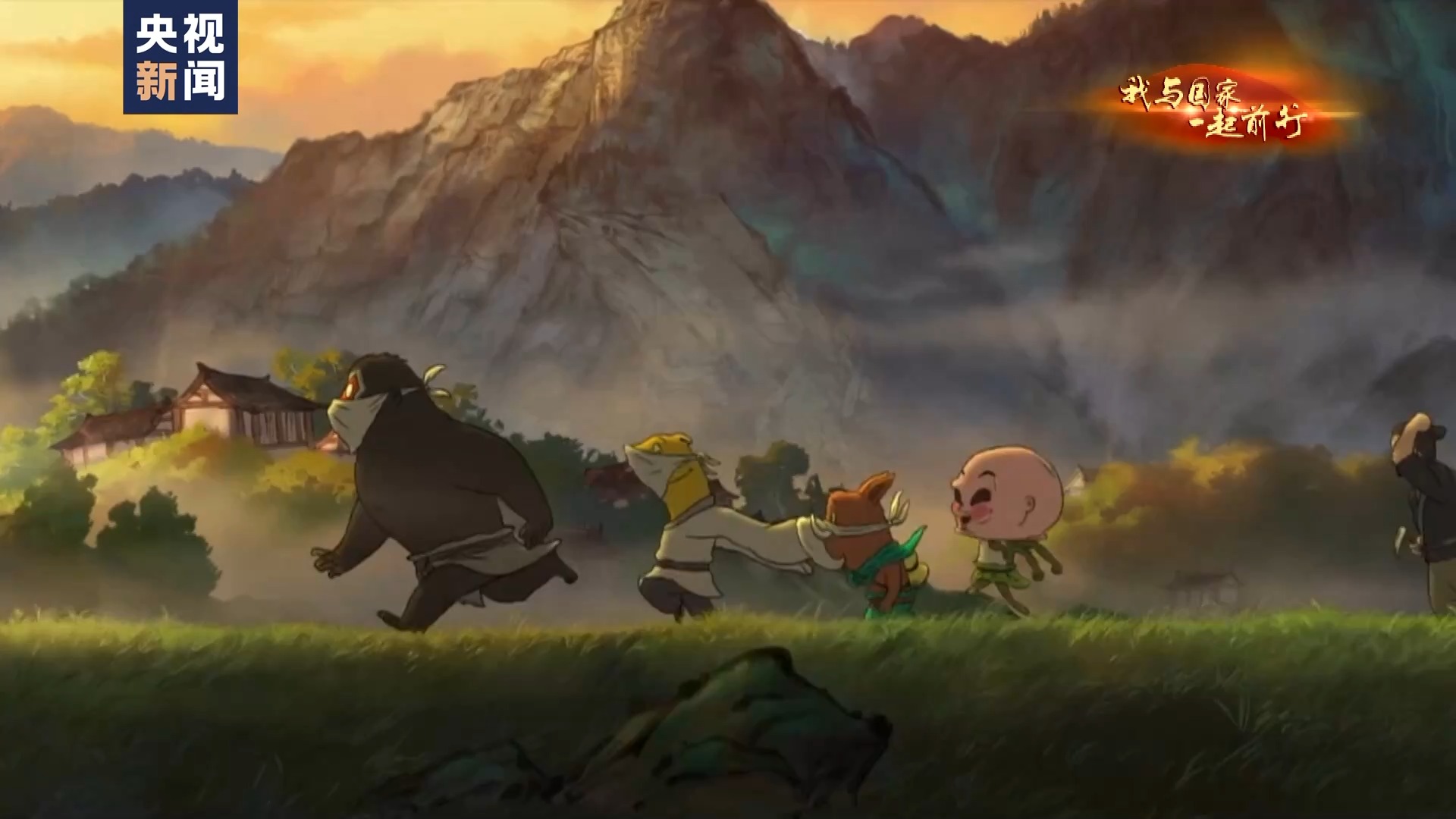
Core Viewpoint - The article highlights the resurgence of traditional Chinese ink wash animation, particularly with the upcoming release of the first color ink wash animated feature film, "斑羚飞渡" (Bān líng fēi dù), which is expected to captivate audiences with its unique visual style that combines traditional aesthetics with modern technology [1] Group 1: Industry Insights - In 2025, the Chinese animation film box office is projected to reach a new high, indicating a growing market for animated films in China [1] - The film "浪浪山小妖怪" (Làng làng shān xiǎo yāo guài) utilizes traditional ink painting techniques alongside modern lighting effects, creating a distinctive visual experience that resonates with audiences [1] - The production of ink wash animation has historically been time-consuming, with some short clips taking 4 to 5 years to complete due to the intricate layering required [1] Group 2: Technological Advancements - Modern technology, particularly hand-drawing software, has significantly reduced the time required to produce ink wash animation, allowing for the completion of what previously took one to two months in just one to one and a half days [1] - The advancements in animation technology are making it feasible to revive and innovate traditional art forms, thus expanding the potential for future projects in this genre [1]
我与国家一起前行丨中国风又回来了!当“国漫崛起”的梦想照进现实
Yang Shi Xin Wen Ke Hu Duan· 2026-01-03 23:29
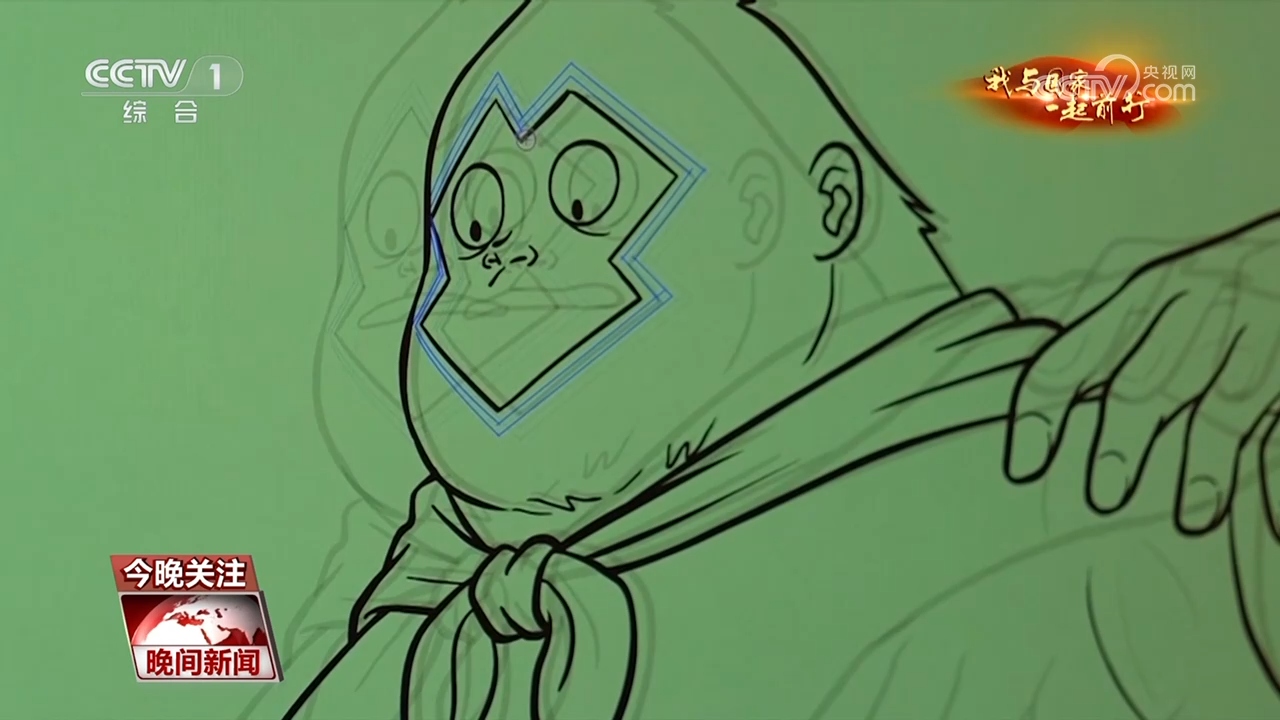
Core Insights - The Chinese film industry achieved a remarkable box office of over 51.832 billion yuan in 2025, with animated films contributing over 25 billion yuan, marking the highest box office for animation in Chinese history [1] - "Nezha: Birth of the Demon Child" set a new global box office record for animated films, while "Wang Wang Mountain Little Monster" broke the domestic box office record for 2D animation [1] Group 1: Animation Industry Growth - The success of "Wang Wang Mountain Little Monster" revitalized the summer of 2025, showcasing a strong Chinese aesthetic that resonated with audiences [3] - The Shanghai Animation Film Studio has leveraged decades of tradition and innovation, utilizing modern technology and hand-drawn software to enhance the creation of Chinese-style animation [6] - The production time for animation has significantly decreased, with one shot that previously took one to two months now completed in about one to one and a half days [10] Group 2: Technological Advancements - The first color ink wash animated feature, "Banshan Feidu," is set to be released soon, which would traditionally require at least 20 years to produce using conventional methods [15] - The studio has faced challenges in the past, including financial difficulties, but government policies since 2004 have provided support through tax reductions, talent development, and funding for domestic animation [18][19] Group 3: Cultural and Artistic Identity - The studio emphasizes the importance of maintaining a Chinese aesthetic in animation, drawing from unique techniques like ink wash and paper-cutting, as well as rich storytelling from Chinese mythology and history [25] - The "old and new" mentorship model at the Shanghai Animation Film Studio has allowed for the continuation and evolution of the Chinese animation school, blending traditional ideas with modern innovations [28] Group 4: Revenue Diversification - The animation industry is shifting from a reliance on box office revenue to a multi-channel "IP ecosystem recovery" model, which includes merchandise sales, crowdfunding, and licensing [40] - "Wang Wang Mountain Little Monster" has launched over 800 merchandise items, generating significant sales and contributing to a broader consumer market [42] Group 5: International Recognition - "Ran Bi Wa" was selected for the Berlin International Film Festival, marking a significant achievement for the Shanghai Animation Film Studio and highlighting the potential for Chinese animated features on the global stage [34][35] - The film's innovative approach, incorporating various animation styles, has garnered both interest and support from veteran artists, indicating a positive trend towards experimental animation [37] Group 6: Cultural Confidence - The success of the animation industry reflects a renewed recognition and appreciation for Chinese culture, with a box office of 25 billion yuan symbolizing a cultural renaissance [46] - The industry is encouraged to continue exploring deep cultural roots while also expanding its reach globally, leveraging cultural "soft power" to enhance the film industry's development [46]
《浪浪山小妖怪》主创在《人民日报》发文:中国故事闪烁在每一个认真生活的普通人身上
Xin Lang Cai Jing· 2026-01-03 17:12
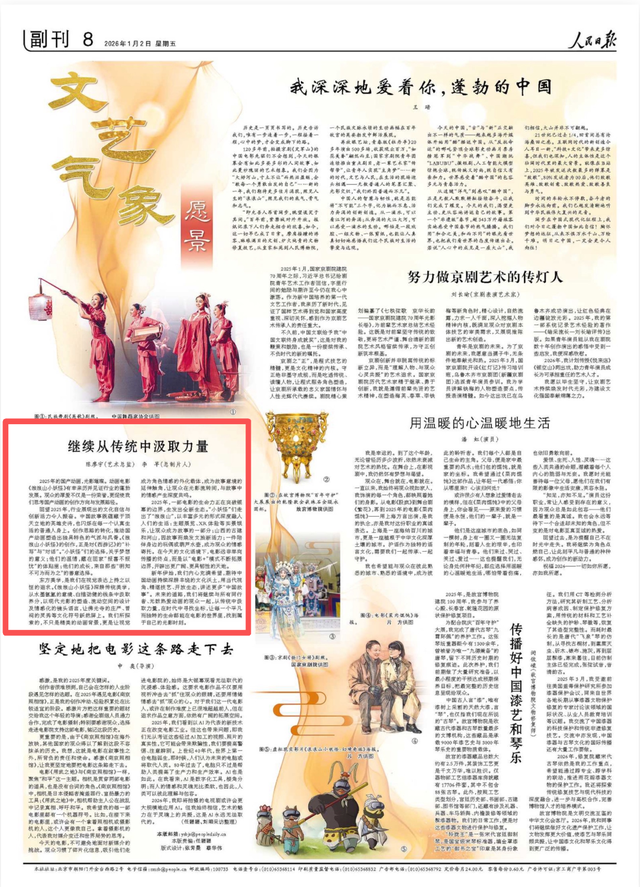
Core Viewpoint - The article emphasizes the vibrant development of the Chinese animation industry, highlighting the film "Wang Wang Mountain Little Monsters" as a testament to cultural confidence and innovation in storytelling [3][4]. Industry Overview - The animation industry in 2025 is characterized by cultural confidence and innovative vitality, with stories reflecting both grand heroic epics and the lives of ordinary people [4]. - The creative approach of "Wang Wang Mountain Little Monsters" serves as a "supplement" and "dialogue" with the classic "Journey to the West," focusing on themes of dreams, warmth, and growth [4]. Artistic Expression - The film deeply explores traditional aesthetics, drawing inspiration from ink painting and line art, while utilizing modern visual techniques to enhance emotional storytelling [4]. - Cultural symbols such as the solemnity of Foguang Temple and the elegance of Jinci are vividly represented, allowing viewers to resonate emotionally with the narrative [4]. Expanding Ecosystem - The film's influence extends beyond the screen, integrating into daily life through various forms such as themed exhibitions and XR experiences, making audiences part of the story [5]. - The narrative revitalizes cultural tourism in Shanxi, showcasing the potential of the "film+" model to create a more resilient and expansive cultural landscape [5]. Future Aspirations - The industry expresses hope for continued growth in Chinese animation, aiming to tell more "Chinese stories" with contemporary perspectives and exquisite craftsmanship [5]. - The commitment to draw strength from tradition while navigating the modern era is emphasized, ensuring that every unique life finds its moment in the cinematic world [5].
我与国家一起前行|中国动画人如何把“国漫崛起”的梦想照进现实
Yang Shi Wang· 2026-01-03 16:05
Core Insights - The Chinese film industry achieved a remarkable box office of over 51.832 billion yuan in 2025, with animated films contributing over 25 billion yuan, marking the highest box office year for animation in Chinese history [1] - The film "Ne Zha" set a new global box office record for animated films, while "Wang Wang Mountain Little Monster" broke the domestic box office record for 2D animation [1] - The series "I Walk with the Country" highlights how Chinese animators are realizing the dream of "the rise of national animation" [1] Industry Developments - The success of Chinese animation is attributed to decades of tradition and innovation at the Shanghai Animation Film Studio, leveraging modern technology and hand-drawn software to enhance the artistic quality of Chinese-style animation [2] - The production time for animation has significantly decreased due to technological advancements, allowing for quicker completion of scenes that previously took months [4] - The first color ink wash animated feature film, "Baili Flying Over," is set to be released soon, which would have taken at least 20 years to produce using traditional methods [7] Policy Support - The Chinese animation industry has benefited from government policies since 2004, including tax reductions, talent development, and funding support, which have helped the industry recover from a period of decline [10] - Continuous top-level design in various five-year plans has aimed to upgrade the animation industry, with cultural funds providing direct support for outstanding works [10] Cultural Significance - The revival of ink wash animation and the exploration of unique Chinese artistic techniques are seen as vital for the future of Chinese animation, emphasizing the importance of cultural identity and innovation [14] - The integration of traditional Chinese aesthetics with modern storytelling is crucial for the evolution of the animation industry [14] Revenue Diversification - The animation industry is shifting from a reliance on box office revenue to a multi-channel "IP ecosystem recovery" model, focusing on merchandise sales, crowdfunding, and licensing [22] - "Wang Wang Mountain Little Monster" has launched over 800 merchandise items, generating significant sales and creating popular tourist spots based on film locations [24] International Recognition - The film "Ran Bi Wa" has been selected for the Berlin International Film Festival, marking a significant achievement for Shanghai Animation Film Studio and highlighting the potential for Chinese animated features on the global stage [19] - The innovative approach of blending various animation styles in "Ran Bi Wa" has received encouragement from veteran artists, showcasing a willingness to explore new creative avenues [19][21]
《浪浪山小妖怪》主创在人民日报撰文
Xin Lang Cai Jing· 2026-01-02 04:05
Group 1 - The core viewpoint emphasizes the flourishing development of the domestic animation industry in 2025, highlighting the cultural confidence and innovative vitality reflected in works like "Wang Wang Mountain Little Monsters" [1][2] - The creation of "Wang Wang Mountain Little Monsters" serves as a "supplement" and "dialogue" with the classic "Journey to the West," focusing on themes of dreams, warmth, and growth through the characters' choices [1] - The film deeply integrates traditional aesthetics with modern visual expressions, utilizing elements like ink painting and emotional cinematography to resonate with audiences [1] Group 2 - In 2025, the film's influence extends beyond the screen, integrating into daily life through various forms such as themed exhibitions and XR experiences, allowing audiences to become part of the story [2] - The narrative revitalizes cultural tourism in Shanxi, showcasing how storytelling can enhance the appeal of local heritage and landscapes [2] - The industry aims to continue exploring rich cultural narratives with contemporary perspectives and advanced techniques, fostering a broader and more resilient ecosystem for storytelling [2]
2025年度产业经济十大热点事件: “科技叙事”重塑投资逻辑 “反内卷”再造产业生态
Zheng Quan Shi Bao· 2025-12-28 22:23
Group 1: AI and Technology Developments - The launch of DeepSeek-R1 in January 2025 has become a core investment theme, driving significant capital market momentum and shifting the focus from performance competition to cost, efficiency, and commercialization capabilities in the AI sector [2] - The AI industry has seen a concentration of funds towards leading companies, with notable stock performances such as the "Yi Zhong Tian" combination, which saw gains exceeding 450% [2] - The human-robotics sector has entered a commercialized phase, with over 46 billion yuan in total orders and more than 20,000 units sold, indicating a shift from conceptual collaborations to practical applications [4][5] Group 2: Film and Entertainment Industry - The film "Nezha 2" achieved a record-breaking box office of 15.4 billion yuan, marking a significant milestone for the Chinese animation industry and contributing to a total annual box office of over 50 billion yuan, a 75 billion yuan increase from 2024 [3] - The success of "Nezha 2" and other animated films reflects the growing market potential for domestic animation, providing a reference for future creative and investment strategies in the film industry [3] Group 3: Market Dynamics and Competition - The intense competition in the food delivery industry, initiated by JD's entry with a no-commission model, has led to significant market disruptions and a series of subsidy wars among major platforms, resulting in a 141 billion yuan loss for Meituan's core local business despite record user numbers [7] - Regulatory bodies have intervened to address the chaotic competition, leading to commitments from major platforms to improve service quality and return to rational development [7] Group 4: Capital Market Trends - The A-share market has seen a record high in cash dividends, totaling 2.61 trillion yuan, reflecting an increase in companies' willingness to return profits to shareholders and enhancing market resilience [11] - The emergence of "GPU dual heroes" in the capital market, with multiple domestic GPU companies going public, signifies a milestone for the domestic AI chip industry and a shift towards self-sufficiency [10] Group 5: Industry Regulation and Quality Improvement - The lithium battery supply chain has experienced a price recovery due to regulatory efforts to combat "involution" competition, with lithium carbonate futures seeing significant price increases [12] - The charging battery industry is transitioning to a more orderly development phase following regulatory changes and recalls by major brands, addressing issues of safety and compliance [13]






“科技叙事”重塑投资逻辑 “反内卷”再造产业生态
Zheng Quan Shi Bao· 2025-12-28 18:03
Group 1: AI and Technology - The launch of DeepSeek-R1 in January 2025 has energized the capital market, establishing AI as the core investment theme for the year, with significant attention on the related industry chain including chips, devices, and applications [3] - The AI industry is shifting from a focus on performance to competition based on cost, efficiency, and commercialization capabilities, allowing small and medium enterprises to build applications quickly using open-source weights [3] - The stock prices of leading AI companies have surged, with notable increases such as the "Yizhongtian" combination exceeding 450% in annual growth, and the stock price of Cambrian Technology surpassing that of Kweichow Moutai at one point [3] Group 2: Film and Entertainment - The film "Nezha 2" released in early 2025 achieved a box office of 15.4 billion yuan, breaking domestic records and entering the global top five, leading to a significant stock price increase for its producer, Light Media [4] - The success of "Nezha 2" reflects the potential of the Chinese animation film industry, with several other animated films also performing well at the box office [4] - The overall domestic film box office reached over 50 billion yuan in 2025, a 75 billion yuan increase from 2024, with total viewership reaching 1.2 billion, indicating a recovery in the film industry [4] Group 3: Robotics - The humanoid robot industry entered a commercialized phase in 2025, with significant orders indicating a shift towards scalable applications, including over 46 billion yuan in total orders and more than 20,000 units sold [5] - The applications of humanoid robots are expanding from industrial settings to service sectors, creating a collaborative development environment across the entire industry chain [5] - The commercialization of humanoid robots has attracted substantial investment and resources, laying a solid foundation for the industry's long-term growth [5] Group 4: Stock Market Dynamics - The competition for the title of "stock king" in the A-share market saw Cambrian Technology and Kweichow Moutai vying for dominance, reflecting a shift in investor preference from traditional consumer sectors to high-growth technology sectors [7] - Cambrian Technology's stock price initially surpassed Kweichow Moutai's, indicating a recognition of the growth potential in tech innovation, but later fluctuations in stock prices highlighted the volatility of market preferences [7] Group 5: Food Delivery Industry - The food delivery industry experienced intense competition in 2025, initiated by JD's entry with a no-commission model, prompting other platforms to enhance rider benefits and engage in large-scale subsidies [8] - This subsidy war led to significant challenges for merchants and platforms, with Meituan reporting a 2% revenue growth despite record user numbers, indicating the pressure on profitability [8] - Regulatory bodies intervened to address the chaotic competition, leading to commitments from major platforms to curb harmful practices and signaling a transition to a more rational development phase in the industry [8] Group 6: Semiconductor and AI Chip Industry - The domestic GPU industry marked a significant milestone with the listing of multiple companies, including Moer Technology and Muxi Technology, indicating a collective movement towards self-sufficiency in AI chips [10] - The semiconductor sector is experiencing a wave of mergers and acquisitions, reflecting a strategic shift from "domestic substitution" to becoming "globally competitive" [10] - The introduction of new listing standards for the Sci-Tech Innovation Board has further supported the growth of emerging industries, enhancing the capital market's backing for innovation [11] Group 7: Dividend Trends - A-share companies have shown a significant increase in dividend payouts, with total cash dividends reaching 2.61 trillion yuan in 2025, surpassing the previous year's total and setting a new record [12] - The growing trend of companies participating in dividend distributions reflects an improvement in overall profitability and a commitment to shareholder returns [12] Group 8: Lithium Battery Industry - The lithium battery industry has seen a rebound in prices due to a collective effort to combat "involution" competition, with significant price increases in lithium carbonate and hexafluorophosphate [13] - The industry is undergoing a transformation towards more sustainable practices, with regulatory measures aimed at stabilizing prices and promoting orderly competition [13] Group 9: Charging Battery Industry - The charging battery industry is entering a new phase of orderly development following a series of recalls by major brands due to safety concerns, highlighting the consequences of intense competition [14] - Regulatory changes and new certification rules are being implemented to enhance oversight and ensure product safety, marking a shift towards more responsible industry practices [14]



2025年动画电影总票房创新高 产业链全面崛起
Xin Lang Cai Jing· 2025-12-26 21:02
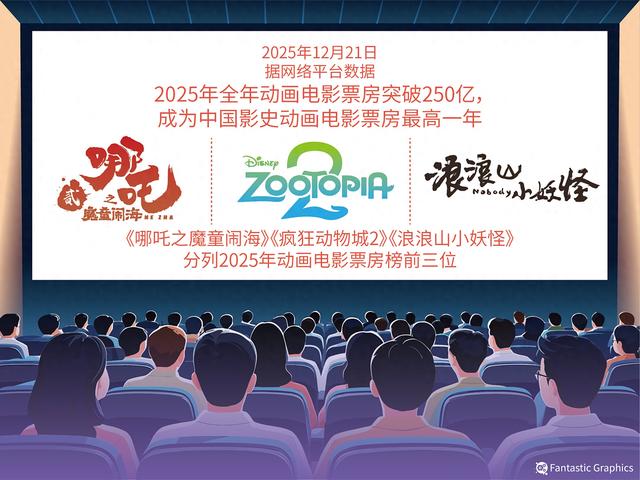
Core Insights - The animation sector in China's film market is projected to be the most outstanding performer by 2025, with cumulative box office revenue reaching approximately 25.1 billion yuan, accounting for about 49% of the total annual box office, marking the highest levels in history [2][3] - The growth of the animation industry is supported by advancements in technology, improved production quality, and expanded commercialization, alongside favorable policies and a relatively loose capital environment [2][6] - The success of animated films has led to a significant increase in related enterprises, with over 8.64 million animation-related companies existing by the end of 2025, reflecting a stable and growing industry [6] Animation Breakthrough - In 2025, eight domestic films surpassed 100 million yuan in box office and received ratings above 7.5 on Douban, three of which are animated films, indicating a comprehensive breakout in both box office and critical reception [2][4] - The IP strength of animated films has improved, with sequels like "Nezha 2" and "Zootopia 2" benefiting from their predecessors' popularity, while "Wang Wang Mountain Little Monster" achieved record box office for 2D animation in China [4][5] Audience Demographics - Animated films are shedding the "child-centric" label, appealing to a broader audience across various age groups, with significant viewership in lower-tier cities [5] - "Zootopia 2" attracted the highest percentage of female viewers and younger audiences, while "Nezha 2" performed well among older demographics, showcasing the films' diverse appeal [5] Industry Upgrade - The success of animated films has instilled confidence in the industry, leading to a continuous increase in animation-related enterprises, with significant annual growth in new companies [6] - Animation is perceived as more stable compared to live-action films, with lower risks associated with production and a more diverse monetization strategy, including IP licensing and derivative products [6][7] AI Integration - The rise of AI technology has enhanced the production quality and efficiency of animated films, reducing costs and enabling the emergence of new formats like AI-generated animated series [7][8] - AI advancements have significantly lowered production costs for animated content, with costs dropping to below 1,000 yuan per minute, while also shortening production cycles [8]
国产动画电影完成“关键一跃”
Qi Lu Wan Bao· 2025-12-26 07:55
Core Insights - The Chinese animation film industry achieved a record box office of over 25 billion yuan in 2025, contributing nearly half of the total annual box office, marking the highest year in the history of Chinese animated films [1][19] - The success of domestic animated films in 2025 represents a significant qualitative leap, transitioning from quantity to quality [1][19] Industry Growth - The prosperity of Chinese animation films is attributed to diverse creative explorations, with many works showcasing remarkable innovation [2][19] - The industry has evolved from a focus on single blockbuster films to building a sustainable "IP ecosystem" that provides ongoing emotional engagement and cultural experiences [12][19] Technological Advancements - Significant technological breakthroughs have supported the quality enhancement of animated films, with "浪浪山小妖怪" achieving a record box office of 1.719 billion yuan for domestic 2D animation [7][19] - The production of "哪吒2" involved 138 animation companies and over 1900 special effects shots, demonstrating the international standard of Chinese 3D animation [7][19] Creative Talent - The emergence of outstanding creators and animation studios has been crucial for the success of numerous high-quality works, with directors like 饺子 and 木头 leading the charge [8][19] - The studio model has diversified, with companies like 追光动画 focusing on themes from traditional Chinese culture, resulting in successful films that resonate with audiences [8][19] IP Development - The "哪吒" series has become the leading IP in Chinese animation, with its universe expanding through sequels and related content [14][19] - Successful IP collaborations and merchandise development have enhanced brand visibility and consumer engagement, exemplified by "哪吒2" and "浪浪山小妖怪" [15][19] Audience Engagement - Positive word-of-mouth has become a key variable in box office performance, with films like "哪吒2" and "浪浪山小妖怪" receiving acclaim for their solid narratives and production quality [16][19] - Conversely, films with poor reception, such as "非人哉:限时玩家," highlight the importance of content quality over marketing hype [18][19] Future Outlook - The animation film trend is expected to continue into 2026, with multiple mythological-themed projects already in the pipeline, indicating a sustained source of creative inspiration [18][19] - The competitive landscape will be further invigorated by international releases, pushing the industry towards higher creative standards [18][19]