
医疗等

Search documents
利好来了!上海重大发布!事关消费 最高补贴不超2万元
Xin Lang Cai Jing· 2026-01-30 23:52
Core Viewpoint - Shanghai has announced a comprehensive policy to promote large-scale equipment updates and a trade-in program for consumer goods, aiming to stimulate consumption and enhance the recycling economy [1][3]. Group 1: Large-Scale Equipment Updates - The policy supports applications for national equipment update projects across various sectors, including industrial, electronic information, energy, transportation, logistics, education, cultural tourism, healthcare, and more [7]. - Specific support is provided for the scrapping and updating of old operational trucks and the renewal of new energy city buses, with subsidies following existing guidelines [8]. Group 2: Consumer Goods Trade-In Program - The policy outlines subsidies for scrapping and updating vehicles, with a maximum subsidy of 20,000 yuan for purchasing new energy passenger vehicles and 15,000 yuan for 2.0-liter or below fuel vehicles [10]. - For vehicle trade-ins, consumers can receive up to 15,000 yuan for new energy vehicles and 13,000 yuan for fuel vehicles, depending on the vehicle's price [10]. Group 3: Household Appliances and Digital Products - Consumers purchasing energy-efficient household appliances such as refrigerators, washing machines, and air conditioners can receive a subsidy of 15% of the product price, capped at 1,500 yuan per item [10]. - For digital and smart products, a subsidy of 15% is available for items priced under 6,000 yuan, with a maximum of 500 yuan per item [11]. Group 4: Recycling and Resource Utilization - The policy emphasizes the establishment of a comprehensive recycling network for old equipment and consumer goods, promoting a "two-network integration" recycling system [8]. - It aims to enhance the recycling and remanufacturing industry, focusing on high-end remanufacturing projects and improving the quality and safety of remanufactured products [9].

海南发布2026年重大项目投资计划!涉及海口的有……
Xin Lang Cai Jing· 2026-01-29 11:34
转自:海口发布 民生保障和生态环境保护等关键领域 其中包括新建湛江至海口铁路 海口经济圈规模化供水工程 海口市横沟村城市更新项目等 日前 《海南省2026年重大项目投资计划》发布 根据投资计划 2026年海南共安排 省重大项目470个、预备项目160个 覆盖基础设施建设、产业发展 2026年,海南安排省重大项目470个,总投资7175亿元,年度计划投资1280亿元。按建设阶段划分:竣 工项目92个,总投资910亿元,年度计划投资211亿元,占17%;续建项目265个,总投资5354亿元,年 度计划投资849亿元,占66%;新开工项目113个,总投资911亿元,年度计划投资220亿元,占17%。 这些项目紧密服务自贸港建设需要,涵盖交通、能源、产业升级及公共服务等多方面。其中包括新建湛 江至海口铁路、海南商业航天发射场能力提升项目、海口经济圈规模化供水工程、海口市横沟村城市更 新项目、海南东方CZ8场址50万千瓦海上风电项目、海南思可源30万吨/年生物能源项目、G98环岛高速 公路大三亚段扩容工程等一系列标志性工程,将有效夯实自贸港硬件基础、培育现代化产业体系。 此外,投资计划还安排了160个预备项目,总投资2 ...
[1月23日]指数估值数据(上涨到3.7星级,500低波动到高估;《红利指数基金投资指南》荣登榜首;抽奖福利)
银行螺丝钉· 2026-01-23 14:04
Core Viewpoint - The market is experiencing significant divergence, with large-cap indices like the CSI 300 and A50 declining, while small-cap indices such as the CSI 500 and CSI 1000 are on the rise, indicating a rotation in market styles that may present long-term investment opportunities [2][10][12]. Group 1: Market Performance - The overall market saw a slight increase, closing at 3.7 stars, but with severe divergence in performance [1][2]. - Large-cap indices like the CSI 300 and A50 have dropped by 0.45% and have seen six consecutive days of decline [3][4]. - In contrast, small-cap indices such as the CSI 500 and CSI 1000 have shown overall gains, with the CSI 500 nearing overvaluation [5][6][18]. Group 2: Investment Strategies - Institutions have been selling off large-cap index funds, impacting their performance negatively, while small-cap stocks have been less affected due to lower institutional holdings [10][11]. - The current bull market is led by small-cap growth styles, reminiscent of the 2015 bull market [12][14]. - The CSI 500 index is approaching overvaluation, and if it continues to rise, it may reach overvaluation levels next week [17][19]. Group 3: Fund Management - For investors with available funds, it is suggested to consider investing in low-valuation index funds or transitioning to bond assets [27][28]. - A strategy of investing in fixed-income products, such as "Monthly Salary Treasure," is recommended while maintaining a plan for dollar-cost averaging when the market reaches 4-5 stars [30][31]. - Historical data indicates that every bear market in A-shares has led to 4-5 star opportunities, emphasizing the importance of having capital ready for investment during these times [33][35]. Group 4: Risk Management - During market fluctuations, low-valuation index funds may also experience volatility, but typically less than large-cap indices [37][38]. - It is advised to limit exposure to thematic industry indices to 15-20% to manage risk effectively [40]. - In phases above 3 stars, strategies such as lump-sum investments or borrowing to invest are discouraged, as market corrections can lead to significant losses [41][44]. Group 5: Hong Kong Market Insights - The Hong Kong market has also returned to a rating of around 3 stars, with ongoing updates to its index valuations [51]. - The valuation table for various Hong Kong indices, including the H-share index and Hang Seng index, provides insights into their current performance metrics [52]. Group 6: New Publications - A new book titled "Dividend Index Fund Investment Guide" has been released, aimed at helping investors understand dividend index funds better, reflecting the growing interest in this investment category [55]. - The book has quickly gained popularity, topping sales charts in its category, indicating a strong demand for educational resources in investment strategies [56].

今年深圳福田区将实施高质量发展“十大行动”,涉及这些领域
Nan Fang Du Shi Bao· 2026-01-23 05:55
Core Viewpoint - The report from the Shenzhen Futian District government outlines significant achievements during the "14th Five-Year Plan" and sets ambitious goals for the "15th Five-Year Plan," focusing on high-quality development and modernization initiatives. Group 1: Achievements during the "14th Five-Year Plan" - The district's GDP crossed the thresholds of 5,000 billion and 6,000 billion yuan, marking two historic milestones [2] - The establishment of three new engines for growth: the Hong Kong-Shenzhen Innovation and Technology Cooperation Zone, the Xiangmi Lake New Financial Center, and the Central Park Vitality Circle [2] - The completion of 90 reform tasks, with 29 being national firsts, and total import and export volume surpassing 8,000 billion and 9,000 billion yuan [2] - Significant improvements in public services, including the construction of 68 new or expanded schools, adding 55,000 new educational slots [2] Group 2: Goals for the "15th Five-Year Plan" - The "15th Five-Year Plan" is seen as a critical phase for the district's second entrepreneurial leap, aiming for decisive progress in modernizing the urban area [3] - The plan emphasizes five key areas: development, governance, civilization, public welfare, and environmental quality [3] - The GDP target for 2030 is set at 8,300 billion yuan, with a focus on creating two trillion-yuan, eight hundred-billion-yuan, and four hundred-billion-yuan industrial clusters [3] Group 3: Key Actions for 2026 - The district will implement ten major actions to ensure a strong start to the "15th Five-Year Plan," focusing on various sectors including consumption, trade, and technology [5][6] - Specific actions include enhancing international trade, improving urban quality, and promoting financial empowerment for innovation [6] Group 4: Focus Areas for 2026 - The district aims to accelerate the development of an international metropolis core, leveraging the APEC conference to enhance urban infrastructure and services [8] - There will be a strong emphasis on innovation-driven growth, with plans to increase R&D investment and support for specialized enterprises [9] - Collaboration with Hong Kong will be strengthened to establish a world-class research hub, including new policies for cross-border cooperation [10] - The district will focus on improving public services, education, healthcare, and social welfare to enhance the quality of life for residents [13] - Environmental initiatives will aim for a harmonious coexistence with nature, targeting a reduction in PM2.5 levels to 15 micrograms per cubic meter [14]
放大赛事溢出效应!上海发布28条举措促进消费提振扩容联动发展
Sou Hu Cai Jing· 2026-01-22 07:26
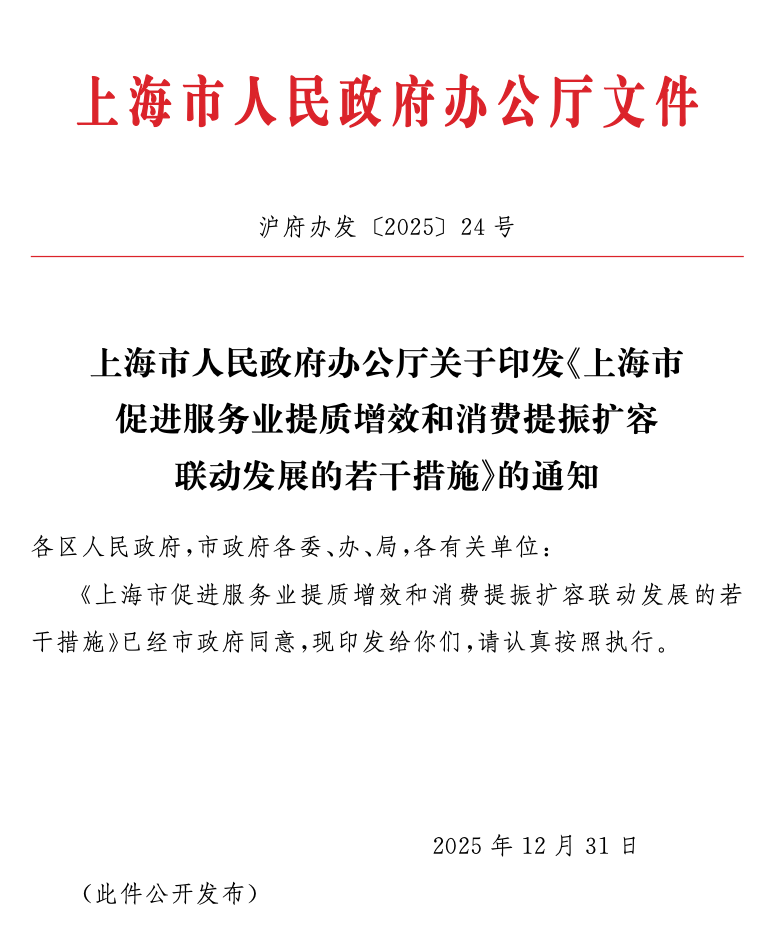
Core Viewpoint - Shanghai's Development and Reform Commission has introduced measures to enhance the quality and efficiency of the service industry while boosting consumption through coordinated efforts on both supply and demand sides [4] Group 1: Sports and Entertainment - Shanghai aims to host 182 international and domestic sports events by 2025, with a projected 35% year-on-year increase in sports consumption during major events [5] - The F1 China Grand Prix is expected to attract 220,000 spectators, generating a direct economic impact of approximately 2.47 billion yuan and an indirect impact of about 6.91 billion yuan [5] - The city plans to develop a globally influential esports ecosystem, becoming a leading hub for esports events and high-level clubs by 2025 [5] Group 2: Financial Innovation - Financial institutions are encouraged to innovate consumer finance products tailored to new consumption trends, including holiday, night-time, nostalgic, and anime economies [7] - Policies will be implemented to optimize personal consumption loans, including easing application conditions and enhancing credit products for large purchases like green smart home installations [7][8] Group 3: Infrastructure and Platform Economy - Financial support will be provided for the renovation of consumer infrastructure, including commercial facilities and community services, with an emphasis on real estate investment trusts (REITs) [10] - E-commerce and service platforms will be supported to develop specialized consumption platforms in sectors like maternal and child care, housekeeping, and elderly care [11] Group 4: Transportation and Connectivity - The city will enhance transportation services by encouraging airlines to open new international routes and improve the quality of travel services at airports and transport hubs [14] - Initiatives will be taken to create integrated consumption scenarios at transportation hubs, including commercial spaces and cultural exhibitions [15] Group 5: Quality of Life Services - Support will be provided to improve the quality of domestic services, including training and insurance for domestic workers, and enhancing the overall service quality in the elderly care sector [20][21] - The introduction of a pilot program for "no-accompaniment" care services in medical institutions is planned to improve healthcare accessibility [22] Group 6: Brand and Standards - The initiative includes the establishment of a recognizable "Shanghai brand" to enhance consumer trust and promote local products [24] - A focus on developing high-quality standards in emerging sectors such as e-sports and digital arts is emphasized to ensure competitive service quality [25] Group 7: Talent and Industry Development - Efforts will be made to attract talent in the service and consumption sectors, including international teams and specialized professionals [31] - The city aims to strengthen industry clusters by attracting high-growth companies and fostering a supportive ecosystem for startups [32]
中国第28座万亿之城,来自浙江
21世纪经济报道· 2026-01-20 09:12
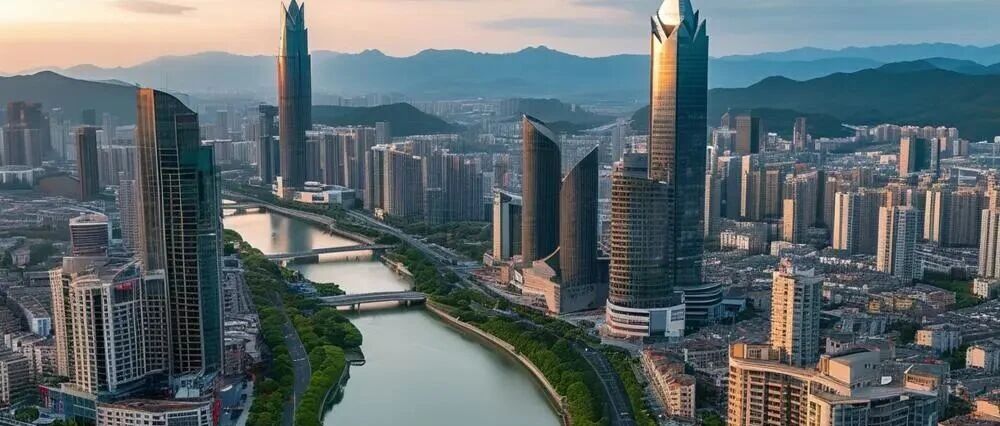
Core Viewpoint - Wenzhou is emerging as a "slash city" with a projected GDP exceeding 1 trillion yuan by 2025, becoming China's 28th trillion-yuan city and the third in Zhejiang province, while accelerating its development as a national "AI demonstration application first city" [1][3]. Economic Growth and Development Goals - Wenzhou's GDP has grown at an average rate of 6.5% during the first four years of the 14th Five-Year Plan, moving from 30th to 28th in national GDP rankings, and its resident population increased from 9.57 million to 9.85 million [3]. - The city aims to enhance its urban circle capabilities and establish itself as a significant regional center in the southeast coastal area, with a focus on high-quality development [3][10]. Innovation and AI Development - Wenzhou is prioritizing innovation, with R&D expenditure growing by an average of 14% annually over the past five years, and the area of incubators expanding over tenfold to exceed 10 million square meters [6]. - The city plans to embed artificial intelligence across various sectors, including manufacturing, energy, healthcare, finance, and tourism, aiming to create a nationally recognized "AI demonstration application first city" [4][8]. Strategic Planning and Implementation - The city has outlined nine key tasks for the next five years, focusing on building a modern industrial system, expanding domestic demand, and enhancing the urban circle's development [6]. - Wenzhou aims to become a leading innovation source in the southeast coastal region, with a modern industrial cluster and a significant increase in the proportion of R&D expenditure relative to GDP [6][7]. Urban Circle and Regional Integration - Wenzhou is working to enhance the integration and development of its urban circle, aiming to connect with the Yangtze River Delta and the Guangdong-Hong Kong-Macao Greater Bay Area [10][11]. - The city is leveraging its unique advantages, including a global trade network, to extend its influence into Southeast Asia and other international markets [11].
新晋万亿之城进击AI,“斜杠青年”温州下一站
2 1 Shi Ji Jing Ji Bao Dao· 2026-01-20 07:17
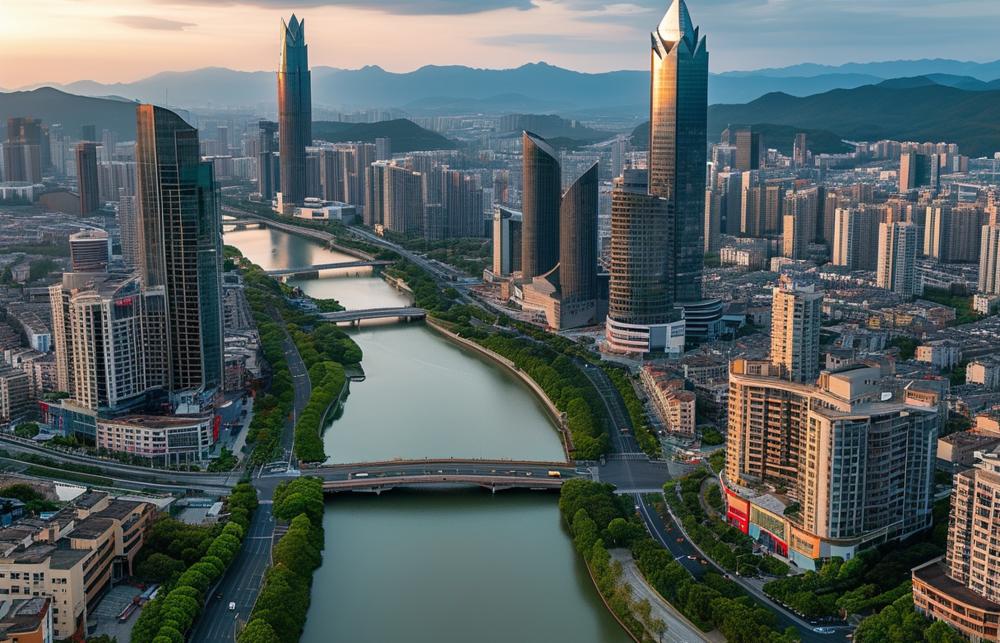
Core Viewpoint - Wenzhou is emerging as a "slash city" with a projected GDP exceeding 1 trillion yuan by 2025, marking it as China's 28th trillion-yuan city and the third in Zhejiang province, while also aiming to become a national leader in AI application development [1][2]. Economic Growth and Development Goals - Wenzhou's GDP has grown at an average annual rate of 6.5% during the 14th Five-Year Plan, moving from 30th to 28th in national GDP rankings, and its resident population increased from 9.57 million to 9.85 million [3]. - The city aims to significantly enhance its urban agglomeration capabilities and establish itself as a key regional center in the southeast coastal area, as outlined in the 15th Five-Year Plan [2][5]. Innovation and AI Development - Wenzhou is focusing on innovation as a key driver for its future growth, with R&D expenditure increasing by an average of 14% annually over the past five years, and the area of incubators expanding over tenfold [5]. - The city plans to embed AI across various sectors, including manufacturing, energy, healthcare, finance, and tourism, to create a nationally recognized "AI demonstration application city" [3][8]. Strategic Planning and Infrastructure - The city will develop a comprehensive "3412" work system to integrate data, algorithms, and computing power, promoting widespread data collection and application [8]. - Wenzhou aims to build a robust AI industry ecosystem, including 6 million square meters of incubation space and focusing on key areas such as intelligent driving and smart manufacturing [8]. Urban and Regional Development - Wenzhou is enhancing its urban agglomeration to amplify the effects of technology, industry, and capital clustering, aiming for high-quality development and integration of urban and rural areas [10][11]. - The city is leveraging its unique advantages, including its global trade network, to extend its influence into Southeast Asia and other international markets [11].
浙江发布2025年度政府“账本”
Sou Hu Cai Jing· 2026-01-17 02:33
Core Insights - Zhejiang's general public budget revenue for 2025 is projected at 886.51 billion yuan, reflecting a year-on-year growth of 1.8%, with tax revenue contributing 717.28 billion yuan, a 2.5% increase, accounting for 80.9% of the total budget revenue [1] - The province is committed to supporting technological innovation, with significant investments in major projects and platforms, including 3.351 billion yuan for provincial laboratories and 1.750 billion yuan for over 400 major technology projects [1] - A proactive fiscal policy is emphasized to stabilize and improve the economy, with a total funding guarantee exceeding 600 billion yuan for 2025, including 104.28 billion yuan from provincial funds [1] Economic Policies - Zhejiang is implementing the "Two New" policy to boost domestic demand, allocating 1.546 billion yuan for a consumption upgrade program, while also enhancing its open platforms to include offshore trade tax incentives [2] - The province is focused on optimizing the business environment for the private sector, with 99.3% of projects funded by the "4+1" special fund being private, and 80% of government procurement contracts awarded to small and micro enterprises [2] Social Welfare - In 2025, social welfare spending in Zhejiang is set at 952.996 billion yuan, making up 76.4% of the general public budget expenditure, continuing a trend of over two-thirds of budget spending directed towards social welfare for 22 consecutive years [2] - Specific allocations include 8.5 billion yuan for basic pension insurance and 2.637 billion yuan for childcare subsidies, alongside improvements in education and healthcare funding [3] Future Outlook - As 2026 marks the beginning of the "14th Five-Year Plan," Zhejiang's fiscal strategy will align with the "4+1" requirements and the provincial government's overall work deployment, aiming for decisive progress and a vibrant economic landscape [3]
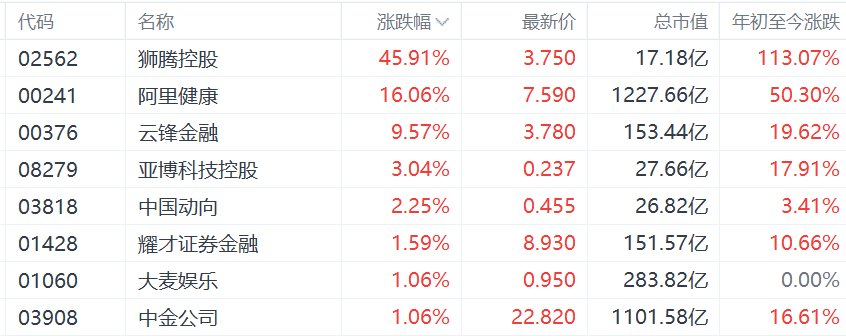
阿里巴巴概念股走强,阿里健康涨16%,云锋金融涨近10%
Ge Long Hui· 2026-01-14 04:30
Core Viewpoint - Alibaba's stock price continues to rise, leading to a strong performance of its related stocks in the Hong Kong market, with significant gains observed across multiple companies [1] Group 1: Stock Performance - Lion Group Holdings saw a remarkable increase of 45.91%, reaching a latest price of 3.750 HKD and a total market capitalization of 1.718 billion HKD, with a year-to-date gain of 113.07% [2] - Alibaba Health recorded a rise of 16.06%, with a latest price of 7.590 HKD and a total market capitalization of 122.766 billion HKD, reflecting a year-to-date increase of 50.30% [2] - Yunfeng Financial experienced a gain of 9.57%, with a latest price of 3.780 HKD and a total market capitalization of 15.344 billion HKD, marking a year-to-date increase of 19.62% [2] - Yabo Technology Holdings increased by 3.04%, with a latest price of 0.237 HKD and a total market capitalization of 2.766 billion HKD, showing a year-to-date gain of 17.91% [2] - China Dynamics rose by 2.25%, with a latest price of 0.455 HKD and a total market capitalization of 2.682 billion HKD, reflecting a year-to-date increase of 3.41% [2]

美国12月CPI报告全文
Xin Lang Cai Jing· 2026-01-13 13:46
Core Insights - The U.S. Consumer Price Index for All Urban Consumers (CPI-U) increased by 0.3% in December, with a year-over-year increase of 2.7% [1][9] - The largest contributor to the monthly increase was the housing index, which rose by 0.4% [1][9] - Food and energy indices also saw increases, with food up by 0.7% and energy up by 0.3% in December [1][9] Food Sector - The food index rose by 0.7% in December, with five out of six grocery categories experiencing price increases [2][10] - The index for "other food at home" increased by 1.6%, while dairy products rose by 0.9% [2][10] - Over the past year, the food index has increased by 3.1%, with meat, poultry, fish, and eggs up by 3.9% [3][11] Dining Out - The index for dining out also increased by 0.7% in December, with full-service dining up by 0.8% and fast food up by 0.6% [3][4][11] - Over the past year, the dining out index has risen by 4.1%, with full-service dining increasing by 4.9% [4][12] Energy Sector - The energy index rose by 0.3% in December, with natural gas increasing by 4.4% [5][13] - Gasoline prices decreased by 0.5% in December, with a year-over-year decline of 3.4% [5][14] - The overall energy index has increased by 2.3% over the past year, with electricity up by 6.7% and natural gas up by 10.8% [5][14] Excluding Food and Energy - Excluding food and energy, the overall index rose by 0.2% in December, with significant increases in entertainment (1.2%) and airline fares (5.2%) [6][15] - Over the past year, the index excluding food and energy has increased by 2.6%, with housing up by 3.2% [7][15] - Other notable increases include medical care (3.2%) and personal care (3.7%) [7][15] Unadjusted CPI Metrics - The unadjusted CPI-U for the past year increased by 2.7%, with the index level at 324.054 [8][16] - The CPI for wage earners and clerical workers (CPI-W) rose by 2.6% over the past year [8][16] - The chained CPI-U increased by 2.5% year-over-year [8][16]