
机器人产业

Search documents
航天智装股价涨5.34%,易方达基金旗下1只基金位居十大流通股东,持有1141.52万股浮盈赚取1792.18万元
Xin Lang Cai Jing· 2025-12-26 02:29
Group 1 - The core viewpoint of the news is that Aerospace Intelligent Equipment Co., Ltd. has seen a stock price increase of 5.34%, reaching 30.98 CNY per share, with a trading volume of 1.34 billion CNY and a turnover rate of 6.34%, resulting in a total market capitalization of 22.236 billion CNY [1] - The company, established on September 4, 2007, and listed on May 15, 2015, specializes in railway vehicle operation safety detection and maintenance systems, intelligent testing and simulation systems, and automation equipment for the nuclear industry and special environments [1] - The revenue composition of the company's main business includes: 51.56% from nuclear industry and special environment intelligent equipment systems, 30.33% from intelligent testing and simulation systems and micro-system control components, and 22.84% from railway vehicle operation safety detection and maintenance systems [1] Group 2 - From the perspective of the top ten circulating shareholders, E Fund's ETF, the E Fund National Robot Industry ETF (159530), has entered the top ten circulating shareholders with 11.4152 million shares, accounting for 1.61% of circulating shares, resulting in an estimated floating profit of approximately 17.9218 million CNY [2] - The E Fund National Robot Industry ETF (159530) was established on January 10, 2024, with a latest scale of 13.315 billion CNY, and has achieved a year-to-date return of 29.86%, ranking 1763 out of 4197 in its category [2] - The fund managers, Li Shujian and Li Xu, have managed the fund for 2 years and 3 years respectively, with total assets under management of 19.758 billion CNY and 26.538 billion CNY, achieving best returns of 114.48% and 139.32% during their tenure [2]

航天智装股价跌5.09%,易方达基金旗下1只基金位居十大流通股东,持有1141.52万股浮亏损失1586.71万元
Xin Lang Cai Jing· 2025-12-23 02:39
Group 1 - The core point of the news is that Aerospace Intelligent Equipment experienced a decline of 5.09% in stock price, reaching 25.91 yuan per share, with a trading volume of 662 million yuan and a turnover rate of 3.49%, resulting in a total market capitalization of 18.597 billion yuan [1] - Aerospace Intelligent Equipment, established on September 4, 2007, and listed on May 15, 2015, is based in Haidian District, Beijing. The company's main business includes safety detection and maintenance systems for railway vehicles, intelligent testing and simulation systems, and automation equipment for the nuclear industry and special environments [1] - The revenue composition of Aerospace Intelligent Equipment is as follows: 51.56% from nuclear industry and special environment intelligent equipment systems, 30.33% from intelligent testing and simulation systems and micro-system control components, and 22.84% from railway vehicle safety detection and maintenance systems [1] Group 2 - From the perspective of the top ten circulating shareholders, E Fund's ETF, the E Fund National Robot Industry ETF (159530), entered the top ten shareholders in the third quarter, holding 11.4152 million shares, which accounts for 1.61% of the circulating shares. The estimated floating loss today is approximately 15.8671 million yuan [2] - The E Fund National Robot Industry ETF (159530) was established on January 10, 2024, with a latest scale of 13.315 billion yuan. Year-to-date returns are 25.21%, ranking 2065 out of 4197 in its category; the one-year return is 18.88%, ranking 2676 out of 4154; and since inception, the return is 45.26% [2] Group 3 - The fund managers of the E Fund National Robot Industry ETF (159530) are Li Shujian and Li Xu. As of the report, Li Shujian has a tenure of 2 years and 107 days, with a total fund asset size of 19.758 billion yuan, achieving a best fund return of 105.96% and a worst return of -10.8% during his tenure [3] - Li Xu has a tenure of 3 years and 29 days, with a total fund asset size of 26.712 billion yuan, achieving a best fund return of 127.45% and a worst return of -3.58% during his tenure [3]
核心技术岗年薪最高达百万元 苏州重点产业薪酬调研成果发布
Su Zhou Ri Bao· 2025-12-22 22:41
Group 1 - The event "Jinji Lake 2025 Human Resources Ecological Week and Suzhou Key Industry Salary Survey Results Release" was held in Suzhou, focusing on creating a high-level talent exchange platform for key industries [1] - The theme of the event is "Gathering Momentum for New Initiatives, Ecological Integration" and features a structure of "1+4+X" including an opening ceremony, four industry sharing sessions, and multiple ecological exhibitions [1] - The report released by Suzhou Human Resources Development Co., Ltd. indicates that the overall annual salary for employees in Suzhou is steadily increasing, with the 50th percentile salary projected to be 117,000 yuan in 2025 [1] Group 2 - Key industries such as high-end equipment manufacturing and new-generation information technology are experiencing salary increases, with core technical positions potentially earning up to 1 million yuan [1] - The demand for talent remains stable overall, with high recruitment activity in emerging sectors like aerospace, low-altitude economy, robotics, and intelligent vehicle networking [1] - This salary and benefits survey report for key industries in Suzhou marks the 17th consecutive year of publication [1]
多省份陆续公布地方版“十五五”规划建议 产业结构向“新”向“智”高质量发展
Yang Shi Wang· 2025-12-19 08:27
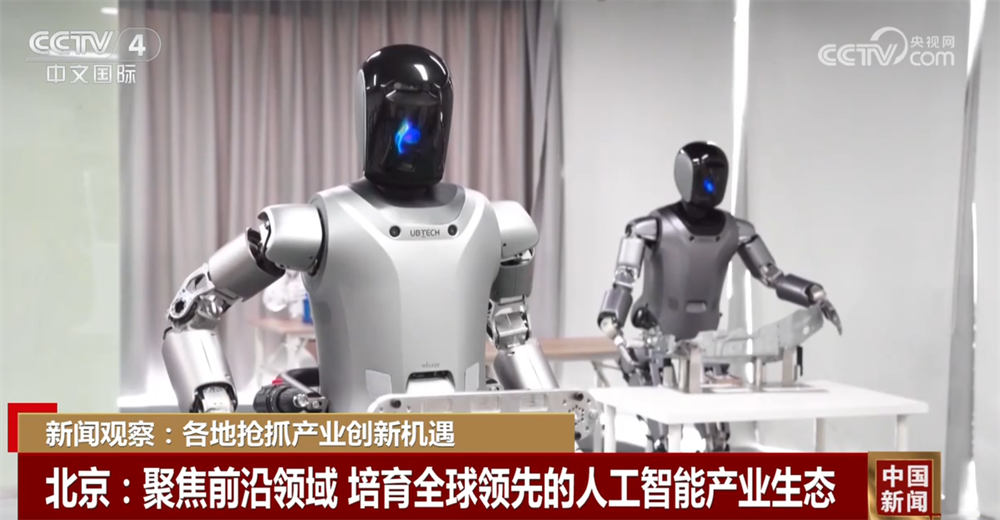
Core Insights - The "14th Five-Year Plan" emphasizes accelerating high-level technological self-reliance and the integration of technological and industrial innovation [1] - Various provinces are unveiling local versions of the "14th Five-Year Plan," focusing on cultivating new productive forces and detailed industrial innovation [1] Group 1: Strategic Focus Areas - Multiple regions are prioritizing cutting-edge fields such as artificial intelligence, quantum technology, and biomanufacturing, with significant projects being planned [1] - Beijing aims to cultivate a leading global AI industry ecosystem, focusing on high-end chips and foundational software [1] - Zhejiang is working to develop emerging pillar industries, accelerating clusters in AI, aerospace, and biomedicine [1] - Guangdong plans to create a high-tech, high-growth, large-scale industrial cluster around "AI + Robotics," with Shenzhen's "Robot Valley" already established as a complete ecosystem [1][4] Group 2: Policy and Industry Support - The Greater Bay Area has developed differentiated policy matrices, with Shenzhen focusing on "complete machines + chips" and Guangzhou on "robots + application scenarios," supported by provincial demonstration industry funds [6] - The integration of these policies is expected to comprehensively support industrial development [6] Group 3: Resource Allocation and Competitive Advantage - Regions are targeting national strategic needs to form differentiated competitive advantages, such as Inner Mongolia's goal to become the largest rare earth materials base and Guizhou's focus on computing power industries [8] - Hainan is enhancing its innovation capabilities in sectors like seed industry, deep-sea, and aerospace [8] Group 4: Comprehensive Development Framework - There is a consensus on building a full-chain development system from basic research to technology breakthroughs and industrial clustering to foster new productive forces and promote high-quality industrial chain development [11] - Shandong is implementing a ten-year action plan to increase investment in basic research, while Jiangsu is pushing for breakthroughs in key technologies in integrated circuits and biomanufacturing [11] Group 5: Economic Transition and Future Roadmap - The "14th Five-Year Plan" period is seen as a critical five years for achieving socialist modernization, with the development of emerging industries being the foundation for high-quality economic growth and the transformation of old and new driving forces [13] - Future development roadmaps are becoming clearer, indicating a significant trend towards the transformation of industrial structures to be more "new" and "intelligent" [13]

多维度感知中国活力 各领域“拔节向上”绘就高质量发展万千气象
Yang Shi Wang· 2025-12-11 06:39
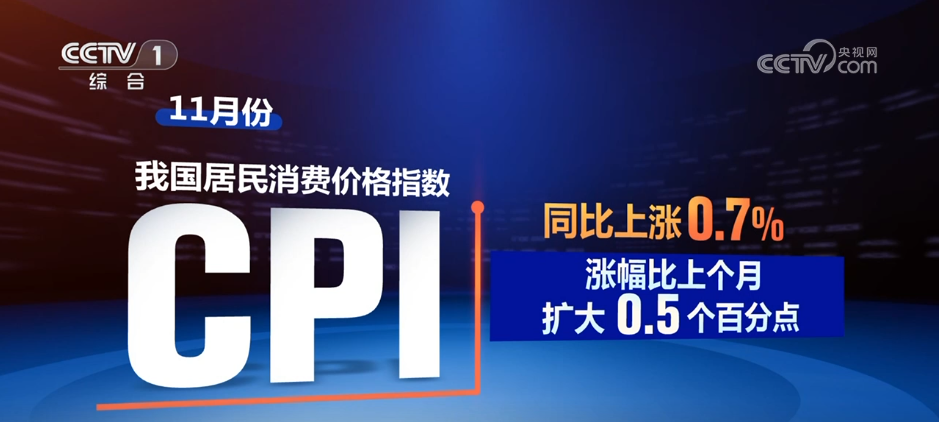
Economic Indicators - In November, China's Consumer Price Index (CPI) rose by 0.7% year-on-year, an increase of 0.5 percentage points from the previous month [3] - The core CPI, excluding food and energy, increased by 1.2% year-on-year, maintaining a growth rate above 1% for three consecutive months [3] - The Producer Price Index (PPI) rose by 0.1% month-on-month in November, marking two consecutive months of increase [3] Light Industry Performance - In the first ten months, revenue of large-scale light industry enterprises reached 19 trillion yuan, a year-on-year increase of 1.9%, with profits of 1.14 trillion yuan, up 1.6% [7] - The added value of large-scale light industry grew by 5.8% year-on-year, with significant growth in battery and plastic furniture manufacturing [7] - Retail sales of 11 categories of light industry products exceeded 7.1 trillion yuan, growing by 9.8% year-on-year, with home appliances and audio-visual equipment sales increasing by 20.1% [9] Robotics and AI Development - The robotics industry has seen rapid development, with service robot production exceeding 13.5 million units in the first three quarters of the year [17] - AI applications have surged, with the number of AI applications reaching 657, a year-on-year increase of 61.8%, and mobile user scale surpassing 700 million [21] - China's AI industry has surpassed 900 billion yuan, with over 6,000 companies contributing to a competitive technological landscape [21] Low-altitude Economy - The State Council has issued guidelines to promote the application of low-altitude economy, including the use of unmanned systems across various sectors [23] - In cities like Jingdezhen and Anyang, low-altitude applications are being utilized for tourism, emergency services, and urban management, significantly improving efficiency [25][27] - By 2024, over 140 new low-altitude logistics routes are expected to be established, with the drone logistics market projected to exceed 1 trillion yuan by 2035, maintaining an annual growth rate of around 20% [29]
奥林匹克中心发展行动计划发布,将建全球首个人形机器人赛训基地
Xin Jing Bao· 2025-12-04 14:03
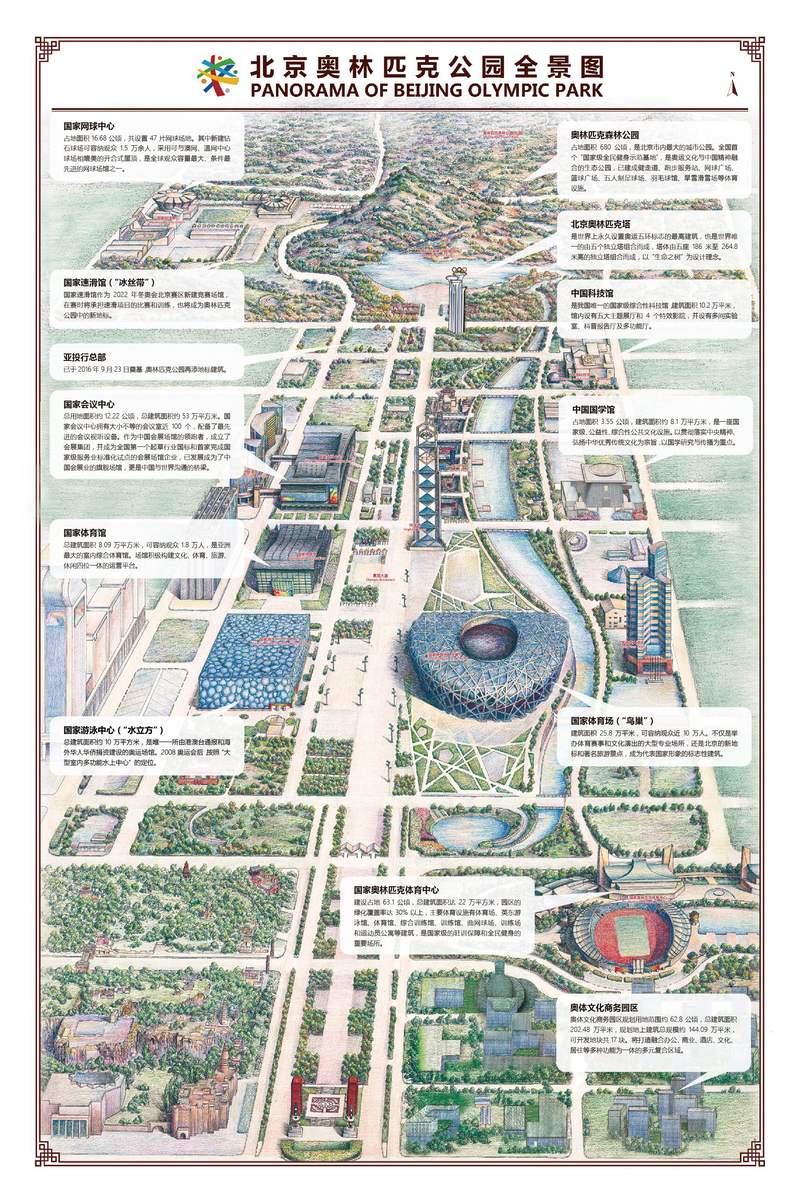
Core Insights - Beijing has released an action plan for the high-quality development of the Olympic Center from 2025 to 2027, focusing on infrastructure upgrades and the establishment of a humanoid robot training base [1][4] Group 1: Development Plans - The Olympic Center will feature the world's first national humanoid robot training base, infrastructure enhancements for the Olympic Forest Park, and comprehensive renovations of the dragon-shaped water system [1][4] - The area covers 11.59 square kilometers and is the only "dual Olympic" park globally, hosting major events and attracting over 300 million visitors annually [3][4] - By 2027, the plan aims to rejuvenate historical and governmental functions, establishing the area as a must-visit destination for domestic and international tourists [3][4] Group 2: Sports and Events - The Olympic Center will host a series of international events, including the 2027 World Athletics Championships, which will return to Beijing after 12 years [7][10] - The plan includes hosting over 100 large-scale events annually, with a target of attracting more than 5 million participants [5][10] Group 3: Urban Renewal - The action plan outlines urban renewal projects, including the renovation of the Olympic Tower and the dragon-shaped water system, which will enhance 187,400 square meters of water area [6][14] - The Olympic Tower will undergo upgrades to improve visitor experiences, including a viewing platform at 246.8 meters [14] Group 4: Economic and Cultural Integration - The plan emphasizes the integration of sports, culture, and tourism, aiming to create a vibrant ecosystem that enhances consumer experiences [5][12] - The Olympic Center will serve as a hub for various industries, including sports, culture, and technology, fostering collaboration and innovation [5][12]

固高科技股价涨5.1%,易方达基金旗下1只基金位居十大流通股东,持有605.54万股浮盈赚取896.2万元
Xin Lang Cai Jing· 2025-11-27 05:31
Group 1 - The core viewpoint of the news is that Gohigh Technology has seen a stock price increase of 5.1%, reaching 30.49 CNY per share, with a total market capitalization of 12.196 billion CNY as of the report date [1] - Gohigh Technology, established on October 29, 1999, is located in Shenzhen, Guangdong Province, and specializes in the research and development of core technologies in motion control and intelligent manufacturing [1] - The company's revenue composition includes 70.47% from core motion control components, 18.27% from motion control systems, 9.57% from complete motion control machines, and 0.90% from other supplementary sources [1] Group 2 - Among the top circulating shareholders of Gohigh Technology, E Fund's ETF, the E Fund National Robot Industry ETF (159530), has entered the top ten shareholders, holding 6.0554 million shares, which is 2.17% of the circulating shares [2] - The E Fund National Robot Industry ETF (159530) was established on January 10, 2024, with a latest scale of 13.315 billion CNY, and has achieved a year-to-date return of 21.63% [2] - The fund's performance over the past year has yielded a return of 26.92%, ranking 1668 out of 4006 in its category [2]
人形机器人如何“放心用”?头部险企接连推专属产品,尚需跨越三大核心障碍
Mei Ri Jing Ji Xin Wen· 2025-11-25 11:08
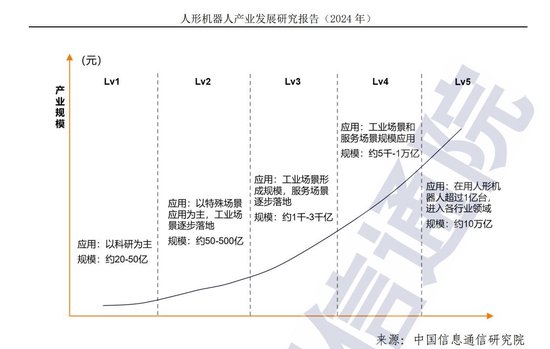
Core Viewpoint - The rapid advancement of artificial intelligence has led to a pressing need for humanoid robots, which are transitioning from laboratory demonstrations to commercial applications, indicating a new phase in industry development [1][3]. Industry Overview - The humanoid robot market in China is projected to reach a scale of 100 billion RMB by 2035, driven by applications in manufacturing, social services, and special operations [1][9]. - The insurance industry is responding to the emerging risks associated with humanoid robots by developing specialized insurance products to cover various dimensions such as property loss, third-party liability, cybersecurity, and data breaches [1][2]. Insurance Product Development - Major insurance companies like China Pacific Insurance and People’s Insurance Company of China have launched dedicated insurance products for humanoid robots, addressing risks from operational failures to third-party injuries [3][4]. - The "Smart Insurance" product by China Pacific Insurance offers integrated coverage for property loss, third-party liability, and flexible policy durations tailored to various commercial scenarios [3][4]. Risk Management Challenges - The application of humanoid robots faces significant challenges, including safety risks, property damage, and liability issues, which are critical for scaling their use [5][7]. - The complexity of humanoid robots, which integrate mechanical, electronic, and AI components, leads to multifaceted risks that traditional insurance products may not adequately cover [8][12]. Market Potential and Support - The humanoid robot market is expected to expand significantly, with projections indicating a market size of 1 trillion to 3 trillion RMB by 2040, and over 100 million humanoid robots in use by 2045 [9][11]. - Government initiatives are increasingly supporting the humanoid robot industry, including financial incentives for insurance premiums to encourage innovation and adoption [13][12]. Ethical and Regulatory Considerations - The industry faces ethical challenges and a lack of unified standards, complicating the insurance landscape and raising questions about liability in cases of malfunction or harm caused by humanoid robots [15][16]. - The need for new insurance products that address algorithmic responsibility and system failures is highlighted, along with the importance of establishing a risk database for accurate pricing [16][14].


机器人产业ETF(159551)盘中涨超1%,连续3日迎资金净流入
Mei Ri Jing Ji Xin Wen· 2025-11-24 07:11
Core Viewpoint - The mechanical and automation equipment industry is expected to benefit from external demand and the "two new" sectors (emerging industries and new infrastructure) by 2025, with leading performance in sub-sectors such as construction machinery, electrical power grids, and energy equipment [1] Group 1: Industry Trends - The emerging sectors, including the AI industry chain and high-end equipment manufacturing, are showing high levels of prosperity [1] - Investment in equipment and tools is maintaining a high growth rate of 13% in the first ten months of 2025, reflecting the significant effects of large-scale equipment renewal policies [1] - It is anticipated that these policies will continue to support manufacturing investment in 2026 [1] Group 2: Investment Products - The Robot Industry ETF (159551) tracks the Robot Index (H30590), focusing on companies involved in the research, manufacturing, and application of robotics [1] - The index highlights technological innovation and industrial automation trends, aiming to reflect the overall development performance in the field of intelligent equipment and automation solutions [1]

创新与出海:权威专家详解未来五年中国企业“生意经”
2 1 Shi Ji Jing Ji Bao Dao· 2025-11-18 14:20
21世纪经济报道记者洪晓文 陆跃玲 广州南沙报道 "十四五"收官之际,众多权威学者和企业家于11月18日现身广州南沙举办的第二十届中国经济论坛,聚 焦讨论一个关键问题:中国经济下一个五年怎么干。对内"产业创新"和对外"出海"几乎是所有与会人士 反复提到的共识。 近日发布的《中共中央关于制定国民经济和社会发展第十五个五年规划的建议》(简称"十五五"规划建 议)提出,着力打造新兴支柱产业、前瞻布局未来产业,以及推动科技创新和产业创新深度融合, 为"十五五"时期现代化产业体系发展擘画蓝图。 对此,国务院发展研究中心党组成员、副主任隆国强在论坛上谈到,新一轮科技革命和产业变革为我国 高质量发展提供历史机遇,因地制宜发展新质生产力,推动现代化产业体系智能化、绿色化、融合化发 展,对实现中国式现代化具有重大意义。 中国金融四十人论坛学术顾问、重庆市原市长黄奇帆提出,中国在0~1的自主创新、原始创新方面, 1~100的科研成果产业化转化方面和100~100万的产业链集群创新方面均取得了重大成就。 对于许多企业而言,发展的空间不仅在国内制造业的"0~1、1~100、100~100万"的全链条跃升之中, 更多的机会在海外。隆国 ...