空调

Search documents
2026开年中央空调行业集体涨价,谁来买单?
Xin Lang Cai Jing· 2026-02-05 12:18
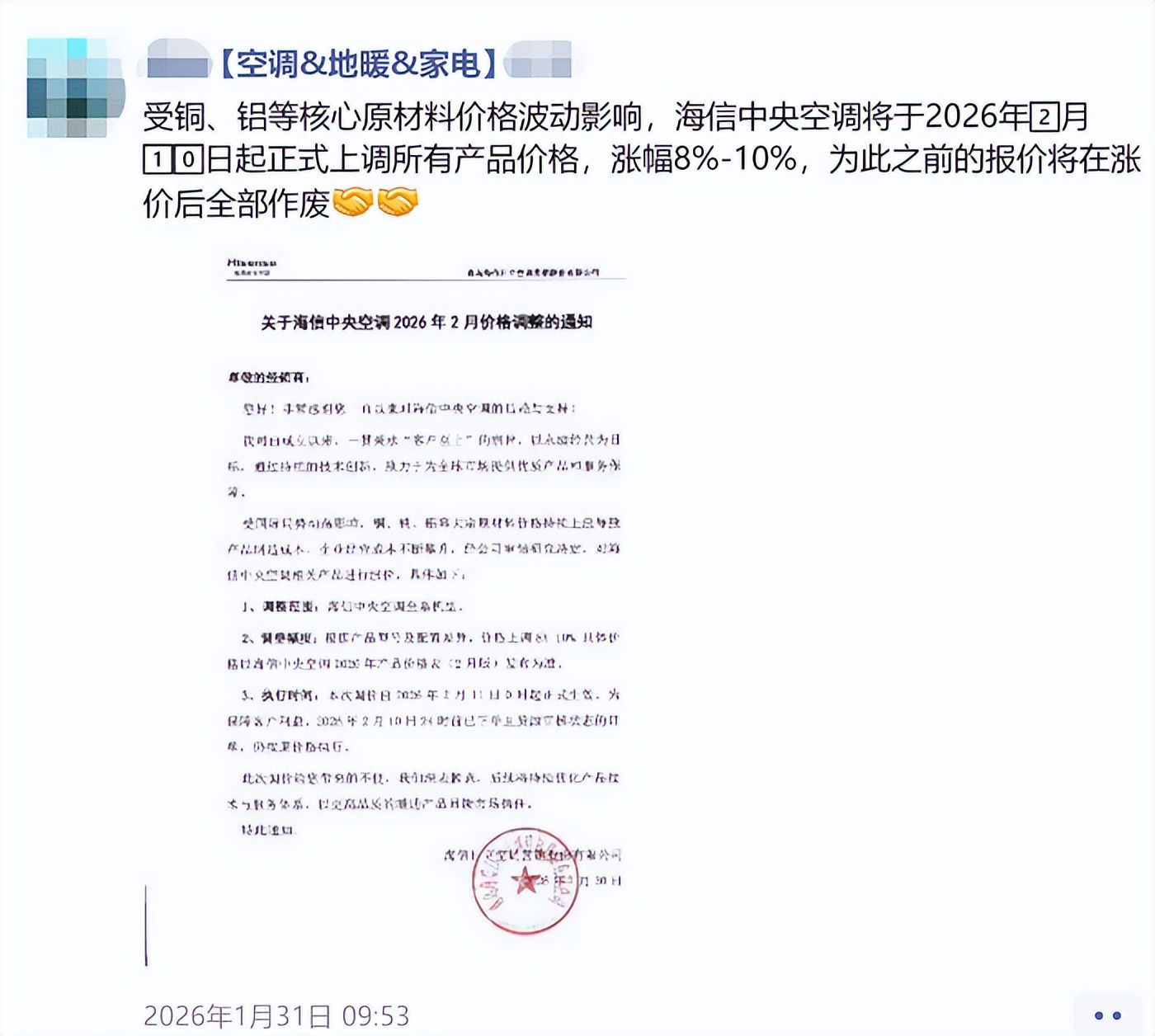
元旦刚过,中央空调市场便迎来一波密集的涨价通知。一位经销商在朋友圈转发海信中央空调的调价函时,或许并未意识到,这仅是冰山一角——一场始于 2025年底的行业性价格调整,正全面铺开。 早在2025年12月,镁刻阳光和iCongo丨志高智能环境已率先宣布,自2026年1月1日起上调产品提货价。2026年1月初,TCL、奥克斯等品牌迅速跟进。至1月 下旬,日立、海信、约克VRF、科龙等品牌纷纷加入,另有美的、格力等品牌施行了区域性的涨价通知,形成行业性的集体调价浪潮,涨幅普遍介于3%至 10%。 鑲刻 阳光 | MEKER 铝、冷媒等大宗原材料 因铜√ 价格上涨 2026年1月1日起 镁刻阳光空调全系列价格上调 5% 2026年1月1日起 因核心原材料价格上涨 iCongo全系列产品价 RISE IN PR 0 200 8169007 总部地址:广东省佛山 iCongo 志高智能环境 # 奥克斯空调温馨提示 # 1月10日起热销机型价格上调 5%-8% 感谢理解与支持 TQ 英全中国雷值本部空间产品经营中心 关于 TCL 空调产品1 各大区战区、各经销商: 近期空调相关大来原材料价格持 且上涨趋势仍在持续。此外,其 ...





AI空调卷疯了:格力、美的、海尔集体押注,核心价值是「省钱省电」?
3 6 Ke· 2026-02-05 04:13
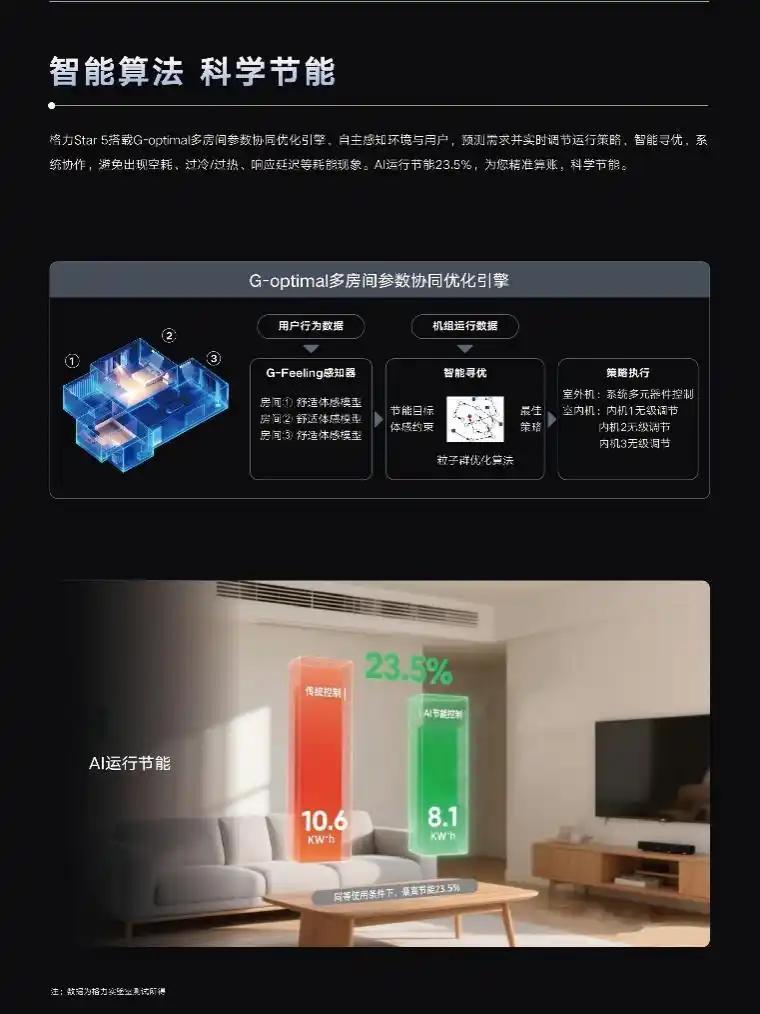
Core Viewpoint - The air conditioning industry is rapidly evolving with the integration of AI technology, moving from traditional cooling and heating systems to more intelligent solutions that focus on user comfort and energy efficiency [1][3][12]. Group 1: AI Integration in Air Conditioning - AI air conditioners, such as Gree's Star 5 AI, aim to enhance user experience by maintaining optimal comfort levels rather than just achieving set temperatures [3][4]. - Traditional air conditioning systems often waste energy and respond slowly to changes in user needs, while AI systems optimize energy use and adjust dynamically based on real-time conditions [4][6]. - Gree's Star 5 AI claims to achieve energy savings of up to 23.5% under ideal conditions, although actual performance may vary based on individual household factors [6][12]. Group 2: Competitive Landscape - Major appliance manufacturers, including Gree, Midea, and Haier, are heavily investing in AI technology, indicating a shift in the market towards algorithm-driven air conditioning solutions [12][15]. - The introduction of AI in air conditioning is expected to create a competitive divide, favoring companies with established data and technology capabilities, while smaller firms may struggle to keep up [16]. - As the market for household air conditioning approaches saturation, consumers are likely to prioritize smart features over cost when upgrading their systems [16].

传统空调需求承压,格力、美的切入AI数据中心制冷领域
Di Yi Cai Jing· 2026-02-04 08:50
Core Insights - The data center cooling business is a significant growth point for the central air conditioning industry during its consolidation phase, but competition is intensifying, presenting both opportunities and challenges [1] Industry Overview - The central air conditioning industry is currently in an adjustment period due to weakening traditional engineering demand. Companies like Gree Electric Appliances (000651.SZ) and Midea Group (000333.SZ) are reallocating resources towards AI data center cooling and high-computing infrastructure to seek structural growth [3] - The data center temperature control market has high requirements for system design capabilities, project experience, and long-term operation and maintenance, posing challenges for traditional HVAC companies [3] Market Dynamics - Air conditioning still accounts for approximately 70% of Gree's revenue, with central air conditioning being a core segment. However, the industry faces pressure from a downturn in real estate, weak traditional engineering demand, and intensified price competition [4] - The Chinese central air conditioning market is projected to reach a sales scale of 138.68 billion yuan by 2025, with a year-on-year decline of 7.4% in the domestic market, while the export market is expected to grow by 12.7% [4] - Data centers are viewed as one of the few remaining sources of certain demand in the central air conditioning industry, although their contribution to Gree and Midea's central air conditioning revenue remains limited [4] Technological Trends - As AI computing power increases, the power density of server cabinets is rising rapidly, revealing limitations in traditional air-cooled solutions regarding efficiency and heat dissipation. Liquid cooling is becoming an important technology route for high-computing data centers [4] - Liquid cooling is not merely an equipment upgrade but involves comprehensive changes in system architecture, core components, and operational modes, requiring higher system integration and project experience [4] Competitive Landscape - The data center cooling market is primarily dominated by two types of companies: specialized temperature control manufacturers and foreign brands. Specialized firms have accumulated substantial project experience and customer loyalty, while central air conditioning manufacturers like Gree and Midea have advantages in manufacturing and global service networks but face competition in specialized cooling solutions [6] - Domestic central air conditioning companies see opportunities in the data center market due to incremental space and localization trends, but they also face challenges such as technology maturity and complex project delivery capabilities [6] Strategic Outlook - Overall, AI data center cooling presents a rare structural growth opportunity for the central air conditioning industry, but its scale, pace, and profit model differ significantly from traditional engineering markets. In the short term, data center business acts more as a buffer against the decline of traditional business rather than a decisive replacement [7] - The ability of Gree and Midea to establish stable engineering capabilities and long-term customer relationships in high-barrier technologies like liquid cooling will be crucial for their positioning in the computing infrastructure cycle [7]
产业亮点:如何看原材料涨价背景下空调品牌提价效果?
Changjiang Securities· 2026-02-01 13:50
Investment Rating - The report maintains a "Positive" investment rating for the home appliance industry [10] Core Insights - Starting from April 2025, the main raw material for air conditioners, copper, has entered a new price increase cycle, with prices accelerating since mid-November. As of January 14, 2026, the LME copper spot settlement price reached $13,335 per ton, reflecting a 53.5% increase compared to the beginning of 2025. In response to cost pressures, several air conditioning companies, including Aux, Midea, and others, have announced price increases ranging from 3% to 8% [2][4][16] - The report analyzes the impact of rising copper prices on air conditioner gross margins and evaluates the effectiveness of manufacturers' price increase strategies based on a review of the previous raw material price increase cycle [4][16] Summary by Sections Introduction - The report discusses the resumption of the copper price increase cycle starting in April 2025 and its implications for air conditioning manufacturers, highlighting the need for price adjustments in response to rising costs [4][16] Theoretical Impact of Rising Copper Prices on Air Conditioner Profitability - Raw material costs account for approximately 54% of air conditioner production costs, with copper, steel, and plastic comprising 22%, 12%, and 10% respectively. The high proportion of copper makes air conditioners particularly sensitive to copper price fluctuations. The report estimates that if copper prices rise by 15%, 30%, and 50%, air conditioner gross margins would theoretically decline by 2.1, 4.2, and 7.1 percentage points respectively [5][20][25] Effectiveness of Price Increases to Mitigate Cost Pressures - The report suggests that manufacturers would need to raise product factory prices by 3.0%, 5.9%, and 9.8% to effectively counteract the pressure on profitability from copper price increases of 15%, 30%, and 50% respectively. A review of the previous raw material price increase cycle (2020Q2-2022Q1) indicates that while price increases can mitigate cost pressures in the short term, sustained rapid increases in raw material prices may still pose challenges to profitability [6][36][47] Investment Recommendations - In light of the current cost uncertainties, the report recommends focusing on leading white goods companies with significant cost advantages and well-integrated supply chains, specifically highlighting Midea Group, Haier Smart Home, and Gree Electric as key investment opportunities [7][56]
大金斩获2025中国消费创新大会两项大奖,引领消费新时代
Jin Tou Wang· 2026-01-28 08:34
近日,由数央网、数央公益联合国内多家大众及财经媒体共同举办的2025中国消费创新大会暨第四届国 际品质节在北京举行。本届大会以"创新引领消费新时代"为主题,聚焦消费领域的前沿趋势与实践探 索,并围绕质量、创新力、影响力等多维度进行严苛评选,不仅被视为中国消费创新发展的风向标,更 成为亿万消费者选购品质产品的重要参考。 在这场聚焦消费创新的巅峰盛典中,大金凭借深厚的百年技术积淀与对中国家庭需求的前瞻洞察,为万 千中国家庭构筑个性化美好人居体验,成功斩获"2025年度新消费影响力品牌"与"2025年度行业领军人 物"两大重磅奖项。这份双重荣誉,既是消费市场对大金在空气领域持续创新的高度认可,更奠定了大 金在高端空气解决方案领域的标杆地位。 深耕消费创新,铸就品牌差异化影响力 新消费时代,那些能显著提升生活品质,甚至改变人生活方式的产品往往更能赢得消费者心智。作为拥 有百年历史的全球知名品牌,大金始终走在消费创新前沿,凭借前瞻性的市场洞察与深入调研,精准捕 捉潜在需求,通过更具健康价值、兼具智慧与便捷的解决方案,为消费者打造提升生活幸福感的空气体 验。从深度融合中央空调、新风、地暖、智控、全周期服务于一体的大金中央 ...
沙利文三重数据认证,奥克斯领跑空调市场价值竞争
Sou Hu Cai Jing· 2026-01-27 03:23
Core Insights - The report by Sullivan highlights that AUX Air Conditioning is projected to be among the top three global sales of household split air conditioners from 2018 to 2024, with the company achieving the highest sales in the mass market for two consecutive years from 2023 to 2024 and leading in smart voice air conditioner sales for three consecutive years from 2022 to 2024 [1][3][4] Group 1: Market Position and Strategy - AUX's market leadership is attributed to 32 years of experience in the air conditioning industry, focusing on innovation and quality as core values, which has allowed the company to build a differentiated competitive advantage [1][4] - The company has established a full industry chain capability, mastering core components like compressors, and has partnered with Panasonic for compressor development, ensuring self-control over core technologies [1][4] - AUX's product strategy of "high configuration, super value" aligns well with market demand, supported by innovative sales models that eliminate intermediaries, allowing direct sales to consumers [4][6] Group 2: Technological Advancements - AUX has made early investments in the smart technology sector, leading to a significant advantage in the market, with a focus on user needs and technology iteration [3][4] - The upcoming launch of the "Air Butler" series in 2026 will integrate smart voice, smart temperature control, and other technologies, transitioning from "single product intelligence" to "scene intelligence" [3] Group 3: Service Innovation - AUX is set to introduce a 10-year free warranty and a 365-day exchange policy starting January 1, 2026, becoming the first in the new first-tier market to offer such services, addressing long-term user concerns about after-sales support [4][6] - The combination of product quality and service innovation is expected to enhance user trust and strengthen AUX's competitive position in the market [6] Group 4: Global Expansion - AUX has established a presence in over 150 countries and regions, maintaining market leadership in more than 20 countries, which complements its ranking among the top three in global household split air conditioner sales from 2018 to 2024 [4] - The company operates 15 major manufacturing bases and 7 R&D centers globally, enabling localized operations that adapt products to different climates and user habits [4]

海尔空调凭AI创新做到TOP3唯一正增后,又发布AI空调新品
Jin Rong Jie· 2026-01-24 11:43
Core Viewpoint - Haier's air conditioning has achieved a comprehensive upgrade from "product intelligence" to "scene intelligence" through its smart home strategy, launching the "Smart Wind Air Conditioner" that emphasizes proactive service rather than passive control [1] Group 1: Product Features - The Smart Wind Air Conditioner is equipped with an "AI Eye" UWB human sensing radar that can accurately perceive user movements, adjusting airflow based on proximity and activity [3] - It features a four-air outlet design and a 130° ultra-wide airflow, ensuring customized comfort regardless of room layout [3] - The air conditioner automatically enters energy-saving mode after 30 minutes of inactivity and shuts down after one hour without detecting human presence, promoting effortless energy conservation [4] Group 2: Health and Maintenance - The air conditioner actively monitors for dust and mold on the evaporator, prompting users to initiate self-cleaning to ensure clean air [7] - It incorporates AI temperature and humidity control to manage air quality effectively, adapting to various weather conditions [7] Group 3: User Interaction - The air conditioner can be controlled through voice commands without the need for remote controls or mobile apps, thanks to a high-performance AI voice chip developed in collaboration with iFlytek [8] - This feature allows users to issue commands within a 5-meter range, simplifying operation and enhancing user experience [8]
【人民日报】漠河:冰天雪地里产品测试“热气腾腾”
Ren Min Ri Bao· 2026-01-22 00:45
眼下,黑龙江漠河市最低气温已跌破零下30摄氏度。 在环能国检漠河极寒实证基地,中国建研院建科环能科技有限公司建筑环境与能源检测院的工程师 们身着防寒服、脚穿防滑鞋,正开展每日例行巡检、参数设置及测试记录工作。 这次测试周期近5个月,从2025年12月一直持续到2026年4月底,覆盖了漠河一年中最冷的时间。 明明实验室里也能开展测试,为何偏要跑到漠河来"自讨苦吃"?面对记者的疑惑,杨强给出了答 案。 "我们就是要在真实环境里,验证产品在极端低温下的可靠性和能效表现。在日常工作中,我们经 常看到产品实际运行数据和实验室数据不一致,常规实验室很难达到漠河这种低温高湿的环境条件,这 充分说明真实环境测试的必要性,也为产品优化和行业技术升级提供实打实的数据支撑,助力推动相关 国家标准一步步完善。"杨强说。 空调行业里常说"制冷制热皆硬功",极寒环境下的制热能力,是检验产品硬实力的关键。这次测试 不仅聚焦核心制热性能,还重点排查低温运行时的噪声异常、电气安全隐患,同步验证压缩机、换热器 等关键零部件的耐寒极限。通过实验室模拟、漠河实地测试、用户使用反馈多维度测评,形成一套完整 的质量闭环,让产品性能更有保障。 凛冽的寒风 ...
冰天雪地里,产品测试“热气腾腾”(神州看点·冷资源成热产业)
Ren Min Ri Bao· 2026-01-21 23:31
眼下,黑龙江漠河市最低气温已跌破零下30摄氏度。 在环能国检漠河极寒实证基地,中国建研院建科环能科技有限公司建筑环境与能源检测院的工程师们身 着防寒服、脚穿防滑鞋,正开展每日例行巡检、参数设置及测试记录工作。 凛冽的寒风里,每个人的睫毛上都结着细密的冰晶,哈出的白气转瞬消散在风中。 空调行业里常说"制冷制热皆硬功",极寒环境下的制热能力,是检验产品硬实力的关键。这次测试不仅 聚焦核心制热性能,还重点排查低温运行时的噪声异常、电气安全隐患,同步验证压缩机、换热器等关 键零部件的耐寒极限。通过实验室模拟、漠河实地测试、用户使用反馈多维度测评,形成一套完整的质 量闭环,让产品性能更有保障。 为了数据的精准可靠,杨强和团队摸索出一套环环相扣的工作流程:提前摸底不同天气条件下的机组性 能,确保后期测试供热温度正常;白天每4小时巡检一次测试设备,检查传感器工作状态及机组运行情 况;晚上汇总分析当天采集的数据,把测试结果和设备运行视频反馈给厂家。 质量把控上,团队更是建立了严格的标准:水温差误差严格控制在±0.1摄氏度以内,数据采集频率设定 为每分钟1次,所有测试结果均需双人交叉复核确认,确保万无一失。 这样的极寒测试,不 ...
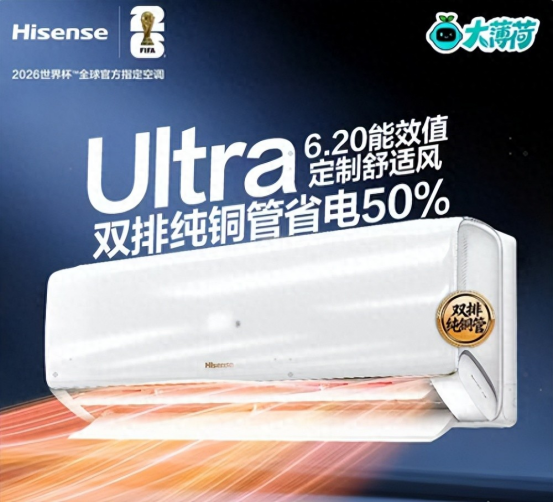
海信空调温暖中国年:智省电Ultra成科技年货担当,守护全家健康过大年
Xiao Fei Ri Bao Wang· 2026-01-21 18:55
Core Viewpoint - The article highlights the rising trend of health-conscious and quality-focused consumer goods during the upcoming Spring Festival, with Hisense's new air conditioner, the "Smart Energy Saving Ultra," positioned as a leading example of "tech gifts" for the holiday season [1]. Group 1: Product Features - The Hisense Smart Energy Saving Ultra air conditioner features a proprietary energy-saving chip that can achieve up to 53% energy efficiency by dynamically generating personalized energy-saving plans based on real-time environmental sensing and user habits [3]. - The air conditioner's hardware includes a dual copper pipe design and a high-efficiency APF value of 6.20, ensuring rapid temperature adjustment and energy savings even during continuous operation [3]. - It is equipped with AI capabilities, allowing for voice control and natural dialogue in six dialects, enhancing user interaction without the need for a remote control [5]. Group 2: Health and Comfort - The air conditioner addresses common discomforts associated with direct airflow by offering multiple airflow modes, ensuring a comfortable experience during family gatherings [5]. - It incorporates a Hi-cat nano catalyst filter that eliminates 99.99% of common bacteria and viruses, along with a self-cleaning feature for both indoor and outdoor units, promoting a healthy breathing environment [5]. Group 3: Market Response and Promotions - The Hisense Smart Energy Saving Ultra is marketed as a "tech gift" that meets the demands of modern consumers, combining energy efficiency, health protection, and smart features [7]. - The product is currently available on major online platforms like JD.com and Tmall, with government subsidies offering a discount of 15%, encouraging consumers to purchase this quality product for the New Year [7].