
轻工纺织

Search documents
21社论丨增量政策协同发力,实现“十五五”良好开局
21世纪经济报道· 2025-12-19 00:37
Core Viewpoint - The Chinese government plans to implement incremental policies in 2026 to boost economic growth, focusing on the integration of existing and new policies to achieve qualitative and quantitative improvements in the economy [1][2]. Group 1: Economic Growth Strategies - The primary task for 2026 is to maintain domestic demand as the main driver of growth, with consumption being the top priority. Current policies like the trade-in program for consumer goods have led to rapid sales growth, and the penetration rate of the new energy vehicle market is nearing 60% [1]. - The government aims to expand the scope of consumption policies from durable goods to more potential service sectors such as culture, tourism, and health [2]. Group 2: Investment and Infrastructure - Significant increases in investment are expected in 2026, particularly in new urbanization, technological innovation, and major livelihood projects. The central budget investment scale is projected to rise from 7.3 trillion yuan in 2025 to provide strong capital support for major projects [2][3]. - The introduction of new policy-based financial tools, with an expected increase of several hundred billion yuan in 2026, will continue to support key projects [3]. Group 3: Industrial Upgrading and New Growth Drivers - The government plans to enhance traditional industries through technological upgrades and green transformations, potentially unlocking an additional market space of approximately 10 trillion yuan [3][4]. - Development of emerging industries such as new energy, new materials, and aerospace is expected to create substantial market opportunities, with projections indicating the potential for tens of thousands of billions in new market scale [4]. Group 4: Policy Coordination and Structural Reforms - The implementation of macroeconomic policies will emphasize systemic and coordinated approaches, focusing on optimizing fiscal spending and maintaining a reasonable level of debt while ensuring effective use of government bond funds [4]. - Structural reforms will continue to deepen, particularly in establishing a unified national market, which includes standardizing market access and competition regulations [4].


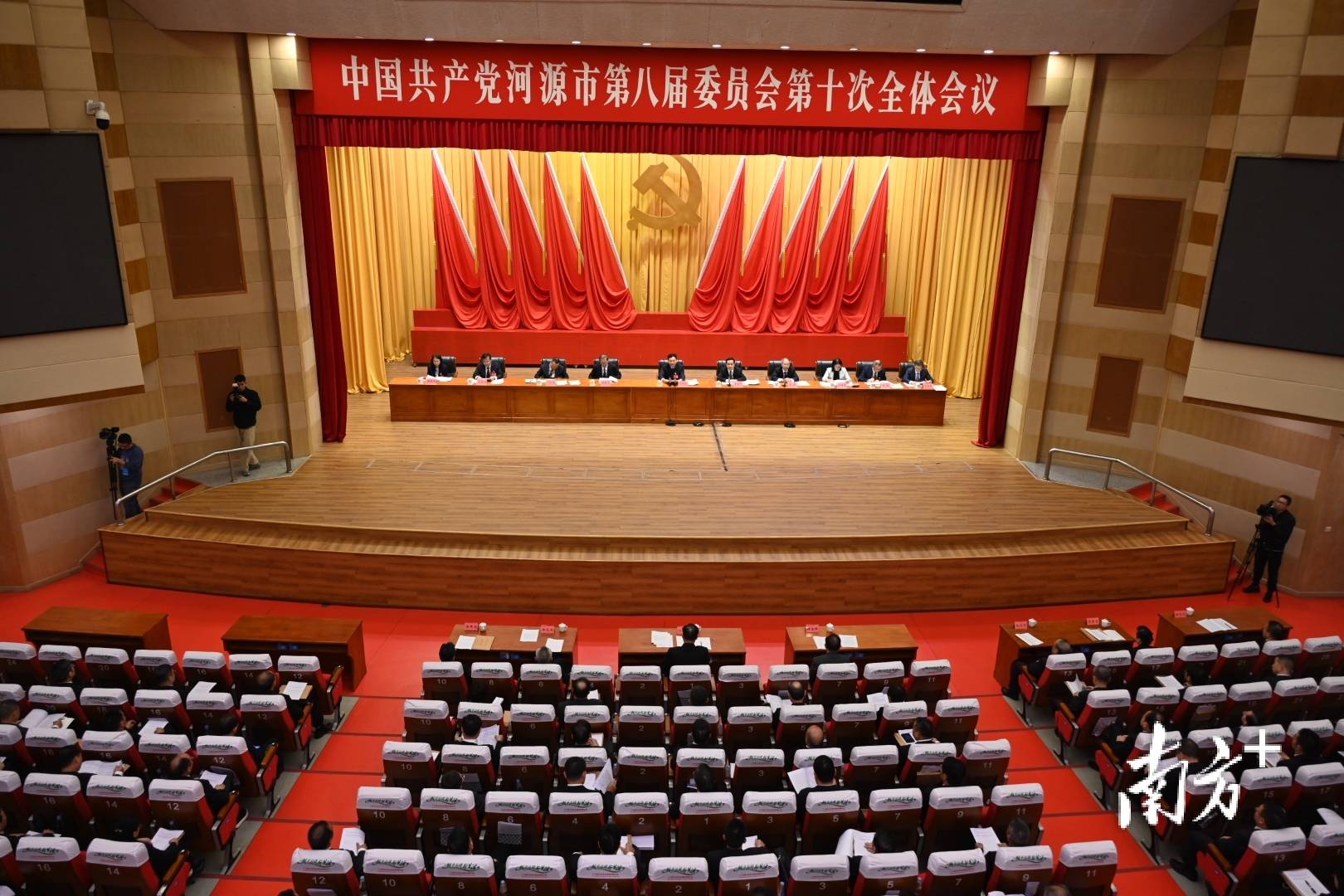
人文经济等多种经济形态屡被提及,有何内涵?丨聚焦河源市委全会
Sou Hu Cai Jing· 2025-12-12 17:48
Core Points - The meeting of the Eighth Committee of the Communist Party of China in Heyuan City highlighted the focus on various emerging economic forms, including low-altitude economy, intelligent economy, and others, as part of the "14th Five-Year Plan" [1][4][18] Group 1: Low-altitude Economy - The low-altitude economy is defined as a comprehensive economic form that integrates the research, production, sales, and related infrastructure of civil aviation aircraft operating in low-altitude airspace [4] - Heyuan is actively developing low-altitude economy through practical initiatives, such as establishing a spaceport in Wanlv Lake and creating a low-altitude tourism base [6] - The low-altitude economy aims to address efficiency bottlenecks in logistics, agriculture, and emergency services, facilitating the transition to high-end, intelligent, and new-quality industries [6] Group 2: First-release Economy - The first-release economy refers to economic activities related to the launch of new products, business models, and services by enterprises [7] - Heyuan is fostering the first-release economy by developing a sports and toy industry cluster, attracting over 20 toy manufacturing companies, and achieving a toy manufacturing output value of 5.29 billion yuan, a 40.4% year-on-year increase [8][12] Group 3: Intelligent Economy - The report emphasizes the construction of an innovation framework called "one core, two belts, and three zones" to promote the development of the intelligent economy [13] - The integration of artificial intelligence across various sectors is expected to create new industries and business models, with significant advancements in agricultural productivity through automation [13] Group 4: Green Economy - The report calls for the vigorous development of the green economy, focusing on the integration of digitalization, intelligence, and sustainability [16] - Heyuan's green economy initiatives include the establishment of zero-carbon parks and green factories, leveraging its strong ecological advantages to support high-quality development [16] Group 5: Fly Economy and Fly-Sea Economy - The report discusses the enhancement of "fly economy" and "fly-sea economy" development models to promote resource sharing and collaborative growth between different regions [17] - The establishment of the Heyuan Longchuan (Baoan) Technology Innovation Center exemplifies the practical application of these economic models, with a projected output value of 290 million yuan in 2024 [17] Group 6: Bay Area, River Basin, and Urban Circle Economy - The report highlights the importance of actively participating in the Bay Area, river basin, and urban circle economies to achieve broader resource sharing and market integration [18] - Heyuan's geographical proximity to the Guangdong-Hong Kong-Macao Greater Bay Area positions it favorably for industrial collaboration and innovation [18] Group 7: Cultural and Sports Economy - The report emphasizes the development of the cultural economy, focusing on enhancing the spiritual life of the people and promoting creative rural economies [22] - The sports economy is also highlighted, with initiatives to host various sports events to enhance the region's reputation as a destination for outdoor activities [22]
湖南“十五五”规划建议:聚焦现代石化、绿色矿业、食品加工、轻工纺织等传统产业,加快技术改造和转型升级
Zheng Quan Shi Bao Wang· 2025-12-12 10:46
Core Viewpoint - The proposal by the Hunan Provincial Committee emphasizes the establishment of a "4×4" modern industrial system, focusing on both traditional and emerging industries to drive economic growth and transformation [1] Group 1: Traditional Industries - The plan highlights the importance of modern petrochemicals, green mining, food processing, and light textile industries, aiming to accelerate technological upgrades and transformation [1] - It also emphasizes enhancing the industrial capacity and cluster effects of advantageous industries such as engineering machinery, rail transit equipment, modern agriculture, and cultural tourism [1] Group 2: Emerging Industries - The proposal focuses on new industries such as digital industries, renewable energy, health, aerospace, and marine sectors, promoting large-scale application demonstration actions for new technologies, products, and scenarios [1] - It aims to implement industrial innovation projects to foster growth in these sectors [1] Group 3: Future Industries - The plan explores future industries including artificial intelligence, life engineering, quantum technology, and advanced materials, seeking to identify diverse technological routes, typical application scenarios, feasible business models, and market regulation rules [1] - The goal is to stimulate the formation of new economic growth points through these initiatives [1]
山东政商要情(11.10—11.16)
Jing Ji Guan Cha Bao· 2025-11-16 14:28
Group 1: Trade and Economic Growth - In the first ten months of this year, Shandong's import and export volume reached 2.89 trillion yuan, a year-on-year increase of 4.7% [1] - Exports amounted to 1.76 trillion yuan, growing by 4.0%, while imports were 1.13 trillion yuan, increasing by 5.7% [1] - Among Shandong's 16 cities, 11 reported positive growth in trade, with Jinan leading at a growth rate of 28.7% [1] - General trade accounted for 65.5% of the total trade volume, with a growth of 6.1% [1] Group 2: Technological Innovation Plans - Shandong has released three-year action plans for four key industries: robotics, modern food, light industry and textiles, and modern metallurgy [2] - The plans aim to address critical areas and weak links in industrial development, focusing on core technology breakthroughs and major product demonstrations [3] - By 2028, Shandong aims to achieve over 200 breakthroughs in foundational and core technologies and create more than 20 advantageous industrial clusters [3] Group 3: International Cooperation and Trade - The "Dialogue with BRICS" event attracted over 400 guests from more than 30 countries, highlighting Shandong's growing trade with BRICS nations, which reached 550.6 billion yuan in the first three quarters of 2025 [4][5] - The BRICS countries account for nearly half of the world's population and about 30% of the global economy, presenting significant cooperation potential for Shandong [5] Group 4: Industry-Specific Conferences - The 2025 Petroleum and Chemical Industry High-tech Development Conference was held in Yantai, focusing on quality improvement and innovation in the sector [7] - Yantai's green petrochemical industry achieved a production value of 166.63 billion yuan in the first nine months, reflecting a growth of 25.9% [7] - The 2025 Beef Trade Cooperation Development Conference in Yangxin County aimed to enhance international beef trade, with a focus on sustainable development and industry collaboration [8][9] Group 5: Regulatory Changes - Shandong's market regulatory authority issued new guidelines for the use of "Shandong" in company names, effective January 1, 2026, to standardize naming practices [10]
山东打出产业创新“王牌”:同步启动四项三年行动计划
Feng Huang Wang Cai Jing· 2025-11-12 17:27
Group 1: Core Insights - The Shandong provincial government has launched three-year action plans for four key industries: robotics, modern food, light industry and textiles, and modern metallurgy, marking comprehensive coverage of 19 key industrial chains in the province [1][2][3] - The action plans aim to achieve significant technological advancements by 2028, including breakthroughs in over 200 core technologies, the creation of more than 80 original major achievements, and the establishment of over 20 competitive industrial clusters [1] Group 2: Robotics Industry - The robotics industry plan focuses on integrating artificial intelligence with robotics, targeting advanced technologies such as intelligent sensing, human-machine interaction, and embodied intelligence [1] - The initiative aims to develop core products like advanced servo motors, operating system software, and special robots, with a goal of creating 100 benchmark application scenarios in sectors such as automotive, home appliances, transportation, healthcare, cultural tourism, rescue, and mining [1] Group 3: Modern Food Industry - The modern food industry plan emphasizes safety, nutrition, green practices, and intelligence, aiming to build a comprehensive technology system from food raw materials to processing equipment [2] - The plan includes establishing a full-chain traceability and quality control system to enhance food safety and developing over 100 innovative products, such as functional oils and special medical foods, to increase food value and improve public well-being [2] Group 4: Light Industry and Textiles - The light industry and textiles plan promotes high-end, green, and intelligent manufacturing, pushing the industry towards higher value chains [2] - In textiles, the focus is on developing advanced fibers with long-lasting flame retardant and fluorine-free water-repellent properties, as well as high-end medical textiles like artificial blood vessels and medical dressings [2] Group 5: Modern Metallurgy Industry - The modern metallurgy plan aims to enhance high-end supply and meet major national strategic needs by focusing on the research and application of high-end materials [3] - Key products include ultra-high-strength steel, marine aluminum alloys, ultra-thin lithium battery copper foil, and photovoltaic silver paste, with a goal to develop frontier materials such as rare earth functional materials and special magnesium and titanium alloys [3]
发展活力加速释放 湖南常德构建特色产业体系
Zhong Guo Xin Wen Wang· 2025-10-23 10:47
Core Insights - Hunan Changde aims to enhance economic growth and structural adjustment during the 14th Five-Year Plan, targeting a GDP increase from 374.91 billion yuan in 2020 to 453.27 billion yuan by 2024, while achieving recognition in various national economic competitiveness rankings [1][3] Economic Development - The city has shifted its investment focus from infrastructure to industrial projects, increasing the proportion of industrial investment by nearly 10 percentage points, surpassing the provincial average by 3.5 percentage points [3] - Traditional industries such as light industry, textile, equipment manufacturing, food processing, and cultural tourism are being upgraded, while new industries like digital economy, new materials, new energy, and biomanufacturing are being cultivated [3] - Changde has introduced a project pre-review mechanism and lifecycle management for new projects, attracting a total of 1,488 major projects with a total investment of 474.7 billion yuan [3] Cultural and Tourism Growth - Changde's cultural and tourism sector has seen significant growth, with 56.62 million domestic and international tourists in 2024, a year-on-year increase of 11.83%, and total tourism expenditure reaching 64.481 billion yuan, up 9.99% [5] - The city has developed key cultural and tourism projects, including the Changde Grand Theatre and the Changde River Street, which has been recognized as a national-level leisure street and night tourism consumption area [5] Technological Innovation - Changde has focused on enhancing its innovation capabilities, with over 1,000 R&D institutions established in large industrial enterprises and the formation of a technology innovation advisory committee comprising 29 academicians and experts [7] - The number of high-tech enterprises has more than doubled, and the number of invention patents per ten thousand people has increased nearly threefold [7] - The biomanufacturing industry has shown strong growth, with an industry output value increase of 25.9% compared to the previous year [7]
第22届东博会和峰会闭幕,经贸项目签约超500项
Xin Hua Cai Jing· 2025-09-21 23:30
Core Insights - The 22nd China-ASEAN Expo and Business and Investment Summit achieved over 700 results, including more than 500 signed economic and trade projects, showcasing a diverse range of outcomes [1][2] - The exhibition area covered 160,000 square meters with participation from 3,260 enterprises from 60 countries, highlighting a significant increase in representation from major companies [1] - The event emphasized high-tech exhibits, with AI-related products accounting for over 50% of total exhibits, including a dedicated AI pavilion featuring around 1,200 items [1] Economic and Trade Projects - A total of 155 investment projects were signed, with 94 in the industrial sector and 44 focusing on "AI+" applications across various industries [2] - Manufacturing projects were prioritized, with 74 signed projects in this category, representing 88% of the total investment amount, covering sectors such as machinery, petrochemicals, and information technology [2] AI and Digital Transformation - The summit utilized AI technology throughout its processes, aligning with the new opportunities presented by the China-ASEAN Free Trade Area 3.0 [2] - An AI matchmaking platform facilitated over 5,300 business negotiation leads for more than 500 companies, enhancing collaboration opportunities [2] Future Events - The 23rd China-ASEAN Expo is scheduled for September 17-21, 2026, with the Philippines as the theme country and Changchun designated as the "Charming City" of China for the event [2]
第22届东博会和峰会闭幕经贸项目签约超500项
Zhong Guo Zheng Quan Bao· 2025-09-21 20:17
Group 1 - The 22nd China-ASEAN Expo and Business and Investment Summit achieved over 700 results, including more than 500 signed economic and trade projects [1][2] - The exhibition area for this year's expo was 160,000 square meters, featuring 3,260 enterprises from 60 countries, with 1,910 enterprises in the main exhibition area [1] - The participation of notable companies increased, with 432 representative enterprises including Fortune 500 and "little giant" companies, marking a 7.5% growth compared to the previous year [1] Group 2 - A significant increase in high-tech exhibits was noted, with AI or AI-enabled products accounting for over 50% of total exhibits, including a dedicated AI pavilion showcasing around 1,200 items [1][2] - A total of 155 investment projects were signed, with 94 in the industrial sector and 44 related to "AI+" applications across various industries [2] - The next China-ASEAN Expo is scheduled for September 17-21, 2026, with the Philippines as the theme country [2]
广东发布10条措施加快扩大工业有效投资 人才政策向AI机器人等新赛道倾斜
Nan Fang Ri Bao Wang Luo Ban· 2025-09-01 09:20
Core Viewpoint - The Guangdong Provincial Government has released the "Implementation Plan for Accelerating the Expansion of Effective Industrial Investment (2025-2027)", aiming to create an "attraction field" for industrial investment, with a focus on new sectors such as artificial intelligence and robotics [1][4]. Group 1: Measures for Industrial Investment - The plan outlines 10 measures to accelerate effective industrial investment, including strengthening investment mechanisms, expanding investment in advantageous industries, and promoting innovation [2]. - Guangdong will continue to invest in traditional advantageous industries like electronics, petrochemicals, and automotive, while also pushing for major projects such as "Guangdong Strong Chip" [2][4]. - The province aims to seize future industrial development opportunities by establishing a new mechanism for cultivating new sectors, focusing on industries like artificial intelligence, integrated circuits, and advanced equipment [2][3]. Group 2: Innovation and Technology Transfer - To facilitate the transition of innovation from laboratories to production lines, the plan proposes various methods to accelerate the development of new materials and intelligent robotics [3]. - A new technology transfer system will be established to promote the conversion of scientific achievements into practical applications, utilizing models like "pay after use" and "off-site incubation" [3][4]. Group 3: Talent and Resource Support - Talent policies will be directed towards new sectors, with support for the targeted recruitment and cultivation of high-level talent in artificial intelligence and robotics [5][6]. - The plan emphasizes the importance of resource support, including land, energy, and environmental capacity, to ensure project implementation [4][5].

广东省人民政府关于印发《广东省加快扩大工业有效投资实施方案(2025—2027年)》的通知
Sou Hu Cai Jing· 2025-08-30 03:58
Core Points - The article outlines the implementation plan for accelerating effective industrial investment in Guangdong Province from 2025 to 2027, emphasizing the importance of expanding industrial investment to promote new industrialization and enhance new productivity [5][6]. Group 1: Investment Expansion Strategies - The plan includes upgrading and establishing a provincial industrial development investment fund to attract social capital into new project investments [2][6]. - It encourages state-owned enterprises and private capital to invest in new sectors through collaborative projects and innovative partnerships [2][6]. - The government aims to create a flexible regulatory mechanism to support innovation and tolerate failures, fostering a conducive environment for investment [2][8]. Group 2: Focus on Key Industries - The strategy emphasizes continuous investment in key industries such as electronics, petrochemicals, automotive, and machinery, aiming to strengthen and stabilize industrial chains [6][7]. - It promotes the introduction of high-quality projects with significant market potential and advanced technology, enhancing the overall investment level [6][7]. Group 3: Project Acceleration and Innovation - The plan establishes a project promotion mechanism that involves provincial and municipal collaboration to expedite the implementation of strategic and emerging projects [6][7]. - It includes initiatives to promote the commercialization of innovative research outcomes and the establishment of innovation centers and technology transfer systems [7][8]. Group 4: Financial Support and Resource Allocation - The government plans to enhance financial support for new sectors, including prioritizing funding for new project investments and encouraging financial institutions to innovate their service models [6][8]. - It aims to ensure resource availability for major manufacturing projects, including land and energy, to facilitate project initiation and completion [7][8]. Group 5: Creating a Favorable Business Environment - The article highlights the importance of establishing a market-oriented, law-based, and international business environment to attract investment [8]. - It emphasizes the need for transparent regulatory frameworks and regular communication between the government and enterprises to address business needs [8].