
金融支付

Search documents
新华时评:把好事办好,让少排队成常态
Xin Hua She· 2026-01-09 03:13
Group 1 - The core viewpoint emphasizes the need to improve the medical payment experience for the public by implementing convenient payment systems such as facial recognition, QR code payments, mobile payments, and credit payments within three years [1] - The initiative aims to optimize payment processes, reduce waiting times, and enhance the overall medical experience for citizens by allowing data to be more accessible and minimizing the need for physical presence [1] - The article highlights the importance of a collaborative approach among various sectors, including healthcare, insurance, and finance, to create a long-term mechanism that addresses data barriers and process bottlenecks [1] Group 2 - The article points out that while reducing queues at payment windows is a step forward, new challenges such as longer lines at pharmacies may arise, indicating the need for a comprehensive approach to healthcare reform [2] - It stresses the importance of addressing existing pain points while also preventing new ones, advocating for a gradual and coordinated implementation of reforms based on the specific circumstances of hospitals [2] - The expectation is set for further reforms across various sectors to enhance the quality of life for citizens, emphasizing the need for practical and effective measures [2]
国家医保局:推进刷脸支付、一码支付等
Xin Lang Cai Jing· 2026-01-08 22:05
Core Insights - The National Healthcare Security Administration (NHSA) is set to advance a convenient payment system for medical services, aiming for a comprehensive implementation within three years [1][2] Group 1: Payment Methods - Four payment methods will be introduced to address different payment challenges faced by various demographics: facial recognition payment, one-code payment, mobile payment, and credit payment [1] - Facial recognition payment allows users to complete identity verification and payment without physical cards or smartphones, targeting elderly individuals who may struggle with technology [1] - One-code payment enables simultaneous completion of medical insurance reimbursement, personal account payments, and out-of-pocket expenses through a single scan, streamlining the payment process [1] - Mobile payment facilitates the entire process of appointment booking, payment, and reimbursement through apps or mini-programs, particularly benefiting individuals with mobility issues [1] - Credit payment allows for upfront payment of out-of-pocket expenses by banks within a pre-approved credit limit, enabling patients to receive care before settling their bills [1] Group 2: Implementation Timeline - The NHSA has outlined a clear timeline for the rollout of these payment systems, with at least two pilot cities in each province by 2026 [1] - By 2027, the goal is to achieve provincial coverage in the initial pilot areas, with full implementation in eligible medical institutions by 2028 [1] Group 3: Benefits to Healthcare System - The establishment of a convenient payment system is expected to enhance the management of healthcare institutions, improve patient flow, and optimize the use of quality medical resources [2] - The initiative will also extend credit scenarios from financial consumption to the public welfare sector, contributing valuable behavioral data to the social credit system [2]
南京建邺首次推出“即碰即用”消费券:碰一下支付自动满减
Sou Hu Cai Jing· 2025-12-31 14:28
Core Viewpoint - Nanjing Jianye District will launch a government consumption voucher program starting December 31, 2025, to stimulate consumer spending during the New Year and Spring Festival seasons [1][4]. Group 1: Consumption Voucher Program - The program will issue three batches of consumption vouchers, allowing citizens to automatically receive discounts of 3 yuan on purchases over 9.9 yuan by using Alipay's "tap" payment feature [1][3]. - The vouchers will be distributed in three phases, aligned with festive events such as "Joyful Winter," "Welcoming the New Spring," and "Joyful Lantern Festival" to maximize consumer engagement [4][6]. Group 2: Innovative Payment Method - The program utilizes an innovative "tap" technology for voucher issuance and redemption, eliminating the need for consumers to pre-claim vouchers, thus enhancing convenience [3][7]. - This method addresses common issues in traditional voucher systems, such as mismatched users and unclaimed vouchers, ensuring that benefits reach actual consumers and merchants [3][7]. Group 3: Targeted Merchant Engagement - The initiative aims to support a wide range of small and medium-sized merchants in the food and retail sectors, thereby broadening the impact of the consumption vouchers [7]. - By leveraging digital platforms, the program seeks to combine technology, scenarios, and subsidies to directly stimulate real consumer behavior, increasing foot traffic and sales for local businesses [7].


当大企业“谈婚论嫁”:分手费1%不多?5%不少?
Xin Lang Cai Jing· 2025-12-24 10:54
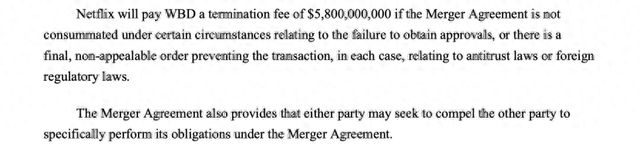
Core Viewpoint - The article discusses the concept of "breakup fees" in corporate mergers and acquisitions, likening them to prenuptial agreements in marriages, highlighting their increasing prevalence in cross-border deals, particularly involving Chinese companies [1][2][8]. Group 1: Breakup Fees in Mergers - The concept of breakup fees serves as a form of compensation for either party in a merger if the deal falls through, with the fees being categorized as either breakup fees (for the seller) or reverse breakup fees (for the buyer) [1][2]. - Since the 2008 financial crisis, over 85% of cross-border mergers involving Chinese buyers have included such breakup fee agreements, a significant increase from less than half before 2010 [2]. - In the case of Netflix's proposed acquisition of Warner Bros., the breakup fee was set at $2.8 billion to prevent Warner from pursuing other offers, while Netflix's reverse breakup fee was $5.8 billion, primarily to cover regulatory disapproval risks [3][4]. Group 2: Case Studies of Breakup Fees - Haier's acquisition attempt of GE Appliances included a tiered reverse breakup fee structure, with amounts varying based on the reason for regulatory disapproval, reflecting a calculated risk approach [4][5]. - Ant Financial's attempt to acquire MoneyGram involved a relatively modest breakup fee of $30 million, which was ultimately paid when the deal fell through due to regulatory scrutiny [5]. - China National Chemical Corporation's acquisition of Syngenta included an $8.48 billion breakup fee, which was reduced from an initial $15 billion, indicating the buyer's concern over deterring higher bids from competitors [7]. Group 3: Trends and Observations - Larger deals, valued over $10 billion, tend to have lower breakup fee percentages compared to smaller transactions, suggesting that the size of the companies involved influences the negotiation dynamics [6]. - The breakup fee in the failed $19.5 billion deal between Chinalco and Rio Tinto was approximately $1.95 billion, representing only 1% of the total deal value, which aligns with the trend of lower fees in larger transactions [6]. - The increasing complexity and scale of cross-border mergers indicate that Chinese companies are evolving from inexperienced participants to more strategic players in the global M&A landscape [8].
香港金管局:三季度储值支付工具交易金额为2689亿港元
Xin Lang Cai Jing· 2025-12-19 14:22
Core Insights - The Hong Kong Monetary Authority (HKMA) released statistics on stored value payment tools for Q3 2025, indicating a steady growth in the sector [1] Group 1: Account and Transaction Statistics - The total number of active stored value payment tool accounts reached 83.4 million by the end of Q3 2025, reflecting a quarterly increase of 0.8% [1] - The total transaction volume for Q3 2025 was approximately 2.1 billion transactions, up 0.5% from the previous quarter, while the total transaction value was HKD 268.9 billion, down 5.9% [1] - The breakdown of total transaction value includes HKD 45.2 billion for point-of-sale payments, HKD 30.6 billion for online payments, HKD 16.5 billion for person-to-person transfers, HKD 65.4 billion for withdrawals, and HKD 111.2 billion for top-ups [1] Group 2: Year-on-Year Comparisons - Compared to the end of Q3 2024, the number of active stored value payment tool accounts increased by 7.7%, and the total stored value and tool deposits rose by 11.8% [1] - Year-on-year, the total transaction volume and total transaction value for Q3 2025 increased by 3.8% and 13.4%, respectively, compared to the same period in 2024 [1]
广东发挥破产重整拯救功能 2023年以来盘活存量资产783亿元
Zhong Guo Xin Wen Wang· 2025-12-18 11:42
Core Viewpoint - Guangdong courts have effectively utilized bankruptcy reorganization to support the development of the private economy, helping numerous companies recover from debt crises and stabilize employment [1][2] Group 1: Bankruptcy Reorganization Achievements - Since 2023, Guangdong courts have assisted over 10 listed companies in successfully restructuring, including Guotian Group, and have facilitated the reorganization of 243 enterprises, stabilizing over 50,000 jobs and accommodating more than 60,000 employees [1] - The total value of revitalized assets reached 783 billion yuan, and 40 million square meters of land resources were released [1] Group 2: Innovative Legal Approaches - In the case of Ren Certain Holdings, the court implemented an innovative "administrative pre-diagnosis + judicial pre-reorganization" model, successfully resolving over 5 billion yuan in debt within 51 days, marking the first successful restructuring case of a listed company since the new regulations were introduced [1] - The court developed a replicable model for "personal bankruptcy combined with small and micro enterprise debt handling," which simultaneously rescued small businesses and their operators, providing judicial support for entrepreneurship and innovation [1] - In the case of Gao Certain Industrial Company, the court guided the administrator to introduce 30 million yuan in credit loans from commercial banks through a benefit debt model, effectively revitalizing an eight-year "stalled project" [1] Group 3: Overall Impact on the Economy - Guangdong courts have strengthened their bankruptcy reorganization functions, helping distressed private enterprises resolve debt crises, revitalize core assets, and successfully transform and upgrade, thereby ensuring livelihood stability and optimizing the business environment [2] - The average processing time for bankruptcy cases has been reduced to 10 months, and bankruptcy costs have decreased by over 20%, providing solid judicial services and guarantees for the high-quality development of Guangdong's private economy [2]
谁才是真正的大国?如今中国的实力不一样,美国的实力也不一样了
Sou Hu Cai Jing· 2025-12-01 05:47
Core Viewpoint - The ongoing trade conflict between China and the United States in 2025 reflects a significant shift in global dynamics, with China no longer being the same nation it was in 2000 or 2008, and both countries' positions have evolved dramatically [1][3]. Group 1: Trade Dynamics - China has leveraged its strategic stability and market size to gain industrial advantages, while the U.S. relies on fiscal deficits and monetary manipulation to maintain its hegemony [3][4]. - The trade volume between China and ASEAN has grown from $40 billion in 2000 to nearly $1 trillion in 2024, showcasing China's strategic foresight in establishing trust through concessions [3][4]. - The U.S. has imposed tariffs exceeding 40% on smaller economies, demonstrating a punitive approach that contrasts with China's trust-building strategies [4][6]. Group 2: Currency and Payment Systems - The internationalization of the Renminbi (RMB) is gaining traction, with over 140 countries having China as their main trading partner, leading to a shift away from the U.S. dollar for trade settlements [4][6]. - China's CIPS payment system offers near-zero transaction fees and real-time processing, contrasting sharply with the SWIFT system, which incurs high fees and delays [4][6]. Group 3: Military and Strategic Calculations - The U.S. military acknowledges the growing disparity in military capabilities, with concerns about the potential consequences of conflict with China [6][7]. - China's military deterrence is now a factor in U.S. strategic calculations, indicating a shift in the balance of power [7]. Group 4: Future Predictions - The U.S. tariff strategy is unlikely to yield institutional benefits and may accelerate the fragmentation of global supply chains and the de-dollarization process [11]. - China is expected to further integrate its strategy of RMB, technology, and trade, thereby constraining the U.S. dollar's influence [11]. - ASEAN, RCEP, and Belt and Road Initiative countries are projected to be central to China's strategic growth over the next decade [11]. Group 5: Global Order Shift - The world is transitioning from a U.S.-dominated era to one characterized by China's contributions, with nations that have recognized and invested in China reaping early rewards [15].
“购在中国·2025精品消费月”黑龙江站启幕
Sou Hu Cai Jing· 2025-11-15 13:36
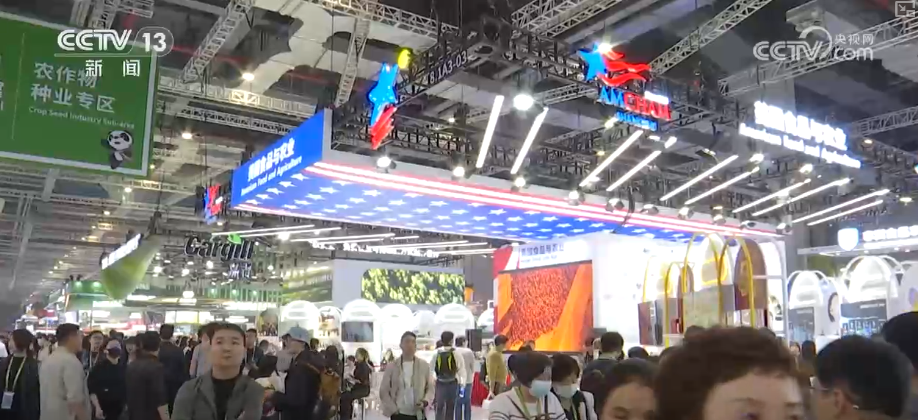
Core Viewpoint - The "China Purchase · 2025 Boutique Consumption Month (Heilongjiang Station)" event was launched to stimulate consumption and integrate into national strategies for boosting domestic demand and leveraging the spillover effects of the 8th China International Import Expo [1][3] Group 1 - The event is co-hosted by the Heilongjiang Provincial Department of Commerce and the Heihe Municipal Government, marking the beginning of a series of consumption promotion activities across the province [1][3] - The event aims to release the consumption potential of Heilongjiang by deeply integrating local resources with national consumption initiatives [1][3] Group 2 - Various consumer-friendly policies were announced by the Heilongjiang Provincial Household Appliances Association, the Amur Chamber of Commerce from Russia, and China UnionPay Heilongjiang Branch, aiming to create a consumption boom [3] - The event included signing agreements for trade and supply-demand procurement projects with Russia, showcasing the vitality and potential of the Heilongjiang consumption market [3] Group 3 - The "Boutique Consumption Month" is closely linked with ongoing provincial activities focused on "New Big Markets, New Services, New Consumption," creating a synergistic effect [3] - Local cities and counties are actively participating by integrating global perspectives with local quality resources, enhancing the consumption environment and service quality [3]

多维度“数”看“进博魅力” 透过亮眼“成绩单”感知中国经济蓬勃“脉动”
Yang Shi Wang· 2025-11-11 01:56
Core Insights - The eighth China International Import Expo (CIIE) concluded on November 10, showcasing a record number of exhibitors and products, with 4,108 companies from 138 countries and regions participating, marking the highest exhibition area and number of enterprises in history [1][4] Group 1: New Products and Technologies - A total of 461 new products, technologies, and services were launched during the expo, including 201 global debuts, 65 Asian debuts, and 195 Chinese debuts, covering sectors such as biomedicine, green low-carbon technologies, and equipment [4] - The expo highlighted trends in the "silver economy," "pet economy," and "self-care consumption," with products like smart hearing aids, sleep systems, and companion robots gaining popularity [6] Group 2: Trade and Business Engagement - The expo facilitated over 600 rounds of business negotiations, with significant participation from 20 retail chains, leading e-commerce platforms, and 14 state-owned enterprises [8] - The total intended transaction amount reached $83.49 billion, a 4.4% increase from the previous year, setting a new historical high [9] Group 3: Audience and Participation - The event attracted over 922,000 attendees, a year-on-year increase of 8.2%, also a record high [12] - Approximately 50,000 social audience members were invited to experience the expo firsthand, enhancing public engagement [10] Group 4: Forum and International Cooperation - The eighth Hongqiao Forum, part of the expo, featured discussions on trade, cooperation, and supply chain resilience, with over 1,000 participants and 20 outcomes published [14] - The "Silk Road E-commerce" promotion event was launched to assist foreign enterprises in entering the Chinese market, showcasing nearly 100 overseas exhibitors [16][18]
MercadoLibre(MELI) - 2025 Q3 - Earnings Call Transcript
2025-10-29 22:00
Financial Data and Key Metrics Changes - Revenues grew by 39% year on year, marking the 27th consecutive quarter of growth above 30% [4][91] - Operating income reached $724 million, growing by 30% year on year, demonstrating the ability to balance growth, investments, and profitability [6][91] Business Line Data and Key Metrics Changes - Mercado Pago experienced strong growth with monthly active users accelerating and NPS hitting record highs in Brazil [5] - The credit card portfolio grew rapidly, with all-time low first-paying defaults and a healthy credit quality maintained [6][12] - GMV in Argentina grew by 39% year on year in US dollars and 97% in local currency, with items sold increasing by 34% [12] Market Data and Key Metrics Changes - In Brazil, unit shipping costs decreased by 8% due to higher transaction volumes and better utilization of logistics [5][30] - Mexico saw strong GMV growth, with fulfillment costs continuing to decline [5] Company Strategy and Development Direction - The company continues to invest in free shipping, logistics, and credit card offerings to drive long-term growth [7][64] - Strategic investments are focused on enhancing the value proposition for users and expanding market share in Latin America [4][91] Management's Comments on Operating Environment and Future Outlook - Management remains optimistic about Argentina's long-term growth potential despite macroeconomic challenges [12][13] - The company is focused on capturing growth opportunities in both commerce and fintech, with a disciplined investment approach [64][66] Other Important Information - The company is exploring the potential of Agentic AI to enhance user experience and operational efficiency [85] - The competitive landscape in Brazil remains intense, but the company believes its strategies are rational and effective [87][89] Q&A Session Summary Question: Argentina's macro challenges and growth outlook - Management acknowledged macro challenges but emphasized continued investment and optimism for long-term growth in Argentina [11][12] Question: Active user growth breakdown - The company reported 7.8 million new buyers in the quarter, with a healthy mix of new and returning users [17][51] Question: Merchant adherence to pricing initiatives - Management discussed the introduction of a price monitoring system to enhance buyer experience and seller performance [21][23] Question: Shipping cost dynamics and automation investments - Shipping costs in Brazil decreased by 8% due to better utilization, with ongoing investments in robotics and automation [26][30] Question: Credit card profitability and cohort performance - Older credit card cohorts are profitable, and the company maintains strict underwriting discipline while expanding issuance [32][73] Question: Competitive dynamics in Brazil - Management expressed confidence in their competitive position and rational strategies in the Brazilian market [87][89]
