制造

Search documents
被「竞业」一夜返贫,困在百万违约金里的打工人
36氪· 2025-06-25 13:56
Core Viewpoint - The article discusses the increasing abuse of non-compete agreements in China, particularly affecting lower-level employees, and highlights the disparity in how these agreements are enforced between different employee levels [4][6][36]. Group 1: Non-Compete Agreement Abuse - Non-compete agreements are being increasingly misused, with a significant rise in related legal cases over the past five years, particularly in industries like internet, new energy, and pharmaceuticals [7][10]. - A study found that 77% of individuals subject to non-compete obligations are lower-level employees, while higher-level executives often escape such restrictions due to their connections [4][9]. - The financial burden of non-compete violations can be devastating, with some individuals facing penalties in the hundreds of thousands, leading to severe mental health issues [7][22][28]. Group 2: Legal and Social Implications - The legal framework surrounding non-compete agreements allows companies to impose exorbitant penalties, often calculated as multiples of the employee's annual salary, without a cap on the amount [10][12]. - The enforcement of these agreements often relies on questionable evidence, such as surveillance footage, which raises ethical concerns about privacy and the methods used to gather such evidence [14][20]. - The judicial system appears to favor companies, with local courts often being more familiar with corporate lawyers, leading to a perceived bias against individual employees [21][39]. Group 3: Employee Experiences and Reactions - Many employees resort to extreme measures to avoid detection by former employers, including changing their appearance and living arrangements [5][15]. - The emotional toll on employees facing non-compete lawsuits is significant, with some expressing a desire to abandon their careers entirely due to the stress and financial pressure [22][28]. - There is a growing movement among affected employees to challenge these agreements collectively, as seen in the formation of support groups and advocacy for legal reform [9][31].


积极拥抱国际化 上交所举办卡塔尔金融中心投资合作培训
news flash· 2025-06-19 11:09
从上交所获悉,近日,上交所与卡塔尔金融中心在上海联合举办"卡塔尔金融中心投资合作培训",来自 能源、建筑、医药、信息技术、金融、制造等行业的37家沪深上市公司及拟上市公司的52名企业代表参 会。 ...
上交所举办卡塔尔金融中心投资合作培训
news flash· 2025-06-19 09:34
金十数据6月19日讯,近日,上海证券交易所与卡塔尔金融中心在上海联合举办"卡塔尔金融中心投资合 作培训",来自能源、建筑、医药、信息技术、金融、制造等行业的37家沪深上市公司及拟上市公司的 52名企业代表参会。培训围绕卡塔尔投资环境、运营实践及融资政策等内容展开深入交流,一方面帮助 参会企业进一步加深对中东地区营商环境的认识,将投资视野从沙特、阿联酋等国家延伸至卡塔尔;另 一方面展现我国优质上市公司高质量发展成果及拥抱国际化的积极意愿,为中国企业开拓中东市场及推 动中卡市场合作挖掘新机遇。 (上交所) 上交所举办卡塔尔金融中心投资合作培训 ...
我困在百万竞业违约金
投资界· 2025-06-19 02:42
Core Viewpoint - The article discusses the increasing abuse of non-compete agreements in China, particularly affecting lower-level employees, and highlights the imbalance of power between employers and employees in these legal disputes [3][5][29]. Group 1: Non-Compete Agreement Abuse - Non-compete agreements are being misused, with a significant rise in related cases over the past five years, particularly in industries like internet, new energy, and pharmaceuticals [8][9]. - The majority of individuals affected by non-compete agreements are lower-level employees, with 77% of cases involving workers such as security guards and cleaners [3][9]. - High-level executives often escape the consequences of non-compete agreements due to their connections and the willingness of new companies to cover their legal fees [10][11]. Group 2: Legal and Financial Implications - The financial burden of non-compete agreements has escalated, with penalties now often calculated as multiples of annual salary rather than based on compensation provided by the employer [11][12]. - There is no legal cap on the penalties for breaching non-compete agreements, leading to exorbitant claims, with some cases reaching up to ten times the annual salary [12][31]. - The legal system currently favors employers, as they can initiate lawsuits with minimal costs, while employees face significant financial and emotional stress [21][30]. Group 3: Surveillance and Evidence Collection - Companies often employ private investigators to monitor former employees, leading to invasive surveillance practices [14][15]. - Evidence collected through surveillance, even if obtained illegally, can still be used in court if it demonstrates that an employee joined a competing firm [16][30]. - The psychological impact on employees being monitored is profound, with many resorting to extreme measures to avoid detection [14][15]. Group 4: Legal Representation and Advocacy - There is a growing movement among lawyers to represent employees in non-compete cases, emphasizing the need for legal support for the vulnerable workforce [5][29]. - The legal community is increasingly aware of the ethical implications of representing companies in these disputes, with some lawyers choosing to focus solely on employee advocacy [27][28]. - The article calls for reforms to protect employees from the excessive penalties associated with non-compete agreements, advocating for a balance between protecting business interests and employee rights [29][31].

被“竞业”一夜返贫,困在百万违约金里的打工人
Hu Xiu· 2025-06-17 07:13
Core Viewpoint - The increasing abuse of non-compete agreements in China is leading to significant financial and emotional distress for employees, particularly those in lower-level positions, while higher-level executives often escape such restrictions [1][3][6][23]. Group 1: Non-Compete Agreement Abuse - Non-compete agreements are being misused, with a notable rise in cases involving lower-level employees such as drivers and cleaners, who are often subjected to exorbitant penalties [3][5][7]. - The number of non-compete cases has surged in recent years, with some companies filing hundreds of cases annually, particularly in sectors like internet, new energy, and pharmaceuticals [4][5][7]. - The legal framework allows companies to set high penalties for breaches of non-compete agreements, often calculated as multiples of the employee's salary, leading to situations where penalties can reach up to 199.5 times the compensation [7][24]. Group 2: Employee Experiences - Many employees resort to extreme measures to avoid detection by former employers, including changing their appearance and living arrangements, highlighting the psychological toll of these agreements [2][9][10]. - A significant percentage of employees (90%) report experiences of being followed or surveilled by private investigators hired by their former companies [8][9]. - The emotional impact on employees is profound, with some facing severe mental health issues due to the stress of potential financial ruin from non-compete penalties [16][24]. Group 3: Legal and Judicial Context - The judicial system often favors companies, as lawyers representing employees feel at a disadvantage in courts where company lawyers are familiar with the judges [11][24]. - The lack of a cap on penalty amounts for non-compete breaches allows companies to impose unreasonable financial burdens on employees, exacerbating the issue of abuse [7][24]. - There is a call for legal reforms to establish limits on penalties and to ensure that the rights of lower-level employees are adequately protected [24][25].
欧洲央行执委Schnabel:尽管存在贸易冲突,但增长前景总体稳定。货币政策周期即将结束。中期通胀稳定在目标水平。融资条件不再受限。私人消费正在支撑经济增长。制造业和建筑业正在复苏。国防、基础设施支出抵消了关税。工资增长预计将进一步放缓。能源价格、欧元可能朝任何一个方向变化。欧元的全球角色强劲,可能进一步增强。
news flash· 2025-06-12 09:24
Core Viewpoint - The overall growth outlook remains stable despite trade conflicts, with the monetary policy cycle nearing its end [1] Economic Conditions - Medium-term inflation is stabilizing at target levels [1] - Financing conditions are no longer constrained [1] - Private consumption is supporting economic growth [1] Sector Performance - The manufacturing and construction sectors are experiencing a recovery [1] - Defense and infrastructure spending are offsetting the impact of tariffs [1] Labor Market - Wage growth is expected to slow further [1] Energy and Currency - Energy prices and the euro could fluctuate in either direction [1] - The global role of the euro is strong and may further strengthen [1]
报名即将截止!从百亿企业到新锐玩家,绿点中国这场可持续 battle 谁能拿下年度绿点王?
第一财经· 2025-06-11 10:10
Core Viewpoint - The fourth Green Point China event in 2025 is themed "Green Wilderness New Tracks," inspired by the classic fairy tale "The Wizard of Oz," symbolizing harmony between humans and nature and the exploration of sustainable development paths [1] Group 1: Event Overview - The event has received a significant number of benchmark cases from outstanding companies, with over 70% of participating companies having a scale of over 10 billion, and half of them exceeding 50 billion [1] - There is a noticeable increase in participation from private and foreign enterprises, indicating a growing focus on sustainability among Chinese companies under the guidance of carbon neutrality strategies [1] - The diversity of industries represented has improved, with notable participation from transportation, technology, and home furnishing sectors, alongside traditional industries like food and beverage, daily chemicals, and manufacturing [1] Group 2: Evaluation Process - The evaluation will be conducted in collaboration with universities, government agencies, industry partners, testing institutions, and professional media to ensure objectivity and fairness [2] - The six updated evaluation dimensions include: Green Traceability, Green Circulation, Green Design, Green Co-creation, Green Logistics, and Green Technology, with a total of 12 secondary indicators and 120 tertiary indicators considered during the assessment [20] Group 3: Participation Requirements - Eligible participants must have products or projects in the sustainable and low-carbon field that have been applied in China, possess a good brand image, and have received recognition from professional testing institutions and media [23][24] - Each company can submit up to three cases, and previously awarded cases cannot be re-entered [26]

【环球财经】5月澳大利亚商业信心指数继续回升 或后继乏力
Xin Hua Cai Jing· 2025-06-10 03:31
Group 1 - The business confidence index in Australia rose to 2 points in May 2025, while the business conditions index fell to 0 points, indicating a weak business environment [1] - The business conditions index has been steadily declining since the end of last year, primarily due to weak corporate profitability, with the profitability indicator remaining in negative territory at -4 points in May [1] - The three sub-indicators of the business conditions index showed a decline: the trading indicator dropped from 6 points to 5 points, the profitability indicator stayed at -4 points, and the employment indicator fell from 4 points to 0 points [1] Group 2 - Most industries in Australia experienced a decline in business conditions in May, with the retail and manufacturing sectors showing the most significant downturn [2] - The mining and transport/utilities sectors, which had previously shown significant volatility, saw notable improvement in business conditions this month [2] - The mining and entertainment/personal services sectors exhibited the strongest performance in business conditions, while manufacturing and retail sectors remained the weakest [2]

无视关税威胁,欧元区5月PMI意外增长,但德、法需求持续低迷
Hua Er Jie Jian Wen· 2025-06-04 10:49
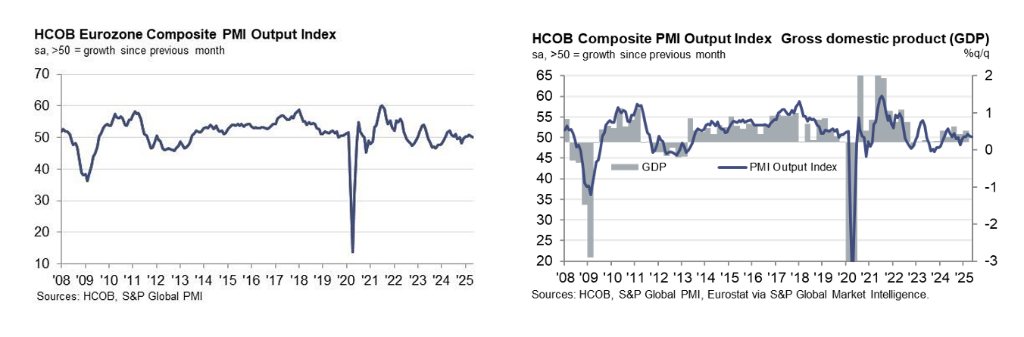
在特朗普关税威胁的阴霾下,欧元区私人部门5月依然实现了微弱增长,超过了初值和修正值49.5的收缩水平。这一意外韧性为欧央行周四降息提供了 更多空间。 周三公布的数据显示,欧元区综合PMI终值至50.2,仍略高于50的分水岭,显示出欧洲经济比最初估计的更具韧性。增长放缓主要源于服务业活动的小 幅下滑,服务业PMI创6个月新低;而制造业产出则维持了与上月相同的温和增长势头。 与此同时,德国服务业活动加速下滑,创30个月新低;法国服务业低迷有所缓解,但未来预期依然疲软。 欧元区5月份私营部门温和增长 5月,欧元区经济勉强维持扩张,但增长步伐放缓。商品和服务需求的持续疲软抑制了商业活动,限制了就业增长,并迫使企业继续消化积压订单。尽 管商业信心有所回升,但仍处于相对低迷的状态。与此同时,欧元区通胀有所降温,但这主要得益于制造业成本和价格的下降。 经季节性调整后的欧元区综合PMI指数连续第五个月高于50.0的荣枯线,显示经济处于扩张区间,但总体增长幅度微乎其微,并且是自2月份以来最弱 的。值得注意的是,制造业是欧元区增长的主要引擎,而服务业活动在5月份自去年11月以来首次出现下降。 欧元区经济增长受新业务量进一步下降的 ...
权限分配不合理如何影响企业运营?
Sou Hu Cai Jing· 2025-06-01 12:53
Core Insights - The article emphasizes that improper permission management is a systemic risk affecting operational efficiency, information security, business continuity, and corporate reputation [1] Issues in Permission Management - Permission fragmentation and isolation occur when different business systems (like ERP, CRM, HR) manage user permissions independently, leading to increased complexity and potential conflicts [2] - Ambiguous role definitions result in permissions being assigned based on temporary needs rather than job responsibilities, causing inefficiencies [3] - Delays in authorization and reliance on manual processes can hinder new employees from accessing necessary systems promptly [4] - Lack of auditing and compliance tracking makes it difficult to meet internal controls or external regulatory requirements, especially in high-compliance industries [5] - Over- or under-privileged access can lead to data breaches or operational limitations, impacting productivity [6] Impact of Improper Permission Allocation - Operational inefficiencies arise when employees cannot access required systems or data, delaying work progress [7] - Increased information security risks are highlighted, with over 74% of data breach incidents linked to poor internal permission management according to the 2023 Verizon data breach report [8] - Compliance challenges are significant, as improper permission management can lead to failures in passing regulatory checks, resulting in fines or reputational damage, exemplified by City National Bank's $65 million fine [9] - Rising management costs are associated with the complexity of handling permission requests and errors due to manual operations [10] - Employee experience suffers when permission issues lead to delays or confusion, affecting satisfaction and collaboration [11] Strategies for Effective Permission Management - Establishing a unified identity management platform can eliminate permission silos and streamline access across multiple systems [12] - Creating a clear role system based on job functions allows for precise permission management, supporting different business scenarios [14] - Automating permission synchronization and approval processes can enhance compliance and reduce manual errors [16] - Strengthening auditing and compliance management through detailed change records and audit capabilities is crucial for meeting regulatory requirements [20] - Dynamic alignment with organizational structure ensures that permissions adjust automatically with changes in the organization, reducing complexity [21] Business Value of Improved Permission Management - Effective permission management can reduce labor costs and error rates through automation and centralized control [22] - Quick response to permission adjustments enhances employee efficiency [22] - Fine-grained permission control and auditing mechanisms lower information security risks [22] - Establishing a solid foundation for future digital transformation initiatives, such as data governance and process automation [22]