化妆品

Search documents
交易员称,欧莱雅第四季度销售额未达预期,其股价预计下跌5% - 7%。
Xin Lang Cai Jing· 2026-02-13 07:47
Group 1 - The core viewpoint of the article indicates that L'Oréal's fourth-quarter sales fell short of expectations, leading to a projected decline in its stock price by 5% to 7% [1]
知行数据观察:卸妆品类
知行咨询· 2026-02-13 07:10
Investment Rating - The report does not explicitly state an investment rating for the industry Core Insights - The facial cleansing market is experiencing steady growth, transitioning from a high-speed growth phase to a mature and stable development stage, with market demand stabilizing and growth driven by product upgrades and innovation [9][12] - The growth rate of the facial cleansing industry is expected to rebound to a range of 12%-17% from 2024 to 2028, with a forecasted growth rate of 17% in 2024, driven by innovations in skincare formulations and the expansion of new consumption scenarios [9][10] - Consumer expectations for cleansing products have shifted from "simple cleansing" to "cleansing + skincare," indicating a significant opportunity for brands to offer products with added skincare benefits [14][12] Market Overview - The facial cleansing industry market size has grown steadily from 2018 to 2023, with a year-on-year growth rate decreasing from 12% to 9%, indicating a transition to a mature market [9][10] - The market size is projected to reach 81.0 billion yuan by 2025, with a sales volume increase from 70.3 million units in 2023 to 128.8 million units in 2025 [18][19] - The online sales of cleansing products on major platforms are shifting from price increases to volume expansion, with a notable preference for high-cost performance products among consumers [18][20] Product Segmentation - The core functions of cleansing products, such as makeup removal and cleansing, account for over 70% of consumer choices, but their growth rates are declining, indicating market saturation [12][14] - Skincare benefits are becoming a new growth engine, with moisturizing and soothing properties showing significant growth rates, reflecting consumer willingness to pay a premium for products that offer additional skincare benefits [12][14] - Niche functions like acne treatment and anti-wrinkle are experiencing explosive growth, indicating a diversification of consumer needs and a potential area for brand differentiation [12][14] Consumer Preferences - Consumers are increasingly interested in products that contain skincare benefits, with 49% prioritizing this feature and 46% willing to pay a premium for it [14][15] - Convenience and multifunctionality are becoming standard demands, with features like "no need for secondary cleansing" being highly valued, although consumers are price-sensitive regarding these attributes [14][15] - The acceptance of premium pricing is highest for products with natural ingredients and simplified formulations, suggesting that brands should focus on safety and gentleness in their product offerings [14][15] Competitive Landscape - The competitive landscape is characterized by a shift towards local brands on platforms like Douyin, which are gaining market share through high-cost performance strategies, while international brands maintain a presence in the high-end segment [26][28] - The top brands on Taobao include Shu Uemura and other international brands, while Douyin's top brands are predominantly local, indicating a divergence in brand performance across platforms [26][32] - The market is witnessing a price war, with significant price drops on both major platforms, reflecting intense competition and a shift towards volume-driven sales strategies [20][22]
从“A醇拓荒”到“高质量引领案例”,HBN赴港上市
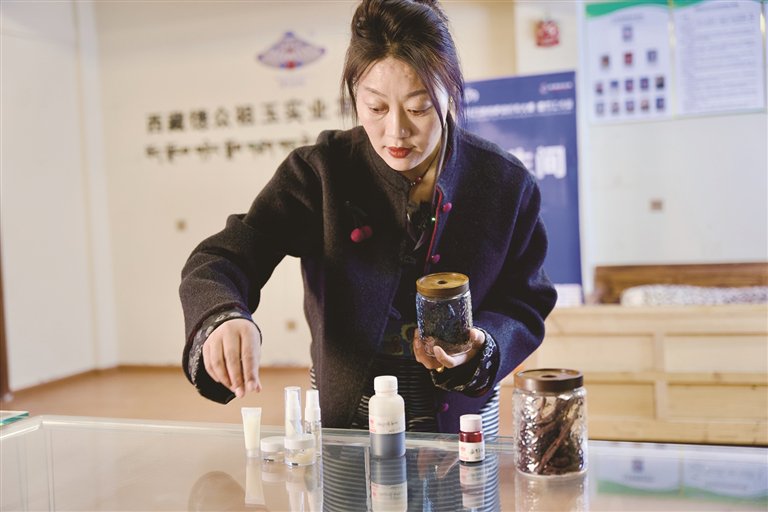
Cai Fu Zai Xian· 2026-02-13 04:26
Core Insights - The Chinese cosmetics market is undergoing a significant paradigm shift, moving from "scale expansion" to "quality leadership" as it surpasses a market size of 1 trillion yuan and domestic brands exceed international ones in sales [1] - HBN, a skincare brand that has filed for an IPO in Hong Kong, exemplifies this shift by focusing on "slow research-driven efficacy," providing a model for domestic brands aiming for high-end market penetration [1] Group 1: Market Trends - The transition of domestic cosmetics brands to high-end positioning is a notable trend, involving upgrades in brand positioning, product efficacy, and consumer perception [4] - HBN has capitalized on the rise of ingredient-focused consumers and the popularization of scientific skincare, playing a dual role in market education and category definition [4] Group 2: HBN's Product Development - HBN has pioneered the "early C, late A" skincare formula, launching successful products like the dual retinol night cream and brightening water, establishing itself in the high-end retinol market [5] - The brand's retinol skincare products and α-arbutin essence have ranked first in national sales for three consecutive years from 2022 to 2024, with cumulative sales of over 30 million units by the end of 2025 [5] Group 3: Consumer Engagement - HBN has accumulated over 4.6 million high-repeat purchase users, with average transaction values gradually increasing; its repurchase rates on platforms like Tmall and Douyin are approximately 35.4% and 44.0%, respectively [7] Group 4: Research and Development - HBN's commitment to "slow research" has built a systematic innovation capability, driving the brand towards high-end positioning [8] - The company has established a complete research loop from basic research to raw material innovation and efficacy verification, with a research team of 103 professionals across various fields [8][10] - HBN has published over 50 international SCI papers, ranking first among domestic skincare brands in terms of publications as the first author [8] Group 5: Efficacy Verification and Industry Contribution - HBN has developed a comprehensive "full-link multi-dimensional cross-validation system" for product efficacy, being the only Chinese skincare brand to conduct efficacy testing through international authoritative institutions [10] - The brand is also advocating for the establishment of a scientific evaluation system for cosmetic efficacy evidence, marking its transition from a market participant to a contributor to high-quality industry development [10] - This shift signifies HBN's role in defining industry standards and its commitment to high-end brand development through continuous investment in research and innovation [10]

北交所投资框架工具书:北交所市场大消费投资框架及核心标的的梳理-20260213
Hua Yuan Zheng Quan· 2026-02-13 03:34
Consumption Trends - The emotional economy market in China is expected to exceed 20 trillion yuan in 2024, with a projected CAGR of 14% from 2025 to 2029[3][60]. - The beauty consumption market is projected to reach nearly 370 billion yuan by 2025, with the retail sales of cosmetics in China estimated at 465.3 billion yuan in 2025, reflecting a year-on-year growth of 5.1%[5][51]. - The health food market is anticipated to reach 720.3 billion yuan by 2029, driven by increasing health awareness and aging population[5]. Policy and Market Dynamics - The Chinese government has prioritized boosting consumption as a key task for 2025, with policies supporting consumption upgrades and equipment renewal[5][9]. - Changing consumer behavior emphasizes emotional value, health, and personalized consumption, indicating a shift towards emotional and social fulfillment in purchasing decisions[5][9]. Key Industry Insights - The maternal and infant food market is projected to reach approximately 55.91 billion yuan in 2024, with the number of maternal and infant chain stores increasing from 21,000 in 2019 to 32,000 in 2024[5]. - The pet economy is expected to grow significantly, with the market size reaching 701.3 billion yuan in 2024, reflecting an 18% year-on-year increase[58]. Investment Opportunities - Companies in the North Exchange related to beauty consumption include Jinbo Biological, Bawei Co., and Vicky Technology, which are positioned to benefit from the ongoing growth in the beauty sector[5][52]. - The health food sector includes leading brands like Kangbiter and Yizhi Konjac, which are well-placed to capitalize on the rising demand for health-oriented products[5].
珀莱雅20260212
2026-02-13 02:17
Summary of the Conference Call for Proya Company Overview - Proya is a leading Chinese skincare brand that has successfully transitioned to online sales channels, leveraging digital strategies such as KOL marketing and live streaming sales to capture market trends. Online sales now account for over 50% of total sales, surpassing offline sales, positioning Proya ahead of domestic competitors [2][3]. Key Points and Arguments Market Position and Strategy - Proya's success with bubble masks has not only driven high short-term sales (over 300 million yuan in three months) but has also helped identify a target demographic of young consumers, facilitating a shift from lower-tier to higher-tier cities [2][3]. - The company has adopted a "Early C, Late A" skincare formula and high-cost performance flagship products (e.g., dual anti-aging essence and ruby essence) to attract consumers seeking alternatives to high-end brands. Flagship products accounted for over 25% of Proya's main brand sales by 2021, with over 60% on Tmall [3]. Future Development Focus - Proya plans to expand its focus from flagship products to a multi-category and multi-brand strategy, inspired by international brands like L'Oréal. This includes upgrading existing flagship products and applying core ingredients to other skincare categories to reach a broader consumer base [4]. Marketing and Channel Strategies - The company has shifted its marketing approach from traditional celebrity endorsements to KOL-driven and emotional marketing, particularly targeting young consumers. Proya's ROI on Douyin (TikTok) has exceeded 3, and the proportion of online direct sales has increased from 34% in 2016 to 79% in 2024 [5]. Impact of Flagship Product Strategy - The flagship product strategy has led to significant new customer growth and a shift in brand positioning. The core customer demographic has changed from ages 31-40 in 2019 to 18-23 in 2023, reflecting a younger consumer base [6][7]. Challenges for International Brands - International brands face challenges in the domestic market, including missed opportunities on Douyin, outdated decision-making processes, and unclear target customer profiles. These brands are beginning to adapt by utilizing Douyin and launching flagship product bundles, but the sustainability of this model is questioned [8][9]. Competitive Advantages of Proya - Proya has a more precise core customer targeting, focusing on young ingredient-conscious consumers, while international brands have a more ambiguous customer base. Proya's rapid product iteration meets the needs of this demographic more effectively than international brands, which often rely on high-end ingredient stories [10]. International Brand Strategies - In response to declining flagship product sales, international brands are launching new product lines, such as L'Oréal's "Little Honey Pot" and Olay's "Super Red Bottle," which have seen success through innovation and new ingredient introductions [11]. Proya's Product Iteration and Innovations - Proya is actively iterating its product lines in anti-aging, whitening, and repair categories, with notable products like the ruby series and high-end energy series. The company is also exploring cell-level care and aesthetic skincare trends to capture more consumer interest [12]. Multi-Category and Multi-Brand Strategy - Proya is diversifying its product offerings and brands to mitigate reliance on flagship products. This includes acquisitions and the establishment of new brands, such as the acquisition of a 38.45% stake in Huazhi, which has strong market influence [13]. Future Outlook - Proya's future outlook is optimistic, with expectations for its main brand to stabilize and slightly rebound by 2026. Key factors influencing performance include potential customer return from international brands, the absence of strong competing flagship products, and the continued success of its multi-brand strategy. Financial projections indicate a net profit of approximately 1.579 billion yuan in 2025, with a PE ratio of 17 times in 2026 [14].

上海丽人丽妆化妆品股份有限公司 简式权益变动报告书
Xin Lang Cai Jing· 2026-02-12 23:53
Core Viewpoint - The report outlines a significant equity change involving Beijing Xiaozhixiao Management Consulting Co., Ltd. and its indirect control over Shanghai Liren Lizhuang Cosmetics Co., Ltd., specifically the transfer of shares previously held through partners to a new managing partner, Chen Yi Hong Qi [1][5][7]. Group 1: Equity Change Details - The equity change results in the information disclosing party no longer controlling 70,376,745 shares of Liren Lizhuang, which represents 17.57% of the total share capital [5][7]. - The change was formalized through agreements signed on February 11, 2026, transferring the role of managing partner from the disclosing party to Chen Yi Hong Qi [6][12]. - Following the equity change, the disclosing party's indirect control over Liren Lizhuang's shares has been reduced to 0% [7]. Group 2: Future Shareholding Plans - The disclosing party has no plans to increase or decrease its shareholding in Liren Lizhuang within the next 12 months, and any future changes will be disclosed in accordance with regulations [5][6]. Group 3: Agreements and Contributions - The partnership agreements signed on February 11, 2026, include provisions for new capital contributions from the new partner, Chen Yi Hong Qi, amounting to RMB 1 million, among others from additional partners [12][20]. - The agreements stipulate that the new managing partner will have full authority over the partnership's operations and decision-making processes [8][17]. Group 4: Compliance and Disclosure - The disclosing party affirms that the report contains no false statements or omissions and complies with relevant laws and regulations [2][25][28]. - All necessary documentation related to the equity change is available for investor review at the company's registered address [26][27].

上海丽人丽妆化妆品股份有限公司简式权益变动报告书
Shang Hai Zheng Quan Bao· 2026-02-12 18:46
Core Viewpoint - The report outlines a significant equity change involving Shanghai Liren Lizhuang Cosmetics Co., Ltd, where the management rights of a major shareholder have been transferred, resulting in a reduction of shareholding by the disclosing party [1][5][7]. Group 1: Equity Change Details - The disclosing party, Beijing Xiaozhixiao Management Consulting Co., Ltd, has transferred its role as the general partner of the shareholder Linlang Huancai to Chenyi Hongqi, leading to a loss of indirect control over 70,376,745 shares, which constitutes 17.57% of the total share capital of Liren Lizhuang [5][7]. - Following the equity change, the disclosing party will only hold a limited partnership interest of 0.18% in Linlang Huancai and 4.78% in Linlang Yicai, resulting in an indirect control of 0% over Liren Lizhuang [7][8]. Group 2: Agreements and Contributions - On February 11, 2026, the disclosing party signed partnership agreements with Chenyi Hongqi and other partners, establishing Chenyi Hongqi as the new general partner [6][8]. - The new partners, including Chenyi Hongqi, Beijing Chenyi, Wuxi Chenyi, and Hangzhou Chenyi, have committed to additional capital contributions totaling RMB 100 million, RMB 400.899 million, RMB 67.821 million, and RMB 23.1631 million respectively [22][23]. Group 3: Compliance and Disclosure - The disclosing party confirms that there have been no other transactions involving the shares of Liren Lizhuang outside of this report, and all necessary disclosures have been made in compliance with relevant laws and regulations [2][24]. - The report asserts that it contains no false records, misleading statements, or significant omissions, and the disclosing party assumes legal responsibility for its accuracy and completeness [2][27].
2026年PDRN行业白皮书-久谦中台x品观
Sou Hu Cai Jing· 2026-02-12 13:56
Core Insights - The PDRN skincare market is projected to grow 27 times from 14.59 million yuan to 401 million yuan between 2023 and 2025, transitioning from a niche medical beauty category to a mainstream skincare staple [1][20][22] - The growth is driven by innovative product forms addressing consumer trust issues and urgent skincare needs, with domestic brands outperforming Korean brands, exemplified by Zhenweiya capturing a 33.9% market share compared to 1.6% for brands like Lijulan [1][12][11] Market Dynamics - Douyin accounts for 77.5% of sales, serving as a primary growth engine, while Tmall caters to higher-priced products and repeat purchases [2][27] - The market is shifting from oligopoly to full competition, with the CR3 dropping by 26.7%, indicating a more fragmented landscape [2][32] - The 300-600 yuan price range is identified as a high-growth area, with Zhenweiya dominating, while products under 100 yuan face intense competition [2][35] Product Trends - The next-generation product forms, particularly the "next-throw" format, have seen a staggering growth rate of 13,888%, with facial serums being the core category [2][12] - PDRN is increasingly competing in the light medical beauty and high-efficacy segments, targeting users lost by major brands [2][12] Industry Challenges - There is a significant mismatch between supply and demand, with supply-side focusing on high-end concepts while demand-side prioritizes practical experiences [2][11] - A trust crisis is emerging due to high concentrations leading to negative user experiences, with satisfaction for "heavy feel" dropping to -86% [2][12] Future Outlook - The PDRN industry is expected to enter a phase of differentiation and reshuffling, with a focus on practical applications over grand narratives [3][11] - Brands must optimize user experience, build trust, and develop proprietary technologies to succeed in the evolving market landscape [3][12][11]

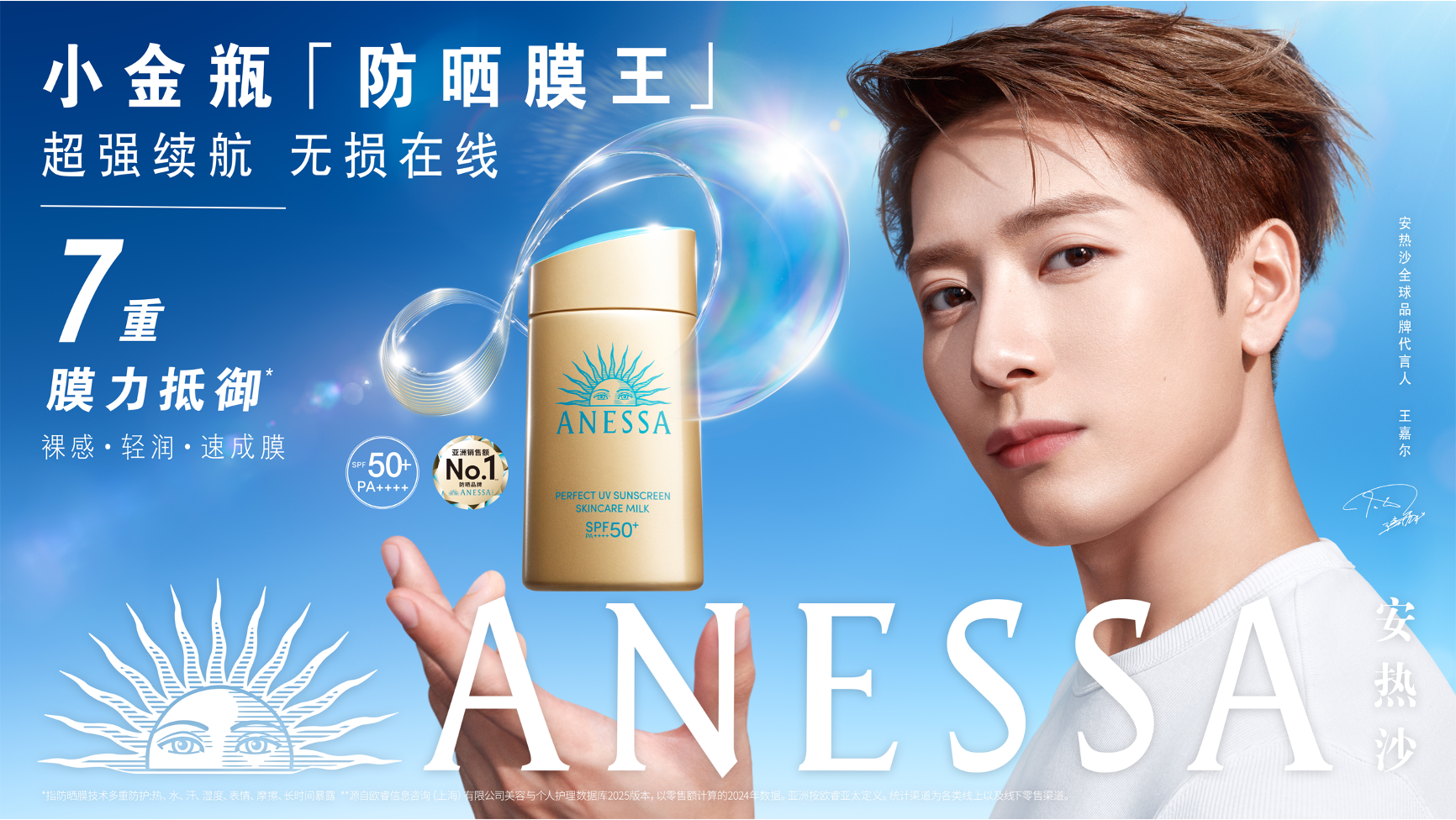
新年膜力在线 共赴新程:安热沙官宣王嘉尔成为全球品牌代言人
Jiang Nan Shi Bao· 2026-02-12 07:41
Core Insights - Shiseido's ANESSA brand has appointed international musician Jackson Wang as its global brand ambassador, marking the beginning of a new journey under the theme "膜力在线,阳光无限" [1][3] Brand Development - ANESSA has been a leader in the sunscreen industry for over 30 years, continuously innovating and redefining the concept of "professional sunscreen" [3][4] - The brand has introduced various products that cater to different skin types and lifestyles, emphasizing its commitment to skin health through advanced research and development [3][4] Product Innovation - The brand's flagship product, the "防晒膜王" (Sunscreen King) small gold bottle, showcases its scientific prowess, featuring technologies like Auto Repair Technology and Auto Booster Technology for enhanced user experience [4][6] - ANESSA has expanded its product line to include a second-generation sunscreen essence that combines protection, anti-aging, and brightening effects, as well as a portable spray for on-the-go application [6] Targeting Young Consumers - The brand has successfully attracted a younger demographic through collaborations with ambassadors and cross-industry partnerships, significantly increasing its market share among young consumers [6][7] - ANESSA aims to enhance its communication with younger audiences by leveraging social media and interactive marketing strategies [6][7] Future Plans - In 2026, ANESSA plans to launch new products and initiatives that address the evolving needs of consumers in terms of integrated skincare and sustainability [7] - The partnership with Jackson Wang is expected to strengthen the brand's connection with younger audiences, showcasing its relevance in contemporary culture [7]
将祖艺打造成本土美妆新标杆
Xin Lang Cai Jing· 2026-02-12 04:07
Core Viewpoint - The article highlights the journey of a Tibetan woman, Meduo, who is transforming the traditional craft of "Ada" into a modern skincare and cosmetic brand, while also promoting local employment and cultural heritage [4][5][6]. Group 1: Company Development - Meduo aims to establish a standardized factory for "Ada" production, which will include raw material processing, product development, and packaging, thereby reducing transportation costs and ensuring product quality [4]. - The company, Tibet Dezong Zuyu Industrial Development Co., Ltd., was founded in 2016, and it has evolved from a simple product to a diverse range of skincare and cosmetic offerings [9][10]. - The "Ada" series has expanded to include skincare sets, cosmetic products, and even calligraphy ink, with annual sales steadily increasing, establishing it as a representative brand of natural beauty products in Tibet [11]. Group 2: Market Strategy - Meduo has actively engaged in product innovation, transitioning from a single paste form to a multi-product matrix that includes skincare and makeup, while maintaining the traditional production methods [10]. - The company has leveraged online platforms and local exhibitions to promote its products, achieving a 40% share of online orders, with products reaching as far as Hainan [11]. - By collaborating with local e-commerce platforms and utilizing live demonstrations, the brand has effectively communicated the cultural significance and benefits of "Ada" to a broader audience [11]. Group 3: Community Impact - Meduo has implemented a training program for local women, providing them with skills in "Ada" production and creating job opportunities, with over 630 individuals trained to date [12]. - The company has established long-term agreements with local herders for yak milk procurement, ensuring quality raw materials while sharing the benefits of the industry with the community [13]. - Meduo also supports impoverished households in the region by providing financial assistance, reflecting a commitment to social responsibility and community upliftment [13].