
智能穿戴

Search documents
“加减乘除”中的发展密码——从“四则运算”解析“十四五”中国经济
Shang Hai Zheng Quan Bao· 2025-10-13 18:20
Economic Growth and Achievements - China's economy is projected to reach approximately 140 trillion yuan, with an average annual growth rate of 5.5%, contributing over 30% to global economic growth [2][4][7] - The economic increment over five years is expected to exceed 35 trillion yuan, equivalent to recreating the economic output of the Yangtze River Delta region [3][7] - By 2024, the total grain production is anticipated to surpass 1.4 trillion jin, marking an increase of 740 billion jin since 2020 [5] Policy and Structural Reforms - The implementation of structural tax reductions and improved business environments has led to a cumulative tax reduction of approximately 10.5 trillion yuan during the "14th Five-Year Plan" period [9][11] - The number of companies benefiting from R&D tax deductions reached 615,000, with a total deduction amounting to 3.32 trillion yuan in 2024, reflecting a 25.5% increase [10] Innovation and Technological Advancements - R&D expenditure as a percentage of revenue for large industrial enterprises exceeded 1.6%, with a nearly 50% increase in total R&D investment by 2024 compared to the end of the "13th Five-Year Plan" [14] - High-tech manufacturing value added is expected to grow by 42% by 2024 compared to the end of the "13th Five-Year Plan" [14] Market Dynamics and Internal Demand - Domestic demand contributed an average of 86.4% to economic growth over the past four years, with final consumption accounting for 56.2%, an increase of 8.6 percentage points from the "13th Five-Year Plan" [14] - The emergence of new products and business models has shown significant market potential, as evidenced by a sevenfold increase in sales of AI smart glasses during the "618" shopping festival [14] Infrastructure and Connectivity - The establishment of the Hubei Ezhou Huahu International Airport has opened 45 international cargo routes, contributing to a 6.1 percentage point increase in Hubei's foreign trade growth since 2025 [16] - The reduction of regulatory barriers has led to a 40.4% share of inter-provincial trade sales in total sales revenue, indicating improved market integration [16] Green Development and Sustainability - During the "14th Five-Year Plan," energy consumption per unit of GDP decreased by 11.6%, and renewable energy generation capacity reached approximately 60% [15] - The focus on green transformation is expected to enhance long-term economic sustainability and contribute to global green initiatives [15]


AI眼镜持续拓展应用场景
Zheng Quan Ri Bao Zhi Sheng· 2025-10-13 16:10
Core Insights - The Rokid smart glasses, developed by Lingban Technology, have gained significant attention after being used by traffic police in Hangzhou during the National Day holiday, showcasing their practical application in real-world scenarios [1][2] - The product has achieved over $3.61 million in crowdfunding on Kickstarter, setting a record in the global XR industry, and has received 300,000 pre-orders before its official launch [1][4] - The glasses are being marketed as a lightweight solution with advanced display and interaction capabilities, marking a shift in the smart glasses market from voice accessories to visual entry points [2][5] Product Performance - The Rokid glasses can identify vehicle reservation information from a distance of 5 to 7 meters, reducing verification time from 3-5 seconds to 1-2 seconds, thus increasing the hourly vehicle verification capacity from 80 to 150 [2] - Weighing only 49 grams, the glasses integrate advanced optical technology, allowing clear display of information even in bright outdoor conditions [2] Market Dynamics - The rapid market demand has led to extended shipping times, with orders now scheduled for delivery after October 31 [4] - The supply chain is responding to the increased demand, with companies like Lens Technology ramping up production to meet the needs of both Rokid and other major AR/VR manufacturers [4] Industry Implications - The success of Rokid glasses is expected to stabilize orders for upstream suppliers and enhance growth expectations within the industry [5] - The market performance may encourage collaborative innovation among industry players, leading to increased R&D investment and technological advancements [5] - The positive market reception could attract more capital into the smart wearable sector, further optimizing and upgrading the industry chain [5]

追觅AI智能戒指首发订单破千万
Xin Lang Ke Ji· 2025-10-11 09:40
Core Insights - The first AI smart ring from Chasing has launched pre-sales on October 1, achieving over 10 million units sold, setting a new record for high-end wearable device sales during the same period [1] - The success of the product is attributed to consumer recognition of its core value of "unnoticeable wear, noticeable care" [1] - Chasing plans to continue focusing on the health technology sector, aiming to meet public demand for refined health management with high-quality products and services [1] Company Strategy - Chasing aims to enhance the smart wearable industry by promoting "warm health companionship" [1] - The company is committed to deepening its engagement in the health technology field [1]
苹果手表为5G RedCap注入强心剂,但RedCap规模化尚需合力
3 6 Ke· 2025-10-09 10:14
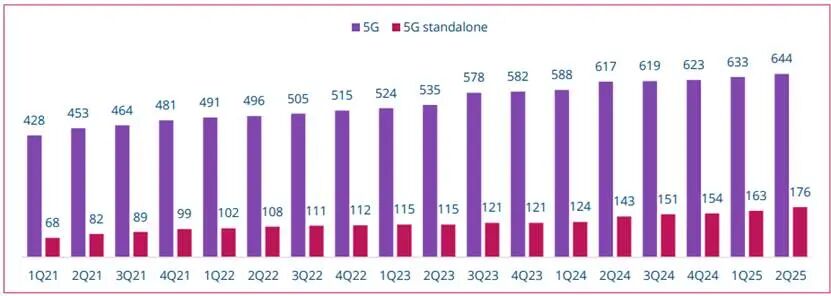
Core Insights - Apple has introduced its first 5G smartwatches, the Apple Watch Series 11 and Apple Watch Ultra 3, utilizing 5G RedCap technology, which is expected to promote the adoption of RedCap across the industry [1][2] - The adoption of RedCap by Apple, a leading manufacturer, signifies a strong endorsement for the technology, although broader industry support is necessary for widespread implementation [1][10] Group 1: Apple's Commitment to RedCap - Apple is not the first to adopt RedCap in wearable devices but is among the most proactive major manufacturers, indicating confidence in RedCap's future [3][5] - As of August 2025, only 34 operators in 24 countries are investing in RedCap, representing just 0.5% of the global market, highlighting the limited current infrastructure [5][6] - Apple's decision to implement RedCap in its smartwatches demonstrates a commitment to the technology despite the current limitations in network infrastructure [5][6] Group 2: Impact on Industry Standards - The introduction of RedCap in Apple's smartwatches aligns with the 3GPP's vision for wearable devices, fulfilling commitments made during the standard's development [6][10] - RedCap is designed for specific applications, including industrial sensors, smart city monitoring, and wearables, with defined performance metrics [6][10] Group 3: Market Dynamics and Growth Potential - In Q2 2025, Apple Watch shipments reached 7.4 million units, a 28.8% year-on-year increase, while the global smartwatch market grew by 8% [8] - Despite a decline in Apple's overall shipment volume, the brand remains influential in the wearable market, potentially encouraging other manufacturers to adopt RedCap technology [9][10] - The global smartwatch market has surpassed 100 million units annually, with a significant portion featuring cellular IoT capabilities, which could facilitate RedCap's broader application [9][10] Group 4: Future Directions for RedCap - The successful application of RedCap requires overcoming barriers across various industries, with a focus on 5G native applications and private networks [10][13] - The integration of RedCap in sectors like smart connected vehicles and AI applications is seen as a promising avenue for growth [14][10] - The collaboration across industries is essential for the proliferation of RedCap, as its success is not solely dependent on consumer products but requires a collective effort [14][10]

南山智尚(300918):发布员工持股计划及新一代触觉智能手套
Xin Lang Cai Jing· 2025-10-09 06:33
Core Points - The company has launched an employee stock ownership plan (ESOP) to raise a maximum of 62.55 million yuan, with each share priced at 1.00 yuan [1] - The total number of shares to be acquired under the ESOP is capped at 5.3691 million shares, representing 1.06% of the company's total equity [1] - The ESOP will last for 60 months and will involve up to 40 employees, including a maximum of 7 directors and senior management [1] - The first unlock period for the ESOP is set for 2025, requiring a revenue growth rate of no less than 15% compared to 2024 [3] - The second unlock period in 2026 has two conditions: either a revenue growth rate of no less than 45% or a net profit growth rate of no less than 20% compared to 2024 [3] - The company aims to align core tasks with stock incentives to enhance the commercialization of its humanoid robot business [3] Product Development - The company has officially released a new generation of tactile smart gloves, developed in collaboration with Wuhan University and Shouzhih Innovation [4] - The gloves integrate flexible sensing and drive technologies, enabling high integration of perception, driving, and processing [4] - Key features include high precision, low latency, strong comfort, and multi-platform support for applications [4] - Current application scenarios for the gloves include remote operation of industrial robots, robot skill learning, and virtual assembly testing in VR [4] Commercialization Efforts - The company plans to collaborate with Shouzhih Innovation to promote the commercialization of the smart gloves, focusing on market development, open-source software, and supply chain production [5] Financial Outlook - The company maintains its profit forecast, projecting net profits of 200 million, 230 million, and 280 million yuan for 2025 to 2027, with corresponding P/E ratios of 55x, 48x, and 39x [6][7]
利好突袭,刚刚公告:猛增38%
Zheng Quan Shi Bao· 2025-10-05 14:54
Group 1: AI Applications - The AI application sector has seen the emergence of a blockbuster product, the Meta Ray-Ban Display smart glasses, which have sold out in retail stores across the U.S. and have a high demand for trial appointments [1][3] - Meta's smart glasses feature a full-color high-definition display and are sold in a package with a neural wristband that converts muscle signals into commands for the glasses, starting at a price of $799 [3] - Other tech giants, including Apple and Amazon, are also investing in AI glasses, with Apple expected to enter the market within 12 to 16 months [3][4] Group 2: AI Infrastructure Growth - Hon Hai Precision Industry (Foxconn) reported a significant revenue increase of 38.01% month-over-month in September, reaching 837.1 billion New Taiwan Dollars, driven by the surge in demand for AI infrastructure [6] - The company anticipates continued growth in AI server shipments and revenue in the fourth quarter, supported by strong demand for AI server racks [6] - NVIDIA has partnered with Fujitsu to build a full-stack AI infrastructure, aiming for energy efficiency and high performance through advanced CPU technology [7] Group 3: Semiconductor Industry Impact - The AI boom is reshaping the semiconductor industry, with AI-related sales now accounting for over 25% of the semiconductor market, marking the first acceleration in growth in 25 years [9] - Semiconductor prices have risen significantly, with an increase of 75% from 2019 to 2025, and a 45% increase since 2022, indicating strong pricing power in the industry [9] - AI data center semiconductor sales are projected to grow from less than 5% in 2022 to approximately 27% by 2025, further boosting the semiconductor industry's revenue growth rate [9][10]

测量仪器龙头切入AI+赛道
2 1 Shi Ji Jing Ji Bao Dao· 2025-10-05 00:48
Core Viewpoint - The rise of AI smart glasses has attracted attention from both tech giants and traditional eyewear companies, with Huashengchang also entering this emerging market by developing its own AI products and models [1][6][9]. Company Developments - Huashengchang announced the development of its "DeepSense" model, which has passed generative AI service registration and will soon be available for internal testing [1]. - The company launched four AI medical devices at the 2025 China International Medical Equipment Expo, showcasing its commitment to integrating AI into healthcare solutions [6]. - Huashengchang has established a subsidiary focused on AI glasses, particularly for industrial applications, aiming to enhance measurement and detection efficiency [9]. Market Trends - The AI glasses market is rapidly growing, with a reported 145.5% year-on-year increase in shipments in Q2 2025, reaching 664,000 units in China [10]. - The Chinese AI glasses market is projected to have a compound annual growth rate of 56% over the next five years, supported by a robust supply chain for smart eyewear components [10][11]. - The overall market for smart glasses is expected to reach 4.153 million units sold by 2029, with a potential market size exceeding 100 billion yuan [12].
切入“AI+”赛道,华盛昌抢滩垂直领域大模型布局
2 1 Shi Ji Jing Ji Bao Dao· 2025-10-04 13:58
Core Viewpoint - The rapid development of AI smart glasses has attracted attention from both tech giants and traditional eyewear companies, with Huashengchang also entering this emerging market by leveraging its AI capabilities and existing expertise in measurement and medical devices [1][4]. Group 1: Company Developments - Huashengchang has announced the development of its "DeepSense" AI model, which has passed the generative AI service filing and will soon be available for internal testing [1]. - The company showcased four AI medical devices at the 2025 China International Medical Device Expo, including a smart blood pressure monitor with an AI voice assistant, demonstrating its commitment to integrating AI into healthcare solutions [2]. - Huashengchang has a strategic focus on combining AI with measurement and sensor technologies, aiming to provide customized industrial measurement solutions [3]. Group 2: Market Trends - The AI glasses market in China is experiencing significant growth, with a reported shipment of 664,000 units in Q2 2025, marking a year-on-year increase of 145.5% [5]. - The market is projected to have a compound annual growth rate of 56% over the next five years, indicating a robust growth trajectory for AI glasses [5]. - The overall market for smart glasses is expected to reach 415.3 million units by 2029, with a potential market size exceeding 100 billion yuan [6]. Group 3: Competitive Landscape - Huashengchang's AI glasses are positioned to serve specific industrial applications rather than being mere consumer products, aiming to enhance operational efficiency and provide real-time data support for technicians [4]. - The company faces competition in a rapidly evolving market, where the integration of AI technology is crucial for maintaining a competitive edge [6].
AI眼镜加速走向大众
Zhong Guo Zheng Quan Bao· 2025-09-30 00:07
Core Viewpoint - The AI glasses industry is experiencing explosive growth this year, driven by the release of new products from major companies and the deep integration of AI and AR technologies, positioning AI glasses at the forefront of consumer electronics [1] Industry Growth - Meta's CEO Mark Zuckerberg announced the launch of new AI glasses, MetaRay-BanDisplay, featuring a display based on LCoS technology and priced from $799 [2] - According to IDC, global AI glasses shipments are expected to reach 2.555 million units in Q2 2025, a significant year-on-year increase of 54.9%, with audio and audio-capturing glasses seeing a staggering growth of 256.8% [2] - The consumer AR market is at a clear turning point, with Meta's collaboration with Ray-Ban performing well and Apple planning to launch lightweight AR glasses, AppleLens [2] - The AR glasses market is projected to grow over 60% this year, transitioning from a niche category to a mainstream market [2] Market Potential - The smart glasses market in China is rapidly developing, with AI glasses being widely adopted in various sectors, including industrial, military, and health monitoring [3] - The consumer-grade AR glasses market is expected to grow quickly due to the integration of AI and innovative applications [3] Key Investment Themes - AI glasses are seen as a significant entry point for edge AI, with potential for hardware to interact with users through voice commands, reducing the need for traditional app interfaces [4] - The release of new AI glasses is anticipated to increase the penetration rate of AI + AR glasses, driving continuous upgrades in the hardware supply chain [4] - In the first half of 2025, the domestic AI glasses market is expected to see retail sales of 468,000 units, a year-on-year increase of 148%, with AR glasses retail sales reaching 195,000 units, up 77% [4] - Qualcomm's AR1 chip shipments are projected to exceed 12 million units in 2026, with Meta's AI glasses expected to surpass 10 million units [4] Technological Advancements - The industry is entering a phase of mass production for AI glasses, with significant advancements in display technologies such as waveguide optics, which are crucial for enhancing AR glasses' performance [5] - Major companies are collaborating with key suppliers to overcome technological bottlenecks, improving display quality, module weight, and cost [5] - Investment opportunities are focused on the AI glasses sector, particularly on the potential sales boost from Meta's new product launches and the anticipated turning point for AR glasses [5][6]
AI眼镜加速走向大众市场 两大主线投资机会值得重视
Zhong Guo Zheng Quan Bao· 2025-09-29 22:22
Core Insights - The AI glasses industry is experiencing explosive growth this year, with major companies launching new products and a significant increase in shipment volumes, driven by the deep integration of AI and AR technologies [1][2] - Analysts believe that the AI glasses sector is transitioning from technological exploration to large-scale commercialization, recognized as a strategic entry point for the next generation of human-computer interaction [1][4] - The market for consumer-grade AR glasses is expected to accelerate towards mainstream adoption, with a projected shipment growth rate exceeding 60% for the year [2][3] Industry Development - Meta's CEO Mark Zuckerberg announced the launch of new AI glasses, the Meta Ray-Ban Display, featuring a display screen based on LCoS technology and priced from $799 [2] - According to IDC, global AI glasses shipments are expected to reach 2.555 million units in Q2 2025, marking a year-on-year increase of 54.9%, with audio and audio-capturing glasses seeing a staggering growth of 256.8% [2] - The Chinese smart glasses market is rapidly evolving, with AI glasses gaining traction in various sectors, including industrial, military, and health monitoring applications [3] Investment Opportunities - The AI glasses sector is viewed as a significant entry point for edge AI applications, with potential for hardware to evolve towards more intuitive user interactions [4][5] - Analysts predict that the release of new AI glasses will enhance market penetration and drive upgrades in the hardware supply chain [4] - Data indicates that the domestic AI glasses market's retail volume is expected to reach 468,000 units in the first half of 2025, a 148% increase year-on-year, with AR glasses retail volume at 195,000 units, up 77% [4][5] Key Technologies - The development of waveguide technology is crucial for the mass production and enhancement of AR glasses, with major companies collaborating to overcome existing technical challenges [5][6] - Investment focus should be on optical display components, including waveguides and upstream materials like glass wafers and silicon carbide substrates [6]

