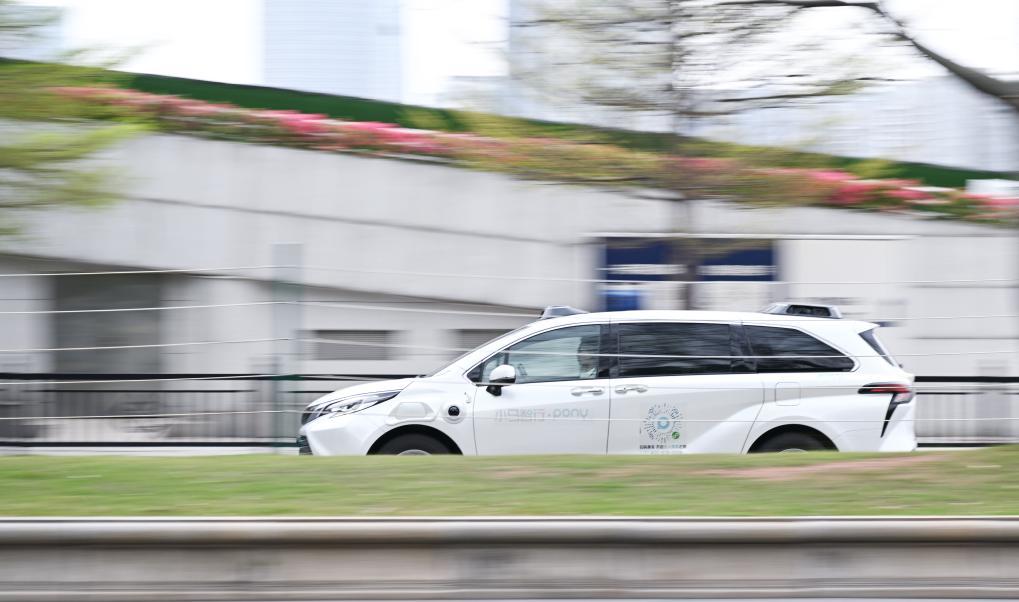
智能网联汽车

Search documents
宏伟蓝图如何变为生动实景 ——上海浦东打造社会主义现代化建设引领区调查
Jing Ji Ri Bao· 2025-12-21 21:56
Core Viewpoint - Shanghai Pudong New Area has achieved significant milestones in its development over the past 30 years, particularly since being designated as a leading area for socialist modernization in 2020, with a focus on high-quality development and higher-level openness [1] Group 1: Technological Innovation - Pudong has focused on cutting-edge technology innovation, achieving important breakthroughs in key industries such as integrated circuits, biomedicine, and artificial intelligence, with a projected scale of 832.3 billion yuan for these industries by 2024, reflecting an average annual growth of 11.7% over the past three years [2] - The autonomous driving industry in Pudong has rapidly developed, supported by policies such as the issuance of the first batch of intelligent connected vehicle demonstration operation licenses in July 2023 [2] - Pudong has established a complete innovation chain for humanoid robots, fostering brands like Zhiyuan Robotics, and aims to create a technology-driven industrial ecosystem [3] Group 2: Biomedicine Sector - Pudong has implemented several policies to support the high-quality development of the biomedicine industry, resulting in the emergence of representative medical enterprises and continuous innovation in the sector [4] - Companies like Hutchison China MediTech have thrived in Pudong, emphasizing the region's supportive environment for growth and innovation [5] Group 3: Reform and Regulation - Since the 14th Five-Year Plan, Pudong has made significant progress in implementing national strategies, achieving a 93% overall implementation rate for key tasks [6] - The "One Industry, One License" reform has streamlined the licensing process for businesses, enhancing operational efficiency and gaining widespread approval from enterprises [6] - Pudong has been a pioneer in institutional innovation, with 80 tasks from the overall plan for high-level institutional opening having been largely implemented, including significant advancements in trade facilitation and cross-border data flow [7] Group 4: Government Services and Support - Pudong has enhanced its administrative services through AI-driven systems, improving efficiency and accessibility for businesses [8] - The establishment of the "Going Global" comprehensive service center has provided extensive support for enterprises seeking to expand internationally, with over 270 global sites established [11] - The center offers a full range of services, including market research, business matching, and risk management, facilitating smoother international operations for local companies [12] Group 5: Future Outlook - Pudong aims to become a national model for higher-level reform and opening up, focusing on attracting international talent and fostering world-class multinational enterprises [13] - By 2024, Pudong's GDP is expected to reach 1.78 trillion yuan, representing a 34% increase from 2020, with a projected 6% year-on-year growth in the first three quarters of 2025 [13]
上海浦东引领区建设“群星闪耀”
Zheng Quan Ri Bao Zhi Sheng· 2025-12-21 16:05
Group 1: Technological Innovation - Pudong New Area has focused on cutting-edge technology innovation, achieving breakthroughs in fields such as assisted driving and embodied intelligence [2] - The first local regulation in China focusing on L4-level and above autonomous driving systems was introduced in November 2022, and the first batch of intelligent connected vehicle demonstration operation licenses was issued in July 2023 [2] - Companies like Shanghai Jinqiao Intelligent Connected Vehicle Development Co., Ltd. are developing a comprehensive testing environment for high-level autonomous driving, including 10 typical multi-dimensional data training sites and a 1000-kilometer testing road [3] Group 2: Robotics Industry - The humanoid robot industry in Pudong has rapidly developed, with an expected shipment of 5,660 humanoid robots this year [4] - Zhiyuan Robotics, established in February 2023, is the only brand in the industry to achieve a full product series and full scene layout [4] - The trend of mass production in the humanoid robot sector is becoming evident, with significant contributions expected to various industries [4] Group 3: Biopharmaceutical Industry - Pudong has implemented several policies to support the high-quality development of the biopharmaceutical industry, including the "Pudong New Area Biopharmaceutical Industry High-Quality Development Action Plan (2022-2024)" [5] - Companies like Hutchison Whampoa Medicine have successfully developed new drugs, with three class 1 new drugs approved in China since 2018 [5] - The Pudong biopharmaceutical sector achieved an overseas authorization transaction volume of $24 billion in the first ten months of this year, accounting for 9.7% of the global total [6] Group 4: Open Economy - The establishment of the "Going Global" comprehensive service center in Pudong aims to assist enterprises in expanding internationally, with over 270 global sites established [7] - The center provides a full range of services, including market research, business matching, and cross-border operational support [7] - During the "14th Five-Year Plan" period, Pudong established over 9,400 foreign-funded enterprises, with actual foreign investment reaching $45.3 billion [9]
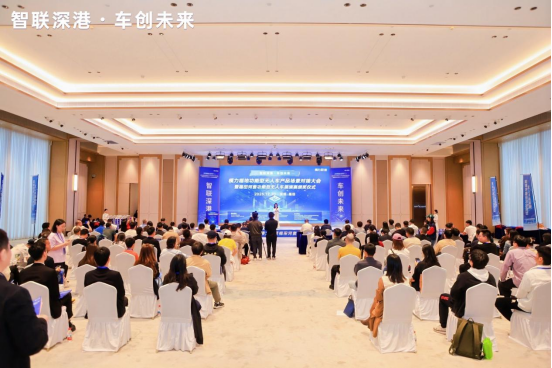
深圳市举办功能型无人车产品场景对接大会暨福田河套功能型无人车展演活动
Xin Lang Cai Jing· 2025-12-21 14:33
据介绍,无人物流车实境演示依托河套城市肌理,严格遵循标准化展演规程,设置六大核心科目,从红 绿灯识别到自动卸货,全流程高度还原城市末端配送的真实工况。标准化的展演执行体系贯穿全程,从 科目设置、路线划定到数据采集均实现统一规范,确保参演车辆展现稳定的环境感知与路径规划能力。 同步进行的公园无人环卫车实境演示,同样以标准化展演规程为指引,在封闭绿地内完成五大考核,多 款环卫机器人实现95%以上作业覆盖率,全程零碰撞、零人工干预,标准化的执行流程为技术验证提供 了精准可靠的评价依据,进一步凸显其在公共空间常态化运营的可行性。 本次活动聚焦无人物流车与公园无人环卫车两大方向,以标准化展演规程为核心、标准化展演执行为保 障,开展真实城市环境下的场景化实境演示。来自全国的十余支功能型无人车团队,在标准化展演执行 体系的赋能下,于河套片区真实城市环境中开展高强度、全流程的实地运行展示。参与企业多为已在深 圳取得功能型无人车道路测试或应用试点牌照的成熟主体,其产品已在园区、社区等场景中积累实际运 行经验,而标准化的展演设计与执行,不仅为各团队提供了公平竞技的平台,更通过统一的技术验证标 准,加速了功能型无人车技术成果的场景 ...

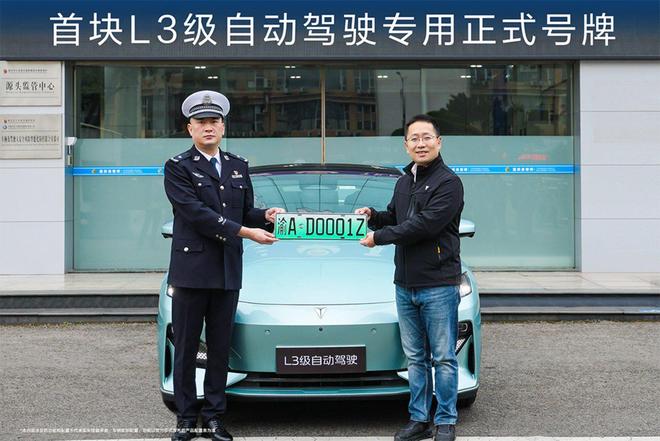
首张L3正式号牌落地:车牌“渝AD0001Z”背后的规则升级
Tai Mei Ti A P P· 2025-12-21 01:55
交巡警总队授牌 12月20日,一张印有"渝AD0001Z"字样的号牌在重庆正式发出。 这张由重庆市公安局交通管理总队授予长安汽车的号牌的意义远超出了行政许可本身。它是首块L3级 自动驾驶专用正式号牌,也意味着,中国智能网联汽车正在剥离模糊的营销话术,正式迈入权责分明的 合规商用时代。 长期以来,自动驾驶行业在L2与L3的界限上始终处于一种微妙的试探期。此次长安汽车获得正式号 牌,并在深蓝汽车上率先落地,实质上是撕开了L3级自动驾驶从技术验证向规模化量产突围的口子。 直到2025 年底,工信部在 12 月 15 日正式对外公布首批 L3 级有条件自动驾驶车型准入许可,长安深蓝 SL03 和北汽极狐阿尔法 S等车型都拿到了正式的入场券。 长安这块"渝AD0001Z",本质上是把纸面上的准入许可继续向前推进了一步,从工信部的产品准入,走 到了公安交管部门颁发的正式号牌。这意味着:监管链条从工信部扩展到公安、交通等多部门协同,对 车企来说,这也是从迈进"规则游戏"的新起点。 为何是长安?为什么落在重庆? 那么这块号牌为什么落在重庆、落在长安? 一头是有"8D 魔幻立体交通"的山城,一头是深耕重庆多年的老牌主机厂。双方 ...

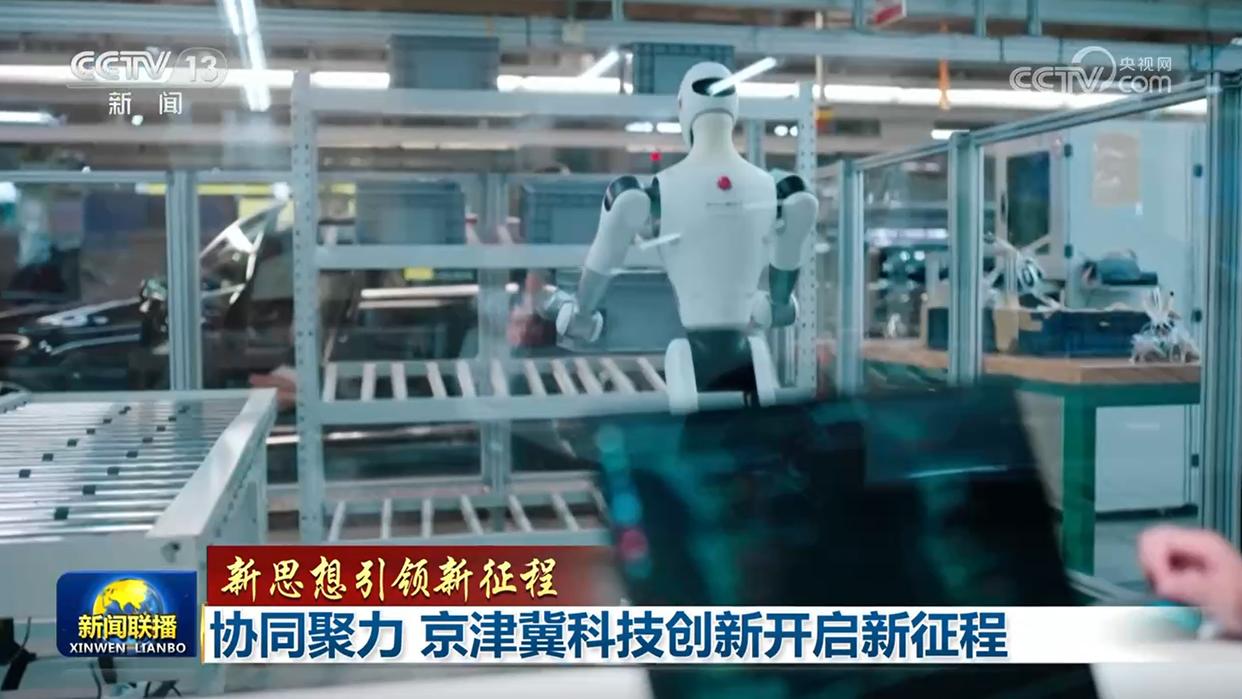
「新思想引领新征程」协同聚力 京津冀科技创新开启新征程
Xin Lang Cai Jing· 2025-12-20 13:56
Core Insights - The Chinese government emphasizes the acceleration of building Beijing as an international technology innovation center and a high-level talent hub, aiming to enhance the country's independent innovation capabilities [1][5] - Beijing's Zhongguancun area, which occupies less than 4% of the city's area, contributes approximately one-third of the city's GDP, showcasing its role as a significant innovation hub [3] - The region has produced over 200 domestic large models, accounting for nearly 30% of the national total, with breakthroughs in quantum technology and artificial intelligence [3] - The number of "unicorn" companies in Zhongguancun exceeds 90, indicating a robust growth in innovative enterprises [3] - By 2025, total revenue from Zhongguancun enterprises is expected to surpass 10 trillion yuan, highlighting its leading role in innovation [3] - Beijing has established 145 national key laboratories and 10 new R&D institutions, maintaining a research funding intensity of around 6% [6] - The city has formed three trillion-level industrial clusters in new-generation information technology, technology services, and pharmaceutical health, along with seven hundred-billion-level clusters in areas like intelligent manufacturing and artificial intelligence [6] - The Beijing-Tianjin-Hebei region is collaborating on over 220 basic research projects, fostering a cooperative innovation ecosystem [8] - The central government has decided to expand the Beijing International Technology Innovation Center to include the Beijing-Tianjin-Hebei region, enhancing regional collaboration [8][10]
新思想引领新征程丨协同聚力 京津冀科技创新开启新征程
Yang Guang Wang· 2025-12-20 03:52
Core Insights - The Chinese government is accelerating the construction of Beijing as an international technology innovation center and a high-level talent hub, aiming to make it a key source of independent and original innovation [1][2]. Group 1: Technological Infrastructure - Beijing has made significant progress in establishing a high-density technological infrastructure, ranking among the top globally, transitioning from single-point construction to cluster operations [2]. - The completion of the high-energy synchrotron radiation source in Beijing's Huairou district marks a milestone, being the world's highest brightness fourth-generation synchrotron radiation source, fulfilling national strategic and technological innovation needs [1][3]. Group 2: Collaborative Innovation - The Beijing-Tianjin-Hebei region has jointly funded over 220 basic research cooperation projects, forming innovation alliances to enhance regional innovation quality and efficiency [3]. - A collaborative model is emerging where research and development occur in Beijing while technology is transferred to Tianjin and Hebei, fostering a synergistic industrial structure [3]. Group 3: Strategic Goals and Achievements - The central government emphasizes the integration of Beijing's technological advantages with Tianjin's advanced manufacturing capabilities to drive innovation in Hebei, outlining a practical path for regional collaboration [2]. - Beijing has been recognized as the global leader in the "science center" dimension of the 2025 International Technology Innovation Center Index, solidifying its position at the forefront of global scientific and innovation activities [2].
L3 级自动驾驶获批上路,我国智能网联汽车迈向量产应用新阶段
Changjiang Securities· 2025-12-19 15:37
行业研究丨点评报告丨软件与服务 [Table_Title] L3 级自动驾驶获批上路,我国智能网联汽车迈 向"量产应用"新阶段 报告要点 [Table_Summary] 12 月 15 日,根据有关规定,工业和信息化部于第 401 批公告附条件许可了两款 L3 级自动驾 驶(有条件自动驾驶)车型产品。此次首批 L3 级车型获得准入许可,意味着我国智能网联汽车 迈入量产应用新阶段。随着试点工作的逐步推进,智能网联汽车产品准入管理和法规标准体系 有望持续完善,进而加速自动驾驶技术的规模化、商业化应用,进而惠及全产业链。建议关注: 1)智能驾驶算法提供商;2)智能驾驶相关硬件提供商;3)Robotaxi 运营平台。 分析师及联系人 [Table_Author] 丨证券研究报告丨 宗建树 陈耀文 SAC:S0490520030004 SAC:S0490525070002 SFC:BUX668 请阅读最后评级说明和重要声明 %% %% %% %% research.95579.com 1 软件与服务 cjzqdt11111 [Table_Title L3 级自动驾驶获批上路,我国智能网联汽车迈 2] 向"量产应用"新阶 ...
L3级是新起点,需要自动驾驶立法护航
Xin Lang Cai Jing· 2025-12-19 07:25
Core Viewpoint - The approval of two L3 autonomous driving models by the Ministry of Industry and Information Technology marks a significant step towards the commercialization of intelligent connected vehicles in China, despite the limited operational scope and the focus on pilot testing [1][2]. Group 1: Regulatory and Operational Framework - The two approved vehicles will not be sold directly to consumers but will operate in collaboration with ride-hailing platforms, indicating a cautious approach to deployment and a clear assignment of responsibility to professional operators [1]. - The L3 autonomous driving feature allows the system to take over driving tasks under specific conditions, raising questions about liability in the event of accidents, including the roles of vehicle manufacturers, software suppliers, and operators [1][2]. - The existing insurance models are inadequate for the new risk dynamics introduced by autonomous driving, necessitating the development of tailored insurance products that address unique risks such as system reliability and data security [1][3]. Group 2: Data Security and Legislative Challenges - Autonomous vehicles generate vast amounts of operational data, raising concerns about data privacy and security, particularly regarding the handling of sensitive information [2]. - There is a pressing need for legislative updates, including the revision of traffic safety laws to define the legal responsibilities associated with L3 autonomous driving systems and the establishment of national standards for data classification and storage [2][3]. - The industry must also develop a clear framework for data ownership and usage to protect personal privacy while fostering innovation and growth in the sector [3]. Group 3: Future Directions and Recommendations - The establishment of a regulatory framework that supports the development of autonomous driving technology is essential, including the introduction of a dedicated management regulation for intelligent connected vehicles [2][3]. - The industry should consider adopting flexible management models, such as regulatory sandboxes, to allow for controlled testing and demonstration of new technologies while ensuring safety [3][4]. - Long-term participation in international rule-making for intelligent connected vehicles is crucial for enhancing China's influence in global smart transportation governance [3][4].
L3级来了!试点为什么是北京、重庆?
新华网财经· 2025-12-19 07:04
Core Viewpoint - The Ministry of Industry and Information Technology has officially announced the first batch of L3-level conditional autonomous driving vehicle permits in China, with two models set to be tested in designated areas of Beijing and Chongqing, marking a significant step towards the practical application of autonomous driving technology in the country [1][9]. Group 1: Pilot Cities and Rationale - Beijing and Chongqing were chosen as pilot cities due to their advantages in data accumulation and diverse traffic scenarios, allowing for effective testing of the autonomous systems in different environments [3][9]. - The pilot program is limited to specific routes in these cities, focusing on safety and gradual implementation, with a maximum speed limit of 80 km/h on designated highways [3][9]. Group 2: Approved Models and Testing - The two approved models are designed for highway and urban congestion scenarios, reflecting the need for tailored solutions in varying traffic conditions [3][5]. - The Ministry has conducted comprehensive assessments of the pilot enterprises' R&D, testing, and emergency response capabilities, ensuring that only qualified entities are selected for the pilot program [7][9]. Group 3: Implications for Drivers and Consumers - L3-level conditional autonomous driving allows the system to act as a "temporary driver" under specific conditions, but drivers must be ready to take control when requested, emphasizing that human drivers remain the primary responsible party [6][8]. - Currently, the autonomous driving features are not available for personal vehicle owners and are limited to pilot operating units, with consumers able to experience the technology through ride-hailing services [8][9]. Group 4: Industry Opportunities - The pilot signifies a shift from technical validation to mass application of autonomous driving in China, indicating that intelligent technology has become a necessity for automotive companies [9]. - The rollout of L3-level autonomous driving encompasses the entire vehicle ecosystem, including components and software, highlighting the importance of safety and maturity in technology development [9].

部分车型获准入许可,L3级自动驾驶大规模落地还有多远?
Xin Hua She· 2025-12-19 02:33
自动驾驶是汽车产业发展、国际科技竞争的重要方向。近日,我国两款L3级自动驾驶车型获附条件准入许可,引发广泛讨论。 随着L3大幕拉开,产业充满热情,社会充满期待。距离真正的大规模商业化落地还有多远?当前还有哪些问题需要厘清?记者18日采访了专家。 问题一:获得产品准入许可是否等于L3"量产在即"? 不能画等号。 "根据工业和信息化部、公安部等四部门共同确定的方案,试点工作包括产品准入试点与上路通行试点两个阶段。"工业和信息化部装备工业发展 中心副主任刘法旺告诉记者,车辆获得准入许可,表明其在自愿申报、初步审核和择优遴选的基础上,已通过四部门联合组织开展的方案确认、 安全测评及专家评审等环节,具备一定的安全保障水平,可进入上路通行试点阶段,获得申领普通车辆号牌资格。 刘法旺强调,由于自动驾驶系统及其应用场景的复杂性,以及面临安全风险的复杂多变性,参考国际经验,为切实保障试点车辆驾乘人员及周边 交通参与者的安全,当前试点采取的是"小范围起步、附条件实施"的推进方式,获得准入许可并不意味着自动驾驶可以立即"全面推广"或"大规 模量产"。 "L3级自动驾驶的普及并非单一技术的突破,而是政策、技术、产业生态的系统性协同成 ...